FirstSpear TV

Archive for the ‘Army’ Category

Army Awards TurbineOne Contract for AI-Powered Edge Target Recognition

Friday, September 5th, 2025

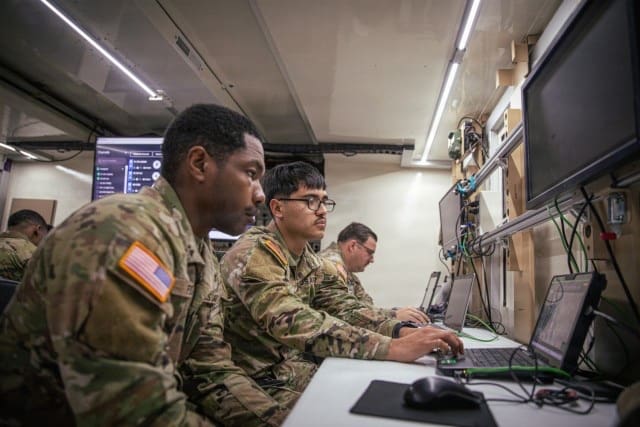
SAN FRANCISCO–TurbineOne announced today it has been awarded a five-year, IDIQ contract with a $98.9M ceiling from the U.S. Army to deliver and demonstrate its Frontline Perception System (FPS) as part of the Army’s Intelligence Enterprise modernization.

With FPS, warfighters can build, retrain, and deploy custom machine learning models at the edge without coding, leveraging multiple sensor feeds in degraded communications environments.

Founded in 2021, TurbineOne successfully completed a Phase II Small Business Innovation Research (SBIR) contract which led to this SBIR Phase III IDIQ, a milestone reached by only a fraction of small businesses. In addition to successful completion of a Phase II SBIR, TurbineOne earned a Defense Innovation Unit (DIU) “success memo” for prototype performance, a key factor in the Army’s decision to award this contract.

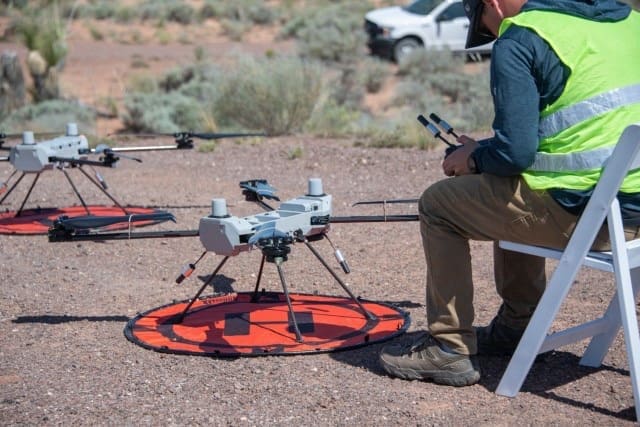
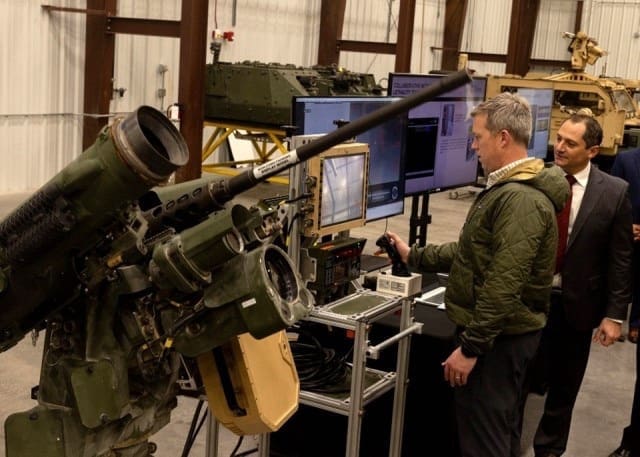
TurbineOne will deliver AI/ML-driven automated target recognition, counter-UAS, and collaborative autonomy capabilities to accelerate intelligence and targeting cycles, including processing, exploitation, and dissemination (PED) to Army units. With FPS, warfighters can build, retrain, and deploy custom machine learning models at the edge without coding, leveraging multiple sensor feeds in degraded communications environments.

“We are grateful to partner with innovative Army units that pushed us through years of iterative exercises to deliver a software-first, hardware-agnostic capability ready for global distribution and rapid scale,” said Ian Kalin, CEO of TurbineOne. “We look forward to supporting the Army’s Transformation Initiative in collaboration with the innovative intelligence leaders in the Army G-2 and Program Executive Office-Intelligence, Electronic Warfare & Sensors.”

www.turbineone.com

Editor’s note: we write about this technology in November 22 soldiersystems.net/2022/11/10/mww-23-turbine-one-frontline-perception-system.

US, Indonesian, Japanese Personnel Perform Airborne Jump at Super Garuda Shield 25

Thursday, September 4th, 2025

BATARAJA, Indonesia — Paratroopers from U.S. Army’s 1st Special Forces Group, 11th Airborne Division, Tentara Nasional Indonesia and Japan Ground Self-Defense Force jumped into the Bintang drop zone during an airborne operation on Aug. 27, 2025.

The combined force exited the aircraft over a designated drop zone, executing a coordinated airborne operation designed to strengthen interoperability between partner nations. The event highlighted shared tactics, techniques and procedures that enable multinational forces to integrate effectively during combined operations.

“It’s important that we do this type of training particularly with our multinational partners,” said Lt. Col. Scott Smith, Combined Joint Task Force Commander, assigned to the 11th Airborne Division. “Bringing additional nations into the fight introduces new challenges and risks, but that’s exactly why we do it here, in Bataraja. It’s far better to build that trust, refine that coordination, and push through the friction now, rather than wait until we’re in the middle of a real-world crisis.”

Prior to the jump, all participating paratroopers completed sustained airborne training. The training included reviews of aircraft exit procedures, body positioning and parachute landing techniques. Despite language differences, the universal nature of airborne operations allowed for a seamless execution between the countries.

Planning and execution of the jump required continuous coordination among jumpmasters, pilots and the drop zone safety officer. Communication throughout the operation ensured safe conditions from departure to landing.

“As the drop zone safety officer, it’s my job to enforce every requirement throughout the airborne operation,” said the 1st Special Forces Group DZSO. “If we miss even one, these paratroopers aren’t just facing a rough landing, they’re facing unnecessary risk, and that’s something I won’t allow in my drop zone.”

This was not the first airborne operation for Super Garuda Shield. Similar training took place in previous iterations in 2023 and 2024, reinforcing the continuity of combined airborne capabilities.

“The ability for three different nations to be able to execute a multinational airborne operation in unfamiliar drop zones is very difficult and it takes a lot of work from a strong team,” said 1st Lt. Joshua Walkup, assigned to 2nd Infantry Brigade Combat Team (Airborne), 11th Airborne Division.

Following the jump, service members from the participating nations held a wing exchange ceremony at the Baturaja Combat Training Center. During the event, paratroopers presented each other with their nation’s airborne wings, symbolizing an airborne tradition and reinforcing a shared commitment to regional security cooperation.

“For multiple nations to come together in a wing exchange shows just how deep the airborne bond runs,” said Lt. Col. Smith. “This isn’t just about tradition, it’s about trust, respect, and building combat-ready relationships with our allies that will carry onto the battlefield.”

The ability to conduct combined airborne operations is an important shared strategic capability for partner forces. Airborne insertion provides commanders with flexible options for rapid response across diverse terrain. Through training together, partner nations improve their ability to integrate during combined operations, ensuring they can respond effectively when required.

By SPC Brandon Vasquez

Army Announces Additional Competitive Award for Next Generation Command and Control (NGC2) Prototyping Efforts

Wednesday, September 3rd, 2025

ABERDEEN PROVING GROUND, Md. — The U.S. Army has awarded a new Other Transaction Authority (OTA) agreement to Lockheed Martin Rotary and Mission Systems and their team of non-traditional innovators and commercial technology providers. This agreement aims to advance the Army’s Next Generation Command and Control division-level prototyping and experimentation by delivering an integrated data layer capability to the 25th Infantry Division.

Next Generation Command and Control, or NGC2, is the Army’s new, innovative approach to equipping commanders with the data they need to make better, faster decisions than the enemy amid rapid technological change.

The OTA was awarded through the NGC2 competitive Commercial Solutions Offering (CSO) on behalf of Program Executive Office Command, Control, Communications, and Network (PEO C3N) for $26 million with a not to exceed period of performance of 16 months.

The new OTA builds on the Army’s recently extended NGC2 OTA agreement to Team Anduril, which also includes several teamed industry partners. Vendor teams participating in NGC2 are flexible, allowing the Army to collaborate with the team leads to adjust capabilities and participants based on prototyping outcomes. Additionally, the Army is accepting proposals on the CSO for potential future team lead or component integration into the NGC2 technology stack.

“This isn’t the end of competition, this is the beginning. Through these two industry team lead agreements, we’ll evaluate different models for shared responsibility and aligned incentives during the NGC2 prototyping phase. We don’t want to have great capabilities simply at the start — we want a durable partnership model that keeps pace with an ever-evolving American tech sector and creates continual opportunity to find and insert the best technology solutions,” said Joseph Welch, deputy to the commanding general, Army Futures Command. “By encouraging companies to self-organize and team with each other and enabling them to integrate and solve these problems directly with the operational force, we will be able to rapidly and continuously improve the command and control capabilities we deliver to Soldiers.”

In July, the Army continued an OTA agreement to Team Anduril to maintain NGC2 momentum from Project Convergence experimentation. The agreement will deliver a NGC2 prototype architecture to the 4th Infantry Division, which is conducting prototyping across applications, data, infrastructure, and transport within a full “technology stack.” The Team Lockheed Martin OTA will focus on the integrated data layer, allowing the Army to assess NGC2 software options. These options will be supported by the C2 Fix transport and infrastructure capabilities already fielded to the 25th Infantry Division. The OTA also supports the Army’s goal of increasing competition and creating multiple opportunities for vendors to contribute technology to the NGC2 ecosystem.

“Next Generation Command and Control is about accelerating transformation and optimizing the innovation of both industry and our warfighters to deliver critical Warfighting capabilities at speed,” said Jesse Tolleson, acting assistant secretary of the Army for Acquisition, Logistics and Technology. “This is not business as usual and reflects exactly what we are trying to achieve through transformation across the Army and the acquisition community.”

Lessons learned by the 4th Infantry Division and 25th Infantry Division will provide insights into how heavy and light units will apply NGC2 differently. These efforts will also examine how NGC2 elements function across the technology stack, with a focus on the data layer’s ability to ingest, transport, and organize data from multiple warfighting systems. Additionally, they will inform future fielding considerations for the broader Army.

“The pace at which we are moving with NGC2, both in terms of contracting and getting the equipment into the hands of Soldiers, is exceptional and laser focused on making our formations faster and more lethal,” said Brig. Gen. Shane Taylor, PEO C3N. “The NGC2 CSO is one way we are transforming our acquisition approaches to drive continuous competition and equip Soldiers with technologies that will win in the future fight.”

Previously fielded with the Army’s C2 Fix capabilities — which provided a “fight tonight” division communications architecture with a mix of military and commercial off-the-shelf capabilities as a down payment on NGC2 transformation — the 25th Infantry Division is postured to demonstrate how NGC2 software capabilities operate with C2 Fix hardware.

“At the 25th Infantry Division, we are humbled to play a role in bringing Next Generation Command and Control into the hands of Soldiers,” said Lt. Col. Eugene Miranda, spokesperson for 25th Infantry Division. “This effort is about giving our leaders and formations the ability to sense, decide, and act faster together than any adversary. By working alongside our industry partners and allies, we are learning in real time how human skill, disciplined processes, and emerging technologies can come together to strengthen deterrence and win in the Indo-Pacific. We are proud to contribute to this Army-wide transformation, knowing that every lesson we learn here helps drive the change our Army needs at the speed of need.”

Through NGC2, the Army is transforming not only technology, but also processes in requirements, resourcing, acquisition and contracting. The NGC2 competitive CSO enables continuous open solicitation with specific “decision windows,” allowing vendors to support rapid integration of new capabilities. During the most recent CSO opportunity for NGC2 prototyping with 25th Infantry Division, more than 80 vendors submitted team lead or component provider proposals.

“Contracting for NGC2 is not just about buying a product; it’s about investing in strategic partnerships with vendors,” said Danielle Moyer, executive director, Army Contracting Command – Aberdeen Proving Ground. “By continuing to embrace open dialogue and collaboration with industry and offering an environment that continues to leverage competition across all aspects of the NGC2 ecosystem, we can better equip our Soldiers with the most agile and innovative technology available.”

By PEO C3N Public Communications Directorate

Second Harding Project Workshop Establishes Way Ahead for Broadening Opportunity Program

Sunday, August 31st, 2025

FORT LEAVENWORTH, Kan. — The Harding Project is consolidating gains after generating multiple wins over the last eighteen months to strengthen the Army profession by reinvigorating professional writing.

Fifteen Harding Fellows and civilian editors from the branch journals joined the project’s directors and Army University Press staff for the second Harding Project workshop from Aug. 18-20, 2025, at Fort Leavenworth.

Four of the fellows are the first to experience the new three-year broadening opportunity program, or BOP.

The expanded Harding Project BOP involves earning a Master of Science in Journalism and Mass Communications at the University of Kansas before returning to their assigned center of excellence to serve as the editor-in-chief of that journal.

Army University Press, which is responsible for the management of the Harding Project, coordinated and hosted the event.

Attendees heard from Maj. Kyle Atwell, Harding Project director, on the rapid progress made since the summer of 2024 and discussed the way ahead.

Working groups addressed items like the growing use of artificial intelligence in professional writing, marketing the journals and program, acquiring high-quality articles relevant to today’s Army and technical training for publishing.

Throughout the three days, Col. Andrew Steadman, Army University Press director, emphasized the various leadership roles the fellows must fill to ensure success of both their respective journal and the Harding Project at-large.

“What you all are in this program are enablers. This whole project is about telling people across the force that the ideas they have about leadership, artificial intelligence and future warfare have the potential to impact others,” he said. “Right now, there is someone sitting at Fort Bragg that has a solution to a problem that someone in Korea has. How do we connect those two?”

Atwell elaborated on the importance of the Harding Project and its impact on the joint force.

“I truly believe in the mission. We are in an interwar period. Interwar periods are an opportunity to learn lessons, that during [a conflict], we are going to have to learn through American blood. This is our chance to capture those lessons, to learn and to innovate,” he said.

A milestone for the Harding Project was the launch of the Line of Departure website, which provides a centralized, web and mobile-friendly access point for all Army professional journals.

The website, along with the Harding Project Substack, continues to see a growth in readership while the branch journals have seen significant increases in writing submissions.

Col. Ethan Diven, the Army University provost, emphasized the support the fellows have. He also explained the importance of exploring topics and challenges to develop how the Army and workforce develops. “The chief has charged us to transform the way we think, we fight, we deliver professional military education. Part of that is through communication,” he said.

The virtual keynote speaker, retired Lt. Gen. James Dubik, stressed the importance of continuing to encourage others to write, highlighting that senior leaders need the perspectives of junior leaders.

“Our profession is an intergenerational profession. We learn from each other,” Dubik said.

The changing character of war is impacting every facet of the Army and there is no limit to the topics Soldiers can write about, Dubik explained, to include implications for the professions and all the technology associated with the fourth industrial revolution.

“There are huge changes that are at play and only those who are in the field with their fingers on the pulse of these changes can write about this, and talk about this, and express this,” he said.

If you are a member of the armor, field artillery, medical, signal/cyber, protection or aviation branch and are interested in applying for the program, visit the Line of Departure website. The window for applicants for the Harding Fellows 2026 Cohort is open through Friday, Aug. 29, 2025.

By Jessica Brushwood, Army University Public Affairs Office

Army Awards Three OTA Agreements for UxS Autonomy

Saturday, August 30th, 2025

Today*, the U.S. Army awarded three Unmanned Systems (UxS) Autonomy agreements to Forterra (Clarksburg, Md.), Overland AI, Inc. (Seattle, Wa.) and Scout AI, Inc. (Sunnyvale, Ca.) to rapidly integrate and deliver commercial autonomous mobility into Army formations. The total award value for all agreements is approximately $15.5 million.

Under these agreements, each awardee will integrate their commercial autonomy solutions onto existing Army Infantry Support Vehicles (ISVs) and deliver prototypes to Army Soldiers for demonstration and evaluation in May 2026.

“We are looking forward to seeing how our industry partner’s autonomy solutions perform on vehicles while performing relevant military missions,” said Col. Ken Bernier, project manager, Future Battle Platforms “We remain committed to bringing the best technologies to our warfighters and shaping the future of autonomous mobility for our Army at an unprecedented speed.”



These demonstrations and evaluations will inform future Army decisions on the applicability of autonomous and unmanned systems across the force and could have the potential to directly transfer successful capabilities to a variety of other ground vehicle platforms.

“This effort will serve as an opportunity for the Army to assess the reliability of commercial autonomy and their ability to deliver real operational value to Soldiers in the field,” said Bernier.

By Ashley John

* published on 27 August.

Paratroopers Make History With Army’s First Drone-on-Drone Strike

Saturday, August 30th, 2025

For Army 1st Lt. Francesco La Torre, the Army’s first drone-on-drone strike wasn’t exactly a Hollywood moment.

“In [the Star Wars movie], ‘A New Hope,’ Luke Skywalker flies an X-Wing through the Death Star trench and blows it up,” La Torre said. “This wasn’t like that. It was way harder. Honestly, it felt more like Darth Vader shooting down rebel pilots. He might be the villain, but he’s also one of the best pilots in the galaxy.” 

That was the image in La Torre’s mind as his team with the 173rd Airborne Brigade achieved a milestone once unimaginable for conventional Army units: destroying an aircraft in flight using a first-person-view drone carrying an explosive charge.

The strike took place earlier this month during the Army’s Unmanned Aerial Systems and Launched Effects Summit, held Aug. 11-15 at Fort Rucker, Alabama. The live-fire event was led by the brigade’s bayonet innovation team in partnership with the Pennsylvania Army National Guard and engineers from Army Combat Capabilities Development Command.

“When I heard [Army] Chief [Warrant Officer 2] Nate Shea say, ‘Arming,’ when he was lined up behind the fixed wing threat UAS, I knew he’d take it down,” La Torre said. “A few seconds later he detonated the claymore [mine], and I looked up from my end-user device to see the fixed-wing [aircraft] drop out of the sky.” 

The success came after weeks of training. Paratroopers flew for hours each day, building muscle memory while rehearsing how to engage a fast-moving aircraft. Army Chief Warrant Officer 2 Andrew Topits familiarized himself with the fixed-wing platform a month in advance, while Shea practiced with inactive claymores. Once on the ground at Fort Rucker, the operators flew daily in changing weather, preparing for a target that could appear anywhere across the range.

Technical skill proved as important as piloting.

“The ability to train and solve problems immediately afterwards was critical to mission success,” La Torre said. “The team was soldering, disassembling, reassembling and performing [quality assurance] around the clock while rehearsals were underway. While tactical units and technicians may not share the same language, they do share an intellectual curiosity and desire to succeed.”

La Torre emphasized what it means for the average paratrooper.

“With the right kit, paratroopers will be able to utilize a low-cost system with preexisting munitions to execute a wide variety of mission tasks — and have the power to protect their unit from an endemic threat,” he said.

The drone demonstration showed that innovation doesn’t have to come from the top.

“It feels extremely satisfying to have this level of impact, but solving these kinds of problems should not be alien to junior officers, or any leader,” La Torre said. “Every year the Army produces leaders at all levels who are better educated now than ever before. At the end of the day, rank is immaterial when it comes to problem-solving.”

For La Torre, the milestone reflects how far the 173rd Airborne Brigade has come.

“At this time last year, this kind of training was a pipe dream for conventional units,” he said. “For the engagement itself, Chief Shea did an incredible job and so did Chief Topits. It’s such a difficult mission profile for both aircraft.”

Lessons from the bayonet innovation team fed directly into Fort Rucker’s new lethal UAS course, directed by Army Capt. Rachel Martin and Army Maj. Wolf Amacker. The course consolidates milestones within the Army’s UAS community and serves as a hub for education and experimentation.

“The more testing and experimentation we do, the less we must teach theoretically and the more we can back claims with real data,” La Torre said. “Safe and effective experimentation allows commanders to understand the true nature of the risks they assume with these systems and helps make this training more commonplace.”

For La Torre, the boundaries are clear: safety and scalability.

“We must safely conduct training, testing and experimentation,” he said. “We also must make sure everything we do is exportable to other units so they can do the same. I’m confident what we’ve done is scalable, and the lethal UAS course at Fort Rucker will centralize the growth of lethal UAS engagements while also serving as a hub for subject matter experts to gather and exchange lessons learned.”

By Army CPT Jennifer French, 173rd Airborne Brigade

Army’s New Cyber Advisor Sets Tone for Priorities

Friday, August 29th, 2025

WASHINGTON — Bringing innovative technologies to Soldiers and incorporating next generation software and capabilities will be among the priorities of the Army’s new top cyber strategist.

Brandon Pugh outlined his duties as the Principal Cyber Advisor to the Secretary of the Army during a discussion in Augusta, Georgia, Thursday.

Pugh, a Rutgers Law School graduate, not only boasts the cybersecurity experience and education to advise service leaders but Pugh, an officer in the Army reserve, can relate to the Soldiers his leadership will influence, having served as a paratrooper, international law officer and now as a national security law professor while in uniform.

Pugh was a non-resident fellow at the U.S. Military Academy and served as legislative counsel at the New Jersey General Assembly Minority Office, managing policy and legislation related to cybersecurity.

Pugh became the third person to be named PCA after President Donald Trump nominated him June 16, becoming the first political appointee to the role.

Pugh said that bolstering the Army’s cyber capabilities and cybersecurity aligns with the service’s continuous transformation priorities, where the service will leverage the latest technologies to keep pace with adversaries.

“I truly believe in the direction the Army is going,” Pugh said. “The Army’s continuous transformation is really a unique window in transforming the Army overall to the current battlefield, as well as where the future one is. And I think cyber is a key part of that.”

Pugh said his goals for Army cyber include pushing AI capabilities to the warfighter and fulfilling the president’s priority of defending the homeland. He said national defense can be achieved by bolstering the service’s cyber offensive and defensive capabilities.

“Transformation is really delivering capabilities to the warfighter in a quick speed. That’s just not a buzzword. How do I interpret that for our office?” he said. “It’s really looking at the nexus of AI and cyber. ARCYBER is doing a great job under [ … Army Cyber Command Science Advisor and Chief Analytics Officer Mark A. “Al” Mollenkopf’s] leadership, but I think that’s the direction we need to go in.”

Pugh will lead his office from the Pentagon and collaborate with Leonel Garciga, the Army’s Chief Information Officer, and other senior leaders. Pugh’s council comes at a critical time as Secretary of Defense Pete Hegseth identified cyber among the Army’s top areas to invest.

This fall, Army Cyber Command, based at Fort Gordon, Georgia, will form the first of its three Theater Information Advantage Detachments, which will focus on U.S. adversaries in the realm of cyber information. Pugh visited Fort Gordon, Georgia, in late July including meeting with Army cyber capability developers at the 11th Cyber Battalion.

Pugh said that further incorporating the National Guard and his fellow reservists into ARCYBER and broader cyber efforts will be among his priorities. He said that many members of the guard and Army Reserve boast skills in the areas of cyber and technology that could benefit the Army’s cyber capabilities.

The Army established its Cyber Direct Commissioning Program, or CDCP, for those who possess key experience in the cyber field or education to be appointed to the Army’s Cyber Corps in the ranks of lieutenant to colonel.

“I see this as a total Army. We need our active-duty Soldiers, but we also need our Reservists and our Guardsmen, and I’ll add civilians on top of that,” Pugh said. “I think we see awesome examples of the Guard and Reserve being utilized.”

Pugh added that Guardsmen work in local communities where they can contribute to critical infrastructure defense.

“Some of these Reserve and Guardsmen have incredible skill sets. They’re in C-suite (top cyber strategy) positions sometimes in their civilian world [positions]. To make sure we’re leveraging them, I think is key.”

By Joe Lacdan Army News Service

Spike NLOS Down Selected For M-LRPSM Competition, Proved Out Capability In Successful Demo

Thursday, August 28th, 2025

Orlando, Fla., August 26, 2025 – The U.S. Army down selected Lockheed Martin’s (NYSE: LMT) Spike Non-Line-of-Sight (NLOS) system capability for the Mobile-Long Range Precision Strike Missile (M-LRPSM) Directed Requirement competition, awarding the company the first phase of the contract to develop and test a precision-guided missile system prototype for the M-LRPSM Directed Requirement for use by Infantry Brigade Combat Teams (IBCT).  Only a week following contract award, Lockheed Martin successfully demonstrated the Spike NLOS system’s capabilities to the U.S. Army, showcasing its ability to engage long-range targets with precision, mobility and accuracy.

The demonstration took place at Dugway Proving Grounds in Utah and included three shots, all of which resulted in direct hits, including one unobstructed and two obstructed targets. The shots were ground-launched from a vehicle and highlighted the system’s non-line-of-sight capability, engaging with targets without a direct line of sight. The system’s organic capability to engage long-range targets from an IBCT-equivalent vehicle is critical for the U.S. Army, which is seeking a capability that can be readily available and easily fielded to bridge a current gap in operational requirement.

“Our matured Spike NLOS system provides the U.S. Army with an advanced defense solution that delivers direct-strike and long-range capability in combat operations where maneuverability, reconnaissance and security matter most,” said Casey Walsh, Lockheed Martin Multi-Domain Missile Systems program director. “We understand the importance of the M-LRPSM Directed Requirement and look forward to working with the U.S. Army to demonstrate how Spike NLOS is the ideal choice when it comes to combat agility and increased operational flexibility.”

Spike NLOS has been qualified under the current Long Range Precision Munitions Directed Requirement (LRPM DR) contract on the U.S. Apache AH-64E. It also has been ground vehicle tested and integrated on Oshkosh’s Joint Light Tactical Vehicle (JLTV) for the U.S. Special Operations Command (USSOCOM).

With the U.S. Army’s desire to accelerate the development and fielding of a system to its IBCT users, Lockheed Martin is positioned to leverage and adapt the matured Spike NLOS system to fulfill long-range capability needs, providing a rapid M-LPRSM solution for light combat vehicles like the JLTV.

Next steps in the competition include a second phase of the competition, which includes safety confirmation testing and the further down selection to a limited number of competitors. A final decision on which competitor will be selected for the M-LRPSM Directed Requirement will be announced following the completion of the second phase of the competition.

More information at Lockheedmartin.com.