GORE-TEX Professional

Archive for the ‘Army’ Category

Textron Systems’ Damocles Loitering Munition Selected For US Army Low Altitude Stalking & Strike Ordnance (LASSO) Contract

Friday, February 27th, 2026

Wilmington, Mass., Feb. 25, 2026 – Textron Systems Corporation, a Textron Inc. (NYSE: TXT) company, announced today it was awarded a prototype agreement from the U.S. Army for the Low Altitude Stalking & Strike Ordnance (LASSO) program. Under the prototype agreement, Textron Systems will deliver a DamoclesTM loitering munition system and demonstrate it to the U.S. Army.

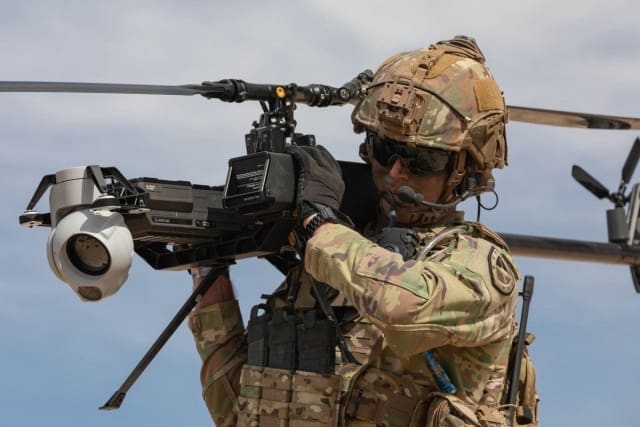
The DamoclesTM loitering munition, equipped with Textron Systems’ advanced GEN2 Explosively Formed Penetrator (EFP), is a cutting-edge system designed to deliver decisive lethality in peer warfare environments. For the LASSO program, the Damocles system is integrated with a vertical take-off and landing (VTOL) uncrewed aircraft system (UAS) to deliver top-attack capability. In the VTOL configuration, no launch or recovery equipment is required.

The Damocles system is built with a modular open systems approach (MOSA), allowing other payloads to be integrated into the system to support various concepts of operation (CONOPS), such as electronic warfare effects. For operational safety, the system includes features to prevent unexploded ordnance (UXO), reducing the risk of hazardous remnants on the battlefield.

“Loitering munitions technology will be key in protecting the warfighter on the battlefield – they allow warfighters to send systems like Damocles beyond-line-of-sight (BLOS) to engage a target from a safer standoff distance,” said Henry Finneral, Senior Vice President, Weapon Systems. “Textron Systems is proud to support this mission and leverage our industry-leading EFP technology to provide next-generation capability at speed and at scale.”

Eyes on the Horizon: Honing Counter Drone Skills in Eastern Europe

Friday, February 27th, 2026

Download the full document here: No. 26-1120, Eyes on the Horizon: Honing Counter Drone Skills in Eastern Europe (Feb 26) [PDF – 2.9 MB]

“In a situation where seconds determine survival, C-sUAS training isn’t just preparation, it’s a measurement of readiness. We must be ready to counter the evolving threat of unmanned systems…to dominate the skies.”

– 173rd IBCT (A) UAS subject matter expert.

Introduction

Observations from the Russia-Ukraine War have revealed emergent tactics, techniques, and procedures (TTPs) in the employment of small-unmanned aircraft systems (sUAS), which have proliferated across the battle space. Russian sUAS have become a significant and persistent factor in protection considerations for Eastern European nations, particularly bordering Ukraine. The rapid employment of sUAS compresses the decision-making cycle to mere seconds, rendering traditional centralized air defense approval processes ineffective at the tactical edge. Consequently, the training environment in future U.S. Army Europe and Africa exercises must replicate the compressed decision cycles and complex threat environments seen in Eastern Europe, ensuring tactical leaders have both the tools and the authority to act decisively.




Numerous drone incursions from the Russia-Ukraine War have spilled over into neighboring countries. These incursions have heightened concerns over unexploded ordnance (UXO), particularly in Moldova’s southern regions: Cahul, L?pu?na, and Tighina which are near the Ukraine border. UXO threats in these regions raise concerns about public safety and regional security. These challenges and concerns are not unique to Moldova but are prevalent across NATO’s Eastern Flank Deterrence Line, underscoring the need for enhanced counter small-unmanned aircraft systems (C-sUAS) capabilities and regional collaboration. This publication provides insights on how U.S. Army Europe and Africa (USAREUR-AF) units plan and execute C-sUAS training along with lessons learned from exercise Fire Shield ’25 executed in Moldova in August 2025.

Background

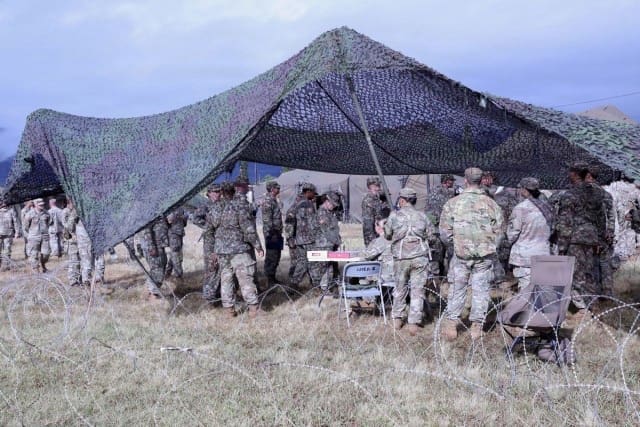
USAREUR-AF leadership plans to conduct C-sUAS activities in exercises to build readiness with subordinate units, integrate emergent technologies, and exchange best practices with Allies and partners. However, host nation legal frameworks governing radio frequency (RF) jamming often constrain full replication of real-world, non-kinetic defeat operations across many established training areas in Western Europe during peace time. Partner nations, like Moldova, that formerly belonged to the U.S.S.R., are optimum locations to conduct C-sUAS training because of drone incursion threats that bleed over from the Russia-Ukraine War. These threats have created a regulatory environment that allows C-sUAS equipment to operate and a host nation appetite for electronic warfare (EW) focused training. As a result, the 173rd Infantry Brigade Combat Team (Airborne) partnered with the 2nd Moldovan Brigade to conduct C-sUAS training as part of the Moldovan annual exercise Fire Shield ‘25 from 4-14 August 2025 at the Bulboaca Training Area in Moldova.

By CPT Madison Fuentes, CPT Saundra Johnson, Scott Safer, Samuel Flaming

JIATF-401 Supports JTF-NCR’s C-sUAS Threat Simulation Exercise

Thursday, February 26th, 2026

JOINT BASE MYER-HENDERSON HALL, Va. — Joint Inter-Agency Task Force – 401 participated in a multi-day Counter-Small Unmanned Aircraft Systems Threat Simulation Exercise this week, designed to test and evaluate cutting-edge technologies aimed at protecting the National Capital Region. The exercise was a collaborative effort involving the base defense forces of Joint Base Myer-Henderson Hall and key leaders from the Joint Task Force – National Capital Region, Combat Capabilities Development Command and the U.S. Army Military District of Washington. The Director of JIATF-401, Brig. Gen. Matt Ross, visited the exercise on February 18 and praised the team’s efforts to test and train our forces on cutting edge counter drone technology.

“The threats we face are constantly evolving, and exercises like this are critical to ensuring we stay ahead of our adversaries,” stated Ross. “Seeing these dedicated teams and advanced technologies in action gives me great confidence in our ability to defend the vital assets within the National Capital Region. This is innovation and collaboration at its finest.”

The exercise involved the execution of dozens of simulated sUAS incidents, utilizing various drone types to test eleven different sensor systems and three mitigation devices. These scenarios, run during both day and night, were designed to replicate real-world threats and enhance the readiness of regional security forces.

A key focus of the event was the interoperability between different agencies and the seamless integration of their technologies. The data collected will be instrumental in refining the multi-layered defense strategy for the NCR.

Col. Brian Reynolds, provost marshal of Joint Task Force – National Capital Region, emphasized the importance of the joint effort. “This training is about more than just technology; it’s about people and partnerships,” said Reynolds. “By bringing together interagency, federal, state and local law enforcement, we are building a unified and coordinated defense. The interoperability we are honing this week ensures that we can act as a cohesive team to detect, track and mitigate any potential aerial threat. Every agency brings a unique capability to the fight, and together, we create a formidable domestic shield for installations in the homeland.”

JIATF-401 and its partners remain committed to continuous innovation, joint force training, and the rapid delivery of state-of-the-art c-UAS capability our warfighters need to defend the homeland.

By LTC Adam Scher

Army Doctrine Writers Embrace AI to Speed Knowledge to the Force

Wednesday, February 25th, 2026

FORT LEAVENWORTH, Kan. – The process of writing Army doctrine, traditionally measured in years, is getting a 21st-century upgrade. Thanks to digital tools, some enabled by artificial intelligence, authors at the Combined Arms Doctrine Directorate are examining processes and gaining efficiencies without sacrificing their high standards for quality and precision.

“We have had people ask us about using AI and large language models to speed up the doctrine development process for years,” said CADD Director Richard Creed, Jr. “So, when some of these tools became available the first thing we did was figure out their capabilities. That meant that we needed to identify people on our team with some AI experience from using civilian applications who could help us figure out what was possible.”

Two officers, Lt. Col. Scott McMahan, a doctrine writer in the Operational Level Doctrine Division, and Maj. Matthew Martinez, CADD’s Information Management Officer, took leaders’ guidance and developed a four-pronged strategy to equip every doctrine writer with the skills and tools necessary to leverage AI effectively. The strategy began with foundational training for all CADD members, allowing them to apply approved AI tools to their work immediately.

To foster expertise, the plan also calls for training a “master gunner,” someone highly qualified in using AI tools, within each doctrine division. These experts can then help their teams tackle more difficult challenges and find advanced applications for the technology. Furthering the integration, AI best practices are being formally incorporated into the Doctrine Developer’s Course, ensuring future writers are introduced to these techniques from the start.

Finally, CADD leaders are working with the Combined Arms Command and industry partners to build a purpose-made AI tool. This new software will be designed for all Army doctrine writers, but it will be especially helpful to authors at the Centers of Excellence, where personnel and time are often scarce.

According to McMahan, the answer is not in “letting AI write the books” that guide the force. Instead, it is about providing human experts with powerful new assistants. “You treat it like a resourceful and motivated young officer who might not know all the information, but they can certainly assist you in cutting some corners and being a little more efficient,” he said. “The bottom line is that eventually it should, even if you’re just shaving at the margins, it’s going to speed up the time when doctrine will reach Soldiers in the field.”

Creed said his guidance was always to treat technology as a tool, not a panacea. “Because we have such good people, I expected that we would stay abreast of developments and be ready when the tools were ready,” he said. “They came up with an approach that would make one person in each doctrine division an AI subject matter expert while training everyone else in the basic use of AI for tasks related to their job. It was no different than ensuring all Soldiers are combat lifesavers while assigning an actual medic to each platoon.”

So far, changes have been small, but those small changes add up when looking at multiple individual and project tasks. One example is an internally developed tool that gives writers the ability to quickly search in hundreds of texts for historical vignettes that illustrate a complex doctrinal point. This task could once have taken days of research, especially for a new doctrine author.

“The large language model tools under development now have access to the databases we needed access to in the past. Access to the data is the foundational measure of whether the tools are useful to us. We tip our hats to those who figured out how to do that,” said Creed.

Another use of AI is something McMahan calls “breaking the blank page.” The tool can help writers get through creative blocks and generate ideas. “We were looking for some more meat for an idea,” he said. “We were able to feed this tool some initial thoughts, and of the three paragraphs it spit out, one sentence was used, but that was a really powerful and useful sentence.”

Blending technology and in-house experience is reducing administrative burdens for doctrine authors and staff in several ways. For instance, digital tools that assist with grammar and readability free authors to focus on the complex aspects of their work, which in turn saves valuable time for CADD’s high-demand editors. This efficiency extends beyond writing, as leaders have improved the publications tracking process with automated forms and use of Power Business Intelligence, and individuals are creating their own self-study tools to prepare for internal certification.

McMahan recognizes the technology is not perfect, but notes that it is improving over time. He said that AI models can “hallucinate” by inventing facts or confuse source materials when asked a question. These are critical flaws in a field where accuracy is paramount. In one case, an AI-generated question for a doctrine test was based on an outdated manual, an error that was only caught because the user creating the test was an expert on the topic.

Situations like this drive home why subject matter expertise is paramount. “We made it perfectly clear that AI tools were not intended to be a crutch for not doing the work we expect from our people,” Creed said. “Humans will review every line of what an LLM produces for accuracy. To make sure that happens one must make sure your people know their business.”

To learn more about Army doctrine and the Combined Arms Doctrine Directorate visit the Combined Arms Command’s website.

By Randi Stenson, MCCoE Public Affairs

Robotic Systems Transform Chemical Defense Training, Enhance Capabilities

Tuesday, February 24th, 2026

FORT LEONARD WOOD, Mo. — While man transportable robotic systems, MTRS, aren’t new to the U.S. Army, the way instructors at the Maneuver Support Center of Excellence’s Chemical Defense Training Facility, CDTF, are incorporating the robots into training is transforming the way chemical Soldiers perform site exploration.

According to Master Sgt. Rolando Silguero, CDTF noncommissioned officer in charge, the facility began a three-phase integration process of the man transportable robotic system in the summer of 2025 to professional military education curriculum, specifically the CBRN Senior Leader and Captains Career Courses.

“The primary focus is to include operating procedures as well as tactics, techniques and procedures during actual exploitation operations,” Silguero said.

Soldiers are learning to use the MTRS by remotely deploying it on a fixed site target to detect, identify and in some applications neutralize, weapons of mass destruction materials from a safe distance.

“The MTRS offers stand-off protection to minimize risk to personnel and can carry multiple payloads for detection, including systems for live video and still photography,” Silguero said, and these skills will “increase Soldiers’ lethality and speed in complex, multi-domain operational environments.”

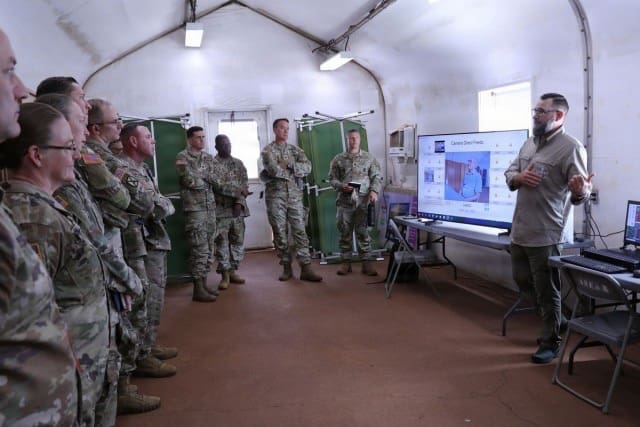
During training on Feb. 4, senior leader course students gathered around a monitor to watch the MTRS make its way through another part of the building. The Soldiers pointed out items as they identified them and noted key information they were gathering via the robot’s camera.

Sgt. 1st Class Dean Barney, CBRN SLC senior small group leader, said his students used the information to create a site sketch to visually organize and consolidate information reported by the MTRS.

“The sketch translates raw observations, such as hazard location, potential contamination and contamination spread, into a clear operation picture that leaders can quickly understand and act on,” Barney said. “This will support faster decision making, accurate reporting and effective follow-on actions, such as isolation, decontamination, maneuver and medical response in a CRBN environment where time and clarity directly impact mission success and troop survival.”

Barney said he was impressed with how his students seamlessly integrated the MTRS into their training.

“It’s a testament to their ingenuity, critical thinking skills and resilience as noncommissioned officers,” Barney said. “Their willingness to learn, problem-solve and push beyond their comfort zones reflects the kind of leadership today’s Army needs.”

According to Silguero, the CDTF has plans to make MTRS training available to other U.S. operational units training at the facility.

“As the global leader in live chemical agent warfare training, the CDTF is committed to the cutting edge of training realism by providing the highest quality, most immersive and exceptionally challenging training capability replicated nowhere else in the world,” Silguero said.

By Melissa Buckley, Fort Leonard Wood Public Affairs Office

Army Announces Winners of the Inaugural Best Drone Warfighter Competition

Monday, February 23rd, 2026

FORT RUCKER, Ala. – The U.S. Army today announced the winners of the inaugural Best Drone Warfighter Competition, a three?day event held on February 17-19 that brought together elite drone operators from across the active duty, reserve, and National Guard components.

The competition was hosted by the Army Aviation Center of Excellence and the Maneuver Center of Excellence, in Huntsville, Alabama, sponsored by the Army Aviation Association of America (AAAA) in partnership with the University of Alabama Huntsville. The event drew over 200 competitors and more than 800 attendees, showcasing the Army’s most skilled small?UAS operators. Participants competed in three distinct challenges designed to test speed, precision, teamwork, and creativity in small UAS employment: a high speed drone race, a tactical squad lane, and an innovation showcase, highlighting the Army’s commitment to integrating advanced unmanned aerial systems at every echelon of the force.

Winners of the 2026 Best Drone Warfighter Competition are:

• Best Drone Operator: Sgt. Javon Purcher, 1st Cavalry Division, Fort Hood, Texas

• Best Tactical Squad: Staff Sgt. Angel Caliz and Spc. Jonah Burks, 2nd Cavalry Regiment, Vilseck, Germany

• Best Innovation: 1st Lt. Ryan Giallonardo, Chief Warrant Officer 3 Robert Reed, Chief Warrant Officer 2 Nathan Shea and Sgt. 1st Class Brent Wehr, 28th Infantry Division, Pennsylvania Army National Guard

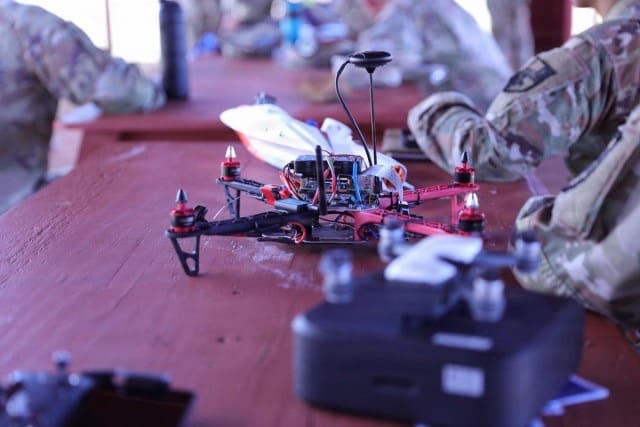
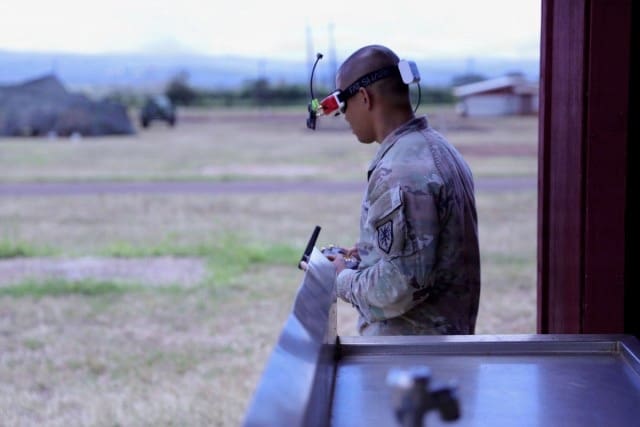
Competitors raced Neros Archer FPV drones through a complex, obstacle course; executed cross?country hunter-killer missions in paired teams to identify and neutralize targets; and showcased Soldier designed technologies in front of a panel of experts aimed at improving survivability, lethality, and battlefield adaptability.

Beyond identifying top performers, the competition demonstrated how rapidly the Army’s unmanned capabilities are advancing. The event reinforced the service’s focus on developing operators who can excel in contested environments and contribute to combat formations that are more lethal, agile, and technologically integrated.

The Best Drone Warfighter Competition aligns with the Army’s broader modernization priorities, underscoring the role of advanced unmanned systems in strengthening readiness and preparing Soldiers for the demands of future conflicts.

For additional imagery and media, go to www.dvidshub.net/feature/USArmyBDWC

By LTC Vonnie Wright

Pennsylvania Guard Soldiers Strengthen AI, Critical Thinking Skills

Sunday, February 22nd, 2026

FORT INDIANTOWN GAP, Pa. — Pennsylvania National Guard Soldiers and civilian employees participated in an Artificial Intelligence 201 course Feb. 11–12.

The course, taught by U.S. Army War College faculty, aimed to prepare leaders to responsibly integrate artificial intelligence into military decision-making while reinforcing critical thinking and mission command principles.

“A lot of people find it very scary, and just like with any new technology, we should be cautious,” said Lt. Col. Kelly Ihme, an assistant professor at the U.S. Army War College and one of the course’s instructors. “Trust but verify. But this is a computer program. It’s predictive math.”

AI 101 introduces Soldiers to the basics of AI, including how to use and understand it, while AI 201 focuses on critical thinking and effective AI prompting.

“At the War College, we’re starting to develop that type of course,” Ihme said. “It’s more about, how do we think about problems? And then where does AI get inserted into those problem sets? So that we’re never taking the human out of the loop, but we’re stepping up the critical thinking and really engaging critical skills questions on AI and where it fits.”

The students found the classes useful and knowledgeable, even wanting to attend more in the future.

“If they had another AI class, I would go again,” said Maj. Maria Myers, logistics branch chief at Joint Force Headquarters. “I would even do this exact same level again, just for repetition and to make sure that I’m still using it correctly, because I do plan to try to implement it in a couple of ways already that they had mentioned.”

Ihme said the 201 course pushes students to dig deeper than the nuts and bolts of AI. The class encourages them to approach AI with a leadership mindset.

“It’s a mission command skill. And if you’re not using AI with some of those mission command ideals in mind, you’re going to get icky outputs or less efficient outputs, and then you’re going to put AI aside,” said Ihme. “You’re not going to throw a private aside and tell them they’re an ineffective private because you didn’t provide them the leadership they needed to succeed. It’s the same with AI.”

Myers said that while she believes AI should be used with caution, it remains a helpful tool for saving time. But, she emphasized that users need to understand how to properly use and prompt AI before utilizing it for work.

“I’m sure some people will think it’s a pain, and there will be people that are against it, because it’s different,” Myers said. “But I think that this class and the level it goes into is a good introductory class because you need to have the knowledge and the understanding and the information from the human aspect to get the appropriate answer.”

The Pennsylvania National Guard is hoping to expand these classes in an effort to have Fort Indiantown Gap become an AI center of excellence, Imhe said. Ihme said she is ready for the next step of AI in the Army.

“Let’s keep providing classes like this, both foundational and thinking classes, so that we can figure out, not just that we’re playing with AI, but that we’re taking the next leap of using AI to propel us forward,” Ihme said.

By SGT Kayden Bedwell

Army Transforms Acquisition Process to Enhance Ammunition Support for Warfighters

Friday, February 20th, 2026

PICATINNY ARSENAL, N.J. – The U.S. Army has established the Portfolio Acquisition Executive for Agile Sustainment and Ammunition, PAE AS&A, at Picatinny Arsenal under the command of Maj. Gen. John T. Reim. The move is a key part of broader Continuous Transformation efforts intended to increase efficiency and accelerate the delivery of critical capabilities to the warfighter.

The new organization was activated at a ceremony held on January 20 at Picatinny Arsenal where several thousand team members from all involved organizations were introduced to the new command. The Assistant Secretary of the Army for Acquisition, Logistics and Technology, the Honorable Brent Ingraham, presided over the ceremony and spoke to the significance of the new organization as a key part of the Army’s Acquisition reform initiative.

Following the ceremony, Ingraham witnessed a live demonstration featuring the Purpose Built Attritable System and a TRV-150 drone dropping smoke and a M69 training grenade onto a target simulating a small group of enemy Soldiers with a vehicle. This showed off one of DEVCOM’s latest innovations, the Picatinny Common Lethality Integration Kit or Picatinny CLIK. These are just a few of the of lethal UAS and counter-UAS technologies being developed by U.S. Army Combat Capabilities Development Command Armaments Center. The DEVCOM Armaments Center now serves as the Systems Center, a key enabler, of the PAE AS&A.

Subject matter experts from the PAE AS&A and DEVCOM Armaments Center then also briefed Ingraham on other lethal UAS, counter-UAS munitions, advanced artillery, next-gen energetics, expeditionary logistics and supply chain enabling systems that are the result of joint efforts of the two Picatinny based organizations.

“This marks a significant milestone in our journey to modernize Army Acquisition,” Ingraham said as he addressed the audience. “We are combining the capabilities of the Joint Program Executive Office for Armaments and Ammunition with critical combat logistic capabilities from PEO Combat Support and Combat Support Services to ensure fully capability alignment under our new structure.”

“Today we turn the page to an exciting new chapter in Army Acquisition,” Ingraham continued. “Every role in the organization plays an invaluable part in this journey. Cross organization engagement and agility are essential in ensuring the success of this transition. The future of Army Acquisition is bright and PAE AS&A is poised to lead the way.”

Ingraham’s visit underscored the installation’s vital role the various commands at Picatinny Arsenal play in maintaining readiness — delivering the capabilities, expertise, and innovation that ensures our Warfighters and allies are equipped to succeed in any environment.

“As we embark on this journey, we align our actions with the strategic guidance provided by our leadership including the President of the United States, the Secretary of War, the Secretary of the Army and the Chief of Staff of the Army,” said Reim who followed Ingraham. “This initiative is not merely a restructuring of our acquisition processes. It is a fundamental rethinking of how we approach the delivery of capabilities to our Soldiers, our joint warfighters, and our international partners.”

Legacies of Excellence

The Army is fundamentally restructuring its acquisition process to prioritize speed and efficiency over traditional approaches. As part of this initiative, the Army is establishing six Portfolio Acquisition Executives with increased focus on capabilities over specific programs.

The transformation includes the integration of the former Program Executive Office Combat Support and Combat Service Support, PEO CS&CSS, into the Capability Program Executive for Combat Logistics, CPE CL, led by Brig. Gen. Camilla White. PEO CS&CSS brings an unmatched history of logistics and sustainment support to the new CPE CL. It encompasses more than 200 programs spanning the Army’s transportation, ordnance, quartermaster, engineer, and training equipment portfolios.

As the CPE CL, it will continue to develop and deliver modernized tactical wheeled vehicles, engineering equipment, watercraft, power generation systems, and other force sustainment capabilities to Army, Joint, and global partners.

At the same time, the Joint Program Executive Office for Armaments and Ammunition, JPEO A&A, will realign into the Capability Program Executive for Ammunition & Energetics, CPE A&E, led by Col. Jason Bohannon. JPEO A&A has consistently delivered innovative acquisition solutions to provide Joint Warfighters and allied partners with overmatch capabilities. The JPEO was comprised of four project offices covering Combat Ammunition Systems, Close Combat Systems, Maneuver Ammunition Systems and Joint Services.

As the CPE A&E, it retains responsibility for life-cycle acquisition management of all conventional ammunition, which includes integrating budgets, acquisition strategies, research and development and life-cycle management across all ammunition families.

CPE CL will be headquartered at Detroit Arsenal, Michigan, while CPE A&E will remain at Picatinny Arsenal. Unlike the previous Program Executive Offices, each PAE will have comprehensive responsibilities and accountability for managing the full spectrum of acquisition activities, including requirements development, technology maturation, product development, testing, contracting, fielding, sustainment, and international sales. This flattened acquisition system empowers PAEs to make timely, risk-based decisions and accelerates capability delivery to Warfighters through problem-focused requirements, smarter contracts, informed risks, and faster pivots.

“This restructure achieves unity of command by establishing and empowering PAE AS&A with the full authority to direct research and development, prototyping, testing, production, and sustainment,” said Reim. “By prioritizing outcomes over processes, this new construct empowers us to award contracts faster by cutting through bureaucracy. Overall, this approach unburdens the acquisition enterprise and allows us to deliver warfighting capabilities at speed and scale.”

Accelerating Ammunition Acquisitions

Under the leadership of Maj. Gen. Reim, PAE AS&A will oversee an entire capability area including all conventional ammunition requirements including direct and indirect fire ammunition, close combat systems, explosives, and pyrotechnics, in addition to logistics, fielding, and sustainment. PAE AS&A will have oversight of the organic munition production facilities.

Maj. Gen. Sean Davis will serve as the new Deputy Portfolio Acquisition Executive adding the sustainment capabilities of the Army’s Combined Arms Support Command, CASCOM to PAE AS&A. CASCOM trains and develops adaptive Sustainment professionals for the total force while integrating innovative Army and Joint Sustainment capabilities, concepts and doctrine to sustain large scale combat operations in a multi-domain operations environment. It is also a part of Transformation and Training Command and is located at Fort Lee, Virginia. PAE AS&A is committed to supporting the warfighter through an innovative approach to ammunition acquisition and sustainment that leverages existing authorities to deliver tangible benefits, including accelerated capability delivery, smarter contracts, and informed risk management.

In addition to the two new CPEs, PAE AS&A will oversee multiple acquisition enablers including senior contracting officials, a test and evaluation integrator, the Sustainment Future Capability Directorate and the system center lead overseeing coordination among Army Combat Capabilities Development Command Centers. The PAE AS&A System Center Lead is Chris J. Grassano, the firector of the DEVCOM Armaments Center. The new structure will enable holistic management of conventional ammunition development, production and sustainment under a single command resulting in increased efficiencies and accelerated delivery of lethality aligned with the emerging Army Warfighting Concept.

Looking Ahead

In conjunction with this reform, the Army is investing $1.1 billion per year to overhaul depots, arsenals, and ammunition plants that produce and sustain Army equipment. This commitment will not only modernize facilities but also strengthen the defense supply chain and create jobs.

For industry partners, these reforms will mean faster contracts, clearer points of entry, and fewer bureaucratic hurdles. Soldiers will benefit from receiving new capabilities, such as drones, long-range fires, and next-generation command and control systems, years faster than before.

By Michael Chambers and Eric Kowal