GORE-TEX Professional

Archive for the ‘Army’ Category

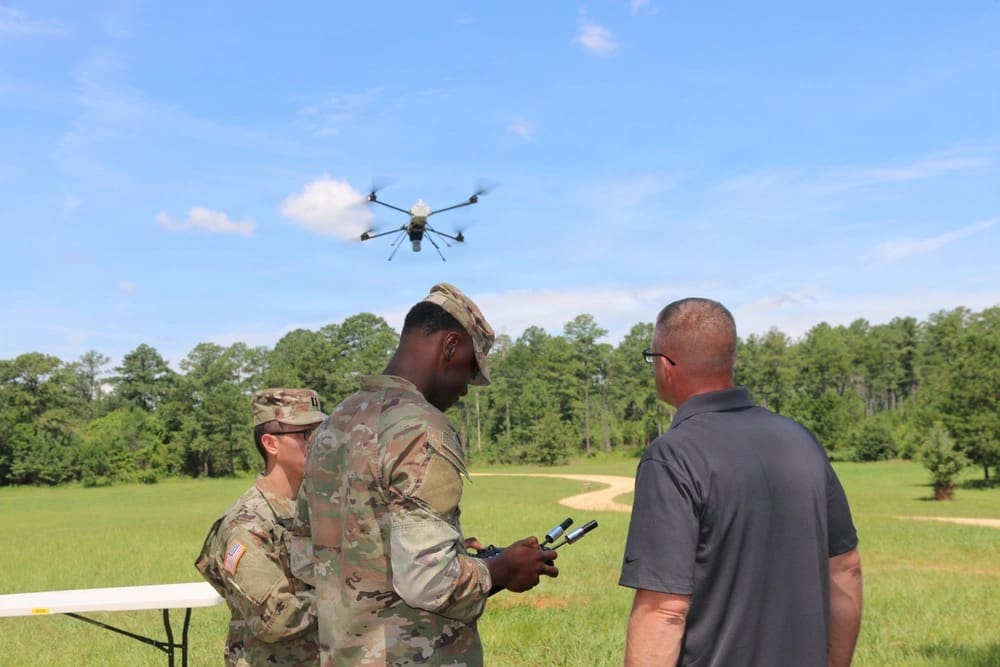
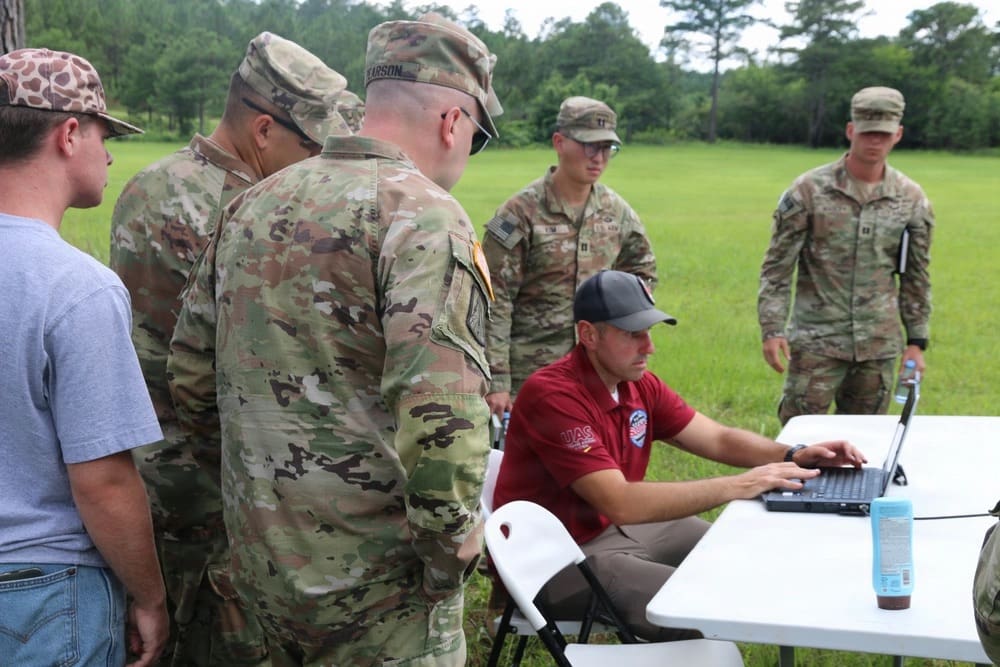
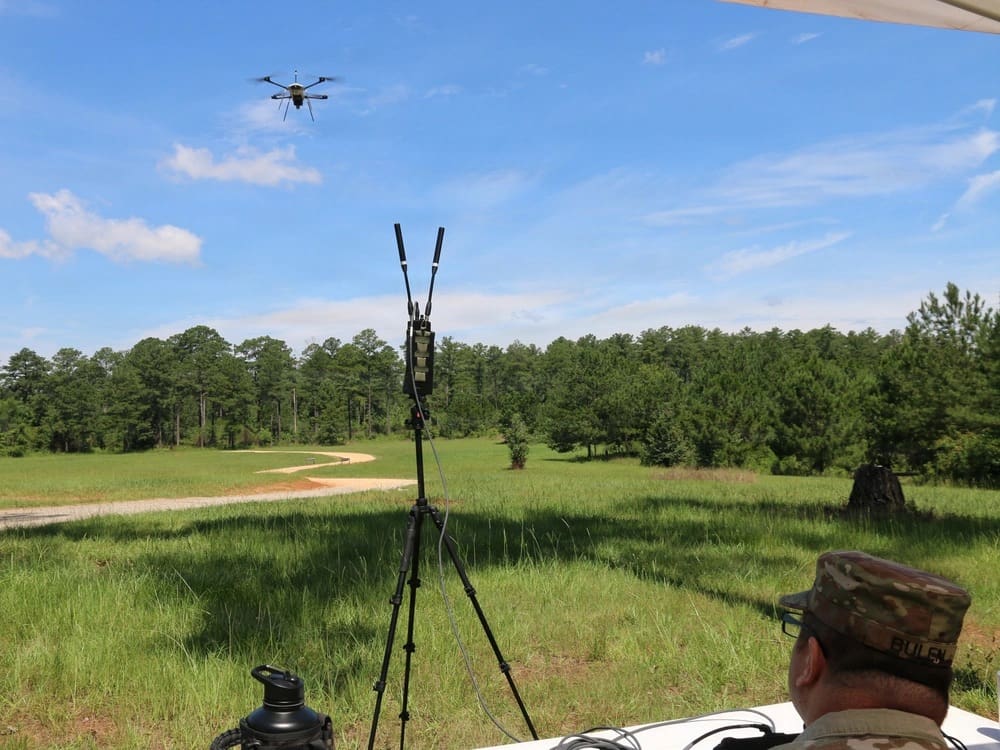
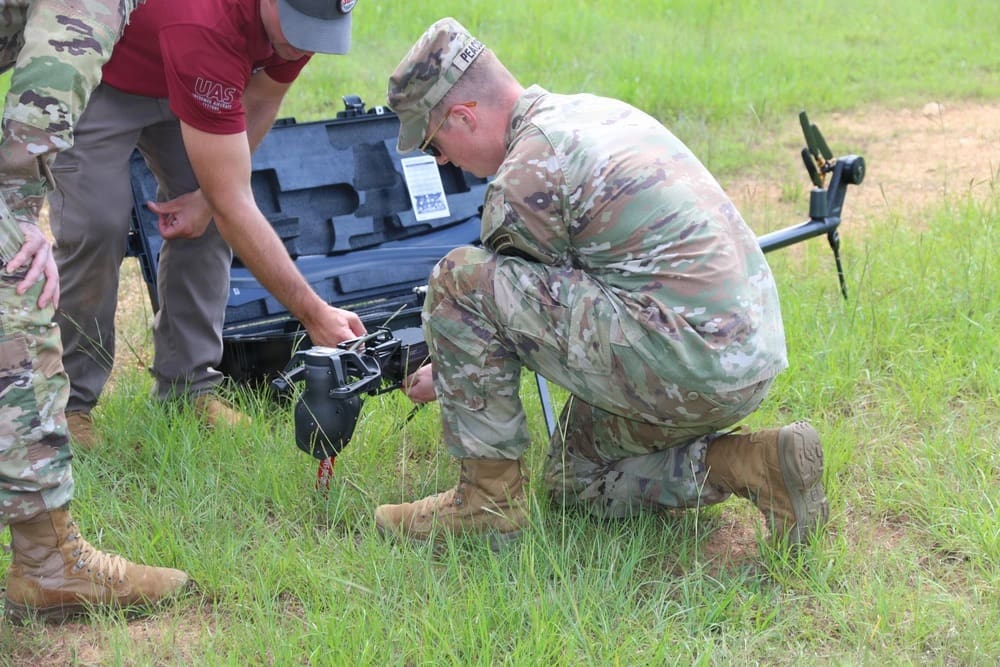
Fort Benning Integrates Virtual Drone Training into OSUT Program of Instruction

Thursday, February 19th, 2026

FORT BENNING, Ga. — As small unmanned aircraft systems, sUAS, become a defining feature of the modern battlefield, the Maneuver Center of Excellence is ensuring every new Soldier has a high-tech edge.

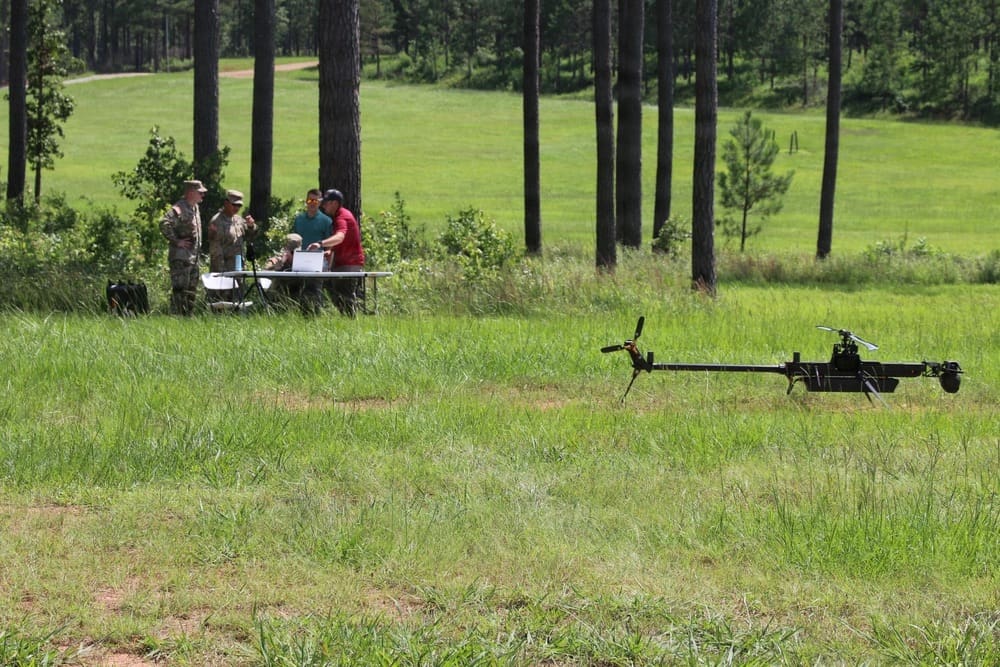
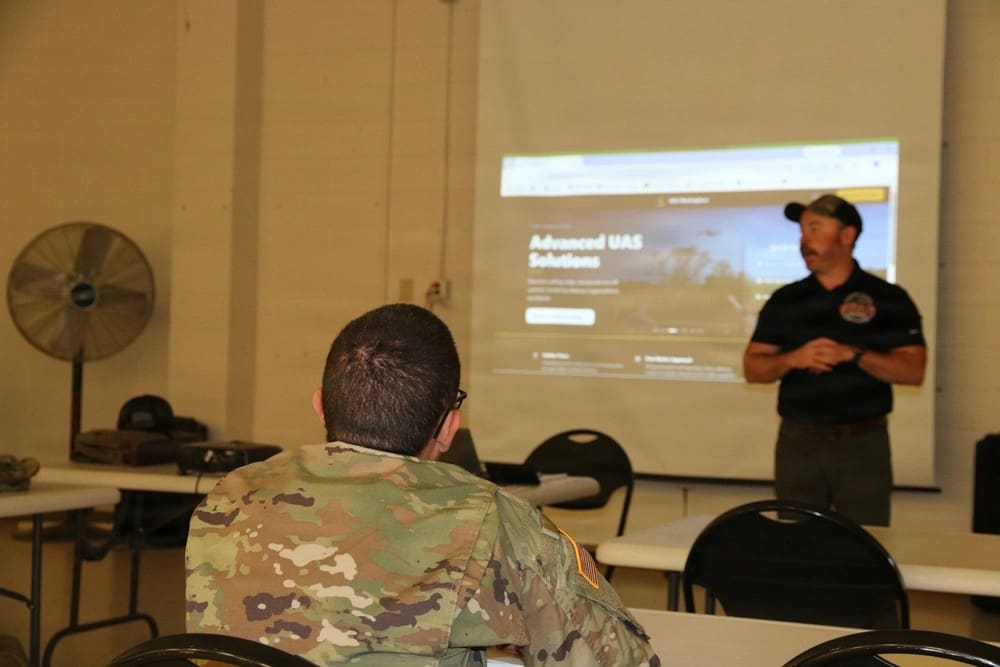
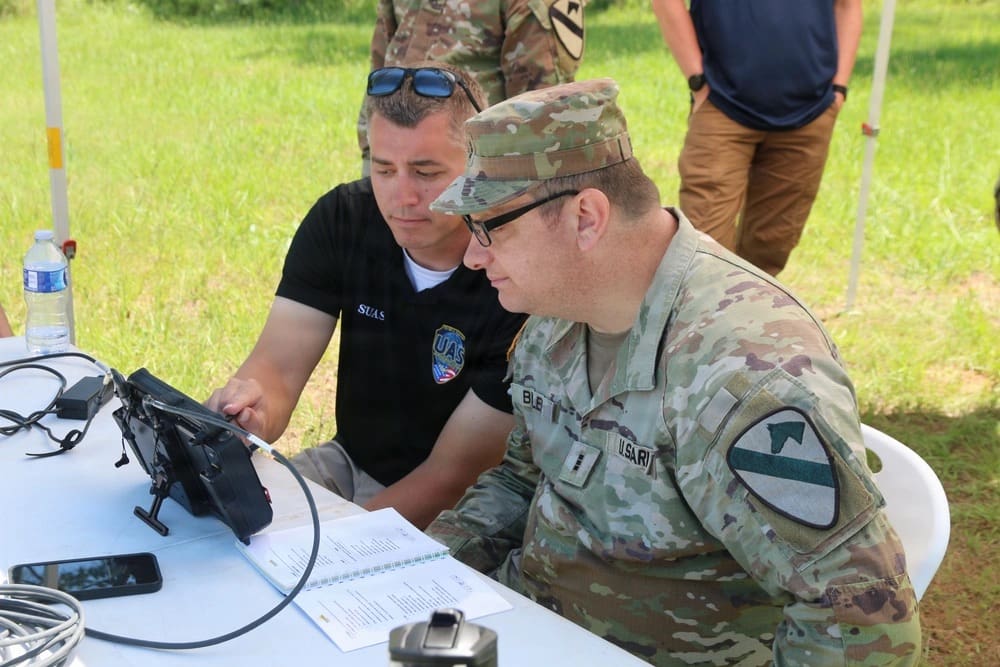
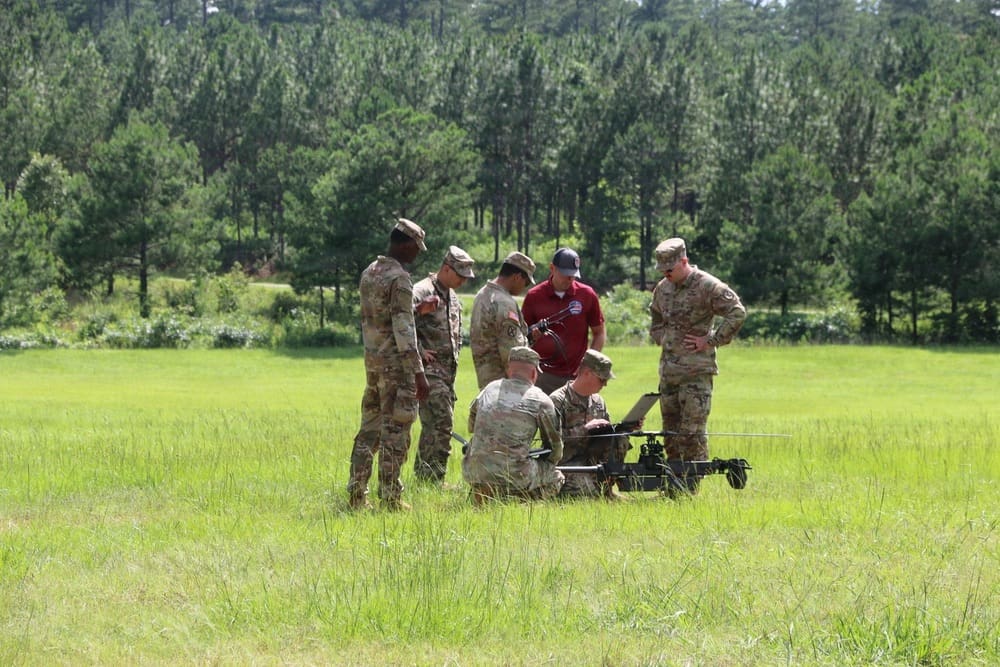
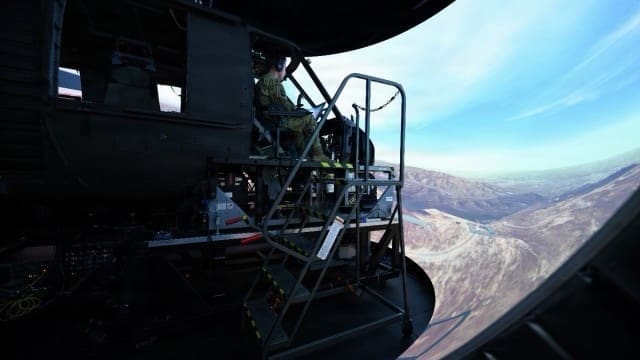
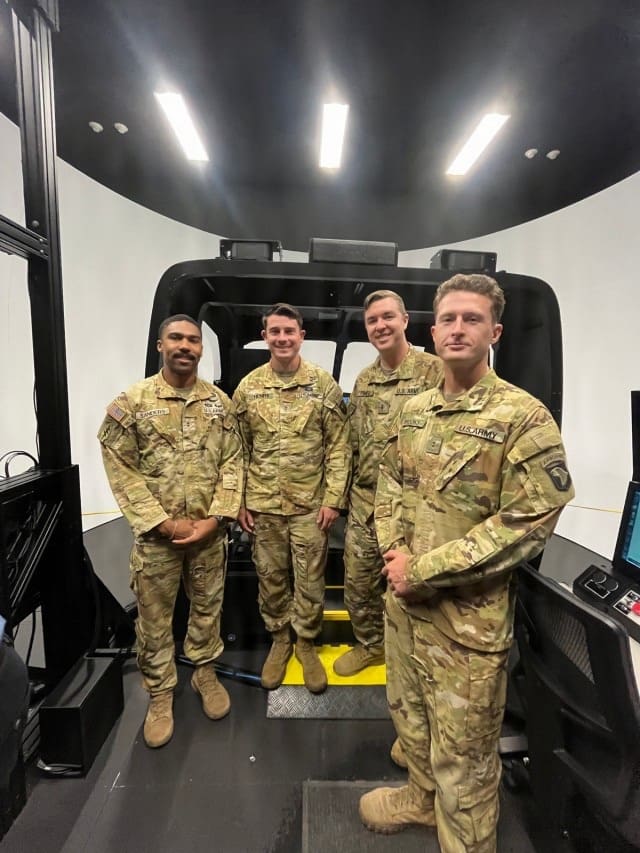
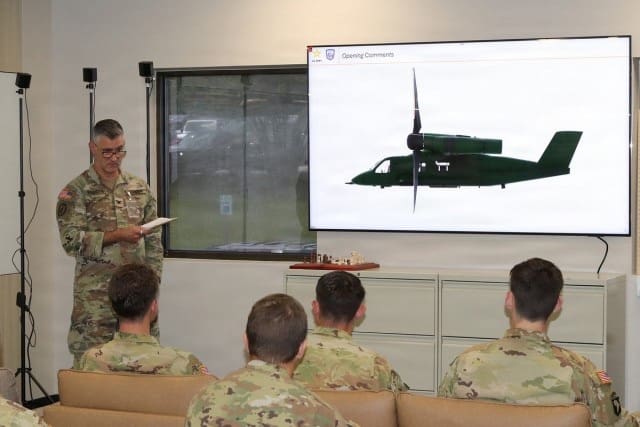
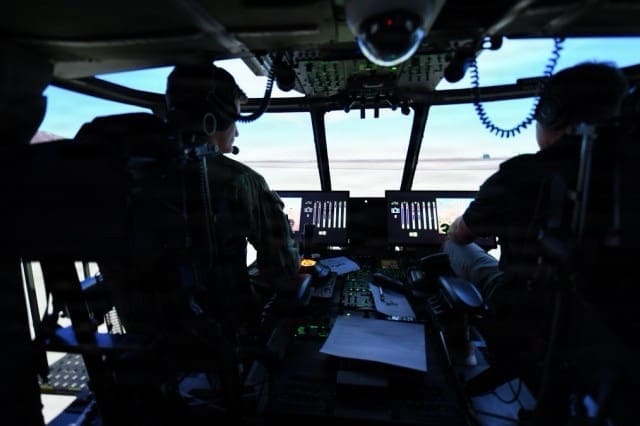
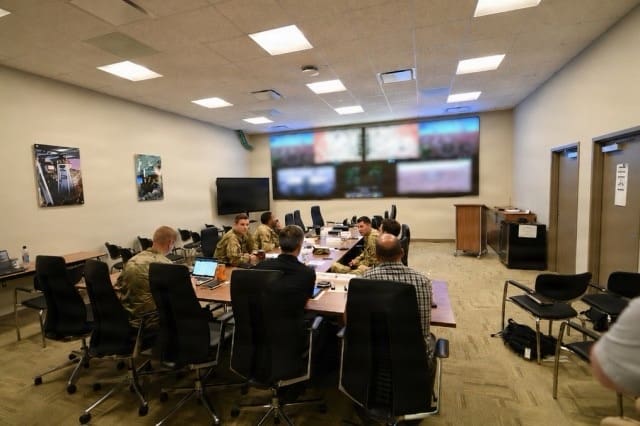
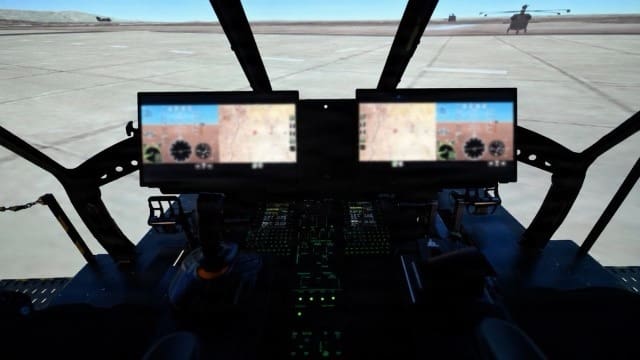
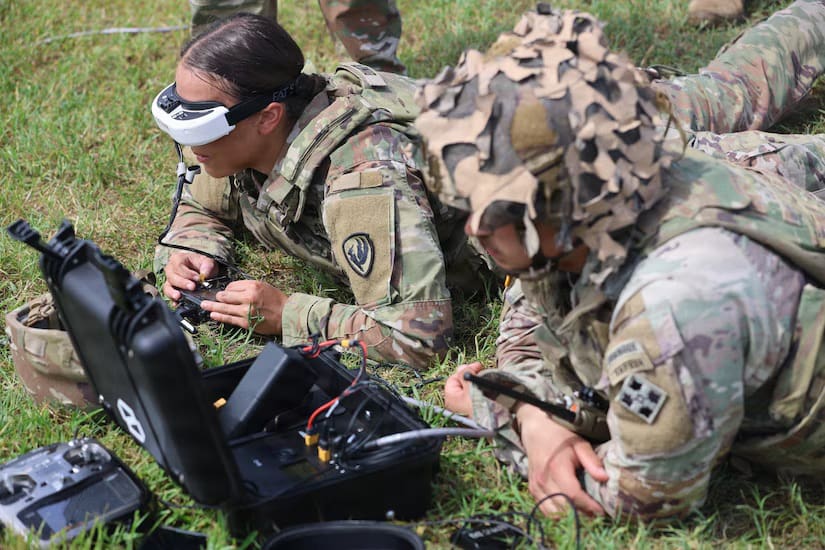
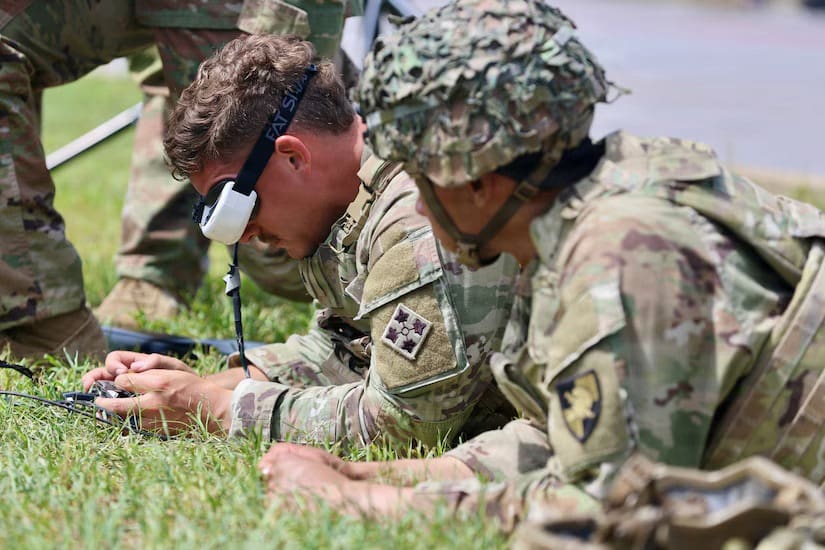
One-Station Unit Training trainees are now undergoing a 10-hour sUAS familiarization course integrated into their formal program of instruction. Using Virtual Battle Space 4 software and the Virtual Drone Collective Trainer plug-in, Infantry and Armor trainees master flight mechanics before stepping onto a live flight line.

The 12-lane curriculum, modeled after the 75th Ranger Regiment’s Ranger Robotics Lethality Course, is designed to take a Soldier from basic “buttonology” — learning the controller interface — to advanced tactical reconnaissance and lethal kinetic strikes.

“The Army has always used simulation-based training to reduce noise, training costs, and wear and tear on equipment and resources,” said Jayson D. Karch, a training specialist with the Maneuver Center of Excellence Directorate of Training and Doctrine. “This enables Soldiers from across the Army to receive immersive, life-like, low-cost training on equipment they have minimal experience operating, without risk of damage to equipment, personnel, or resources.”


The move toward simulation-based training addresses the logistical challenge of training thousands of Soldiers annually. By using the Virtual Drone Collective Trainer software plug-in, developed by the Combined Arms Center-Training Innovation Facility at Fort Leavenworth, Kansas, the Army can provide immersive training at scale.

“While live flight is an important and vital portion of certifying an sUAS operator, new operators use simulations to build basic skills without all the resources required for live flight,” said Rory O’Brien, an MCoE simulation specialist. “Given the number of Soldiers trained in Infantry and Armor OSUT, there aren’t enough resources to allow every Soldier to fly a live sUAS, so virtual simulations allow us to train the skills at scale using less resources.”

The training is divided into three distinct phases: flight training, basic tactical training and a culminating assessment. During the tactical phase, trainees use night vision, thermal, and infrared cameras to identify enemy personnel and vehicles before conducting simulated drone strikes.

The Army’s goal is not to turn every Soldier into a certified pilot, but to ensure every Soldier is familiar with a combat enabler they will encounter in future formations. The simulation also serves as a talent-scouting tool; trainees who demonstrate above-average proficiency are considered for the formal sUAS Operators Course following graduation.

The MCoE plans to publish these training lanes on the milGaming website, allowing units across the force to download and utilize the same scenarios for home-station training.

The integration of sUAS training into OSUT represents a fundamental shift in how the Army prepares for the modern, transparent battlefield. By prioritizing digital literacy and technological proficiency from day one, the MCoE is ensuring that the next generation of Infantry and Armor Soldiers is not just keeping pace with change but driving it. As these Soldiers transition to the operational force, they provide a ready, lethal, and tech-capable backbone for the multidomain formations of tomorrow.

View more photos of the virtual sUAS training.

By CPT Stephanie Snyder

SEAM: Modern Gear Management Personalized for You

Tuesday, February 17th, 2026

DETROIT ARSENAL, Mich. — A Soldier’s strength is built on more than courage and rigorous training — it’s also in the gear worn on their bodies, stowed in their rucksacks and carried into conflict.

Diligent equipment management has always been a cornerstone of readiness. As the nature of warfare rapidly evolves, the U.S. Army is launching a powerful tool that will transform how today’s forces prepare for tomorrow’s fight, delivering the accuracy, agility and speed needed to succeed on the modern battlefield.

The Soldier Equipping and Asset Management System, or SEAM, represents a groundbreaking new era of organizational clothing and individual equipment, OCIE, management.

“SEAM puts OCIE control right where it belongs — in your hands,” said Command Sgt. Maj. Kofie B. Primus of the U.S. Army Tank-automotive and Armaments Command. “From managing [central issue facility] appointments to tracking OCIE to stay mission-ready, SEAM gives you an intuitive, tech-powered way to own every step of your equipment journey.”

The next generation of OCIE management

Militaries worldwide have long struggled with a universal challenge: how to track millions of items — from uniforms and helmets to weapons — assigned to thousands of soldiers, across thousands of sites, in constant motion.

SEAM offers a next-generation logistics solution. The digital, cloud-based platform centralizes and streamlines OCIE management across echelons in real-time, tracking individual pieces of equipment all the way down to the user level.

As the Army pursues greater lethality and readiness, SEAM supports informed decision-making, curtails waste and enhances both convenience and clarity — with the warfighter squarely in the driver’s seat.

Soldiers will be able to easily order and monitor their gear through SEAM’s common access card-enabled online portal. The site is similar to many popular online shopping platforms, with the ability to search for items, view item details, add items to a shopping cart, submit orders and view order status.

It even has photos of each piece of OCIE, so Soldiers can visually confirm their inventory.

Records in SEAM will remain accurate and up-to-date as Soldiers move between units and assignments. Legacy and end-of-life items that the Army has determined have no economic value can be automatically removed, and duplicate items flagged.

The SEAM portal also has a mechanism that lets Soldiers schedule appointments at central issue facilities, or CIFs.

“SEAM brings OCIE management into the digital age, giving Soldiers the power to browse, schedule and equip with confidence and control,” Primus said.

SEAM was designed specifically to enhance Soldiers’ OCIE experience. But perhaps its most impactful feature is what it offers commanders and other decision-makers: real-time readiness insight.

The platform is being integrated with existing Army information technology systems and incorporates data from human resources, logistics, training and readiness domains, providing the first truly holistic view of the Army’s vast OCIE enterprise. Leaders and logisticians will be better able to forecast future needs based on force demands.

TACOM, as the central manager of the OCIE enterprise, is leading the SEAM initiative.

When SEAM rolls out across the Army on Feb. 17, it will be accessible anytime, anywhere, through government-approved devices — even cell phones.

Why is SEAM revolutionary?

SEAM is replacing Installation Support Module-Central Issue Facility, ISM-CIF, the Army’s primary legacy system for OCIE management.

In use for the better part of two decades, ISM-CIF lacks modern OCIE direct ordering and asset-fielding capabilities. Its reliance on local records and non-integrated databases can lead to lapses in accountability.

SEAM was designed to eliminate those gaps at every stage, from the day OCIE is issued through end-of-lifecycle turn-in.

Unit leaders will be able to instantly see whether every Soldier is properly equipped. Soldiers will notice a smoother process for signing and validating records.

Under SEAM, OCIE guesswork evaporates.

“Every time a Soldier is issued gear, turns in gear, or has a change to the clothing record, he or she will be notified to validate the record,” said Chief Warrant Officer 4 Allen Flagg, CIF accountable property officer, Massachusetts Army National Guard.

Flagg noted a greatly improved process for dealing with obsolete items.

“If there is a recalled item, such as if an eye pro has been removed from the [Authorized Protective Eyewear] list, SEAM will notify the Soldier that the item should be disposed of, and a new request put into SEAM for an updated eye pro,” he said.

SEAM has a host of other advantages. It will enable the proactive fielding of equipment, ensure resources are positioned efficiently and simplify access to information about shortages and trends.

Unlike ISM-CIF, SEAM doesn’t use technical language that can be difficult to understand, said Ross Pursifull, SEAM mission lead at TACOM’s Integrated Logistics Support Center. Pursifull’s integral role in building SEAM included business process reengineering, user interface design and cataloging more than 7,000 photos of OCIE.

“All the strange codes that I had to decipher on my old OCIE record are gone,” he said. “Now, it’s pictures and plain English.”

The Army is launching SEAM amid a sweeping, force-wide transformation that promotes the use of emerging technologies and data and analytics.

“As the Army moves more toward leveraging data to inform decisions, SEAM is the modern-day method to ensure Soldiers have the right equipment they need to perform their tactical missions,” said recently retired Command Sgt. Maj. Jimmy Sellers of U.S. Army Materiel Command.

Soldiers can learn more about SEAM by reading the knowledge articles on the site. Training is underway for online direct ordering managers,supply sergeants, CIF and regional logistics support center personnel.

ISM-CIF will sunset by the end of 2026.

Modernization, readiness drive SEAM’s creation

SEAM grew out of the realization that as the Army modernizes its equipment and weapons, it needed a cutting-edge OCIE system to match.

Army officials have aggressively pushed in recent years to update the equipping enterprise to better serve Soldiers and units. A 2023 executive order directed CIF reform and the implementation of OCIE online direct ordering.

That order was a catalyst behind SEAM’s creation, said Adam Charczenko, SEAM portfolio manager and TACOM CIO/G6.

Platform development began in mid-2024. TACOM worked with several partners on the complex, highly collaborative effort, said Robert Ignozzi, branch chief for OCIE, TACOM Integrated Logistics Support Center.

“We now have better asset visibility, an improved, modern ordering experience and a much more stable platform,” he said.

TACOM is a subordinate command of AMC. Its partners in the project included Headquarters Department of the Army G-4; Forces Command, now part of Western Hemisphere Command; Training and Doctrine Command, now T2COM; U.S. Army Europe and Africa; U.S. Army Pacific; Army National Guard; U.S. Army Reserves Command; U.S. Army Cadet Command; Army Sustainment Command, Program Executive Office Soldier; and the Office of the Chief Information Officer.

No group played a more important role in SEAM than Soldiers. Their critical insight and feedback literally shaped how the system looks and works.

“The goal here was to put the power in Soldiers’ hands,” Charczenko said.

In May 2025, Lt. Gen. Heidi J. Hoyle, then-deputy chief of staff, G-4, issued a memo announcing the initial implementation of SEAM as the Army’s new system of record for OCIE.

As SEAM expands in capability and reach, officials expect it will revolutionize tasks for warehouses, issuing facilities and elsewhere. The system is absorbing the capabilities of the Standard Management Asset Readiness Tool, Mobility Inventory Control and Accountability System, Automated Personal Clothing Request system and the systems for ordering heraldry and veterans’ medals.

“As we continue to implement enhancements and integrate new systems, SEAM will become an even better system for the mission,” Michael Santos, SEAM IT project manager, TACOM CIO/G6, said.

Looking ahead

SEAM isn’t just a software upgrade. It represents a foundational shift in how the Army supports and equips the entire fighting force.

By uniting all facets of OCIE management into one data-centric system, SEAM will enable warfighters to operate quickly and with greater precision. That directly translates to increased lethality and readiness — core priorities of U.S. Secretary of War Pete Hegseth.

In a rapidly shifting global landscape, SEAM underscores the Army’s broader push toward a more modern, digitally focused sustainment system. It enhances readiness and operational effectiveness at speed and scale, promising a future where equipping is faster, easier and more dependable, from the strategic level all the way to the tactical edge.

By Ann Zaniewski and Tyeeshia West

101st Airborne Division (Air Assault) Conducts UAS Competition Tryouts, Showcasing Innovation and Readiness

Tuesday, February 17th, 2026

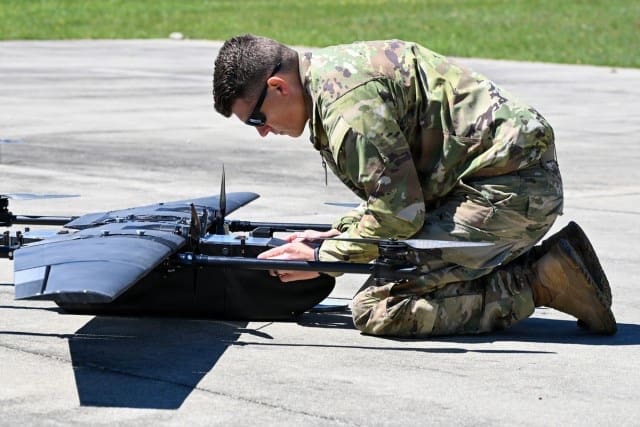
FORT CAMPBELL, KY – The 101st Airborne Division (Air Assault) conducted competitive tryouts for its UAS team on Jan. 12, 2026, here, identifying Soldiers who will represent the division in an upcoming Army UAS competition while reinforcing the unit’s commitment to innovation, readiness and modernization across the force.

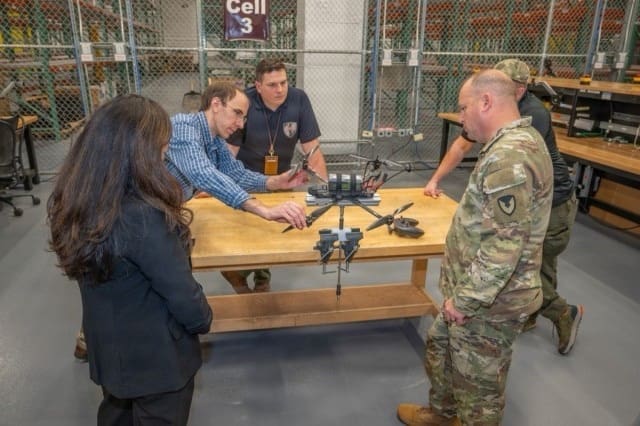
Held at Fort Campbell, the tryouts brought together Soldiers from across the formation who demonstrated technical skill, adaptability and problem-solving abilities while operating unmanned aerial systems.

“The Army has sent a very clear demand signal to identify and employ the best drone teams and best drone operators, ” said Chief Warrant Officer 2 Page Frazier, a member of the Robotics and Autonomous Integration Directorate. “And here at the 101st Airborne Division we are prepared to answer that call.”

Soldiers across the formation were evaluated on their physical endurance through the Air Assault obstacle course, techniques on how to employ a UAS, and how to navigate a drone system in a confined area. These attributes that were being evaluated reflected how emerging technologies are increasingly integrated into modern battlefield operations.

“The most challenging part about the tryouts so far is the air assault course, mixed with running to the nets, and then flying around, ” said Spc. Markus Sund, a participant in the drone tryouts.

This event directly supports the Army’s broader modernization strategy, and places emphasis on the importance of unmanned systems in future conflicts which is evolving the modern-day battlefield. Division leadership within the 101st Airborne Division hones in on the concept that innovation is a critical component of lethality and readiness.

As the Army continues to integrate advanced technologies into training and operations, the division sets forth to remain the trailblazers of that transformation. Through events like the UAS competition tryouts, the division is ensuring its Soldiers are equipped, empowered and prepared to meet tomorrow’s challenges head-on.

The selected team will continue training in preparation for the upcoming Army drone competition, representing the division’s commitment to excellence, adaptability and innovation across the force.

Story by SGT Parris Kersey 

101st Airborne Division (Air Assault)

Joint Interagency Task Force, FBI Deepen Drone Partnership to Bolster National Defense

Monday, February 16th, 2026

Army Brig. Gen. Matt Ross, Joint Interagency Task Force 401 director, visited the FBI’s National Training Center for counter-small unmanned aircraft systems in Huntsville, Alabama, yesterday to solidify a strategic alliance to protect the nation from unmanned aerial threats.

The visit centered on increasing collaboration between the War Department and the FBI to enhance homeland defense through joint training and the accelerated development of counter-UAS capabilities with federal interagency partners. 

A primary focus of the discussion was enhancing efforts to coordinate security preparations for this summer’s FIFA World Cup. Ross and Mike Torphy, FBI acting assistant section chief for UAS and counter-UAS, spoke with expert instructors who are teaching a specialized course for local law enforcement in each of the tournament’s eleven host cities across the nation. 

“The security of our homeland depends on a seamless, unified defense, and that is only possible through robust interagency collaboration,” Ross said. “The threats we face are shared, so our solutions must be as well. Our work with the FBI, to secure major events like the World Cup against the threat of drones, is a prime example of this strategy in action, but our goal is much broader: to build permanent, integrated [counter]-UAS capabilities across the federal government.” 

This synergy is foundational to building a more resilient national counter-UAS capability and ensuring state and local partners are effectively trained and equipped for any threat.  

Ross thanked Torphy for hosting the productive visit, which underscored the importance of combining JIATF 401’s lessons learned from the battlefield and expertise in joint training with the FBI’s critical law enforcement mission. 

“This is one example of how JIATF 401 is working with partners to enhance our counter-drone efforts,” Ross said. “No single person or agency can take on this task alone. It requires a whole-of-government coordination, and I am grateful that Mr. Torphy and the training center staff are supporting our mission to build a layered defense against the full spectrum of small UAS threats to the homeland.” 

The engagement in Huntsville signifies a deliberate move to formalize and expand the working relationship between the department and federal law enforcement. Future efforts will include the JIATF 401’s Joint Counter-Small UAS University in Fort Sill, Oklahoma, working closely with the FBI’s National Training Center to execute this shared mission.  

This partnership model, focused on joint capability development and shared training, will enhance security for specific events and serve as a blueprint for a more integrated national approach to all counter-UAS threats, Ross added. 

By Army LYC Adam Scher, Joint Interagency Task Force 401

US and Panamanian Forces Kick Off Jungle Operations Training Course

Sunday, February 15th, 2026

CRISTÓBAL COLÓN, Panama — U.S. service members and Panamanian security forces are set to hold the Jungle Operations Training Course-Panama, JOTC-P, Feb. 3–20 at Base Aeronaval Cristóbal Colón. The 18-day program will be conducted in a combined U.S.-Panamanian setting and focused on honing jungle warfare skills to enhance multinational interoperability.

Coordinated by the Joint Security Cooperation Group–Panama, the course brings together U.S. Army Soldiers from the Army Security Cooperation Group – South and the 82nd Airborne Division — with support from Joint Task Force-Bravo — as well as U.S. Marines, training side-by-side with partners from Panama’s Servicio Nacional de Frontera, Servicio Nacional Aeronaval and Policía Nacional de Panamá.

This iteration marks significant growth, with increased student numbers and balanced teams featuring the continued representation from U.S. and Panamanian participants. The course will also feature the largest participation of U.S. Army personnel since the revitalized training began in August 2025. The blended teams foster collaboration, build interoperability and encourage joint problem-solving in challenging conditions.

JOTC-P integrates assets across services and nations, including dismounted tactics and aviation support, to prepare forces for operations in dense, triple-canopy jungle terrain. The training progresses through three phases.

In phase one, participants master jungle survival fundamentals, such as machete use, fire craft, water purification and building primitive shelters. Largely led by Panamanian instructors, this phase emphasizes adaptability, endurance and resourcefulness in austere environments.

Phase two covers small-unit tactics, including movement techniques, ambushes, casualty evacuation and waterborne operations, largely led by U.S. instructors. These scenarios challenge decision-making under stress and strengthen communication in multinational teams.

Phase three features five combined missions — encompassing attacking a mortar firing point and conducting ambushes and reconnaissance missions — culminating in the grueling “Green Mile” endurance event and graduation. Instructors assess teamwork, leadership, and sustained performance in demanding jungle conditions.

By SPC Richard Morgan

Fort Benning Trains Army Leaders to Integrate Robotic and Autonomous Systems in Combat

Friday, February 13th, 2026

FORT BENNING, Ga. – The U.S. Army Maneuver Center of Excellence (MCoE) at Fort Benning launched the first pilot of the Robotic Autonomous Systems Leader Tactics Course (RASLT) yesterday as part of Army-wide Transforming in Contact (TiC) initiatives.

The course will prepare Army leaders for future conflicts where autonomous and robotic systems will play a more prominent role. The course is slated for three pilots in Fiscal Year (FY) 2026. Each pilot will be three weeks long and run five days a week.

Lt. Col. Alan Hastings, commander of the 3rd Squadron, 16th Cavalry Regiment, the unit overseeing RASLT, said this training is critical for Army leaders as the force integrates new robotic and autonomous systems formations.

“What we hope RASLT will provide is a touchpoint within an officer or NCO’s professional military education timeline where they are exposed to this subject matter and they develop a foundation for building proficiency and expertise in planning tactical operations, combining arms with these new capabilities,” Hastings said.

According to Capt. Alison Darby, the RASLT course director, the unit is targeting officers from first lieutenant to major for participation, and enlisted personnel ranked sergeant first class and above. She recommends eligible enlisted personnel graduate first from Scout Leader Course or Battle Staff NCO Course and eligible officers should ideally be Maneuver Captain’s Career Course graduates before attending RASLT.

“We’re looking for leaders (who) are returning to the operational force where there is likely to be one of these robotics and autonomous systems formations integrated at the company, battalion, or brigade level,” Darby said.

The three-week course will follow a structured format.

In the first week, students will have broad discussions to gain understanding of different types of autonomous systems before learning about unmanned ground vehicle (UGV) types and their capabilities. The week will end with a cognitive exercise where students will develop a plan as a company commander within a mobile brigade combat team with RASLT assets attached.

“This is our first chance to test their ability to plan and execute their plan based off the injects they’re getting from the instructor acting as a thinking, adaptive enemy,” Darby said.

In the second week, students will explore small unmanned aircraft system (sUAS) capabilities, limitations, and considerations. They will then learn about electromagnetic spectrum management and the impact of terrain and weather on the systems. Students conclude the second week by conducting a defensive tactical decision exercise (TDE) where they act as an armor company commander with robotics systems attached to their combined arms formation.

During the third week, students will discuss leadership, ethics and other general considerations of robotic and autonomous systems. In a final tactical decision exercise, students must incorporate robotic and autonomous systems to enable an offensive maneuver.

“Graduates of this course should be able to understand the capabilities and limitations of several types of robotic and autonomous systems that are already being implemented in the force or are a proposed idea to add into the force,” Darby said. “Whatever unit they go to, students will have the capability and understanding of how to plan and utilize these systems to enable the maneuver formations.”

The Army is continuously transforming by using the latest technologies for warfighting advantage to remain the most lethal and ready land force in the world. Initiatives like RASLT ensure the Army can deliver trained, cohesive, and lethal teams to meet future challenges in complex operational environments.

By Daniel Murnin

Michigan’s NADWC Designated as National Range for Deep Uncrewed Aerial Systems Training

Tuesday, February 10th, 2026

LANSING, Mich. – Michigan’s National All-Domain Warfighting Center, or NADWC, was designated by the U.S. Department of War as a National Range for Deep Uncrewed Aerial Systems, or UAS, Training.

“Today’s designation of the NADWC as a national test site shows that Michigan can lead the future of aerospace and continues to play a key role in protecting our national defense,” said Gov. Gretchen Whitmer. “Over the last few years, we held an autonomous drone competition, released a statewide Advanced Air Mobility Initiative and secured a new fighter mission at Selfridge Air National Guard Base. Now, thanks to this new national test site, we are building on that momentum, becoming an even more attractive place for cutting-edge defense and aerospace companies to invest in, create good-paying, high-skill local jobs and grow our economy. You can already see Michigan-made products on roads around the world, and soon, we’ll be in the sky too.”

This designation cements the NADWC as the nation’s premier proving ground for advanced UAS and Counter Uncrewed Aerial Systems, or C-UAS, positioning Michigan at the forefront of America’s defense innovation economy. Selected by the U.S. Army and National Guard Bureau, NADWC offers an unmatched environment for drone development and testing and training, one that is squarely focused on the warfighter and on doing what is best for the force. By combining permissive operating authorities, cutting-edge infrastructure and close ties to Michigan’s world-class technology and manufacturing ecosystem, this designation amplifies our ability to train at speed and scale.

Anchored by nearly 200,000 acres of maneuver space at Camp Grayling Joint Maneuver Training Center and more than 17,000 square miles of special-use military airspace at the Alpena Combat Readiness Training Center, NADWC delivers a level of scale and realism few training environments can match. These Joint National Training Capability–certified sites feature diverse terrain, robust electromagnetic spectrum access and a true four-season climate, allowing units to stress systems, tactics and formations in conditions that replicate multiple theaters of operation and prepare forces for the next fight.

As the largest joint training range east of the Mississippi River and home to the flagship Northern Strike Exercise, NADWC is purpose-built to enhance readiness. Its all-weather, all-domain environment enables warfighters and our allied partners to train together at full operational tempo, integrating uncrewed systems into live-fire, combined arms and advanced swarm operations. The result is a more lethal, more prepared force, better equipped to succeed on the future battlefield.

“This designation is about staying focused on the warfighter and doing what’s best for the force,” said U.S. Army Maj. Gen. Paul D. Rogers, adjutant general and director of the Michigan Department of Military and Veterans Affairs. “The NADWC gives us the scale, airspace and all-domain environment we need to amplify our ability to train and prepare for the next fight. It allows our Soldiers, Airmen, joint partners and allies, to develop, test and employ uncrewed systems at operational tempo under realistic, all-weather conditions. That kind of training directly translates to readiness and ensures our forces are positioned to succeed on the future battlefield. I want to thank Governor Whitmer and Michigan’s congressional delegation for their steadfast support in making this effort possible, which will ensure the men and women of the U.S. military and our allies will be prepared for any future conflict.”

By Michael Kroll, Michigan National Guard

US Army Awards Persistent Systems Contract for $87.5 Million Supporting Next-Generation Command and Control Prototype

Thursday, February 5th, 2026

Contract marks a total of $121.5 million awarded to company for NGC2 prototype
NEW YORK, Feb. 4, 2026 — Persistent Systems, LLC (“Persistent”), a leader in mobile ad hoc network (MANET) technology, announced that the U.S. Army’s Capability Program Executive Command, Control, Communications, and Network (CPE C3N) has submitted a second order of $87.5 million for MANET devices, as part of the transport layer for Next-Generation Command and Control (NGC2) prototype. 

This second order is a follow-on to the $34 million contract the company received in October. The follow-on award will incrementally add capability for Army prototypes of NGC2. Together, these awards total $121.5 million.

“In the transport layer, we are responsible for moving all the 1s and 0s across the battlefield, so data reaches the warfighter who needs it, when they need it,” said Jon Patrick, Vice President of Business Development at Persistent.

Faster information delivery times and more reliable access to data enable faster, more efficient decisions, streamlining command and control (C2). The MANET radio continues to demonstrate it can serve as part of the transport layer, with the speed, resilience, and capacity required for combat operations.

“As the Army has presented us with increasingly demanding benchmarks, our team continues to deliver highly resilient transport that can empower an armored division on the move,” said Dr. Herbert Rubens, Founder and CEO of Persistent Systems. “We’re proud to provide a commercial solution that supports the Army’s transport layer and strengthens the warfighter at echelon.”

Over the coming months, deliveries will be underway as Persistent looks forward to empowering the Army with the most advanced communications technology, shaping the Army’s future network.