XC3 Weaponlight

Archive for the ‘Army’ Category

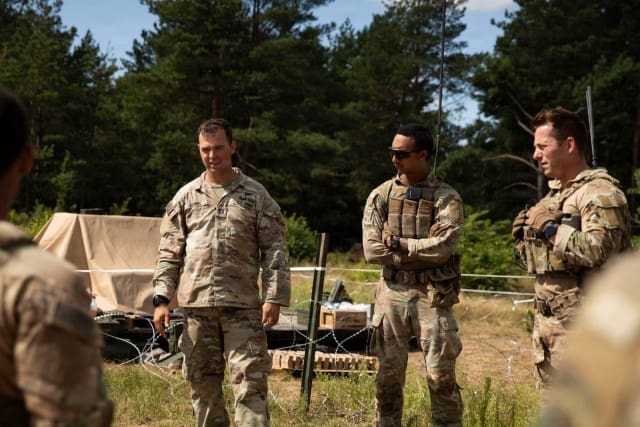
Special Forces Sharpen Skills, Integrate Technology in Arctic Training

Friday, March 6th, 2026

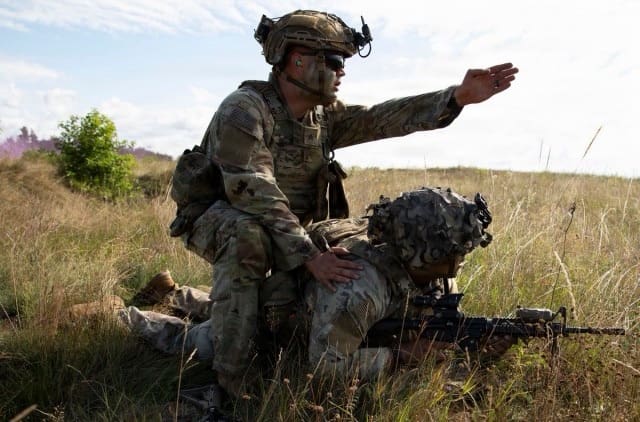
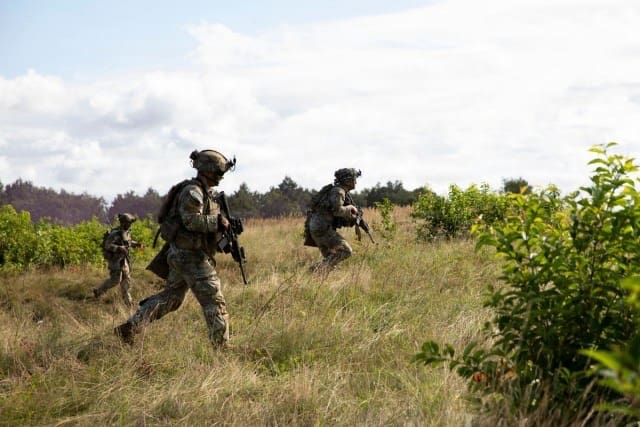
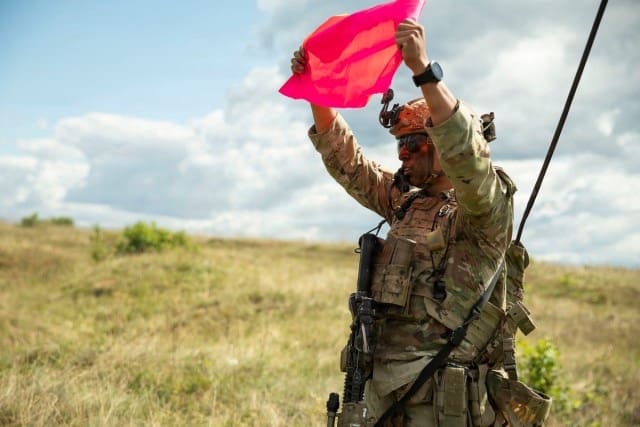
FORT WAINWRIGHT, Ak. – Across the freezing subarctic region, Green Berets immersed themselves in some of the most physically and mentally taxing cold weather training for the Joint Pacific Multinational Training Center (JPMRC) 26-02 rotation across multiple training areas in central and southern Alaska.

Green Berets and enablers assigned to 3rd Battalion, 10th Special Forces Group (Airborne) pushed their bodies to the limit and used their unique set of skills to enhance the effectiveness of 11th Airborne Division in a simulated large-scale combat operation from Feb. 11-20, 2026.


Several small teams of operators leveraged reconnaissance and disruption of adversary technology to ultimately give the Joint Force Commander a decisive advantage in fires and maneuver across the battlespace.

“We’ve got our place [in large-scale combat operations] and it is using tactical actions with our specialized signals intelligence and electronic warfare analysts to achieve strategic results,” said Maj. Scott Ratzer, the 3rd Battalion Alpha company commander. “This gives us a chance to identify important [enemy] targets on the Division’s high-priority target list and disrupt [enemy] command and control, sustainment and logistics.”

Prior to entering the JPMRC training area, multiple Special Forces Operational Detachment–Alphas (SFOD-A) and support personnel conducted 14 days of focused cold weather training in Alaska to refine fundamental survival skills required to operate in Arctic conditions.

The teams rehearsed small-unit movement over snow-covered and restrictive terrain, cold weather sustainment to include meal preparation, communications in extreme temperatures, and long-duration dismounted operations. The training reinforced the technical discipline required to maintain combat power when equipment, batteries, and even basic tasks become more complex in sub-zero environments.

“Having two weeks of solid cold-weather training prior to going into the box helped us and other teams really prepare for the subfreezing temperatures that we were going to face in the box,” said a Special Forces Team Sergeant, the senior NCO on an ODA. “When guys are exposed to this environment [like Alaska], they stop doing the simple things – changing socks, drinking water, and eating. These mistakes can begin to snowball if not taken seriously.”

Building on that foundation, the ODAs integrated emerging technologies to extend their reach well beyond line-of-sight contact. The 3rd Battalion’s premiere military free fall (MFF) team practiced a high-altitude high opening jump to field test cold-weather equipment, communications gear, and layered clothing configurations in a true Arctic environment prior to entering the training area.

By executing the infiltration under realistic conditions, the ODA identified equipment limitations, refined load plans, and confirmed that critical systems would function upon landing.

“If we can prove we’re able to execute an MFF jump in Arctic conditions, that’s just one more option the commander has in his back pocket,” said a Special Forces Detachment Commander. “Weather and terrain up here can limit how you move forces, so testing our gear and our procedures in this environment gives higher headquarters the flexibility to insert a team where and when it makes sense.”

This training underscores the Army’s focus on building agile, lethal formations capable of projecting combat power in any climate and against any adversary. Adaptability is a key component in building lethality and first-person view (FPV) drones assist 10th SFG(A) signals intelligence Soldiers in collecting critical information to hand off to 11th Airborne Division for rocket and missile support.

“FPV drones give us a fast, low-signature way to confirm what we’re seeing on the ground and tighten up our target picture,” said a signals intelligence Soldier. “Instead of relying solely on reports or larger platforms, we can push a drone forward, get eyes on the objective in real time, and provide accurate information to the commander. That speed and precision makes a big difference when it comes to reconnaissance and confirming prior intel.”

As the rotation wrapped up, Green Berets from 3rd Battalion, 10th Special Forces Group (Airborne) returned from Alaska having honed their cold-weather skills and tested their equipment in extreme conditions. From survival basics to using FPV drones for real-time reconnaissance, they showed the Army’s focus on adaptability, precision, and readiness. The training ensures commanders have the tools and information needed to gain an edge on any battlefield.

The Joint Pacific Multinational Readiness Center (JPMRC) is the U.S. Army’s premier Combat Training Center (CTC) in the Indo-Pacific region. Established as a “home-station” and exportable capability, it allows units to train in their own regional environments—such as jungles, archipelagos, and extreme cold—rather than traveling to conventional training centers in the continental United States.

Story by SGT David Cordova, 10th Special Forces Group (Airborne)

FN Awarded $9.9 Million Contract From U.S. Army and Navy for Machine Guns

Thursday, March 5th, 2026

(McLean, VA — March 05, 2026) FN America, LLC, is pleased to announce that it has been awarded a $9.9 million contract to supply the U.S. Army and U.S. Navy with FN® M240B machine guns, continuing the supply of FN America’s longest-standing military weapons platform.

“This contract continues FN’s legacy of providing the most effective and advanced weapon systems for the warfighter,” said Jim Williams, Vice President, Military Programs for FN America, LLC. “The U.S. Army contract for the M240 machine gun was the first military contract FN was awarded and the first to be produced from our production facility in South Carolina. We’re incredibly honored to continue supporting the U.S. military with high-quality and reliable weapon systems for our servicemen and women.”

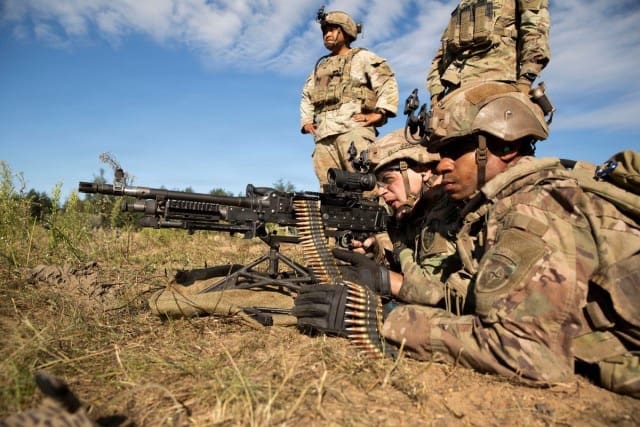
The FN® M240B, built on the M240 platform that was adopted and has been in use by the U.S. military since the late 1970s, is the “go-to/can-do” medium machine gun for all branches of the U.S. military. It offers unmatched reliability, extended range and an exceptional service life. This weapon’s high volume of fire makes it the principal suppressive firearm for the infantry platoon and company.

Chambered in 7.62x51mm NATO, the M240B’s cold hammer-forged MIL-SPEC barrel has a hard-chromed bore for longer life, improved accuracy and maximum range of 3,725 meters. The receiver is machined steel and is equipped with a top-mounted MIL-STD-1913 optical rail. The crossbolt safety and curved trigger help enhance operator control.

“Since beginning our first production in 1981, FN has produced millions of firearms for the U.S. military at our Columbia, SC, manufacturing facility,” said Daryl Atkins, Director, Industrialized Weapons for FN America, LLC. “FN is extremely proud of the high-quality, reliable firearms we build for our military servicemen and women, and we look forward to continuing the tradition with this contract.”

Throughout its history, FN has been one of the largest suppliers of small arms to the U.S. military and continues to develop innovative, future technology. In addition to the M240 platform, the company currently holds contracts for the FN® M249, MK 46, MK 48, MK 17 and MK 20 SSR for USSOCOM and various other contracts.

More information about FN’s military contracts and military product line can be found here

Counter-Drone Training in Europe Equips US Forces for Evolving Threats

Wednesday, March 4th, 2026

GRAFENWOEHR, Germany — The senior enlisted advisor for Joint Interagency Task Force 401, Sgt. Maj. Kellen Rowley recently visited Germany to serve as the graduation speaker for the Joint Multidomain Counter-Unmanned Aerial Systems Course, or JMDCC.

The course, a U.S. Air Forces in Europe program executed with the support of the 7th Army Training Command, is at the forefront of developing joint service capabilities to counter the growing threat of unmanned aerial systems. This effort supports JIATF-401’s mission to provide counter-drone capabilities that protect U.S. personnel and facilities both domestically and internationally through a whole-of-government approach.

During his visit, Rowley observed the course’s culminating field training exercise, a rigorous 48-hour event that tested the skills of 22 U.S. Air Force, Army and Marine noncommissioned and commissioned officers. He also received a comprehensive overview of the course’s program of instruction and engaged with the 7th ATC leadership, which included a briefing on the Bumblebee training course, Test and Evaluation Center and the Warrior Unmanned Aerial Battalion.

In his remarks to the graduating class, Rowley emphasized the importance of taking proactive C-UAS measures at all echelons.

“The proliferation of UAS technology on the modern battlefield requires us to be agile and adaptive,” said Rowley. “We must ask ourselves: what are we doing to establish and rehearse our battle drills and SOPs at the small unit level? How are we integrating C-UAS into our collective training? The answers lie in the hands of talented and dedicated individuals like you… A vigilant and prepared force is the first and most effective line of defense.”

Highlighting the need for specialized skills, Rowley added, “We must actively identify talent within our ranks — the service members who possess the knowledge, capability, and desire to excel in this rapidly evolving space. They are the future of our C-UAS enterprise.”

Rowley noted the JMDCC’s platform-agnostic approach and focus on core competencies such as electronic warfare, sensor integration, and command and control. The three-week course is structured to provide a comprehensive learning experience, with one week of classroom theory, one week of practical exercises, and one week of lane training, culminating in the final FTX.

“The JMDCC is an excellent course that has intuitively set the standard for the train-the-trainer model we need across the force,” said SGM Rowley. “To my knowledge, there is no other C-UAS course in the department operating at this level of proficiency and realism.”

U.S. Soldiers, Airmen, Marines and Belgium Soldiers conduct weapons qualifications using the SMASH 2000 system during the Air Force’s Joint Multi-Domain Counter Unmanned Aircraft Systems Operator Course in the Grafenwoehr Training Area, Germany, Feb. 12, 2026. The U.S. Air Forces in Europe – Air Forces Africa assess the feasibility of expanding the Air Force’s Joint Multi-Domain Counter Unmanned Aircraft Systems Operator Course to a multi-service environment with the growing Unmanned Aircraft Systems threat. The 7th Army Training Command remains the premier location for U.S., NATO and partner testing, experimentation, readiness and interoperability. U.S. Army video by Sgt. Collin Mackall.

Story by COL Adam Scher

AV Receives $186 Million US Army Delivery Order for Next-Generation Switchblade Systems

Monday, March 2nd, 2026

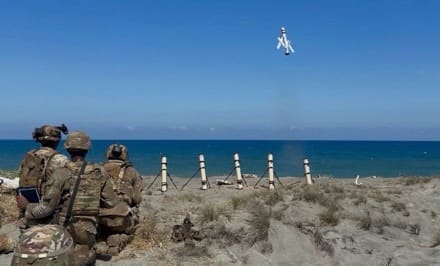
ARLINGTON, Va. — February 26, 2026 — AeroVironment, Inc. (“AV”) (NASDAQ: AVAV), a global leader in autonomous systems and precision strike solutions, today announced receipt of a $186 million delivery order from the U.S. Army for Switchblade® 600 Block 2 and Switchblade® 300 Block 20 explosively formed penetrator (EFP) loitering munition systems.

The order was issued under the Army’s existing five-year, $990 million Indefinite Delivery, Indefinite Quantity (IDIQ) contract for Lethal Unmanned Systems (LUS), which was awarded in August 2024. This delivery order marks the U.S. Army’s first procurement of AV’s next-generation Switchblade product line, underlining a significant step forward in fielding advanced, precision loitering munitions across infantry and maneuver formations. It is the Army’s first Switchblade order containing EFP payload, delivering enhanced lethality against armored threats.

“This delivery order reflects the Army’s confidence in the next evolution of the Switchblade family and its relevance to modern, contested battlefields,” said Brian Young, Senior Vice President of Loitering Munitions at AV. “Switchblade 600 Block 2 and Switchblade 300 Block 20 build on years of combat experience while delivering meaningful upgrades in autonomy, resilience, and lethality tailored to today’s operational demands.” 

Switchblade 600 Block 2 is AV’s most advanced long-range loitering munition to date, designed for multi-domain operations and ruggedized for maritime and highly contested environments. Developed in collaboration with United States Special Operations Command (SOCOM), the system features upgraded avionics and advanced Automatic Target Recognition (ATR), enabling faster detection, identification, and engagement of threats. Integrated resilient communications, including Silvus MANET radios, support distributed operations and extended handoff ranges, while improved navigation and mission resilience allow effective employment in GPS-challenged environments. These upgrades provide commanders with increased reach, flexibility, and confidence against armored and high-value targets.

Switchblade 300 Block 20 introduces a new modular payload capability to the combat-proven, backpackable loitering munition. For the first time, the Army has procured the system with an Explosively Formed Penetrator (EFP) payload, delivering enhanced lethality against armored threats while retaining the speed, portability, and ease of use that have made Switchblade 300 a trusted solution at the small-unit level. The Block 20 configuration also includes sensor improvements, enhanced user interfaces, and extended range options, allowing rapid, precision effects beyond line of sight.

Together, the Switchblade 600 Block 2 and Switchblade 300 Block 20 provide the Army with a scalable family of precision loitering munitions—from lightweight, single-operator systems to long-endurance, multi-domain capabilities—designed to operate seamlessly across echelons and mission sets.

“This delivery order further advances the Army’s Lethal Unmanned Systems Directed Requirement and reinforces AV’s role as the leading provider of combat-proven loitering munition systems,” said Young. “As we continue to invest in expanding Switchblade manufacturing capacity and accelerating delivery timelines, we are continuing to meet the growing demand for these products from U.S. and allied forces.”

1st Special Forces Group (Airborne) Parachute Riggers Make History on Joint Base Lewis-McChord

Monday, March 2nd, 2026

JOINT BASE LEWIS-McCHORD, Wash. — Parachute riggers assigned to Group Support Battalion, 1st Special Forces Group (Airborne) successfully executed the first drop of a Joint Precision Airdrop System (JPADS) at Joint Base Lewis-McChord (JBLM) on Feb. 12.

After nearly three years of planning and coordination with JBLM range control, the successful proof-of-concept demonstration facilitates future training and operational capabilities for 1SFG(A) and other adjacent units assigned to JBLM.

The JPADS is a self-steering, GPS guided airdrop platform consisting of a canopy and an autonomous guidance unit, capable of landing within 100 meters of its target. The demonstration unit notably utilized Modular Autonomous Guidance Unit 3.0 which incorporates GPS denied vision guided capability.

During the demonstration, the system carried a payload of 535 pounds suspended weight and was released from a CH-47 Chinook helicopter 4,750 above ground level.

The drop was followed by a military freefall pass simulating a Green Beret Operational Detachment Alpha (ODA) team securing the payload on the ground. Then 1SFG(A) parachute riggers conducted a proficiency jump, where all rigger personnel jumped with a static line parachute that they packed themselves, demonstrating confidence in their product.

Chief Warrant Officer 2 Wade Head, Group Airdrop Systems Technician, emphasized the operational significance of the capability.

“This is important because we can provide sustainment to the warfighter from a distance, that keeps the aircrew and aircraft safe.”

Operationally, ODA teams from the 1SFG(A) employ JPADS to deliver equipment and mission-critical items. These can be dropped at a desired impact point or sent to a pre-determined location for later retrieval. In some instances, a military freefall ODA pushes the JPADS first, immediately followed by an airborne operation, resulting in the personnel and equipment arriving to the desired impact point simultaneously.

“Now [the ODA teams] will be able to get their infiltration training locally, versus going to Yakima or somewhere else.” Said Sgt. 1st Class Mia Schwartz, Senior Airdrop Operations NCO.

A mixture of unit representatives from 2nd Ranger Battalion, 75th Ranger Regiment, 593rd Corps Sustainment Command and I Corps, attended the event to observe the demonstration. The Washington Army National Guard supported the event providing a CH-47 Chinook helicopter for the JPADS and airborne operations.

Planning the JPAD training came with challenges, particularly due to the installation’s proximity to adjacent roadways, neighborhoods and nearby towns. Organizers worked to mitigate risks while demonstrating the system’s precision and reliability. Most notably JBLM range control assisted 1SFG(A) with navigating safety protocol and ensuring safe implementation. This coordination provides a template for adjacent JBLM units to replicate similar training in the future.

The ability to train JPADS operation underscores the importance of the logistical support provided by the Group Support Battalion to mitigate interdiction of ground and sea lines of communication to the Special Forces Operators. By successfully completing this training both 1SFG(A) and conventional forces assigned to JBLM can better prepare for future operations.

By SGT Alec Byrd

US Army Activates Capability Program Executive (CPE) Enterprise Software and Services (ES2)

Sunday, March 1st, 2026

?

FORT BELVOIR, Va. – On Feb. 25, the Hon. Brent Ingraham, Assistant Secretary of the Army for Acquisition, Logistics and Technology, joined leaders from the former U.S. Army Program Executive Office (PEO) Enterprise in unveiling the acquisition organization’s new name, logo and colors at an activation ceremony. The organization is now officially known as Capability Program Executive (CPE) Enterprise Software and Services (ES2).

As one of the Army’s 13 newly designated capability program executives, CPE ES2 will continue its core mission of delivering software and services that drive operational readiness, providing seamless support for mission-critical systems and warfighting capabilities. CPE ES2 will report directly to Hon. Ingraham and continue to work closely with the Army Chief Information Officer on technology initiatives.

According to Miranda Coleman, CPE ES2’s acting Capability Program Executive, the organization will remain focused for the rest of fiscal year 2026 on operationalizing low-code/no-code, delivering at speed, maturing Agile practices, maintaining adaptability and flexibility, and managing talent.

“We have a lot of work ahead of us, but I’m confident we’re off to a fantastic start,” said Coleman, whose team highlighted several CPE ES2 software programs for Hon. Ingraham at a pre-ceremony capability demo.

As part of the organization’s transition to becoming a capability program executive, CPE ES2 has renamed its four portfolios to align with Army domains and better convey their areas of focus:

Project Manager (PM) Integrated Personnel and Pay System – Army is now PM Human Resources and Force Management (PM HR-FM).

PM Enterprise Business Systems and Convergence is now PM Logistics and Finance (PM LOG-FIN).

PM Defense Integrated Business Systems is now PM Acquisition, Training and Readiness (PM AT&R).

Project Director (PD) Enterprise Services is now PD Business Technology Solutions (PD BTS).

An updated organizational chart with all CPE ES2’s leaders, portfolios and product offices is available on the newly updated CPE ES2 website.

By Erika Christ

National Guardsmen Train to Use Small Drones

Sunday, March 1st, 2026

FORT INDIANTOWN GAP, Pa. – National Guard Soldiers from various backgrounds, skillsets and military occupational specialties attending a 10-day small unmanned aircraft system operator course, or sUAS, are learning how to operate small drones.

The course, which began Feb. 19 and ends Feb. 28, is being conducted by the 166th Regiment – Regional Training Institute.

“It’s been a great course,” said Sgt. Stephen Scharf, a student from 1st Battalion, 111th Infantry Regiment. “It’s a very evolving world, so there are a lot of new ideas coming out. A lot of things are changing very rapidly.

The course is structured to encourage students to adopt a tactical mindset and understand how the things they learn can be integrated into a large-scale combat operation, said Sgt. 1st Class Brandon Wahl, the sUAS operator course manager.

“One of my main goals here is to make it as realistic as we can,” he said. “So, it’s important for everyone to know how to operate one, because at any point you could be tasked with operating it.”

Several members of the 111th Engineer Brigade, West Virginia National Guard, attended the course because their unit is deploying soon. They’ll be using these drones on their deployment, Spc. Simon Bertram said.

“For infantry, it’s very necessary for reconnaissance,” Bertram said. “Getting more drone operators will be very beneficial.”

Other attendees of the course came to learn a new skill. Scharf said the course has been very informative.

“It’s an evolving world, and a lot of things are changing very rapidly,” he said. “The instructors are doing their best to stay on top of it and disseminating that info.”

Scharf mentioned that this course and the information it provides have been beneficial not just for himself but for the Army as a whole.

“It’s something that as we develop this, more doctrine gets established,” he said. “It’s going to be something that you’re going to see more widespread throughout both the Guard and the Army.”

The course is open to National Guard members of all military occupational specialties.

“There are infantrymen here, some of them are engineers,” Wahl said. “One of the students is an intel guy. There’s all kinds of jobs that come through.”

“All of these different jobs in the Army will be affected by sUAS’s,” Scharf said. “Sometimes that might be that you have to figure out how, which is a great thing.”

By SGT Kayden Bedwell

Soldiers Engage with Advanced Battlefield Sensor Prototypes

Saturday, February 28th, 2026

From Feb. 2-6, 13 Soldiers from the 1st Armored Division, the Maneuver Center of Excellence (MCoE), and the Fires Center of Excellence, participated in a Soldier Touch Point (STP 0) at Fort Belvoir to engage with some of the Army’s latest technology under development—FALCONS.

FALCONS, which stands for Future Advanced Long-range Common Optical/Netted-fires Sensors, is set to replace the Long Range Advanced Scout Surveillance System (LRAS3). FALCONS integrates cutting-edge commercial technologies with advanced military sensors, including the Army’s third-generation Forward-Looking Infrared (3GEN FLIR) system.

Lt. Col. Ryan Welch, who leads Product Manager for Ground Sensors (PM GS) which manages the FALCONS program, said FALCONS will enhance Soldier performance where it matters most.

“FALCONS will improve the effectiveness of the Soldier on the battlefield by improving upon the legacy system, LRAS3/FS3, providing overmatch to our Scouts and Fire Supporters,” said Welch.

Designed for both mounted and dismounted operations, FALCONS pinpoints targets with precision to support a wide range of Army and joint munitions—whether precision-guided, near-precision, or conventional. Its networked architecture directly connects Scouts and Fire Supporters, accelerating coordination and shortening the kill chain.

One of the improvements with FALCONS includes the addition of artificial intelligence.

“FALCONS will integrate advancements in AI and machine learning into the most powerful IR [infrared] sensor on the battlefield to support Aided Target Detection and Recognition (AiTDR), which will reduce the cognitive load on operators,” Welch said.

The STP 0, led by Research and Technology Integration’s (RTI) Sensor Evaluation and Digital Prototyping Division (SEDP), focused on eliciting feedback on initial vendor designs including ergonomics, button layout, and Graphical User Interfaces (GUI).

STPs are testing and feedback events where Soldiers provide insights on how systems or equipment undergoing development will be used in the field. The touch points provide helpful input to vendors, testers, researchers and acquisition experts on the capabilities Soldiers will need.

During SPT 0, Sgt. 1st Class Daniel Agriesti with the MCoE provided soldiers with a familiarization session on LRAS3 – an integral step needed to understand FALCONS prototypes during feedback sessions. Additionally, he participated in the Soldier touch point as a subject matter expert to provide feedback from a user perspective.

The feedback included how the hands of Soldiers interact with prototype components.

“How do they feel, how do they work, are they getting in the way, are they too big,” said Agriesti. “Especially with the new generation of Soldier[s] coming along they are a lot more gaming oriented based on what studies have told us.”

Engineering psychologists facilitated discussion and evaluation in the STP focus groups, meticulously documenting Soldier interactions with the prototypes and their verbal feedback.

Colleen Gerrity, one of several engineering psychologists who evaluated feedback at STP 0, said it is crucial her team is involved early on

“I feel like this Soldier touch point is unique because we are involved at the beginning of the process,” said Gerrity. “This is great because we are able to apply the academic rigor of research, design, and evaluation to ensure that the feedback is robust.

The feedback gathered during the event will accelerate the design process by enabling the early identification and mitigation of potential design flaws

STP 0 also underscored the importance of having fire support specialists and calvary scouts at future touch points, as their feedback, particularly on the GUI and operation of FALCONS, is essential to ensure vendor designs translate into something both intuitive and operationally effective

“STP 0 will inform future vendor designs as they prepare to transition into the initial design phase of the FALCONS prototyping,” Welch said.

He added that feedback from the touchpoint included Soldier preferences on handgrip design and button layout, the benefits of biocular versus binocular display, and the formatting of basic GUIs.

“The information gleaned will result in a more ergonomic design optimized for usability and employment in the diverse battlefield conditions that our Soldiers fight in across the globe,” Welch said.

Story by Michael Bortot, Capability Program Executive – Intelligence, Electronic Warfare & Sensors