GORE-TEX Professional

Archive for the ‘Armoured Vehicles’ Category

INKAS Unveils Its First Armored Rolls-Royce Cullinan Series II, Changing the Ultra-Luxury Segment

Tuesday, April 21st, 2026

INKAS® is proud to announce the release of its first-ever armored Rolls-Royce Cullinan Series II, marking a significant milestone in the company’s expansion into next-generation ultra-luxury vehicle platforms.

As one of the most refined SUVs in the world, the Cullinan Series II represents the pinnacle of automotive craftsmanship. INKAS® enhances this platform with a fully integrated armoring solution, engineered to deliver comprehensive protection while preserving the vehicle’s original design, performance, and driving experience.

At the core of the build is a precision-engineered armored capsule, providing 360° ballistic protection through the integration of certified ballistic steel, multi-layer armored glass, and advanced overlap systems. These systems are designed to eliminate vulnerable gaps, ensuring consistent protection across all critical areas of the vehicle.

Unlike conventional armored vehicles, the INKAS® Cullinan Series II maintains a completely discreet appearance. Without any visible modifications interfering with the exterior styling or interior refinement, allowing occupants to benefit from enhanced security without drawing attention.

“Armoring a vehicle like the Cullinan Series II requires a meticulous balance between protection and preservation,” said David Khazanski, CEO of INKAS®. “Our engineering approach ensures that every protective element is seamlessly integrated, maintaining the integrity of Rolls-Royce design while delivering the level of security our clients expect.”

To support the added weight of the armoring system, INKAS® upgrades critical performance components, including suspension and braking systems, ensuring the vehicle retains its smooth handling characteristics and ride quality. Each vehicle undergoes rigorous quality control and testing processes to meet international armoring standards and internal performance benchmarks.

This latest release reflects INKAS®’s continued commitment to innovation, craftsmanship, and client-focused engineering. By combining advanced protection technologies with one of the world’s most prestigious luxury platforms, INKAS® delivers a solution that enhances both safety and long-term vehicle value.

Textron Systems Awarded $450M Advanced Reconnaissance Vehicle (ARV) Pre-Production Development (PPD) Award by US Marine Corps

Wednesday, April 8th, 2026

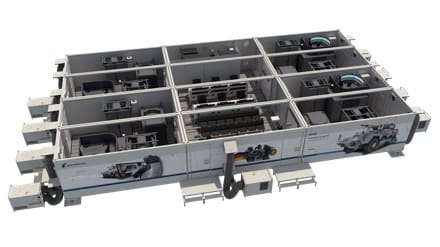
SLIDELL, La., April 2, 2026 – Textron Systems Corporation, a Textron Inc. (NYSE:TXT) company, announced today that it was awarded a $450M Pre-Production Development (PPD) agreement for the Advanced Reconnaissance Vehicle (ARV) program by the U.S. Marine Corps. Under this agreement, Textron Systems will deliver 16 Cottonmouth® pre-production vehicles (PPVs), three systems integration labs (SILs) and four blast hulls.

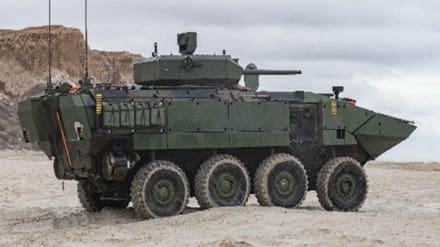
The Cottonmouth ARV PPV will be delivered in three variants: C4UAS, 30mm, and Logistics (LOG). Designed to enhance the Marine Corps’ Expeditionary Advanced Base Operations (EABO) framework, these vehicles prioritize mobility, survivability, and adaptability. Rigorous government-led testing will follow delivery to validate performance and verify program requirements. The Cottonmouth C4UAS was designed to act as the battlefield quarterback and naval sensor node within the force structure, enabling transformation to how the Marine Corps communicate and fight, providing superior maneuverability while offering a synergized sensor system. A purpose-built vehicle system, the C4UAS will serve as the crewed platform base for robotic and autonomous systems integration, enabling advanced situational awareness. The 30mm variant offers direct fire support and anti-armor capability, while the LOG variant will be optimized for field supply and support. Over the last several years, Textron Systems has delivered C4UAS and 30mm prototype vehicles, as well as SILs, for Marine Corps testing and evaluation, providing valuable insights into design and performance for risk reduction. During this time, Textron Systems worked closely with the USMC to propose a Cottonmouth ARV offering that is aligned with Force Design 2030. 

“Starting as a clean-sheet design in 2019 and shaped by the voice of the customer, the Cottonmouth vehicle is poised to transform the Marine Corps’ reconnaissance missions with adaptability, mobility and as a battlefield quarterback for the USMC,” said David Phillips, Senior Vice President Air, Land and Sea Systems. “Textron Systems invested early on in prototype vehicles to reduce risk and increase maturity for the warfighter. The system design considers today’s mission requirements while also employing a Modular Open System Architecture that enables ease of future integration for the future needs of the USMC, embodying the very essence of innovation and partnership that define us as an organization.

“This achievement solidifies Textron Systems’ role as a key partner in advancing the Marine Corps’ mission capabilities,” added Zach Bupp, Vice President Land Systems. “We’re proud of the innovative, purpose-built capabilities we’ll be delivering and look forward to continuing our partnership with the Marines over the next several years.”

Built at Textron Systems’ manufacturing facility in Slidell, LA, the Cottonmouth ARV represents decades of heritage and expertise in ground vehicle design and manufacturing. Engineering and design work will also occur in Hunt Valley, MD.

Project Manager Maneuver Ammunition Systems Works To Increase Lethality Of Existing Weapon Systems

Tuesday, April 7th, 2026

It is not often that a revolution in the conduct of warfare occurs, however the introduction of inexpensive, commercially available unmanned aerial systems (UAS), or drones, to the battlefield is just that. Recent global conflicts have demonstrated the vulnerability of large, armored formations and the threat posed by small UAS. The maneuverability of large, armored formations has always been a challenge when breaching defensive lines, but the current vulnerability to the formation is the inability to effectively counter the rapidly growing UAS threat. This new threat set is causing commanders to re-think the employment of armored formations, underscoring a fundamental shift in modern combat dynamics.

Historically, drones and other UAS were limited to technologically-advanced militaries employing multi-million-dollar platforms for persistent surveillance and strikes. Recent conflicts, both globally and within terrorist organizations, have revealed a new paradigm: UASs are no longer limited to technologically advanced militaries, but rather, the new improvised explosive device of this generation’s war. Similarly, UASs are now employed through inexpensive, commercially available and even 3D-printed material that can include modified payloads capable of devastating expensive platforms that lack adequate defenses. The ease of manufacturing and deployment will only lead to further proliferation and evolution in future conflicts, demanding the development of diverse solutions quickly to protect U.S. forces and strengthen homeland security. While threats are becoming cheaper and more accessible on the battlefield, a crucial element of defense must include low-cost kinetic effectors empowering crews to protect themselves and their formations.

THE EVER-EVOLVING UAS THREAT AND CURRENT C-UAS GAPS

The UAS threat is dynamic and exacerbated by a continuous cycle of countermeasure development and UAS reengineering. Historically, drones could be jammed through various electronic warfare technologies by disrupting drone communications, resulting in a communication severance and ultimately a failed mission. As technology evolves, UAS threats will begin to move away from networked communication systems to fiber optic drones, becoming impervious to jammers. This rapid evolution necessitates a diverse suite of effectors to address the changing threat landscape.

Current air defense solutions are often expensive, limited in number and usually at echelons above brigades. The cost-benefit ratio of employing a several-hundred-thousand-dollar missile to defeat hobbyist drones is questionable and poses a readiness issue for more high valued threats. An adversary could potentially exhaust an opponent’s monetary and munition stockpile by employing swarms of cheap, easily produced UAS. While these missiles are effective against individual targets, their use should be reserved for more critical threats. A few small UASs or worse, a swarm, can overwhelm these expensive, limited defenses. A more cost-effective engagement method is essential for the entire battlefield.

Effective kinetic counter-UAS (C-UAS) capability hinges on two critical components: detection and effects. The Army solution cannot include putting exquisite radars onto every platform, not only due to budgetary constraints, but also radars tend to emit electromagnetic signatures, which will be exploitable for enemy targeting. The Army also cannot count on dedicated Air Defense assets down to the brigade and below. Legacy ammunition, while extremely lethal, requires a direct hit to the threat to be effective. Traditional targets have been slow moving vehicles, stationary personnel in the open, or within defilade position. As the threat changes to small, fast-moving aerial threats, it becomes incredibly difficult to get a direct hit on target, even for dedicated air defense systems with skilled crews. Some of the latest ammunition innovations include programmable airburst rounds, where the weapon system communicates to the round to detonate at a pre-determined distance, creating fragmentation above targets, increasing lethality without having to directly hit the target for effects. This is a great capability to increase the lethality of crews in a variety of situations, providing a bigger lethal footprint over stationary targets in the open, in a trench or in a building. However, the key to this technology is knowing the pre-determined distance (which assumes it remains stationary), which is ineffective in combatting small, moving UAS threats. Getting an accurate range on a fast, moving target is difficult.

While reminiscing of his time on the Bradley platform, Maj. Kenneth Welch, Medium Caliber Assistant Product Manager stated, “During Bradley gunnery training, I remember having to use my laser range finder several times to ensure accurate range against certain stationary targets. I don’t know how it would be physically possible to engage a highly dynamic, constantly moving small target with the current system.” As with defeating any threat, munition placement is critical, whether a direct hit or within proximity, to ensure that the fragmentation from detonation is providing lethality. Traditional programmable airburst significantly increases the lethal footprint versus point detonation, but lasing a target cannot be relied on to determine an accurate pre-programmed bursting distance for the round; there is too much human factor interference. The XM1228 Bradley Aerial Defeat Ground Enhanced Round (BADGER) is the C-UAS solution that armored brigades need to overcome human programming error and increase lethality. This innovation at the round is key to increasing the number of potential kills per vehicle, without adding a new weapon system.

XM1228 BADGER

The operational environment is changing quickly, and that means getting new capabilities to our Soldiers, at the speed of relevance, is more critical than ever. Every decision is made with the goal of rapidly enhancing their capabilities. Portfolio Acquisition Executive (PAE) Agile Sustainment and Ammunition has developed proximity fuze technology for 30mm that has been fielded to mobile low, slow, small unmanned aerial integrated defeat system, Marine Air Defense Integrated System and partner countries, which has been deemed a “game-changer” for kinetic C-UAS solutions for the joint force. Proximity fuze ammunition eliminates the need for a direct hit, or pre-determined detonation, to achieve an effect. The fuze utilizes a small RADAR to detect threats and detonates within lethal distance, increasing probability of kill significantly. This provides the gunner with no additional burden, no modifications to the weapon or fire control and allows him to lase targets traditionally, firing within the ‘proximity’ of the target for successful kills. Because this technology is government owned (developed by Department of Army civilians) it allows for the ability to implement it across multiple ammunition calibers and applications.

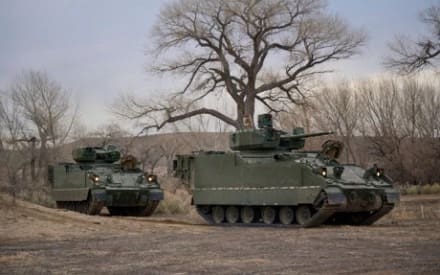
The conflict in eastern Europe has demonstrated the effectiveness of the Bradley Fighting Vehicle, but also the vulnerability to the UAS threat for all platforms, formations and Soldiers. It’s apparent that our current armored brigade combat teams (ABCT) will share the same vulnerabilities in any future conflict. Project Manager Maneuver Ammunition System, in collaboration with Project Manager Mounted Armor Vehicles, leveraged the capability that has been fielded in 30mm and designed a 25mm solution to serve as a unit common C-UAS solution for ABCTs. The 25mm XM1228 BADGER provides organic C-UAS capabilities to the M2 Bradley Infantry Fighting Vehicle with no additional vehicle or weapon modification required. Being employed no differently than the legacy 25mm M792 High Explosive Incendiary with Tracer, the gunner can utilize the M242 weapon system to engage UAS threats with the pull of the trigger. The XM1228 BADGER empowers crews to effectively counter these lethal threats with a low-cost solution, increasing probability of kill and increasing total vehicle stowed kills, resulting in an increased magazine depth. The XM1228 BADGER is utilizing the miniaturized RADAR technology and are able to sense targets within its flight path. Once the bullet detects the target, it detonates, utilizing the fragmentation of the warhead to defeat aerial threats.

Traditional targeting and round placement are a gunner’s biggest challenge for lethality. Introduce moving targets and the challenge grows, resulting in spent ammunition, shorter engagement times and platform vulnerability. The proximity fuzing within BADGER enables a fire and forget application, as a gunner just needs to get ‘close enough,’ which results in highly effective lethal engagements and cost benefits. Integrating this round into the Bradley increases the crew’s ability to engage targets, enhancing survivability and reducing logistical burden by increasing the number of potential kills stowed on the vehicle.

TACTICAL EMPLOYMENT AND DOCTRINE IMPLICATIONS

The Bradley was originally developed to destroy Russian vehicles in the 1970s and 1980s. A new chapter was written in the 2020s with its recent deployment to eastern European conflicts. While it’s been decades since Bradley’s inception, and many attempts at its replacement, the vehicle has exceeded expectations against near peer adversaries, providing a basis for continued service and continue investment in its readiness and survivability.

With all the platforms’ success, UAS with lethal payloads have highlighted a glaring weakness for not only Bradley but all current and future platforms. A disturbing amount of reported vehicle damage is attributed to these UAS, leaving a large capability gap for armored formations; but this will change.

Insert BADGER; currently in production for safety testing for next year, then expected to be in formation in 2027. Whether equipped on a designated vehicle or across the entire formation, crews can engage the threat and continue their assault. By suppressing the sUAS threat and reducing casualties, the attacking force can close with the enemy and leverage their superior firepower to overwhelm the defenders.

CONCLUSION

The XM1228 BADGER provides a mid-to-close range countermeasure for the Bradley. It complements longer and shorter-range countermeasures, creating a layered defense incorporating both kinetic and non-kinetic means. This layered approach extends beyond the platform level; integrating brigade assets within the division creates a holistic capability to counter the UAS threat currently plaguing armored formations in Eastern Europe.

For more information, go to jpeoaa.army.mil/Project-Offices/PM-MAS.

By Maj. Kenneth Welch and Kaitlyn Tani for Behind the Frontlines

MAJ. KENNETH WELCH is the assistant product manager Medium Caliber Ammunition, C-UAS. He holds an MBA from Arkansas State University and a B.A. in psychology from the University of New Mexico.

KAITLYN TANI is the deputy product manager Medium Caliber Ammunition. She holds a Master of Engineering in mechanical engineering from Stevens Institute of Technology and a B.S. in chemical engineering from Rowan University.

MARTE – Main ARmoured Tank of Europe

Wednesday, March 25th, 2026

Key Facts:

  • Half-Time successfully reached at the EDF-Project “MARTE”
  • Actions on track: First technical work packages closed, significant Milestones and Deliverables achieved and approved
  • Strong European industry cooperation confirmed

Bonn, 23.03.2026

The European defence sector entered a new era of industry- and Ministry of Defence-cooperation in the domain of Main Battle Tanks. Funded by the European Defence Fund (EDF), the MARTE project (Main ARmoured Tank of Europe) is far more than a technology project, it is a cornerstone for Europe`s strategic autonomy and military relevance in high intensity land warfare.

MARTE aims to design Europe`s future Main Battle Tank as a system complete that will dominate future battlefields. MARTE sets new standards in multinational capability development by harmonizing the requirements of in total 11 European Member States involved (Germany (lead), Belgium, Estonia, Finland, Greece, Italy, Netherlands, Norway, Romania, Spain and Sweden), including lessons learned from current conflicts. The overall ambitious project goal is to achieve Preliminary Design Review (PDR) maturity within only 24 months.

One year after the official Kick-Off in December 2024, the MARTE project, coordinated and led by MARTE ARGE GbR, a joint venture company between KNDS Deutschland GmbH & Co. KG and Rheinmetall Landsysteme GmbH, now has successfully reached a decisive midterm milestone.

Building on the strong foundation laid at project start, the consortium confirms substantial progress across technical, organizational and strategic aspects within the past 12 months.

Guided by the MARTE Core Team, consisting of MARTE ARGE GbR, KNDS Deutschland GmbH & Co. KG and Rheinmetall Landsysteme GmbH (all Germany), Leonardo SPA (Italy), Indra Sistemas SA (Spain) and SAAB AB (Sweden), the MARTE consortium has managed to complete several technical Work Packages and to submit key deliverables to the granting authority, the European Commission in accordance with the agreed schedule.The results achieved include a comprehensive Concept of Operations as well as a full set of requirements for a future Main Battle Tank System. Led by SAAB AB, the consortium partners engaged in close collaboration with the participating Ministries of Defence (MoDs). This joint effort resulted in a consolidated and harmonized baseline, explicitly incorporating the needs of the participating MoDs, representing the future customers. In addition, under the leadership of Indra Sistemas S.A., the consortium carried out an extensive market survey. Numerous partners contributed their expertise to evaluate the availability, technological readiness and performance capabilities of relevant technologies and subsystems across the European defence market.

With all submitted deliverables formally approved by the European Commission, a strong foundation has been established to advance into the next stage of the MARTE project. This phase focuses design and architecture activities of the overall MBT system and its subsystems, with KNDS Deutschland GmbH & Co.KG, Rheinmetall Landsysteme GmbH and Leonardo SPA taking the lead in driving these key activities.

The General Assembly, held in November 2025 in San Sebastián (Spain) and hosted by MARTE ARGE GbR, gathered all consortium members and key stakeholders at the project’s halfway point.

Beyond presenting the results achieved to date, the event offered insights into ongoing activities, ensured full alignment on the roadmap towards the targeted Preliminary Design Review, and thereby reaffirmed MARTE as one of the most consequential defence programs embedded in the EDF.

The achievements reached to date, the strong industrial collaboration across Europe, and the continued active engagement of the participating Ministries of Defence collectively position MARTE as a decisive strategic investment in Europe’s technological sovereignty and defence innovation.

INKAS Expands Executive Fleet with the Addition of the Armored BMW 7 Series

Friday, March 6th, 2026

INKAS® proudly announces the addition of the all-new Armored BMW 760i to its growing global fleet of premium protected vehicles. As demand for discreet executive protection continues to rise, INKAS® is further strengthening its lineup with a distinctive luxury sedan platform engineered to deliver certified ballistic protection.

Based on BMW’s flagship executive sedan, the armored BMW 7 Series combines advanced technology with proven ballistic engineering. Powered by a 4.4L TwinPower Turbo V8 producing 536 horsepower and supported by a 48-volt mild-hybrid system, the platform offers enhanced efficiency and performance capabilities while supporting the structural requirements of full armoring integration.

Engineered entirely in-house, the vehicle integrates advanced armored steel, multi-layer ballistic glass, and proprietary overlap protection systems, which provide full 360-degree perimeter protection against high-powered rifle threats and explosive risks, all while maintaining the original appearance and performance of the OEM BMW design. Structural reinforcements, upgraded suspension, and critical system upgrades ensure the vehicle maintains stability, handling, and ride quality under armored operating conditions.

The addition of the armored BMW 7 Series marks a notable development within the luxury armored vehicle segment, where armored BMW platforms remain limited in availability. Its distinctive design, advanced technology, and executive profile provide clients with a highly specialized alternative within the premium protection category.

“Clients today are looking for protection solutions that combine advanced engineering with refined executive presence,” said David Khazanski, CEO of INKAS®. “By integrating our proven armoring technology into the BMW 7 Series platform, we are expanding our ability to meet evolving security needs while maintaining the highest standards of quality and reliability.”

As INKAS® continues its global expansion, the introduction of the Armored BMW 7 Series further solidifies the company’s position as a leading manufacturer of high-quality, certified armored vehicles trusted by executives, government officials, and VIP clients worldwide.

Bundeswehr’s Luchs 2 Reconnaissance Vehicle: Rheinmetall Receives Orders for CT-025 Medium-Calibre Turret, Oerlikon KBA 25 Automatic Cannon and Modern Simulators

Wednesday, February 25th, 2026

Rheinmetall will contribute to the reconnaissance capabilities, combat effectiveness and training of the German Army’s Intelligence and Reconnaissance Corps. General Dynamics European Land Systems (GDELS) is the prime contractor for the next generation ‘Luchs 2’ reconnaissance vehicle of the Bundeswehr, which is due to be delivered from 2029 onwards. GDELS has commissioned Rheinmetall to supply the turret, main armament and corresponding simulators. The contract was signed in Kaiserslautern at the beginning of February 2026. The total order value is in the mid three-digit million-euro range.


“We are grateful for the trust that GDELS and the Bundeswehr have placed in our products and capabilities”, said Timo Haas, Head of the Digital Systems Division. “The Luchs 2 contract package is a significant success for our Bremen site and our colleagues in Rome. At the same time, it sends a strong signal in favour of European defence cooperation”.

The largest share of the Luchs 2 contract package will be fulfilled by Rheinmetall Electronics GmbH in Bremen. At first, 274 CT-025 turrets are to be delivered by 2031, marking the first major order of this newly developed, modular, unmanned turret system. The Luchs 2 will receive a modified version of the CT-025, complying with the specific requirements of the Bundeswehr. The newly developed Rheinmetall turret will serve as a technological base platform for different mission profiles, and combines high operational capabilities with maximum adaptability to operational and logistical requirements. 
State-of-the-art sensor technology and digital networking give the turret particular strengths: a stabilised vision system enables precise counter-attacks against ground and air targets, including drones (UAVs). The fully digitalised fire control system with inertial weapon stabilisation, a ballistic computer and GVA/NGVA-compatible interfaces, ensures maximum accuracy, even when the vehicle is in movement. 

Furthermore, the Bundeswehr version of the CT-025 features a turret hatch supplemented by ballistic protection, allowing an open protected position while commanding the vehicle in motion. To comply with the maximum weight requirement, the ammunition supply has been adapted according with the mission. Additionally, the height profile has been optimised to ensure compatibility with other platforms. 

The CT-025’s open, modular framework enables full integration into the Rheinmetall Battlesuite, the Group’s digital ‘capability store’. This allows functions such as AI-supported target tracking or mission-specific software upgrades to be quickly and flexibly integrated without hardware modifications.

The German Army’s mechanized reconnaissance forces will soon be fighting with the tried-and-tested Oerlikon KBA 25 mm automatic cannon. Manufactured by Rheinmetall Italia S.p.A. in Rome, it is Rheinmetall’s most widely produced weapon in the NATO standard calibre of 25 mm x 137. Manufactured over 6,000 times, it combines a battle-proven design with outstanding reliability. With three firing modes (single shot, rapid single fire /175 rounds per minute and burst fire /600 rounds per minute), dual belt feed and a range of up to 2,500 metres, the CT-025 offers versatile firepower. The Oerlikon KBA 25 mm is a cost-effective, scalable solution offering high effectiveness against a wide range of targets due to the variety of 25 mm x 137 ammunition types available. It can penetrate the armour of most modern armoured personnel carriers. 
With a firing rate of 600 rounds per minute – the highest in its category – and thanks to the new 25 mm x 137 proximity fuse ammunition technology, it also provides an effective protection against drones. The dual belt feeder allows two different types of ammunition to be loaded as well as a fast interchange between the two. This turns the KBA 25 mm into a thorough, multi-purpose weapon. Its low recoil enables it to be installed on various platforms, ranging from heavy tracked vehicles to light armoured 4×4 reconnaissance vehicles. It is suitable for both manned and unmanned turrets, as well as anti-aircraft mounts and naval applications. This paves the way for a cross-sectional main weapon for the Bundeswehr, enabling synergies in training, maintenance and logistics.

Modern simulation technology, also supplied by Rheinmetall Electronics, will soon be used to provide comprehensive, mission-oriented, modern training for reconnaissance soldiers. GDELS has commissioned the development and delivery of six combat simulation training devices for vehicle-based reconnaissance troops (AGFS). The reference system is scheduled for delivery in mid-2028 and will later be upgraded to the same standard as the other five devices in the series.

The AGFS is a highly realistic simulator, recreating the battlefield. Its precise replication of key elements, such as vehicle logic, sensor technology and ballistics, enables highly realistic training in line with the ‘train as you fight’ concept. The AGFS is designed to enable networking with other AGFS simulators or other compatible systems. Rheinmetall is developing the AGFS on the same technological basis as the firing and combat simulators already under contract for the Puma infantry fighting vehicle, the heavy weapon carrier and the Schakal wheeled infantry fighting vehicle.

Rheinmetall has also been commissioned in the field of live simulation. The established training device, the AGDUS combat simulator, will be fully integrated into the coming vehicle fleet. The laser-based training tool will enable army reconnaissance troops to train in realistic conditions – from firing exercises to large-scale exercises in the combat training centre in all types of operations. Rheinmetall is thus relying on the installation already proven in the Puma and Lynx programmes, which enables laser-based combat using original display and control elements.

The Role of Heavy Metal on the Technological Front Line: Where Do Platforms Go From Here?

Saturday, January 31st, 2026

Thales RapidRanger – a modular integrated mobile weapon system – firing StarStreak

On Ukraine’s front lines, a small robot trawls through the dark, laden with supplies. Against long odds, this Uncrewed Ground Vehicle delivers a lifeline to the warfighter who depends on it. Whether platforms can go the distance and deliver the required effect is increasingly defined by the mission systems they’re equipped with – the sensor suites, autonomy modules and C4ISR capabilities that turn a technological edge into an advantage.

As Human Autonomy Teams go, this serves as just one discrete example among many. Platforms, of course, predominate. However, their ability to achieve the desired results increasingly depends on the mission systems they are equipped with, which transform technological superiority into a competitive advantage.

Mission systems: the ‘secret sauce’ behind a platform’s value and lethality

As the Minister of State for the Armed Forces warned of the “shadow of war knocking on Europe’s door”, UK MoD is shifting gears to meet an urgent, unerring need: to keep its armed forces agile enough to stay ahead of the threat and lethal enough to deter it altogether. The role of platforms in meeting this need is not in doubt. But if they are doing the heavy lifting, then it is the mission systems on top that fine-tune the solution.

One only has to consider the £1bn earmarked for the Digital Targeting Web, described by General Sir Jim Hockenhull as bringing “a step change in lethality”, to get an idea of what that solution could look like: an interconnected network of AI-enabled sensors, deciders and effectors to help British Army operators, in the context of Project ASGARD, see first and strike fast.

The timing of the Army’s new framing as a ‘20-40-40’ force is not a coincidence. On paper, 20% of its combat capability will come from technologically advanced, high-spec “survivable platforms”. In practice, these platforms – and their operators – will be able to punch above their weight.

Behind all the speeches, strategies and initiatives is an unequivocally clear desired strategic end state. The British Army must become – and must remain – a protected, connected, digitally-enabled and absolutely lethal force.

Augmenting the platform to enhance the operator

If the ‘ends’ have been well-defined, then the ‘ways and means’ are increasingly delivered by mission systems that can make operators safer, more decisive, more dangerous and more situationally aware beyond the metal hull.

“Take the TrueHunter gimbal sight. Its ability to identify and track targets on the move – and at increased range – helps commanders and gunners deftly coordinate and execute recce-strike operations, enabled by a seamless handover of targets.

“Combine this with the RS4 stabilised weapons system, TrueGuardian Threat Detection and Thales’ DigitalCrew, and hunter-killer teams become – like the platforms they operate – far greater than the sum of the parts: a network of organic and synthetic eyes, ears and instinct to deliver tactical advantage,” says Jonathan, Head of Land Sales at Thales.

DigitalCrew™, a domain, platform and sensor-agnostic suite of algorithms, assists soldiers in armoured vehicles. It enhances and augments what they ‘see’ through sensors and alerts them to what is different, dangerous, or of interest.

Such a reality is neither remote nor unattainable. GVA-compliant platforms like the Hippo Multipower Raptor UGV – designed to UK MoD open-architecture standards that allow rapid integration and upgrade of mission systems – are rolling out of the lab, off the production line and on to where they are needed most.

Rigorous experimentation for real-world implementation

Similarly, initiatives like the Land Digital Robotics and Autonomous Systems Integration Capability (L-DRIC), a DSTL-funded programme, are acting both as vanguard and testbed for this sort of capability. The aim is to give operators the means of sensing the battlefield without stepping foot or training eyes on it. From a technical perspective, this involves beyond visual line of sight operation of multiple uncrewed ground and air systems from a crewed platform that’s positioned away from the immediate action.

“Working alongside DSTL, Catalyst and Digital Concepts Engineering, Thales developed trials for L-DRIC during which a single operator controlled three uncrewed vehicles – including Raptor – demonstrating how robotic and autonomous systems (RAS) can be integrated with crewed command vehicles through a unified digital system,” says Jonathan.

Although three uncrewed vehicles were used in the recent trials, this is by no means the limit of the capability. It would be possible to also include fixed winged capability as L-DRIC emulates a combat platform system with full UK DEF STAN 23-009 GVA installation. With sufficient processing power, the digital twin eco-system could incorporate a whole battlegroup simulation that could be rapidly configured down to individual sensor and effector levels. The extension of GVA electronic architecture into RAS force integration has been critical to enabling the rapid sharing of information across the whole eco-system.

This is a UK first. It will not be the last. The physical platforms and systems involved in L-DRIC were digitally twinned, allowing for rapid testing and scaling of new and existing capabilities in a virtual environment without the effort, cost and risk of buying hardware and conducting physical trials.

The lessons learned and successes earned from L-DRIC can be laced through wider defence business: how to pull a TRL-6 capability through to fieldable product at speed; how to help MOD make the most of its existing investments; and how to keep operators lethal without making them targets.

The procurement imperative: investing in software-enhanced mission systems

With every passing week comes new peril, a stark warning, a technology turned on – then turned on the West. Threats proliferate and cross-pollinate across domains. Any advantage gained by either side is slim and fleeting. This is neither new nor news; the nature of war remains unchanged just as its character can become unrecognisable in months.

When it comes to armoured mobility, heavy metal might be enough to make do but it is not enough to make better. The platforms exist – and where they don’t, the programmes to replace them do. As the shadow of war starts knocking louder and louder, what is needed are three distinct but complementary things:

  • a focus on rapidly upgradable, spirally-developed mission systems;
  • a network of highly qualified, high-quality SMEs to design, develop and deliver the systems, and
  • integrators who can ensure these systems all contribute to a faster, tighter and more lethal sensor-to-shooter chain.

For these to work – and work well – we need common standards, open architectures and a platform-agnostic approach to sensors, data fusion and effectors. Technologically, we are already there. Technically, we are not far behind. But if the UK is to meet its aggressive lethality goals, then procurement and upgrade strategy must recognise that money is best spent on the software-enhanced mission systems that turn platforms into force multipliers.

Thales RapidDestroyer – Radio Frequency Directed Energy Weapons (RFDEW)

Italian Army’s A2CS Programme Kicks Off – First Four New Infantry Fighting Vehicles Delivered by LRMV Joint Venture

Thursday, January 29th, 2026

Rome, 27/01/2026 – Today, at the Italian Army Multifuncional Experimentation Center (Ce.Poli.Spe) in Montelibretti, the Leonardo Rheinmetall Military Vehicles (LRMV) Joint Venture delivered to the Armed Forces the first four Lynx KF-41 infantry fighting vehicles. This first delivery marks the official launch of the “A2CS” (Army Armoured Combat Systems) programme, for which an initial contract for the acquisition of 21 new “A2CS Combat” vehicles was signed at the end of last    year.
The ceremony was held in the presence of the Minister of Defence, Guido Crosetto, the Chief of Staff of the Italian Army, General Carmine Masiello, the Chief Executive Officer of Leonardo, Roberto Cingolani, and Dr. Björn Bernhard, Head of Rheinmetall’s Vehicle System Division Europe. Also present were the CEO, Laurent Sissmann and the Executive Chairman of the Joint Venture, David Hoeder.

The Minister of Defence, Guido Crosetto, stated: “The international scenario requires a constantly evolving Defence, capable of ensuring the security of the country and safeguarding national interests. This calls for a modern, flexible and credible model, based on high levels of operational readiness, qualified personnel and advanced technological capabilities. Within this framework comes the delivery of the Lynx armored vehicle, the result of Italian-German industrial cooperation, to the Italian Army, aimed at strengthening land systems through the introduction of state-of-the-art platforms. In this process, the Army’s Multifunctional Testing Center (CEPOLISPE) plays a central role, ensuring the testing and technical evaluation of vehicles, equipment and weapon systems to determine their suitability for operational use.”

 “The Army has a clear direction and well-defined requirements for the new vehicles to accelerate the ‘mechanization’ path of the Armed Force, which concretely begins today. After 30 years in which the Italian soldier has demonstrated courage, commitment, determination and professionalism in peace support operations — to the point of coining the ‘Italian Way’ of peacekeeping — we have no doubts about their capabilities. They will be able to operate at their best if equipped with technology that meets the challenges ahead: this vehicle will radically change the way the Army fights”, stated the Chief of Staff of the Italian Army, Gen. C.A. Carmine Masiello, at the presentation of the A2CS “Lynx”.


Roberto Cingolani, Chief Executive Officer and General Manager of Leonardo, stated:
“The start of deliveries of the new armoured vehicles represents an important milestone in the programme we are carrying out with the Italian Army. The international alliance between Leonardo and Rheinmetall continues to stand as a key reference point for strengthening national defence and for the development of a solid, integrated and competitive European industrial base. This is a commitment we consider essential to ensuring national and European security and strategic autonomy.”

Armin Papperger, Rheinmetall Chief Executive Officer said: “With the handover of the first armoured vehicles to the Italian armed forces, we are opening a new chapter in the success story of the Lynx vehicle family. As a next-generation combat vehicle, Lynx not only sets standards in terms of versatility, protection, effectiveness, scalability and future-proofing, but also in terms of enhanced European armaments cooperation.”

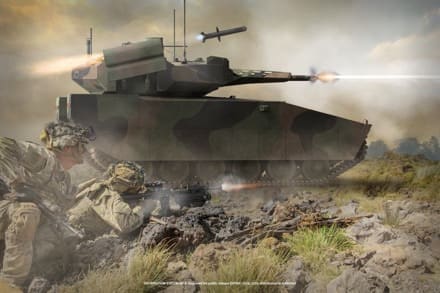
The Lynx platform is capable of fulfilling multiple roles, including infantry fighting vehicle, troop transport, mobile command post and ambulance. The 4 vehicles delivered today complement Rheinmetall’s Lance 30mm turret, which will later be replaced by Leonardo’s Hitfist 30mm turret. The latter will equip all the other 16 armoured vehicles of this contract.

The A2CS programme – Army Armoured Combat System, originally named AICS – Armoured Infantry Combat System together with the new Main Battle Tank programme will renew the Italian Army’s heavy vehicle fleet , providing cutting edge technology, characterised by high levels of digitalisation and connectivity, and capable of operating within the most complex multidomain contexts. This will also provide an opportunity for the renewal of the armoured fleets of international partners.