Aquaterro

Archive for the ‘Army’ Category

‘Stryking’ Towards Networked Battlefield Communications

Tuesday, March 7th, 2023

HOHENFELS, Germany — As the geopolitical landscape in Europe continues to draw attention, one U.S. Army regiment stationed in Germany is leading the force with new on-the-move communications from inside the hull of a Stryker.

The 2nd Cavalry Regiment recently completed its annual Dragoon Ready exercise at the Joint Multinational Readiness Center in Hohenfels, Germany. This exercise helps to ensure readiness and train the regiment in its mission essential tasks in support of unified land operations, enhancing proficiency and improving interoperability with NATO Allies.

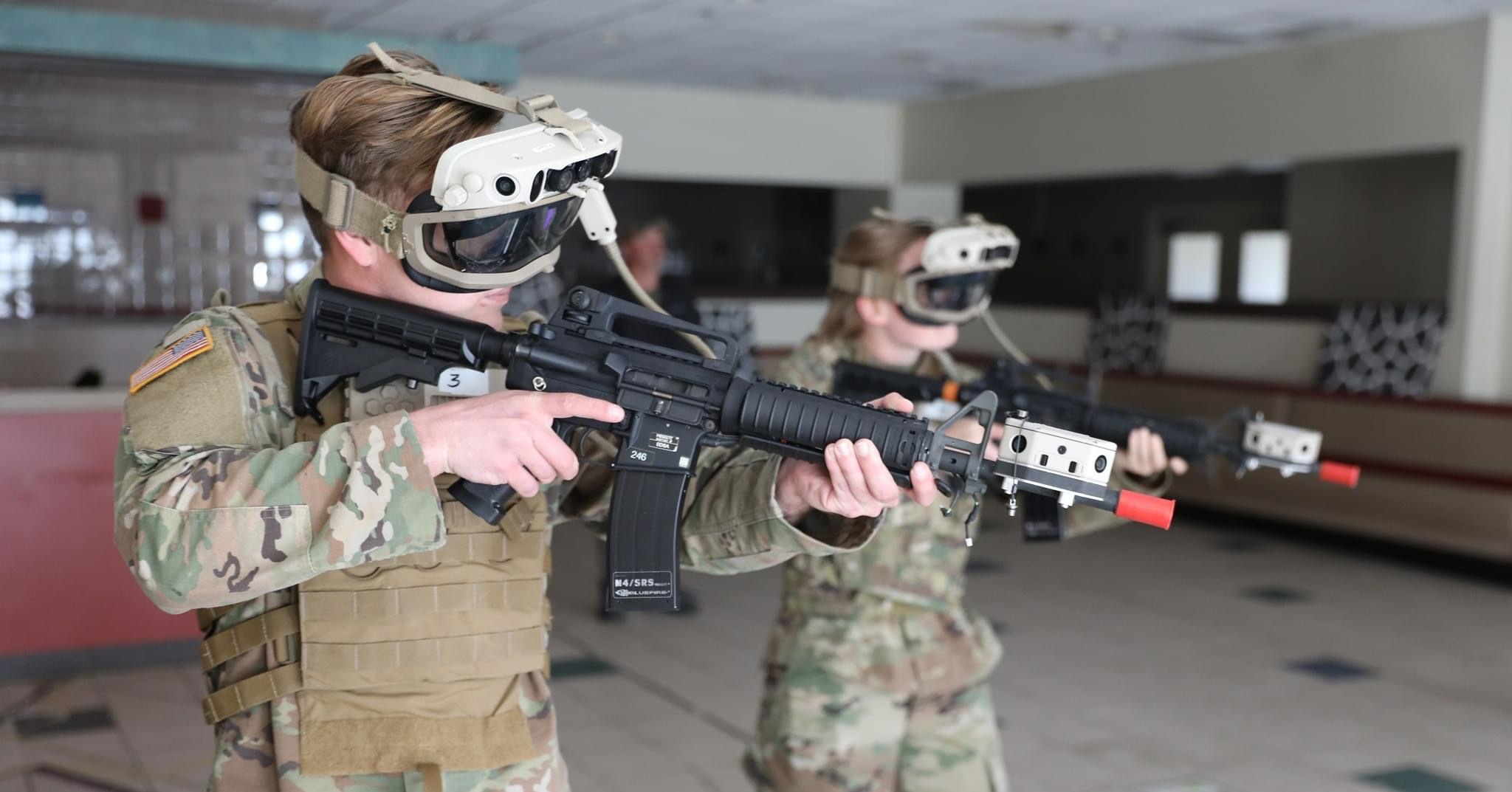
The exercise also served as the Army’s second Integrated Tactical Network (ITN) operational testing event (Ops Demo Phase II) for Capability Set (CS) 23, which demonstrated the latest version of networked communications between the command post, integrated Stryker vehicle platforms and dismounted troops.

Several weather events, including freezing temperatures and pounding snowfalls, provided a real-world backdrop to ensure the 2CR learned to operate and stress the ITN equipment in all environments.

As part of the U.S. Army V Corps, the 2CR provides a lethal and agile force capable of rapid deployment throughout the European theater. The “Dragoons” are the first mechanized unit to receive CS23 for evaluation and operational testing, with CS23 officially fielding in 2023. Last June, the Army conducted Ops Demo Phase I with the regiment’s 3rd Squadron, while Phase II two incorporated the entire regiment, making this the largest ITN test to date.

“The regiment has taken on a tremendous responsibility to help the Army continue to mature the Capability Set,” said Matthew Maier, Project Manager for Interoperability, Integration and Services, Program Executive Office for Command, Control, Communications-Tactical (PEO C3T). “From the earliest collaborations deciding how components will fit into mounted formations like 2CR’s Stryker squadrons, to this week’s full-regimental networked communications as part of Dragoon Ready, we could not be more thankful for their feedback on CS23 capabilities.”

The ITN’s flexible capabilities are comprised of both military and commercial technologies and include several varieties of software-defined tactical radios, including both single channel radios and two-channel Leader and Manpack Radios, commercial phone technology and small satellite terminals. ITN radios deliver applications through the Nett Warrior end-user device (EUD) to consolidate the air, ground and fires pictures onto a single common operating picture.

New ITN capabilities are being developed as part of the Army’s capability set process, which incrementally delivers new capabilities every two years informed by Soldier feedback and industry advancements. With this approach, the Army can leverage the best of commercial technology to ensure it stays current in the fight with peer and near-peer adversaries.

The CS23 Ops Demo Phase II is a critical precursor to CS25, which will integrate the ITN capabilities on other mounted platforms for Armored Brigade Combat Teams. This exercise will also provide data and lessons learned on how to meet the Army’s shift from brigade to division as a unit of action, leading up to informing network solutions for Army 2030 priority units.

“We have been brigade-centric since the late 2000s, but as we now focus ourselves as a division as unit of uction, we have to think about the architecture and how we bring this vision to the network to support the fight,” said Maj. Gen. Tony Potts, program executive officer for C3T.

Radios are the key capability used for ITN communications across the echelons, and for this exercise, the unit operated Leader radios and single channel radios for dismounted operations and Manpack radios for both dismounts and inside the vehicles. The radios are connected to the Nett Warrior EUD, which is a commercial cell phone with hardware and software ruggedization for military use. The Nett Warrior EUDs provide the dismounts with real-time, map-based position location information (PLI) and provides mission essential data to and from command posts.

The primary waveform used with ITN is the TSM waveform — a commercial mesh waveform that provides line-of-sight voice, data and PLI communications using a multi-node relay, where every radio is a repeater for all network traffic. The TSM operates in the secure but unclassified-encrypted network environment, which enables encrypted data to be transmitted over military or commercial networks, the Internet, cellular networks or compatible but non-military waveforms.

“The TSM is very clear as opposed to [the single channel ground and airborne radio system],” said Pfc. Liam Croson, radio telephone operator in charge of communications from inside the hull to the command post and squad-level commanders. “It’s self-healing and performs well even in shaded areas.”

Reconnaissance missions also benefited from ITN’s capabilities.

“The whole suite of ITN allows us to be fast, flat and accurate,” said Lt. Col. Joseph Byerly, 4th Squadron, 2CR commander.

Byerly’s Soldiers report from the frontline back to the analysts in the command post, who collect information to make informed battlefield decisions. They incorporated the Mobile User Objective System (MUOS) satellite communications system, which has been a pivotal reach-back capability, especially as Army operations in Europe and INDOPACOM require beyond line-of-sight, point-to-point communications across the services.

“At one point we had an analyst on a cell talking to the commander at the front of the formation 20k away using MUOS,” Byerly said. “I’ve never had the capability before.”

The analyst looked at a UAV feed to observe a vehicle, type the intelligence into the chat using the EUD to the commander on the ground, who was able to simulate the ‘kill’ of the vehicle, Byerly said.

“With ITN, we had connectivity between different elements of the organization that aren’t normally connected,” Byerly said. “Every day we used the ITN we learned more and were able to incorporate it into our exercise.”

The breadth of the test brought together multiple organizations to assess and measure the operational effectiveness, suitability, and survivability of CS23’s ITN, including the Network Cross-Functional Team, U.S. Army Combat Capabilities Development Command C5ISR Center, PEO Intelligence, Electronic Warfare and Sensors for the Electronic Warfare stress test; PEO Soldier for NET Warrior and Dismounted EUDs; and the Army Test and Evaluation Command (ATEC), which has the critical role of collecting all network performance data, Soldier surveys, first-hand observations and instrumentation data from the various ITN components.

Presented with the opportunity to test an entire European-based Army regiment tasked with multiple priorities required flexibility and teamwork from the unit and testers.

“We were faced with achieving our test and evaluation objectives while simultaneously adhering to unit training objectives,” said Maj. Greg Stueve, test officer for the Army’s Operational Test Command, under ATEC.  “With the many competing priorities facing the unit, they worked with the test team to ensure we had opportunities needed to collect sufficient data.”

Preliminary reports will identify system successes and key priorities for improvements to further enhance ITN capabilities throughout the regiment, which will also be used to iterate development for future capability sets.

“The speed and accuracy at which we continue to field capabilities across the force is due to our ability to participate in major operational exercises such as Dragoon Ready and implement our capability set process,” Maier said. “For now, we will review the data points collected, and most importantly, continue to support the critical mission of the 2CR as they take on current and future deployments throughout the European Command’s area of responsibility.”

By Kathryn Bailey, PEO C3T Public Affairs

The Long Wait Is Over: Vietnam Veteran to Receive Medal of Honor

Saturday, March 4th, 2023

WASHINGTON — The White House announced retired Army Col. Paris Davis will receive the Medal of Honor for his acts of bravery as a commander during the Vietnam War.

President Joe Biden will present the award to Davis during a ceremony at the White House Friday.

Davis commanded American Special Forces as well as an inexperienced South Vietnamese company against a large North Vietnamese force June 17-18, 1965. His tactical leadership allowed the company to gain an advantage and surprise the enemy.

Davis was wounded in the initial assault, but he continued to push forward, killing several enemy soldiers.

Following a counterattack from the North Vietnamese and facing intense gun fire, Davis led a small group of Soldiers as they destroyed locations defended by the enemy.

Davis then regrouped with his company and ordered air strikes on the enemy. The North Vietnamese, however, launched another attack with increased numbers. Davis was again wounded but managed to hold off the enemy.

Noticing two of his Soldiers seriously injured, Davis disregarded his own safety and went to save them. He was shot in the leg as he pulled the first one to safety.

Davis went back to get the second Soldier and drew heavy enemy fire. He crawled 150 yards and was hit by grenade fragments, causing multiple wounds. He didn’t let that stop him and was able to get the Soldier to safety.

After rescuing both men, Davis directed the helicopter extraction of the wounded but refused it for himself. He continued to fight the enemy until his entire company made it out safely. He then remained on the battlefield to coordinate the final aerial and artillery attacks, ensuring victory.

Davis saved the lives of multiple Soldiers during the battle and led his company to victory over a much larger enemy force. He was awarded the Silver Star for heroism.

Now, after nearly six decades, Davis will receive the nation’s highest award for military valor.

By Christopher Hurd, Army News Service

US Army Tests Cutting Edge Parachute System

Friday, March 3rd, 2023

YUMA PROVING GROUND, Ariz. — In a combat theater, ground troops in the most isolated areas depend on airlifts for resupply. In the worst conditions, time can be a matter of life or death.

U.S. Army Yuma Proving Ground is home to all manner of parachute testing, with spacious and instrumented ranges large enough to accommodate even the world’s largest cargo parachutes.

YPG has long been on the cutting edge of developmental and operational testing of new airdrop capabilities, including the Rapid Rigging De-Rigging Airdrop System, or RRDAS, which promises to get Soldiers out of a drop zone and into the fight with the equipment they need faster than ever.

Conventional cargo payloads are typically cushioned with a honeycomb-like cardboard material between the vehicle or other heavy item and the steel palette that carries it from an aircraft to the ground. Even with good cargo parachutes and a perfect landing, multiple layers of the honeycomb will collapse upon impact with the ground. RRDAS, however, dramatically reduces the amount of honeycomb necessary to dissipate the force of impact with 10 reusable airbag modules. The self-inflating airbags can be utilized as low as 750 feet above ground level and carry loads from between 5,000 and 22,000 pounds.

“When it flies through the air, ambient air pressurizes all of the fabric-based airbags,” said Maj. Matthew Rohe, Assistant Product Manager for Cargo Aerial Delivery at the U.S. Army Program Executive Office Combat Support and Combat Service Support. “When it hits the ground, the airbag modules cushion the payload, so we don’t need as much honeycomb as in the current design.”

The reduced use of honeycomb should lower rigging time by 25%, but testers are particularly excited about reducing de-rigging time by 40%, which gets Soldiers out of harm’s way faster.

“The end state is that it will reduce the de-rigging time by about two and a half hours primarily through the reduction of the use of honeycomb so Soldiers on the drop zone won’t have to use axes, shovels and picks,” said David Emond, operations manager for Product Manager Force Sustainment Systems. “Currently, once the vehicle crushes the honeycomb Soldiers have to cut out all the honeycomb around the vehicle’s tires to be able to drive it off.”

The system also boasts features to ensure an airdropped vehicle will land upright.

“The system has deployable outriggers on it,” said Rohe. “If it is a high center of gravity load with a chance of tipping over when it hits the ground, these outriggers kick out and will stop it from flipping over.”

Though developmental testing of RRDAS is scheduled to end later this year and full fielding of the system to troops is expected in Fiscal Year 2025, intermittent testing at YPG based on feedback from operational testing at Fort Bragg, North Carolina should continue for two years after that.

“We will be able to increase the load of the payload and the length of the platform so we can drop heavier and longer items,” said Rohe. “We’ll be testing on and off at Yuma for several years to come.”

YPG is the Army’s primary personnel and cargo parachute tester, with decades of institutional knowledge in both rigging and evaluating these complex airdrop systems, as well as coordinating multiple sorties safely. The post’s nearly 2,000 square miles of restricted airspace and favorable weather make it an ideal location for air drop testing.

“We always use YPG because of the test assets available,” said Emond. “It is safer and cheaper to conduct developmental testing here: it is the most reliable and dependable place to get the aircraft that we need to fly test missions.”

By Mark Schauer

U.S. Army Selects AeroVironment JUMP 20 Medium Unmanned Aircraft System to Enter Future Tactical Unmanned Aircraft System (FTUAS) Program Increment 2

Thursday, March 2nd, 2023

• AeroVironment is the only company to secure an award for all FTUAS program increments, including FTUAS Increments 0,1 and now 2

• Increment 2 is the final phase of the U.S. Army’s FTUAS program competition to select a replacement for the RQ-7B Shadow UAS

The JUMP 20 is shown conducting flight tests and maneuvers on February 25-26, 2021, at Fort Benning, Georgia during the Future Tactical Unmanned Aircraft System (FTUAS) Rodeo. (Photo: Courtesy asset of the U.S. Department of Defense attributed to Mr. Luke J. Allen). The appearance of U.S. DoD visual information does not imply or constitute DoD endorsement.

ARLINGTON, Va., March 1, 2023 – AeroVironment, Inc. (NASDAQ: AVAV), a global leader in intelligent, multi-domain robotic systems, today announced it was selected by the United States Army on Feb. 28, 2023, to move forward in the Future Tactical Unmanned Aircraft System (FTUAS) program.

AeroVironment’s JUMP 20 will compete with several other vendors in the FTUAS Increment 2 multi-phased effort which will allow the Army to select the best system for its needs. Ultimately, FTUAS Increment 2 aircraft will be fielded to Brigade Combat Teams (BCTs) throughout the Army, replacing the long-serving RQ-7B Shadow UAS.

During the early stages of what would become the U.S. Army’s FTUAS program, AeroVironment’s JUMP 20 demonstrated superior competitive performance and was awarded the FTUAS Increment 1 contract to develop a prototype system to field to one Brigade Combat Team (BCT). Its success throughout the demonstrations led to AeroVironment’s contract award for FTUAS Increment 0, in which the U.S. Army fielded the JUMP 20 into an additional Army BCT within the United States Army Europe. AeroVironment is the only company awarded the FTUAS contract for all three program increments.

“The AeroVironment JUMP 20 is the most mature and capable solution in its class,” said Gorik Hossepian, AeroVironment’s vice president and product line general manager for medium unmanned aircraft systems. “We will continue to work closely with the U.S. Army to ensure we meet their performance needs both today for an all-environment aircraft system and in the future as requirements evolve to meet changing battlefield demands.” 

First-Ever Multi-Domain Effects Crews Increase Readiness at Fort Huachuca

Thursday, March 2nd, 2023

FORT HUACHUCA, Ariz. — Senior leaders from across the Army converged on Fort Huachuca on Feb. 13, to observe a new development in Army Modernization: the successful conclusion of the 1st Multi-Domain Effects Battalion’s inaugural exercise, conducted on the newly built 1st Lt. John R. Fox Multi-Domain Operations Non-Kinetic Range Complex.

Throughout the day, the 1st MDEB demonstrated a wide array of non-kinetic effects, highlighting the significance of this milestone in the 1st Multi-Domain Task Force’s path to become fully operationally capable.

The Multi-Domain Effects Battalion, assigned to the 1st Multi-Domain Task Force, has the mission of employing non-kinetic effects to deter adversary aggression in the Pacific.

The commander of the U.S. Army Intelligence Center of Excellence and Fort Huachuca, Maj. Gen. Anthony Hale, hosted the visiting party, consisting of almost 50 general officers and senior leaders, to demonstrate the effects of a collaborative effort to create realistic training and to test Army crews on using technologies and hardware that no military on earth has ever before fielded.

“This is a great opportunity for Fort Huachuca to show our unique capabilities in the electromagnetic spectrum on the 1st Lt. John R. Fox range,” said Hale. “We have 700 acres of training area, we have 1,500 square miles of restricted airspace, and since we are surrounded by mountains, we can keep the electrons in our range complex. And this really allows the MDEB to come out here and really test their capabilities to train on their systems that they are going to deploy with into theater.”

Completion of this range complex marks the culmination of two years of collaborative effort, starting when the Chief of Staff of the Army approved Fort Huachuca for a planning task to develop the first multi-domain operations-capable range.

“We have been testing equipment for the Army and for the joint force for over 70 years now we are bringing this training capability, not only to the Army, but to the joint force,” said Hale. “The MDEB is training their teams on their equipment that they will deploy with into theater and use. As we do that in the joint environment, that makes everybody better in our warfighting capabilities.”

Soldiers training on this new range complex emerged with an enhanced understanding of multi-domain operations and their important role in the Pacific region, ultimately to ensure a free and open Indo-Pacific.

“This will certainly be a key component of our training program as we move forward,” said Brig. Gen. Bernard Harrington, commander of the 1st Multi-Domain Task Force. “As our Soldiers go through this training, they are rehearsing their individual and small unit tasks in preparation to deploy forward in theater and operate in a real-world environment.”

This exercise is a major milestone, and a critical part of a massive Department of Defense effort to modernize the force and prevent future conflicts.

“The Army and the Department of Defense is taking on the largest modernization effort in the last four decades,” said Peter Don, Senior Technical Advisor for USAICoE and Fort Huachuca. “We realized that as we modernized our kit, our capabilities, and our formation, our ranges were not keeping pace and would not allow us to work through the next generation of weapon systems, collection systems, and also have us work through our warfighting functions and concepts. So, we wanted to create an environment and a range and a training area that would allow us to train and certify our Soldiers on their weapon systems, but also explore and expose different technology that will allow us to adjust how we need to fight.”

Story by LTC Derek Wamsley, 1st Multi-Domain Task Force

Photos by SFC Henrique De Holleben

PEO Soldier Delivers CTAPS to Two Brigade Combat Teams in the Arctic

Tuesday, February 28th, 2023

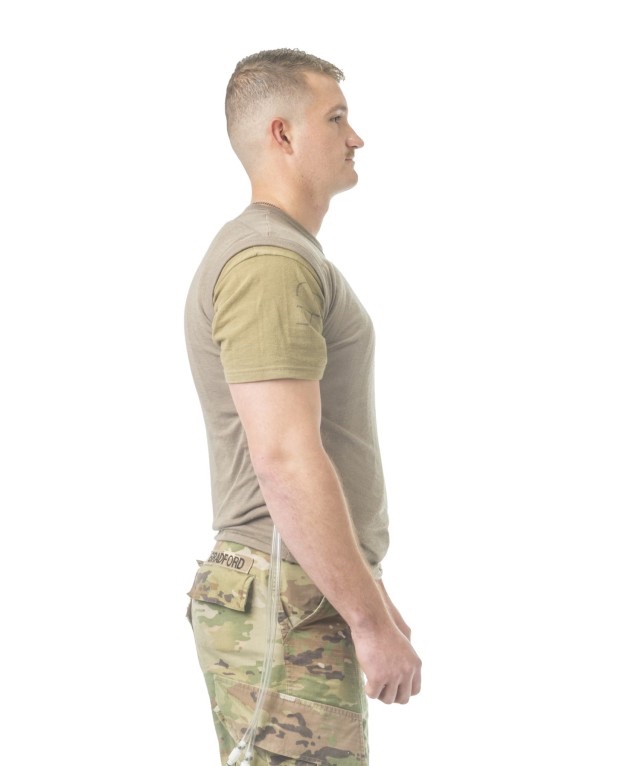
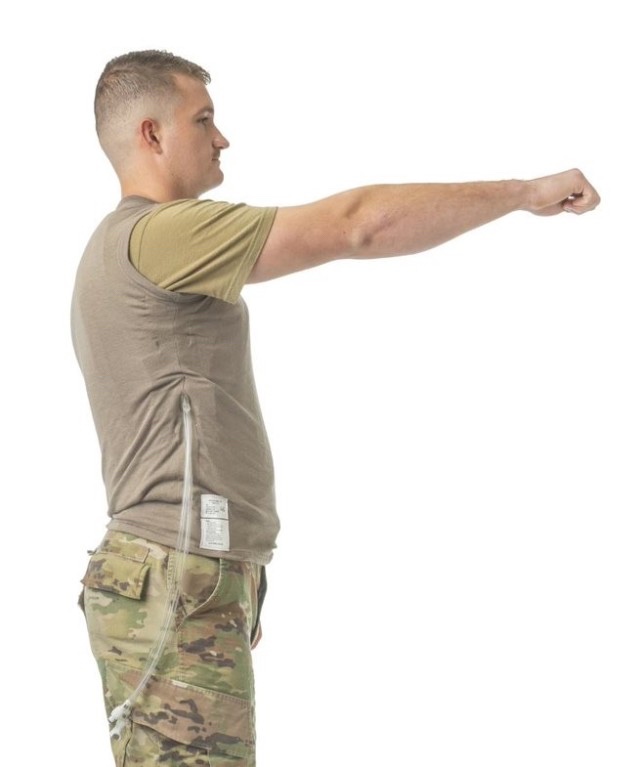
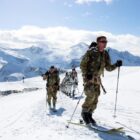
Project Manager Soldier Survivability (PM-SSV) began the issuing of the Cold Temperature and Artic Protection Systems (CTAPS) system to two Brigade Combat Teams (BCT) of the 11th Airborne Division at Ft. Wainwright and Anchorage, AK on February 13, 2023. Soldier feedback on CTAPS will inform the Army’s next generation Cold Weather Clothing System requirement for protection in extreme cold weather operating environments, with a more modular, adaptable, and packable system.  

PM-SSV in conjunction with the DEVCOM Natick Soldier Center worked tirelessly to fulfill the June 2022 Army directed requirement to outfit soldiers in Alaska in support of winter field training exercises, inform the Army long-term requirement for Arctic Clothing and provide the 11th Airborne Division with this improved interim capability.

CTAPS allows soldiers to effectively operate and sustain combat operations in extreme conditions increasing their ability to fight is temperatures as low as -65 degrees Fahrenheit.

The team transitioned the CTAPS from Science & Technology to production and began delivering CTAPS to the 11th Airborne Division within six months of receiving the Directed Requirement.  This included transitioning three novel materials to production that had never been produced in large quantities by the industrial base, establishing production contracts with multiple vendors, and ramping up the entire supply chain to support this effort.  Currently vendors are producing between 250-400 sets of CTAPS per day and 300-500 soldiers are being issued CTAPS every day.

Army Software Factory, USAREUR-AF Partner on Tech Modernization

Tuesday, February 28th, 2023

GRAFENWÖHR, Germany — In today’s rapidly evolving digital landscape, many organizations strive to stay ahead of the curve in terms of technology and innovation. The Department of the Army is no exception, and its efforts to modernize and streamline its operations have recently taken a leap forward due to the agile software development processes of the Army Software Factory, or ASF.

The ASF is a significant step forward in the modernization of military operations. By streamlining an agile software development cycle, minimizing the need for external acquisition and promoting collaboration, the ASF is positioned to deliver innovative solutions to the military.

“The idea here is that we’re trying to meet Soldiers where they are at,” said 1st Lt. Aanand Shah, a software engineer for ASF. “What that means here in Europe is we are able to develop solutions that can work across multiple networks with Allies, partner countries and nations as well as internally within theater.”

During a recent interoperability exercise at 7th Army Training Command the Soldier-led ASF, in collaboration with U.S. Army Europe and Africa Mission Command Support Branch, developed new solutions directly addressing issues that in the past created challenges for U.S. and NATO allied system interoperability.

“My developer initially wrote an application that would bridge data between U.S. and NATO systems from the Army Tactical Assault Kit,” said Martin Christian Dudel, a civilian senior software engineer with USAREUR-AF. “The Army Software Factory came to Europe and helped us modernize the code and take it from a standalone application that must run on a server, into a container that can operate in a cloud native environment on the tactical edge bridging U.S. and NATO systems. This is a capability that we didn’t have before.”

The solution opens an entirely new range of possibilities as now essentially any application can be developed, deployed and seamlessly interact with the data of a partner nation’s application operating at the tactical edge.

“We’ve developed a path to production where apps go from origin to security scanning to deployment into Kubernetes clusters that will run on a TSI stack here on the edge of the battlefield,” said Sgt. 1st Class Joshua Millett, a platform engineer with ASF.

At the heart of ASF is a commitment to continuous improvement and a focus on collaboration. Teams within the ASF are encouraged to work together and closely with their end users to cultivate user stories, share ideas, determine best practices and learn from each other. This helps foster a culture of innovation and ensures that everyone is working toward a common goal of delivering high-quality software solutions to meet the needs of the military.

“It’s incredibly rewarding for our Soldiers to assist USAREUR-AF in accomplishing its challenging mission while we help Army Futures Command design the Army of 2040,” said Col. Vito Errico, director of ASF. “The Army has exceptionally talented Soldiers who can help lead us through digital transformation at the lowest levels.”

Upon meeting with representatives from the 7th Army Training Command’s public affairs team, Col. Michael Kaloostian, a senior leader and decision maker with USAREUR-AF’s G-6 division, confirmed the ongoing collaboration and solutions from ASF’s efforts.

“Our relationship with the Army Software Factory is essential to the command’s digital transformation,” said Col. Kaloostian. “The European theater’s digital landscape is complicated, and it’s our responsibility to simplify it by innovating software-based solutions that are shareable with our mission partners at the speed of conflict. Incorporating a DevSecOps model into our cloud environment assures that we can rapidly meet the command’s operational priorities and truly become data-centric.”

One of 7th Army Training Command’s core missions is to lead the Army in developing Allied and partner nation interoperability by providing the Army with an active learning, near-peer environment to press modernization initiatives. Working with ASF to furnish a realistic operational training environment for U.S., NATO, Allied and partner nations to introduce solutions to the military’s modern challenges is one of the ways 7th ATC works toward accomplishing that mission.

Story by CPT Darryl Padgett

Photos by SSG Ashley Low

SMA Plans To Reward Soldiers Who Meet Rising Standards

Monday, February 27th, 2023

ARLINGTON, Va. — By raising the standards of its physical assessment tests and Basic Leader Course, the service will continually challenge its Soldiers resulting in more successful missions, the Army’s top enlisted leader said.

Sgt. Maj. of the Army Michael A. Grinston, speaking during an Association of the U.S. Army meeting Feb. 14, praised Soldiers for their ongoing efforts on one such mission, supporting the conflict in Ukraine.

To allow Army leaders to focus on the larger battle picture, Grinston said Soldiers at the squad level must be proficient in battle drills, land navigation and basic first aid.

“If you don’t know how to stop a Soldier from bleeding, it doesn’t matter if you’re in large-scale combat or counterinsurgency, you don’t know how to do your tasks,” Grinston said. “At the battalion and below, you need to be an absolute expert in your job. Every Soldier in your organization needs to know their job so well that we shouldn’t have to worry about that. [Then] we can worry about the deep fight and long-range hypersonics.”

The Expert Infantryman Badge, which distinguishes Soldiers who demonstrate excellence or proficiency in infantry skills, and the Expert Soldier Badge and the Expert Field Medic Badge form the EIB3.

To qualify for the EIB, Soldiers must complete a new physical assessment test.

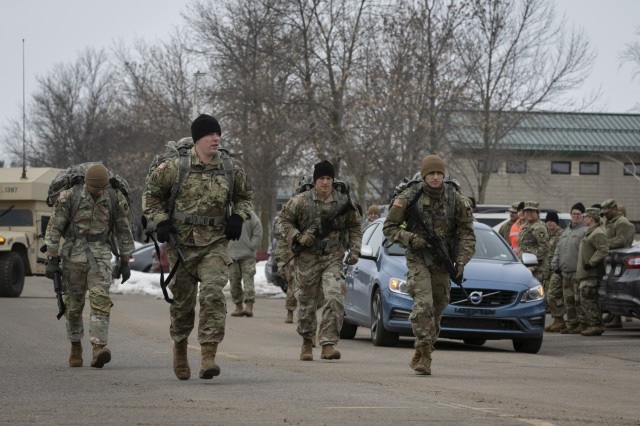
During the qualification, Soldiers must don operational camouflage pattern uniforms and helmets, run for one mile, perform pushups and sprints, and push through a sandbag course. Then Soldiers must complete a high crawl, perform a series of exercises with a partner, run a designated distance while carrying weights and finally, Soldiers will finish another one-mile run.

Grinston said the service plans to reward Soldiers who maintain a high level of physical fitness. Soldiers who score 540 or higher on the Army Combat Fitness Test will be exempt from the body composition measurements with a directive expected to be published in March, Grinston said. Soldiers can score a maximum of 600 on the exam.

Additionally, Grinston announced last year that the service will bring land navigation qualification back to the Basic Leader Course.

“What we need to do is continuously challenge our NCOs,” Grinston said. “So that’s one of our biggest changes; make our first NCO course rigorous and bring back a little rigor and field time and the tactics.”

Grinston lauded the efforts of Soldiers who deployed in support of the war in Ukraine, crediting Army units’ swift response times and ability to carry out logistics support to the Ukrainian military.

Within seven days of the Feb. 24 Russian invasion of the Eastern European country, the 1st Armored Brigade Combat Team, 3rd Infantry Division deployed to Grafenwoehr, Germany, where they test fired tanks and Bradley Fighting Vehicles, Grinston said. The brigade deployed on short notice after completing a tour in South Korea.

“When Russia invaded Ukraine, your Army knew exactly what we needed to do,” Grinston said. “You should be proud of what we’ve done.”

The 82nd Airborne Division completed its fourth no-notice deployment to Europe to aid the Ukrainian military. Last month the Defense Department announced that it would send 90 Stryker armored combat vehicles to assist the Ukrainian military.

In January Grinston visited Soldiers at Grafenwoehr to watch Army units conducting air defense training with Bradleys. Members of the National Guard have trained and mentored Ukrainian Soldiers.

“The Ukrainians have a huge will to fight,” Grinston said. “Whether it’s air defense, Bradleys or medical [training], they were really motivated so they could get back into the fight. I’m extremely proud of the Ukrainians and what they’re doing. But I’m also extremely proud of our Soldiers at getting rallied around that mission and doing anything asked of them.”

By Joe Lacdan, Army News Service