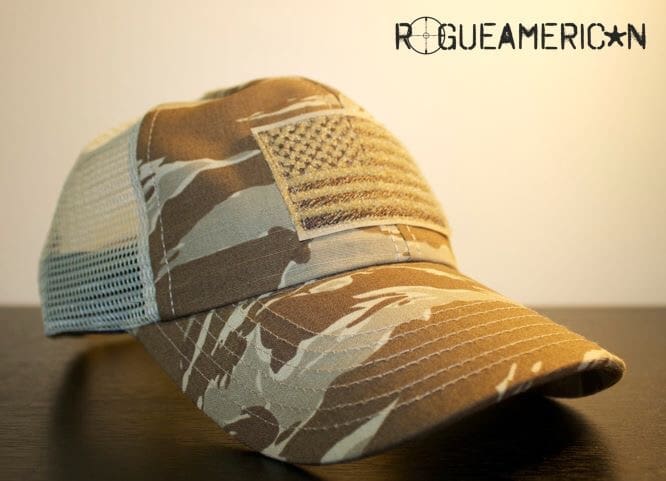
Rogue American Apparel is offering a Desert Tigerstripe version of their American Flag and Death Card Caps
UF PRO is currently offering three new cold weather garments in licensed MultiCam: the Hunter Sweater, Delta AcE Sweater, and Delta AcE Plus Jacket.
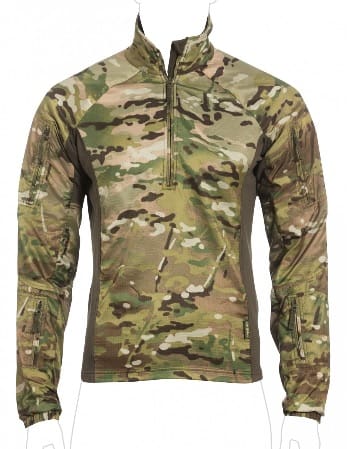
The Hunter Sweater is a lightweight layer intended for cold, windy, or wet days. It is made from 100% polyamide, and lined with 37.5 COCONA micro fleece. Additional features include the Striker sleeve pocket configuration, elastic cuffs, and a 1/2 front zipper.
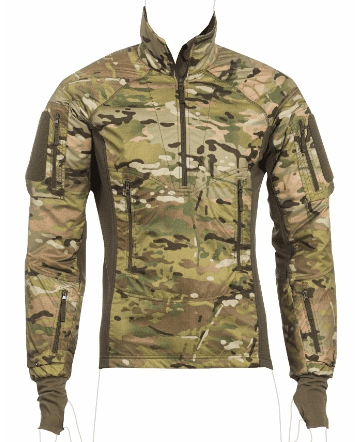
The Delta AcE Sweater is a cold weather sweater designed using UF PRO Hybrid/Design technology to create a garment with a windproof and water repellent nylon ripstop laminate front material lined with 37.5 micro fleece, 37.5 micro fleece in the back and arm pit areas, and sleeves filled with G-Loft insulation lining. UF PRO air/pac inserts in the shoulder allows for comfortable carry of packs, plate carriers, and other heavy gear. Additional features include Striker sleeve pocket configuration, dual access front pocket, wrist warmers, Velcro loop panels on the upper arm of both sleeves, and a 1/2 front zipper.
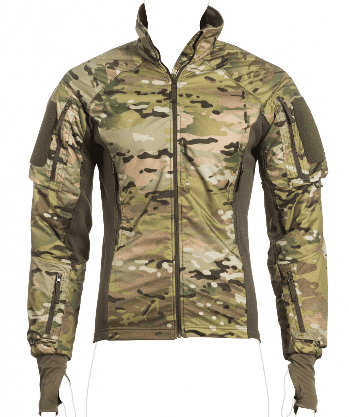
Delta AcE Jacket
The Delta AcE Jacket is designed with UF PRO’s Hybrid/Design technology, creating a garment with an ePTFE softshell laminate front and back, 37.5 micro fleece contours at the back and arm pit areas, and two layer laminate sleeves filled with G-Loft insulation lining. UF PRO air/pac inserts in the shoulder and upper back area allows for comfortable carry of packs, plate carriers, and other heavy gear. Additional features include Striker sleeve pocket configuration, two front pockets, wrist warmers, lined collar, Velcro loop panels on the upper arm of both sleeves, and a full length front zipper.
UF PRO has been offering garments in the MultiCam-inspired SloCam for a while now, however this is the first time they’re offering products in the original MultiCam pattern itself.
Thanks to Greg for the tip!
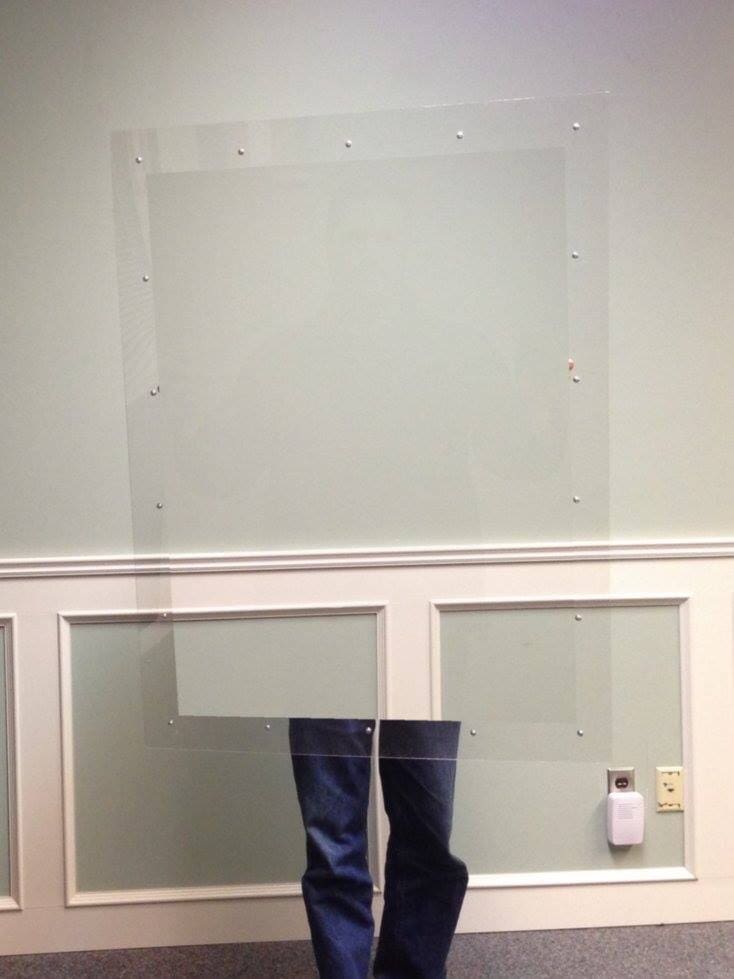
On their Facebook page, Canada’s Hyperstealth Biotechnology Corporation wondered if their Quantum Stealth (Light Bending Material) might have offered better protection to the first responders and security personnel during last week’s terror attack in Ottawa. What do you think?
During a recent trip to Phoenix, Arizona we had the chance to stop by Tactical Concealment Manufacturing where they showed us a couple of their products. One that stood out is the Boomslang.
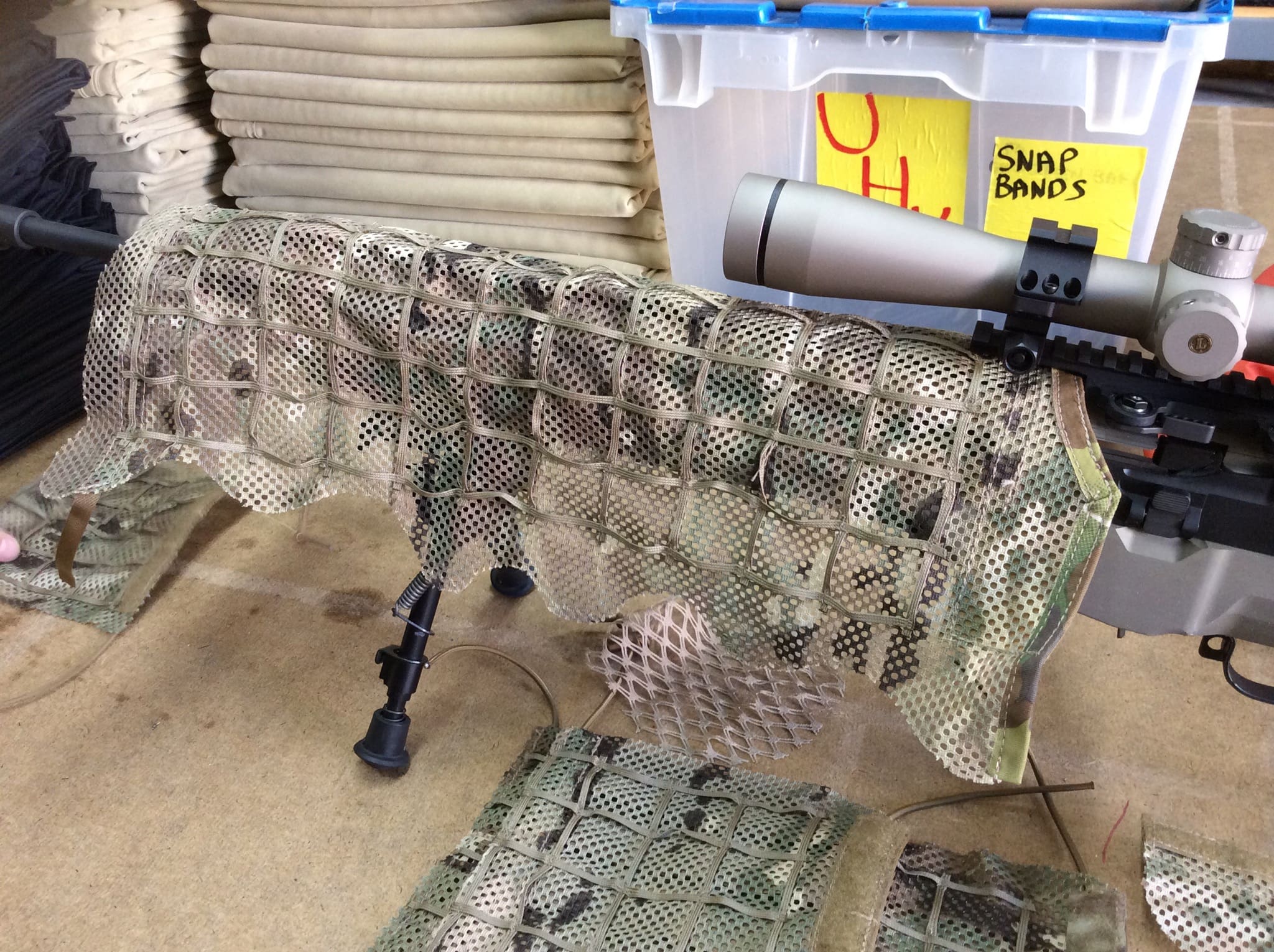
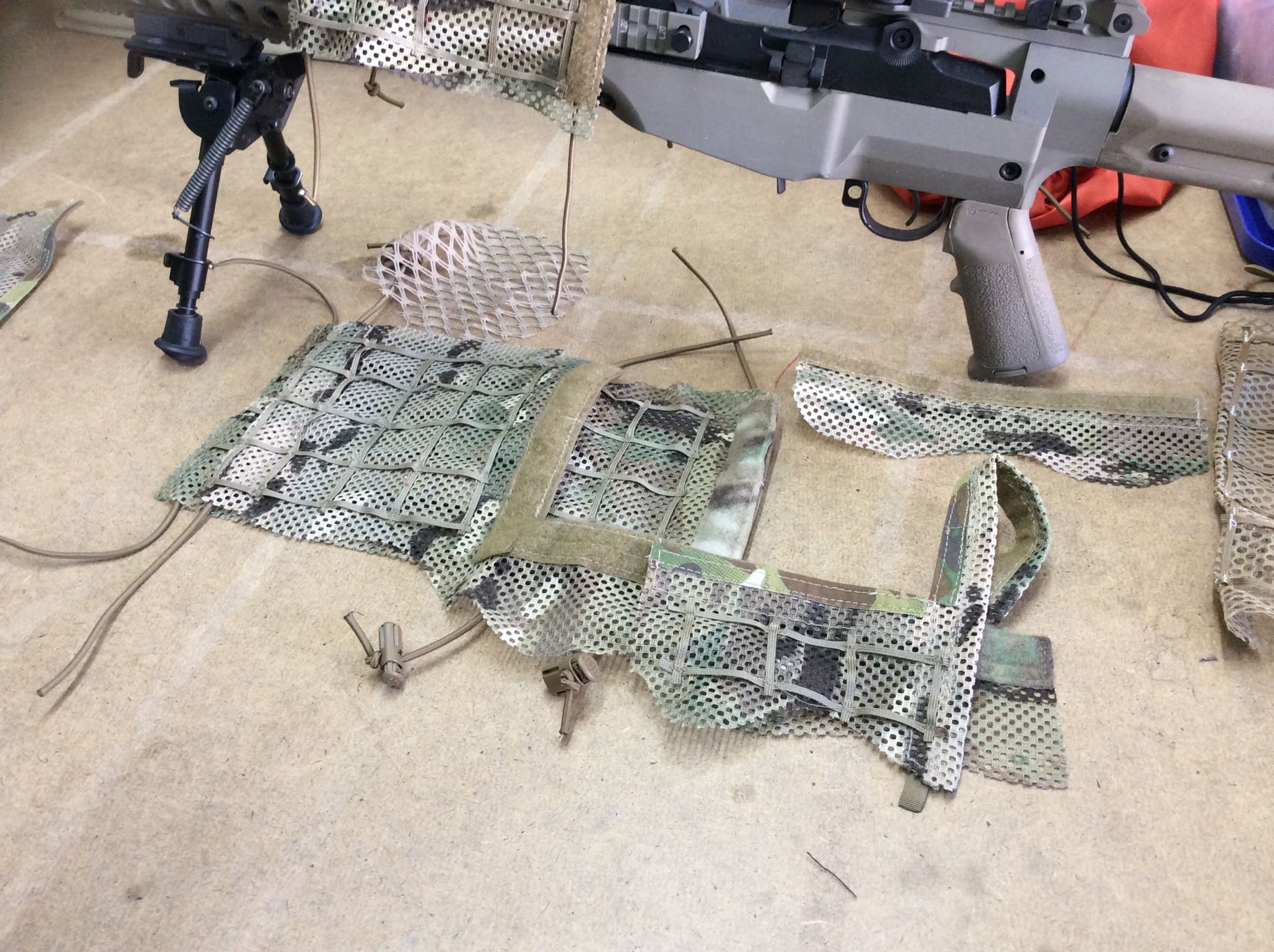
Think of the Boomslang as a Ghillie foundation for your weapon. Offered in Alpha, Bravo and Charlie models, the pre-cut fabric modules are designed to allow full use of the weapon even when draped with garnish.
The kits consist of four components: Barrel Extension Cover, Barrel Shroud Cover, Scope Objective Cover and Scope Ocular Strap. All components are secured via elastic cord and barrel lock and some sticky Velcro. Additionally, the kits are offered in a variety of different color schemes and integrate 550 cord to attach scrim.
Yesterday, the Dutch Telegraph released a special edition of their newspaper, regarding the 200 year anniversary of the Dutch Army. Below, you can see a photo of the report which claims that the Dutch Army has adopted Netherlands Fractal Pattern (NFP) as their official new camouflage. The story does not mention the Dutch Royal Marines who continue to wear M81 Woodland camouflage. However, they may well make the transition to NFP as well. Although the article states that no one has been chosen to manufacture the uniforms yet, they will feature FR and insect repellant properties.
The article goes on to state that another feature of NFP, which took one-and-a-half years to develop by a collaborative effort between TNO and Dutch MoD, is that it’s recognizable. Ben Vlasman, head of the Joint Soldier Systems Knowledge Centre (joint kenniscentrum militair & uitrusting), says it’s not just to camouflage, but also offers something recognizable for other troops and civilians.
NFP is currently offered in two variants; Green aka Woodland and Tan aka Arid. To develop the colorways, they sent soldiers to the area of operations with a camera and a color card in ordeer to determine the dominant colors in each area.
The article did not mention which pattern would be adopted for use with camouflage pattern for equipment such as plate carriers. What’s more, the Dutch Army must still determine a way ahead for armor (ie plate carrier or armor vest). Considering the current state of the art it is probable that the vest will be modular is probable. The article mentions two scenarios in particular; worn lightly for a patrol in the jungle, or worn heavily when at a roadblock.