XC3 Weaponlight

Archive for the ‘Clothing’ Category

Tactical Distributors Kicks Off 8 Weeks of Tax Savings

Monday, February 6th, 2012

Starting February 6th, Tactical Distributors will offer a Tax Refund Sale. For the next 8 weeks they will have a sale the first 3 days of each week (Monday, Tuesday & Wednesday). They’ve just begun week 1 with 17% off all Socks. Just enter the code TAX12 at checkout and 17% will be taken off all socks in your cart!

www.tacticaldistributors.com

Viper Headwear Announces the “Snake Eater”

Saturday, February 4th, 2012

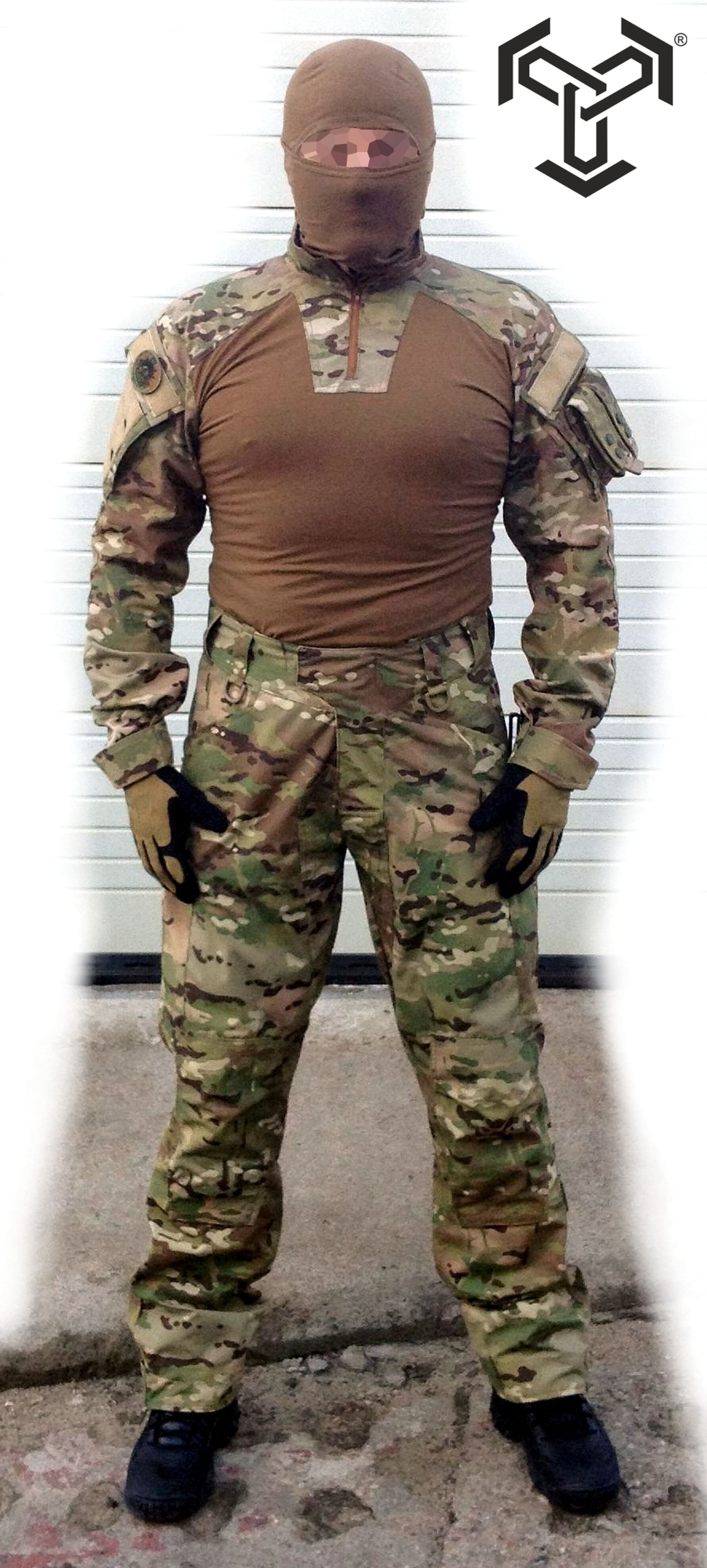
Viper Headwear was started by a US Army SF vet. Their new “Snake Eater” is a fitted cap for tactical operators constructed from genuine Crye Precision Multicam® 50/50 Nylon/Cotton Cordura® material. Caps can be ordered with or without the 2″ x 3.5″ Velcro® loop material on the front of the cap, 1.5″ x 1.5″ loop on top, and 1″ x 4″ or 1″ x 6″ Velcro® loop material on the back for shorter 4-inch or standard 6-inch nametapes.

For added comfort when wearing communications headsets, this cap does not include the button on top and it features an unstructured, lower crown.

www.viperheadwear.com

Mountain Khakis Catalogs Now Online

Friday, February 3rd, 2012

Here are the Spring/Summer and Fall/Winter 2012 catalogs from Mountain Khakis.

Spring/Summer 2012
Fall/Winter 2012
*open in full screen mode for optimal viewing

Massif Goes Haute Couture

Friday, February 3rd, 2012

This Fall, Massif is launching a new fashion clothing line. We’ve told you about their new non-FR, outdoor/tactical line but this is something altogether different. Once again, it’s non-FR but his time the approach is “Tailored clothing made from performance fabrics”. Consider it a lifestyle brand for today’s “urban warrior”.

It’s a great effort to diversify their offerings from very military centric FR combat clothing to outdoor/tactical and now high end urban wear. You can see that the new Massif Collection draws influence from what they know best and you will see some of the same fabric stories between the two new lines.

www.massif.com/collection

Ever Wonder Where Those Socks Came From?

Friday, February 3rd, 2012

Despite the US Army’s recent interest in wool, it never went completely away. All four services recognize the advantages of wool and issue Darn Tough Vermontâ„¢ Merino wool socks to their personnel. In particular, the Army’s Fire Resistant Environmental Ensemble (FREE) relies on a Darn Tough Vermontâ„¢ sock to provide no melt-no drip protection in a wide variety of conditions.

These days almost everyone is issued socks prior to deployment and many of you receive Merino wool socks for that purpose. But, did you ever wonder where they come from? I did, so last week I visited Darn Tough Vermontâ„¢’s factory in rural Vermont but I didn’t expect what I found.

The first thing I saw after meeting my host, Shannon McKenna, Darn Tough Vermontâ„¢’s Director of Government Sales, was a mural. On it was a simple statement that gets to the heart of their philosophy.

Nobody ever outsourced anything for quality

Naturally, any company located in Vermont is going to have at least a little bit of Yankee, but I must admit I was still surprised at the village atmosphere. I was introduced to Ric Cabot, CEO of Darn Tough Vermontâ„¢ and the man behind the outsourcing sign. The more I talked to him, the more I realized how similar our outlook on life and business is.

It turns out the mill was started in 1978 and Ric Cabot is a 3rd generation sock maker. One of the first things he told me as we walked along the production line, wooden ruler hanging out of the back pocket of his work pants was, “You’re not just buying socks, you’re buying us.” To him, it’s easy. People are the most important part of process. It’s simply a matter of explaining the goal and then working together.

Ric Cabot doesn’t think that outsourcing is just about shipping jobs overseas. When I mentioned the slogan at the entrance he said, “If you’re serious about something you’ll do it yourself.” He wants to do as much as possible in house. For instance, they build all of the socks with their name on them. They don’t send anything out to sub-contractors.

Everyone should want to be Darn Tough Vermontâ„¢.
-Ric Cabot

When I commented to Ric Cabot about how impressed I was with how smoothly it all ran, he turned to me and commented, “It all goes back to the ruler.” I could tell by his conviction that he wasn’t just talking about that ruler he carries around the factory in his back pocket for spot checks of socks on the line. He also meant the personal ruler he uses to measure success. It’s not just about “quality” as an industrial term. Ric Cabot is interested in sustainability of community. He knows each of his 147 employees; some are 3rd generation employees just like him. He shared with me that his factory is more than just those 147 employees. All told, he says there are over 500 dependents plus, by extension, his suppliers around the country.

Don’t think it’s always been roses. They’ve had tough times. Ric went on to tell me, “Darn Tough Vermontâ„¢ is the mill, it’s not a name we put on a pair of socks. It’s my family. In an rural American environment, we’ve pulled ourselves from near bankruptcy to become the producers of the highest quality performance sock brand.”

Anybody can build a Berry compliant sock, but it’s still not Darn Tough Vermontâ„¢
-Shannon McKenna

Shannon knows many of the men and women who wear their socks. You’ll see her at trade shows, greeting everyone with a smile. She told me, “We perform best, when you don’t know we’re there.” But it’s more than a smile and a kind word. Their commitment to excellence shows through in so many ways.

Many of the workers at Darn Tough Vermontâ„¢ are veterans. In fact, the head of R&D served in 10th SFG(A) in the 1960s and we had a fun conversation reminiscing about the old Chippewa mountain boots and thick wool socks issued up into the 1990s. More still, have family who are serving overseas so there is a passion to ensure that they build the best product possible.

Additionally, Darn Tough Vermontâ„¢ listens to its customers. The Darn Tough Vermontâ„¢ Tactical footwear line is pretty broad and includes Tactical Boot, Tactical Dress and Tactical PT socks. With 23 styles ranging from True-Seamlessâ„¢ mesh, no-show PT socks to over-the-calf Extreme Cold Weather Mountaineering Boot socks, they’ve got one of the largest selection of Berry Compliant styles available in industry, covering all the bases. In fact, every style has been issued to one organization or another.

Take the FREE sock for instance. To satisfy the US Army’s requirement for a head-to-toe FR environmental clothing system system integrator ADS turned to Darn Tough Vermontâ„¢. They selected the “Merino Wool Boot Sock Cushion” due to its inherent no-melt no-drip, anti-microbial, and warm even when wet properties.

Here you can see a freshly knit FREE sock on the right and a fully finished version on the left. Remember that ruler? Quality assurance checks are made at each step in the process with gauges placed at various stations to verify measurements. But that trusty ruler still randomly comes out to make spot checks.

After the sock is knit, unless the sock is seamless, the toe seam is added and excess material trimmed. Then it heads over for a wash and dry which sets the size you see above. Commercial varieties are also dyed in this step. Then it’s off to packaging which includes the addition of any labels. A quick note on seamless sock technology. Yes, it’s cool and Darn Tough Vermontâ„¢ can do it. But they don’t include it on every style. It’s mainly because it isn’t necessary. For socks with a low nap, it makes a big difference, but for the thick terry nap socks like the mountaineering variety it superfluous. Sure, they could replace ALL of their machines to produce seamless socks and lay off the workers who finish the socks, but why do it? How does that best serve the community?

It’s important to note that everyone wears socks and Darn Tough Vermontâ„¢ recognizes this. They offer far more socks to the commercial market than they do for GIs. Interestingly, they don’t sell direct. There’s a reason for this. They don’t want to compete with their retailers.

I came away from my visit realizing that for this crew, making socks is a passion. There’s an investment of more than just money and materials. It’s an investment in community. To me, it’s an investment in America.

www.adsinc.com/darn-tough-socks

New Shemagh

Thursday, February 2nd, 2012

Australian military outfitter Platatac has released the M-Cam Shemagh. It’s unique design is unlike anything we’ve ever seen.

www.platatac.com

Fuel Handler Coverall Contract Explained

Wednesday, February 1st, 2012

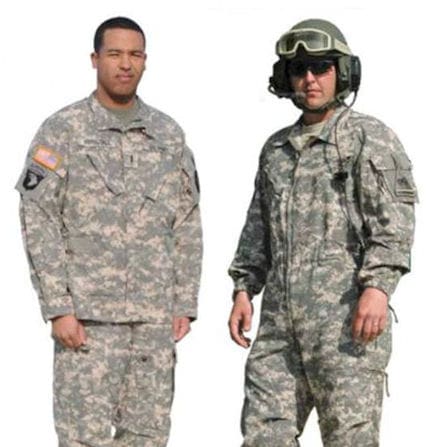
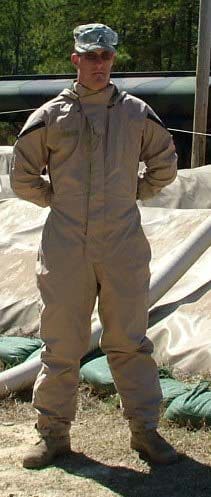
We recently wrote about the contracts awarded to Propper International and Tennessee Apparel for the new Fuel Handlers Coveralls. Unfortunately, we didn’t explain what was going on which caused readers to make some back of the envelope calculations which resulted in the perception that the taxpayer is paying a lot more for these than is actually the case.

In fact, the contracts awarded to Propper International and Tennessee Apparel are five-year, firm-fixed price, indefinite delivery/indefinite quantity contracts worth a maximum of $45,000,000. These contracts include options to procure a maximum of 75,000 Fuel Handler Coveralls. The maximum contract value ($45M, based on an early Government estimate of $600 per coverall) would only be reached if the Army purchased all 75K coveralls.

Almost all contracts are written this way these days. The maximum value of the contract is the award amount announced. This amount is generally only reached is all contract options are used. Generally this number is a little higher than what is required to give the Government a little bit of breathing room in the event demand is increased over the life of the contract. It also serves to lock in a price over the course of the contract. These contracts don’t require the Government to purchase the maximum amount but rather set a limit on the amount that can be purchased on that contract. Essentially, it serves as a blanket purchase agreement for that particular commodity. The Government can purchase as much as it needs (up to set limit) at a set price over the life of the contract without going through the contracting process over and over. Conversely, if it turns out the Government doesn’t need the gear, it doesn’t order or pay for it. This helps keep the Government from purchasing and stockpiling unneeded gear.

In the case of the Fuel Handler Coverall, the first delivery order for each of the awardees is for only 1,670 coveralls making actual contract cost per coverall came in between $400-$522, depending on size and vendor. Any future purchases will be determined based on fielding requirements set by the Army.

These coveralls offer a tremendous increase in protection when compared to their predecessors in the areas of flame resistance, environmental and electrostatic protection, and liquid-penetration resistance for fuel and water. PEO Soldier is committed to Soldier survivability, and this contract award is yet another example of their continuing efforts to provide the absolute best uniforms and gear to our Soldiers.

This is actually a joint effort. PEO Soldier specified that the coveralls be made in Coyote Brown so that their Marine brothers could order and use them too.

Thanks to those who reminded us to follow up on this. We hope this clears up any misconceptions that surround the Fuel Handler Coverall procurement.

Mission First Tactical – “American” Tshirt

Wednesday, February 1st, 2012

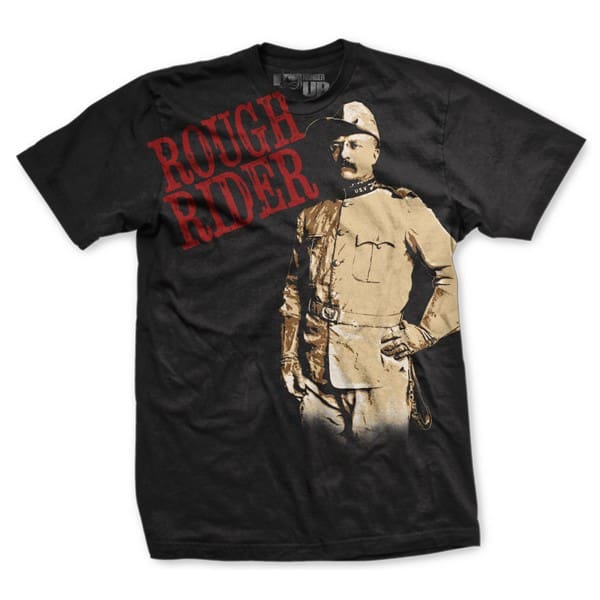
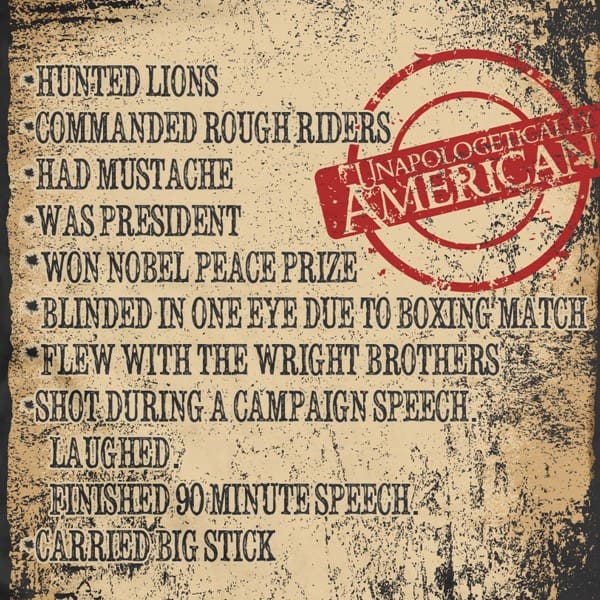
Mission First Tactical did a limited edition Tshirt at SHOT Show that extolled the virtues of being an American and supporting American companies. They were so popular they decided to offer them to everyone.


Available in Black, Grey, Navy, OD and White, sizes Small – XXXXLarge.

www.missionfirsttactical.com