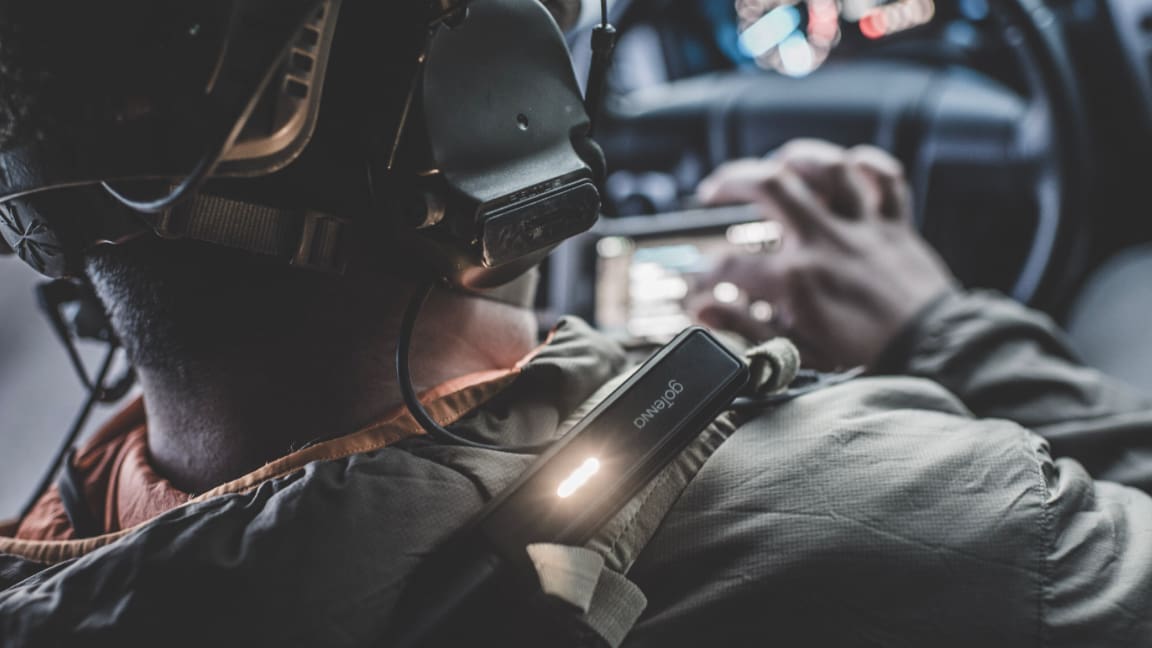
I was an early adopter of goTenna, having participated in their crowdfunding campaign. When I saw the new goTenna Pro At SHOT Show in TSSi’s Booth, I was immediately excited about the possibilities it offers due to its integration with USSOCOM’s Android Tactical Assault Kit (ATAK) and a a wide variety of commercial personal cellular devices such as smart phones. These three components combine to provide a new practical solution for partner force communications interoperability.
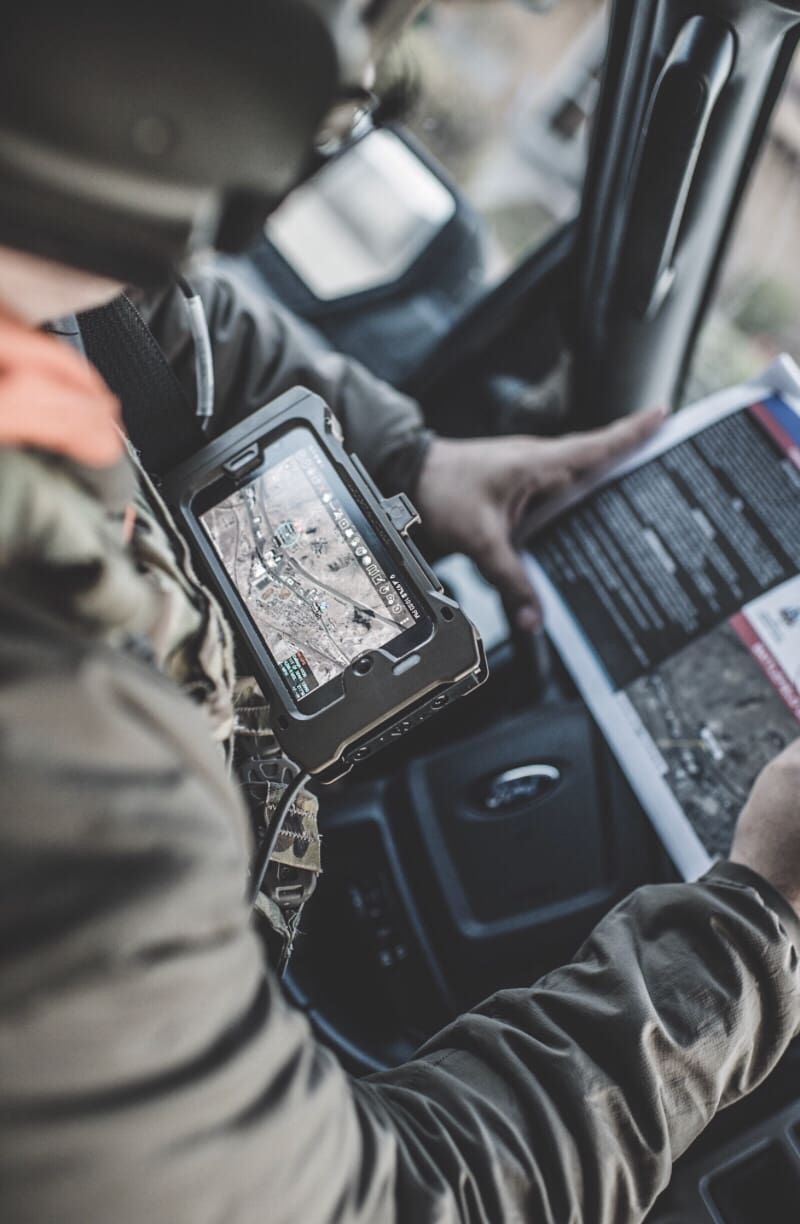
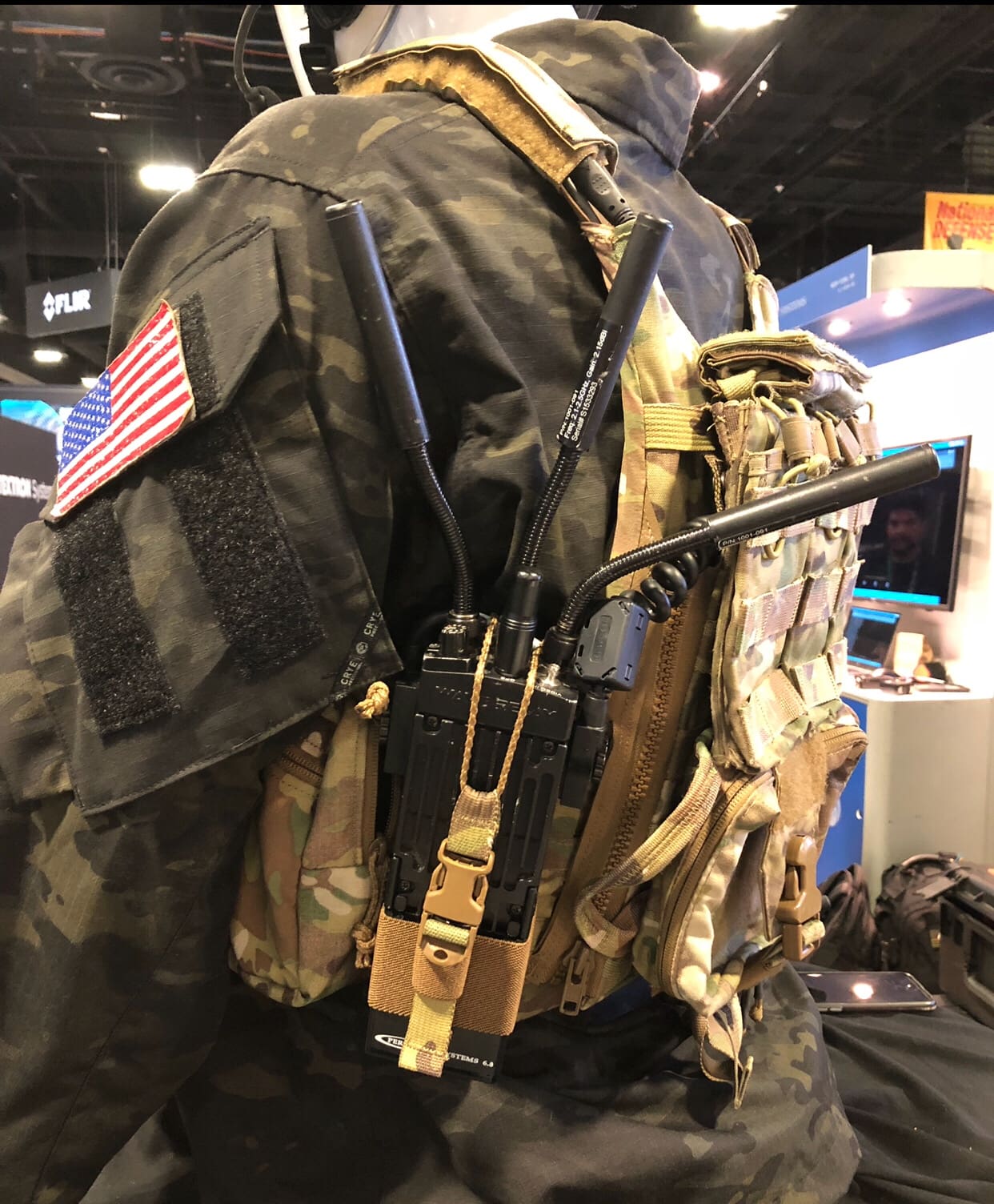
Chest mounted ATAK The challenge of establishing secure interoperable communications with partner/coalition forces has been a problem since the advent of wireless communications over a hundred years ago.
The historical intractability of this problem has been rooted in the fact that it is not just one issue that needs to be solved, but a whole host of interweaving problems push and pull against each other in a tangled mess that has never truly been solved.
Fundamentally the barriers to truly operational interoperable communications systems are rooted in security, training/logistics, and budget disparities that come into play when dissimilar forces have to work together.
To illustrate the example, lets take a generic unnamed Type-1 secure tactical radio from US. Should an American force need to interoperate with a friendly partner force, they would be completely unable to for the following reasons:
1. Due to security policy restrictions (ITAR and more), US forces simply cannot provide the radio outside of their direct US command, no matter how trusted they may be.
2. These kinds of radios are complex and require hands-on training and experience to operate, and in an expeditionary environment its entirely possible, if not likely, that the partner would have no idea how to use the radio, even if it could be handed over to them.
3. The waveform run on these radios is usually restricted or highly technical to set up as well, making connection to a different radio system over the air impossible or disallowed.
4. These radios, at least the most advanced mesh networking ones, cost at least $15,000 a unit, and there is little chance any command is going to let a $15K piece of equipment get handed out to an outside party – even if they were allowed to do so.
Attempts to solve these issues have circled just about every possible path, from trying to make interoperable waveforms (never truly pulled off), or simply turning to commercial solutions like LTE or WiFi to try to bring in outside partners and then segregate them on the backend with digital firewalls – again not unlike a traditional internet model.
This turning to consumer products has actually worked well however, but the limits of LTE and WiFi are well known for any program office. They are an affordable, mature, and deployable technology when operating against a highly disadvantaged enemy, as were the most recent combat experience in Iraq and Afghanistan, but against any kind of peer or near-peer adversary, the thought of relying on LTE and WiFi on the battlefield isn’t considered realistic by anyone. Therein the continued need for advanced standalone digital tactical radios, particularly cognitive mesh networking radios that can flexibly combat the countermeasures to be expected from a technologically advanced adversary.
But these radios are precisely the ones that offer the largest barrier to any kind of realistic partner-force interoperability, or at least, they use to be. There is a new interesting player in the field that, perhaps coincidentally, is also a cross-over from the consumer/commercial market, goTenna.
A small Brooklyn-based startup, goTenna started 5 years ago as a consumer radio system designed for hikers and skiers to keep in touch with each other with their smartphones while out doing activities in remote environments where there was no cell service. They designed a unique radio system which thanks to its unique focus on just communicating short bursts of data for texting and location tracking (they explicitly do not try to support energy and spectrum hungry transmissions like video which bloat other systems), resulted in providing a robust long-distance secure digital data transfer in a form factor that was radically smaller, lighter, and perhaps most importantly, radically less costly than any other legacy radio system.
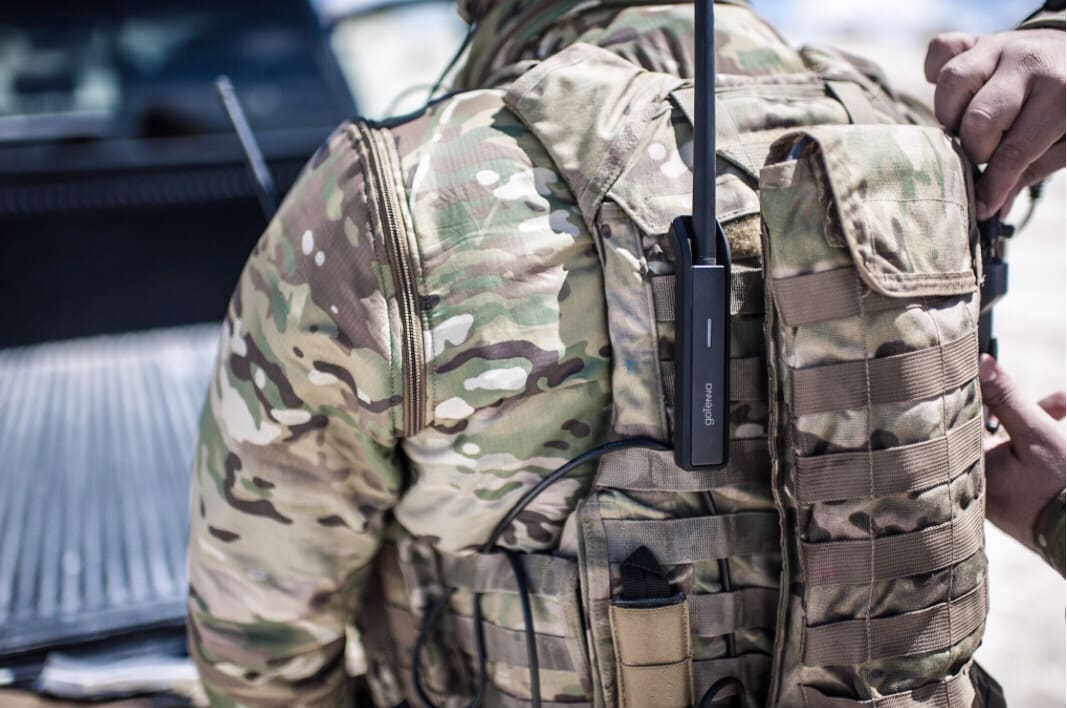
goTenna Pro mounted to PALS webbingIn 2016 USSOCOM’s Android Tactical Assault Kit (ATAK) program took notice of this little REI and Amazon.com product, and used their SDK to integrate it into their battle management application. The integration was not able to support all the features in ATAK, but the funny coincidence was that the consumer use case closely mirrored the most important features within ATAK, specifically:
• Blue force tracking (for consumers, find my friends)
• Cursor on target (for consumers, map pins)
• Command/control via chat (no difference, text messaging)
Those three simple features could all be supported within goTenna’s short bursts of data, and thus provided support the overwhelming bulk of ATAK’s core situational awareness and command/control features in an off-grid secure digital radio network, but now within a bearer that was radically smaller, unrestricted, and perhaps most importantly only a few hundred dollars.
This combination of the ATAK platform and the goTenna consumer product provided an answer to the elusive partner force communications problem, and that answer boiled down to an almost comically simple solution, “Just hand the radios out to partners.”
That was it.
Instead of trying to establish interoperable coalition communications with complex RF waveform synchronization or convoluted data security firewalls the answer ended up being “interoperability through ubiquity” as goTenna likes to call it.
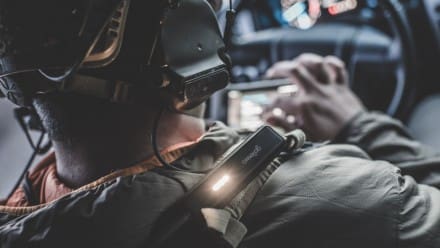
After removing the security policy restrictions (all goTenna security is run at the app level, not hardware, and thus have no ITAR or export controls), if one can cut the cost of secure mesh-networking radio system to only $499, the cost of their new upgraded goTenna Pro version, then simply carrying a stock of spare radios for handing out to partners on the fly when you need them to work with you is a practical and immediately deployable solution.
At that price point, if the partner were to break, steal, or otherwise do something you don’t want them to do to your radio, the cost of loss is negligible and you can just move on. Not something one could say when spending $15,000 or more a radio.
As an added bonus, all these communications on the goTenna/ATAK network also automatically bridge and backhaul back over any other data networks either within another tactical radio system (or Wifi, LTE, etc), or all the way back to the TAK server – offering a very interesting ability to mix and match different radio systems in powerful hub-and-spoke type architectures that can leverage goTenna’s small size, cost, and unrestricted status to expand the tactical edge in a meaningful and practically accessible manner.
Considering the increasing prominence of partner/indigenous force interoperation in today’s modern proxied conflicts, the criticality of finding a way to solve the interoperability issue is of utmost importance, and this model of using ATAK and goTenna for both blue force and green force communications has proven itself in Iraq, Afghanistan, and more locations of on-going conflict.
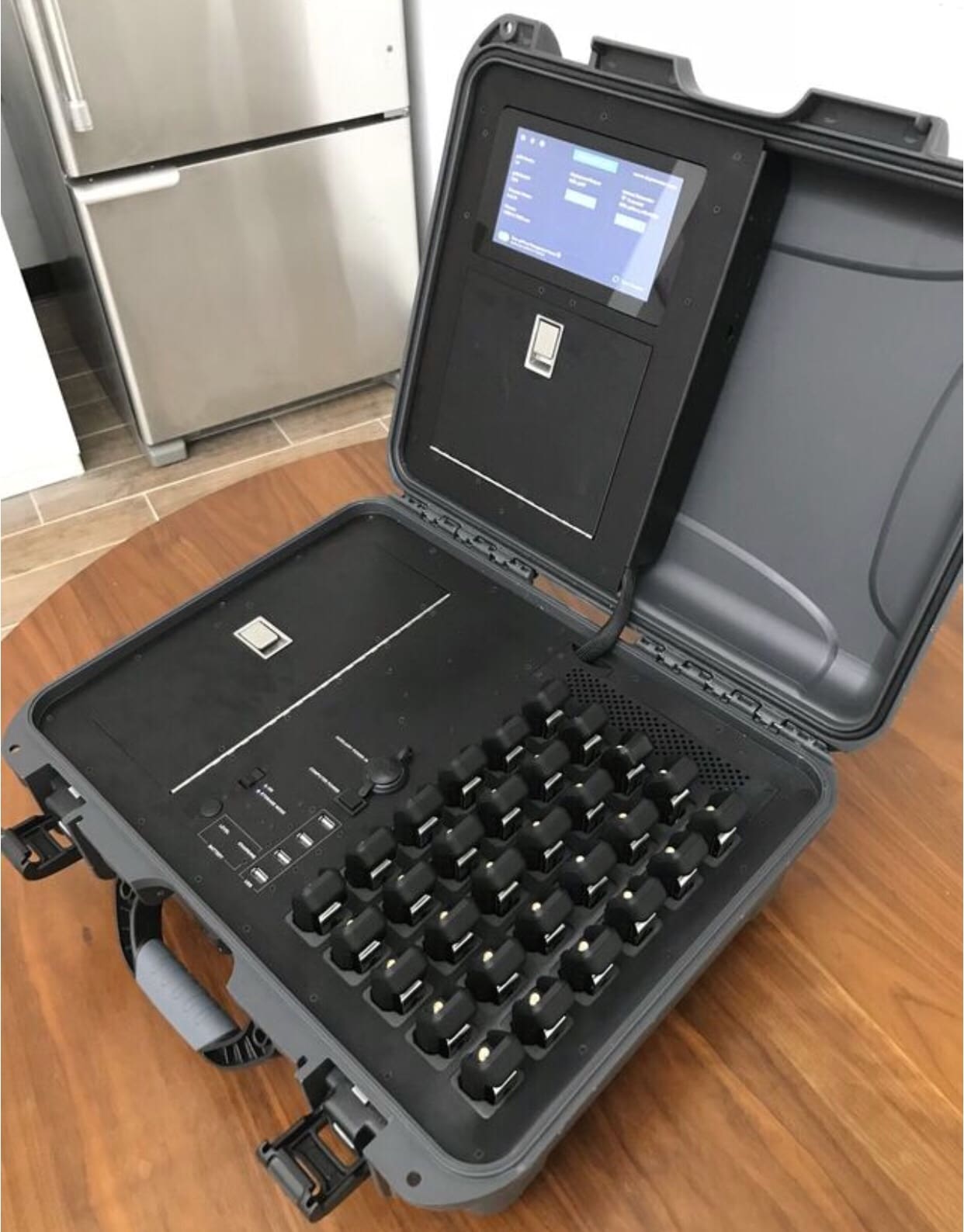
goTenna can accurately be called, at least for now, the world’s first and only hyper-low cost narrowband tactical mesh networking radio, which is something to be really thought about. It is not every day that entirely new classes of radios are invented, it happens perhaps every 20 or 30 years, but when it does happen, these innovations present a powerful opportunity to radically change up legacy thinking about what might be possible at the tactical communications edge. Although it is still early, we are already starting to see how things might change as many major program offices around the world begin to turn their eye towards the example set by the SOF community already.
Be sure to check them out at SOFIC, in booth #1535, in the main hallway.