FirstSpear TV

Archive for the ‘Disruptive Tech’ Category

Emerging Technology and Irregular Warfare: Launching a New Focus Area

Tuesday, February 3rd, 2026

Technology Is Redefining Irregular Warfare. Here’s What That Means

There’s no agreed-upon playbook for emerging technology in the gray zone, and no consensus on what’s next. Experts debate competing timelines. The policy community commissions studies that become outdated before publication. And those working in these environments face split-second decisions that involve technologies that didn’t exist in doctrine, dilemmas that weren’t in ethics training, and environments where old assumptions no longer apply. What’s more, for every strategic advantage a new technology offers—whether in the realm of artificial intelligence (AI), autonomous systems, cyber and electronic warfare, crypto, cognitive warfare, biotech, etc.—it also introduces new risks that we don’t always see coming.

By the time institutions have done the analysis, calculated the risks, and agreed on how these technologies have changed irregular warfare and how to respond, the operating environment is already different. It can take decades for defense organizations to change and adapt. Technology evolves in months. The gap is already wide, and it’s only growing. The result is a dangerous reality in which practitioners are forced to make irreversible decisions without clear guidance, but with high-stakes consequences that may not even be fully understood until it is too late.

We can’t close that gap with studies and strategies alone. We need to connect the people closest to the challenges and build a community that learns faster than adversaries adapt.

That’s why the Irregular Warfare Initiative is launching a new focus area: the Emerging Technology and Irregular Warfare Focus Area.

What sets this effort apart is both the challenges we are tackling and the people we are engaging. We intend to take seriously the strategic and operational tensions that emerge as new technologies are adopted and embedded in irregular warfare. And we will bring together communities that don’t always talk to each other to grapple with those tensions collectively.

The Challenges We Are Tackling

Technology in irregular warfare creates genuine tensions between competing priorities that aren’t easily resolved. At the heart of these tensions are questions about how to maximize operational advantages while managing expanding risks, and who gets to determine those tradeoffs. While individual technologies introduce distinct risks and benefits, our focus is not on the tools themselves, but on the tensions they generate, and how those tensions play out across different contexts and stakeholders and in exploring new directions and fresh proposals for navigating them. Some of these core dilemmas include:

Decisionmaking & Accountability – Technology enables faster, better-informed and more precise decisions, but only if our existing decisionmaking processes evolve in parallel. But by reshaping decision dynamics in decentralized and ambiguous environments, these tools also introduce new risks related to accountability, civilian harm, and the ability to maintain political control and influence.

Diffusion & Escalation – Dual-use, low-cost, high-impact technologies enable individuals, nonstate actors, and terrorist networks to adapt lethal irregular warfare tactics, evade traditional financial intelligence, and exploit deniability. At the same time, their diffusion accelerates escalation dynamics and demands new concepts and approaches to restraint and control in gray zone conflicts.

Legitimacy & Effectiveness – As artificial intelligence, autonomous systems, and cyber capabilities outpace laws and regulations, tensions arise between operational effectiveness and maintaining public legitimacy, especially when confronting adversaries that reject these constraints. In operating environments where information moves fast and decisions can’t wait, both effectiveness and legitimacy require new approaches to measuring impact, managing risk, and adapting in real-time.

Influence & Trust – Emerging technologies offer new tools for enhancing diplomatic and humanitarian effectiveness, critical components of securing influence among populations in irregular warfare. In contested environments, however, adversaries can exploit these same technologies to undermine public trust through surveillance, algorithmic bias, misinformation, and dependency creation.

The People We Are Engaging

This platform is built for and by everyone working across irregular warfare: government, military, civil society, private sector, humanitarians, academics, development actors, partners, and local communities. We believe experience matters as much as credentials. Ground truth matters as much as theory. And the hard lessons learned in one theater should inform decisions in another, in real time, not years later through formal doctrine updates. Most importantly, we believe the people navigating these challenges can’t wait for perfect answers. They need better options now, founded on clear principles to guide decisions under uncertainty.

How We Work

As we tackle these challenges, this Focus Area will be guided by the following principles:

Problem-driven – Our starting point will be the problems practitioners face on the ground, not technologies in search of applications. We want to identify what works, what doesn’t, and what principles can guide decisions when perfect information doesn’t exist. When doctrine exists but practitioners aren’t using it, we want to figure out why and identify solutions.

Whole-of-Government and Whole-of-Society Perspectives – Technology in irregular warfare doesn’t just affect military operations. It reshapes societies, influences populations, and creates dependencies that outlast any single intervention. These issues demand a coordinated response across the government and a systems approach that recognizes how technology’s societal impacts might reinforce or undermine strategic objectives over the long term.

Future-focused – What’s important in confronting the challenges above is not merely analyzing last year’s conflict, but remaining focused on what’s coming next. Responding adaptively to the emerging technologies, tactics, and dilemmas that will shape tomorrow’s irregular warfare environment will ensure we are staying ahead of the problem, not playing catch-up.

Join the Conversation

As IWI develops this Focus Area going forward, we want to hear from you. Submit an article. Join us on a podcast. Send us an email at EmergingTech@irregularwarfare.org. Engage on social media where these conversations reach beyond traditional circles to developers, humanitarians, local partners, and others navigating the same technology dilemmas.

We’re interested in emerging issues where the problem hasn’t been clearly defined, where consensus is lacking, or where solutions remain elusive. We also want to bridge gaps where doctrine exists but isn’t being applied. Help us understand why and what needs to change. What matters is the quality of the argument, the evidence behind it, and the technology’s impact on irregular warfare, not whether it meets an arbitrary definition of “emerging.” Contributions will not be dismissed on the grounds that a technology is too established, not novel enough, or insufficiently disruptive.

Technology will continue reshaping societies and conflicts at an accelerating pace. The only question is whether we learn fast enough to stay ahead, or whether we’re perpetually reacting to problems that could have been anticipated.

Practitioners on the ground can’t wait for perfect answers. They need better options, clearer principles, and a community learning together in real time. That’s what we’re building. And we want you to help us build it.

February 2, 2026 by Kristina Kempkey, Jeffrey Szuchman

Kristina Kempkey is a senior leader with over two decades of experience working at the intersection of national security and foreign policy in high-risk environments. She has led and advised major efforts with USAID, the U.S. Department of Defense, and the United Nations, working alongside military, diplomatic, and civilian partners across Africa, Eastern Europe, and South Asia. Her work centers on applying emerging technologies to real-world security, stabilization, and institutional challenges. She brings a practitioner’s understanding of interagency operations, coalition building, and decision-making under uncertainty. She has contributed to research with the Council on Foreign Relations and West Point on national security and military strategy. As a Fellow at the ML Alignment and Theory Scholars (MATS), Future Impact Group (FIG), 21st Century India Center at UC San Diego, and the Center for AI and Digital Policy (CAIDP), Kristina informs practical policy recommendations and operational insights for governments and security institutions navigating the risks and opportunities of advanced AI.

Jeffrey Szuchman’s work examines how emerging technologies shape governance and security in fragile and conflict-affected settings. He has held leadership roles at USAID in Washington, DC and in Africa, including as Deputy Director for Democratic Governance, Peace & Security in Kenya, where he managed multi-million dollar grants in security, governance, and peacebuilding, and advised on integrating digital safeguards and responsible AI principles into national strategies. He has also led teams at USAID in Liberia and in Washington, DC, where he served as Acting Director of Policy, leading agency-wide strategic planning and directing cross-functional teams on issues ranging from digital transformation, stabilization, and conflict prevention. Prior to USAID, he was a Professor of Global Studies at Zayed University in Abu Dhabi. He holds a PhD and MA in Near Eastern Languages and Cultures from UCLA.

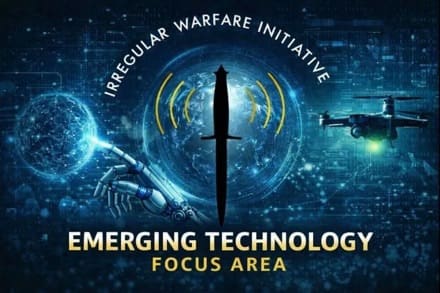
Main Image generated by ChatGPT using DALL·E, OpenAI (January 2026).

The views expressed are those of the authors and do not reflect the official position of the Irregular Warfare Initiative, Princeton University’s Empirical Studies of Conflict Project, the Modern War Institute at West Point, or the United States Government.
AV Delivers First Two Multi-Purpose High Energy Laser Systems to US Army

Thursday, September 4th, 2025

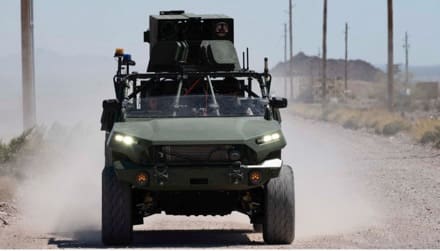
ARLINGTON, Va., August 31, 2025 –AeroVironment, Inc. (“AV”) (NASDAQ: AVAV) today announced the successful delivery of the first two mobile counter-unmanned aircraft system (C-UAS) prototype Laser Weapon Systems (LWS) to the U.S. Army Rapid Capabilities and Critical Technologies Office (RCCTO) as part of the first increment of the Army Multi-Purpose High Energy Laser (AMP-HEL) prototyping effort. The AMP-HEL prototype systems feature AV’s 20kW-class LOCUST™ LWS integrated on the General Motors Defense Infantry Squad Vehicle (ISV) platform–a significant advancement in mobile, frontline C-UAS capabilities.

“This milestone marks a major step forward in the Army’s pursuit of fieldable directed energy capabilities,” said Mary Clum, Senior Vice President for AV’s Space & Directed Energy Group. “Through the AMP-HEL program, AV is delivering our extensively validated LOCUST laser system–a technically sophisticated solution that has demonstrated reliability and operational readiness for the C-UAS fight. We are honored to support the U.S. Army RCCTO and, together, accelerate warfighter access to these critical capabilities.”

Following integration at AV’s Directed Energy (DE) manufacturing facility in Albuquerque, New Mexico, the AMP-HEL prototypes underwent rigorous government acceptance testing at Yuma Proving Ground in Arizona to validate performance, mobility, safety, and lethality. Subsequently, Army units performed new equipment training at Fort Sill, Oklahoma to prepare for potential employment of DE capabilities. Soldier feedback from the event is shaping ongoing enhancements to ensure warfighter readiness and operational relevance in dynamic threat environments.

The AMP-HEL prototyping effort is part of the Army’s broader modernization initiative to rapidly develop and field DE solutions to defeat a range of threats, including drones and other airborne systems. The integration of laser systems on the lightweight, highly mobile ISV platform reflects a commitment to scalable, adaptable, and expeditionary force protection solutions. Next month, AV is set to deliver the second increment of AMP-HEL–two Joint Light Tactical Vehicles with a 20kW class LOCUST LWS, radar, and command-and-control systems.

“The need for these systems from real world events is clear: the time is now for directed energy to get into the hands of warfighters everywhere and we are confident that LOCUST meets that need,” said John Garrity, Vice President of Directed Energy Systems for AV. “AV is committed to supporting the Army’s modernization and modularity priorities. We stand ready to meet the mission need through full-scale manufacturing of our LOCUST laser systems, including AMP-HEL and other mobile and fixed-site platforms, to increase lethality and continue to build on our extensively validated reliability and precision tracking and targeting technology to address the evolving threats.”

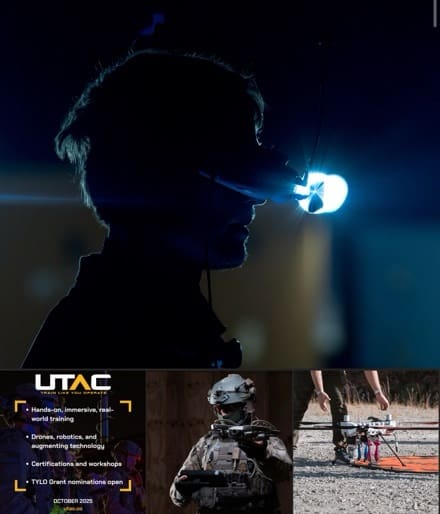
Consider UTAC-X to Validate Your UXS and Emerging Tech

Friday, August 1st, 2025

With the cancellation of Dragon Spear (RDAX) for 2025, many teams are rethinking where and how they’ll evaluate mission-critical technologies.

Enter UTAC-X.

A multi-domain proving ground purpose-built for testing and validating unmanned systems and emerging tech designed to support operations across:

-FPV drones

-CBRNe response

-EOD and robotic manipulation

-Intelligence, surveillance, and reconnaissance (ISR)

-Remote strike capabilities

-Tactical resupply and logistics

-Denied-environment comms

…and more.

Every solution at UTAC-X is built around real-world complexity, ensuring technologies are pushed, operators are challenged, real-time feedback is exchanged, and risk to personnel is reduced through innovation.

If your team was preparing to attend Dragon Spear, we encourage you to consider UTAC-X: a truly experimental environment for teams advancing the edge of tactical capability.

October 30, 2025 | Perry, GA

Defense-exclusive. No cost for attendees.

Train like you operate. Deploy what works.

To learn more, visit www.utac.co.

Israel Shoots Down Enemy Drone With Rafael Laser System

Sunday, June 1st, 2025

Rafael Advanced Defense Systems shared the following statement late last week on X:

Screenshot

World First — Combat-Proven Laser Defense, Powered by Rafael

For the first time in history, high-power laser systems have been used to intercept aerial threats in combat.

This unprecedented breakthrough took place during the Swords of Iron War — with Rafael’s advanced technology at the heart of the operation.

Developed in close partnership with the Israel Ministry of Defense and the Israeli Air Force, Rafael’s laser interceptors were successfully deployed by the IAF’s Aerial Defense Array, neutralizing enemy threats with speed, precision, and zero cost per shot.

“Israel is the first country in the world to transform high-power laser technology into a fully operational system – and to execute actual combat interceptions.”

— Dr. Yuval Steinitz, Chairman, Rafael

“Rafael is leading the energy weapon revolution. The ingenuity of our teams and deep investment in R&D led to this monumental achievement.”

— Yoav Tourgeman, CEO, Rafael

These systems mark the beginning of a new era in warfare — one that will soon expand with the delivery of Iron Beam, Rafael’s next-generation laser weapon designed to reshape the future of air defense.

This is not theory. This is real. Combat-proven. Operational. Historic.

* Photos from video posted by Rafael to X.

Introducing Jed Doc LLC, Tech on Tech, and The Forge

Monday, January 13th, 2025

About Jed Doc:

Jed Doc is a multi-disciplinary team of tactical practitioners that assists clients with understanding, developing, and deploying capabilities to support the national security interests of the United States and its Allies.

Understanding: Jed Doc provides Tactical Tech Scouting in current conflict areas and emerging crisis areas to provide insights on emerging tactics, techniques, and technology.

Development: Jed Doc provides Proving Ground Operations and Technical Effects Consulting by leading and organizing events to assess the effectiveness of defense technology products under conditions of current and future operating environments. Jed Doc conducts these events inside, and outside of the continental United States.

Deployment: Jed Doc assists clients with deploying their products to current conflict areas and emerging crisis areas by providing physical security, commercially consistent secure communication systems, infrastructure, logistics, and customer integration.

Tech on Tech:

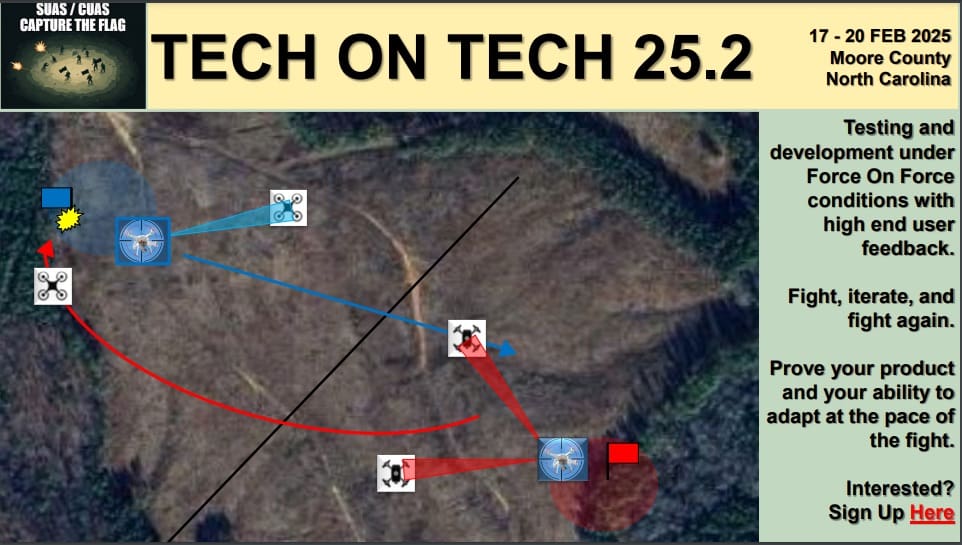
One way Jed Doc accomplishes development this is through its novel Tech on Tech program, which provides tailored force-on-force environments to aid companies in product development, testing, and evaluation on a monthly basis.

Tech on Tech events are built around the needs of the customer and simulate real-world conditions so that companies can evaluate their strengths and weaknesses and rapidly iterate on-site while simultaneously gaining exposure to end users.

Tech on Tech 25.2 is scheduled for 17-20 February in Moore County, North Carolina and registration is open until February 7th. Slots are available on a limited basis with first come first serve for six companies. The theme of 25.2 is “SUAS/CUAS Capture the Flag” with observer participation from US Government agencies and military organizations.

The Forge:

The Forge Defense Technology Scouting Platform weekly newsletter service and archive is oriented on identifying the ongoing evolution of Tactics, Techniques, and Technology as seen in current crises and conflict zones around the world and providing commentary and analysis. Those interested in The Forge’s weekly updates can subscribe here.

Those interested in learning more about The Forge, Tech on Tech, or other services provided by Jed Doc can contact jeddoc@proton.me.

Tough Stump Rodeo Update

Sunday, January 12th, 2025

We’re thrilled to announce Augustine Consulting Inc, Galvion, Juggernaut Case, MP Antenna and Somewear Labs as Silver Sponsors for Tough Stump Rodeo 2025!

These incredible sponsors bring innovative solutions and expertise that will elevate this year’s event, supporting the cutting-edge technologies and collaborative efforts that define the Tough Stump Rodeo.

What They Bring to TSR25:

• Augustine Consulting : Delivering tailored engineering and technical solutions for mission success.

• Galvion: Leaders in advanced personal protection and power management systems.

• Juggernaut Case: Providing rugged, mission-ready gear for seamless mobile device integration.

• MP Antenna: Experts in high-performance antenna solutions for mission-critical communications.

• Somewear Labs: Innovators in global satellite communication and situational awareness tools.

We’re honored to have their support as we prepare for an unforgettable week of innovation, problem-solving, and collaboration in Montana’s rugged terrain.

Now in its fifth year, the Tough Stump Rodeo returns, providing attendees with an exclusive in-person opportunity to explore products designed to enhance operational collaboration and boost safety.

Save the Dates: June 2-6, 2025

Registration Opens January 2025 – Limited Seating

toughstump.com/rodeo-2025#

All Americans to Host Innovation Dropzone 4.0

Wednesday, December 18th, 2024

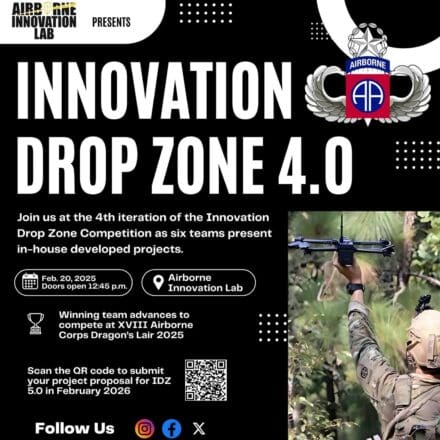
Join us for the next round in All-American innovation as Innovation Dropzone 4.0 will be held Feb. 20, 2025. Doors open at 12:45pm. We are a Division that exemplifies continuous transformation, so if you have an idea of how to improve your fox-hole scan the QR code and begin preparing for IDZ 5.0!

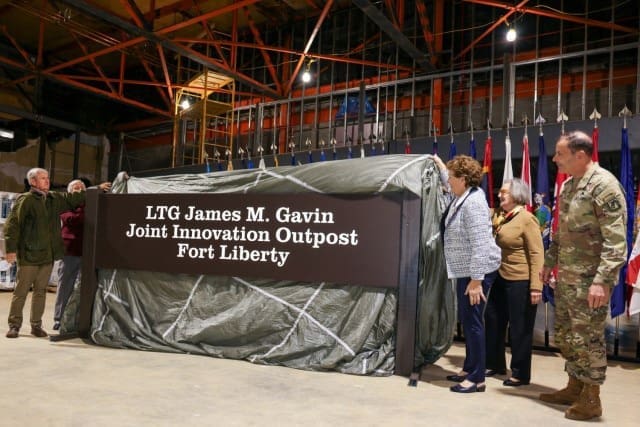
Lt. Gen. James M. Gavin Joint Innovation Outpost: A Legacy of Progress and Innovation

Tuesday, November 26th, 2024

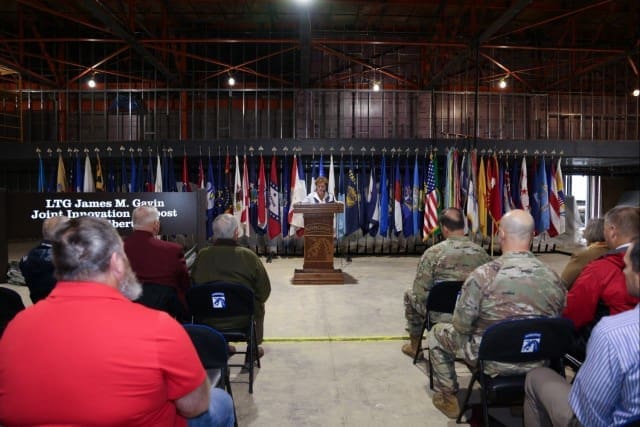
FORT LIBERTY, N.C. — Fort Liberty held a defining moment on November 14, 2024, with the dedication of the Lt. Gen. James M. Gavin Joint Innovation Outpost. This event celebrated not just a new facility but the enduring legacy of Lt. Gen. Gavin, a leader whose vision for innovation resonates deeply with the Army’s mission today.

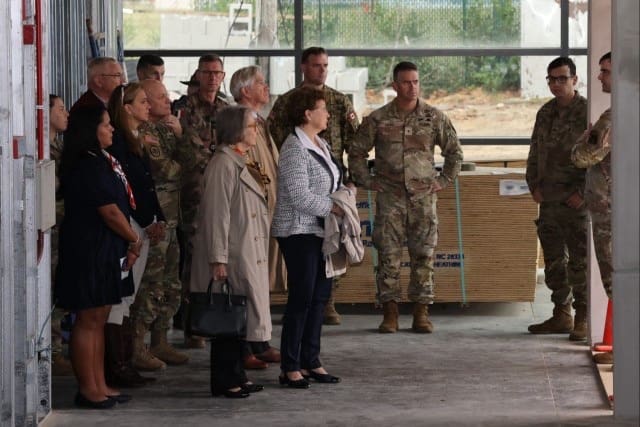
Army leaders, Soldiers, innovators and Gavin’s family gathered to honor his contributions while setting the stage for a future of cutting-edge capabilities. Gavin, fondly known as “Jumping Jim,” embodied the Army’s spirit of adaptation and excellence.

Chloe Gavin-Beatty, his daughter, shared during the ceremony, “My father was always asking, ‘How do we solve this problem? How can we do this better?’”

These words reflect his life’s work, from pioneering airborne warfare during WWII to advocating for advanced tactical systems as head of research and development. His foresight in utilizing helicopters for combat mobility predated their iconic use in Vietnam highlighting the kind of thinking that inspired this outpost.


Gavin’s belief in change wasn’t just professional — it was personal. As Chloe shared, even as a child, Gavin urged her to embrace innovation, recounting his own leap from the horse-bound Army of the 1920s to the technology-driven force he helped shape. His legacy underscores the value of questioning the status quo — a principle that guides the mission of the outpost bearing his name.,

The innovation outpost represents a leap forward for the Army. Capt. Robert Scalzo, senior software engineer for XVIII Airborne Corps, described the capabilities it offers as classified and unclassified spaces with unmatched flexibility.


“It’s not just about solving today’s problems but about building the infrastructure to tackle tomorrow’s challenges,” said Scalzo.

Purpose-built for adaptability, the space supports everything from warfighter exercises to large-scale technology conferences. Its proximity to key partners — including Defense Innovation Unit and local universities — removes barriers to collaboration, allowing ideas to flow freely and solutions to develop rapidly.

Unlike retrofitted buildings, the outpost’s design reflects a clear vision: to empower teams across the Department of Defense, academia and industry. It serves as both a resource and a hub, enabling the Army to outthink and outpace adversaries. It is equipped with cutting-edge resources designed to foster creativity and solve problems in real time.

Inside its walls will be 3D printing labs, virtual reality simulation suites and prototyping workshops, all enabling Soldiers and engineers to take ideas from concept to reality. These tools are vital for pushing innovation forward, offering the Army the ability to address challenges head-on. One standout example comes from the 82nd Airborne Division’s Innovation Lab, which used 3D printing technology to design and produce custom radio mounts for their Infantry Squad Vehicles.

Before this, they lacked the capability to ensure secure and reliable communication for their crews. Solutions like this underscore how these resources aren’t just high-tech — they’re essential for mission success.

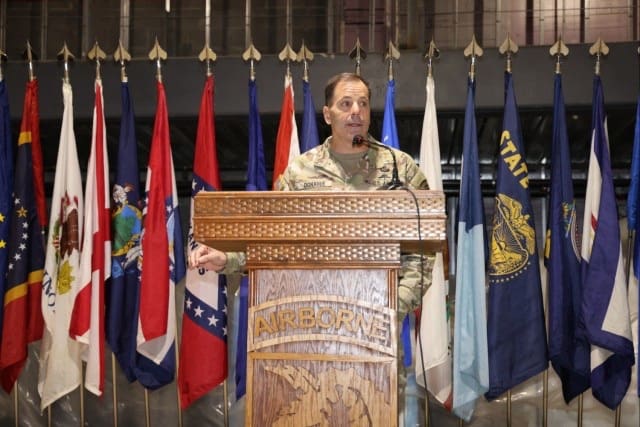
The dedication ceremony also showcased the outpost’s importance as a resource for Soldiers at every level. Lt. Gen. Christopher Donahue, commanding general of the XVIII Airborne Corps, emphasized the need for such facilities in an unpredictable world.

“You have to have a facility that can out-think, out-adapt, and out-anything your adversary does,” Donahue stated.

The outpost embodies this ethos, offering the tools and partnerships needed to remain at the forefront of military innovation. Beyond the technology and infrastructure, the outpost represents something more profound: a commitment to the Army’s people.

Gavin’s leadership philosophy prioritized the well-being of his Soldiers, and this facility reflects that same care. Chloe Gavin-Beatty recounted how her father would walk the front lines to check on morale and ensure his troops had what they needed. Similarly, this innovation hub asks a simple but vital question of every Soldier: “What do you need to do your job better?”

From the Battle of the Bulge to the labs of today, the spirit of innovation has been central to the Army’s success. The Lt. Gen. James M. Gavin Joint Innovation Outpost builds on this tradition, creating a space where ideas can thrive, solutions can emerge and the Army can continue leading in a complex world.

As Chloe concluded during the ceremony, “This lab continues my father’s lifelong drive to solve problems and embrace change.”

Her words encapsulate the enduring impact of Lt. Gen. Gavin’s legacy and the transformative potential of this facility.

The outpost is more than a facility — it is a promise to the future. By fostering collaboration, advancing technology, and prioritizing Soldier readiness, it ensures the Army remains a step ahead. The dedication of this innovation hub is not just a tribute to the past but a bold statement of intent: to lead, to adapt and to succeed in an ever-changing battlefield.

By SGT Jacob Bradford