Phantom Lights

Archive for the ‘Drone’ Category

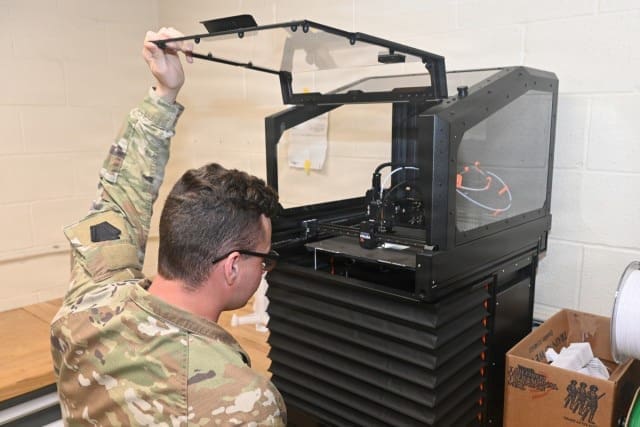
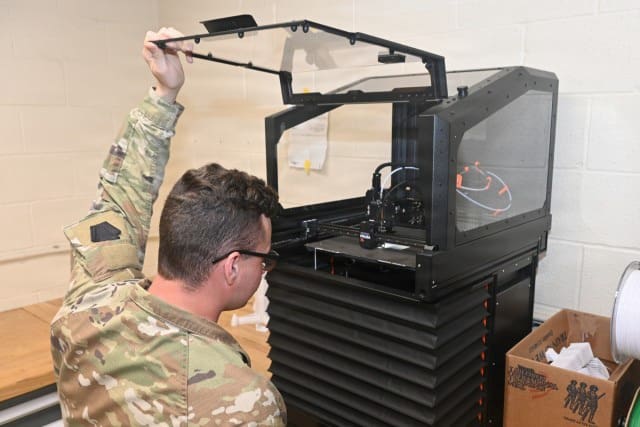
Soldiers Assist Air Force Squadron With Drone Warfare Training

Wednesday, March 18th, 2026

More than 200 airmen training with the Air Force’s 368th Training Squadron spent Feb. 27 at Fort Leonard Wood, Missouri, learning about unmanned aerial systems during an exercise designed to cultivate Air Force airmindedness and the warrior ethos.

The training squadron, based at Fort Leonard Wood, provides initial skills and advanced level training in the areas of ground transportation, engineering, emergency management and pavements and construction equipment.

According to Air Force Tech. Sgt. Christopher Moss, a specialty code instructor assigned to the training squadron, airmen at various specialty schools on base usually train separately, but this day was unique because it brought them all together.

“It allows them to integrate with our other schoolhouses, bringing them together as one force instead of each person learning just their craft,” Moss said. “Producing more well-rounded airmen for the force.”

Air Force Capt. Nathan Elking, 368th Training Squadron director of operations, said the unique training event is called Bracer Forge and is an operational readiness exercise.

“It is a continuation of the training airmen receive at basic training,” Elking said. “Both exercise initiatives are designed to instill airmindedness and warrior ethos in our airmen.”

The squadron’s exercise topics vary, but the current unmanned aerial system focus was driven by the unit’s specialty codes, which according to Elking play a key role in airfield damage assessment and rapid airfield damage recovery.

“Before each iteration of Bracer Forge, we provide the participating airmen with an operation order for the day and reporting instructions with a training scenario to recover a damaged airfield,” he said.

Squadron instructors prepared four stations for the airmen to rotate through.

At the airfield damage assessment challenge, Elking said teams conducted an assessment on a simulated airfield and relayed the information to their teammates in an emergency operations center.

“The airmen in the EOC were tasked with creating a map of the airfield using the details their counterparts called in over the radio,” he said.

While at the UAS reporting challenge, teams established defensive fighting positions and reported UAS activity to their teammates in the EOC by consolidating the information into a report to send up.

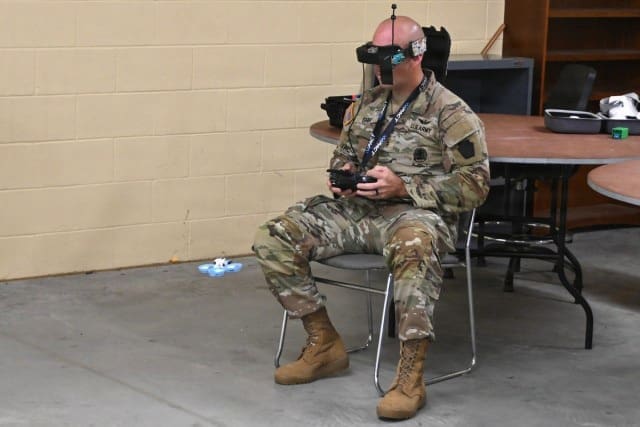
The other two stations were a high intensity physical fitness event and a UAS capabilities overview. Soldiers assigned to the Maneuver Support Center of Excellence Combat Training Company gave the UAS portion of the training.

“We are not subject matter experts on counter-UAS and UAS employment. Being able to leverage our Army partners at [center of excellence] played a significant role in the exercise’s success,” Elking said.

According to Army Sgt. 1st Class Austin Priebe, Combat Training Company UAS chief, his mission was to introduce small UAS threats, and teach the basics of identifying, reacting to and reporting small UAS threats.

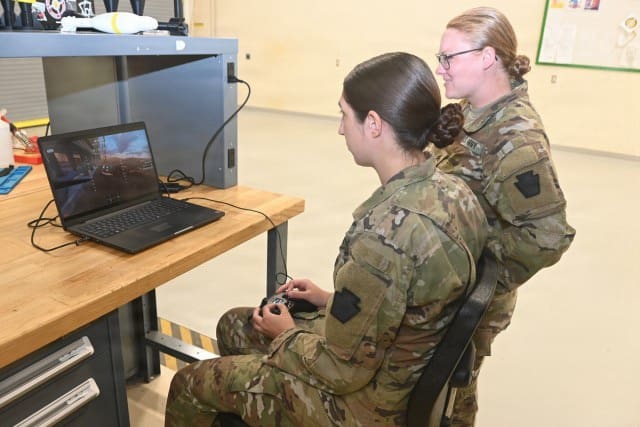
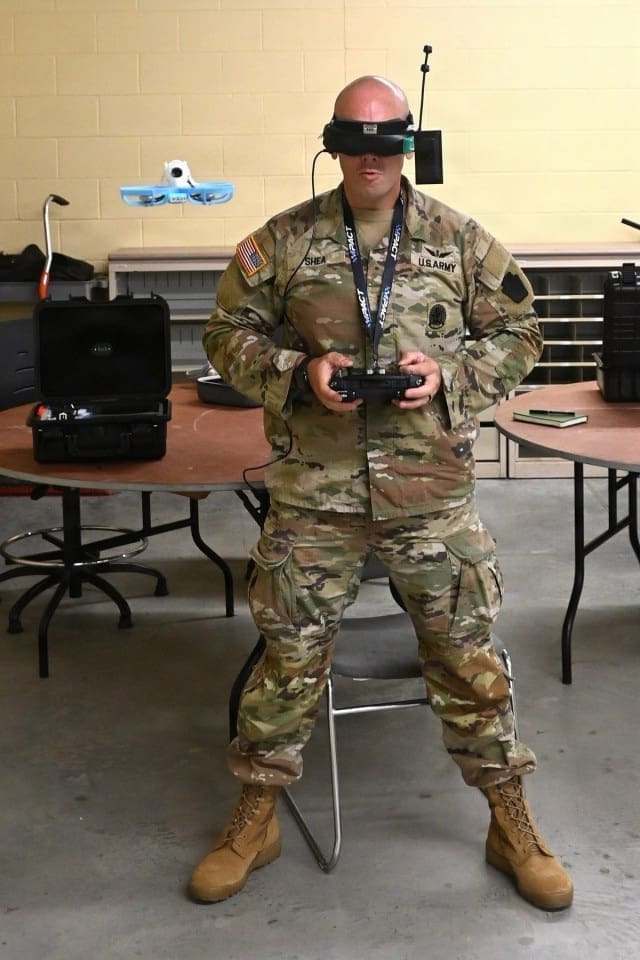
Priebe said most trainees he instructs have watched or controlled a simulated UAS in video games, but being able to experience a UAS in person, see and hear a drone up close, is “essential to prepare service members for what they will see in current and future conflicts.”

“We conducted practical exercises on scanning for [small] UAS, completing a report and showed the airmen what they look like from an elevated viewpoint,” Priebe said.

This was the training company’s first time facilitating interservice UAS training.

“I’ve largely been focused on enabling training and instruction to the Army units here on Fort Leonard Wood since the inception of our UAS program this past fall,” Priebe said.

As the battlefield changes rapidly, so does our training requirements. If our organization can provide more realistic and in-depth training to our brothers and sisters in other branches, we only stand to benefit as a military.”

Priebe said his team is looking forward to conducting more interservice training events in the future.

At the end of the day, the exercise was a catalyst for innovation, Elking said.

“By exposing airmen to the dual nature of UASs — both as a threat to counter and a tool to master — we challenge them to rethink their mission sets and pioneer new solutions for the modern battlefield,” he said.

By Melissa Buckley, Fort Leonard Wood Public Affairs

Orqa Signs Teaming Agreement with Red River Army Depot to Boost UAS Manufacturing

Monday, March 16th, 2026

OSIJEK, Croatia, March 16, 2026 — Orqa has entered into a groundbreaking teaming agreement with Red River Army Depot in Texarkana, Texas, representing a significant step in advancing the U.S. Army’s rapidly expanding organic small Unmanned Aircraft System (sUAS) manufacturing capacity.

The agreement also strengthens Orqa’s recently announced Global Manufacturing Program.

This agreement builds on Orqa’s longstanding engagement with the Department of War and reflects a shared commitment to supporting the Army’s broader modernization efforts.

The recently signed National Defense Authorization Act represents a national effort to expand unmanned systems production capacity within existing Army depots. Orqa’s role in this initiative builds on the company’s established record of delivering advanced sUAS technologies and supporting operational requirements across multiple theaters.

The teaming agreement marks a significant step in Orqa’s continued partnership with the U.S. military. It reinforces Orqa’s position as a trusted provider of unmanned systems and components, including recent authorizations that enable the company to support Army programs in Europe.

Through this collaboration, Orqa plans to contribute to strengthening domestic production of unmanned systems. As Orqa expands its role in U.S. manufacturing, the increased production activity may also support growth within the company’s operations. “Made in America” Orqa platforms will be available to U.S. military customers and may also support allied nations through established security cooperation channels.

Srdjan Kovacevic, co-founder and CEO of Orqa, said, “We’re thankful for the opportunity to contribute to the increase of U.S. drone manufacturing capability. The resulting boost in capacity will add to the production we can already achieve at our headquarters, a figure that will grow significantly as our Global Manufacturing Partnership Program comes online throughout the year. This agreement is a clear vote of confidence in Orqa, our capabilities, and our products.”

DroneShield Establishes European Manufacturing Footprint to Advance Sovereign Counter-UAS Capability

Thursday, March 12th, 2026

Sydney, Australia – 11 March 2026 – DroneShield (ASX:DRO), a global leader in counter-drone technology, today announced the establishment of counter-UAS manufacturing in the EU, marking a major expansion of the Company’s European industrial footprint and manufacturing capacity. The announcement follows increased momentum across the continent, with national military investments growing under the ReArm Europe Plan / Readiness 2030 initiative, accelerating the need for mature, scalable, and sovereign counter-UAS capability.

Under a new collaboration with an experienced and established manufacturer, production of European-made counter-UAS systems is now underway, with delivery scheduled for mid-2026. The contract manufacturer will carry out full turnkey assembly and component manufacturing, including PCB assembly, precision machining, cable and wire harness assembly, and associated assembly and testing labor. As part of this collaboration, DroneShield has established and will continue to grow a primarily EU-based supply chain, making this the Company’s only production line currently outside of Australia.

DroneShield’s European manufacturing footprint positions the Company more competitively for EU procurement opportunities, which increasingly prioritizes sovereign capability, regional production, and resilient supply chains, ensuring DroneShield can meet these expectations while delivering at scale and with reduced lead times.

Image: DroneShield have established a European production line

Oleg Vornik, Chief Executive of DroneShield said, “Europe is undergoing a profound shift in counter-UAS preparedness. By establishing dedicated manufacturing in the EU, DroneShield is contributing to Europe’s sovereign capability while continuing to deliver rapidly and reliably for our European customers. The ReArm Europe Plan / Readiness 2030 initiative has highlighted the importance of localized, scalable production, and this new production line positions us to meet that demand.”

The establishment of counter-UAS production in Europe forms part of DroneShield’s global manufacturing expansion, which is planned to grow the Company’s combined total annual production capacity from approximately $500 million in 2025 to an expected $2.4 billion by the end of 2026. This uplift supports rising operational demand across Europe, and reinforces DroneShield’s commitment to strengthening industrial bases and diversifying global supply chains, as militaries, law enforcement and critical infrastructure operators expand and modernize counter-UAS capabilities.

Dragon’s Lair Pitch Goes from Idea to Production

Tuesday, March 10th, 2026

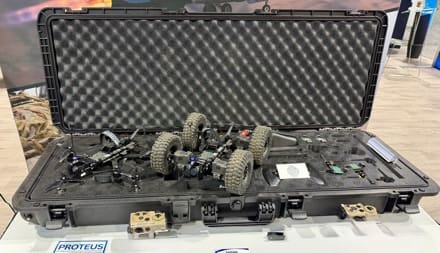
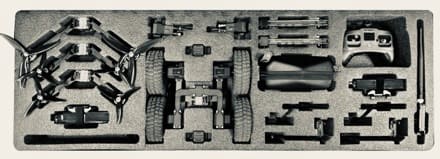
FORT BRAGG, N.C. — A modular drone case conceived by two 82nd Airborne paratroopers is heading into production eight months after being a runner-up at the XVIII Airborne Corps’ Dragon’s Lair competition on June 25, 2025.

This rapid turnaround from idea to production demonstrates the success of Secretary of the Army Daniel Driscoll’s Transformation Initiative, which simultaneously increase warfighter lethality and accelerates the Army’s acquisition process.

Spc. Alexander Soto, a paratrooper assigned to the 1st Battalion, 508th Parachute Infantry Regiment, noted the reoccurring problem of drones being broken during airborne drops and rigorous field exercises.

“We needed to be able to carry drones in our rucksacks for airborne operations,” said Soto. “The idea of a smaller rigid case that allowed us to pack it also made it possible to get them in the air as soon as we hit the drop zone.”

His solution was born out of necessity and pitched at Dragon’s Lair 11, an annual competition modeled after the TV show Shark Tank. Soldiers from across the corps presented their battlefield solutions to real-world challenges to a panel of judges for potential adoption.

Following the competition, Soto collaborated with Staff Sgt. Larry Dockins from the Airborne Innovation Lab. Together they developed a functional prototype in just three months. The result was a lightweight, rigid, and jumpable modular drone case compatible with multiple small unmanned aerial systems.

The accelerated path from concept to contract was made possible by another of the Corps’ innovation initiatives: the Lt. Gen. James M. Gavin Joint Innovation Outpost. The drone case project served as a successful pilot for the outpost’s new rapid-procurement model — testing the team’s ability to align the necessary resources for production.

The JIOP officially opened its doors in January 2026. Its primary mission is to bridge the gap between military needs and industry partners, fast-tracking the procurement process.

“By implementing the systems that the Lt. Gen. James M. Gavin Joint Innovation Outpost enables, we are able to bring these Soldiers’ ideas forward and implement them rapidly,” explained Col. Thomas R. Monaghan Jr., the JIOP’s director. “It also demonstrates the shift in prioritizing innovations that Soldiers want and view as viable solutions to problems.”

The significance of such Soldier-led innovation was not lost on leadership.

“Any solution that makes a warfighter more lethal is a winning solution for us,” Dockins said. “Ultimately, ounces make pounds, seconds make minutes. Creating a device that cuts weight could mean winning or losing on the battlefield.”

By SGT Prim Hibbard

Green Berets Hone Drone Proficiency with Advanced Training

Tuesday, March 10th, 2026

FORT CARSON, Colo. — High winds tear across the tactical range — tumbleweeds pass and debris swirls but a tactical drone maneuvers steadily through the sky, locked on course and unmoved by the elements. This moment reflects the culmination of three demanding weeks of training.

Green Berets from the 10th Special Forces Group (Airborne) completed an intensive training program from Feb. 9 to 27, conducting exercises both in the classroom and across multiple tactical ranges on Fort Carson. The Advanced Drone Course taken by the Soldiers is designed to expand operational capabilities and enhance small unmanned aerial system employment across the modern battlefield.

The course, led by instructors from 4th Battalion, 10th Special Forces Group (Airborne), brought together Green Berets, alongside a Soldier from the 4th Infantry Division. Throughout the training, students developed hands-on proficiency in soldering, assembling, programming and piloting small UAS platforms.

The course emphasized technical mastery and tactical integration, reinforcing that drones are not a substitute for core Soldier skills but an additional asset that increases precision, adaptability, and lethality during reconnaissance and combat operations.

“This is simply another tool in a Soldier’s kit but its impact depends on how well we understand and employ it,” said Sgt. 1st Class Jovani Vasquez of the 4th Combat Aviation Brigade. “Our adversaries recognize that too. This technology is increasing worldwide, and enemy forces and terrorist organizations are actively using it. We must remain just as adaptive and informed to maintain the advantage.”

As the rhythm of warfare continues to evolve, UAS platforms have become increasingly central to operations. Over the past two decades, the battlefield has expanded beyond traditional ground maneuvering, requiring Soldiers to adapt to threats and opportunities in the air domain. The Advanced Drone Course reflects the Army’s commitment to ensuring units remain agile and prepared to meet emerging challenges.

Upon completion of the course, graduates are capable of independently maintaining and repairing their systems in austere environments. Soldiers are trained to troubleshoot malfunctions, replace components, and conduct basic modifications to sustain mission effectiveness.

“If the motor goes out, they now have the ability to re-solder a new motor, fix it, and continue the mission,” said a UAS instructor from 4th Battalion, 10th Special Forces Group (Airborne). “If your M4 jams, you don’t stop — you find a solution. The same mindset applies to drones. Soldiers need to perform basic repairs and keep the mission moving.”

By investing in advanced drone training, the 10th Special Forces Group (Airborne) reinforces its ability to adapt to the evolving character of warfare. The course equips Soldiers with the technical skills and problem-solving mindset needed to build, repair, and employ small unmanned aerial systems in any environment. As technology reshapes the battlefield, initiatives like this ensure Green Berets remain agile, self-sufficient, and ready to maintain the advantage.

By SGT Zachary Myers

Special Forces Sharpen Skills, Integrate Technology in Arctic Training

Friday, March 6th, 2026

FORT WAINWRIGHT, Ak. – Across the freezing subarctic region, Green Berets immersed themselves in some of the most physically and mentally taxing cold weather training for the Joint Pacific Multinational Training Center (JPMRC) 26-02 rotation across multiple training areas in central and southern Alaska.

Green Berets and enablers assigned to 3rd Battalion, 10th Special Forces Group (Airborne) pushed their bodies to the limit and used their unique set of skills to enhance the effectiveness of 11th Airborne Division in a simulated large-scale combat operation from Feb. 11-20, 2026.

Several small teams of operators leveraged reconnaissance and disruption of adversary technology to ultimately give the Joint Force Commander a decisive advantage in fires and maneuver across the battlespace.

“We’ve got our place [in large-scale combat operations] and it is using tactical actions with our specialized signals intelligence and electronic warfare analysts to achieve strategic results,” said Maj. Scott Ratzer, the 3rd Battalion Alpha company commander. “This gives us a chance to identify important [enemy] targets on the Division’s high-priority target list and disrupt [enemy] command and control, sustainment and logistics.”

Prior to entering the JPMRC training area, multiple Special Forces Operational Detachment–Alphas (SFOD-A) and support personnel conducted 14 days of focused cold weather training in Alaska to refine fundamental survival skills required to operate in Arctic conditions.

The teams rehearsed small-unit movement over snow-covered and restrictive terrain, cold weather sustainment to include meal preparation, communications in extreme temperatures, and long-duration dismounted operations. The training reinforced the technical discipline required to maintain combat power when equipment, batteries, and even basic tasks become more complex in sub-zero environments.



“Having two weeks of solid cold-weather training prior to going into the box helped us and other teams really prepare for the subfreezing temperatures that we were going to face in the box,” said a Special Forces Team Sergeant, the senior NCO on an ODA. “When guys are exposed to this environment [like Alaska], they stop doing the simple things – changing socks, drinking water, and eating. These mistakes can begin to snowball if not taken seriously.”


Building on that foundation, the ODAs integrated emerging technologies to extend their reach well beyond line-of-sight contact. The 3rd Battalion’s premiere military free fall (MFF) team practiced a high-altitude high opening jump to field test cold-weather equipment, communications gear, and layered clothing configurations in a true Arctic environment prior to entering the training area.

By executing the infiltration under realistic conditions, the ODA identified equipment limitations, refined load plans, and confirmed that critical systems would function upon landing.

“If we can prove we’re able to execute an MFF jump in Arctic conditions, that’s just one more option the commander has in his back pocket,” said a Special Forces Detachment Commander. “Weather and terrain up here can limit how you move forces, so testing our gear and our procedures in this environment gives higher headquarters the flexibility to insert a team where and when it makes sense.”

This training underscores the Army’s focus on building agile, lethal formations capable of projecting combat power in any climate and against any adversary. Adaptability is a key component in building lethality and first-person view (FPV) drones assist 10th SFG(A) signals intelligence Soldiers in collecting critical information to hand off to 11th Airborne Division for rocket and missile support.

“FPV drones give us a fast, low-signature way to confirm what we’re seeing on the ground and tighten up our target picture,” said a signals intelligence Soldier. “Instead of relying solely on reports or larger platforms, we can push a drone forward, get eyes on the objective in real time, and provide accurate information to the commander. That speed and precision makes a big difference when it comes to reconnaissance and confirming prior intel.”

As the rotation wrapped up, Green Berets from 3rd Battalion, 10th Special Forces Group (Airborne) returned from Alaska having honed their cold-weather skills and tested their equipment in extreme conditions. From survival basics to using FPV drones for real-time reconnaissance, they showed the Army’s focus on adaptability, precision, and readiness. The training ensures commanders have the tools and information needed to gain an edge on any battlefield.

The Joint Pacific Multinational Readiness Center (JPMRC) is the U.S. Army’s premier Combat Training Center (CTC) in the Indo-Pacific region. Established as a “home-station” and exportable capability, it allows units to train in their own regional environments—such as jungles, archipelagos, and extreme cold—rather than traveling to conventional training centers in the continental United States.

Story by SGT David Cordova, 10th Special Forces Group (Airborne)

AV Receives $186 Million US Army Delivery Order for Next-Generation Switchblade Systems

Monday, March 2nd, 2026

ARLINGTON, Va. — February 26, 2026 — AeroVironment, Inc. (“AV”) (NASDAQ: AVAV), a global leader in autonomous systems and precision strike solutions, today announced receipt of a $186 million delivery order from the U.S. Army for Switchblade® 600 Block 2 and Switchblade® 300 Block 20 explosively formed penetrator (EFP) loitering munition systems.

The order was issued under the Army’s existing five-year, $990 million Indefinite Delivery, Indefinite Quantity (IDIQ) contract for Lethal Unmanned Systems (LUS), which was awarded in August 2024. This delivery order marks the U.S. Army’s first procurement of AV’s next-generation Switchblade product line, underlining a significant step forward in fielding advanced, precision loitering munitions across infantry and maneuver formations. It is the Army’s first Switchblade order containing EFP payload, delivering enhanced lethality against armored threats.

“This delivery order reflects the Army’s confidence in the next evolution of the Switchblade family and its relevance to modern, contested battlefields,” said Brian Young, Senior Vice President of Loitering Munitions at AV. “Switchblade 600 Block 2 and Switchblade 300 Block 20 build on years of combat experience while delivering meaningful upgrades in autonomy, resilience, and lethality tailored to today’s operational demands.” 

Switchblade 600 Block 2 is AV’s most advanced long-range loitering munition to date, designed for multi-domain operations and ruggedized for maritime and highly contested environments. Developed in collaboration with United States Special Operations Command (SOCOM), the system features upgraded avionics and advanced Automatic Target Recognition (ATR), enabling faster detection, identification, and engagement of threats. Integrated resilient communications, including Silvus MANET radios, support distributed operations and extended handoff ranges, while improved navigation and mission resilience allow effective employment in GPS-challenged environments. These upgrades provide commanders with increased reach, flexibility, and confidence against armored and high-value targets.

Switchblade 300 Block 20 introduces a new modular payload capability to the combat-proven, backpackable loitering munition. For the first time, the Army has procured the system with an Explosively Formed Penetrator (EFP) payload, delivering enhanced lethality against armored threats while retaining the speed, portability, and ease of use that have made Switchblade 300 a trusted solution at the small-unit level. The Block 20 configuration also includes sensor improvements, enhanced user interfaces, and extended range options, allowing rapid, precision effects beyond line of sight.

Together, the Switchblade 600 Block 2 and Switchblade 300 Block 20 provide the Army with a scalable family of precision loitering munitions—from lightweight, single-operator systems to long-endurance, multi-domain capabilities—designed to operate seamlessly across echelons and mission sets.

“This delivery order further advances the Army’s Lethal Unmanned Systems Directed Requirement and reinforces AV’s role as the leading provider of combat-proven loitering munition systems,” said Young. “As we continue to invest in expanding Switchblade manufacturing capacity and accelerating delivery timelines, we are continuing to meet the growing demand for these products from U.S. and allied forces.”

National Guardsmen Train to Use Small Drones

Sunday, March 1st, 2026

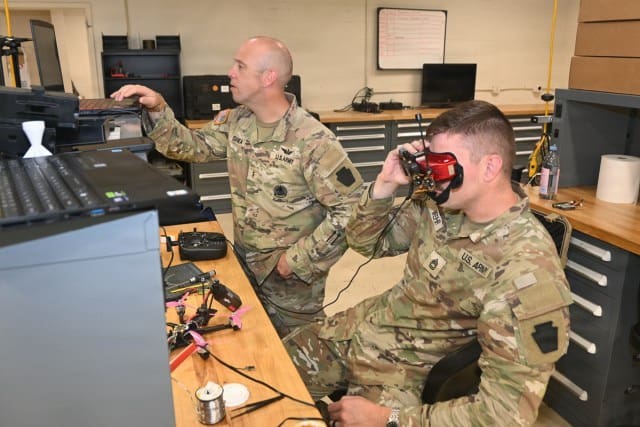
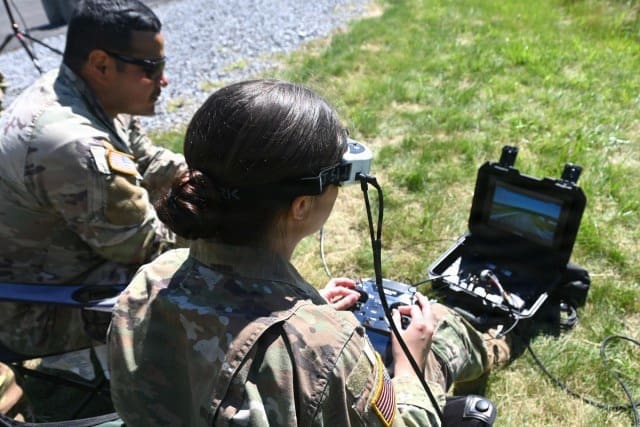
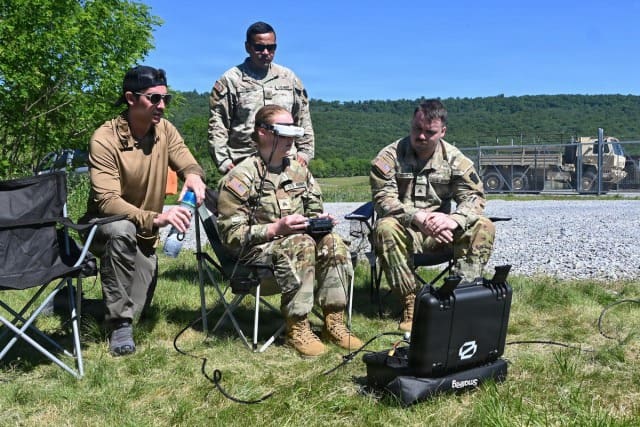
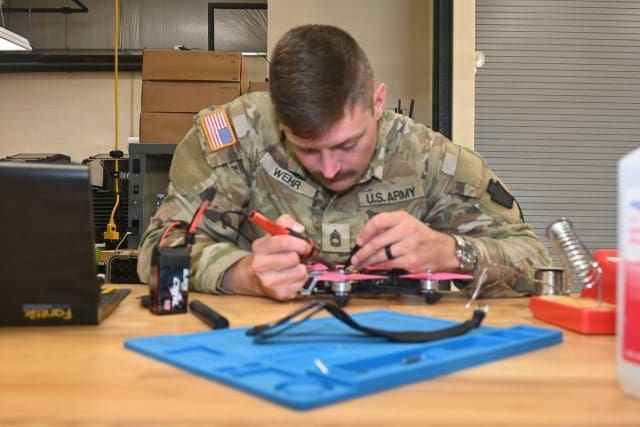
FORT INDIANTOWN GAP, Pa. – National Guard Soldiers from various backgrounds, skillsets and military occupational specialties attending a 10-day small unmanned aircraft system operator course, or sUAS, are learning how to operate small drones.

The course, which began Feb. 19 and ends Feb. 28, is being conducted by the 166th Regiment – Regional Training Institute.

“It’s been a great course,” said Sgt. Stephen Scharf, a student from 1st Battalion, 111th Infantry Regiment. “It’s a very evolving world, so there are a lot of new ideas coming out. A lot of things are changing very rapidly.

The course is structured to encourage students to adopt a tactical mindset and understand how the things they learn can be integrated into a large-scale combat operation, said Sgt. 1st Class Brandon Wahl, the sUAS operator course manager.

“One of my main goals here is to make it as realistic as we can,” he said. “So, it’s important for everyone to know how to operate one, because at any point you could be tasked with operating it.”

Several members of the 111th Engineer Brigade, West Virginia National Guard, attended the course because their unit is deploying soon. They’ll be using these drones on their deployment, Spc. Simon Bertram said.

“For infantry, it’s very necessary for reconnaissance,” Bertram said. “Getting more drone operators will be very beneficial.”

Other attendees of the course came to learn a new skill. Scharf said the course has been very informative.

“It’s an evolving world, and a lot of things are changing very rapidly,” he said. “The instructors are doing their best to stay on top of it and disseminating that info.”

Scharf mentioned that this course and the information it provides have been beneficial not just for himself but for the Army as a whole.

“It’s something that as we develop this, more doctrine gets established,” he said. “It’s going to be something that you’re going to see more widespread throughout both the Guard and the Army.”

The course is open to National Guard members of all military occupational specialties.

“There are infantrymen here, some of them are engineers,” Wahl said. “One of the students is an intel guy. There’s all kinds of jobs that come through.”

“All of these different jobs in the Army will be affected by sUAS’s,” Scharf said. “Sometimes that might be that you have to figure out how, which is a great thing.”

By SGT Kayden Bedwell