Colt

Archive for the ‘Drone’ Category

Textron Systems’ Damocles Loitering Munition Selected For US Army Low Altitude Stalking & Strike Ordnance (LASSO) Contract

Friday, February 27th, 2026

Wilmington, Mass., Feb. 25, 2026 – Textron Systems Corporation, a Textron Inc. (NYSE: TXT) company, announced today it was awarded a prototype agreement from the U.S. Army for the Low Altitude Stalking & Strike Ordnance (LASSO) program. Under the prototype agreement, Textron Systems will deliver a DamoclesTM loitering munition system and demonstrate it to the U.S. Army.


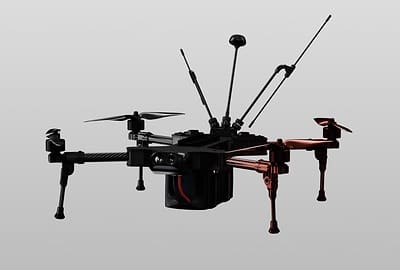
The DamoclesTM loitering munition, equipped with Textron Systems’ advanced GEN2 Explosively Formed Penetrator (EFP), is a cutting-edge system designed to deliver decisive lethality in peer warfare environments. For the LASSO program, the Damocles system is integrated with a vertical take-off and landing (VTOL) uncrewed aircraft system (UAS) to deliver top-attack capability. In the VTOL configuration, no launch or recovery equipment is required.

The Damocles system is built with a modular open systems approach (MOSA), allowing other payloads to be integrated into the system to support various concepts of operation (CONOPS), such as electronic warfare effects. For operational safety, the system includes features to prevent unexploded ordnance (UXO), reducing the risk of hazardous remnants on the battlefield.

“Loitering munitions technology will be key in protecting the warfighter on the battlefield – they allow warfighters to send systems like Damocles beyond-line-of-sight (BLOS) to engage a target from a safer standoff distance,” said Henry Finneral, Senior Vice President, Weapon Systems. “Textron Systems is proud to support this mission and leverage our industry-leading EFP technology to provide next-generation capability at speed and at scale.”

Army Announces Winners of the Inaugural Best Drone Warfighter Competition

Monday, February 23rd, 2026

FORT RUCKER, Ala. – The U.S. Army today announced the winners of the inaugural Best Drone Warfighter Competition, a three?day event held on February 17-19 that brought together elite drone operators from across the active duty, reserve, and National Guard components.

The competition was hosted by the Army Aviation Center of Excellence and the Maneuver Center of Excellence, in Huntsville, Alabama, sponsored by the Army Aviation Association of America (AAAA) in partnership with the University of Alabama Huntsville. The event drew over 200 competitors and more than 800 attendees, showcasing the Army’s most skilled small?UAS operators. Participants competed in three distinct challenges designed to test speed, precision, teamwork, and creativity in small UAS employment: a high speed drone race, a tactical squad lane, and an innovation showcase, highlighting the Army’s commitment to integrating advanced unmanned aerial systems at every echelon of the force.

Winners of the 2026 Best Drone Warfighter Competition are:

• Best Drone Operator: Sgt. Javon Purcher, 1st Cavalry Division, Fort Hood, Texas

• Best Tactical Squad: Staff Sgt. Angel Caliz and Spc. Jonah Burks, 2nd Cavalry Regiment, Vilseck, Germany

• Best Innovation: 1st Lt. Ryan Giallonardo, Chief Warrant Officer 3 Robert Reed, Chief Warrant Officer 2 Nathan Shea and Sgt. 1st Class Brent Wehr, 28th Infantry Division, Pennsylvania Army National Guard

Competitors raced Neros Archer FPV drones through a complex, obstacle course; executed cross?country hunter-killer missions in paired teams to identify and neutralize targets; and showcased Soldier designed technologies in front of a panel of experts aimed at improving survivability, lethality, and battlefield adaptability.

Beyond identifying top performers, the competition demonstrated how rapidly the Army’s unmanned capabilities are advancing. The event reinforced the service’s focus on developing operators who can excel in contested environments and contribute to combat formations that are more lethal, agile, and technologically integrated.

The Best Drone Warfighter Competition aligns with the Army’s broader modernization priorities, underscoring the role of advanced unmanned systems in strengthening readiness and preparing Soldiers for the demands of future conflicts.

For additional imagery and media, go to www.dvidshub.net/feature/USArmyBDWC

By LTC Vonnie Wright

Fort Benning Integrates Virtual Drone Training into OSUT Program of Instruction

Thursday, February 19th, 2026

FORT BENNING, Ga. — As small unmanned aircraft systems, sUAS, become a defining feature of the modern battlefield, the Maneuver Center of Excellence is ensuring every new Soldier has a high-tech edge.

One-Station Unit Training trainees are now undergoing a 10-hour sUAS familiarization course integrated into their formal program of instruction. Using Virtual Battle Space 4 software and the Virtual Drone Collective Trainer plug-in, Infantry and Armor trainees master flight mechanics before stepping onto a live flight line.

The 12-lane curriculum, modeled after the 75th Ranger Regiment’s Ranger Robotics Lethality Course, is designed to take a Soldier from basic “buttonology” — learning the controller interface — to advanced tactical reconnaissance and lethal kinetic strikes.

“The Army has always used simulation-based training to reduce noise, training costs, and wear and tear on equipment and resources,” said Jayson D. Karch, a training specialist with the Maneuver Center of Excellence Directorate of Training and Doctrine. “This enables Soldiers from across the Army to receive immersive, life-like, low-cost training on equipment they have minimal experience operating, without risk of damage to equipment, personnel, or resources.”

The move toward simulation-based training addresses the logistical challenge of training thousands of Soldiers annually. By using the Virtual Drone Collective Trainer software plug-in, developed by the Combined Arms Center-Training Innovation Facility at Fort Leavenworth, Kansas, the Army can provide immersive training at scale.

“While live flight is an important and vital portion of certifying an sUAS operator, new operators use simulations to build basic skills without all the resources required for live flight,” said Rory O’Brien, an MCoE simulation specialist. “Given the number of Soldiers trained in Infantry and Armor OSUT, there aren’t enough resources to allow every Soldier to fly a live sUAS, so virtual simulations allow us to train the skills at scale using less resources.”

The training is divided into three distinct phases: flight training, basic tactical training and a culminating assessment. During the tactical phase, trainees use night vision, thermal, and infrared cameras to identify enemy personnel and vehicles before conducting simulated drone strikes.

The Army’s goal is not to turn every Soldier into a certified pilot, but to ensure every Soldier is familiar with a combat enabler they will encounter in future formations. The simulation also serves as a talent-scouting tool; trainees who demonstrate above-average proficiency are considered for the formal sUAS Operators Course following graduation.

The MCoE plans to publish these training lanes on the milGaming website, allowing units across the force to download and utilize the same scenarios for home-station training.

The integration of sUAS training into OSUT represents a fundamental shift in how the Army prepares for the modern, transparent battlefield. By prioritizing digital literacy and technological proficiency from day one, the MCoE is ensuring that the next generation of Infantry and Armor Soldiers is not just keeping pace with change but driving it. As these Soldiers transition to the operational force, they provide a ready, lethal, and tech-capable backbone for the multidomain formations of tomorrow.

View more photos of the virtual sUAS training.

By CPT Stephanie Snyder

101st Airborne Division (Air Assault) Conducts UAS Competition Tryouts, Showcasing Innovation and Readiness

Tuesday, February 17th, 2026

FORT CAMPBELL, KY – The 101st Airborne Division (Air Assault) conducted competitive tryouts for its UAS team on Jan. 12, 2026, here, identifying Soldiers who will represent the division in an upcoming Army UAS competition while reinforcing the unit’s commitment to innovation, readiness and modernization across the force.

Held at Fort Campbell, the tryouts brought together Soldiers from across the formation who demonstrated technical skill, adaptability and problem-solving abilities while operating unmanned aerial systems.

“The Army has sent a very clear demand signal to identify and employ the best drone teams and best drone operators, ” said Chief Warrant Officer 2 Page Frazier, a member of the Robotics and Autonomous Integration Directorate. “And here at the 101st Airborne Division we are prepared to answer that call.”

Soldiers across the formation were evaluated on their physical endurance through the Air Assault obstacle course, techniques on how to employ a UAS, and how to navigate a drone system in a confined area. These attributes that were being evaluated reflected how emerging technologies are increasingly integrated into modern battlefield operations.

“The most challenging part about the tryouts so far is the air assault course, mixed with running to the nets, and then flying around, ” said Spc. Markus Sund, a participant in the drone tryouts.

This event directly supports the Army’s broader modernization strategy, and places emphasis on the importance of unmanned systems in future conflicts which is evolving the modern-day battlefield. Division leadership within the 101st Airborne Division hones in on the concept that innovation is a critical component of lethality and readiness.

As the Army continues to integrate advanced technologies into training and operations, the division sets forth to remain the trailblazers of that transformation. Through events like the UAS competition tryouts, the division is ensuring its Soldiers are equipped, empowered and prepared to meet tomorrow’s challenges head-on.

The selected team will continue training in preparation for the upcoming Army drone competition, representing the division’s commitment to excellence, adaptability and innovation across the force.

Story by SGT Parris Kersey 

101st Airborne Division (Air Assault)

From Backpacks to Bird’s-Eye: Drones Transforming EOD at Hurlburt Field

Wednesday, February 11th, 2026

Across a stretch of open terrain at Hurlburt Field, Florida, two 1st Special Operations Wing Airmen began a race between machines. One guided a ground robot toward a simulated casualty, its treads working across dirt and grass. The other launched a small unmanned aerial system, or drone, which reached the site within seconds. From above, the drone’s camera streamed a clear view of the scene before the robot made it halfway there.

It’s a new kind of flight reshaping how Explosive Ordnance Disposal Airmen execute their mission—and how the Air Force strengthens readiness through innovation. Before the adoption of modernized drones, EOD teams relied primarily on heavy robotic platforms to inspect potential explosive threats. The systems still provide valuable standoff capability but require vehicle transport and setup time, limiting their use during dismounted operations. In those scenarios, Airmen may have to approach hazards themselves.

Compact and portable drones can now be carried in a backpack and launched within minutes. Operated from a safe distance, they stream real-time imagery that helps Airmen assess hazards without approaching them. The drones give teams an unmatched view of any environment. They combine optical and thermal cameras for day or night operations with advanced 3D scanning that produces precise digital models in minutes, whether documenting blast sites or mapping entire airfields.

Drone imagery can be used to establish a visual reference of a runway and to collect updated imagery after an incident. The data helps civil engineers quickly identify changes or damage, supporting timely clearance actions and repair planning to resume air operations.

Built-in artificial intelligence also allows drones to operate with a high degree of autonomy. The system can identify and track targets, hold position, and navigate around obstacles with minimal operator input. These capabilities boost mission tempo and efficiency while augmenting the work of Airmen, keeping them out of harm’s way and allowing them to focus on critical decision-making.

Drones have not yet replaced every function of traditional robots, but the two technologies currently complement one another on the battlefield. “The big thing [a drone] doesn’t currently have is manipulation,” explained an 1 SOW Airman. “I can’t pull a battery off something or flip something over [with a drone], but a robot can.” Still, drones are increasingly assuming tasks once limited to ground platforms, expanding options for commanders and reinforcing the Air Force’s ability to adapt faster than its adversaries.

Introducing any new technology brings challenges, but EOD Airmen at Hurlburt Field have moved quickly to overcome them. Through local innovation projects, the team acquired and tested drones early, giving them a head start in integrating the capability into daily operations. “We’ve had the ability to work through a lot of the growing pains much faster,” said a 1 SOW Airman. “Now we’re able to disseminate those lessons throughout the career field.”

That progress continues as Airmen refine training and certification standards while identifying where drones provide the most operational value. “A lot of this is going to fluctuate based on use cases, because we all have a general idea of how we’d want to use this… but there’s still a lot to learn,” said an Airman.

1 SOW Airmen emphasized that the success of drone integration depends as much on institutional understanding as on technology itself. They said progress requires high-level advocacy to navigate the policies and risk assessments that come with operating in shared airspace, along with trust between ground units employing the systems and aviation communities managing them. As one Airman explained, the future fight will rely on an enterprise that adapts quickly and learns from those already proving what’s possible.

At Hurlburt Field, 1st SOW EOD Airmen are showing how small systems can yield big results. The shift from large ground robots to backpack-sized drones is transforming how they detect, respond, and recover—bringing speed, precision, and safety to every mission. “These are coming. This is the way of the future,” said a 1st SOW Airman. “If it’s not in your shop currently, it probably will be in the very near future. Get ready.”

Story by Alexandra Broughton 

Headquarters Air Force, Office of the Director of Civil Engineers

Michigan’s NADWC Designated as National Range for Deep Uncrewed Aerial Systems Training

Tuesday, February 10th, 2026

LANSING, Mich. – Michigan’s National All-Domain Warfighting Center, or NADWC, was designated by the U.S. Department of War as a National Range for Deep Uncrewed Aerial Systems, or UAS, Training.

“Today’s designation of the NADWC as a national test site shows that Michigan can lead the future of aerospace and continues to play a key role in protecting our national defense,” said Gov. Gretchen Whitmer. “Over the last few years, we held an autonomous drone competition, released a statewide Advanced Air Mobility Initiative and secured a new fighter mission at Selfridge Air National Guard Base. Now, thanks to this new national test site, we are building on that momentum, becoming an even more attractive place for cutting-edge defense and aerospace companies to invest in, create good-paying, high-skill local jobs and grow our economy. You can already see Michigan-made products on roads around the world, and soon, we’ll be in the sky too.”

This designation cements the NADWC as the nation’s premier proving ground for advanced UAS and Counter Uncrewed Aerial Systems, or C-UAS, positioning Michigan at the forefront of America’s defense innovation economy. Selected by the U.S. Army and National Guard Bureau, NADWC offers an unmatched environment for drone development and testing and training, one that is squarely focused on the warfighter and on doing what is best for the force. By combining permissive operating authorities, cutting-edge infrastructure and close ties to Michigan’s world-class technology and manufacturing ecosystem, this designation amplifies our ability to train at speed and scale.

Anchored by nearly 200,000 acres of maneuver space at Camp Grayling Joint Maneuver Training Center and more than 17,000 square miles of special-use military airspace at the Alpena Combat Readiness Training Center, NADWC delivers a level of scale and realism few training environments can match. These Joint National Training Capability–certified sites feature diverse terrain, robust electromagnetic spectrum access and a true four-season climate, allowing units to stress systems, tactics and formations in conditions that replicate multiple theaters of operation and prepare forces for the next fight.

As the largest joint training range east of the Mississippi River and home to the flagship Northern Strike Exercise, NADWC is purpose-built to enhance readiness. Its all-weather, all-domain environment enables warfighters and our allied partners to train together at full operational tempo, integrating uncrewed systems into live-fire, combined arms and advanced swarm operations. The result is a more lethal, more prepared force, better equipped to succeed on the future battlefield.

“This designation is about staying focused on the warfighter and doing what’s best for the force,” said U.S. Army Maj. Gen. Paul D. Rogers, adjutant general and director of the Michigan Department of Military and Veterans Affairs. “The NADWC gives us the scale, airspace and all-domain environment we need to amplify our ability to train and prepare for the next fight. It allows our Soldiers, Airmen, joint partners and allies, to develop, test and employ uncrewed systems at operational tempo under realistic, all-weather conditions. That kind of training directly translates to readiness and ensures our forces are positioned to succeed on the future battlefield. I want to thank Governor Whitmer and Michigan’s congressional delegation for their steadfast support in making this effort possible, which will ensure the men and women of the U.S. military and our allies will be prepared for any future conflict.”

By Michael Kroll, Michigan National Guard

Estonia, Latvia, and Belgium Take Delivery of BLAZE Interceptor Drones from Origin Robotics

Monday, February 9th, 2026

Three NATO nations’ armed forces are the first European military to field autonomous interceptor drones amid rising airspace threats.

RIGA, Latvia (February 6, 2026) – Only months after the initial procurement announcements, Riga-based defence technology company Origin Robotics has begun delivering its BLAZE interceptor system to the armed forces of Latvia, Belgium, and Estonia. This handover makes these three countries the first in Europe to field a domestically produced, fully autonomous, warhead-equipped drone interception system. The rapid delivery underscores how agile defence companies like Origin are helping governments respond more quickly to evolving airspace threats.

Across Europe, NATO countries have reported a growing number of unauthorized drone flights near borders, military sites, and critical infrastructure, reflecting the wider spread of low-cost unmanned systems linked to regional security tensions. These incidents have accelerated efforts such as the “drone wall,” a coordinated initiative to strengthen surveillance and counter-UAS capabilities along NATO’s eastern flank, as governments seek faster and more autonomous ways to protect their airspace.

Latvia was the first to announce its order for Origin’s interceptor systems in early October, followed by the Belgium Ministry of Defence, which publicly announced a €50 million allocation for counter-drone systems in November, with Estonia ordering shortly thereafter. As of January 2026, all three nations have begun receiving the first batches of the BLAZE system, with deliveries continuing in several batches over the coming weeks.

The BLAZE system, entirely developed and manufactured by Origin in Latvia, is an autonomous drone interceptor designed to neutralize hostile UAV threats with speed and precision. Designed for NATO interoperability and built for real-world use, BLAZE is the first NATO-codified autonomous interceptor drone equipped with a STANAG-compliant warhead module and available for immediate deployment.

Latvia’s Autonomous Systems Competence Center (ASCC) will be responsible for evaluating the system and determining how the newly acquired capabilities should be integrated into the National Armed Forces. Comparable national evaluation and integration processes are underway in Belgium and Estonia.

Major Modris Kairišs, Head of the Latvian Autonomous Systems Competence Centre: “The rapid deployment of systems like Origin Robotics’ BLAZE is essential to strengthening national air defence. At the same time, hands-on use at scale allows us to build a precise, real-world understanding of their capabilities, limitations, and tactical applications. This ensures new technologies are not only fielded quickly, but also integrated effectively into the armed forces.”

Agris Kipurs, co-founder and CEO of Origin Robotics: “The Baltic states have acted with urgency and foresight in strengthening their aerial defence posture amidst growing threats, and Belgium has shown the same determination. These deliveries prove that rapid procurement cycles are possible when governments work with agile, technology-driven defence companies like Origin. That speed matters when drone technology evolves faster than traditional procurement timelines.”

Unlike traditional defence procurement cycles that can stretch into years, the BLAZE deliveries come within months of contract announcements. The systems are operational and ready for immediate integration, and the delivery will take place over the next weeks in several batches.

Further details of the order, including quantities and operational roles, remain confidential. Additional deliveries to several other European NATO nations are already underway and will be announced in due course. Together, these deployments reflect growing institutional adoption of Origin’s technology across multiple NATO and partner countries.

origin-robotics.com/blaze

War Department Announces Vendors Invited to Compete in Phase I of the Drone Dominance Program

Wednesday, February 4th, 2026

When Secretary of War Pete Hegseth took office a year ago, matching new technologies to threats was one of his core priorities. He commissioned an acquisition strategy to swiftly outfit our combat units with lethal drones.

The War Department today announced the 25 vendors invited to compete in Phase I of the Drone Dominance Program (DDP), an acquisition reform effort designed to rapidly field low cost, unmanned one way attack drones at scale as part of strengthening America’s Arsenal of Freedom.

“Drone dominance is a process race as much as a technological race,” Secretary of War Pete Hegseth wrote in his July 2025 memorandum, Unleashing U.S. Military Drone Dominance. “We are buying what works—fast, at scale, and without bureaucratic delay. Lethality will not be hindered by self imposed restrictions.”

The Phase I evaluation—the Gauntlet—will begin 18 February at Fort Benning, where military operators will fly and evaluate vendor systems. The Gauntlet will conclude in early March, when approximately $150 million in prototype delivery orders will be placed, with deliveries beginning shortly thereafter and continuing over the following five months.

Drone Dominance operationalizes the Secretary of War’s acquisition reformpriorities by sending a clear demand signal to industry—$1.1 billion over four phases, placing warfighters at the center of evaluation, and driving competitive, iterative cycles measured in months, not years. Across the program’s four phases, unit prices decrease, production volumes increase, and operational capability rises.

By 2027, the Department will be fielding hundreds of thousands of weaponized, one way attack drones ready for combat.

The Drone Dominance Program is sponsored by the Office of the Secretary of War and executed by the Defense Innovation Unit, the Test Resource Management Center, and Naval Surface Warfare Center, Crane Division.

The funding is ready and steady. The timeline to build combat power is compressed. The competition begins now.

The Department has invited 25 companies to Gauntlet I, listed below alphabetically.

ANNO.AI, INC.
ASCENT AEROSYSTEMS INC
AUTERION GOVERNMENT SOLUTIONS INC
DZYNE TECHNOLOGIES, LLC
EWING AEROSPACE LLC
FARAGE PRECISION, LLC
FIRESTORM LABS, INC.
GENERAL CHERRY CORP
GREENSIGHT INC.
GRIFFON AEROSPACE, INC.
HALO AERONAUTICS, LLC
KRATOS SRE, INC.
MODALAI, INC.
NAPATREE TECHNOLOGY LLC
NEROS, INC.
OKSI VENTURES, INC.
PALADIN DEFENSE SERVICES LLC
PERFORMANCE DRONE WORKS LLC
RESPONSIBLY LTD
SWARM DEFENSE TECHNOLOGIES, LLC
TEAL DRONES INC
UKRAINIAN DEFENSE DRONES TECH CORP
VECTOR DEFENSE, INC
W S DARLEY & CO
XTEND REALITY INC.

– Via Department of War