XC3 Weaponlight

Archive for the ‘Guest Post’ Category

Pacific Air Forces Airmen Test Next Generation Aircrew Protection Equipment

Thursday, June 1st, 2023

HICKAM AIR FORCE BASE, Hawaii (AFNS) —  

If you’ve spent time in the Indo-Pacific region, you’ve likely heard the term “Fight Tonight” more than once and for good reason. Pacific Air Forces Airmen are on the forefront of operations in ensuring a free and open Indo-Pacific, and these operations come with a need to be ready, diverse, innovative and lethal.
We have been charged with challenging the status quo, operationalizing resourcefulness and adopting concepts and technologies that drive the readiness, resilience and lethality of the force.

One of the most recent advances added to the PACAF portfolio involves the U.S. Air Force Next Generation Aircrew Protection, or NGAP, effort.

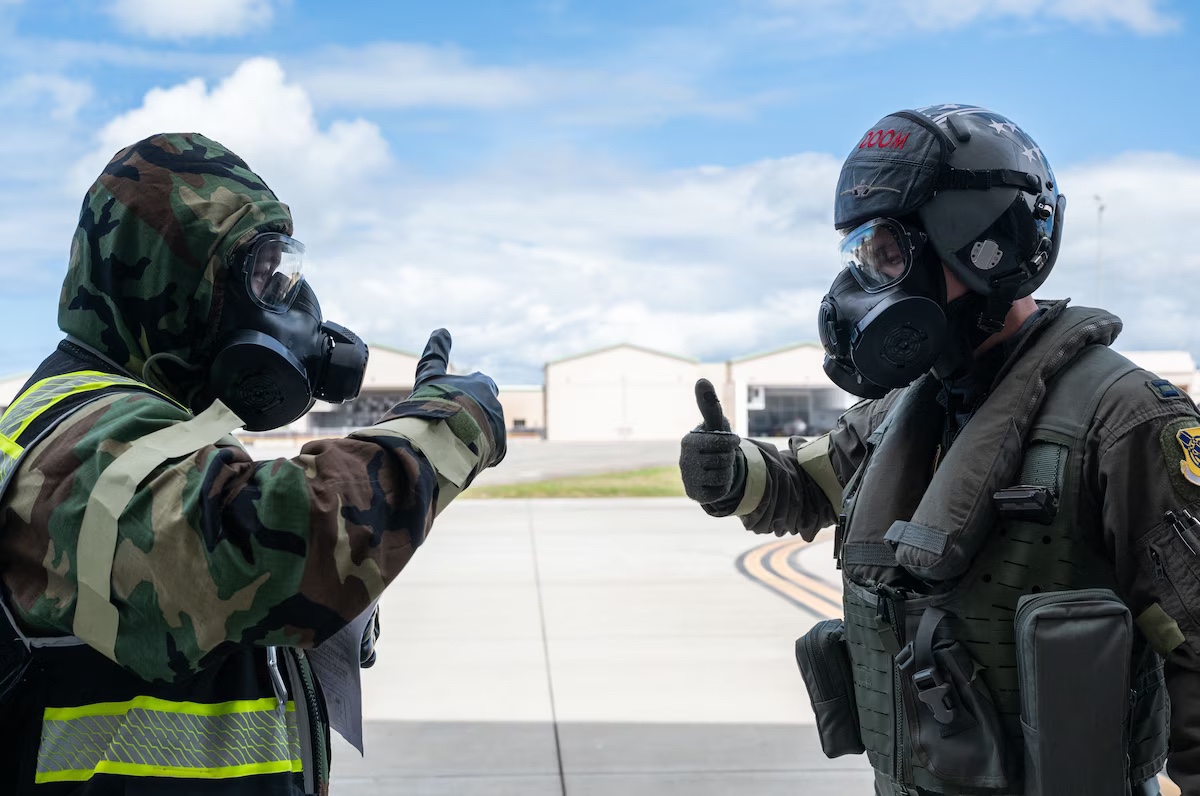
Airmen with the 15th Wing and 154th Fighter Squadron on Hickam Air Force Base tested and trained on the F-22 Raptor using the innovative Step-Launch and Recover, or SLR, concept of operation and the critical data provided by the NGAP effort. SLR allows for the aircrew to safely generate sorties in a Chemical, Biological, Radiological, and Nuclear, or CBRN, contaminated environment.
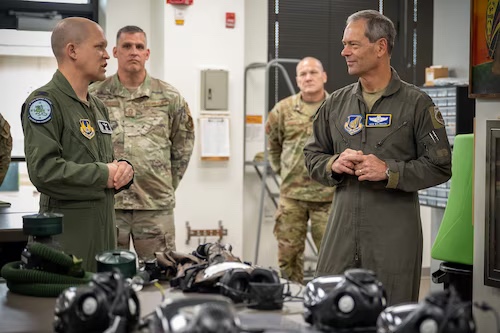
“The ability to confidently operate in less-than-optimal conditions is vital for our aircrew,” said Gen. Ken Wilsbach, PACAF commander. “SLR and NGAP capabilities ensure our ability to fight tonight with an enhanced level of protection for our Airmen who may be operating in a CBRN-threatened environment.”

The current solution for pilots is to use the Aircrew Eye and Respiratory Protection System, which was initially developed during the Gulf War and is not agile enough to allow for scaled protections against current CBRN threats. The legacy mask ensemble risks degradation to aircrew performance and combat effectiveness due to its bulk and impact on dexterity. While this is the current solution for most ejection seat airframes, the F-22 doesn’t have an effective CBRN mask—making it even more essential to innovate to find an adaptive solution for our warfighters.

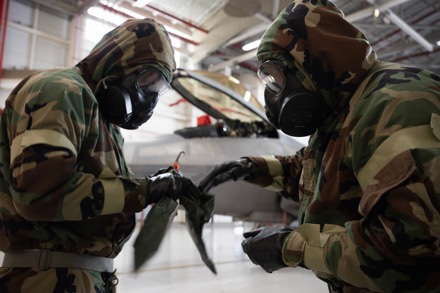
This new process uses the modified M-50 ground crew mask—the same one that’s used with Mission Oriented Protective Posture, or MOPP, gear—and two-layer nitrile gloves worn under the standard flight glove and allows aircrew to safely execute take-off and landing procedures in a chemically contested environment without the thermal burden and loss of dexterity.
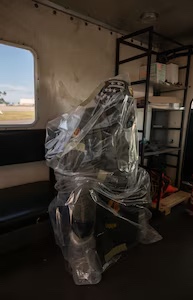
“This method of CBRN protection provided me not only the dexterity but also the visibility I needed while in the cockpit,” said Capt. Alex Moss, 19th Fighter Squadron F-22 pilot.

The concept of SLR was originally generated by a series of events set in motion during the North Korea pressure campaign in 2018. 

“The ability to use an innovative science-informed concept like SLR immediately restored combat capability options in a CBRN contested environment to our Indo-Pacific Command commanders,” said Senior Master Sgt. Ryan Rios, PACAF Command Aircrew Flight Equipment lead. “This is the type of flexibility that provides game-changing combat power and removes options from our near-peer adversaries to degrade our capabilities.”
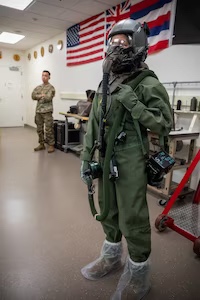
Based on a need to unencumber the pilot, a team of cross functional experts from Headquarters Air Force A10, PACAF, Air Force Research Laboratory, Air Combat Command, the Air Force CBRN Defense Systems Branch, the Joint Program Executive Office for CBRN Defense, and numerous other organizations began looking at the ability of the on-aircraft environmental control system—or air conditioner—to remove and purge chemical vapor contamination from the cockpit

“The assumption was that if a chemical vapor threat could be purged and mitigated, the pilot could fly with a decreased level of protection,” said Col. Paul Hendrickson, Air Force CBRN Defense Systems Branch Materiel leader. “The initial findings were positive, and the NGAP effort was launched to characterize the environments our pilots and aircrew could face in order to allow for the creation of risk-informed operational techniques and new materiel solutions.

To date, the joint team has tested F-15, F-16, F-22, A-10 and C-130 aircraft and provided the data to commanders to allow them to make risk-based decisions based on the threat, ultimately transitioning the aircrew to the aircraft without additional contamination.

The team at Hickam AFB tested this process for the F-22. The pilot donned protective gear and the M-50 mask, went to the aircraft, purged the simulated contaminants before removing the mask, and simulated conducting a mission before reversing the process and going through an expedited decontamination line

“Using science and technology to ensure we are developing the right materiel solutions for the future fight is a game-changing mentality,”  said Steve Singleton, Air Force CBRN Defense Systems Branch NGAP program manager. “It gives us huge flexibility as materiel developers to develop pertinent solutions at the speed of relevance to protect the warfighter and support mission effectiveness.”
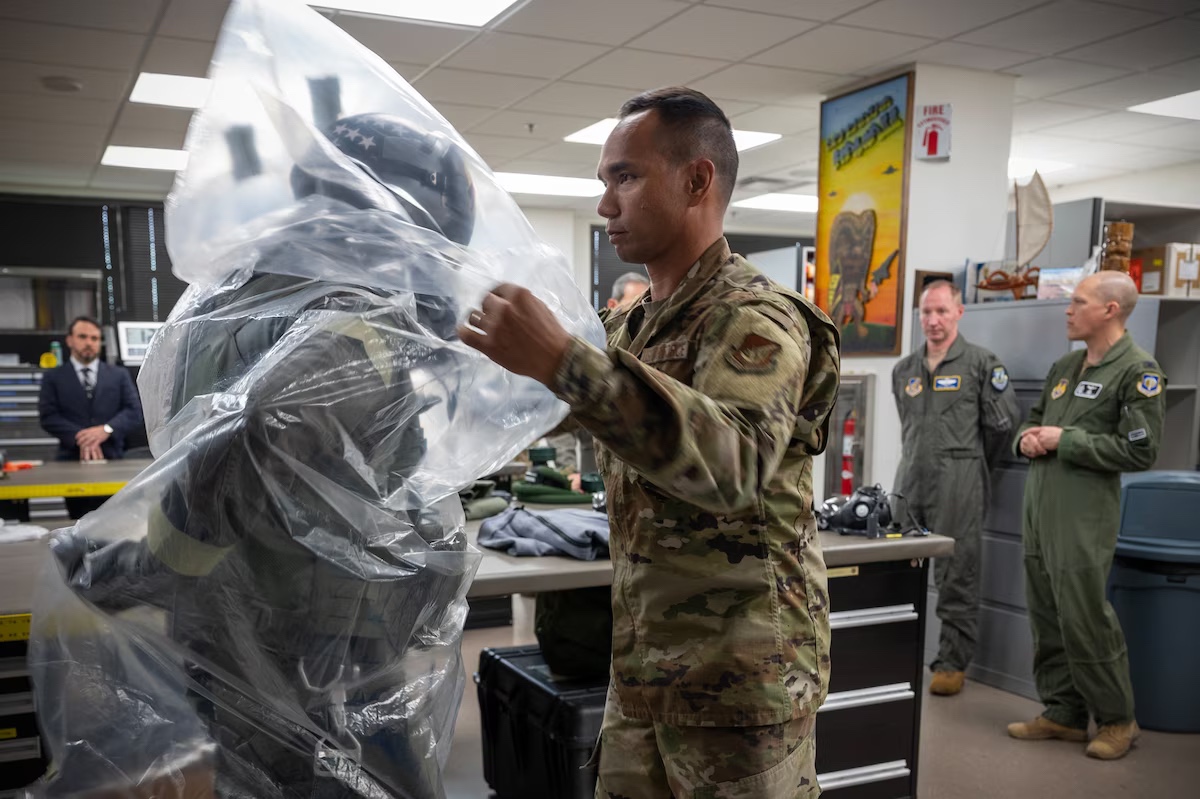
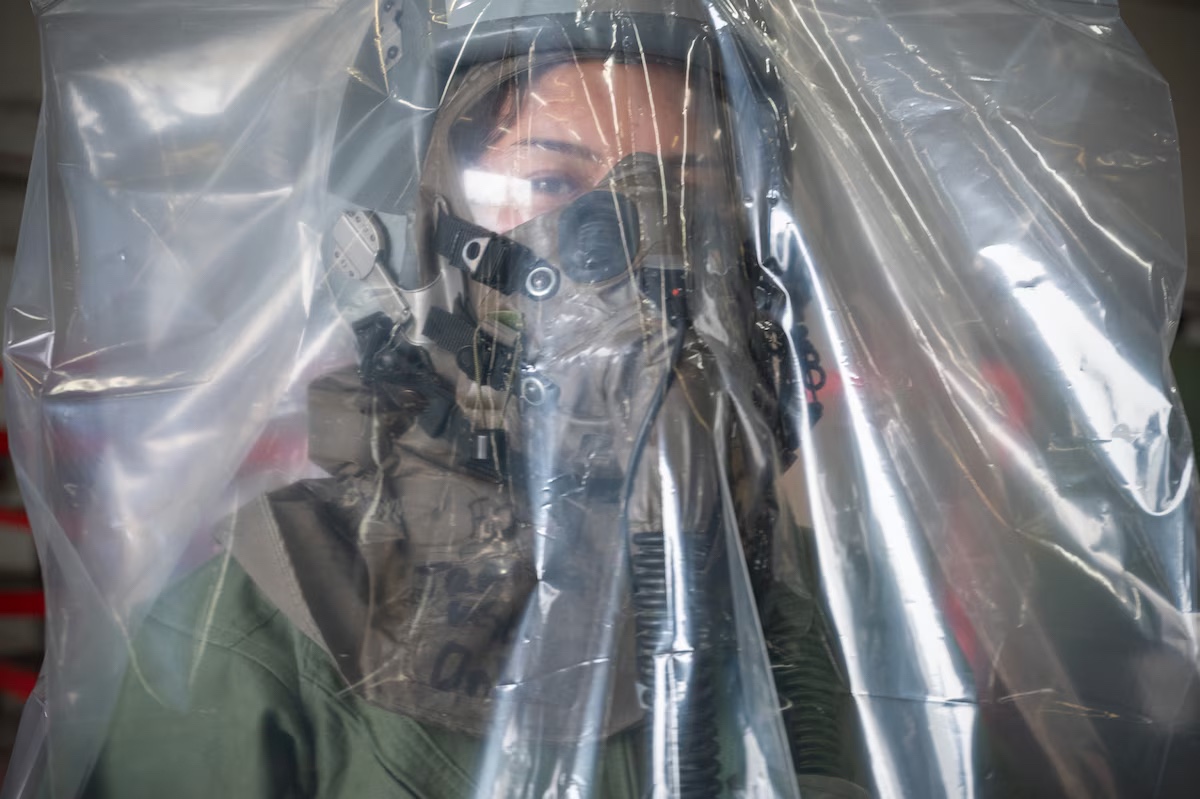
Throughout the F-22 SLR testing procedure, all involved were notating any shortfalls or limiting factors for further examination.

“The ability to work directly with the warfighter to provide relevant and mission enhancing information that allows them to conduct their operations safely while maximizing protection in a chemical environment is a huge win for the work the team has done over the last five years,” said 1st Lt. Gunnar Kral, Air Force CBRN Defense Systems Branch, CBRN aircrew protection lead engineer.

The events at Hickam AFB were capped off with the opportunity to showcase the successful efforts of all involved to the commander of PACAF, highlighting how these practical, risk-based decisions are allowing his wing commanders to Fight Tonight.

“These operationally relevant capabilities give commanders decision superiority to generate combat sorties safely in a chemical environment while maximizing aircrew performance,” Hendrickson said. “This is something that can truly help shape how the warfighter fights over the next decade. The work we’re doing here will save an Airman’s life.”

By TSgt Hailey Haux, Pacific Air Forces Public Affairs, and Col Paul Hendrickson Air Force CBRN Defense System Branch

Some photos by MSgt Mysti Bicoy
AFSOC Uses Video Game–Like Simulation Training, Adds Realistic, World-Wide Value

Tuesday, May 30th, 2023

HURLBURT FIELD, Fla. —  

Imagine you’re at home, playing your favorite online warfighting video game with friends from different parts of the country –each with a different contribution to the overall effort. Your goal? Mission success!

After eight months of planning and mission rehearsal, all five U.S. Special Operations Command (USSOCOM) components did just that for the first time in conjunction with the 16th annual Air Force Special Operation Command (AFSOC) hosted Emerald Warrior exercise.

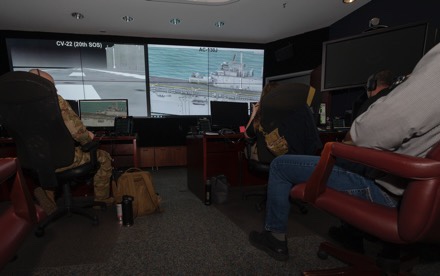
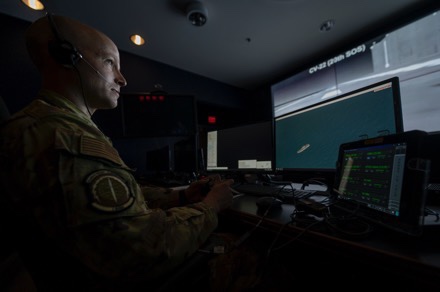
Connected virtually across six separate geographic locations, SOF participants “gamed” using a mix of local, distant, and virtual players. Specifically, the players included an AC-130J (constructive) and MQ-9 crew from Hurlburt Field, MQ-9 and CV-22 crews from Cannon AFB, a MH-60 crew from the 160th Special Operations Aviation Regiment and three groups of Joint Terminal Attack Controller’s from Naval Special Warfare, Marine Special Operations Command and Joint Special Operations Command.

The objective was to capture and collect all information from a person of interest to eliminate a threat against the U.S. and our allies within a constructed virtual environment.

“This was a USSOCOM initiative we were able to turn into a reality and yet another pathfinding step towards SOF components being able to fully exercise in a distributed mission operation (DMO) network,” said Mr. Bill Spicer, Emerald Warrior virtual planner.

The AFSOC Air, Space and Information Operations directorate, or A3, and EW planners led the effort from the 492d Special Operations Wing Operations Center and aircraft simulator facilities.

“Future technology continues to challenge current training capabilities with the introduction of virtual reality, augmented reality, and mixed/extended reality, “said Lt. Col. Heather Demis, C-146 pilot and DMO chief of readiness training. “While there are rigorous cyber security requirements and minor occasional technical issues between software and hardware compatibility, once connected, the simulators allow for streamlined joint and combined interoperability.”

These devices can be connected across the world to ensure the warfighter can train, exercise and implement tactic, techniques and procedures (TTPs) in any environment to prepare for real-world events and missions.

“The future of DMO events will include extended reality for any AFSOC platform in a network exercise through the newest AFSOC Emulator System which is currently projected to be on network for Bold Quest, a joint staff test and evaluation event,” said Demis.

With this notable success, AFSOC hopes to continue to push the envelope for DMO with more participation worldwide across not only SOF units but also allies and partner nations in training our warfighters to succeed on any battlefield. 

“Now that we are in the era of strategic competition, we must adapt and look for opportunities to innovate and transform to remain the most capable, most lethal Air Force in the world,” said Demis. “And with wins like DMO…. that’s exactly what AFSOC is doing.”

By 2d Lt Cassandra Saphore, AFSOC Public Affairs

AOC FTU Augments Austere Challenge 2023

Monday, May 29th, 2023

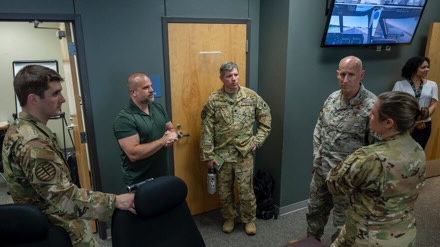
RAMSTEIN AIR BASE, Germany – The 505th Training Squadron sent air operations center subject matter experts to Ramstein Air Base to support U.S. European Command’s execution of exercise Austere Challenge 2023 from May 5 – 12 to practice coordinating a response to a fictional major crisis.

The exercise brought together military and civilian personnel from EUCOM forces and its components to contribute virtually across Europe in the weeklong command post exercise. U.S. Army Europe-Africa, U.S. Marine Corps Forces Europe/Africa, U.S. Naval Forces Europe, and U.S. Air Forces in Europe-Africa participated alongside an additional 11 North Atlantic Treaty Organization, or NATO, partner nations.

Building on the augmentation the 505th Command and Control Wing provided to U.S. Air Forces in Europe following the unprovoked invasion of Ukraine by Russia in February 2022, the 505th Training Squadron continues to provide training, advising, and assistance to support 603rd AOC execution.

“As an instructor in our systems administration course, my job is to ensure our students are prepared to manage and perform defensive cyber operations in support of combatant commander priorities,” said Master Sgt. Donald Keefer, 505th TRS systems flight chief, Hurlburt Field, Florida. “The lessons learned from this exercise, and the operational experience I received, will directly impact the 1,600 students we graduate annually here at the 505th Training Squadron and send to air components around the world.”

In addition to cyber defense expertise, the 505th Training Squadron also sent personnel with expertise in combat airspace and command and control battle management operations. As the AOC Formal Training Unit, the 505th Training Squadron routinely sends subject matter experts to support air components during exercises and real-world contingencies.

The intent of Austere Challenge 2023 was to prepare ready forces, validate strategic access, exercise deterrence principles, and integrate and synchronize with the NATO alliance.  

“The expertise we have in this squadron is unmatched. We routinely leverage opportunities to participate in combatant command exercises to better prepare the joint force, allies, and partners to execute large-scale combat operations,” said Lt. Col. Jason Gossett, 505th Training Squadron commander. “Additionally, participating in these events ensures our instructor cadre remain proficient in operating the AOC Weapon System.”

The 505th Training Squadron is responsible for preparing graduates to operate the AOC Weapon System, graduating more than 1,600 joint and coalition personnel annually. Additionally, the squadron teaches 13 initial qualification courses in the weapon system, including an Integrated Air and Missile Defense Course, a Joint AOC C2 Course, and an academic instructor course. Graduates from the 505th Training Squadron serve in all combatant commands.

By Deb Henley

505th Command and Control Wing

Public Affairs

The Mystery Ranch Honor Pack Is Key To Healing For Station Foundation Participants

Sunday, May 28th, 2023

There are times when we can use what we do best to create impact, to create meaning, and to create something bigger than a backpack. This was one of those times. We are incredibly proud to support the Station Foundation and recently completed these special HONOR PACKS for their program participants.

In their programs, they honor their Fallen Warriors with a sacred ritual. Each night, they gather on the edge of the wilderness while carrying a large river rock in their MR packs. These rocks are hand-picked along the Gallatin River. Some are plain, others are adorned to honor those they hike for.

Together, they hike in silence to a memorial built stone by stone, standing as a symbol of the weight they all carry inside and the courage it takes to leave it behind.

“For the past ten years, the sons and daughters of our fallen Special Operations Warriors have come to The Station Foundation to heal and grow beyond tragic loss. It’s here, in the beautiful backcountry of Montana, where we come together to honor the Fallen, celebrate their legacies, and guide their children into the lives they are destined to live. These are special kids who answer their calling and discover authentic healing in a community that chooses never to forget.

Throughout this powerful journey, one special partner shows up every year: MYSTERY RANCH. The MYSTERY RANCH family has quietly supported our Gold Star Students for over a decade and continues to find special ways to say ‘we care’ in the Special Operations Community.

This ‘HONOR PACK’ elevates the lives of those quiet professionals who left us too early, and who are missed dearly. It reminds us of the costs of war and the things we carry home. Most of all, the HONOR PACK carries the weight through our wilderness until we are ready to put it down.

MYSTERY RANCH has always been there when we needed them. We’ve relied on their packs in combat and now depend upon their love on our journey home. This pack is a symbol of strength, hope, and of life beyond war. It is a testament to great people showing up to make a difference. We may Never Forget– MYSTERY RANCH has our backs.”

– Kevin Stacy, Station Foundation Founder & Executive Director

Purdue Receives $5 million Lilly Endowment grant to support Military Family Research Institute

Sunday, May 28th, 2023

WEST LAFAYETTE, Ind. – A $5 million grant from Lilly Endowment Inc. will provide continued support during the next three years for the work Purdue University’s Military Family Research Institute (MFRI) does to improve the lives of military families and veterans.

This grant, which includes $3.5 million in outright funding and $1.5 million in matching funds, will help MFRI enhance its robust support networks. The grant period is from March 1, 2023, to June 30, 2026. 

“We at MFRI are honored and humbled by this funding,” said Shelley MacDermid Wadsworth, MFRI director and Distinguished Professor in the Department of Human Development and Family Science in Purdue’s College of Health and Human Sciences. “Over the past 16 years, support from Lilly Endowment has made it possible for MFRI to deeply understand the vulnerabilities – and the resilience – of military and veteran families and to quickly develop and test new ways to help them confront the challenges and barriers placed in their way. We are excited about the opportunities ahead and look forward to expanding our work with partners at Purdue, across Indiana and around the country.”

Specifically, the grant will assist military and veteran families by:

• Supporting their military communities by cultivating continuity between military and civilian organizations, building and sustaining linkages among the systems surrounding military families, and promoting synergy in their efforts.

• Strengthening the motivation and capacity of their civilian communities to support military and veteran families through improved preparedness and coordination.

• Generating important new knowledge about their needs and circumstances.

• Assisting veterans as they transition to civilian life.

• Influencing pertinent programs, policies and practices by initiating, building and sustaining productive working relationships with existing and potential partners, while also raising awareness and shaping the thoughts and actions of the broader community.

• Growing and sustaining vibrant learning across all focus areas, with the goal of enhancing professional opportunities for veterans and military families.

“MFRI has demonstrated scholarly excellence for more than two decades, conducting groundbreaking studies that influence programs, practices and policies,” said Mung Chiang, Purdue University president. “Shelley MacDermid Wadsworth has earned an international reputation as a scholar who has led MFRI in developing innovative research and programs that have received numerous awards at Purdue and nationally. We are proud to serve as such an important resource for supporting the quality of life for military and veteran families.”

With guidance from MacDermid Wadsworth, MFRI was created at Purdue in 2000. The organization works to expand opportunities for military members, veterans and their families by providing research to help mental health providers, public policymakers, employers and leaders in higher education better understand the issues affecting the military community. This includes helping civilian leaders see the value of bringing military and veteran families into community leadership roles. 

MFRI uses support from Lilly Endowment and other funders to strengthen the capacity of community organizations and systems to promote and build the resilience of military and veteran families. Innovations created by MFRI and its partners are operating across the country in several key areas: 

• Policy: The Measuring Communities program provides stakeholders in cities, towns and rural areas across the U.S. with data that supports good decision-making about how best to support military and veteran families.

• Behavioral health: The Star Behavioral Health Providers program makes it easier for military and veteran families to connect with well-trained therapists in their local communities. The Reaching Rural Veterans program brings community organizations together to address food and housing insecurity among high-need veterans in rural areas.

• Higher education: The Focus Forward Fellowship program promotes academic and career achievements among female student veterans nationwide. MFRI collaborates with faculty and provides learning opportunities for students in diverse disciplines ranging from computer graphics technology and data science to counseling and human development and family science.

• Programming: In communities across Indiana, MFRI brings together clinicians, community leaders and legal experts at the annual Battlemind to Home Summit to educate them about the newest scientific evidence, programs and policies that will help them address needs in the military and veteran communities. Through the annual Barbara Thompson Excellence Award competition, MFRI brings researchers and practitioners together to “narrow the gap between the laboratory and the living room.”

• Collaboration: MFRI partners extensively with military and government organizations as well as national, state and local nonprofits to help them do their work better through improved preparedness and coordination, with strong attention to relevant scientific evidence and data.

“Veterans and military families have done so much for the benefit of our country,” said N. Clay Robbins, Lilly Endowment’s chairman and CEO. “Their challenges and aspirations are much better understood because of MFRI’s outstanding research and analysis, which helps government and military leaders and concerned citizens know how to help veterans and their families lead more satisfying lives. Lilly Endowment is pleased that its support will help MFRI continue and enhance its important research efforts as well as the programs it has developed for the benefit of veterans and military families.”

Individuals or organizations interested in doubling the impact of their gifts in support of MFRI’s efforts to assist veterans and military families should contact Jim Priest, director of foundation relations at Purdue for Life Foundation, at jcpriest@purdueforlife.org to learn about matching opportunities through Lilly Endowment’s grant. 

509th Weapons Squadron Supports SOF exercise, Prepares for WSINT

Sunday, May 28th, 2023

Airmen from the 509th Weapons Squadron integrated with the 14th Weapons Squadron providing air refueling for a special operations forces exercise at Hurlburt Field, Florida, May 7-10.

The purpose of the training for the 509th WPS was to expose its students to the Special Operations mission set and to prepare its students for their large-scale Weapons School Integration capstone exercise where all weapons schools come together and perform peer-to-peer combat to perfect their skills.

“The tanker’s mission means that it’s always an asset that is integrated with other operations,” said Lt. Col. Ian Shelley, 509 WPS commander. “This exercise allows our students to integrate with the special operations mission set. They develop tanker tactics to best support air players who are providing air support to ground units. They integrate not only with air players, but with Army and Navy ground units.”

The exercise also provided the 509th WPS Airmen a chance to integrate with other weapons squadrons and their weapons systems to execute the mission. Some units that also participated in the training include the 14th WPS AC-130J Ghostriders, MC-130J Commando IIs, U-28 Dracos, and CV-22 Ospreys.

“SOF operates in a unique manner, one that most of our students haven’t experienced before,” Shelley said. “The integration opportunity provides tanker and SOF units with a broader set of tools preparing them for future combat operations.”

One of the key points of the training included the students having to work together to create an effective mission plan in order to meet the objective of the exercise.

“Not only did the students plan air refueling and fly the KC-135, we also had students who planned and witness tilt rotor air refueling on board an MC-130 and we had others who were heavily integrated in forward arming and refueling point operations whereby the lessons learned can be applied to future agile combat employment operations,” Shelly said.

The 509th WPS is one of 21 weapons squadrons and is the only weapons school for the KC-135 Stratotanker, with a mission of providing the world’s most advanced training and tactics to pilots, navigators and inflight refueling specialists.

“We develop aviators who are steeped not only in peer threats and tanker tactics, but also critical thought and problem solving,” Shelley said. “Their expertise in other platforms and mission sets makes them experts in employment operations.”

Training for the 509th WPS is designed to prepare Airmen to analyze and apply appropriate tactics to possible pacing threats, and ensure they are ready for tomorrow’s fight anytime, anywhere.

Story by SSgt Lawrence Sena, 92nd Air Refueling Wing Public Affairs

How Agile is Changing the Way PEO EIS Develops Software

Saturday, May 27th, 2023

Combining 28 disparate Soldier and civilian training systems into one cohesive system requires more than extensive planning. It demands collaboration, prioritizing people over processes, and a willingness to respond to change in increments over time — otherwise known as an iterative approach.

PEO EIS’ Army Training Information System (ATIS), managed by Army Data and Analytics Platforms (ARDAP), is being developed with two priorities in mind: getting all the Army’s training data in compliance with the Army Data Plan; and building a system around the user’s experience through human-centered design. For ATIS, the users are Soldiers and civilians seeking training and educational opportunities, anywhere they are in the world. For Army leaders, ATIS’ biggest return on investment is time. ATIS will consolidate multiple cumbersome and outdated legacy systems, and will automate all training management, development, scheduling and resourcing. This will allow leaders to focus on training execution and readiness assessment throughout the Army.

The ATIS team has implemented a Scaled Agile Framework® (SAFe) workflow across all aspects of the development process by leaning into SAFe’s 10 Agile principles. As part of the process, the ATIS team incorporates Soldier, civilian and Army leaders’ feedback at every step along the way.

“Agile allows programs to pivot,” said Capt. James Oliver, ATIS’ assistant project manager. “Agile programs emphasize collaboration and communication between team members, customers and all stakeholders.”

With this Agile framework in place, the ATIS team has worked in program increments (PI) by breaking up the development work into smaller, manageable chunks, each 10 weeks long. Within each PI are a set of two-week sprints, which serve as short-term goals where the team plans, develops, tests and delivers a working set of features. Each sprint builds on the next, and each PI does the same — with iterations along the way as needed, when goals and objectives change. This process allows for flexibility, which is key to adapting to changes in priorities and user needs during the development process.

“The sprints are synchronized across all the teams working on the PI, and they are designed to ensure that the teams are aligned and working toward a common goal,” Oliver said.

Working in increments makes it easier and more efficient to change plans. For example, if the ATIS team spent 10 weeks working toward an objective — an entire PI — only then to find out a feature needed modification, it would require a significant effort to undo the last 10 weeks of development work. With shorter, two-week sprints, making feature or program modifications is significantly quicker and more efficient.

Unlike in a waterfall approach, where all requirements are established up front, Agile goes about software development differently by using a process called progressive elaboration. In progressive elaboration, each sprint and PI serve as building blocks for the next phase of development by further refining project requirements during the process — progressively.

“The hard part about this process when you’re dealing with software is that everything changes so fast,” said Melissa Lee, ATIS’ release train engineer. “That’s one of the reasons why Agile is really good for software.”

Tim Hale, ATIS’ product manager, echoed Lee’s thoughts. “When you’re building software, you need flexibility,” he said. “You also need to create an environment that allows for incremental deployments while iteratively getting finished software into capability support and a Continuous Improvement/Continuous Development pipeline. This [Agile] process allows that.”

Staying on track in an ever-changing environment is a challenge for the ATIS team — which is where a 15-minute daily stand-up meeting helps. The purpose of the stand-up is to ensure each team member is moving forward with their objectives and to work out any issues that may arise. It is one of the ways the ATIS team continues to improve as PEO EIS progresses toward becoming a fully Agile organization.

“It’s a very big deal in the Army in this digital transformation,” said Aric Sherwood of PEO EIS’ journey to becoming an Agile organization. Sherwood is the director of PEO EIS’ Acquisition Innovation Directorate. “Specifically for PEO EIS, which does a lot of the Army’s heavy lifting when it comes to software development.”

Adopting Agile across the Defense Acquisition System in its entirety poses its own challenges, which makes PEO EIS’ efforts especially innovative.

“I find that the Defense Acquisition System and Agile aren’t always compatible,” Hale said to this point. “Further regulatory changes would help with future digital adaption.”

As of May 2023, the ATIS team has entered the fourth PI in the development process. It is still early, but the team is thriving in its adoption of Agile.

“We’re doing great,” Lee said of the ATIS team’s progress. “People are starting to understand Agile and how it works. We’re building momentum.”

For PEO EIS, the success on ATIS is just the beginning in the organization’s Agile transformation journey.

By Dan Lawton

FirstSpear Friday Focus: Memorial Day 2023

Friday, May 26th, 2023

“Freedom is a fragile thing and is never more than one generation away from extinction. It is not ours by inheritance, it must be fought for and defended constantly by each generation…”

— President Ronald Reagan