TYR Tactical

Archive for the ‘Guest Post’ Category

Fort Bragg Opens Lieutenant General Gavin Joint Innovation Outpost

Tuesday, January 27th, 2026

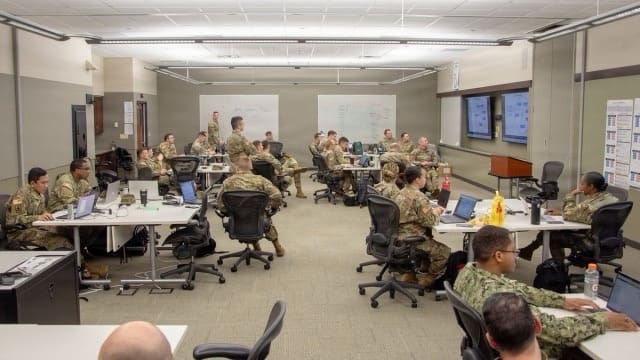
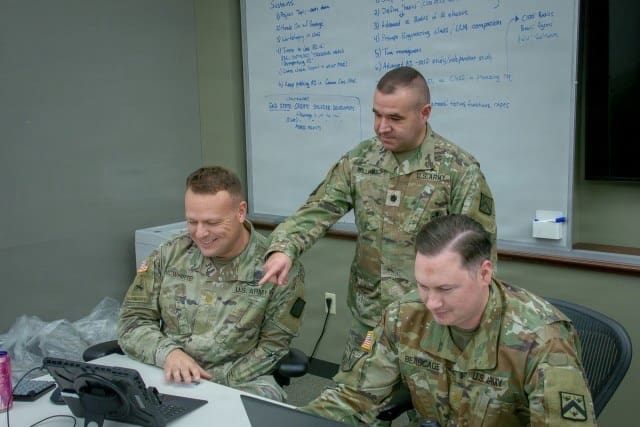
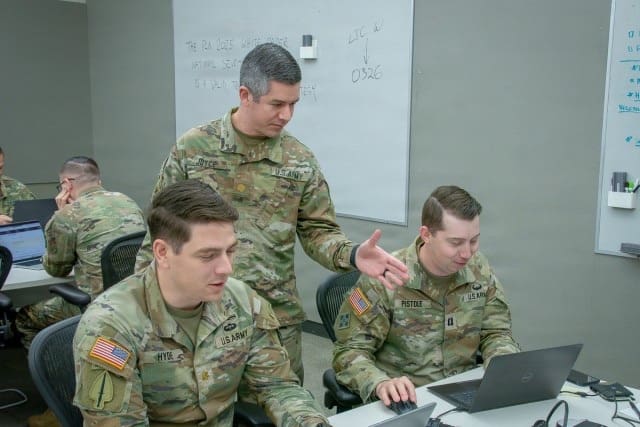
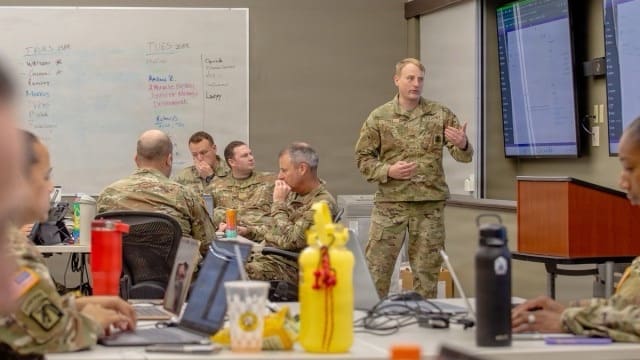
FORT BRAGG, N.C. — In support of the Department of War’s transformation initiative, Fort Bragg and the XVIII Airborne Corps officially opened the Lt. Gen. James Gavin Joint Innovation Outpost on January 23, 2026.

As the first facility of its kind, building on U.S. Army Division innovation labs, the JIOP serves as a center that bridges tactical and operational challenges with rapid innovative solutions. Designed as a hub for military personnel, academia, and industry, the JIOP aims to collaboratively address problems faced on the modern battlefield.

The facility is named in honor of Lt. Gen. James Gavin, who commanded the 82nd Airborne Division during World War II, leading the division through pivotal moments such as D-Day, Operation Market Garden and the Battle of the Bulge. Following World War II, Gavin became the head of U.S. Army Research and Development and was renowned for his innovative concepts, including the use of helicopters to transport infantry ? air assault ? and the development of modern air cavalry.

“We are honored to name this facility after Lt. Gen. James Gavin, a true visionary who understood the importance of innovation,” said Lt. Gen. Greg Anderson, XVIII Airborne Corps commanding general. “The JIOP will carry on his legacy by fostering the kind of bold thinking and collaboration that he championed throughout his career.”

Appropriately named after Lt. Gen. Gavin, the JIOP focuses on rapid innovation for the modern and future global battlefields.

“The future of warfare is here,” said Rob Braun, XVIII Airborne Corps Chief Technology Officer. “It’s driven by technology and success is impossible without partnerships. The Lt. Gen. James M. Gavin Joint Innovation Outpost is an investment in that future, where we will develop and test cutting-edge capabilities while forging enduring new partnerships with the best of the military, industry, and academia to meet the future head on.”

While the U.S. Army currently collaborates with industry through the Assistant Secretary of the Army for Acquisition, Logistics and Technology office, the JIOP represents the first concerted effort to focus on rapid innovation coordinated with industry and academia at the operational level. The JIOP will connect Soldiers from all ranks and levels to innovative teams capable of developing solutions for current battlefield challenges.

“Every piece of technology we develop at the JIOP has one ultimate purpose: to enhance the lethality and survivability of our Soldiers on the battlefield,” said Col. Thomas Monaghan, director of the Joint Innovation Outpost. “This is about ensuring our warfighters can dominate any adversary, anywhere in the world.”

In addition to addressing modern battlefield problems, the JIOP will foster and strengthen ties between Fort Bragg and regional academic and industrial partners. “At the JIOP, we are creating a dynamic ecosystem where our Soldiers can collaborate directly with the brightest minds in industry and academia,” said Anderson. “This partnership is essential for accelerating innovation and maintaining our competitive edge.”

In recent years, Fort Bragg and the XVIII Airborne Corps have led the way in Soldier innovation through events like Dragon’s Lair and exercises such as Scarlet Dragon. Dragon’s Lair is a competition similar to Shark Tank, where Soldiers pitch innovative technological solutions that range from battlefield applications to improvements in daily quality of life. Scarlet Dragon involves industry partners field testing new technologies with the XVIII Airborne Corps and its subordinate units.

Looking ahead, Dragon’s Lair will feed the JIOP with innovative ideas, which will then flow into Scarlet Dragon for testing, creating a quick, tri-series process to rapidly address challenges for Soldiers in modern and future combat environments. “Fort Bragg has always been a proving ground for Army innovation, and the JIOP is the next chapter in that legacy,” added Monaghan.

MAJ Matthew St. Clair

Standardising the Edge

Monday, January 26th, 2026

~ How rugged USB-C connectors power interoperability across C5ISR systems ~

Modern defence operations rely on seamless communication across land, sea, air, space and cyber domains. As joint and coalition missions become more complex, the systems behind them need to connect, share data and adapt in real time. These demands are driving significant changes in how defence communications are designed and deployed.

Rugged USB-C connectors, originally developed for everyday electronics but now built to military-grade standards are becoming key to this evolution. They simplify system integration and help maintain connectivity at the tactical edge. Here, Alex Raymond, European product manager at military connector specialist PEI-Genesis explores the growing importance of USB-C connectors in C5ISR systems.

C5ISR, short for Command, Control, Communications, Computers, Cyber Defence, Intelligence, Surveillance and Reconnaissance sits at the core of today’s defence strategies. It includes everything from rugged laptops and tablets to target acquisition systems and command post shelters.

To perform reliably, C5ISR platforms need physical infrastructure that supports power, data and video transmission under harsh conditions. Rugged USB Type-C connectors for harsh environments deliver all three in a compact, robust format, streamlining integration while enhancing system reliability, connectivity and upgradeability in the field.

The importance of USB-C connectors

Traditional military connectors are often custom-built for specific equipment. While durable, these connectors often make it harder for systems to work together, especially in joint-force operations where interoperability is critical. USB-C takes a different approach. It offers a standard, universal interface that supports multiple functions. When housed inside a ruggedised, military-grade shell, it holds up in demanding environments and reduces the number of connectors and cables needed in the field.

This kind of consolidation is particularly useful in environments where space and weight are limited, like soldier-worn equipment, UAV control units or tactical command systems inside armoured vehicles. Rather than relying on separate ports for power, data and video, a single USB-C connection can handle all three. That streamlines the hardware layout, cuts down on design complexity and makes it easier to build modular systems that can be upgraded or adjusted without a full redesign.

Simplifying the connector setup also delivers practical benefits in the field. Fewer cable types mean more efficient logistics, faster deployment, and quicker turnaround on repairs, all of which are critical when operations are time-sensitive and conditions are unpredictable.

Supporting open architectures

As defence agencies move toward open systems architectures like CMOSS in the US and LOSA in the UK, the goal is to make systems more modular, upgradeable and interoperable. This shift allows military platforms to incorporate new technologies more rapidly, rather than waiting for lengthy redesign cycles.

The move toward modular system design is playing a key role in speeding up digital transformation across the defence sector. As technologies like software-defined radios, edge computing and real-time analytics become more widespread, the need for adaptable hardware is growing. Rugged USB-C connectors help meet that need, giving operators the flexibility to add or replace components without having to rework entire systems.

This trend is also influencing how engineers approach field readiness. USB-C connectors streamline setup and help cut down on errors by combining multiple functions into a single port. For personnel operating under pressure, being able to plug in one cable instead of managing several, cuts down failure points and gets systems operational faster.

This kind of straightforward, operator-first functionality is becoming a key consideration in procurement, especially as defence programs aim to boost agility and ease the demands placed on frontline units.

Enhancing sustainability and lifecycle support

A strategic advantage of USB-C standardisation lies in how it supports equipment lifecycle and sustainability. By offering a universal connection across multiple systems, USB-C reduces the need for bespoke, platform-specific components. This lightens the load on supply chains and makes field maintenance more efficient.

With fewer distinct parts to manage, armed forces can maintain higher readiness levels and lower overall support costs. It also aligns with long-term upgrade plans, where new technologies can be integrated into older platforms without requiring complete system overhauls. That combination of operational efficiency and reduced hardware waste offers both practical and environmental benefits.

Amphenol Socapex’s USB-C connectors deliver the full capabilities of USB Type-C, including high-speed data, power delivery and video transmission within a rugged MIL-DTL-38999 Series III shell. Built for extreme environments, these connectors feature IP68 sealing, EMI shielding and resistance to vibration and corrosion, making them the perfect choice for use in demanding defence applications.


PEI-Genesis supports system integrators by offering rapid connector assembly, expert engineering support for complex requirements and value-added services,such as connector modification and custom cable assembly. This ensures quick, dependable integration across both legacy and mixed-technology defence systems.

As the battlefield becomes more digital and decentralised, small hardware decisions have big strategic effects. Rugged USB-C delivers a compact, flexible solution for simplifying system design, supporting modularity and improving cross-domain connectivity. These connectors are helping defence organisations align with the demands of agile, multi-domain operations.

To find out more about Amphenol’s Socapex USB-C connectors or to browse more military grade connectors offered by PEI-Genesis, visit www.peigenesis.com.

A ‘Tail’ of Service: Famous ‘Doggles’ Dog Nick Retires After Eight Years

Monday, January 26th, 2026

FORT GEORGE G. MEADE, Md. — The beloved military working dog known across the force for greeting users when logging in to military devices is now retired from active service.

Affectionately called “Doggles,” MWD Nick served eight years in the U.S. Army, seven of those here.

Nick specialized in explosives detection, where he helped technicians as they confronted and defeated explosives around the world. Some of the biggest assignments that Nick and handler Staff Sgt. Justin Peyton have worked include 58 United States Secret Service missions, the North Atlantic Treaty Organization Summit, the Democratic National Convention, the Army’s 250th anniversary celebration, state funerals and the United Nations General Assembly.

“My favorite assignment was the United Nations meeting in New York City,” Peyton said. “We got to walk around the city, see sights and meet lots of people.”

The famous photo came from Nick’s nine-month deployment to Al Assad, Iraq with his previous handler, Spc. Joseph J. Lane. During this deployment, Lane and Nick supported the 5th Infantry Regiment, 1st Brigade Combat Team, 25th Infantry Division.

“The goggles are worn to protect MWDs from debris and harsh weather,” said Lane in a 2023 interview. “In that photo, Nick was wearing them at the range for familiarization. We were at the range for night fire, and we flew in Black Hawks with night vision goggles.”

Nick’s photo was selected from among hundreds to be used by the Department of Dense Global Directory.

“When they saw Nick’s photo, the creators knew that was the one they wanted,” Peyton said.

Since becoming the face of the DoD Global Directory, Nick garnered a cult following among service members and Department of War civilians. A morale patch made by a small artist has been sold thousands of times.


“It has been nice to see lots of people take to him and fall in love with him,” Peyton said.

“This dog’s career is a direct reflection of the high standards and operational lethality we demand from every team in our unit,” said 2D MP Detachment (MWD) Commander Capt. Patricio Quezada, as he reflected on Nick and Peyton’s time with the unit. “Their success was built on the relentless work of a dedicated handler who exercised patience and translated that into an unbreakable bond between dog and handler.”

When adopting a military working dog after their service, handlers have priority. Nick will be living out the rest of his years with Peyton, his wife Lauren and two children.

“Knowing that Nick kept Justin safe for so long, knowing that he protects my husband, has given me a lot of comfort,” Lauren said. “We are looking forward to giving him a comfortable life in retirement.”

By Abigail Carey

US Army, Polish Land Forces Conduct Operation Winter Falcon 2026

Saturday, January 24th, 2026

OLESZNO, Poland — Soldiers assigned to the 3rd Battalion, 66th Armored Regiment, 1st Armored Brigade Combat Team, conducted an armored live-fire exercise and technology demonstrations during Operation Winter Falcon 26 at the Drawsko Combat Training Center in Oleszno, Jan. 13.

The event demonstrated how modern military operations rely on integrating multiple systems, including unmanned aerial systems and counter-UAS capabilities, to strengthen defensive capabilities. The demonstration reflected how the United States and its NATO allies are modernizing to reinforce defenses in Poland and across the alliance.

Polish and U.S. forces fired their M1A2 Abrams tanks side by side on the firing line. This marked the first time Polish forces fired their M1A2 SEPv3 Abrams tanks alongside U.S. forces, demonstrating both the platform’s firepower and the coordination among partner nations. The commander of the 1st Armored Brigade Combat Team, Army Col. Matthew Kelley, emphasized the importance of communication when building relationships to deliver interoperability.

“We train to be ready for anything that might happen in the future,” Kelley said. “There is no way you could do that on your own.”

The commander also spoke about the importance of training in Poland and the value it brings to his troops.

“The strength of our allies together is how we demonstrate that resolve, that commitment, and you’ve [got to] do that in the place you may have to defend,” he said.

“After the live-fire exercise, a static display of UASs featured drones that can provide reconnaissance for ground and armored forces and engage enemy vehicles while the pilot remains in a secure position.

Polish vehicles, such as the M142 High Mobility Artillery Rocket System and the AH-64D Apache helicopter, were displayed alongside U.S. technology systems to counter opposing UAS.

The static display illustrated how both UAS and counter-UAS systems complement armored platforms such as the Abrams by providing reconnaissance, identifying potential threats at a distance and preventing adversaries from locating friendly forces.

When presented together, the systems demonstrated the growing role of UAS and counter-UAS technologies in reinforcing NATO’s defensive posture along Poland’s eastern region.

Operation Winter Falcon 26 underscored the importance of innovation for NATO’s armed forces in modern military operations. By linking armored elements, such as the Abrams tank, with UAS, U.S. and NATO forces demonstrated how coordinated technologies enhance readiness and strengthen overall defense.

PFC Andre Gremillion Jr

FirstSpear Friday Focus: New Low Visibility Plate Carrier (LVPC)

Friday, January 23rd, 2026

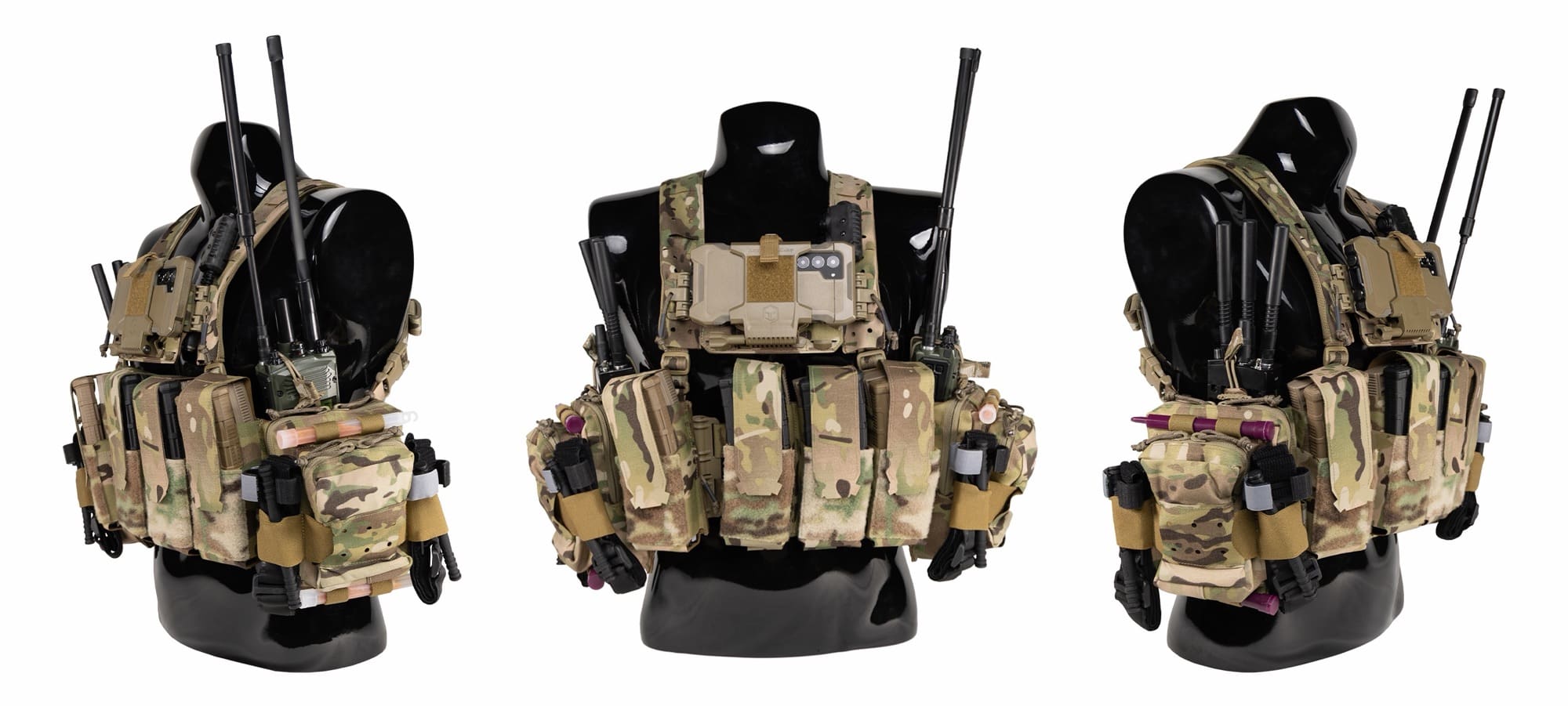
The FirstSpear Low Visibility Plate Carrier (LVPC) is engineered for military, law enforcement, and special operations personnel who require ballistic protection without a visible tactical footprint. The LVPC provides a lightweight, durable, and flexible platform capable of withstanding operational demands while maintaining all-day comfort.

Its low-profile construction is optimized for plainclothes, surveillance, and covert operations where remaining unnoticed is critical. The carrier maintains a close-to-body fit, minimizing bulk and a streamlined exterior reduces visual signature while preserving mission-essential functionality.

Modular integration allows operators to scale their loadout based on threat level and mission requirements. Full compatibility with Ragnar pockets enables efficient, low-profile ammunition and equipment carriage.

The ergonomic design supports natural movement, ensuring unrestricted mobility in urban, vehicular, and close-quarters environments. This freedom of movement allows operators to transition quickly between roles and positions.

The LVPC is purpose-built for environments where discretion, speed, and readiness are non-negotiable. Every component is designed to perform without compromise. The Low Visibility Plate Carrier delivers trusted protection while keeping the operator concealed, capable, and operationally effective.

To request an estimate click image above or visit First-Spear.com/Request-For-Estimate. FirstSpear is the premier source for cutting-edge tactical gear for military, law enforcement and those who train. For more information visit First-Spear.com.

JRTC Brings Industry, Experts Together to Support TiC

Friday, January 23rd, 2026

FORT POLK, La. — The Joint Readiness Training Center and Fort Polk hosted their first Innovation Industrial Conference, Jan. 14–15, bringing together defense industry vendors and Army modernization experts to support efforts to modernize JRTC’s Transformation in Contact initiative.

The two-day conference focused on electromagnetic warfare, unmanned aerial systems, unmanned ground vehicles, artificial intelligence, command and control, and intelligence and fires integration.

More than 40 defense industry vendors from across the country participated, showcasing technologies aligned with concepts developed by the JRTC Innovative Modernization Equipping Group. Vendors included Interference Management and Cancellation International, ORKID, Farada Group and EagleNXT.

Representatives from several Department of War organizations also attended, including Army Materiel Command, Army G-3, U.S. Army Reserve Command G-34, First Army Training and the Joint Counter–Small Unmanned Aircraft Systems University.

“This is super important for what we do here at JRTC,” Brig. Gen. Jason A. Curl, commanding general, said about the event. “We’re making sure we continue to move up and close the gap between what we’re seeing in the current operating environment and what we’re able to replicate. We’re focused on making sure that we continue to advance the Army’s Combat Training Center itself.”

Organizers said the conference was designed to connect emerging industry solutions with JRTC’s operational experimentation environment, ensuring future equipment supports realistic training at the Army’s premier CTC.

Sgt. First Class Travis Keiper, USAR Soldier assigned to Task Force 76 from Salt Lake City, Utah, discussed the importance of the conference and gave feedback.

“To build our counter-UAS program, it’s important for us to understand what capabilities and products are coming and how we can integrate them into a top-down program,” he said.

“While I’m here, I can ask questions about what products are coming out, if we can get a better feel for those systems and understand the training timeline so we can continue to develop the program. We also attend several annual training events each year, so it would be beneficial to incorporate those programs as well, along with working with the JRTC here. Ideally, we could bring our unit to Fort Polk to train and gain hands-on experience across the full spectrum of capabilities.”

Maj. Roman Xydias, USARC G34 Training and Exercises officer, shared similar beliefs.

“We are looking at both materiel training solutions and using a bottom-line up-front approach,” Xydias said. “From the USARC G-34 perspective, our goal is to develop a complete concept that moves materiel solutions through the training and testing pipeline within an operational environment, allowing us to clearly determine what capabilities we should be fielding and which we should not.”

Col. Justin Sisak, USARC G-34 program manager, said events like the Innovation Industrial Conference are important because they help build relationships to form partnerships and identify missing links.

“Now that we’re here at the Innovation Industrial Conference, we’ve identified a relationship that we can continue to build and grow,” Sisak said. “The current environment is saturated with individual organizations all trying to solve the same problem at the same time, often in isolation. Those are the walls we need to break down, and this type of event does exactly that for the USAR. It accelerates the maturation of our strategy and campaign plan significantly.”

Lt. Col. Troy Allen Catterton, U.S. Army reservist assigned to the JRTC G-3 Directorate as the senior USAR advisor and the JRTC TIC modernization project officer, was a key organizer of the conference. Upon conclusion of the two-day event, Catterton expressed how the Innovation Industrial Conference enables JRTC to bridge the gap between Department of War initiatives and the modernization of warfighter capabilities.

“There is much more that could be added to the broader environment, but our initial task is to create a venue where technology modernization and its various facets can be identified and where we can leverage vendor capabilities and industry leaders to synchronize our path forward,” he said.

Catteron said he hopes to see the conference evolve into an annual event in the future.

As the Army continues to adapt to rapidly evolving threats, the Innovation Industrial Conference marked a significant step in aligning industry innovation with realistic, operational training. By fostering collaboration across Army organizations and defense partners, JRTC and Fort Polk strengthens its ability to modernize transformation in contact and prepare Soldiers for the complexities of the modern battlefield — setting conditions for continued innovation and readiness in the years ahead.

By Porsha Auzenne

The NOVA Binocular System from L3Harris: The Future Of Night Vision

Thursday, January 22nd, 2026

The new L3Harris NOVA binocular system is ‘the every-soldier goggle’ – and the beginning of a new era for night-vision capability.

Today, direct combat forces gear up with advanced night-vision goggles for their missions. Going forward, L3Harris has a solution for the remaining complement of armed forces – the NOVA™ binocular system.

As armies globally are modernizing their foundational ground-force capabilities, equipping troops to be effective at all times of day and see at night is taking focus.

“We’re meeting the needs of the U.S. Army, militaries around the world and public safety officials by creating a system that delivers critical night-vision functions at scale,” said Brenna Baker, President of Integrated Vision Solutions, L3Harris. “The NOVA binocular system is the night-vision system this generation of warfighters will think of when someone says, ‘night vision.’”

“We’re meeting the needs of the U.S. Army, militaries around the world and public safety officials by creating a system that delivers critical night-vision functions at scale. The NOVA binocular system is the night-vision system this generation of warfighters will think of when someone says, ‘night vision.’”

– Brenna Baker, President of Integrated Vision Solutions, L3Harris

Owning the Night at Scale

The NOVA system is the commercial variant of L3Harris’s proposed Binocular Night Observation Device (BiNOD) system for the U.S. Army, according to Matt Lufkin, Lead, Product Management, L3Harris. Development of the device began in 2021 with a concerted focus on the Army’s chief considerations for a PVS-14 replacement: a low-cost binocular system that can be universally deployed with a common configuration.

“The Army wanted something that could stand the test of time, and this goggle does that,” said Lufkin. “The NOVA system’s design, centered around the integrated tube, is the future of night vision for us.”

While targeting a price point with which land forces can procure a NOVA system at scale, L3Harris’s newest night-vision goggle is not without the features customers come to expect. One of the biggest lifecycle cost reductions comes from the ease of maintenance and reduced downtime of the goggles. If, for instance, an image intensification tube requires replacement, the new USB-C interface means four screws are the only hurdle in swapping out the damaged components and having a functioning system back in the field.

A Complement to Advanced L3Harris Systems

L3Harris still expects Enhanced Night Vision Goggles – Binocular (ENVG-B) and Binocular Night Vision Devices (BNVD) – with enhanced features to identify threats, enhanced battery life and deep immersion thresholds – to be the advanced night-vision systems of choice for direct-combat and special operations forces for the foreseeable future. NOVA is the solution for the remainder of the force structure.

“The first to benefit from a NOVA system is the warfighter, border patrol agent or tactical officer who doesn’t have high-quality night vision,” said Lufkin. “NOVA binoculars are economical to purchase and own. It gives these professionals more military-grade capability than previously available.”

L3Harris is developing a technical roadmap for future versions in the NOVA line, including an enhanced version with a partial heads-up display, attached battery and increased immersion capacity.

www.l3harris.com

Year in Review: CECOM SEC Provides Solutions Through Modernization

Tuesday, January 20th, 2026

In 2025, the Communications-Electronics Command Software Engineering Center advanced the Army’s modernization portfolio through scalable software capabilities.

Given the Army’s adoption of continuous delivery and modern DevOps, transformation is the new normal for the Department of War support center headquartered in Aberdeen Proving Ground, Maryland.

DEVSECOPS AND CONTINUOUS DELIVERY

Powered by expertise in AI, DevSecOps, electromagnetic warfare, operational support, and software solutions, the Center concluded the year by advancing its core mission to deliver modular, transformative solutions that meet Soldiers’ evolving needs through enhanced cyber posture, scaled-up deployment cadence, modernized systems, and expanded field engagement. These competencies support enterprise DevSecOps efforts on behalf of the Enterprise Cloud Management Agency and the Chief Information Officer.

CECOM SEC’s extensive and continuous modernization posture kept the Army ahead of evolving threats without disrupting readiness. In step with its continuous software release cadence, the Center delivered 350 security updates in FY25, ensuring Soldiers have access to cutting-edge capabilities.

SOFTWARE MODERNIZATION AND CLOUD ENABLEMENT

FY25 saw the Center meet the Army’s need for cloud-based solutions. Cloud-enabled modular infrastructure allows the Army to deliver innovation rapidly so updates can be rolled out instantly across the force without delay.

“Software’s always changing, the environment’s always changing—so the requirements for systems are also changing with that, and we need to be able to adapt,” says Seiichi Sugawara, computer scientist for CECOM SEC.

The Center is propelled by the Army’s demand for innovation against the backdrop of an ever-changing battlefield.

“There’s a change in risk appetite. The Army is taking on more risk in order to release these next-generation systems faster,” Sugawara stated.

In FY25, CECOM SEC’s modernized cloud infrastructure met this speed of delivery with almost 600 software releases.

ZERO TRUST CYBERSECURITY

With the Army moving toward cloud-native solutions and continuous integration and continuous delivery, or CI/CD, there’s a growing requirement for a cyber posture that underpins modernized capabilities.

CECOM SEC advanced its cyber posture for the Army by working with the Army Materiel Command to support the DOW’s policy and procedure development for Zero Trust cybersecurity. In an escalating cyber threat environment, one of the Center’s goals is to educate the workforce on Zero Trust by partnering with Defense Acquisition University. The Center also partnered with U.S. Military Academy at West Point to analyze the feasibility of the SEC-developed mapping between Zero Trust and the DOW Risk Management Framework.

Continuous hardening of Army systems is required to ensure that readiness keeps pace with modernization across a more resilient foundation.

AI FLOW AND AI-ENABLED CAPABILITIES

FY25 was also CECOM SEC’s successful proof-of-concept year for AI Flow, an application built around AI agents, workflows, smart API’s, and custom AI applications. Designed to revolutionize workflows through cutting-edge AI technology, the application uses open AI structure to assist in a range of functions.

AI Flow currently handles 37 subscriptions with 500 agents across various organizations and averages 90 million tokens a month—and is growing, too. In FY25, the user base surged to 5,000.

The Center’s Army Reprogramming Analysis Team combined AI Flow with its Simulation Modeling Framework to create an AI-enabled code generator.

ELECTROMAGNETIC WARFARE AND THREAT ANALYSIS

That effort is part of the Army’s increased demand for threat analysis. FY25 saw continued field demand, upping the tempo of electromagnetic warfare support and driving the need for faster mission data updates. The Army Software Portal Electronic Notification System, managed by CECOM SEC, provided over 33,000 downloads for Soldiers requiring air and ground mission software support. The Center also analyzed 2,800 threats.

READINESS DATA AND DECISION SUPPORT

CECOM SEC’s mission focus in readiness continued to build rapport with Soldiers in the fight across the world. Its Data Analytics and Readiness Team developed a Power BI decision support tool that gives Army leadership real-time visuals of critical data such as budget allocations, acquisition milestones and equipment deployment timelines.

The Center’s usage of Low Code No Code technology is accelerating development and delivery of software to Soldiers.

Personnel from DART and CECOM SEC’s Technical Services Directorate also worked with the Army Audit Agency to develop tools for detecting fraudulent activities involving government-issued credit cards and the Defense Travel System. Out of 17 million Army vouchers, they were able to flag 240,000 for further review.

LOOKING AHEAD

The center’s deep commitment to meeting Soldiers’ needs is a testament to its continued pursuit of scalable software readiness.

While increased demands for AI, machine learning, and automation play out, the fact remains: CECOM SEC’s mission is to support people in the fight.

“Everything serves trust—and that trust is built on our technical competence and our work ethic, and the relationships that we can build based on that,” says John Fry, Field Support Branch Chief for CECOM SEC.

All these accomplishments reflect the greater transformation underway across the Army with CECOM SEC positioned squarely at the forefront of Army modernization in FY26.

“2025 was a strategic inflection point for the Center,” says Boomer Rizzo, Deputy Executive Director for CECOM SEC. “We’ve accelerated our shift from legacy software sustainment to agile software solutions. That shift fundamentally changes how we support Soldiers and partners moving forward in 2026.”

In alignment with the Army’s broader transformation efforts, effective January 20, 2026, CECOM SEC was redesignated as the CECOM Army Software & Innovation Center.

By Kevin Deegan