FirstSpear

Archive for the ‘Guest Post’ Category

Year in Review: CECOM SEC Provides Solutions Through Modernization

Tuesday, January 20th, 2026

In 2025, the Communications-Electronics Command Software Engineering Center advanced the Army’s modernization portfolio through scalable software capabilities.

Given the Army’s adoption of continuous delivery and modern DevOps, transformation is the new normal for the Department of War support center headquartered in Aberdeen Proving Ground, Maryland.

DEVSECOPS AND CONTINUOUS DELIVERY

Powered by expertise in AI, DevSecOps, electromagnetic warfare, operational support, and software solutions, the Center concluded the year by advancing its core mission to deliver modular, transformative solutions that meet Soldiers’ evolving needs through enhanced cyber posture, scaled-up deployment cadence, modernized systems, and expanded field engagement. These competencies support enterprise DevSecOps efforts on behalf of the Enterprise Cloud Management Agency and the Chief Information Officer.

CECOM SEC’s extensive and continuous modernization posture kept the Army ahead of evolving threats without disrupting readiness. In step with its continuous software release cadence, the Center delivered 350 security updates in FY25, ensuring Soldiers have access to cutting-edge capabilities.

SOFTWARE MODERNIZATION AND CLOUD ENABLEMENT

FY25 saw the Center meet the Army’s need for cloud-based solutions. Cloud-enabled modular infrastructure allows the Army to deliver innovation rapidly so updates can be rolled out instantly across the force without delay.

“Software’s always changing, the environment’s always changing—so the requirements for systems are also changing with that, and we need to be able to adapt,” says Seiichi Sugawara, computer scientist for CECOM SEC.

The Center is propelled by the Army’s demand for innovation against the backdrop of an ever-changing battlefield.

“There’s a change in risk appetite. The Army is taking on more risk in order to release these next-generation systems faster,” Sugawara stated.

In FY25, CECOM SEC’s modernized cloud infrastructure met this speed of delivery with almost 600 software releases.

ZERO TRUST CYBERSECURITY

With the Army moving toward cloud-native solutions and continuous integration and continuous delivery, or CI/CD, there’s a growing requirement for a cyber posture that underpins modernized capabilities.

CECOM SEC advanced its cyber posture for the Army by working with the Army Materiel Command to support the DOW’s policy and procedure development for Zero Trust cybersecurity. In an escalating cyber threat environment, one of the Center’s goals is to educate the workforce on Zero Trust by partnering with Defense Acquisition University. The Center also partnered with U.S. Military Academy at West Point to analyze the feasibility of the SEC-developed mapping between Zero Trust and the DOW Risk Management Framework.


Continuous hardening of Army systems is required to ensure that readiness keeps pace with modernization across a more resilient foundation.

AI FLOW AND AI-ENABLED CAPABILITIES

FY25 was also CECOM SEC’s successful proof-of-concept year for AI Flow, an application built around AI agents, workflows, smart API’s, and custom AI applications. Designed to revolutionize workflows through cutting-edge AI technology, the application uses open AI structure to assist in a range of functions.

AI Flow currently handles 37 subscriptions with 500 agents across various organizations and averages 90 million tokens a month—and is growing, too. In FY25, the user base surged to 5,000.

The Center’s Army Reprogramming Analysis Team combined AI Flow with its Simulation Modeling Framework to create an AI-enabled code generator.

ELECTROMAGNETIC WARFARE AND THREAT ANALYSIS

That effort is part of the Army’s increased demand for threat analysis. FY25 saw continued field demand, upping the tempo of electromagnetic warfare support and driving the need for faster mission data updates. The Army Software Portal Electronic Notification System, managed by CECOM SEC, provided over 33,000 downloads for Soldiers requiring air and ground mission software support. The Center also analyzed 2,800 threats.

READINESS DATA AND DECISION SUPPORT

CECOM SEC’s mission focus in readiness continued to build rapport with Soldiers in the fight across the world. Its Data Analytics and Readiness Team developed a Power BI decision support tool that gives Army leadership real-time visuals of critical data such as budget allocations, acquisition milestones and equipment deployment timelines.

The Center’s usage of Low Code No Code technology is accelerating development and delivery of software to Soldiers.

Personnel from DART and CECOM SEC’s Technical Services Directorate also worked with the Army Audit Agency to develop tools for detecting fraudulent activities involving government-issued credit cards and the Defense Travel System. Out of 17 million Army vouchers, they were able to flag 240,000 for further review.

LOOKING AHEAD

The center’s deep commitment to meeting Soldiers’ needs is a testament to its continued pursuit of scalable software readiness.

While increased demands for AI, machine learning, and automation play out, the fact remains: CECOM SEC’s mission is to support people in the fight.


“Everything serves trust—and that trust is built on our technical competence and our work ethic, and the relationships that we can build based on that,” says John Fry, Field Support Branch Chief for CECOM SEC.

All these accomplishments reflect the greater transformation underway across the Army with CECOM SEC positioned squarely at the forefront of Army modernization in FY26.

“2025 was a strategic inflection point for the Center,” says Boomer Rizzo, Deputy Executive Director for CECOM SEC. “We’ve accelerated our shift from legacy software sustainment to agile software solutions. That shift fundamentally changes how we support Soldiers and partners moving forward in 2026.”

In alignment with the Army’s broader transformation efforts, effective January 20, 2026, CECOM SEC was redesignated as the CECOM Army Software & Innovation Center.

By Kevin Deegan

SETAF-AF Stands up Advanced Capabilities Directorate to Drive Innovation, Data, Decision Dominance

Monday, January 19th, 2026

VICENZA, Italy — U.S. Army Southern European Task Force, Africa (SETAF-AF) launched its Advanced Capabilities Directorate, signaling a strategic leap in integrating innovation, data and rapid procurement to enhance modern warfighting, Jan. 5.

Replacing the former initiatives, the new directorate reports directly to the SETAF-AF chief of staff. It centralizes innovation and operational data efforts to improve decision-making and drive transformation across SETAF-AF missions.

“This is the big news, we’re growing,” said U.S. Army Lt. Col. Nicholas R. Dubaz, innovation branch chief for SETAF-AF. “The Advanced Capabilities Directorate brings together our innovation division and operational data team to achieve decision dominance and better use the data we work with every day to execute our mission.”

ACD integrates new technologies, tests how well they work in real situations and shares those results with Army leaders, industry partners and those developing official procedures and guidelines.

“It includes a full-time innovation division who focus on identifying and implementing new technologies, and an operational data team responsible for analyzing and managing information,” said Dubaz.

U.S. Army Lt. Col. Armand L. Balboni fills the newly created science and technology advisor role and serves as the innovation branch deputy chief.

“I’m serving two functions,” Balboni said. “One is helping run the new directorate. The other is ensuring that medical innovation is fully integrated. Innovation isn’t just about acquiring technology. It’s about the human-technology interface, command and control, and how systems function across complex operations.”

Balboni brings extensive acquisition and technology experience.

“I spent 14 years on active duty evaluating and procuring new technologies, along with private-sector experience as a technology company chief executive officer,” said Balboni. “I’m currently a reservist serving on active-duty operational support orders, as well as a professor at the U.S. Air Force Academy.”

The directorate includes officers and specialists focused on operational integration, coordinating internal processes across functions, external outreach and engagement, as well as acquisition.

“One key addition is a full-time Global Tactical Acquisition Directorate representative who serves as a liaison to the Assistant Secretary of the Army for Acquisition, Logistics, and Technology,” said Dubaz. “This representative enables SETAF-AF to pursue faster, more adaptive procurement pathways.”

The ACD will lead innovation support for the exercise African Lion 2026.

“Our focus right now is execution,” Dubaz said. “African Lion is where innovation meets reality. We can integrate advanced technology into an exercise, but if we don’t assess it, collect data and understand what works and what doesn’t, then we’ve failed our mission.”

SETAF-AF leads AL26, U.S. Africa Command’s largest annual joint exercise, which takes place from April 20 to May 8. The exercise validates units and systems under realistic battlefield conditions. AL26 involves more than 5,600 civilian and military personnel from over 30 nations, using innovation to drive partner-led regional security.

“These aren’t demos run by vendors,” Dubaz said. “These systems are in the hands of Soldiers, being used the way they would be in combat. That’s the only way to truly assess effectiveness.”

AL26 will incorporate more than 45 technologies across three operational vignettes: defense in depth, deep attack and counterattack.

“Technologies evaluated include unmanned and counter-unmanned aerial systems, loitering munitions and autonomous ground systems for breaching and obstacle emplacement,” said Dubaz. “Advanced command-and-control architectures that fuse sensors into a common operating picture are also tested.”

The assessments feed directly into Army decision-making on doctrine, procurement and future investment.

“For many industry partners, this is the first time their technology is exposed to real-world operations,” Dubaz said. “Heat, dust, electronic warfare, heavy loads and battlefield chaos each reveal strengths and weaknesses that no lab can replicate.”

ACD uses an iterative innovation approach to repeatedly collect and examine data, evaluate technology performance and quickly update recommendations. This process ensures insights and improvements lead to actual, usable capability enhancements.

“What works in a lab may not work in the desert, under fire or with soldiers carrying heavy loads in degraded environments,” Dubaz said. “Our role is to provide feedback so industry can make systems that work when it counts.”

At its core, leaders say the ACD exists to close the gap between technological potential and battlefield reality. It aims to do so at the speed required by modern conflict.

“The traditional procurement cycle is long,” Balboni said. “One of the gaps we’re trying to close is speed, getting the right capabilities to Soldiers in time to actually impact the fight.”

By integrating innovation, data analysis, assessment and acquisition, SETAF-AF positions the ACD to deliver faster decisions, smarter investments and more impactful warfighting capabilities across Europe and Africa.

By SSG Raquel Birk

Taco Tuesday at S&S Precision

Sunday, January 18th, 2026

Join the S&S Precision crew Tuesday for FREE beer on tap, giveaways, raffles, and good vibes all around. Swing by the booth, grab a drink, score some swag, and hang with the crew. Don’t miss it!

How a Perpetual Desire for Innovation and Thinking ‘Outside the Box’ Led William P Yarborough to Create the Green Berets

Sunday, January 18th, 2026

In the rigid world of military tradition, true innovators are rare. Even rarer are leaders who respect tradition yet willingly break with convention when the mission demands it. Lieutenant General William Pelham Yarborough was one of those men—a visionary whose creativity, intellectual curiosity, and willingness to challenge orthodoxy when circumstances required, helped define the identity of the U.S. Army’s Special Forces. Remembered today as the ‘Father of the Modern Green Berets,’ Yarborough’s legacy extends far beyond a title; it lives on in the culture, symbols, and mindset of America’s most unconventional soldiers.

A Mind Built for Innovation

Born in 1912 to a military family in Seattle and raised largely in Georgia, Yarborough entered the U.S. Military Academy at West Point during a period when doctrine and hierarchy ruled Army thinking. Commissioned in 1936 as an infantry officer, he began his career overseas in the Philippines. From the outset, his assignments revealed a pattern that would define his professional life: identify a difficult problem, ignore unnecessary convention, and design a practical solution.

That pattern became unmistakable after his transfer to Fort Benning in 1940. As a test officer with the 29th Infantry Regiment—and soon after as an acting captain commanding Company C, 501st Airborne Battalion—Yarborough found himself in the embryonic world of U.S. airborne forces. There, he applied both artistic sensibility and engineering logic to the challenges of a new form of warfare. He designed the Army’s metal parachutist qualification badge (which he later patented), the M42 “jump” uniform, specialized jump boots, and a range of air-droppable equipment containers. These were not cosmetic contributions; they were functional innovations that helped turn airborne theory into combat reality complete with an Esprit de corps.

Unit photograph, Company C, 501st Airborne Battalion, Fort Benning, GA, 1940. Captain Yarborough (the Company Commander) is sitting in the front row, second from the right.Photo by Gary Wilkins, 1st SFC PAO.

Capt. Yarborough boards a C-39 troop transport aircraft. Photo by The Army Historical Foundation.

Leadership Under Fire

During World War II, Yarborough’s unconventional mind was paired with combat leadership. In 1942. While serving in England as an airborne advisor for Operation Torch, he helped plan the first U.S. combat parachute operation, which landed American paratroopers (himself included) in French North Africa. The following year, as commander of the 509th Parachute Infantry Battalion at Anzio, he demonstrated that creativity did not come at the expense of discipline. Under fire, he demanded high standards, proving that unconventional thinking and strict professionalism were not mutually exclusive.

Diplomacy, Discipline, and the Cold War

After the war, Yarborough’s adaptability placed him in another complex environment: Allied-occupied Vienna. From 1945 through the mid-1950s, he served as Allied provost marshal, working daily with British, French, and Soviet forces. In this tense Cold War setting, he helped establish the famous four-power “International Patrol,” a mission that required restraint, cultural awareness, and constant negotiation—skills that later became hallmarks of Special Forces operations. His later assignment as deputy chief of the U.S. Military Advisory and Assistance Group in Cambodia further expanded his understanding of unconventional warfare and foreign internal defense.

The “International Patrol” later became informally known as “four men in a jeep,” a phrase that echoed the wartime Hollywood film Four Jills in a Jeep. One of the film’s stars, Martha Raye, would later become one of the most devoted and visible supporters of U.S. Army Special Forces. The connection is an interesting historical footnote: a reminder that Yarborough’s work in Vienna operated not only at the tactical and diplomatic level, but also within a broader cultural context that would later intersect with the Special Forces community in unexpected ways.

Colonel Yarborough serving as the Allied military Provost Martial in post-war occupied Vienna. Photo by The Army Historical Foundation

Forging the Green Beret Identity

Yarborough’s most enduring impact came in the early 1960s when he was appointed commander of the U.S. Army Special Warfare Center. At the time, Special Forces existed, but their identity—and institutional acceptance—remained fragile. Yarborough understood that elite units require both rigorous training and a unifying symbol. In 1961, he took a calculated risk by arranging for Special Forces soldiers to wear their green berets during a presidential review at Fort Bragg, despite the headgear lacking official authorization.

President John F. Kennedy, who himself held considerable interest in unconventional warfare, noticed immediately. When he asked Yarborough about the berets, the general seized the moment to explain. The result was a White House directive authorizing the green beret as the exclusive headgear of U.S. Army Special Forces. With that decision, Yarborough gave the force not just a uniform item, but an identity—one that signaled independence of thought, adaptability, and quiet professionalism.

Brigadier General Yarborough, wearing his green beret, in a discussion with President Kennedy during the president’s inspection of Special Forces personnel while visiting Fort Bragg in 1961. Photo by The Army Historical Foundation

As SWC commander, he also reshaped training. He expanded the curriculum to include military assistance, unconventional warfare, counterterrorism, and mandatory foreign-language instruction. Just as important, he fostered an environment where intellectual curiosity and creative problem-solving were expected. His vision was clear: Special Forces needed to be thinkers as much as fighters.

Senior Command and Global Perspective

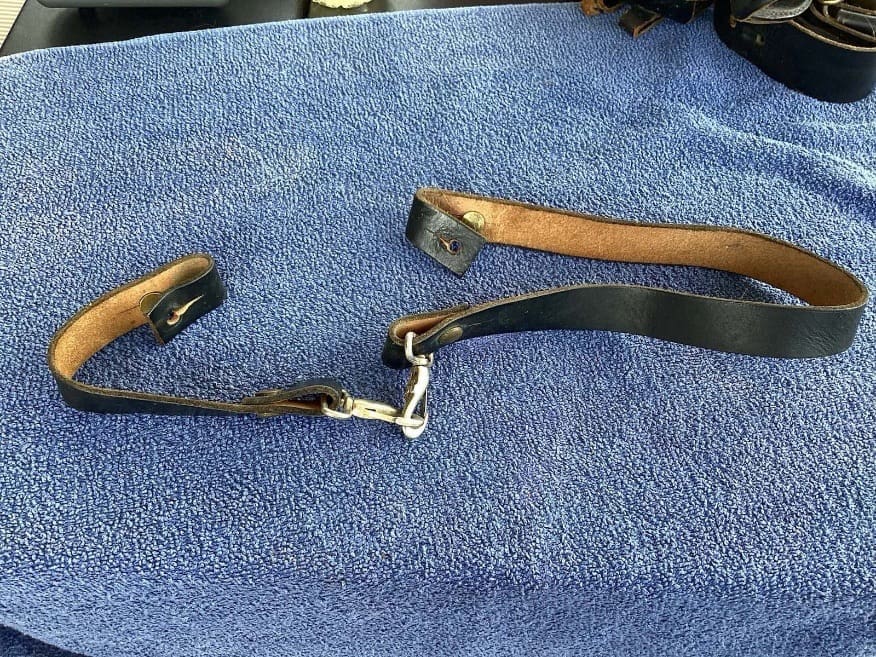
In the latter stages of his career, Yarborough served in some of the Army’s most demanding senior roles. He represented the United Nations Command as chief negotiator at Panmunjom, dealing directly with Chinese and North Korean counterparts. As a lieutenant general, he commanded I Corps in Korea and later served as chief of staff and deputy commander in chief of U.S. Army Pacific. Across these assignments, his unconventional mindset remained intact, even extending to personal gear—such as his modified Air Force N-3B parka, altered to meet his own practical standards rather than rigid regulation.

Close up view. Captain Yarborough first row, second from right, Photo by Gary Wilkins, 1st SFC PAO.

A Legacy Etched in Steel

Yarborough’s influence did not end with his retirement. Beginning in 2002, graduates of the Special Forces Qualification Course were awarded the serial-numbered “Yarborough Knife,” a tangible link between new Green Berets and the man who forged their professional identity. Though later cost constraints severely limited its distribution, the knife remains one of the most powerful symbols of excellence and heritage within the Special Forces community.

LTG Yarborough’s personal customized USAF N3B winter parka, worn during his command of I Corps in the Republic of Korea. Photo by Gary Wilkins, 1st SFC PAO.

By Mr. Gary Wilkins, 1st Special Forces Command

Lieutenant General William P. Yarborough did more than design equipment or authorize a beret. He shaped a culture. He believed in a “new breed of man”—one who could think independently, adapt quickly, and succeed in the world’s most ambiguous and dangerous environments. Today’s Green Berets, operating across cultures and conflicts, continue to embody that vision. In their mindset, methods, and symbols, the legacy of Yarborough’s unconventional genius endures.

By Mr. Gary Wilkins, 1st Special Forces Command

332nd ELRS Conducts First Hot-Pit Refuel with R-20 Expeditionary Refueling System

Saturday, January 17th, 2026

U.S. CENTRAL COMMAND AREA OF RESPONSIBILITY (AFNS) —  

For the first time at this location, U.S. Airmen assigned to the 332nd Expeditionary Logistics Readiness Squadron conducted a hot-pit refueling operation using an R-20 expeditionary refueling system to support a U.S. Army UH-60 Black Hawk helicopter on a flightline within the U.S. Central Command area of responsibility, Dec. 14, significantly reducing aircraft ground time and expanding expeditionary fueling capabilities.

The operation marked the first use of the R-20 at the base to conduct hot-pit refueling, allowing the helicopter to remain running while taking fuel directly from a bulk fuel bladder rather than a standard R-11 fuel truck. The capability enables faster turnaround times, conserves limited refueling assets and improves mission responsiveness in a deployed environment.

“Basically, it allows us to pump straight from the fuel bladder into the aircraft without having to worry about using an R-11,” said Staff Sgt. John Kaelin, 332nd ELRS fuels distribution noncommissioned officer in charge. “If we had to send one or two R-11s out here, it would take away resources we need to support all of our other aircraft.”

Kaelin explained that traditional cold refueling for UH-60 helicopters can take up to 75 minutes, including shutdown procedures and system checks. Using the R-20 for hot-pit refueling reduces ground time by 66% and allows aircrews to return to the air faster.

“In a deployed setting, the longer it takes for them to get back out, the longer whoever they’re going to help is waiting on them,” Kaelin said.

The R-20 also provides significantly greater fueling capacity and flexibility than the R-11. Each R-20 hose can issue fuel at a rate of up to 450 gallons per minute, with dual-hose operations capable of delivering up to 900 gallons per minute. Unlike the R-11, which carries a maximum of 6,000 gallons, the R-20 connects directly to bulk fuel bladders capable of holding more than 200,000 gallons, enabling multiple aircraft to be refueled simultaneously.

“Here we can hit two aircraft at a time, depending on size, and keep the mission going if we need to get sorties in the air,” said Airman 1st Class Samuel Ilet, 332nd ELRS fuels distribution operator. “Deployed, you never know when something could pop off, and they have to go up as soon as possible.”

The successful R-20 hot-pit refueling demonstrated the squadron’s ability to rapidly adapt expeditionary fuel operations, ensuring aircraft can launch faster, respond sooner and remain ready when mission demands are at their highest.

By Airman 1st Class Jonah Bliss

United States Air Forces Central Public Affairs

Tracer Tactical Invites You to the Echelon Happy Hour at SHOT Show

Friday, January 16th, 2026

Come Join us for an Echelon Happy Hour Wednesday 2-4pm at our Booth 62308 and grab a free can of Echelon. While you’re there, take a peek at some of the new products we’re releasing this year.

tracer-tactical.com

Check Out the 2026 Salomon Forces Line & Get In On the Raffle

Friday, January 16th, 2026

FirstSpear Friday Focus: SHOT Show 2026

Friday, January 16th, 2026

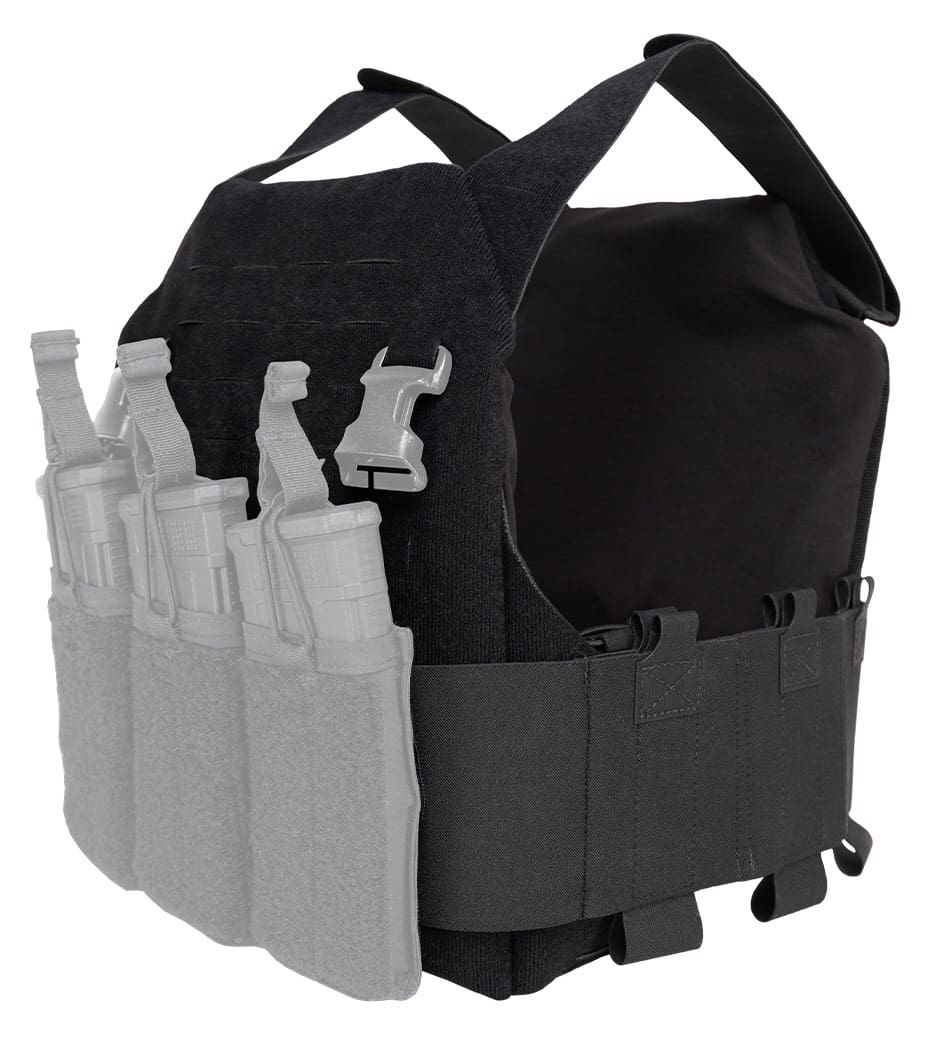
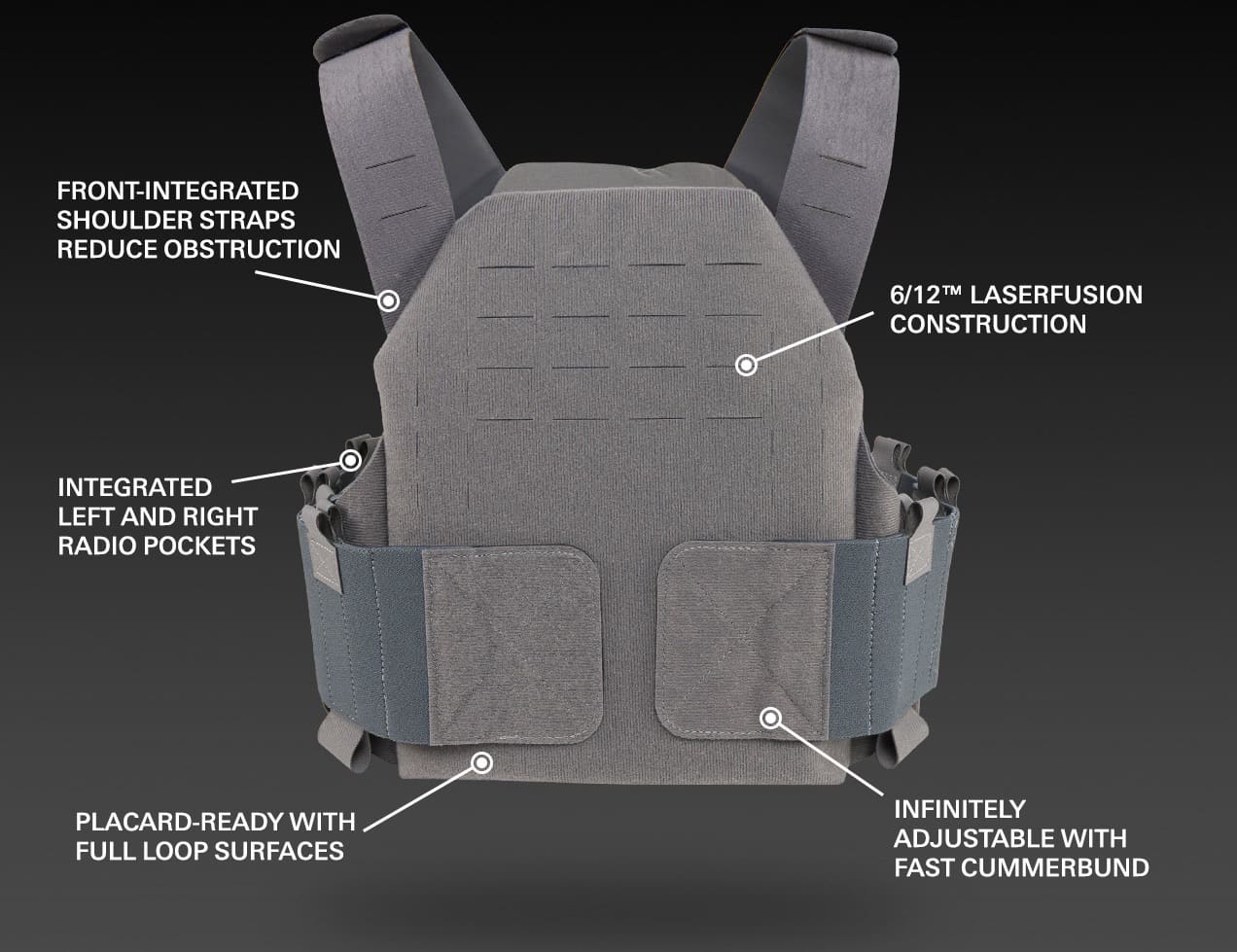
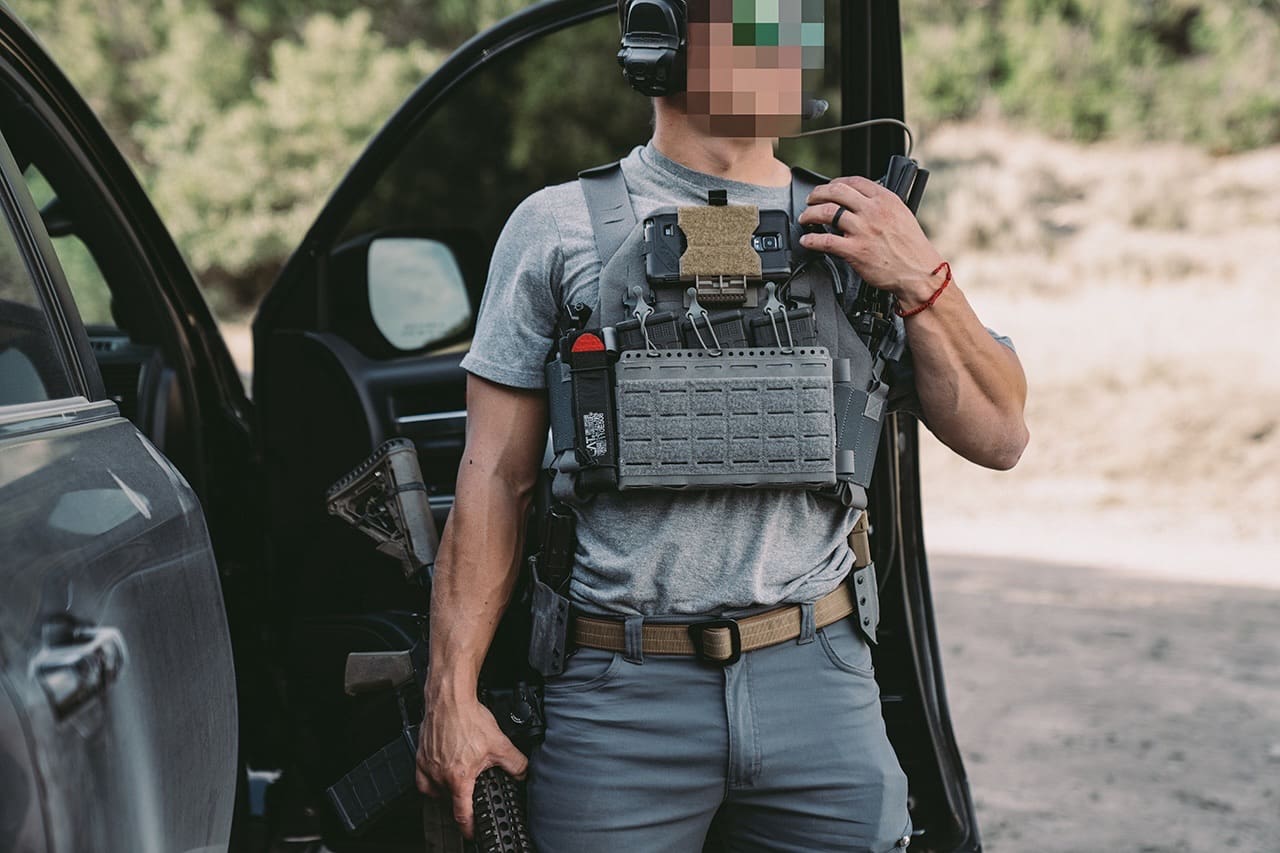
Come see us next week at SHOT Show 2026 over at booth #32111 from Tuesday, January 20th through Friday, January 23rd. Check out our product line-up and catch up with our team to learn more about what’s coming in 2026!

To request an estimate click image above or visit First-Spear.com/Request-For-Estimate. FirstSpear is the premier source for cutting-edge tactical gear for military, law enforcement and those who train. For more information visit First-Spear.com.