Phantom Lights

Archive for the ‘Guest Post’ Category

101st Airborne Division (Air Assault) Conducts UAS Competition Tryouts, Showcasing Innovation and Readiness

Tuesday, February 17th, 2026

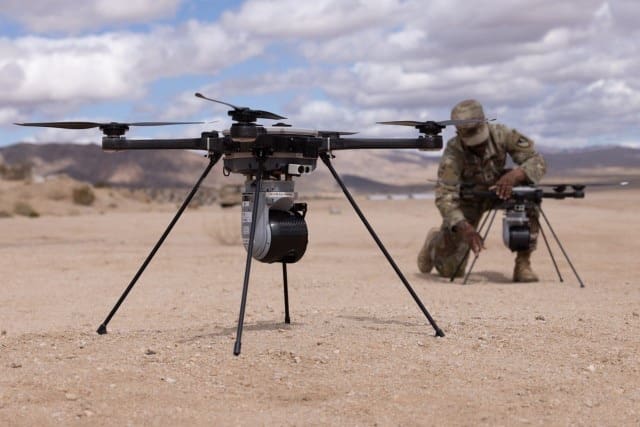
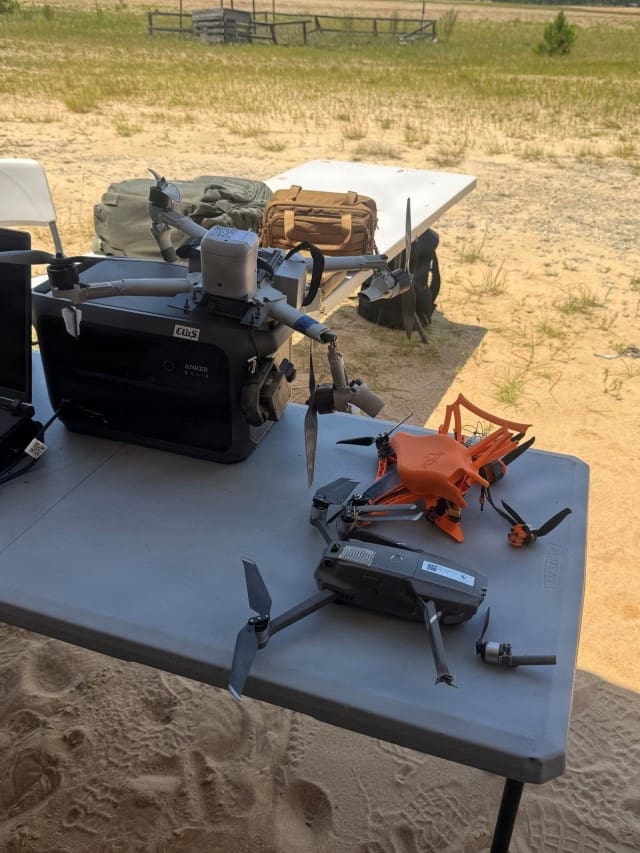
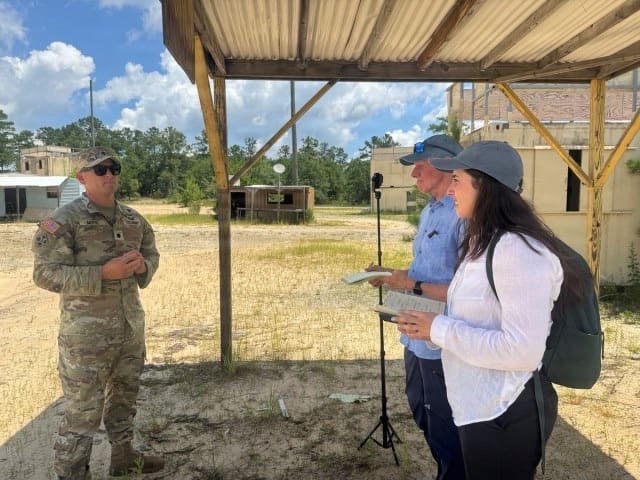
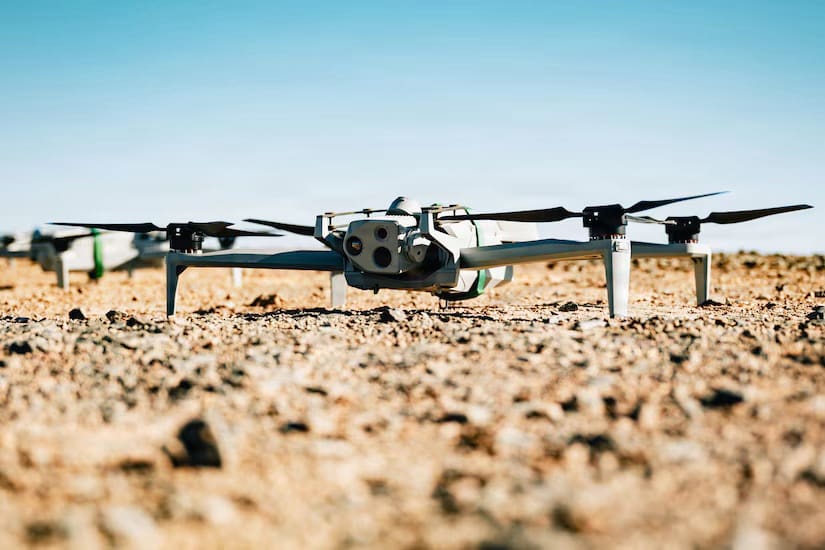
FORT CAMPBELL, KY – The 101st Airborne Division (Air Assault) conducted competitive tryouts for its UAS team on Jan. 12, 2026, here, identifying Soldiers who will represent the division in an upcoming Army UAS competition while reinforcing the unit’s commitment to innovation, readiness and modernization across the force.

Held at Fort Campbell, the tryouts brought together Soldiers from across the formation who demonstrated technical skill, adaptability and problem-solving abilities while operating unmanned aerial systems.

“The Army has sent a very clear demand signal to identify and employ the best drone teams and best drone operators, ” said Chief Warrant Officer 2 Page Frazier, a member of the Robotics and Autonomous Integration Directorate. “And here at the 101st Airborne Division we are prepared to answer that call.”

Soldiers across the formation were evaluated on their physical endurance through the Air Assault obstacle course, techniques on how to employ a UAS, and how to navigate a drone system in a confined area. These attributes that were being evaluated reflected how emerging technologies are increasingly integrated into modern battlefield operations.

“The most challenging part about the tryouts so far is the air assault course, mixed with running to the nets, and then flying around, ” said Spc. Markus Sund, a participant in the drone tryouts.

This event directly supports the Army’s broader modernization strategy, and places emphasis on the importance of unmanned systems in future conflicts which is evolving the modern-day battlefield. Division leadership within the 101st Airborne Division hones in on the concept that innovation is a critical component of lethality and readiness.

As the Army continues to integrate advanced technologies into training and operations, the division sets forth to remain the trailblazers of that transformation. Through events like the UAS competition tryouts, the division is ensuring its Soldiers are equipped, empowered and prepared to meet tomorrow’s challenges head-on.

The selected team will continue training in preparation for the upcoming Army drone competition, representing the division’s commitment to excellence, adaptability and innovation across the force.

Story by SGT Parris Kersey 

101st Airborne Division (Air Assault)

Picatinny – How It Really Works!

Monday, February 16th, 2026

This was shared by Spuhr on Instagram.

When the Picatinny rail (MIL-STD-1913) was originally designed, it was intended to use only the 45-degree angled surfaces for clamping and reference (highlighted in green on the drawing). The tolerance to the top flat surface was deliberately made very large.

Advantages of the original design (green surfaces):

• A QD mount can be attached and detached on a huge variety of rails with extremely tight control — total width tolerance is only about 0.1 mm!

• This makes the system very forgiving of manufacturing variations between different rails.

Disadvantages:

• The mount will always sit slightly canted depending on the exact width of the rail.

• For most practical purposes, this doesn’t matter at all… but it drives people with OCD absolutely crazy…

NATO’s recommendation since 2009 (STANAG 4694): Use three surfaces instead (highlighted in red): the two 45-degree sides plus the top flat as the primary reference.

Advantages:

• The mount will always sit perfectly straight and level

Disadvantages:

• In addition to the ~0.1 mm width tolerance, you now also add 0.25 mm tolerance to the top flat.

• That adds up to a cumulative tolerance of up to ~0.6 mm (0.024”).

• This works fine for screw-fixed mounts, but it’s a disaster for QD mounts — they become much harder to get consistently straight and repeatable across different rails.

What we do at Spuhr:

• Fixed mounts: We follow the NATO/STANAG recommendation (red surfaces) for maximum straightness and repeatability.

• QD mounts: We stick to the original Picatinny design (green surfaces only) to keep tolerance stack as low as possible and ensure compatibility with as many rails as possible.

The last picture shows one of our custom inspection fixtures for QD mounts — we use it to verify that they sit reasonably straight despite rail variations.

NATO really missed an opportunity by not tightening up that loose 0.25 mm top-flat tolerance — it would have made QD systems so much better!

Joint Interagency Task Force, FBI Deepen Drone Partnership to Bolster National Defense

Monday, February 16th, 2026

Army Brig. Gen. Matt Ross, Joint Interagency Task Force 401 director, visited the FBI’s National Training Center for counter-small unmanned aircraft systems in Huntsville, Alabama, yesterday to solidify a strategic alliance to protect the nation from unmanned aerial threats.

The visit centered on increasing collaboration between the War Department and the FBI to enhance homeland defense through joint training and the accelerated development of counter-UAS capabilities with federal interagency partners. 

A primary focus of the discussion was enhancing efforts to coordinate security preparations for this summer’s FIFA World Cup. Ross and Mike Torphy, FBI acting assistant section chief for UAS and counter-UAS, spoke with expert instructors who are teaching a specialized course for local law enforcement in each of the tournament’s eleven host cities across the nation. 

“The security of our homeland depends on a seamless, unified defense, and that is only possible through robust interagency collaboration,” Ross said. “The threats we face are shared, so our solutions must be as well. Our work with the FBI, to secure major events like the World Cup against the threat of drones, is a prime example of this strategy in action, but our goal is much broader: to build permanent, integrated [counter]-UAS capabilities across the federal government.” 

This synergy is foundational to building a more resilient national counter-UAS capability and ensuring state and local partners are effectively trained and equipped for any threat.  

Ross thanked Torphy for hosting the productive visit, which underscored the importance of combining JIATF 401’s lessons learned from the battlefield and expertise in joint training with the FBI’s critical law enforcement mission. 

“This is one example of how JIATF 401 is working with partners to enhance our counter-drone efforts,” Ross said. “No single person or agency can take on this task alone. It requires a whole-of-government coordination, and I am grateful that Mr. Torphy and the training center staff are supporting our mission to build a layered defense against the full spectrum of small UAS threats to the homeland.” 

The engagement in Huntsville signifies a deliberate move to formalize and expand the working relationship between the department and federal law enforcement. Future efforts will include the JIATF 401’s Joint Counter-Small UAS University in Fort Sill, Oklahoma, working closely with the FBI’s National Training Center to execute this shared mission.  

This partnership model, focused on joint capability development and shared training, will enhance security for specific events and serve as a blueprint for a more integrated national approach to all counter-UAS threats, Ross added. 

By Army LYC Adam Scher, Joint Interagency Task Force 401

US and Panamanian Forces Kick Off Jungle Operations Training Course

Sunday, February 15th, 2026

CRISTÓBAL COLÓN, Panama — U.S. service members and Panamanian security forces are set to hold the Jungle Operations Training Course-Panama, JOTC-P, Feb. 3–20 at Base Aeronaval Cristóbal Colón. The 18-day program will be conducted in a combined U.S.-Panamanian setting and focused on honing jungle warfare skills to enhance multinational interoperability.

Coordinated by the Joint Security Cooperation Group–Panama, the course brings together U.S. Army Soldiers from the Army Security Cooperation Group – South and the 82nd Airborne Division — with support from Joint Task Force-Bravo — as well as U.S. Marines, training side-by-side with partners from Panama’s Servicio Nacional de Frontera, Servicio Nacional Aeronaval and Policía Nacional de Panamá.

This iteration marks significant growth, with increased student numbers and balanced teams featuring the continued representation from U.S. and Panamanian participants. The course will also feature the largest participation of U.S. Army personnel since the revitalized training began in August 2025. The blended teams foster collaboration, build interoperability and encourage joint problem-solving in challenging conditions.

JOTC-P integrates assets across services and nations, including dismounted tactics and aviation support, to prepare forces for operations in dense, triple-canopy jungle terrain. The training progresses through three phases.

In phase one, participants master jungle survival fundamentals, such as machete use, fire craft, water purification and building primitive shelters. Largely led by Panamanian instructors, this phase emphasizes adaptability, endurance and resourcefulness in austere environments.

Phase two covers small-unit tactics, including movement techniques, ambushes, casualty evacuation and waterborne operations, largely led by U.S. instructors. These scenarios challenge decision-making under stress and strengthen communication in multinational teams.

Phase three features five combined missions — encompassing attacking a mortar firing point and conducting ambushes and reconnaissance missions — culminating in the grueling “Green Mile” endurance event and graduation. Instructors assess teamwork, leadership, and sustained performance in demanding jungle conditions.

By SPC Richard Morgan

Air Force Portfolio Acquisition Executive for Command, Control, Communications and Battle Management Takes Lead on Joint Fires Network

Saturday, February 14th, 2026

NAVAL BASE POINT LOMA, Calif. (AFNS) —

The Department of the Air Force Portfolio Acquisition Executive for Command, Control, Communications and Battle Management stood up an integrated program office to lead the Joint Fires Network.

The Joint Fires Network is a revolutionary warfighting network that enables the joint force to realize the advantages of speed and unity of command. By fusing high-quality targeting data with cutting-edge command and control applications, JFN delivers data to warfighters when and where they need it. This network outperforms legacy networks by aligning fires tasks into an object-based common data layer, providing a common operating picture for the Joint Force.

“Our mission is to take the JFN prototype and wrap a layer around it that allows us to manage and scale it as a robust capability that will have all the appropriate supportability aspects that a program of record should have,” said Col. Alex Constantine, Joint Fires Network senior materiel leader.

The newly created IPO is meant to provide the infrastructure and oversight to transform the JFN from a successful prototype into a long-term, reliable, and strategically important asset for the Joint Force, according to Constantine.   

“The establishment of the IPO allows us to create structured interfaces and venues with the services and Joint Force that ensure integration of fires at the combatant command-level and below,” Constantine said. “We will be able to look at economies of scale, supportability, and warfighting efficiency as we continue to increase the footprint and capabilities of JFN.”

The future architecture of JFN will focus on how it delivers decision advantage to the Joint Force as well as how it feeds into the DAF Battle Network, by working collaboratively across the Department of War.

“The actual system itself touches multiple parts of planning, fires control, and execution,” Constantine said. “So, it will touch various aspects of the DAF Battle Network, but it’s really a tier 1 combatant command-oriented system that the planners and below at the lower echelons will use to collaboratively plan and execute fires.”

Constantine said developing JFN in a joint environment contributes to its overall success as service members from each branch bring unique perspectives and expertise.

“We have a Navy deputy and teammates from across the services who bring technical interchanges together to ensure that we’re touching Army, Naval and Department of the Air Force equities holistically, as well as those of the relevant combat support agencies, to truly deploy a better system,” he said.

JFN’s development will utilize the DOW’s Software Acquisition Pathway 5,000.87 so servicemembers can develop and deliver the capability quickly.

“To ensure JFN remains adaptable and responsive to evolving threats, the program office is leveraging software acquisition pathway, an approach designed to streamline the capability delivery process,” he said. “Our approach balances agility with acquisition rigor to continue our rapid fielding efforts while we address supportability in manner tailored to the system’s needs as we move forward.” 

The DAF Battle Network is the integrated system-of-systems connecting sensor, effector, and logistics systems enabling better situational awareness, faster operational decisions, and decisive direction to the force. It integrates roughly 50 programs of record across the department, ensuring resilient decision advantage needed by the Air Force, Space Force, joint and coalition forces to win against the pacing challenge. 

By Richard Blumenstein

DAF PAE C3BM Public Affairs

2026 Canadian National Counter UAS Conference

Friday, February 13th, 2026

March 2nd and 3rd, 2026, please join the Kingston Police, Ottawa Police, and the Correctional Service of Canada for the 2026 Canadian National Counter Unmanned Aircraft System Conference at the Westin Ottawa, 11 Colonel By Drive, Ottawa ON. Conference topics include Organized Crime use of UAS for trafficking, Contraband into prisons, Narcotics and Firearms across national borders, Narcotics and Firearms within cities, protecting major events and mass gatherings from UAS attacks and miss-use, VIP protection, Protecting public infrastructure from drone attacks (power plants/lines, public safety & government buildings), weaponized UAS use in terrorist and national security related attacks, update on UAS use in Ukraine and future domestic trends, and A panel discussion on needed legislative changes to support enforcement and investigations. Please use links in attached flyers to register or go to Reservation-Link for hotel reservation and 2026 National Counter UAS Conference Tickets, Mon, Mar 2, 2026 at 8:00 AM | Eventbrite to register for the event.

Event registration is $335.00 CAD, and lodging is available for $229.00 CAD per night at the Westin.

FirstSpear Friday Focus: Tubes Gas Mask Pouch

Friday, February 13th, 2026

The FirstSpear TUBES™ GAS MASK POUCH is built for professionals who require immediate access to critical respiratory protection in high-threat environments. Compatible with the Tubes™ Attachment Accessory and Tubes™ Belt Mount Accessory, it mounts securely to plate carriers or belt rigs to match mission requirements.

The wide-opening design enables rapid deployment and efficient re-stowage when seconds matter. A protective hooded top shields the mask from debris, dirt, and adverse weather conditions. Retention is handled by a dual closure system combining hook-and-loop with a side-release (SR) buckle, ensuring the mask stays secure during movement while remaining instantly accessible.

This balance of speed and security supports operations where reliability is non-negotiable. Constructed for durability in austere conditions, the pouch withstands the rigors of hard use.

The Tubes™ Gas Mask Pouch keeps essential respiratory gear protected, locked in, and ready to deploy at a moment’s notice.

To request an estimate click image above or visit First-Spear.com/Request-For-Estimate. FirstSpear is the premier source for cutting-edge tactical gear for military, law enforcement and those who train. For more information visit First-Spear.com.

Fort Benning Trains Army Leaders to Integrate Robotic and Autonomous Systems in Combat

Friday, February 13th, 2026

FORT BENNING, Ga. – The U.S. Army Maneuver Center of Excellence (MCoE) at Fort Benning launched the first pilot of the Robotic Autonomous Systems Leader Tactics Course (RASLT) yesterday as part of Army-wide Transforming in Contact (TiC) initiatives.

The course will prepare Army leaders for future conflicts where autonomous and robotic systems will play a more prominent role. The course is slated for three pilots in Fiscal Year (FY) 2026. Each pilot will be three weeks long and run five days a week.

Lt. Col. Alan Hastings, commander of the 3rd Squadron, 16th Cavalry Regiment, the unit overseeing RASLT, said this training is critical for Army leaders as the force integrates new robotic and autonomous systems formations.

“What we hope RASLT will provide is a touchpoint within an officer or NCO’s professional military education timeline where they are exposed to this subject matter and they develop a foundation for building proficiency and expertise in planning tactical operations, combining arms with these new capabilities,” Hastings said.

According to Capt. Alison Darby, the RASLT course director, the unit is targeting officers from first lieutenant to major for participation, and enlisted personnel ranked sergeant first class and above. She recommends eligible enlisted personnel graduate first from Scout Leader Course or Battle Staff NCO Course and eligible officers should ideally be Maneuver Captain’s Career Course graduates before attending RASLT.

“We’re looking for leaders (who) are returning to the operational force where there is likely to be one of these robotics and autonomous systems formations integrated at the company, battalion, or brigade level,” Darby said.

The three-week course will follow a structured format.

In the first week, students will have broad discussions to gain understanding of different types of autonomous systems before learning about unmanned ground vehicle (UGV) types and their capabilities. The week will end with a cognitive exercise where students will develop a plan as a company commander within a mobile brigade combat team with RASLT assets attached.

“This is our first chance to test their ability to plan and execute their plan based off the injects they’re getting from the instructor acting as a thinking, adaptive enemy,” Darby said.

In the second week, students will explore small unmanned aircraft system (sUAS) capabilities, limitations, and considerations. They will then learn about electromagnetic spectrum management and the impact of terrain and weather on the systems. Students conclude the second week by conducting a defensive tactical decision exercise (TDE) where they act as an armor company commander with robotics systems attached to their combined arms formation.

During the third week, students will discuss leadership, ethics and other general considerations of robotic and autonomous systems. In a final tactical decision exercise, students must incorporate robotic and autonomous systems to enable an offensive maneuver.

“Graduates of this course should be able to understand the capabilities and limitations of several types of robotic and autonomous systems that are already being implemented in the force or are a proposed idea to add into the force,” Darby said. “Whatever unit they go to, students will have the capability and understanding of how to plan and utilize these systems to enable the maneuver formations.”

The Army is continuously transforming by using the latest technologies for warfighting advantage to remain the most lethal and ready land force in the world. Initiatives like RASLT ensure the Army can deliver trained, cohesive, and lethal teams to meet future challenges in complex operational environments.

By Daniel Murnin