GORE-TEX Professional

Archive for the ‘Guest Post’ Category

Breaking Barriers: Jeremy Chambers Becomes First NCO to Commission as Captain in Foreign Affairs

Saturday, January 10th, 2026

FORT SHAFTER, Hawaii – In a milestone moment for the United States Army and U.S. Army Pacific, U.S. Army Master Sgt. Jeremy Chambers, of the Security Cooperation Division at the U.S. Army Pacific (USARPAC), Fort Shafter, Hawaii, has shattered expectations and set a new precedent by becoming the first noncommissioned officer in Army history to commission directly as a U.S. Army Captain in the elite Foreign Area Officer (FAO) career field. His achievement marks a transformational step forward in Army talent management and showcases the extraordinary potential found within the enlisted corps.

Chambers’ historic transition did not arise overnight. For years, he has performed the duties and strategic coordination typically expected of a Foreign Area Officer—often at a level well above his rank. His proven track record is why multiple deputy commanding generals, beginning with Lt. Gen. Braga, now the commanding general of Joint Special Operations Command, have consistently advocated for his direct commission. Their support reflects a shared belief that Chambers had long been performing the duties of an FAO and deserved the formal authority and rank commensurate with his contributions.

“I can’t be thankful enough that the Army got it right when they chose to promote my husband,” said Sergeant Major Krystal Chambers, wife of Captain Jeremy Chambers. “I think he has accomplished something that not many will be able to do.”

The FAO program produces experts in regional studies, foreign languages, diplomacy, and international security cooperation. FAOs work alongside partner militaries, operate within U.S. embassies, and advise senior leaders at strategic levels. Entry into this field is highly selective and requires proven academic ability, operational experience, and strategic thinking.

“My hope with this entire direct commission was to help create a legacy and a pathway for other NCOs. Still, it’s more important now that we’ve created an opportunity for other NCOs, other enlisted Soldiers, to recognize that there’s another thing they can do,” Capt. Chambers said. “Your hard work can be recognized, and things can be done if you accomplish all of your tasks and do your job. The most significant impact, whether they have a specialized skill or not, is that they recognize your talents and abilities, and reward them in creative ways, as you see today.”

Throughout his distinguished enlisted career, Chambers excelled in key leadership roles, guided Soldiers through complex missions, and supported operations that required both tactical skill and strategic insight. These experiences positioned him uniquely for the FAO program’s rigorous demands.

As he begins his journey in the FAO program, Chambers will complete advanced academic studies, regional cultural training, and intensive language development. He will be prepared for future assignments, including embassy roles, multinational coordination, and high-level international engagement missions. At the ceremony, U.S. Army Gen. Ronald Clark, commanding general of the U.S. Army’s largest Service Component Command, U.S. Army Pacific, highlighted the years of strategic leadership and mentorship that contributed to this significant milestone.

“We all know that the promotion comes from the determination by senior leaders who individually possess the potential for increased responsibility,” Clark said. “I have to give credit to the number of senior leaders at this headquarters who have gone to other assignments or are in retirement, who have shaped this action, which took many years to develop. It started with Lieutenant General John Braga, who had the tremendous idea to commission Jeremy as an officer.”

Chambers’ commissioning represents not only a historic achievement for the unit but a powerful symbol of what dedication, excellence, and vision can accomplish within the Army’s ranks.

By SGT Qishaunia Hawkins

FirstSpear Friday Focus: Thin Blue Line T-Shirt

Friday, January 9th, 2026

National Law Enforcement Appreciation Day lands on Friday, January 9th, and the FirstSpear THIN BLUE LINE T-SHIRT is built to represent those who stand watch when it matters most. This is a no-nonsense way to show respect for the men and women in law enforcement who run toward the problem, hold the line, and keep pushing through the hard days.

Whether you’re training, on the range, off-duty, or just moving through the day, this shirt is designed for comfort and everyday wear without sacrificing the message behind it. The Thin Blue Line graphic says exactly what it needs to—support, unity, and unwavering respect for the badge and the mission.

Offered in both short-sleeve and long sleeve options, it’s ready for any season and any environment. Wear it under kit, layer it up, or run it solo—either way, it stays on mission. Law enforcement is a lifestyle, not a job you clock out of, and this shirt is for the people who understand that. 

It’s also a solid gift for your team, your family, or anyone who carries that responsibility every shift. On January 9th, don’t just say you support them—show it. Grab the FirstSpear Thin Blue Line T-Shirt and stand behind those who protect and serve.

To request an estimate click image above or visit First-Spear.com/Request-For-Estimate. FirstSpear is the premier source for cutting-edge tactical gear for military, law enforcement and those who train. For more information visit First-Spear.com.

XVIII Airborne Corps Delivering on SECARMY Innovation Priorities

Friday, January 9th, 2026

FORT BRAGG, N.C. – Since assuming the Army’s top civilian role, Secretary of the Army Daniel Driscoll has made one message abundantly clear: the Army must innovate faster, transform deeper, and fundamentally accelerate the pace of acquisition if it intends to win the wars of tomorrow.

During an address at the Association of the United States Army’s annual conference in October, Driscoll underscored the urgency behind his vision. “Nobody can predict the next war,” he said, “but we cannot wait to innovate until Americans are dying on the battlefield. We must act now to enable our Soldiers.”

XVIII Airborne Corps leading the charge

The XVIII Airborne Corps and Fort Bragg, North Carolina, are in lockstep with the Secretary’s priorities. On Dec. 1, 2025, the Corps held the soft opening of the Lt. Gen. James M. Gavin Joint Innovation Outpost – a collaboration hub designed to rapidly translate emerging technologies into battlefield overmatch.

“Here we are, day one of the JIOP opening, and we’re already connecting small businesses to the military ecosystem,” said Lt. Gen. Gregory Anderson, commanding general of the XVIII Airborne Corps. “We coordinated for a product demonstration and now we have a proposed solution to an Army wide problem. That’s the power of the JIOP – creating an avenue to connect small businesses and academia to the Army to help solve operational problems.”

The JIOP model removes barriers, shortens timelines and brings Soldiers, academics, industry leaders and decision-makers together early in the development process to create impactful solutions that close capability gaps and support the Corps’ mission as America’s Contingency Corps.

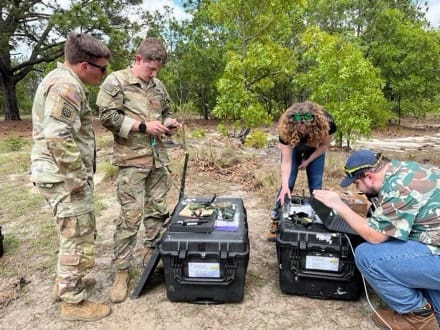
Coinciding with the JIOP soft launch was an industry showcase at Oak Grove Technology Center, a 200-plus-acre kinetic training range about an hour west of Fort Bragg. During the two-day event, four small businesses demonstrated systems ranging from counter-sUAS tools, handheld radio frequency detection devices, and a next generation dynamic target system designed to replicate enemies ducking behind cover.

A major theme across the event was the rising threat of unmanned systems. As Driscoll stated in a November interview with Reuters, “Drones are the future of warfare, and we must invest in both offensive and defensive capabilities against them.”

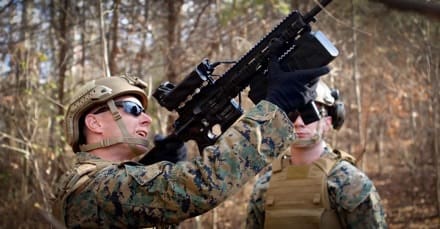
One of the companies demonstrating solutions was Drone Rounds, based in Gilbert, Arizona. The team showcased a kinetic counter-sUAS round fired from a standard 5.56 mm rifle. Instead of firing a single projectile, the round disperses in-flight like a shotgun shell, significantly increasing hit probability on fast-moving drones.

On multiple occasions throughout the day, Conor Schnepf, owner of Drone Rounds, reiterated the value of the JIOP and how it enables non-traditional defense companies the opportunity to get in front of the Army. He lauded the JIOP’s emphasis on prioritizing innovation and speed, reinforcing the direction set forth by Army senior leaders.

Setting the conditions

Another priority for Driscoll is challenging legacy contracting practices that restrict units from maintaining or repairing their own equipment, a concept often referred to as the right to repair.

He emphasized this point in a recent interview on The Shawn Ryan Show, where he referenced a 101st Airborne Division artillery maintenance effort where he personally empowered Soldiers to take whatever actions necessary to restore howitzers to the firing line.

By underwriting the potential legal risk, Driscoll reinforced that lethality and readiness come first, and that commanders and Soldiers are empowered to solve problems at the point of need.

Strategic Logix, a Georgia-based UAS manufacturing company, attended the Oak Groves showcase, and reiterated throughout their demonstration that right to repair is their default maintenance plan for its UAS systems.

The pivot toward continuous transformation is reshaping outdated procurement systems, and senior-level momentum is providing the roadmap for industry partners that want to engage.

“The paradigm is shifting in the Army with innovation and transformation, it’s palpable and great news for the JIOP,” said Rob Braun, chief technology Officer, XVIII Airborne Corps. “Not only are industry partners ecstatic to work with us, but we now have a dedicated space to innovate at the pace of industry to enhance lethality for our warfighters.”

The way forward

The JIOP will serve as the intersection of innovation, technology and warfighting for the XVIII Airborne Corps and Fort Bragg. It will also function as the innovation nexus for multiple transformation initiatives already underway.

Dragon’s Lair, modeled after the TV show Shark Tank, is an innovation competition that provides a platform for service members of all ranks to propose and pitch creative solutions to challenges faced by XVIII Airborne Soldiers.

The installation also hosts Scarlet Dragon.

“Scarlet Dragon is our innovation exercise,” said Braun. “It’s our platform to bring new technologies and new approaches to solve operational capability gaps and requirements that we derive from different operational plans around the globe.”

The JIOP is more than just an office space. It’s the Army’s new engine of rapid experimentation – where ideas become prototypes, and prototypes become battlefield overmatch.

“I’m going to continue to push the acquisition process to go faster and faster in order to keep up with current operational tempo,” said Col. Thomas Monaghan Jr., JIOP director. “We have people across multiple offices already surging to get the right outputs for the way forward.”

Organizations, researchers, and technology developers interested in learning more about the JIOP may contact the program office here: dragoninnovations@army.mil.

By XVIII Airborne Public Affairs

AI in Battle Management: A Collaborative Effort Across Borders

Thursday, January 8th, 2026

The 2025 series of the Decision Advantage Sprint for Human-Machine Teaming marked a significant step forward in the integration of artificial intelligence and machine learning into battle management operations. Through a series of groundbreaking experiments, including the recent DASH 3 iteration, the U.S. Air Force, alongside its coalition partners, Canada and the United Kingdom, tested and refined AI’s potential to enhance decision-making, improve operational efficiency, and strengthen interoperability in the face of growing global security challenges.

Held at the unclassified location of the Shadow Operations Center-Nellis in downtown Las Vegas, DASH 3 set the stage for this collaboration, led by the Advanced Battle Management System Cross-Functional Team. The experiment was executed in partnership with the Air Force Research Lab’s 711th Human Performance Wing, U.S. Space Force, and the 805th Combat Training Squadron, also known as the ShOC-N, further solidifying the commitment to advancing battle management capabilities for the future.


AI Integration into Operational Decision-Making

In the third iteration of the DASH series seven teams, six from industry teams and one from the ShOC-N innovation team partnered with U.S., Canadian, and U.K. operators to test a range of decision advantage tools aimed at enhancing the rapid and effective generation of battle course of actions with multiple paths. The goal of a Battle COA is to map sequences of actions that align with the commander’s intent while overcoming the complexities of modern warfare, including the fog and friction of battle. Examples of Battle COAs include recommended solutions for long-range kill chains, electromagnetic battle management problems, space and cyber challenges, or agile combat employment such as re-basing aircraft.

U.S. Air Force Col. John Ohlund, ABMS Cross Functional Team lead overseeing capability development, explained the importance of flexibility in COA generation: “For example, a bomber may be able to attack from multiple avenues of approach, each presenting unique risks and requires different supporting assets such as cyber, ISR [intelligence, surveillance, and reconnaissance], refueling, and air defense suppression. Machines can generate multiple paths, supporting assets, compounding uncertainties, timing, and more. Machines provide a rich solution space where many COAs are explored, but only some are executed, ensuring options remain open as the situation develops.”

This ability to explore multiple COAs simultaneously allows for faster adaptation to unforeseen challenges and provides operators with diverse strategies to act upon as the situation unfolds. AI’s integration into this process aims to not only speed up the decision-making cycle but also increase the quality of the solutions generated.

AI Speeds Decision Advantage

The speed at which AI systems can generate actionable recommendations is proving to be a game-changer in the decision-making process. Transitioning from the manual creation of COAs that once took minutes or tens of minutes to producing viable options in just tens of seconds was identified as a radical advantage in combat scenarios. Initial results from the DASH 3 experiment show the power of AI in enabling faster, more efficient decision-making.

“AI systems demonstrated the ability to generate multi-domain COAs considering risk, fuel, time constraints, force packaging, and geospatial routing in under one minute,” said Ohlund. “These machine-generated recommendations were up to 90% faster than traditional methods, with the best in machine-class solutions showing 97% viability and tactical validity.”

For comparison, human performance in generating courses of action typically took around 19 minutes, with only 48% of the options being considered viable and tactically valid.

“This dramatic reduction in time and improvement in the quality of solutions underscores AI’s potential to significantly enhance the speed and accuracy of the decision-making process, while still allowing humans to make the final decisions on the battlefield,” Ohlund added.

The ability to quickly generate multiple viable COAs not only improves the speed of decision-making but also gives commanders more options to work within a compressed time frame, making AI an essential tool for maintaining a strategic advantage in fast-paced combat situations.

Building Trust in AI: From Skepticism to Confidence

Skepticism surrounding the integration of AI in operational decision-making was common at the start of the DASH 3 experiment. However, participating operators saw a notable shift in their perspectives as the DASH progressed. U.S. Air Force First Lt. Ashley Nguyen, 964th Airborne Air Control Squadron DASH 3 participant, expressed initial doubt about the role AI could play in such a complex process. “I was skeptical about technology being integrated into decision-making, given how difficult and nuanced battle COA building can be,” said Nguyen. “But working with the tools, I saw how user-friendly and timesaving they could be. The AI didn’t replace us; it gave us a solid starting point to build from.”

As the experiment unfolded, trust in AI steadily increased. Operators, gaining more hands-on experience, began to see the value in the AI’s ability to generate viable solutions at an unprecedented speed. “Some of the AI-generated outputs were about 80% solutions,” said Nguyen. “They weren’t perfect, but they were a good foundation. This increased my trust in the system; AI became a helpful tool in generating a starting point for decision-making.”

Trust and Collaboration Across Nations

The collaboration between the U.S. and its coalition partners was highlighted throughout the 2025 DASH series. The inclusion of operators from the UK and Canada brought invaluable perspectives, ensuring that the decision support tools tested could address a broad range of operational requirements.

“We understand that the next conflict cannot be won alone without the help of machine teammates and supported by our allies,” said Royal Canadian Air Force Capt. Dennis Williams, RCAF DASH 3 participant. “DASH 3 demonstrated the value of these partnerships as we worked together in a coalition-led, simulated combat scenario. The tools we tested are vital for maintaining a decision advantage, and we look forward to expanding this collaboration in future DASH events.”

This integration of human-machine teaming and coalition participation highlighted the potential for improving multinational interoperability in the command-and-control battlespace. “The involvement of our coalition partners was crucial, not just for the success of DASH 3 but also for reinforcing the alliances that underpin global security. DASH experimentation is intentionally a low barrier for entry from a security classification standpoint, enabling broad participation from allies and coalition partners alike,” said U.S. Air Force Lt. Col. Shawn Finney, commander of the 805th Combat Training Squadron/ShOC-N.

Addressing Challenges: Weather and AI Hallucinations

The DASH 3 experiment was not just a test of new AI tools, but a continuation of a concerted effort to tackle persistent challenges, including the integration of weather data and the potential for AI “hallucinations.” These issues have been focus areas throughout the DASH series, with each iteration bringing new insights and refinements to ensure AI systems are operationally effective.

Weather-related challenges are a critical factor in real-world operations, but due to simulation limitations, they were not fully integrated in the DASH series. Instead, weather-related challenges were manually simulated by human operators through ‘white carding’, a method that provided scenario-based weather effects, such as airfield closures or delays, into the experiment.

“We didn’t overlook the role of weather,” explained Ohlund. “While it wasn’t a primary focus of this experiment, we fully understand its operational impact and are committed to integrating weather data into future decision-making models.”

The risk of AI hallucinations, instances where AI produces incorrect or irrelevant outputs, particularly when using large language models, was another challenge tackled during the DASH 3 experiment. Aware of this potential issue, the development teams took proactive steps to design AI tools that minimized the risk of hallucinations and organizers diligently monitored the outputs throughout the experiment.

“Our team didn’t observe hallucinations during the experiment, underscoring the effectiveness of the AI systems employed during the experiment,” said Ohlund. “While this is a positive outcome, we remain vigilant about the potential risks, particularly when utilizing LLMs that may not be trained on military-specific jargon and acronyms. We are actively refining our systems to mitigate these risks and ensure AI outputs are reliable and relevant.”

Looking Ahead: Building Trust in AI for Future Operations

As the U.S. Air Force moves forward with the 2026 series of DASH experiments, the lessons learned from 2025 iterations will serve as a crucial foundation for future efforts. The growing trust in human-machine collaboration, the strengthening of international partnerships, and the continuous refinement of AI tools all point to a future where AI plays an integral role in operational decision-making.

“The 2025 DASH series has established a strong foundation for future experiments, with the potential to further expand AI’s role in battle management,” said Ohlund. “By continuing to build trust with operators, improve AI systems, and foster international cooperation, the U.S. and its allies are taking critical steps toward ensuring they are prepared to address the evolving challenges of modern warfare.”

“This is just the beginning,” said Williams. “The more we can integrate AI into the decision-making process, the more time we can free up to focus on the human aspects of warfare. These tools are key to staying ahead of our adversaries and maintaining peace and stability on a global scale.”

Deb Henley

505th Command and Control Wing

Public Affairs

Air Force Updates Fitness Test Requirements

Wednesday, January 7th, 2026

ARLINGTON, Va. (AFNS) —  

The Air Force announced an update to its physical fitness assessment standards and implementation timeline.

Changes from the September 2025 announcement include a shortened physical fitness diagnostic testing period to end in June and the option for either the 2-mile run or the 20-meter High Aerobic Multi-shuttle Run every six months.

“We care about the long-term health of our Airmen and that starts with physical fitness,” said Air Force Chief of Staff Gen. Ken Wilsbach. “The habits Airmen build by working out daily directly impact their quality of life in and out of uniform. I am confident our commanders will continue to implement a culture of fitness so our warfighters are healthy and ready.”

The components of the updated bi-annual PFA offer Airmen a choice between traditional and alternative exercises:

Cardiovascular: 2-mile run or 20-meter HAMR.

Strength: One minute of push-ups or two minutes of hand-release push-ups.

Core: One minute of sit-ups, two minutes of cross-leg reverse crunches, or a timed forearm plank.

Body Composition: Waist-to-Height Ratio measurement.

From March 1 through June 30, 2026, all fitness tests will be diagnostic to provide Airmen time to adapt to the new standards. Beginning July 1, 2026, the Air Force will resume official testing under the new PFA standards.

Fitness testing is currently paused to facilitate the transition to the updated program.

Per the Secretary of War’s guidance, PFA scores will be included in officer and enlisted performance briefs beginning in February 2026. The first groups to be affected by this change will be colonels in February 2026, then lieutenant colonels, majors, and chief master sergeants in May 2026. Senior airman EPBs closing out in in March 2026 will not include PFA scores.

The most recent PFA score included on an Airman’s performance brief may include tests accomplished on previous standards.

“Your physical health is important to us, not just as a readiness metric but as a human being as well,” Chief Master Sgt. of the Air Force David R. Wolfe said. “When you’re physically healthy, you are not only happier, but in a better position to excel at your job.”

Updated fitness score charts incorporating feedback from the field and a thorough review of score distributions will be released soon. Additionally, an updated AFMAN 36-2905, Air Force Physical Fitness Program, will be published soon.

Secretary of the Air Force Public Affairs

Next Generation Constructive Team Showcases Advanced Capabilities at Synthetic Dragon 2025

Wednesday, January 7th, 2026

The Next Generation Constructive (NGC) Team, in collaboration with vendors and the XVIII Airborne Corps Operational Data Team (ODT), successfully participated in Synthetic Dragon 2025 from Dec. 15-19, at Fort Bragg’s Joint Innovation Outpost (JIOP).

This critical event focused on integrating NGC capabilities, preparing for the upcoming Risk Reduction Event (RRE) 1.0, and demonstrating the NGC rapid prototyping of Atom Engine simulation engine’s capabilities within the Enterprise Cloud Management Agency (ECMA) cloud environment.

A significant milestone achieved during Synthetic Dragon was the Authority to Operate (ATO) granted by the Army Chief Information Officer (CIO), enabling the successful demonstration of NGC capabilities streamed from the Army Cloud. This achievement underscores NGC’s readiness for the January RRE and highlights its potential to support future operations.

“This milestone was made possible through the strong partnership and support of the Army CIO and ECMA,” said Brent Bell, NGC product director at Capability Program Executive Simulation, Training and Instrumentation (CPE STRI). “Their support enabled the NGC minimum viable product to operate in the cloud, allowing real-time assessment and development during Synthetic Dragon with the XVIII Airborne Corps through the JIOP.”

Emphasizing the importance of collaboration and innovation during the event, Bell said this type of teamwork accelerated feedback, reduced risk, and delivered operationally relevant capability to the warfighter.

According to Bell, Synthetic Dragon provided a hands-on opportunity to integrate, iterate, and evaluate NGC into the cloud environment, address technical challenges, and transparently showcase its current capabilities to key stakeholders. This included active participation across several NGC vendor teams, Amazon Web Services, Combined Arms Center-Training (CAC-T), XVIII Airborne Corps staff, and others.

During the event, NGC successfully provisioned an instance of its capability in the ECMA IL5 Development Environment and deployed the simulation engine as a virtual machine instance to the IL5 Production Environment using a limited local hardware footprint that is a radical shift from legacy on-prem hardware intensive approaches. This deployment enabled an end-to-end fires thread connection with the Advanced Field Artillery Tactical Data System (AFATDS), validating the system’s end-to-end connectivity and operational readiness.

In addition to the fires demonstration, Bell said NGC showcased its capabilities across space, cyber, and intelligence domains. The team also conducted load testing of warfighting functions by scaling users into the simulation engine, further demonstrating the system’s scalability and ability to support operational demands.

According to Bell, this was coupled with capturing agile feedback on new, fresh capabilities to inform future program increment backlog planning. The ability to directly, and with hands-on approach, iterate with developer and users in a common setting sets the conditions for future constructive training transformation.

Amit Kapadia, chief engineer at Project Manager Synthetic Environment (PM SE) at CPE STRI, highlighted the value of field engagement and real-world testing.

“Modern delivery of capability means moving out of your comfort zone, your office, and getting out into the field to show nascent capabilities and provide opportunities for iterative feedback and transparent review,” said Kapadia. “That is exactly what we did with the Program Office, multiple vendors, XVIII Airborne Corps Soldiers, operators, and others. This is a dynamic game-changing approach that will allow us to deliver more rapid and relevant capabilities in for the modern, high OPTEMPO battlefield.”

Representatives from U.S. Army Europe and Africa (USREUR-AF) and the Center for Army Analysis (CAA) also attended the event to gain deeper insights into the status of NGC capability development. Following these discussions, the NGC team agreed to integrate CAA into its sprint process and initiate efforts to assess the demand signal and requirements for supporting the broader analysis community.

The Synthetic Dragon experiment demonstrated CPE STRI, PM SE, and NGC’s commitment to delivering innovative solutions and advancing operational capabilities. By addressing technical challenges, incorporating stakeholder feedback, and validating its systems in real-world scenarios, NGC is ensuring readiness for future challenges and maintaining alignment with critical timelines.

Headquartered in Orlando, Florida, CPE STRI is comprised of a highly skilled and diverse workforce of more than 1,100 Soldiers, Army civilians and contractors, who work with Army partners to enhance operational readiness and support the Army’s modernization efforts by fielding and sustaining the next generation of multi-domain operations testing, training and information operations capabilities.

Via Program Executive Office Simulation, Training and Instrumentation

US Army Standardizes Drill Sergeant Campaign Hats

Wednesday, January 7th, 2026

JOINT BASE LANGLEY-EUSTIS, Va. – Beginning in Calendar Year 2026 (CY26), all brave volunteers will be greeted by the iconic campaign hat, as the U.S. Army has canceled all future procurement of the women’s bush hat and authorized the campaign hat to be worn by all current, and future, drill sergeants.

“There’s a single standard when screening and certifying Noncommissioned Officers (NCOs) for service as a drill sergeant, a single standard that we hold all serving drill sergeants to, and moving forward, there will be a single standard drill sergeant uniform” said Command Sgt. Maj. Michael McMurdy, Senior Enlisted Advisor to the Commanding General of the U.S. Army Center for Initial Military Training. “Drill sergeants are the standard bearers for the Initial Military Training environment, and we solicited, consolidated, and incorporated their feedback to improve the Drill Sergeant Program moving forward”.

Drill sergeants are non-commissioned officers (NCOs) within the U.S. Army who are tasked with building the next generation of warfighters every day. These NCOs epitomize the Army Values, live the Warrior Ethos, and instill discipline in the individuals who volunteer to serve within the world’s greatest fighting force.

These NCOs are authorized to wear the campaign hat and the Drill Sergeant Badge to identify themselves as masters of all Skill Level 1 Tasks and some of the nations most qualified Soldiers placed in positions of responsibility tasked with transforming volunteers into U.S. Army Soldiers.

The campaign hat’s origin dates to 1872, when American Soldiers wore the hat to protect themselves against sun, wind, and rain. In 1964, the U.S. Army established the Drill Sergeant Program and authorized the campaign hat as the official headgear of currently serving Drill Sergeants. In 1971, the Chief of Staff of the Army approved the expansion of the Drill Sergeant Program to include female soldiers. In February 1972, six Women’s Auxiliary Corps NCOs were enrolled in the Drill Sergeant School (now known as the Drill Sergeant Academy) located at the Army Training Center, Fort Jackson. Upon their graduation from the Drill Sergeant School, these six NCOs were authorized to wear the “women’s drill sergeant hat” designed to model the Australian bush hat.

Since 1964, over 142,000 NCOs have proudly served as drill sergeants, with over 38,000 of those donning the bush hat.

Sgt. 1st Class Sarah Escarcega, 2023 Maneuver Center of Excellence at Fort Benning, Georgia Drill Sergeant of the Year (DSOY) is glad to see the standardization occurring. “When I was the Maneuver DSOY, the bush hat distinguished female drill sergeants who were held to the same standard as their male counterparts yet had a separate uniform”, said Escarcega. “Standardizing the headgear for all drill sergeants is directly aligned with every other standard that NCOs are held to when they serve as drill sergeants. I’m glad that Army Senior Leaders decided to listen to current and past drill sergeants to move away from the bush hat and continue putting our people first”.

Annually, the U.S. Army Center for Initial Military Training conducts multiple surveys of currently serving drill sergeants and drill sergeant candidates on ways to improve the Drill Sergeant Program.

Consolidated data since Fiscal Year 2023 (FY23)

-Roughly 70% of the drill sergeants surveyed expressed a desire to switch from the bush hat to the campaign hat.

-Over 60% of drill sergeants surveyed believed that the campaign hat had a more professional appearance compared to the bush hat.

In recent years, manufacturers have struggled to provide a quality product of bush hats that meet the U.S. Army standard and to date no industry partner has been willing to accept the contract to produce more. This problem has been plaguing the female drill sergeant population for nearly a decade, forcing the Army to solicit feedback from the force on ways to improve.

As the 2010 U.S. Army Reserve DSOY Sgt. Maj. Melissa Solomon is glad to see the standardization occurring. “When I served as the DSOY, the bush hat distinguished female drill sergeants that successfully completed the course and served honorably with their male counterparts. With deep respect to the bush hat history, I believe a change is necessary to mitigate product quality issues I witnessed first-hand as the Drill Sergent Academy Deputy Commandant and reinforce uniformity during the critical transformation of a civilian into a Soldier”.

Consolidated data beginning in 2023 informed U.S. Army Transformation and Training Command (T2COM), who, with support from the Program Executive Office (PEO) Soldier, presented a solution to the Army Uniform Board (AUB). The 158th AUB convened in 2025 and decided to recommend the unified drill sergeant campaign hat. The AUB’s annual process ensures issued uniforms align total force requirements.

Female drill sergeants currently serving on the trail are authorized to draw two campaign hats to wear with a single effective date of 2 Jan 2026. This change eliminates trainee confusion and enables an efficient and effective transition from civilian to U.S. Army warfighter.

“Every member of society understands the importance of the U.S. Army drill sergeant and the iconic headgear associated with the time-honored position as a symbol of excellence.”, said 2024 U.S. Army DSOY Samuel Matlock. “This single standard will eliminate any confusion among the training population, the American public, and cadre regarding all standards for serving as a drill sergeant”.

By Hunter Rhoades, U.S. Army Center for Initial Military Training

Bundeswehr Birds Group – The New Innovation Network

Tuesday, January 6th, 2026

The army sends a clear signal: innovation should be created faster, closer to the force and much more effectively and implemented in practice in the future. The newly established Birds Group at the Heer command, the staff of the inspector, combines ideas from the associations with the innovation actors of the Bundeswehr.


In the future, the Birds Group will bundle the innovation potential of the German Army and put it under a uniform leadership. It is important to make new technologies, processes and ideas ready for use in a short time.(Bundeswehr/Marco Dorow)

The Birds Group becomes the central point of contact for unmanned systems, technical innovations and tactical testing in the field of land forces. The “look from above”, which provides an overview of a broad picture of the situation and provides the basis for decision-making, gives the group its name.

The structure that is being created is a decisive step towards more commitment and technological security for the future. The task of the Birds Group is to strengthen the innovation culture of the Bundeswehr through networking, expertise and openness to new solutions. How can this be realized?

Benefits for the entire Bundeswehr

The Birds Group is a hub at the highest management level in the army, which identifies innovations faster, bundles, coordinates with the other players outside the army and brings them into the area. The entire Bundeswehr is to benefit from this later, because successful approaches from the force become visible more quickly and can then be transferred to other areas. The German Army thus strengthens its role as a driver of innovation and puts the important ideas and suggestions that already exist in the force under a uniform leadership.

The Birds Group does not replace the responsibility of leadership at all levels as well as in the respective professionalism. In the future, it will promote exchange with key innovation actors of the Bundeswehr through its leadership mission and will make it easier to make new technologies, processes and ideas ready for use in a short time. In this way, it strengthens the ability of all sub-forces to go into future positions in a more modern, networked and action-proof manner.

by PIZ Heer