SIG SAUER - Never Settle

Archive for the ‘Guest Post’ Category

First Columbus AFB Airman Selected for Sniper School

Tuesday, June 21st, 2022

COLUMBUS AIR FORCE BASE, Miss. —  

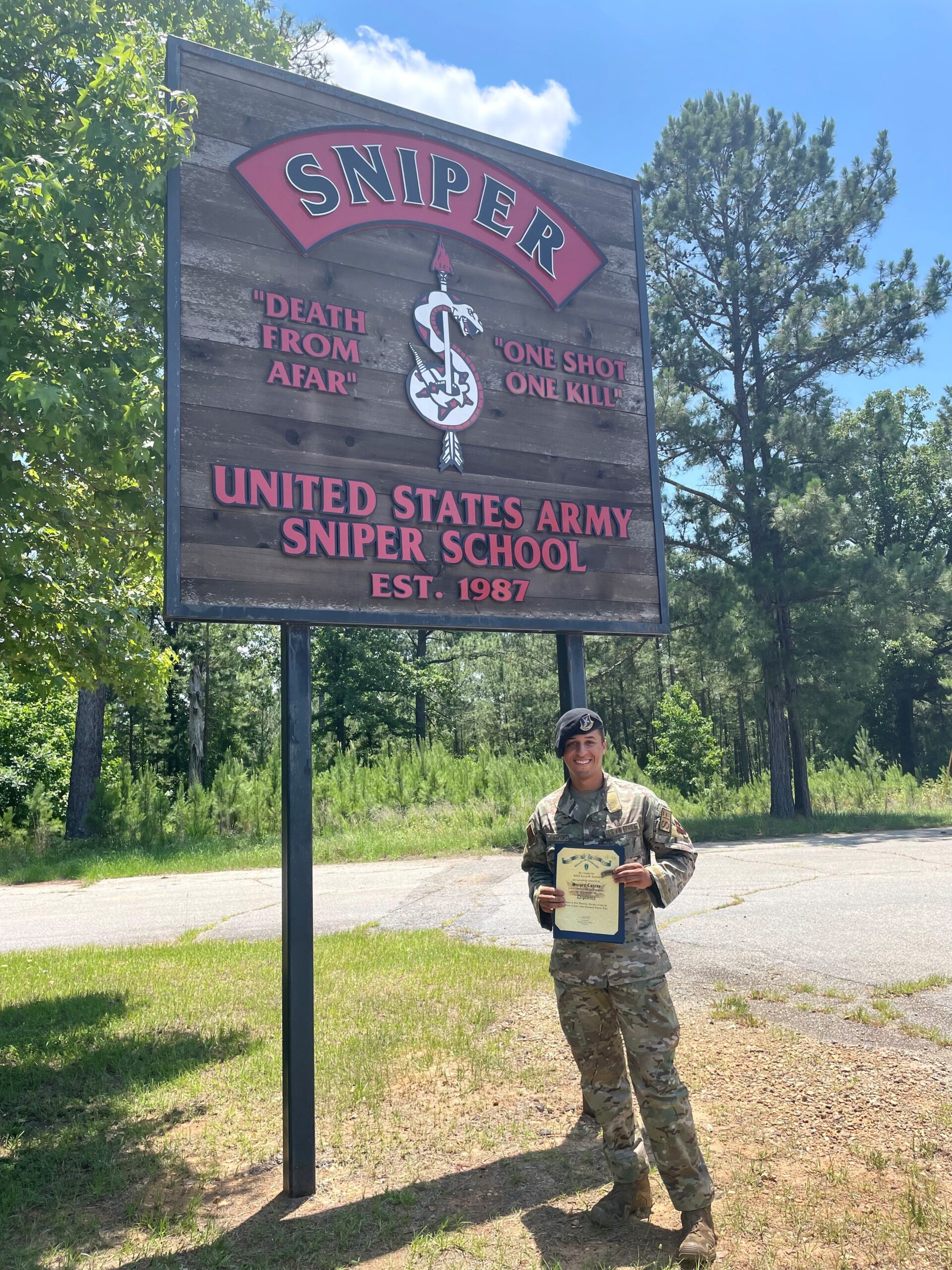
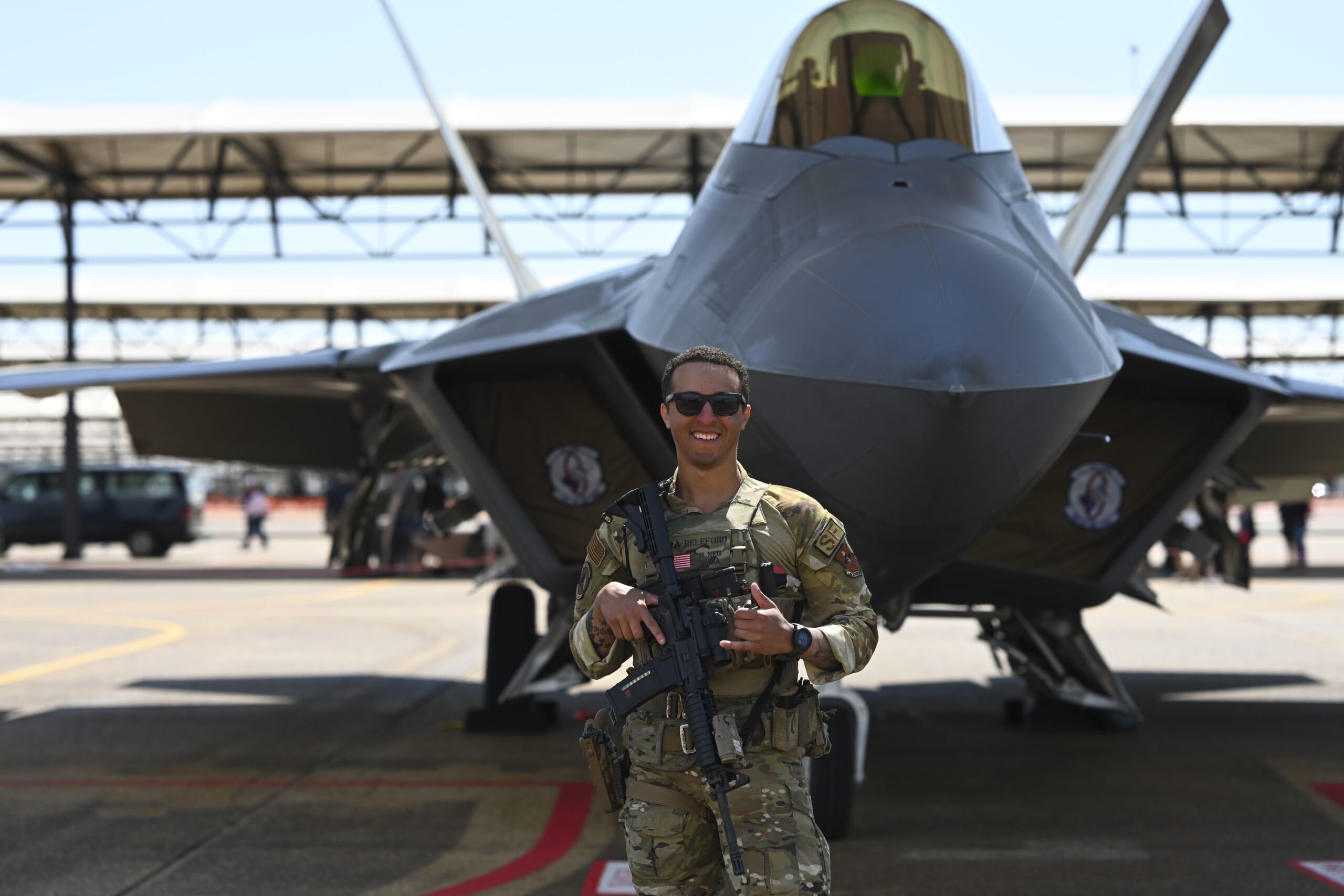
U.S. Air Force Senior Airman Tarriq Releford, 14th Security Forces Squadron, installation entry controller, was one of four Airmen chosen to represent the USAF at the highly selective, United States Army Sniper School, Apr. 17, 2022, at Fort Benning, Ga.

Releford is the only Airman from Columbus Air Force Base, Mississippi, selected to attend the course. The Airman is no stranger to working with snipers, as he has experience from a prior base.

“Releford was chosen because of his prior tactical experience, and for his weapons skills,” said Technical Sgt. Tanner Barber, 14th Security Forces Squadron non-commissioned officer in charge, antiterrorism section. “He continually strives to make the entire organization a better place with his positive, happy-go-lucky attitude and his willingness to train fellow airman on tactics that he has learned in other courses.”

U.S. Army Sniper School only allots a small percentage of their class slots to separate branches, so at any given time an Airman could find themselves being the only one there.

“Going into it I was super nervous,” said Releford. “Out of the 51 guys there, only four of us were Air Force. It was very humbling because you realize you aren’t the best. Everyone there had the skills it took to get selected.”

The 53 day course trains selected members with the sniper skills necessary to deliver long range precision fire and the collection of battlefield information. Day one, members complete the Army Combat Fitness Test (ACFT), and must qualify as “expert” during a weapons qualification test with the M4 Rifle.

“You are about 50 meters away, shooting an M4 with iron sights,” said Releford. “You have to shoot 5 rounds and group them together within an inch and a half. You will shoot 25 rounds all together in groups of 5 and 3 out of the 5 groupings must be perfect. The first day 17 people were dropped from the course.”

The course is designed to ensure all selectees gain familiarity with all Sniper Weapons System characteristics, components and functions.

“This course has made me a better Airman because if, or when, the occasion arises that a sniper is needed to complete the mission, I will be ready,” said Releford. “Now that I have sniper capabilities, I can go on sniper missions to reconnaissance and take out the bad guys from distances with accuracy and precision.”

Upon graduation each student has gained experience in planning and executing without compromise, mission context problem solving and can demonstrate a higher understanding of commander’s informational needs during planning and action phases. Releford successful graduated the Basic Sniper Course, Jun. 3, 2022.

“Our goal is to always promote an environment for development and enrichment,” said Barber. “Releford has been equipped with a skill-set that most Defenders do not get the opportunity to attain. The expectation is for him to pass along his experience gained during the class to fortify the marksmanship of all unit members, and offer the Wing a long-range standoff capability that did not exist prior to his attendance.”

By Airman 1st Class Jessica Haynie, 14th Flying Training Wing Public Affairs

Air Force Graduates Final Multi-Domain Warfare Officers, Operational Planning to be Incorporated into all-levels of PME

Monday, June 20th, 2022

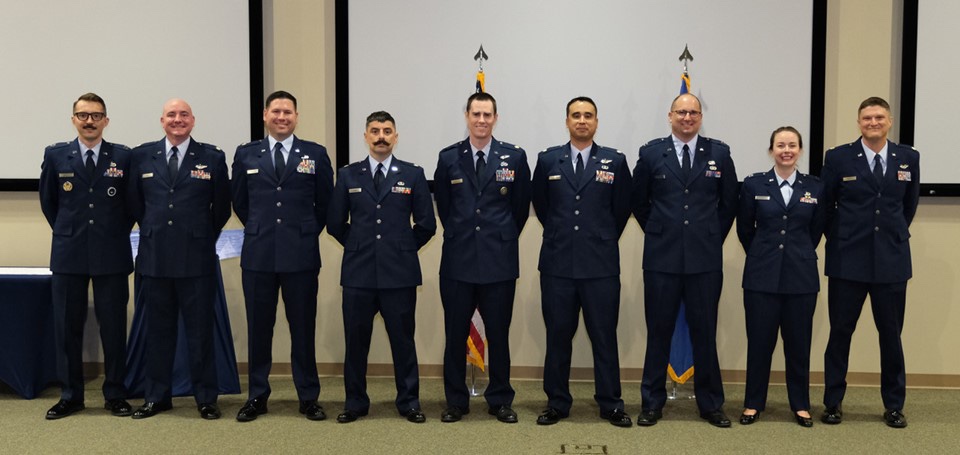
The 505th Command and Control Wing graduated the sixth and final class of Multi-Domain Warfare Officers, previously known by the Air Force Specialty Code designator “Thirteen Oscar,” during a live-streamed ceremony at Hurlburt Field, Florida, May 20.

For the eleven students, their graduation marks the culmination of a 20-week journey covering 840 hours of intensive joint academics and 310 hours of complex training exercises, which honed their operational-planning skills.

Reflecting the ever-changing operational environment, no two Thirteen Oscar, or 13O, courses were the same.  The five-month training course evolved with every class to ensure leading-edge training focused on preparing the students to lead the operational-planning efforts from competition through conflict. The course’s main focus areas included the command-and-control processes for the air components, employing the joint planning process for air and the joint air targeting cycle, exposure to Agile Combat Employment considerations, development of integrated air and missile defense plans, information operations, non-kinetic operations, and seminars with each joint and functional components.

The Multi-Domain Warfare Officer career field was created in 2019 in response to direction from previous Chief of Staff of the Air Force, Gen. Goldfein, to develop dedicated operational-level C2 experts responsible for integrating joint and coalition capabilities across multiple warfighting domains. The short-lived career field made U.S. Air Force-wide impacts, with 151 total force graduates being employed at 23 locations, including nine combatant command air components, in just under three years. The increased capability these high-quality operational-level planners brought to air components across the globe highlighted to the current CSAF, Gen. C.Q. Brown, the need to expand this expertise beyond a singular career field. As a result of the desire to increase the planning proficiency of all Airmen, the USAF decided to transition away from the AFSC and towards a USAF-wide robust training partnership between Air Combat Command and Air Education and Training Command.

“Even though Class 22A graduates were not awarded the AFSC, they still received exquisite training that will benefit them, the Air Force, and other joint services, as they will be able to lead joint, operational and air planning groups,” said Maj. Marvin-Ray Arida, 705th Training Squadron Thirteen Oscar course manager.  “For those that return to the tactical- or wing-level organizations, their new understanding of how their efforts affect the operational and strategic levels of war act as a force multiplier in and of itself.”

“The students in 13O Initial Skills Training Class 22A have shown great perseverance and flexibility throughout course execution, and I am very proud of their performance,” said Lt. Col. Eric Farquhar, 705th TRS Thirteen Oscar course director.  “The level and depth of training these graduates have received sets them apart from most of their peers in the air component.  As a result, they are uniquely suited to lead planning groups and incorporate a vast array of multi-domain capabilities to help solve very complicated problems.”

The 705th TRS continues to work with joint, coalition, and total force partners to expand the ability of the USAF to plan and execute air operations for a wide range of missions from foreign humanitarian aid and disaster relief to peer-threat major combat operations.

“In conversations with air component and functional component commanders throughout the Air Force, the unique skills and diverse backgrounds of the 13Os that we produced provide critical expertise in complex joint planning environments,” said Lt. Col. Marcus Bryan, 705th TRS commander.  

The eleven newly-graduated officers will now go forward to fill critical C2 billets in air operations centers, air operations groups, air support squadrons, training squadrons, and other air component staffs across the USAF, U.S. Northern Command and U.S. Forces Korea.

In each class, there were students whose performance warrants special recognition. The distinguished graduate of Class 22A was Capt. Benjamin Durdle; Michigan Air National Guard Capt. Megan Serrano was awarded the Academic Ace Award for the highest academic average in the class.

The Odysseus Leadership Award, based academic performance and excellence in leadership, followership, and overall contributions throughout the course, was also awarded to Capt. Benjamin Durdle.

“Playing a critical role in defining, building, and transitioning the 13O AFSC is a proud lineage for the 505th CCW,” said Col. Adam Shelton, 505th Test and Training Group commander.  “To answer the ever-increasing demand from the air components for personnel who can not only plan but also integrate capabilities across all-domains, the 505th CCW is assisting in the evolution of professional military education offerings with AETC/AU [Air University] while also enhancing the C2 Warriors Course as a future capstone offering.”     

To learn more about other command and control training, visit the following website: intelshare.intelink.gov/sites/C2/SitePages/Home.

SCUBAPRO SUNDAY – OPERATION Gunnerside

Sunday, June 19th, 2022

Only a few months after the discovery of nuclear fission on December 17, 1938, the military potential of nuclear power became apparent, and the race to develop an atomic bomb began.

Germany began its nuclear-weapons development program in April 1939. During their research for a nuclear reactor, the scientists discovered that deuterium oxide, also known as “heavy water” because it has a higher molecular weight than regular water, performed well as a moderator, allowing them to have greater control over the fission process than they had previously thought.

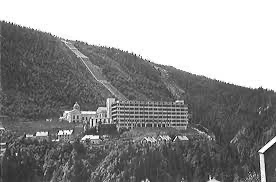
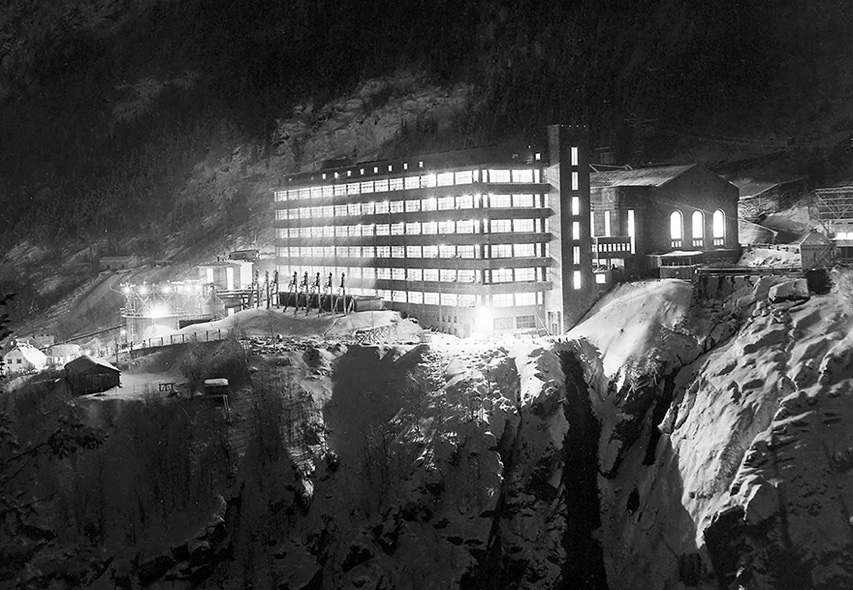
There was only one area on the planet capable of creating heavy water on an industrial scale: Norsk Hydro’s Vemork hydroelectric power plant in southern Norway, which was built in the 1960s. Heavy water was produced as a byproduct of the plant’s primary function, which was to manufacture ammonia for use in nitrogen fertilizer.

As early as January 1940, German officials inquired about the possibility of purchasing the whole Norsk Hydro heavy water storage and increasing the plant’s monthly output by a factor of ten to fulfill German demand.

This defeat only temporarily hampered the Nazis. Germany attacked Norway precisely one month later and seized the country by the beginning of June. Vemork, now under German control, raised its heavy-water output BY 50%.

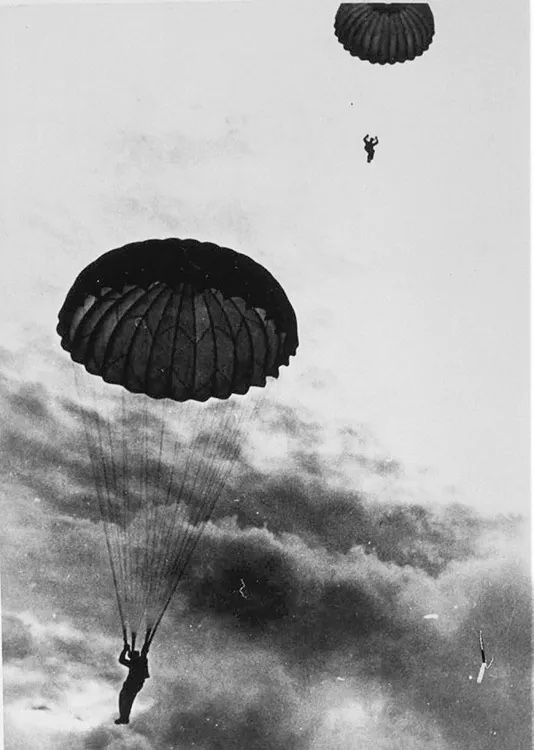
In collaboration with the Norwegian Resistance, the Special Operations Executive (SOE) devised a plan for two squads to be dropped into Norway simultaneously.

The first, codenamed Operation Grouse, was composed of four Norwegian commandos. They were to parachute into Norway, conduct reconnaissance, and secure a landing zone for a 34-man team of British commandos, codenamed Operation Freshman, who would land in two gliders and then assault the plant, destroying the 18 electrolysis cells that produced heavy water.

The launch of Grouse took place on October 18, 1942. During the next three weeks, the group trekked to Freshman’s intended landing place, which they finally reached on November 9. Operation Freshman was officially initiated on November 19. An aircraft carrying a glider crashed after experiencing mechanical issues and poor weather, killing the flying crew and several commandos on board. When the bomber towing the second glider decided to cancel the operation, the cable attached to it snapped, leading it to crash as well.

In response to Hitler’s Commando Order, survivors from both gliders were apprehended and executed by the Germans. The loss of 41 soldiers resulted in enhanced security at Vemork, including land mines on the surrounding mountains, and the Grouse crew was trapped and forced to fend for itself.

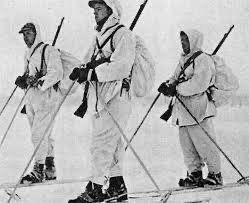
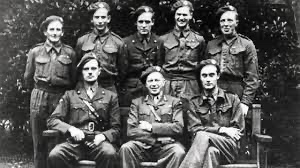
Norway’s Operation Gunnerside was planned to drop a team of six Norwegian commandos into Norway to hook up with members of the Grouse squad. They would be dressed as British soldiers, so the Germans would not retaliate against the locals if captured.

The unit parachuted into Norway on February 16, 1943; it would take them five days trekking thru waist-deep snow to join up with the Grouse team on February 22. On February 27, nine members of both teams embarked on their journey to Vemork, with one member remaining behind to connect with their counterparts in Great Britain.

On reaching the plant’s perimeter, they discovered that the bridge, which served as the only direct entry point into the complex, was now heavenly guarded because of the failed British raid. Currently, the only way in was to follow the railway (the only place not mined) and to reach the railway gate, and the team had to drop 350 feet into a riverine and then climb an almost 500-foot rock face to gain access to the complex’s rear entrance through a fenced railway gate. As soon as they arrived, the guards changed shifts, and they could cut their way through the barrier just after midnight.

Once inside, the group was divided into two sections. During the attack, five commandos took up positions outside the barracks, the bridge, and the main gate, while the remaining four entered the factory. In the building, they came across only one Norwegian employee, who didn’t put up any resistance or raise the alarm.

The target chamber, which was in the basement, was rigged with explosives. The members of the team were evacuated and were waiting for the blast. It was possible to escape because the room was so far underground, and the walls were so thick because there was little noise when the bombs went off, allowing the entire team to flee before the Germans discovered what had happened. As they rushed through the barracks, they could hear the muffled crump of the explosion ahead of them. At the factory, sirens began to blare shortly after. When German soldiers raced out of the barracks and workers scattered in confusion, the saboteurs had vanished out of the picture. A hunt involving 2,800 soldiers was conducted throughout the area. However, by the time the sun rose, the saboteurs had already embarked on a 280-mile journey across forests and mountains to neutral Sweden.

The commandos demolished the electrolysis cells and more than 500 kg of heavy water in the process. They could flee without firing a single shot or inflicting any fatalities on the other side. By May, the Germans had repaired the damage, but successive Allied air raids had prevented the company from ramping up production. Eventually, the Germans halted all heavy water production and attempted to divert the remaining supplies to the country’s borders.

First In-Air Refueling Conducted Between KC-46 and Air Force Special Operations Command CV-22

Sunday, June 19th, 2022

CANNON AIR FORCE BASE, N.M. —  

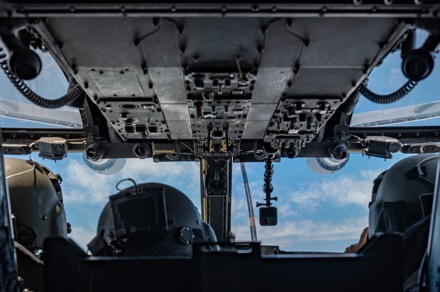
One of the most renowned aircraft in the Air Force’s fleet, the CV-22 Osprey tiltrotor aircraft combines the vertical flight qualities of a helicopter with the fuel efficiency and speed of a fixed wing plane. This combination makes it the ideal aircraft for conducting infiltration, exfiltration and resupply missions for special operations forces across long distances.

Now, thanks to pathfinding efforts from the 20th Special Operations Squadron and the 349th Air Refueling Squadron, assigned to the 22nd Air Refueling Wing at McConnell Air Force Base, Kansas, CV-22 aircrews across Air Force Special Operations Command can ensure their aircraft’s extended range by calling on Air Force Mobility Command’s newest tanker.

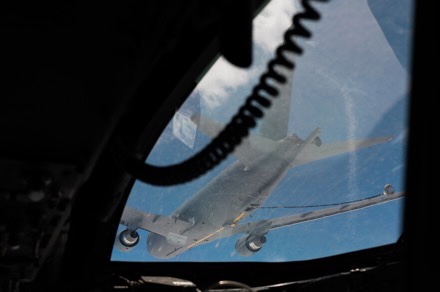
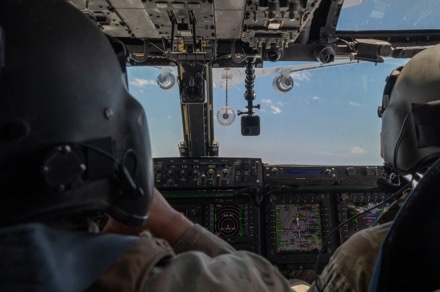
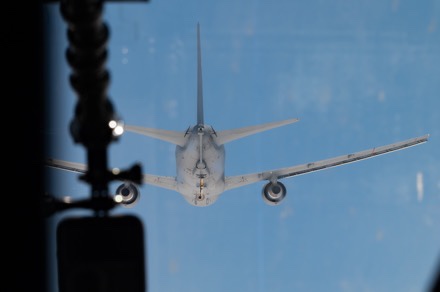
The 20 SOS & 349 ARS brought a CV-22 and KC-46 Pegasus tanker together for  in-air refueling training over Cannon, June 1, 2022. The flight was the first time a KC-46 refueled an AFSOC CV-22.

“This being the first time we operationally refueled with a KC-46, we were able to get some good video for training and development,” said Maj. Anthony Belviso, the CV-22 aircraft commander. “We were also able to get some understanding of what it feels like to fly behind the jet, and work on some different refueling techniques and practices”

One of the new capabilities the KC-46 brings to the table is a hose and drogue system in the same centerline position as it’s refueling boom pipe for fixed-wing aircraft.

“This capability allows the KC-46 to the refuel the Osprey and other drogue compatible receiver aircraft without any modification,” said Maj. Benjamin Chase, the KC-46 aircraft commander. “This is important because it enables flexibility in mission planning and limits the amount of maintenance it takes to prepare for air refueling, especially compared to most aircraft in the legacy tanker fleet.”

The KC-46 is not the only aircraft the CV-22 can receive fuel from while flying. However, its advanced refueling, communications and defensive systems, range and large fuel storage capabilities make it an ideal system for getting CV-22s the fuel they need, even in or near contested environments.

“The CV-22 is specifically designed for long range missions, and when you add on top of that an aerial refueling capability you can extend that distance to the point where you’re only limited by how long the crew is able to fly,” said Belviso. “The KC-46 can get enough fuel to get multiple CV-22s that much further both into and out of combat.”

“The 22 ARW has showcased the capability of the KC-46 to operate out of austere locations in recent exercises,” said Chase. “This is unique among tanker aircraft,  and replicates the types of environments the KC-46 to operate out of when refueling the Osprey in real-world missions.”

Another advantage of CV-22s being able to refuel from KC-46s is that it allows for faster refueling during real-world missions.

“Normally, an MC-130J aircraft would have to go up to a tanker to get fuel, then fly to us and give us that fuel, and would have to repeat that process several times,” said Belviso. “Because KC-46s can refuel us directly, we can go straight to them and get everything done much more quickly.”

With the successful training mission, both Chase and Belviso said it would provide the data and real-world experience the Air Force’s KC-46 and CV-22 fleets need to ensure the two airframes could work well together for a long time to come.

“The refueling of the CV-22 marks another success in the program,” said Chase. “It really paves the way for support of the Osprey and other aircraft in the future.”

“I’m glad we were able to get the mission done for the CV-22 community,” said Belviso. “I think this new capability will be tremendous for us going forward, so I’m very happy about that.”

By SSgt Max J. Daigle, 27th Special Operations Wing Public Affairs

‘Tropic Lightning’ Contributes to Soldier Performance Study

Saturday, June 18th, 2022

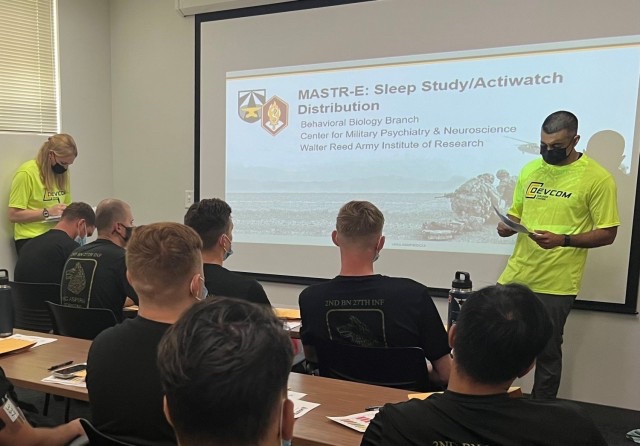
SCHOFIELD BARRACKS, Hawaii — Recently, Soldiers from the 25th Infantry Division volunteered for U.S. Army Combat Capabilities Development Command Soldier Center Measuring and Advancing Soldier Tactical Readiness and Effectiveness, or MASTR-E, program baselining study and 72-hour field study efforts.

The MASTR-E Baseline Team is comprised of members of the DEVCOM Soldier Center and partners at Aberdeen Test Center, Center for Applied Brain and Cognitive Sciences, DEVCOM Data and Analysis Center, Naval Health Research Center and Walter Reed Army Institute of Research, or WRAIR.

Soldiers with the 2nd Battalion, 27th Infantry Regiment, 3rd Brigade Combat Team, 25th Infantry Division volunteered to help the study, which objectively and holistically measures Soldier and squad performance by using a diverse set of metrics in order to capture and track cognitive, physical, social, emotional, and health status during extended live training exercises. The data collected will be used to identify the human dimension X-factors that reliably account for dismounted Soldier and small unit performance on fundamental warfighting tasks during sustained operations.

“Building a ready and resilient Army is a top priority. MASTR-E is a tool that helps the Army achieve this by providing vital information about our formations assisting leaders to optimize total Soldier performance,” said the Principal Deputy Assistant Secretary of the Army (Acquisition, Logistics & Technology), Mr. Young Bang. “Kudos to the 25th ID, DEVCOM [Soldier Center] and WRAIR Team for collaborating within the Army, industry and academia, to fit innovative solutions to help accomplish the Army’s priorities.”

As the partner of choice for multiple nations across — not just one or two time zones but over multiple time zones — leadership within the 25th Infantry Division is excited to participate in an innovative program that can provide tools to combat issues related to jet travel.

“The Wolfhounds are exceptionally excited and eager to work with the MASTR-E program to help gather and analyze small unit performance analytics that will help increase lethality and readiness across our fighting force,” said 2-27 Infantry Battalion Commander, Lt. Col. Michael Haith. “We recognize the importance of this study and how it will facilitate more focused and specific training progressions that will better prepare us for combat. As our environments and threats are ever-changing, it is crucial to remain adaptive and agile; this study will better equip us for these variations and we could not be more honored and motivated to lead the way.”

During this week’s baseline data collection, Soldiers performed a variety of tasks paired with training from WRAIR scientist Dr. Tina Burke and colleagues on strategies to combat jetlag. “Taking the proper steps to mitigate the risk associated with sleep loss, circadian misalignment, and fatigue can make the difference between mission success and failure,” said Dr. Burke.

“We have all these tools out there to measure Soldiers’ performance and by getting a better measure of performance we can get a better prediction of performance,” said DEVCOM Command Sgt. Maj. Bryan D. Barker. “Collaboration events like this give us a good solid baseline that provides important data that we can reference later in the program and in other studies.”

Data that will continue to be collected over the next few weeks as participants will wear a specifically designed watch up to the 72-hour field study taking place at Fort Devens, Massachusetts in June.

The DEVCOM Soldier Center is committed to discovering, developing and advancing science and technology solutions that ensure America’s warfighters are optimized, protected, and lethal. DEVCOM Soldier Center supports all of the Army’s modernization efforts, with the Soldier Lethality and Synthetic Training Environment Cross Functional Teams being the DEVCOM Soldier Center’s chief areas of focus.

The center’s science and engineering expertise are combined with collaborations with industry, DOD and academia to advance Soldier and squad performance. The center supports the Army as it transforms from being adaptive to driving innovation to support a multi-domain operations capable force of 2028 and a multi-domain operations ready force of 2035. DEVCOM Soldier Center is constantly working to strengthen Soldiers’ performance to increase readiness and support for warfighters who are organized, trained, and equipped for prompt and sustainable ground combat.

The 25th Infantry Division, ‘Tropic Lightning’, is America’s Pacific Division. Tropic Lightning provides the U.S. Indo-Pacific Command a uniquely tailorable force with the ability to rapidly respond to contingencies across the Pacific. Tropic Lightning soldiers – a reliable, credible, and disciplined force —– continuously work with partners and allies to prepare for shared challenges.

By Oliver Schuster

FirstSpear Friday Focus: Warrior East

Friday, June 17th, 2022

FirstSpear showcases at Warrior East

FirstSpear sets up shop at ADS Warrior Expo East in Virginia Beach on June 22-23, 2022, to showcase American Made equipment for today’s warfighter. Stop by booth #901 and check out our latest gear and technology.

For more information about FirstSpear equipment, check out FirstSpear.

Soldiers Get Hands-On Experience With New Tech During Combined Resolve

Friday, June 17th, 2022

GRAFENWOEHR, Germany — Combined Resolve 17 put an Army brigade and multinational units to the test on more than just their combat readiness and interoperability — the exercise brought future capabilities into the current fight.

Combined Resolve is a U.S. Army exercise consisting of 5,600 service members, Allies and partners from more than 10 countries, and is designed to assess units’ abilities to conduct combat operations effectively in a multi-domain battlespace. Combined Resolve 17 is scheduled to take place from May 20 to June 19, 2022.

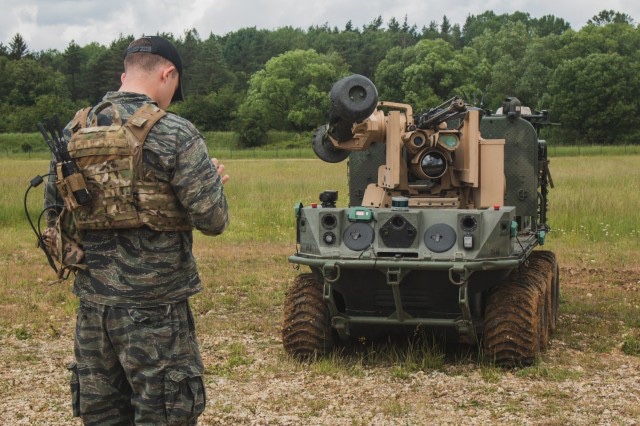
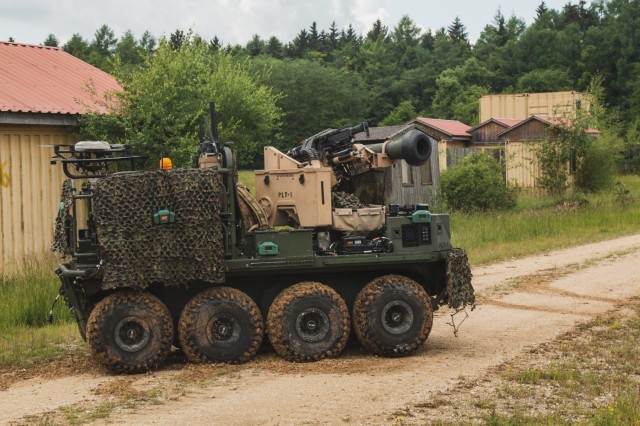
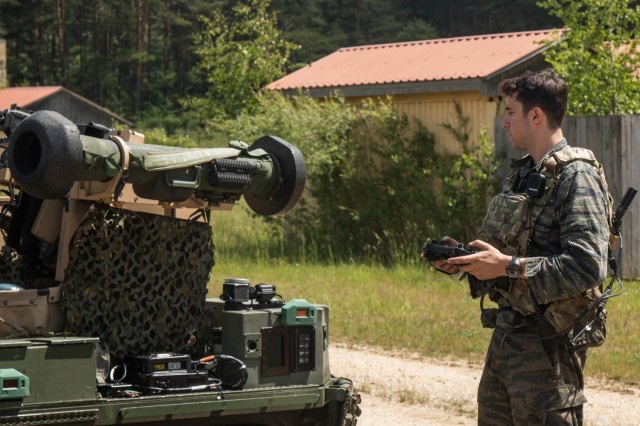
The 1st Battalion, 4th Infantry Regiment — serving as the opposing force in Combined Resolve — pitted robotic combat vehicles, or RCVs, against the 1st Armored Brigade Combat Team, 3rd Infantry Division and their partner nations in simulated combat.

The RCVs are part of Project Origin, an initiative in development as part of the Army’s modernization efforts from the Ground Vehicle Systems Center, or GVSC, under the Army Combat Capabilities Development Command. The program tests and experiments with autonomous ground vehicles to support Army maneuvers and provide a variety of load packages, depending on the situation.

This training provided Project Origin engineers with real-time feedback on the capability, utility, and combat effectiveness of the latest generation of RCVs. The vehicles are remote or autonomously controlled and designed to assist with a wide range of operations including long-range reconnaissance, concealment, electronic warfare, and autonomous resupply operations.

“Anytime we can get technology in [Soldiers’] hands and find out, right away, what they like, what they don’t like, helps us to not expend resources in the wrong areas,” said Todd Willert, an engineer with GVSC. “Being out here with the [Soldiers] is the most productive thing for the Army’s Robotic Combat Vehicle Program.”

Soldiers with the 1st Battalion, 4th Infantry Regiment have been working with Project Origin since the beginning of Combined Resolve 17, however the current iteration of RCVs they are training with have already been through two weeks of hands-on experimentation with the 1st Special Forces Group at Dugway Proving Ground, Utah.

“This is something I didn’t think we would be seeing in the [Infantry] as soon as we are,” said Sgt. Andrew Carmichael, Sniper section leader with 1st Battalion, 4th Infantry Regiment. “It’s definitely here to stay, so the quicker we can expose our allies and our own forces to this technology and how to implement and defend against it, is crucial in the next fight.”

Soldier feedback within multinational exercises inform Army modernization on requirements operating in the coalition environment, promoting interoperability and communicates strength of a combined U.S., Allied and partner force to shape the security environment. At the conclusion of Combined Resolve the RCVs will be taken to Grafenwoehr Training Area in order further test their capabilities and conduct live fire training.

For more information on visit the Combined Resolve DVIDS page.

By Spc Garrison Waites

Highly Decorated EOD Technician Retires from Elite Unit after Recovering from Paralysis

Thursday, June 16th, 2022

FORT BRAGG, N.C. — The most highly decorated explosive ordnance disposal, or EOD, technician in the history of an elite U.S. Army airborne EOD company recently retired after recovering from a combat-related gunshot wound that paralyzed him from the chest down.

Sgt. 1st Class Jeffery M. Dawson completed his legendary career with the 28th Ordnance Company (EOD), the Army’s only Special Operations-focused EOD company with handpicked and highly trained EOD Soldiers who support direct action missions around the world.

The Fort Bragg, North Carolina-based 28th EOD Company (Airborne) is part of the 192nd EOD Battalion, 52nd EOD Group and 20th Chemical, Biological, Radiological, Nuclear, Explosives (CBRNE) Command, the U.S. military’s premier all hazards formation.

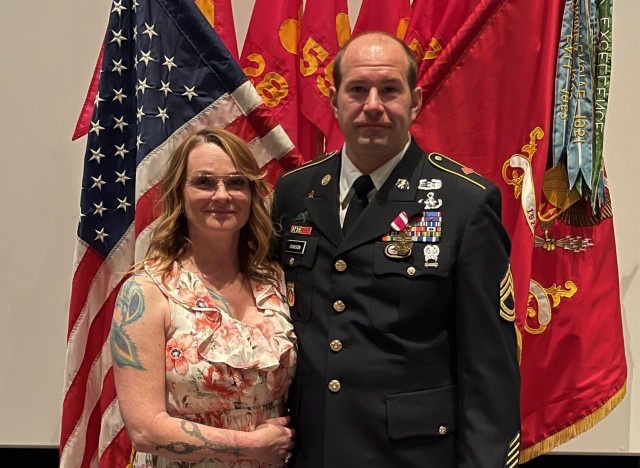
In an Army EOD community first, 75th Ranger Regiment Commander Col. Jim “JD” Kiersey and Command Sgt. Maj. Curt D. Donaldson attended his ceremony and upgraded Dawson’s status from an “honorary member” to a “distinguished member” of the Ranger Regiment.

Part of U.S. Army Special Operations Command, the 75th Ranger Regiment is the U.S. Army’s premier direct action light infantry force. The regiment can deploy one Ranger Battalion to hotspots around the world within 18 hours of notification.
A seasoned combat veteran who is originally from Coalville, Utah, Dawson deployed to Iraq with the 722nd EOD Company before being selected for the 28th EOD Company. During his six years with the 28th EOD Company, Dawson deployed to Afghanistan seven times.

Dawson said EOD technicians safeguarded forces and enabled operations during the Global War on Terror by confronting and defeating the enemy’s preferred weapon — the improvised explosive device. EOD forces have rendered safe more than 100,000 improvised explosive devices in Iraq and Afghanistan since 2006 and have trained thousands of host nation forces.

“During the Global War on Terror, IEDs and other complex explosive devices were at an all-time high. Many maneuver elements relied heavily on the skill and competency of EOD technicians. Not just from the Army but all services. Often times, the elements would embed EOD as an organic asset,” said Dawson. “I often overheard many members of the elements we’ve supported say that they would never go outside of the wire without EOD on the manifest. That’s what makes EOD techs so important to the military.”

During his career, Dawson defeated hundreds of explosive devices and earned the Purple Heart for combat injuries twice.

“As an EOD tech, the most memorable missions stand out because they were either really good or really bad,” said Dawson. “Working with special operations forces, you often find yourself in situations where the outcome can sway in either direction in a moment’s notice.”
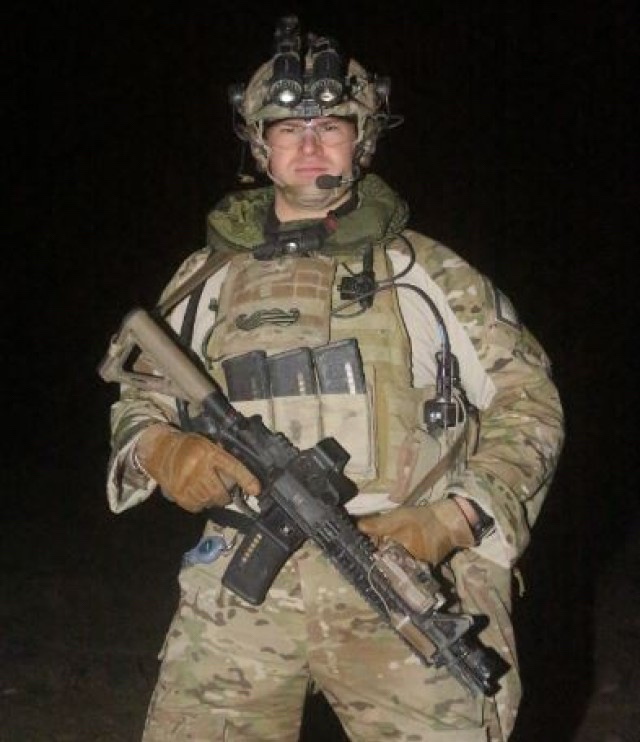
The missions that stand out the most for Dawson are the one where he earned the nation’s second highest military medal, the Distinguished Service Cross, and the mission that nearly ended his life and left him paralyzed from the chest down.

In Afghanistan on Oct. 5, 2013, Dawson participated in a mission to capture or kill a high value Taliban leader who was planning terror attacks.

“The IED threat was low and it was supposed to be a quick easy target,” Dawson said. “Upon infiltration everything changed in minutes.”

A fleeing insurgent detonated an explosive and killed a team member and the team’s multi-purpose canine, Jani.

Dawson soon realized that his team was surrounded by pressure plate IEDs. He halted the mission, located the improvised explosive devices and aided in the evacuation of dead and wounded Soldiers. Four U.S. Soldiers were killed by explosive devices during the mission.

Although seriously injured during two different explosions, Dawson worked in limited visibility to locate three confirmed pressure plate IEDs and six additional suspected devices. He then cleared a path to evacuate the fallen and wounded Soldiers.
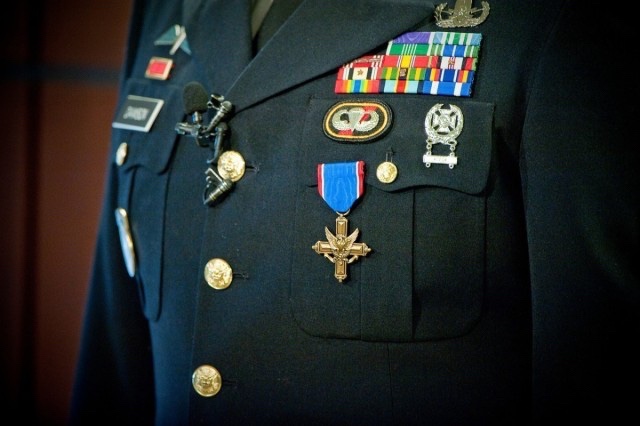
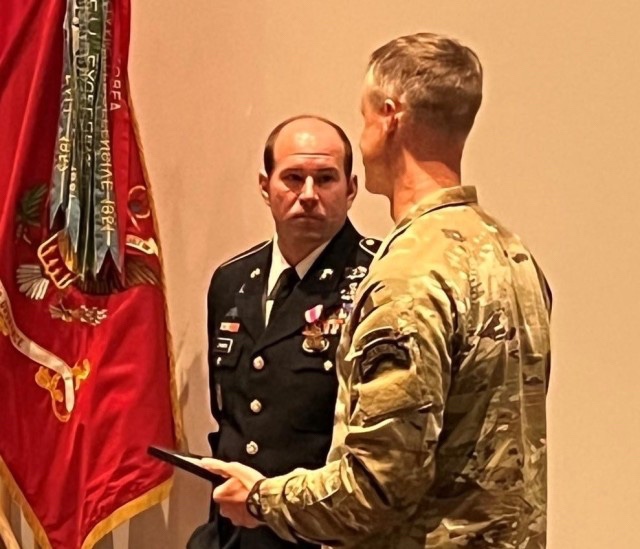
On Feb. 17, 2015, then-Army Vice Chief of Staff Gen. Daniel B. Allyn presented the Distinguished Service Cross to Dawson during a ceremony on Fort Benning, Georgia. Sgt. Bryan C. Anderson, the Ranger Platoon medic on the same mission, also received the Distinguished Service Cross during the ceremony. The 75th Ranger Regiment submitted them for the award.

On another mission in Afghanistan in July 2019, Dawson was shot and seriously wounded.

“When I was shot, it came in my right arm and came to rest upon impacting and fracturing my left shoulder blade, collapsing both lungs and exposing my spinal cord in the process,” said Dawson. “I’m thankful for the expertise of the medic that performed life-saving treatment which allowed me the opportunity to live despite all odds.”

The medic saved Dawson by using a chest tube to inflate his collapsing lungs.

Dawson was medically evacuated to Germany for surgery and then to Walter Reed National Military Medical Center in Bethesda, Maryland. He moved next to James A. Haley Veterans Hospital in Tampa, Florida, a facility that specializes in spinal injuries.

Working with physical therapists and using the tough and tenacious “never quit” approach that made him successful on the battlefield, Dawson stood again and then he walked again.
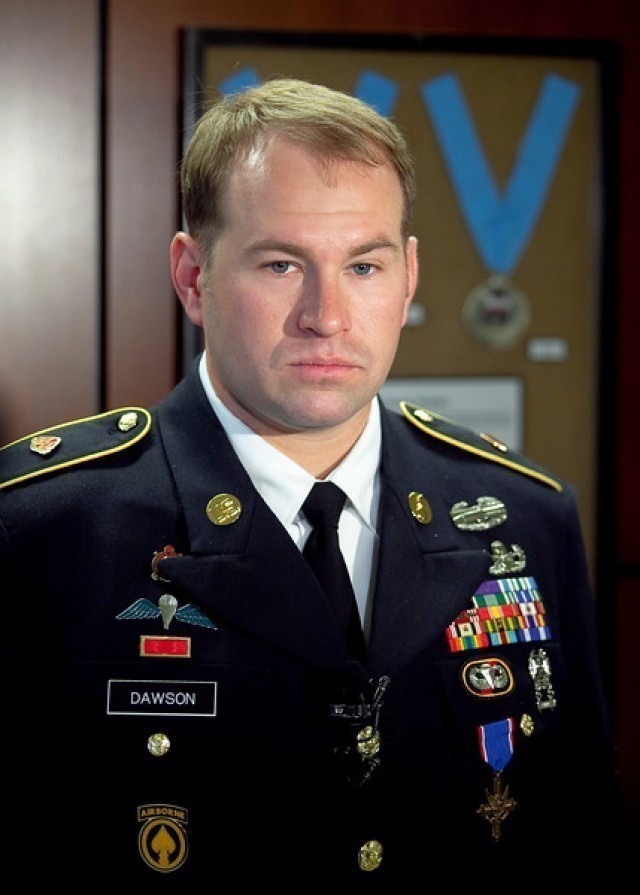
Less than a year after being severely wounded, Dawson took on 5K and walked 3.1 miles unassisted. Since then, he has completed a 6.2-mile walk and a triathlon with a quarter-mile swim, 11-mile bike ride and 3.1 mile walk without assistive devices.

“The key to my recovery was mostly mental,” said Dawson. “I lost control of everything from the chest down, with that I lost any physical conditioning prior to my injury. I essentially had to start over as a newborn in a 33-year-old man’s body.

“Since I am still trying to relearn everything, I have to keep a positive mental attitude so I can continue to progress,” said Dawson.

After returning home to North Carolina, Dawson has taken time to focus on healing the visible and invisible scars from multiple combat missions. “I still remain active as much as I can,” said Dawson. “I enjoy hunting, fishing, hiking and other outdoor activities that get my heart pumping. In the future, I would like to complete a mud run.”

He has enrolled in college and he is looking for opportunities to help other veterans.

Dawson said the highlight of his career was being recognized by the 75th Ranger Regiment for actions on the battlefield.

“I was surrounded by people who wanted to be there,” said Dawson. “It has been an honor working with the 75th Ranger Regiment. Their expertise and professionalism set the standard for others to look up to.

“What makes the 28th a great company is that it is filled with specially selected and well trained Soldiers who will never accept defeat and never fail to complete the mission. Soldiers who have the willingness to shoulder more than their share of the task, whatever it may be, one hundred percent and then some,” said Dawson. “To be successful in the 28th, you need to be in shape, comfortable working autonomously, intelligent, and most importantly, you must be trainable.”

Maj. Stephen M. Knudsen, the commanding officer of the 28th EOD Company, said his company has always relied on the expertise, grit and determination of noncommissioned officers like Dawson to support Special Forces units at the tip of the spear around the world.

“The 28th is a one-of-a-kind formation with forward elements continuously deployed throughout the entirety of its 13-year history,” said Knudsen. “It provides a painfully light and disproportionally lethal airborne EOD capability to the 75th Ranger Regiment and Special Operations Command during crisis response, raid and joint forcible entry operations.”

Knudsen, a 14-year veteran from Sutter Creek, California, has deployed to Iraq once and Afghanistan three times. The 28th EOD Company commander said Dawson had never let his heroic deeds and storied service in the Explosive Ordnance Disposal community go to his head.

“The thing that stands out about Sgt. 1st Class Dawson is how approachable and down to earth he is,” said Knudsen. “He’s a legend in the career field, yet he’s such a light hearted, funny and genuine person. If there was anyone who has earned the right to be super arrogant or macho, it’s him, but instead you’re greeted by a humble guy with a warm grin wearing a cat shirt.”

By Walter T. Ham IV