Tropo Performance

Archive for the ‘Guest Post’ Category

Carry Compact this Medical Monday

Monday, April 18th, 2022

SWANSBORO, N.C. – April 18, 2022 – High Speed Gear® would like to take a moment to remind its customers what matters most.

Throughout the tactical community, there are many assets to defending your life. However, some of the most important items are the ones that can save a life. High Speed Gear® offers many options for carrying medical equipment on your person. Some of the more low-profile options would be the ReViveTM Medical Pouch and the Bleeder/Blowout PouchTM.

Both the ReViveTM Medical Pouch and the Bleeder/Blowout PouchTM offer an individual a quick access pouch to release life-saving medical equipment. The pouch can fit all necessary medical equipment (not included) to treat a small-arms gunshot wound.

“The design of these pouches, was to make sure users had one handed, quick access to the most important supplies while being extremely compact to save space.” Said HSGI® Senior Designer, Daniel Chaney.

The benefits of these pouches are considered greatly within the tactical industry. Both the ReViveTM Medical Pouch and the Bleeder/Blowout PouchTM were awarded gold status by the National Tactical Officers Association (NTOA). These compact medical kits are not only space savers, but also money savers with the retail cost of the ReViveTM being $76 and the Bleeder at only $44.

For more information for the ReViveTM Medical Pouch, visit: ReViveTM Medical Pouch

If you would like to see more about the Bleeder/Blowout PouchTM, please see the link here: Bleeder/Blowout Pouch

U.S. Army Aviation and Missile Command’s Advance Planning Briefings to Industry Offers Corporate Partners ‘Predictability, Situational Understanding’

Monday, April 18th, 2022

REDSTONE ARSENAL, Ala. — The U.S. Army Aviation and Missile Command hosted the Redstone Arsenal Center of Excellence — Advance Planning Briefings to Industry March 22-24 at Redstone Arsenal, Alabama.

The annual event offered transparency in acquisition strategies by providing long-range technology and capability development objectives to members of industry. It also showcased potential business opportunities available with various Team Redstone organizations.

Due to COVID-19 conditions, the event was held virtually again. Although the auditorium was nearly empty, approximately 1,000 participants tuned into the three-day forum, which was packed with presentations from senior leaders throughout the federal government, as well as civic leaders, such as Alabama Senator Tommy Tuberville, Huntsville Mayor Tommy Battle, Madison Mayor Paul Finley and Madison County Commissioner Dale Strong.

Army Materiel Command Commanding General Gen. Edward Daly was the keynote speaker and described the APBI as critical and beneficial, as it provides predictability and situational understanding to the corporate sector.

Daly outlined the four Redstone Arsenal core competencies of logistics services; space operations and missile defense; research, development, test and evaluation; and intelligence and homeland defense.

“Those are what we are focused on during APBI,” he said. “Making sure the industry partners have predictability and situational understanding on where we are going depending on what they do in support of those areas.”

He said the theme of this year’s event, “government-industry partnership to support large-scale combat operations,” is more important than ever due to the real-world events occurring in Europe.

Daly said his priorities are aligned to those of the Secretary and Chief of Staff of the Army and noted that industry partners could assist in those areas, such as modernization and identifying vulnerabilities in the supply chain — not just shortfalls and gaps, but also quality and cyber threats. His final message to the virtual audience was a reminder that when it comes to industry, the size of the company does not matter.

“This is not just about large industry partners; this is also about small businesses,” Daly said. “We have balanced this approach very carefully so that so we can simultaneously take care of small business efforts, as well as our corporate partners. We have a common bottom line, and that’s the support of the warfighter — that’s our single, common bond — our ability in those partnerships to take the right actions to support the warfighter.”

More than half of the 73 tenants that call Redstone Arsenal home spoke at the 2022 APBI, and event organizer, AMCOM Ombudsman Eric Lampkin said the event has steadily grown each year. With that growth, he said the virtual option, while necessitated for the last two events due to the COVID-19 pandemic, will remain as an option, even when APBI returns to in-person attendees.

“Next year we anticipate doing a hybrid of both virtual and in-person,” Lampkin said. “The virtual option allows attendees to dial-in when it is relevant to their needs and as their time allows. However, nothing beats the ability to shake hands, meet face-to-face and network in-person, especially when it comes to the industry matchmaking event.”

The second day of APBI traditionally features a matchmaking forum, which allows small businesses to meet with large corporations, federal contractors and government organizations. Lampkin said hosting the matchmaking event virtually was challenging because you do not get those personal connections, so he looks forward to the crowds returning to the Bob Jones Auditorium next year.

Rodney Pennywell, who assisted Lampkin by coordinating the civic leadership involvement, attended the event as a small business owner. He said when he started attending APBI six years ago, the structure and focus were different; they did not address the needs of small businesses or provide opportunities for how industry could assist Redstone organizations.

He said, “Over the years, the presenters have dramatically tailored their message to the industrial base, particularly to small businesses, ensuring that they better understand RSA missions and related business opportunities. These presentations now truly address industry needs by giving advance notice of where the federal government requires industry assistance with developing innovative technologies and solutions to achieve long-term goals and objectives.”

Former AMCOM commander Jim Rogers works for a large defense industry partner and while he was not able to attend APBI this year, as the vice president of Army programs for his company, he encouraged employees from all over the U.S. to register and tune into the virtual event.

Rogers concurs with Pennywell. He said APBI is much more robust than it was when he served at Redstone 2010 through 2012.

“Our business areas are from the west coast to the east coast, and it’s not only the people who have interest in doing business with Redstone, but also our supplier diversity, which is the folks who are looking for small businesses who want to do business with us. So you have the whole gamut of people on the line listening about what is going on at Redstone Arsenal.”

The next APBI will be held in spring 2023 and Lampkin said the planning will begin about eight months prior to the kickoff. He said he hopes to be in person next year, with a virtual option for attendees, but regardless of the forum, the intent of the event will not change, which is securing partnerships between the Department of Defense and the private sector.

“It’s important that we communicate with industry so they know where to direct their energy and resources,” Lampkin said. “It’s value added to them and it’s also value added to us on the government side, because we can communicate the technology we are looking for, what we are trying to do, where we see ourselves in five years and where we need industry to help us get these things done.”

Lampkin added, “We have to have industry continuously engaged in the organic industrial base, continuously engaged in the defense department and continuously delivering technology so we can remain ahead of our near-peer competitors.”

By Michelle Gordon

SCUBAPRO Sunday – HMS Conqueror

Sunday, April 17th, 2022

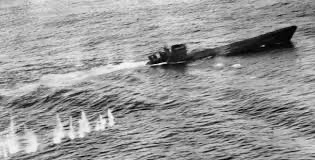
HMS Conqueror was a nuclear-powered attack submarine and one of the Royal Navy’s most powerful ships in the 1980s. As part of the Falkland Islands Re-taken operation, she sank the Argentine Navy light cruiser ARA General Belgrano. It was only the second submarine torpedo sinking since WWII.

After returning to the U.K., the Conqueror would be tasked to steal a secret sonar array from a Soviet Navy ship. It was code-named Operation Barmaid, and the nuclear-powered sub would be fitted with a special pair of remote-controlled heavy steel cutting blades and television cameras, so they could sneak up on a Russian spy trawler towing a sonar array and just cut it off and then float away.

During the Cold war, the U.S. and the U.K. had a significant advantage over the Soviets regarding submarine warfare. We had two different types of SONAR, Active and passive. Active sonar sends out pings, which travel through the ocean before returning to the ship that sent them. Active sonar pings and machinery noise are detected by passive sonar. Passive sonar is challenging to use effectively due to the ship’s noise, particularly the propeller noise. A mile or more behind a boat, passive sonars are used. The easiest way to put it active SONAR is to put pings out and wait to hear if it bounces off anything. Passive is when you drag a cable behind you that has a bunch of microphones(hydrophones) on it, and you listen.

They noticed that Russian submarines were becoming quieter and faster in the late 1970s and feared that they were not making enough progress in naval technology. Because the array itself made no noise, learning about it required sitting in front of one and dismantling it. So, the U.S. and U.K. decided to steal one to see if the one the Soviets had was anything like the one they used. The plan was to sneak up behind the towed ship, a Polish intelligence vessel, and use the pincers to free the array.

It was a complicated plan. First, the Conqueror, led by Captain Christopher Wreford-Brown, had to intercept a Soviet intelligence ship in international waters. Detected would have meant immediate, lethal retribution to cut through a three-inch-thick steel cable.

Second, the sub had to operate while both ships were moving. Third, the submarine had to avoid the passive SONAR array and remove it from the trawler without being seen.

The submarine was ordered to steal a two-mile string of hydrophones from a Polish-flagged spy trawler near Russian waters. Known as AGIs (Auxiliary General Intelligence), these trawlers were common during the Cold War, often disguised as fishing trawlers. But most had no fishing nets.

They used American-made pincers to make it look like it had snagged and been torn off accidentally; it would make a lot of small compression-type cuts and not just one straight throw cut again so it would look like it was ripped off and not cut. The Conqueror had to enter the ship’s blind spot and cut the cable just yards from the vessel and its propeller.

It was on station for a while during the cutting phase, all nonessential equipment was turned off, and all hands were not allowed to move from their assigned stations. Once the cable was cut, the sub started to sink from the extra weight of the cable, and the crew had to allow this to happen until they could get away from the trawler. Once they were far enough away, the Conqueror crew sent out divers to retrieve the cable after being sent to the U.S. for analysis.

According to Stuart Prebble’s book Secrets of the Conqueror, one minor miscalculation could have spelled disaster for the entire operation.

‘The control room was tense,’ said one crew member. We expected to be discovered at any time and were prepared to flee.’

The Conqueror had twice attempted to cut the cable from the boat before succeeding in August 1982. It did not take the U.S. long to realize that the cable was made to the specification as the ones used by the U.S. and U.K. It is believed that John Walker, who spied on the U.S. for the Russians from 1967-1985, was the person that gave them the information.

Army Units Train for Nuclear Forensics Mission During Exercise Prominent Hunt

Saturday, April 16th, 2022

BETHANY BEACH, Del. — Highly specialized American Army units from the U.S. Department of Defense’s premier all hazards command trained for interagency nuclear forensics missions during Exercise Prominent Hunt at Bethany Beach, Delaware, April 4-7.

The 20th Chemical, Biological, Radiological, Nuclear, Explosives Command’s Nuclear Disablement Team 2 and 3rd CBRNE Response Team qualified to serve as a part of the National Technical Nuclear Forensics Ground Collection Task Force at the conclusion of Prominent Hunt.

NTNF members who have recently served on prepare-to-deploy orders for the task force — including members of NDT 3, 2nd CRT from the 46th Chemical Company, Army Public Health Center and AFTAC — served as observers and controllers during the exercise.

Soldiers from the Joint Base Lewis-McChord, Washington-based 3rd CBRNE Response Team, 9th Chemical Company, trained for their NTNF mission of collecting ground samples through crawl, walk and run phases.

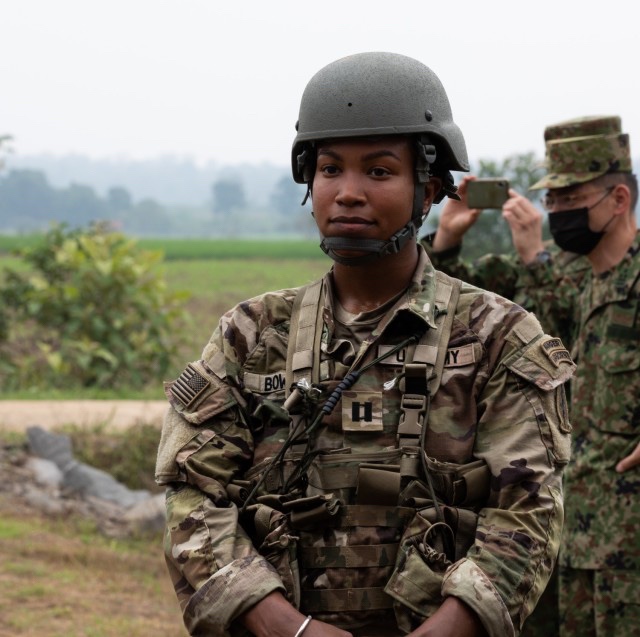
“Prominent Hunt promotes tactical and operational readiness to react in a nuclear emergency to meet the Army’s current demands,” said 1st Lt. Samantha K. Roberson, the team leader for CRT 3. “This mission specifically gives our Soldiers a further understanding on the radiation and nuclear portion of our mission-essential tasks. These lessons they can internalize and apply to future missions and carry on to their future Soldiers.”

According to Roberson, CRTs have to stay ready for all four weapons of mass destruction threats: chemical, biological, radiological and nuclear.

“This task force gives us a rare opportunity to exercise our radiological and nuclear capabilities. In this particular mission, we stress our ground sampling and escort tasks alongside the FBI and Department of Energy to create a joint task force,” said Roberson.

A former enlisted Soldier from Baton Rouge, Louisiana, Roberson was commissioned into the U.S. Army Chemical Corps in August 2019 after earning a bachelor’s degree in Environmental Science and Toxicity from the University of Louisiana at Lafayette, Louisiana.

“I felt drawn to the Chemical Corps as it naturally pairs with my degree,” said Roberson. “The Chemical Corps has provided me with the opportunity to learn more of what I’m passionate about, while protecting my fellow Soldiers from any CBRN threats.”

NDTs directly contribute to the nation’s strategic deterrence by staying ready to exploit and disable nuclear and radiological WMD infrastructure and components to deny near-term capability to adversaries. They also facilitate follow-on WMD elimination operations.

As the U.S. Department of Defense’s nuclear subject matter experts, Nuclear Disablement Teams serve as an informed interface between the CBRNE Response Team and the Department of Energy technical experts. The U.S. Army’s three Nuclear Disablement Teams — NDT 1 “Manhattan,” NDT 2 “Iron Maiden” and NDT 3 “Vandals” — are all stationed on Aberdeen Proving Ground, Maryland.

Maj. Stacey M. Yarborough, the deputy team leader for the Nuclear Disablement 3, served as an observer during the exercise.

“The NDTs are the DoD component lead,” said Yarborough. “We exercise mission command over elements from a CBRNE Reconnaissance Team, the Air Force Technical Applications Center and augmentations from the 20th CBRNE Headquarters.”

Yarborough said NDTs plan and battle track ground collection missions through a variety of Department of Defense communication systems.

“Our Medical Science Officer and Health Physics Technician noncommissioned officers monitor all members of the ground collection team for radiation exposure forward of the DoE hotline,” said Yarborough, a Nuclear and Countering Weapons of Mass Destruction officer from Felton, Delaware.


Lt. Col. Ronald C. Lenker, the team leader for NDT 2, served as the task force leader during exercise, a role usually reserved for an FBI Special Agent.

“The Ground Collection Task Force is led by the FBI as the task force leader and the Department of Energy also provides a deputy task force leader,” said Lenker. “In this particular scenario, no FBI agent was available, so I’m the acting task force leader for this exercise.”

An 18-year Army veteran from Wiconisco, Pennsylvania, who has deployed to Kuwait and Iraq, Lenker has participated in Exercise Prominent Hunt six times, including three exercises as a player and three as an observer and controller.

“Prominent Hunt is extremely important to the NTNF GCTF,” said Lenker. “This exercise demonstrates several agencies from the federal government can come together, swiftly form a cohesive task force and accomplish the mission In this case, attribution for the detonation of a terrorist initiated improvised nuclear device.”

Lenker said the task force came together to navigate around obstacles during the exercise. When one system went down, the operations team used a joint mapping tool in Humvee to track the plume of a simulated detonation.

“The highlight for me is seeing my Soldier and Airman teammates overcoming challenges as they arise,” said Lenker. “It’s this type of problem solving skills that set our military personnel apart from any other military in the world in my opinion.”

Story by Walter Ham

Photos by Marshall R Mason

??????????

As a part of an interagency task force lead by the FBI, the National Technical Nuclear Forensics Ground Collection Task Force gathers and packages samples of radioactive fallout that enable partner agencies to determine the source.

Headquartered on Aberdeen Proving Ground, Maryland, the 20th CBRNE Command is home to 75 percent of the U.S. Army’s active-duty explosive ordnance disposal technicians and chemical, biological, radiological, nuclear specialists, as well as the 1st Area Medical Laboratory, CBRNE Analytical and Remediation Activity, five Weapons of Mass Destruction Coordination Teams and three Nuclear Disablement Teams.

From 19 bases in 16 states, Soldiers and civilians from the 20th CBRNE Command deploy to confront and defeat the world’s most dangerous hazards during joint, interagency and allied operations around the world.

Infantry Week Highlights Soldiers’ Combat-Readiness

Saturday, April 16th, 2022

FORT BENNING, Ga. — U.S. service members throughout the Department of Defense, along with partner nations, converged at Fort Benning, Georgia, April 4-11 to compete during U.S. Army Infantry Week.

Infantry Week supports service members’ readiness by providing a controlled, high-pressure environment to validate tactics, techniques and procedures, test the latest doctrine, highlight Infantry initiatives and build esprit de corps through competition and camaraderie.

An annual event hosted by the U.S. Army Infantry School, Infantry Week is the venue for some of the most physically and mentally demanding challenges any Soldier can face in a U.S. Army competition.

Infantry Week is comprised of three events: the International Sniper Competition, the All-Army Lacerda Cup Combatives Competition and the Best Ranger Competition.

The week kicked off with the International Sniper Competition where teams competed in a three-day test of precision, technique and teamwork.

Instructors from the U.S. Army Infantry School designed a gauntlet that challenged each three-person team’s ability to work together within a range of sniper skills. Events included long-range marksmanship, observation, reconnaissance, communications and the ability to move with stealth.

The sniper team from U.S. Army 2nd Special Warfare Training Group (Airborne), based at Fort Bragg, North Carolina, earned the title of the world’s best sniper team.

The All-Army Lacerda Cup Combatives Competition features teams of eight individuals from across the Army who competed in a three-day event, hand-to-hand, for the tournament titles. Soldiers went in head-to-head matches against opponents in their respective weight classes.

The competition enhances unit combat readiness by building Soldiers’ personal courage, confidence and resiliency as well as situational responsiveness to close quarters’ threats in the operational environment.

U.S. Army Staff Sgt. Sharon Jacobson, from Colorado Springs, Colorado, became the first female noncommissioned officer to win the Lacerda Cup Combatives Competition.

“It’s an honor. It’s amazing. I’m the first NCO enlisted female Soldier to do it. It feels really good. I’m really proud of myself,” said Jacobson. “These competitions push Soldiers and NCOs to their limits both mentally and physically.”

This year, U.S. Army Ranger-qualified two-person teams competed in the David E. Grange Jr. Best Ranger Competition. The grueling 60-hour event tested each team’s physical, mental, technical and tactical skills. Back-to-back events featured weapons firing, extended foot marches, land-navigation courses and Ranger-specific tasks.

The winners of the 2022 David E. Grange Jr. Best Ranger Competition representing the 75th Ranger Regiment were Capts. Joshua Corson and Tymothy Boyle.

Corson highlighted a lesson he can bring back to his unit. “Competing … brings back the drive to want to compete, the drive to want to win, the drive to do better every day and not give up,” said Corson.

Boyle spoke on why winning the Best Ranger Competition matters to him. ‘We have to go as hard as we can, we have to try to win because that is what our job is because we owe it to everybody we represent,” said Boyle.

The fierce competition coupled with camaraderie displayed throughout the seven-day event made this Infantry Week an incredibly successful event.

Story by Alexander Gago

Photos by Patrick A. Albright, Alexander Gago, and Markeith Horace.

Thai Cave Rescue Mission – MSgt Ken O’Brien at NMUSAF

Friday, April 15th, 2022

Featured guest speaker, Master Sgt. Ken O’Brien, shared his experience in the Thai Cave Rescue during the Humanitarian Exhibit opening at the National Museum of the USAF. O’Brien played an instrumental role in the Thailand Cave rescue mission. He was essential in creating the rescue plan, which placed himself as the furthest American inside the cave. During the mission, he also led the effort to retrieve and successfully resuscitate a Thai Navy SEAL. His team’s heroic efforts led to the rescue of 13 Thai civilians.

FirstSpear Friday Focus: NEW Halifax Jacket

Friday, April 15th, 2022

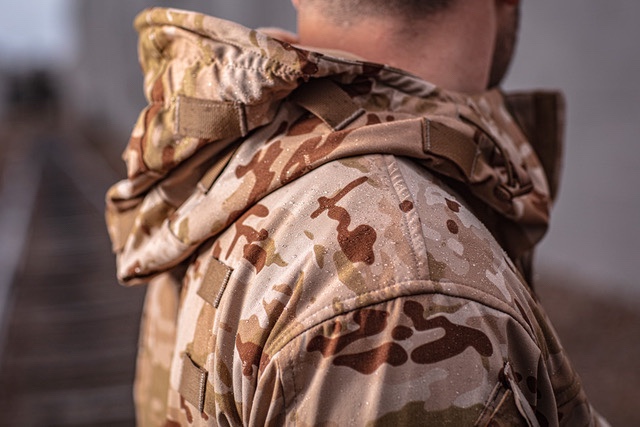
A tip of the hat to its namesake, the Halifax Gibbet (guillotine), this “headless” or hoodless Wind Cheater has all the essential features covered. Soft and quiet with a Durable Water Repellant (DWR) finish, it breathes like a T-shirt, sheds wind, and dries very quickly.

• Ultralight breathable shell
• Durable Water Repellent (DWR) Finish
• Hoodless
• Made in USA

This is not a rain proof jacket, but it will shed some moisture thanks to the DWR coating and will dry very quickly. Great compression and features bungees at the bottom to cinch the jacket tightly. A longer tail in the back is perfect for range days and keeping you out of the elements.


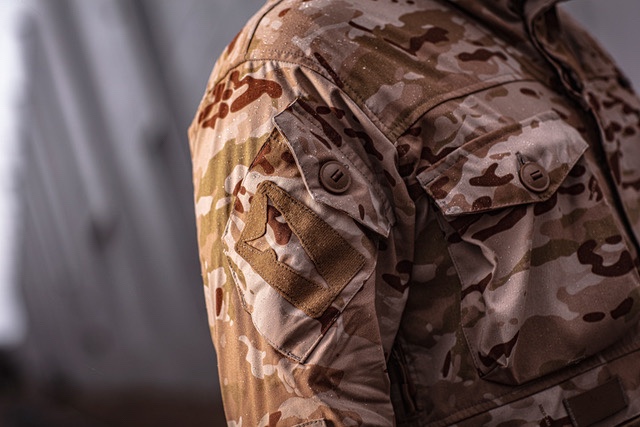
It has sleek, large bicep pockets that will fit your essentials. The Halifax Jacket is “true to fit”, your t-shirt size is your jacket size. If you wear a large shirt and don’t plan to layer heavily underneath, go with a large Halifax Jacket. The sizing is also identical to our popular Wind Cheater jacket.

Available now in black and manatee! https://www.first-spear.com/halifax-jacket

Welcome to the Jungle: Special Warfare Airmen Acclimate to Indo-Pacific Environment

Friday, April 15th, 2022

WAHIAWA, Hawaii (AFNS) —  

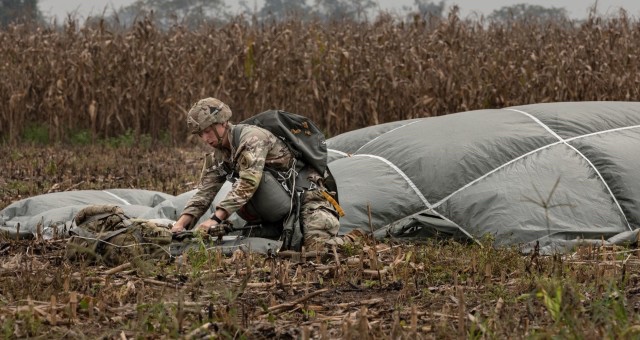
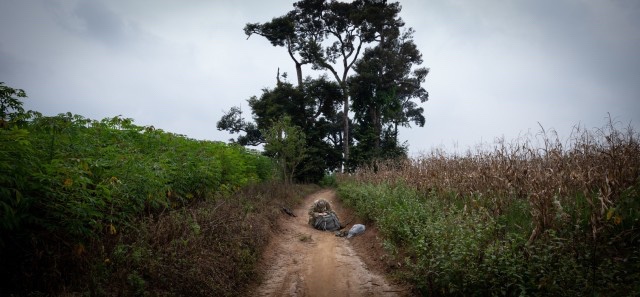
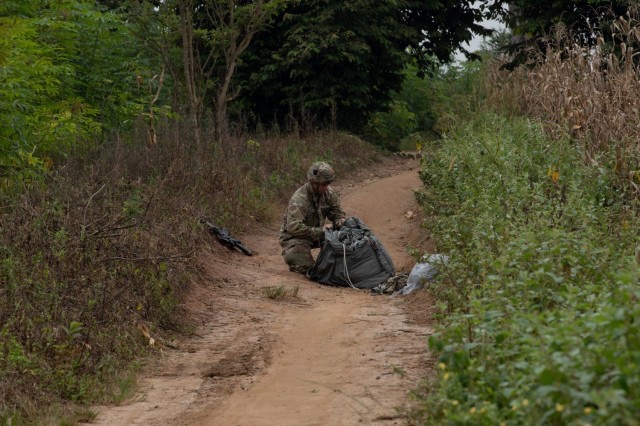
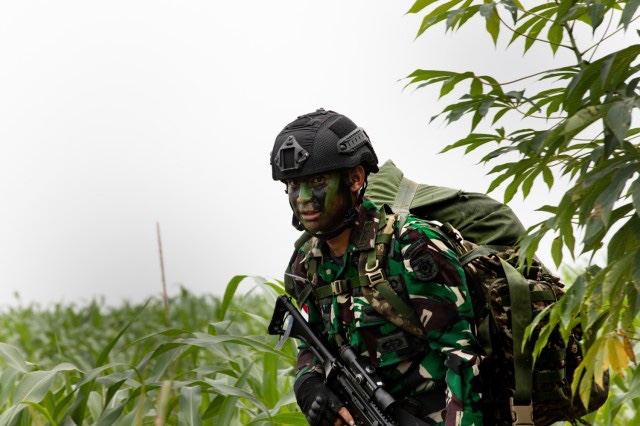
The 38th Rescue Squadron’s Blue Team traveled to Hawaii to conduct jungle warfare training, March 26 – April 10.

Moody Air Force Base’s pararescuemen are special warfare operators charged with the responsibility of rescuing personnel all around the world. As such, it’s vital they familiarize themselves with all types of environments.

In an effort to sharpen their capabilities in rescue operations throughout the Indo-Pacific region, Blue Team learned how to track personnel in the jungle.

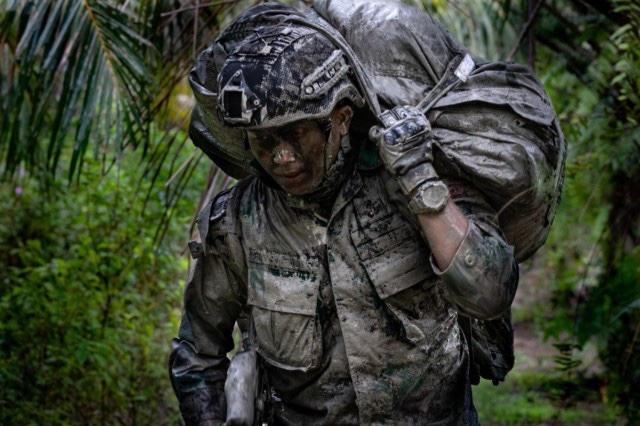
“The jungle is a very unforgiving environment,” said Lt. Col. Michael Vins, 38th RQS commander. “There are areas in the jungle where you can only travel 100 meters in an entire day. We need to be ready for that kind of environment by training there, understanding how to survive there, using different equipment … everything is so different, so we need to get used to that kind of environment to be effective in (Indo-Pacific Command).”

Blue Team put their tactics, techniques and procedures (TTP) to the test in a climate they had never experienced before by performing a series of training scenarios to include team vs. team tracking and anti-tracking exercises.

“Over the last 20 years, we’ve gotten really good at desert warfare with the war in Afghanistan and Iraq,” said Staff Sgt. Evan Rogowski, 38th RQS Blue Team pararescueman. “With that kind of phasing away, and the new area of responsibility quickly becoming the INDOPACOM region, we’re really having to take a step back from some of the older TTPs that seemed to work well in the desert and figure out how to adapt to this environment, which is way more difficult to operate in.”

Upon arriving in the jungle, the team set up an outpost to conduct operations. Over the duration of five days and four nights, they survived with only the rucks on their backs and the knowledge they gained as special warfare operators in the Air Force. Rogowski said one of the biggest challenges they faced was the weather.

“It’s pretty unpredictable out here in the jungle,” Rogowski said. “It can be raining in the morning and then completely sunny in the afternoon, and back to rain. Outside of carrying the proper equipment, there’s not much we can do to control that.”

The unique experience tested their ability to adapt in an unforgiving environment. To combat the risks associated with sleeping on the ground, the team slept in enclosed hammocks.

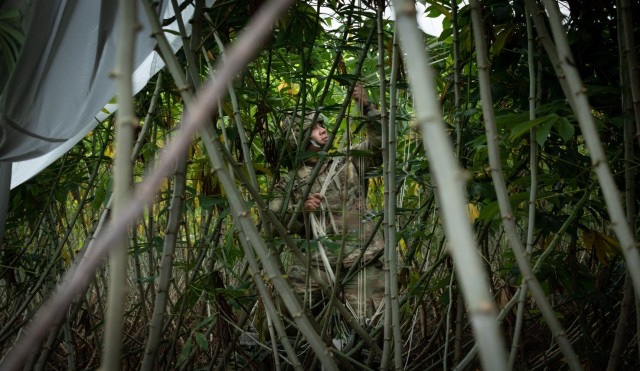
Encounters with centipedes, spiders, steep inclines and thick foliage made it difficult to execute the mission. Despite the challenges, the team was able to effectively track their targets in the jungle. Using tactical formations and hand signals, they practiced combatting potential threats from simulated enemies and booby traps.

“As highly trained special warfare operators, we’re always thinking about modern-day warfare and high-tech weapon systems, but something so primitive like grenades that roll out of bamboo if you kick the wrong stick over is enough to wipe us all out,” said Staff Sgt. Evan Orth, 38th RQS Blue Team pararescueman. “Getting this training makes us more aware of threats we would have never expected in this environment, which could be the difference in saving not only our lives but the life of the person we’re trying to locate on the ground.”

Blue Team learned mostly through action, however instructors from the Tactical Tracking Operations School also provided an array of tips in a classroom setting before they ventured out into the jungle.

“They’ll sleep in the field for four nights to give them an opportunity to live in the environment, assess their gear, work out the little kinks or whatnot and make sure their sleeping systems are good,” said Pete Kerr, TTOS president and instructor. “The more time you spend out in the field, you start to hone those senses.”

Kerr expressed the importance of attention to detail. Whether tracking an adversary or a missing ally, such as a downed pilot, being able to notice subtle disturbances in the terrain is crucial to finding a target.

“What that’s doing is programming the subconscious mind to pick up on these indicators,” Kerr said.

TTOS provided detailed hands-on training enabling the special warfare operators to determine a person’s direction of travel and intent.

“That footprint is going to explain a story to you,” Rogowski said. “Where that person went, what they did, how fast they were moving, where they’re going to, are they paranoid? And I think that’s kind of hard to put into words unless you’ve actually been there.”

Using the skills they learned during the training scenarios, the team was put to the test in a final two-day, one-night exercise. During the exercise, Blue Team tracked a simulated downed pilot while traversing the terrain undetected from potential danger. Once they retrieved the isolated personnel, the team made their way to an extraction point.

After a sleepless 24 hours and hiking 6 kilometers through grueling terrain, the team completed their mission.

By the end of the two-week course, Blue Team gained the knowledge necessary to refine their TTPs for the unique jungle environment, thus enabling them to operate effectively in the Indo-Pacific region.

“The culmination of this exercise validates the effectiveness the rescue teams will have in a contested jungle environment,” Rogowski said. “The lessons and skills learned here will further expand the way we operate in the INDOPACOM area of responsibility. We’ll take these lessons and shape our TTPs for the future of special operations, personnel recovery, and combat search and rescue.”

By SSgt Devin Boyer, 23rd Wing Public Affairs