Phantom Lights

Archive for the ‘Guest Post’ Category

ABCs of Risk Assessment

Saturday, April 23rd, 2022

Seneca’s quote on anticipating the coming troubles can be interpreted in these challenging times means that you can stay ahead of the action-reaction power curve by taking proactive measures instead of being relegated to reactive measures that place you behind the curve. Of course, the granddaddy of all proactive measures is to do risk assessment and develop control measures to reduce the probability of an undesired event.

Referred to as risk assessment or RA by the professionals such as high-end protective services and security specialists. A potential threat area (home, office, etc.) or activity (vacation or business travel) risk assessment should include an examination of potential risks via identification of known threats or threat areas, consideration of the likelihood and severity of an unwanted event, and implementation of realistic control measures to reduce likely risk. The risk assessment process can be further broken down by the numbers:

  1. Identify potential threats and/ or significant threat areas
  2. Estimate the likelihood and impact of an unwanted event
  3. Implement realistic control measures

It’s important to define terminology before running the RA process on a potential threat or threat area. The four most used RA terms are risk, threat, vulnerability, and assessment. 

Devgru Risk Assessment

Risk is the measurement of the frequency, probability, and impact of loss from exposure to threats.

Risk

  1. Frequency
  2. Probability
  3. Impact

A threat is a serious, impending, or recurring undesired event that can result in loss which must be handled. In terms of residential or workplace violence, a threat can range anywhere from pre-operational activities (security probes, collection of sensitive information, etc.) to an active shooter.

threat can also refer to an individual or the observable concerning behavior of an individual. Vulnerability is the quality or state of being exposed to the possibility of being attacked or harmed. Risk is the product of threat and vulnerability. The greater threat and/ or vulnerability, the greater the risk.


Risk = Threat x Vulnerability

Risk Assessment is a rational and orderly approach to problem identification and probability determination. As mentioned earlier, risk assessment is not a reactive approach but a proactive approach that should be part of any personal, home, or work security planning process. It involves figuring out the possible risks and how and when to control that risk should it become realized. 

An example of figuring out the possible risks and how and when to control that risk if it occurs is the design of a home invasion emergency action plan. Using a traditional residential security concept called ‘concentric rings of protection, ‘ multiple rings or layers of security are employed to create a 360-degree envelope of protection around your dwelling and its occupants. The concentric rings are like an onion of security wrapped around your home. 

The outermost ring is to deter – that is, remove any tools (hammers, screwdrivers, crowbars, etc.), ladders, and sporting equipment (baseball bats, etc.) from the yard. Have good lighting activated at night and some sort of gate or at least a fence or terrain barrier to help deter interest in your home. 


The next security ring is to detect – that is, use of any cameras or motion sensors to determine or observe a security breach. The next ring is to delay – be sure that there are good quality locking windows and doors installed to help keep an intruder at bay long enough for an appropriate response. 

The last of the four concentric rings of security is to deploy – that is, depending on which end of your home the attack initiates, what are your use of force deployment options? Have you established and reviewed a home protection emergency action plan with your family? 

When appropriately implemented, risk assessment promotes activity for reducing or eliminating long-term risk. The goal of effective risk assessment is sustained threat intervention.

Danger

Risk Assessment Examples

The very best example of RA is that of the commercial airline industry. Few industries have established such a quality risk assessment culture as that of the commercial airlines. The three most common guidelines utilized by the airlines and similar high-value security professionals are:

  1. Accept no unnecessary risk. Suppose you’re planning your vacation and know that a particular foreign country is under extreme civil unrest or worse. In that case, there’s no reason to accept the high probability risk of something bad happening to you or your family.
  2. Anticipate and manage risk by planning. Proactive measures assist you ahead of time and develop strategies that can be deployed in the event of an active threat. If you need to drive for a very long distance to a destination you’ve never been before, then looking at a map ahead of time to get your bearings and keeping your gas tank near full are two proactive measures that can help prevent you from needing roadside assistance or getting lost in an unknown or potentially high-threat area.
  3. Make appropriate risk decisions at the right awareness level. If you’re walking through a nasty part of town, then your personal security radar should be clicked up to a higher setting than when you’re locked in your car with the windows rolled up and driving at speeds around 65 MPH on a freeway. The worse decision you can make is to click to a lower level of situational awareness where and when you need it the most.

PMC PSD

Top security professionals recommend following the ABCs of risk management – Assess, Balance and Communicate. 

Assess is applying your situational awareness to your immediate environment and continually evaluating what’s happening. Forewarned is forearmed and places you ahead of the action-reaction power curve. Taking in good information allows you better decision-making that will affect future outcomes.

Balance is your evaluation of a given situation. Applying your situational awareness and processing relevant information gleaned from your environment (assessment) allows you to weigh the pros and cons of a tactical decision like an accounting balance sheet in your head.

Communicate. If there are others with you, it’s recommended to timely and appropriately verbalize your plan. For example, “Hey kids, let’s get back to the car!” 

Risk is an expression of the probability and severity of an undesired event. It occurs at many levels (compromise of personal safety, making the decision to accept unwarranted risk, etc.) Risk is controlled by balancing the factors that might increase risk, decrease the potential of an undesired event, and increase the likelihood of a positive outcome.

Remember your ABCs – Assess, Balance, and Communicate. Follow the professional RA guidelines by accepting no unnecessary risk, anticipate and manage risk by planning and making appropriate risk decisions at the appropriate awareness level. The product of good risk assessment keeps you ahead of the action-reaction power curve by implementing proactive measures.

About the Author: 

Steve Tarani is a former full-time CIA protective programs employee, small arms and defensive tactics subject matter expert who served on POTUS 45 pre-election executive protection detail. He is the lead instructor for NRA’s non-ballistic weapons training program offered nationally and a widely recognized SME on matters of personal protection and urban survival. Tarani is also a DoD and FLETC-certified federal firearms instructor who has been on staff at Gunsite Academy (AZ) as a Rangemaster for over twenty years. Formerly sworn, he is also a former federal contractor and service provider for the US Defense Intelligence Community, US Naval Special Operations Command, and other government agencies. Additionally, Tarani serves on the National Sheriffs’ Association Committee for School Safety and Security.

Army Industrial Base Poised for Holistic Modernization

Saturday, April 23rd, 2022

REDSTONE ARSENAL, Ala. — As the Army undergoes its greatest transformation in more than 40 years, senior leaders are taking steps to ensure persistent modernization of the Organic Industrial Base to sustain the next generation of Army equipment, current unit readiness and the ability to surge in support of contingencies.

The Army’s OIB Modernization Implementation Plan, led by Army Materiel Command, will modernize facilities, processes and the workforce across the 23 depots, arsenals and ammunition plants that manufacture and reset equipment, generating readiness and operational capability throughout Army formations. The Army OIB is comprised mostly of facilities that were built during World War II.

“The 15-year OIB modernization plan represents a once-in-a-generation chance to holistically modernize,” said Gen. Ed Daly, commanding general of AMC. “The plan provides a deliberate and comprehensive roadmap to a 21st century OIB focused on processes, facilities, equipment, workforce, data and information technology, as well as energy and cyber resilience.”

Last year, the Army stood up an OIB Modernization Task Force with experts from across the service. The task force has collaborated over a series of planning sessions, site visits and war games to develop a holistic investment plan to bring the OIB into the 21st century, infuse industry best practices and refine human capital management structures to maximize the skills and capabilities of the workforce.

“We are exploring new production processes to enhance capacity and improve resiliency, rebuild organic capabilities and develop new ways to leverage innovation technologies,” said Doug Bush, the Assistant Secretary of the Army for Acquisition, Logistics, and Technology.

The 15-year OIB Modernization Implementation Plan synchronizes a cost-neutral investment of an estimated $16 billion in three phases: Build 21st Century Capability for the Future (Fiscal Years 24-28); Continue to Build Capabilities and Attack Vulnerabilities (FY29-33); and Maintain and Sustain OIB Investments (FY34-38).

“The first phase is getting at the most critical processes and capabilities that we need immediately,” said Daly. “The second phase is really expanding those 21st century capabilities and reducing our vulnerabilities, and then the third phase is continuing to expand beyond that and into the future.”

ASA(ALT) and AMC, in collaboration with the Secretariat, Department of the Army partners, academia and industry, built the OIB MIP from the 2019 Army Modernization Strategy and 2019 Army Organic Industrial Base Strategy. These investments are tied directly to the Army’s signature modernization efforts, ensuring that the OIB is ready to sustain the next generation of Army equipment.

“History is replete with examples of the OIB’s criticality,” said Daly. “This is getting at the continuance of that legacy. It is ensuring the OIB can better support surge capacity for Large Scale Combat Operations, reducing single points of failure and mitigating supply chain vulnerabilities.”

A key piece of these modernization efforts is empowering the OIB workforce, approximately 32,000 employees who work in more than 240 different job fields, ranging from aircraft mechanics, machine tool operators, welders and machinists.

“Our artisan workforce provide the best equipment the world has ever seen, and it is their dedication that lets a warfighter know when they take a piece of equipment on the battlefield, it will survive enemy contact,” said Daly. “They are the backbone of the OIB. To meet the Army’s future needs, we need to ensure we are recruiting, training and retaining the next generation of artisans. We must identify and prioritize the jobs and skill sets needed to repair the Army’s future equipment.”

A living document, the OIB MIP was developed through data-driven decisions tied to the Army’s priorities of People, Readiness and Modernization. The OIB Modernization Task Force transitioned the 23 sites from having separate, hard-copy master plans to using an enterprise data repository that can show real-time updates and information.

“It’s dynamic, flexible in nature and it will be revisited on an annual basis,” said Daly.

By Megan Gully, U.S. Army Materiel Command Public Affairs

Air Commando Tests Stamina and Builds Relationships During Best Ranger Competition

Friday, April 22nd, 2022

Fort Benning, Georgia —  

Imagine yourself going through months of training for a rigorous event just to lose your teammate to an injury weeks prior and have to drop out. Now, imagine being the only U.S. Air Force member in a group of over 100 U.S. Army soldiers – well, this is exactly the situation U.S. Air Force Capt. Reace Hudgeons, a Tactical Air Control Party Officer at the 17th Special Tactics Squadron, Detachment One, Savannah, Georgia, found himself in when he competed in the Best Ranger Competition April 8 – 10, 2022, at Fort Benning, Georgia.

After three days of competition, Hudgeons and his new teammate, a U.S. Army Captain James Moore, finished sixth out of 51 teams on the first-ever joint team from different units..

A few days before the Best Ranger Competition was set to begin, Hudgeons received a phone call from the 75th Ranger Regiment asking if he would want to participate in the competition with one of their Army Captains. He had already assumed he would not participate this year due to his Air Force teammate’s injury, but immediately jumped on the opportunity.

“I drove to Fort Benning late on Friday evening and didn’t arrive until after one in the morning,” said Hudgeons. “Eight hours later I met my teammate, CPT Moore, for the first time and we started training together.”

Even though the two had never met before, they didn’t find it hard to integrate and plan for the three days of competition that lied ahead. They already had common ground due to the joint training between their units.

“I always wanted to compete in this event, but never expected to win or even place in the top ten,” said Hudgeons. “I just wanted to prove that there are Air Force members who can do the same things as Ranger-qualified soldiers in the Army.”

After three days and two nights of 19-mile ruck marches, six-hour land navigation events, long foot movements, and many other events, the two crossed the finish line in sixth place with smiles on their faces.

“Teaming up with a guy from the 75th Ranger Regiment made a huge difference,” said Hudgeons. “They’re already the best of the best and being able to team up with someone of that caliber made me push myself even harder. Keeping up with him was challenging at times, but it was hands down such a worthwhile experience.”

The team’s experience highlights the strength in unity behind joint forces. Hudegons and Moore showed up having never met each other before and integrated seamlessly due to trusting in each other’s abilities to do the work based on the credibility established from their career fields.

“The relationship we had, the success we had, is what our relationship is supposed to look like as TACPs and Army maneuver units,” said Hudgeons. “They should trust us to compete under their unit’s name with an expectation of success. That’s where we need to be as an Air Force and a sister service.”

When asked if he would do it again, there was no hesitation. Even through the months of training leading up to the event, to having to drop out last minute to re-joining with a brand new teammate, he would not trade his experience for anything.

“I highly recommend any qualified member to volunteer and compete,” said Hudgeons. “Know what you’re getting into, be prepared to do 80-100 miles on your feet, and have the right attitude. Show up, perform, work alongside them, do some things better than them, and they will welcome you with open arms.”

By Capt Savannah Stephens, 24 SOW Public Affairs

Air Force Fields New Rifle to Airmen

Thursday, April 21st, 2022

ROBINS AIR FORCE BASE, Ga. (AFNS) —

The Air Force Life Cycle Management Center’s Small Arms Program Office is in the final phase of delivering the Squad Designated Marksmanship Rifle, or SDMR, to units across the Air Force.

The Air Force purchased approximately 1,464 SDMRs that will be distributed across the service based on approved allowances.

The SDMR is a semi-automatic, 7.62x51mm caliber rifle designed by Heckler & Koch for missions requiring combat over-watch with precision-fire capability to accurately engage targets up to 600 meters.

The SDMR was fielded to Air Force units this year. It is a multi-role asset, set to meet multiple missions taking place around the world.

It will replace legacy M24 Sniper Weapon Systems for security forces defenders performing base defense operations in-garrison and in contingency support.

The SDMR is lighter weight in comparison to other 7.62 platforms and will also replace the M110 Semi-Automatic Sniper Systems rifle for pararescuemen and Guardian Angels, saving them 5 pounds in gear while out on missions.

Finally, the SDMR’s precision-fire capability will be wielded by Air Force Explosive Ordnance Disposal technicians to eliminate small munitions in their standoff munition disruption activities.

“We’re excited to field this incredible weapon system,” said Matthew Hamer, Small Arms Program Office lead. “Being able to field one solution that can effectively achieve multiple missions epitomizes Air Force acquisition strategies and shows Airmen ability to adapt to any situation.”

Story by Brian Brackens, Air Force Life Cycle Management Center Public Affairs

Photos by Shaun Ferguson

UT System, U.S. Army Futures Command Announce Partnership to Accelerate Innovation in Trauma Care

Wednesday, April 20th, 2022

The University of Texas System and the United States Army Futures Command (AFC) have formed an official educational and cooperative research partnership to advance medical science and technology to save lives both on and off the battlefield.

Since last year, leaders from the UT System, AFC, U.S. Army Medical Research Command and U.S. Army Institute of Surgical Research (USAISR) have been exploring how to work together to solve some of the most critical issues affecting soldiers injured in combat.

Today, they formally signed two agreements to streamline collaboration between the military and UT institutions: an Educational Partnership Agreement and a Cooperative Research and Development Agreement.

The agreements will allow a continuous flow of resources, research and scientific expertise, focusing specifically on medical science and technological innovations.

“I can not emphasize how groundbreaking this will be,” said Lt. Gen. James Richardson, AFC acting commanding general. “This will allow opportunities for furthering research and expand capabilities for improving our work in the critical area of trauma care, which will extend to our future soldiers and also have impacts in our communities.”

The partnership will leverage the scale and expertise of the both the UT System and the Army, UT System Chancellor James B. Milliken said.

“The military brings to the table a substantial health research infrastructure, unrivaled experience in battlefield trauma, and the capacity to test innovations in the field,” Milliken said. “UT institutions offer an extensive basic and applied science infrastructure, a world-class system for conducting clinical trials, and some of the world’s most brilliant and innovative minds.”

During a Summit last year, researchers and military health specialists from AFC and the UT System emphasized the need to turn the “Golden Hour” into the “Golden Day,” referring to the timeframe following a battlefield wound when proper medical treatment is crucial to survival. Following the Summit, several UT institutions and USAISR developed collaborating research proposals to address the underlying causes of tissue damage and novel treatment options following trauma.

The UT System and Army Futures Command anticipate that the new partnership will have long-lasting impacts on both soldiers as well as civilians who suffer traumatic injuries that land them in the emergency room.

The partnership also builds on numerous existing collaborations between the Army and UT institutions.

The UT System Board of Regents allocated $50 million to UT Austin to establish facilities to develop and test robotic systems and artificial intelligence through the new Robotics Center of Excellence. Researchers at UT Arlington are studying the human dynamics of decision-making, and UT Dallas is creating chemically powered artificial muscles that could power robotic mules to serve as alternative Army vehicles. UT San Antonio and UT El Paso are working with the Army to advance cybersecurity.

In addition, the UT System currently has several research projects with the Department of Defense to create more technologically advanced cybersecurity systems and to support the use of robotics in combat. The collaboration aims to deliver breakthroughs in the science of combat casualty care, such as delivering oxygen to tissue, shock management, wound progression and infection, as well as physical pain or PTSD.  

DEVCOM Soldier Center’s Director of Research and Technology Integration Inducted into Senior Executive Service

Tuesday, April 19th, 2022

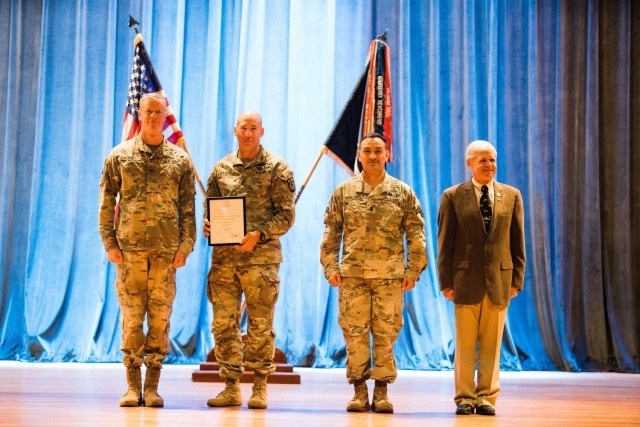
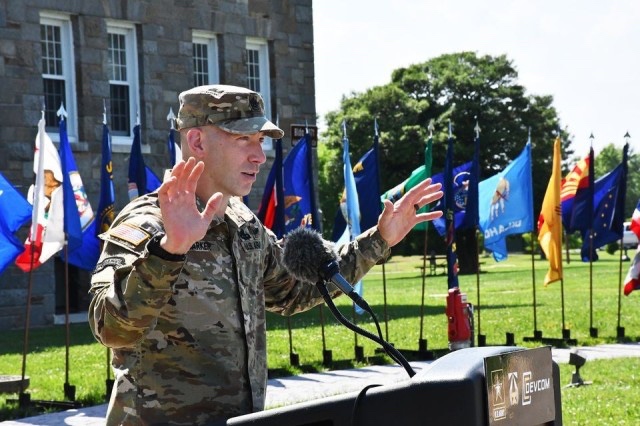
NATICK, Mass. – Craig L. Rettie, director of Research and Technology Integration for the U.S. Army Combat Capabilities Development Command Soldier Center, or DEVCOM SC, has been inducted into the Senior Executive Service, or SES.

In his position at DEVCOM SC, Rettie is responsible for the planning, programming, coordination and external integration of DEVCOM SC’s science and technology program to ensure America’s warfighters are optimized, protected, and lethal.

During the March 31 SES induction ceremony, Douglas Tamilio – director of DEVCOM SC and an SES Level II – hosted the ceremony and administered the oath of office to Rettie. The ceremony took place in Hunter Auditorium at the Natick Soldiers Systems Center, or NSSC.

By becoming an SES, Rettie joins an elite group of men and women chosen for their leadership qualifications and tasked with leading the ongoing transformation of the government.

Tamilio said that Rettie has the right skill set, as well as a wide depth of experience coupled with demonstrated leadership.

“He epitomizes the Army Values of loyalty, duty, respect, selfless service, honor, integrity, and personal courage,” said Tamilio.

Rettie credited the many people who have led, mentored, and supported him over the years.

“Being selected for the Senior Executive Service is an honor that words are incapable of truly describing,” said Rettie. “I certainly never set out almost 40 years ago with the intention of winding up here, in this position. I have been blessed over those years to have the strongest leaders, insightful mentors, and strong supporters. Any credit for my successes belongs to them and the great people I have worked with on this journey. I look forward to continuing to serve the Army and Soldiers, with this great workforce, for years to come.”

By Jane Benson, DEVCOM SC Public Affairs

Visit Photonis Defense at TTPOA

Monday, April 18th, 2022

Photonis Defense – Night Vision is proud to support the Texas Tactical Police Officers Association TTPOA Raffle with a donation of our NEW Vyper Series Night Vision Binocular Device. Photonis Defense is committed to providing smaller, lighter, and faster auto gating night vision systems. From law enforcement professionals to our military forces we provide superior defense support for those who take up the cause to protect us. Our specialists custom build to fit your most demanding operations.

When you attend this year’s conference in Round Rock, TX please stop by the Photonis Defense booth and check out the Night Vision Series that allow you to see what others cannot.

photonisdefense.com

www.ttpoa.org/page/2022-conference-home

Nightforce Optics Adds Dark Earth Color Option

Monday, April 18th, 2022

Nightforce is excited to announce that select ATACR and NX8 riflescopes are now available in Dark Earth color options.

Also available is the Nightforce UltraMount in many commercial configurations: Dark Earth or Black anodizing, 1.54in or 1.93in height, and 0MOA or 20MOA bias options.

For more information on all of our new Dark Earth riflescopes and Nightforce UltraMounts, please visit our website or contact your local Nightforce dealer.