GORE-TEX Professional

Archive for the ‘Guest Post’ Category

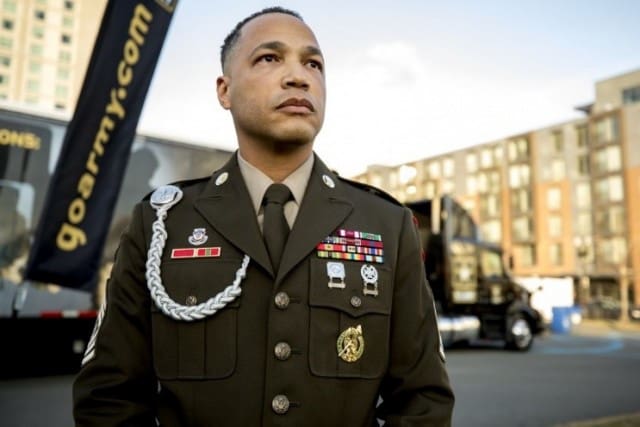
Army Uniform Board Votes On Soldier-Driven Changes for New AGSUs

Wednesday, February 19th, 2020

WASHINGTON — The Army Uniform Board (AUB) recently met to address and vote on the latest feedback from Soldiers for improving the design of the new Army Green Service Uniform (AGSU). The AUB, which included the first all-female board for the female uniform, sought and addressed the critical changes from Soldiers in designing the uniform for function and fit.

The AUB discussed and voted on 20 uniform changes for both complex and simple design features. These changes directly stem from Soldier participation in the limited user evaluation that is intended to enhance the AGSU’s performance and functionality for Soldiers across the Army.

Voting efforts focused on balancing responses from Soldiers and costs for the Army and Soldiers. “It was important we voted in such a way that demonstrated we understand the valuable input and concerns of our Soldiers. We must also continue to safeguard our promise to keep the AGSU cost down,” stated Lieutenant General Duane Gamble, Deputy Chief of Staff G-4 and AUB Chairman.

The AUB is the Army’s only forum to address the changing requirements of Soldiers’ uniforms and accessory items. Every Soldier can contribute to the Uniform Board process by providing his or her recommendation to his or her unit’s Sergeant Major. Incorporating the feedback from our Soldiers is a big part of the AUB process and without their input, the new uniform would not have the support it currently has.

Members of the AUB include Soldiers of all levels, and representatives from the active component, the Army Reserve, and the Army National Guard. Each member has an equal vote in deciding which recommendations go forth to the Chief of Staff of the Army.

By Ms. LeAndrea O White (G4)

Brigantes Presents – Brigantes Issue Essentials

Wednesday, February 19th, 2020

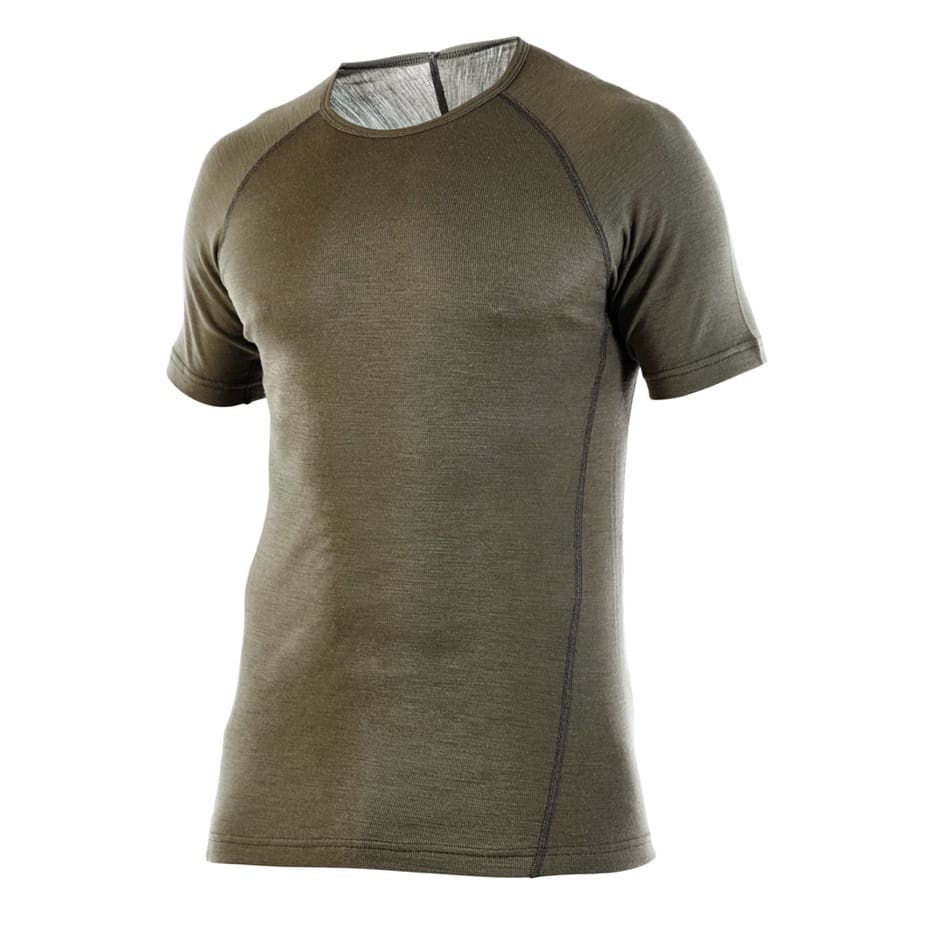
Each week we bring you products that should be on all military standard issue kit lists. This week it’s the Armadillo Merino Condor base layer.

ARMADILLO MERINO make clothing that is made for tactical operators and other professionals in the most extreme environments. They have had our products go to space, and worn by professionals operating in some of the highest risk places and environments on earth.

Their condor uses a soft but strong rib knit structure (similar to honeycomb) for maximum versatility. In summer this open knit structure moves heat and moisture away from the skin keeping you cooler and drier. In winter this same knit structure traps still air to give you a buffer zone of warmth.

The strong and stretchy knit structure is designed to be figure hugging and with flat lock stitching the Condor functions as the ideal base layer garment for year round applications.

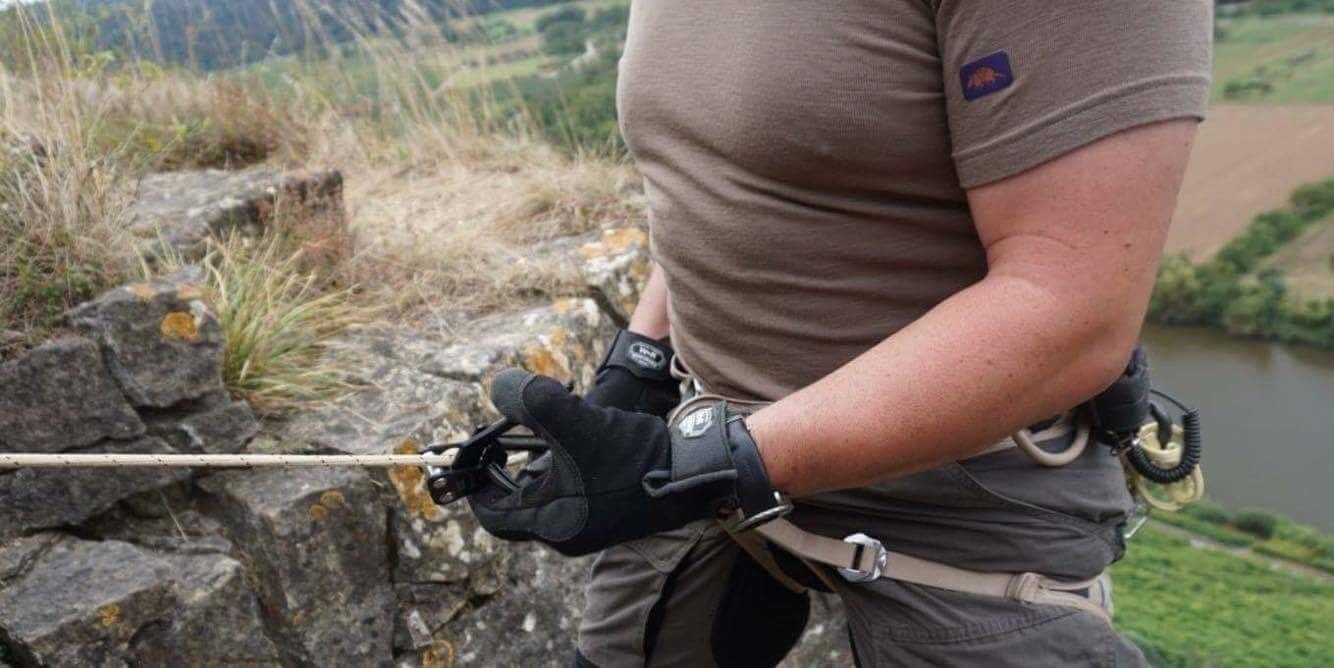
Its Rib knit designed for year round comfort but the tight design enables it to be worn under your uniform. The seamless shoulders and underarm, with extra strong thread and a tag free neckline are ideal for load carrying, eliminating chaffing and a tag free neckline.

The Condor benefits from Armadillo’s “no melt or drip” technology. They have natural flame resistance up to 1100F, and will not melt or drip when exposed to heat.

Their garments do not smell as they have natural anti-microbial properties. You can wear the Armadillo tops for days on end without odor. A great all round base layer to give super comfortable 365 days a year.

For more information contact international@brigantes.com

For UK sales contact warrior@brigantes.com


USAF Parachute Riggers: One Ripcord at a Time

Tuesday, February 18th, 2020

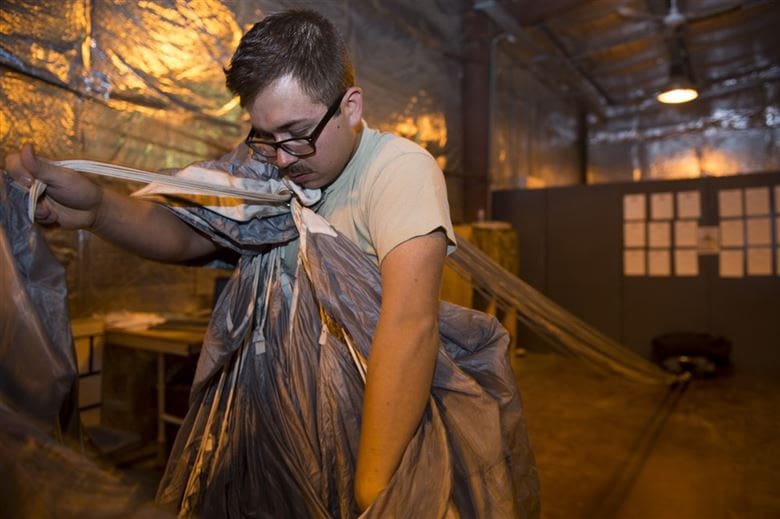
CAMP LEMONNIER, Djibouti (AFNS) — The Air Force uses more than 20 types of parachutes to conduct personnel recovery, airdrops and asset insertion into combat zones. Knowing what type of parachute is required for each mission and verifying the safety of those parachutes is the job of a parachute rigger.

This responsibility on Camp Lemonnier is up to the 82nd Expeditionary Rescue Squadron Aircrew Flight Equipment riggers, deployed from Moffett Federal Airfield, California.

“Being a rigger, everything we do has to be 100 percent,” said Tech. Sgt. Isaac Corniel, the 82nd ERQS AFE NCO in charge. “There is no room for mistakes. There’s no room for error. Their lives are in our hands. Even if we have a small twist in a line we want to make it straight, as it can mean someone’s life.”

Being deployed to Djibouti has allowed the 82nd ERQS AFE to train on real-world missions unlike any other training they can get at home station.

AFE riggers are required to pack a variety of chutes in a variety of conditions throughout the world to meet mission needs. The packing can take from 35 minutes to several hours to inspect and repack. Along with the complex quality control measures that must be performed.

“We just try to be the best that we can. We preach quality, quantity and efficiency,” Corniel said. “We are combined with a variety of military forces being deployed, so our guys get to train on more scenarios than they would at home.”

According to Corniel, being deployed to Africa has allowed the team to have hands-on experience with more airdrop missions, whereas back home they would only provide chutes for one or two drops a month. The AFE Airmen said they have grown their understanding on the job to make their deployment a success.

“The guys have been great. They all live up to the riggers creed; they know now what it is to be a rigger,” Corniel said. “We are a part of something special and we strive to keep the history of excellence between the pararescue teams and riggers.”

By SSgt Carlin Leslie , Combined Joint Task Force-Horn of Africa Public Affairs

Wanted: Ideas on Space Force Members’ Name, Ranks

Sunday, February 16th, 2020

ARLINGTON, Va. (AFNS) — The U.S. Space Force is looking for feedback from U.S. military space professionals on what Space Force members should be called – similar to how the Air Force refers to its members as ‘Airmen’ or the Army refers to its members as ‘Soldiers’.

Given the significance a name has to the identity and culture of an organization, the Space Force is taking a deliberate approach to ensure Space Force member titles and ranks appropriately convey the nature of the newest Armed Forces branch and the domain in which it operates.

Toward that end, Space Force officials are soliciting ideas related to Space Force ranks, names for operational units and what Space Force members should be called collectively. They are especially interested in soliciting ideas from those currently assigned to the U.S. Space Force or those who expect to be members of the Space Force in the future.

Air Force Common Access Card holders with access to Air Force Portal should submit their ideas online by Feb. 24 through the IdeaScale website at usaf.ideascalegov.com/a/ideas/recent/campaigns/122. Space Force officials will also be reaching out to the Army, Navy and Marine Corps space communities to offer military space professionals in other services the opportunity to submit ideas.

“As we continue to forge the Space Force into a lean, agile and forward-looking 21st century warfighting branch, we want to provide space professionals the opportunity to influence what the members of our new service will be called,” said Lt. Gen. DT Thompson, U.S. Space Force vice commander. “The decisions we make today will shape the Space Force for decades to come, so we want to ensure those who will serve in the Space Force have a say when it comes to important organizational and cultural identity considerations.”

Officials emphasized several guidelines respondents must consider when submitting ideas. For example, proposals must be gender-neutral, distinctive and should emphasize a future-oriented military force. In addition, submissions cannot violate copyrights, infringe on trademarks or other intellectual property rights, or be proprietary. Any submission falling into those categories will not be considered. Submissions must also be in good taste.

Once the submission deadline closes, a panel of Space Force officials will review inputs along with other feedback received from various sources to help inform a final decision on the new Space Force member moniker. That decision, which will be made by senior Space Force leaders, will be announced publicly at a future date to be determined.

By Secretary of the Air Force Public Affairs

SCUBAPRO SUNDAY – Buoyancy  

Sunday, February 16th, 2020

Buoyancy is key to a lot of things when diving. It helps make the dive easier in a lot of ways. When using a closed-circuit rig (CCR) it keeps you from rocketing to the surface, it prevents you from dropping to the bottom when you stop to fix your gear or “Dräger” talk/ yelling at your dive buddy.  


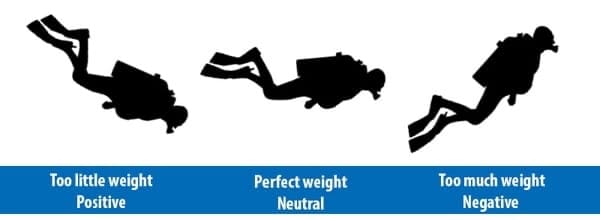
The two keys to buoyancy: balance and breathing 

The two significant factors in achieving neutral buoyancy.

• 1st Wear the right amount of weight for the dive. This will differ depending on the thickness of your wetsuit/ dry suit and gear you are wearing, also water type fresh or salt.

• 2nd Breathing slowly and evenly, so you do not have too much air in your breathing bag. If diving a CCR

Steps to help maintain buoyancy

Pre-dive preparation

Buoyancy control begins, with the pre-dive preparation. As you pick what to wear for a dive. Double-check to make sure nothing has changed that could affect buoyancy. A new wetsuit is more buoyant than an older one and will need more weight. A new suit has more inherent buoyancy at first because diving, especially deep diving simply bursts its bubbles. Make sure you look at any new gear compared to the old version. Gear is always being updated with new buckles or martial so when you switch from old to new make sure you know what the buoyancy is with the new stuff. Check the weights on a scale; often there is variation between claimed and actual weight. If diving open circuit, remember cylinders are negatively buoyant when full and less negative when empty.

Do a buoyancy check

Here is the best way to do a proper buoyancy check. With your lungs half-full, you should float at eye level with no air in your BC. If you are diving open circuit, remember the average cylinder loses about 5 pounds as it empties. So, you might have to add about 5 pounds to your weight if you have done your buoyancy check with a full tank. 

Keep a log

Keeping a log of what gear, you have worn, what the temperature was and the type of water (salt/fresh /brackish). What equipment you used, how much lead you carried, your body weighs and whether you seemed too heavy or light. Knowing the weight of the gear that you used on the dive will help. Make sure you understand that if you are going to remove something during the dive you need to account for that on the return trip home. If you plan ahead by recording in training what you used it will help when you have to do it the next time.  

Saltwater VS Freshwater

If most of your diving is done in the ocean, then ballast calculations should be done in the ocean. Jumping in the pool to check your ballast will get you close, but it won’t be 100% correct. If you switch back and forth, you’ll need to adjust your ballast. Be prepared to add weight if needed sometimes it’s nice to have a weight belt with extra pouches just in case or maybe just an empty pouch on a gear belt will help. But still try and keep the weight evenly distributed. 

Buoyancy, Trim, Position, and Breathing

The secret to buoyancy control, begins with fine-tuning your weighting. How much lead you put into your pouches or have on your weight belt. If you are carrying just the right amount of weight, you will only have to put a little air in your BC. That means less drag and more efficient finning. Less BC inflation also means less buoyancy shift with depth, so you’ll have to make fewer adjustments. There are many tricks, but buoyancy control is the fundamental skill. Precise control of your buoyancy is what enables you to hover motionless and fin through the water, at any depth. You should not have to use your hands at all or stirring up mud or silt from the bottom by always moving your feet. In addition to using the right amount of weight, make sure you are correctly balanced to optimize your position under water.


Keeping a more horizontal position makes you more hydrodynamic. Distribute the weight as uniformly as possible from side to side; you should never notice that you put on more weight on one side while diving. You must also consider the weight of your dive gear and any other additional gear you might be wearing. I.E gun belt or special gear. Make sure it is balanced on your body and it doesn’t shift when you are diving. The lower you wear your dive rig can cause a tendency to push the diver forward (upside down) in the water, so the placement of weight towards the back can help reverse this position, especially on the surface. Make sure any dive weight you put on can be easily removed in an emergency.

The factors that affect your buoyancy besides ballast weight are BC inflation, your trim, exposure suit, depth and breathing control. Your ballast weight and your trim are the only two factors that, once you’ve selected them, stay put. Ballast is the amount of weight it takes to keep you neutral in the water. Trim is about the position of your body weight relative to the position of your weight. Sometime when diving a rebreather you can tape lead washers on it to help with your trip.  

There is one more thing to understand that will help with your buoyancy. It is controlling your breathing. Make sure you maintain proper breathing. Take relaxed breaths this will allow you to maintain control over your buoyancy.

To determine the amount of weight you need, you can take your body weight, the diving suit you are going to use, the weight of your equipment and the environment you are diving in salt or fresh water. If you use about 10 percent of your body weight, that is a good starting point for a full 5 mm or more and for a 3 mm suit, use 5 percent of your body weight.  

Dry suits and thick neoprene suits require more ballast to counteract the increased buoyancy of those suits in comparison with the thinnest. Body composition (the muscular density, for example) will also influence the necessary weight. Remember fat floats, muscle sinks.

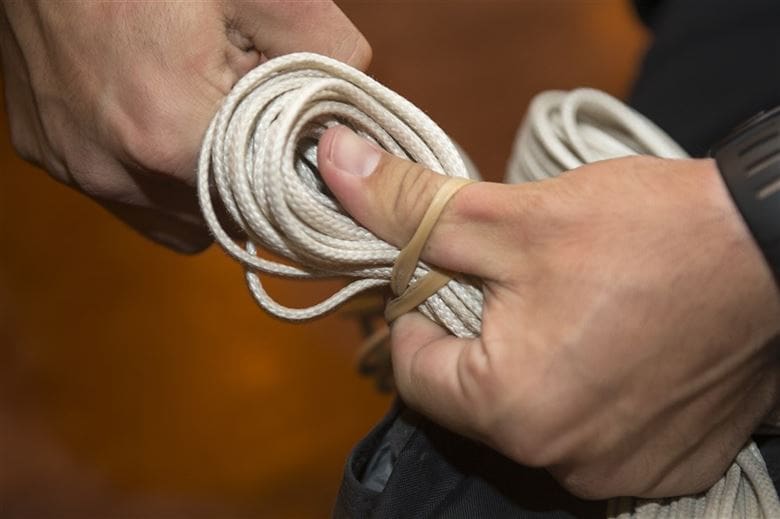
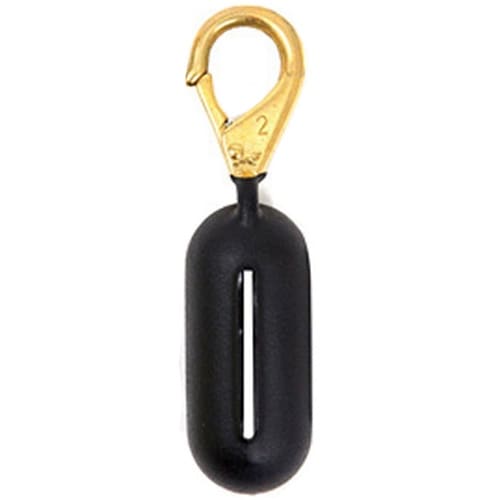
Remember to calculate for everything you are going to do and wear on your dive. If you are doing a long dive and plan to leave or remove something half way thru your dive. Say doing a ship attack, and you are taking limpets off. Plan for the whole dive. To check your buoyancy get into water deep enough to stay in an upright position, without treading and releasing all air from the vest. Inhale, in a normally, the surface of the water must be at the level of your eyes. When you exhale, you should sink until water covers your head and inhale again, you should emerge once again until the level of the eyes. Adjust your weight in small increments about 1 pound at a time. You can use a weight with snap link on it or just a weight with some 550 cord on it. Make sure you don’t just put all the weight you are adding to one side. Try and use this time to even yourself out and set your trim also. I have also seen people tap lead washers to the front of their Dräger to help even them out.


Once you get your ballast weight and trim dialed in, you will be ahead of about 75% of all divers toward perfect buoyancy control. Now you can fine-tune your BC inflation to compensate for the very predictable changes due to breathing down your tank and changing depth. 

Lastly, there are advanced classes that you can take that focus on advanced skills like this. This may seem like a lot of work, but it will help make diving a lot better and make you more efficient at it.

Army Modernizes Its Biometric Processing Capabilities

Sunday, February 16th, 2020

ABERDEEN PROVING GROUND, Md. — U.S. Army Soldiers patrolling critical checkpoints overseas will have an improved biometrics tool to help identify persons of interest in real time.

Army Futures Command’s Command, Control, Communications, Computers, Cyber and Intelligence, Surveillance and Reconnaissance (C5ISR) Center has developed and delivered software that will enable Program Executive Office Intelligence, Electronic Warfare and Sensors (PEO IEW&S) to modernize the Army’s 20-year-old biometric processing capabilities.

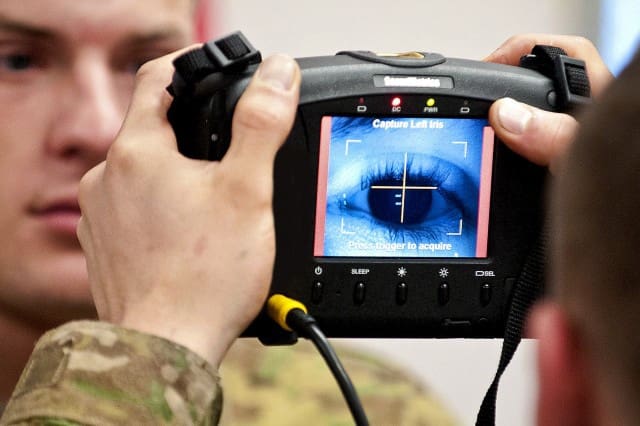
The Biometrics Automated Toolset — Army (BAT-A) is a handheld device used by deployed Soldiers to collect, process and reference biometric identity information — such as iris, fingerprint and facial images — during force protection screenings.

With the system deployed to U.S. joint forces around the world and more than one million entries saved in the DoD’s Automated Biometrics Identification System, it is important to migrate BAT-A to a database that will meet the government’s new electronic biometric transmission specifications, explained Brian D. Likens, product lead for the Biometrics Collection Capability at PEO IEW&S’ Project Manager Department of Defense Biometrics (PM DoD Biometrics).

“We asked the C5ISR Center to make the database more efficient and useful for tomorrow’s Soldier. To do this, they restructured the data to comply with future standards and modern architecture practices,” Likens said.

The new database software architecture will improve the overall speed and functionality of the tool so Soldiers can access better filtered information, noted Will Daddario, a software engineer with the C5ISR Center.

“In the past, superfluous information had the ability to make its way up and into the BAT-A database. That will not happen anymore. You are now going to have a database with improved integrity that will be easier to use,” Daddario said.

The architecture will also make future software development work easier.

“Previously, all database relationships were performed by the application. Our new database has all of these relationships built in, so when you make a change in one area, it propagates through the whole database,” Daddario said.

The C5ISR Center delivered a data conversion tool with the architecture and plans to deliver data migration and filter tools in Fiscal Year 2021 before helping the PM migrate the data. The Center is also slated to support PM DoD Biometrics throughout the development of the Next Generation Biometric Collection Capability.

“The need for accurate and timely data is vital to the protection of our warfighters in support of Multi-Domain Operations. This updated database will make it more efficient for warfighters to collect, identify and neutralize the enemy,” said Col. Senodja “Frank” Sundiata-Walker, project manager for PM DoD Biometrics.

By Douglas Scott

The Baldwin Files – A Poor Man’s Guide to Guerrilla Warfare

Saturday, February 15th, 2020

I was born and raised poor. Financially, my family was somewhere between The Waltons during the Depression and the Beverly Hillbillies – before they struck oil. Not that I noticed at the time. When I was young, all the people around me were generally in the same economic and social circumstances so there was no obvious disparity. It was not until my last two years of High School that I even became aware of it. I do not recall anyone giving me grief for my relative poverty; however, I became more conscious of my fiscal disadvantages relative to my more affluent peers. I started working after school and on weekends at 15. My immediate goal was to accumulate enough money to buy a car as soon as I was licensed to drive. I thought that one purchase would make all the difference. It did not. A cheap car – that my parents had to cosign for – did not change my social status. I still had little spending money and could not afford the latest fashions or other teenage status symbols. I was still a poor kid. It was a simple but very important life lesson.

I am not saying that growing up poor made me any more insightful, virtuous, or smarter, than someone born into a family of greater means. However, I did experience a lot in those first 18 lean years that gave me a useful perspective that ultimately proved to be professionally valuable. Later, I had the opportunity to apply and validate what I had learned. First, as a “school trained” guerrilla and eventually as someone who instructed newer Special Forces (SF) candidates on how to be successful guerrillas. Consequently, I have a practitioner’s understanding of what it takes for a guerrilla to “win” and – because they are two sides of the same coin – I also know what it takes for a counterguerrilla to prevail. I started collating and sharing my “poor man’s” insights on the subject with SF students about to be inserted into the Robin Sage exercise. While in “Pineland,” they have to work by, with, through, and alongside, a distrustful population while enhancing and effectively employing the ragtag guerrilla forces found there. It is harder than it might seem.

People in general, and Americans in particular, are prone to make one of two equally wrong assumptions when engaging people from foreign cultures, i.e. they are exactly like us…or nothing like us. Because we come from a rich society – even if we are not personally wealthy – it is often hard for American soldiers to discern and subsequently leverage the commonalities and the differences between themselves and their inevitably less fortunate foreign partners and adversaries. Moreover, the term “guerrilla warfare” itself has become old fashioned and out of style. We now prefer insurgencies and counterinsurgencies, or maybe irregular or asymmetric warfare instead. Asymmetric is perhaps the most overused and least helpful term. ALL warfare involves the combatants constantly seeking at least a temporary asymmetric advantage over their opponents. That is why I still prefer the classic term of guerrilla warfare, a.k.a. “small wars” or “poor man’s war,” because I believe it captures the normally smaller scale, limited resources, and intimate human dynamics of this kind of warfare better than the more modern terms.

I also avoid the phrase “hearts and minds.” It is vague and provides no useful guidance.  Instead, I emphasize three terms: influence, manipulate and exploit. As in: How can I influence (or gain influence over) the people who have the power to help me do what I need to do?  How can I manipulate the current situation into something more advantageous to my goals and objectives?  And, what factors, conditions, attitudes or perceptions can I exploit to accomplish my mission? By definition, in military and financial terms, the guerrilla is always weaker and poorer than the counterguerrilla; however, influence is much, much more important than relative finances and force numbers. A better measure of relative strength is to ascertain what power (influence) the guerrilla wields with the population.  Likewise, what power (influence) does the counterguerrilla have with the population? It is not the man that must be defeated, but rather his influence. Both sides have to remember that.

For a poor person, limited assets are a given and nothing in life is free. Therefore, poor people are understandably frugal – even miserly – with their resources. To get the most out of what little is available, it is important to know how and why things work in the target society rather than just observing what is going on. In the rural area where I grew up, everyone was a poor farmer. That is, most had other day jobs but almost all families tilled a vegetable garden and – if space allowed – kept chickens, a milk cow, and hogs to supplement their diet. It was a necessity, not a “lifestyle” choice. All those that could, also raised at least some tobacco and had a shed or even an entire barn devoted to drying the tobacco leaves. Once a year, tobacco brokers would come around and buy up those small batches of dried leaves. It was a vital cash crop that families counted on to plus up their incomes every fall. It was a significant and integral part of the local economy. The practice ended only because tobacco companies found it cheaper to get their product from larger-scale farm operations contractually affiliated with their brand. Consequently, the poor farmers stopped growing tobacco and life got a little harder for them.

Fast forward to Afghanistan, and a similar economic arrangement is in effect between the poor poppy farmers and the opium smugglers and profiteers. No matter how it is done, stopping the latter would have a devastating impact on the livelihood of the former. That, in turn, would naturally help guerrillas recruit more fighters and garner support from the disaffected population. In general, poor people do what they have to do to survive – often operating on the edge of the local laws. My father was a mechanic by trade. However, when I was young, he had a side hustle as a bootlegger and moonshiner. Bootlegging involves illicitly transporting booze from a place where it is legal and selling it for profit someplace it is illegal. Moonshiners simply make their alcoholic merchandise instead. In short, my father was a criminal. However, he was operating in a place where he had been born and raised. He had grown up with both his customers and local law enforcement. They were all his life-long friends and – in some cases – even relatives. Because of that familiarity, the law knew he had a wife and six kids and had little interest in taking him to jail where he would miss work and lose money. Accordingly, they rarely kept him in custody more than overnight and local judges let him off many times with warnings rather than fines. It was the socially accepted sliding scale of poor man’s justice for that time and place.

That vignette illustrates why any efforts to convert the population or the guerrilla to the American viewpoint are invariably a waste of time and energy; instead, strive to comprehend the locals’ point of view. A successful guerrilla or counterguerrilla understands that, minus the occasional foreign fighter, everyone killed on both sides (no matter how “righteous” the kill) is the son, brother, nephew or cousin of a local family, clan and tribe. They are NOT considered “bad guys” by the locals. Therefore, the population is not likely to help you, thank you or embrace your cause if it involves killing or jailing family. That does not mean you do not kill as many as you need too, but it does mean that you must fully understand the consequences. Recognize that you are also an outsider and will probably never be a “hero” to the locals no matter how long or hard you work with them. 

Still, do not overthink the problem! Certainly, warfare – of any flavor – is a thinking person’s game. It always involves intuitively appreciating and leveraging fundamental human nature, but warfare is not rocket science. No one needs to have graduated from the Army War College to get it right. Indeed, guerrilla warfare specifically is routinely prosecuted almost exclusively by amateurs on all sides – not professional soldiers. Effort spent on fully understanding the local cultural dynamics is never wasted even down at the small unit level. Studying local history is useful for establishing a framework of understanding. However, appreciating something I call “cultural mythology” is far more important than history. Local mythology provides a much more accurate insight into how the population sees itself. History is not written or read by the masses. Mythology is the peoples’ narrative. Local mythology is constantly embellished and dutifully passed from generation to generation.  Ask any Texan (or any American) about the Alamo. He or she will know the myth by heart but will likely be unaware of the real (unembellished) historical facts. Other peoples are no different.

In a poor society, a man’s pride or family honor is his most important possession. If that honor is threatened or perceived to be threatened, he will fight. As a case in point, De-Baathification was the single worst mistake we made in Iraq. It did not just take away a former low-level Baathist’s job. Rather it emasculated the Sunni men in front of their tribes, clans, and families. We stripped “poor men” from their position in society and denied them even a chance to earn a new place of respect in Iraq. It should come as no surprise that they eventually fought back in a poor man’s fashion. That is exactly what I would do in similar circumstances. The truth is that deliberate US policies created the Sunni guerrillas.  It did not have to be that way.

I have not seen the latest version of FM3-24, Counterinsurgency.  I thought that the first version was significantly flawed and I admit I have little confidence that the new version will be much better.  I have heard – but cannot confirm – that it now includes “Shape” and “Transition” to bookend the “Clear, Hold, Build” mantra of the first version. As a cinematic warrior once said, “I do not think that word[s] means what you think it means.” First, I have always counseled that it is unwise to embrace the simplistic axiom that demands counterguerrillas expend enormous energy trying to physically “separate the guerrilla from the population.”  Thereby – presumably – marginalizing his power and enhancing the counterguerrilla’s power until the guerrilla becomes irrelevant. Hence, the term “clear” for example, should not be (but usually in practice is) misinterpreted as essentially a tactical task, as in clearing a building. It implies that after forces have “swept” through a village or sector that the problem has been moved to the outside of our newly establish perimeter.  So now, we “hold” what we have and our security can safely “face out” because that is where new threats will come from.  It also implies that an uncertain, noncontiguous, and non-linear, environment can be rearranged into something very linear – and more comfortable – with a relatively simple maneuver of forces. Nonsense!

Then there is the culminating “build” phase that supposedly secures the peace – equally nonsensical. The predictable result of too many leaders visualizing guerrilla warfare through the lens of rich American builders rather than poor local farmers. In other words, too much money and not enough “common sense” – not that common sense is very common. In a guerrilla war, “clear” is more akin to a poor farmer clearing land for cultivation; in other words, a longer duration, hands-on, and “operational” rather than tactical process.  Long story short, I would argue that successful guerrilla warfare requires combatants to think more like poor farmers rather than rich builders.  Functioning societies are not akin to machines or building, they are instead analogous to living entities. They have to be healed not rebuilt. I would suggest that “build” could and should be replaced by “raise” or “grow” – as in raising a crop or a child. Anyone can readily build a government infrastructure. Every country on earth has one. However, one has to grow or raise (develop) a representative government or even a workable concept of governance. Just as we cannot kill our way to success, one cannot simply build our way out either.  However, over time, we can help potentially grow/raise something that will be reasonably self-actualized and enduring. 

Nevertheless, building is the American default because it is easier and faster than raising or growing. Besides, building gives the illusion of quick progress. In fact, during GWOT we established entire organizations tailored to do construction projects called Provincial Reconstruction Teams (PRTs). PRTs were supposed to be optimized to “win hearts and minds” – but managed only to make Americans feel good temporarily. The PRTs chose which projects to finance and then measured their “success” by pointing to the number of projects completed and the fact that they had spent all their money. American PRTs in Afghanistan and Iraq were worthless and even counterproductive to our objectives; in fact, the expenditure of allocated monies was so badly managed as to be criminal.  Indeed, if PRTs were such a great idea, why not built Iraqi or Afghan led versions instead?  Simple, the HNs governments (even Iraq that might conceivably have had the money) had no intention to continue supporting those kinds of projects after we left.  So what was the logic of us doing it?

Still, as rich Americans, we almost instinctively move to “solve” issues by spending money. Throwing resources at a problem may create a short-term effect but will likely have no long-term impact. Again, we would be better served if we learned to think more like poor people. Watch a person raised in a poor culture build a warming fire.  He will always use only the minimum fuel to survive. A man from a rich culture invariably builds a fire big enough to achieve comfort. He has little concern for conserving resources for an uncertain future. Even the poorest American has been raised in a culture when resources are abundant, available, and readily renewable. A man from a poor culture knows down to his bones that resources are a zero-sum game and always finite. To extend the poor farmer analogy, a farmer knows he cannot control the weather or other factors that may threaten his crop. But with the minimum of resources, he will still plant every year because doing so represents a better alternative for his future than doing nothing. Indeed, he hopes to increase the yield incrementally every year of his crop or his herd.  He does not need peace, perfect security, or some guarantee of success in order to try. 

Additionally, I advise anyone who will listen that any meeting with locals should have a concrete purpose…even if it is just to establish a working relationship.  Do NOT fall into the “feel good” trap and have long, pointless discussions about how we can “help” the locals.  I taught my people that it was best to deal with these engagements as business propositions. We only offer our “goods and services” pragmatically for something of equal or greater value from the other side. That cuts through the culture and language barriers no matter who we are dealing with. All cultures understand trade. It is no coincidence that trade is usually the first nonviolent and mutually beneficial interaction between two foreign cultures. I do not have to be an expert in the local history, culture, or language – or him in mine – to effectively haggle and find a workable balance between my wants and needs and his. I do not have to like the person nor do I need him to like me. It is just business and both sides can perceive themselves as winners. It works much better than the “I am here to help and give you free stuff out of the goodness of my heart” song and dance.  Nobody in the world buys that BS.

Now, I am going to share one of the keys to successful guerrilla warfare campaigns. To win that kind of fight, leaders do not necessarily have to be smarter, braver, more perceptive, or better resourced than their opponent; but they do need to have a little more imagination. Guerrilla wars are not won simply by maneuvering military forces to “close with and destroy the enemy.” Rather, a guerrilla or counterguerrilla leader must concentrate on influencing, manipulating and exploiting, everything that can be brought to bear to beat the other side’s ideology and power. It means routinely thinking outside of the doctrinal box because there is no cookie-cutter “book answer” to whatever situation a guerrilla combatant will face on the ground. Finally, no matter which side we are supporting, guerrilla warfare still means killing and destroying as required.  Yet, we make the effort to gain and maintain influence and conserve our resources by only killing those that need to be killed – like zealots who cannot be co-opted for example. This does not somehow make guerrilla war into “touchy-feely” warfare, as some seem to erroneously think. It is the toughest of business and it requires multi-functional and imaginative guerrilla warfighters who can bring their A-game day after day.

De Oppresso Liber! 

LTC Terry Baldwin, US Army (Ret) served on active duty from 1975-2011 in various Infantry and Special Forces assignments. SSD is blessed to have him as both reader and contributor.


Army Researchers Pursue Soldier Protection Technologies

Friday, February 14th, 2020

ADELPHI, Md. — When faced with battlefield threats, American Soldiers depend more than ever on body armor to protect them. To adapt to the evolving dangers of getting shot, the Army created a flagship program dedicated to protection technologies.

At the U.S. Army Combat Capabilities Development Command’s Army Research Laboratory, leaders designated 10 research programs as essential. Soldier protection made the list.

“The United States fields the best body armor in the world, but near-peer adversaries have threats designed to defeat body armor,” said Dr. Christopher Hoppel, Physics of Soldier Protection to Defeat Evolving Threats program manager.


This essential research program, or ERP, directly supports an important modernization priority for the Army, Soldier Lethality. Soldier lethality spans all fundamentals: shooting, moving and communicating, protecting, sustaining and training, according to Army officials.

“We are working on the technologies to provide Soldiers with protection from those future threats while not placing any additional burdens on the Soldier.”

Army scientists and engineers aim to discover, innovate and transition effective yet lightweight body armor to defend Soldiers from next-generation ballistic threats — without restricting movements or increasing load.

The program has three research thrusts: terminal ballistics, armor materials and computational mechanics. In each of these areas, Army scientists partner with experts in the Department of Defense and the Department of Energy, as well as industry and academia, to bring in additional knowledge and identify the most promising technologies in the field.

Working together, the researchers plan to improve Soldier protection technology using multiple approaches.

“In the short term, we are working to develop and demonstrate ballistic mechanisms to defeat small arms threats in a compact armor package,” Hoppel said. “At the same time, we are developing new ceramic composite materials technologies to minimize the weight and bulk of the armor.”

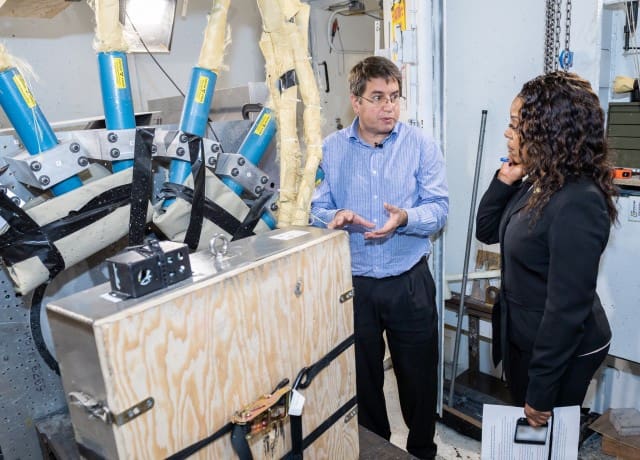
Testing is already underway with advanced ceramic blends such as synthetic diamond, along with novel manufacturing methods to provide higher toughness and lower density. Researchers are also investigating ultra-high molecular weight polyethylene composite materials that may absorb the kinetic energy of the oncoming bullets.

So far, the team has seen considerable success with its comprehensive systems-engineering approach. Last year, Army scientists examined the design methodology and the requirements for behind armor blunt trauma, which address the energy transmitted to the body during a non-penetrating impact.

Working together with the CCDC Data & Analysis Center, researchers made a significant adjustment to the behind-armor-criteria that reduced the weight of the armor by up to 20 percent. Then-Vice Chief of Staff of the Army General James McConville, approved the change last June as part of the Vital Torso Protection program.

For the long term, Army scientists plan to create computational tools to help them design armor for any ballistic threat.

“We are developing improved models to capture the full system response, including the fracture and failure of these materials under high pressures and loading rates and behavior of the material interfaces,” Hoppel said. “In these efforts, we are using the Army’s high performance computing centers to model how the projectiles and armors respond under high rates of loading.”

Scientists and engineers in the program partner with industry and academia through the Army’s collaborative research alliance known as MEDE, Materials in Extreme, Dynamic Environments. The alliance is led by Johns Hopkins University and includes a consortium of universities and industry partners seeking to understand the effects of material microstructure on the response to ballistic loading conditions.

Army scientists are also working together with the Dynamic Compression Sector at Argonne National Laboratory to conduct controlled experiments designed to calibrate and validate computational models for large-scale impact and penetration problems.

By partnering with leaders in the field, the researchers believe their collective efforts will strengthen their push for better protection technologies.

“We have gained a good understanding of the operative mechanisms in these emerging threats, and that knowledge illuminates paths forward to defeat the threats efficiently and robustly,” Hoppel said. “This will enable us to push the boundaries of armor design, creating much more effective protection for the Soldier.”

This story is the first in a multipart podcast series, What We Learned Today, highlighting the mission behind each of lab’s essential research programs. This series will provide coverage on the goals guiding the structure of these programs and the managers who lead them.

Story by U.S. Army CCDC Army Research Laboratory Public Affairs

Photos by Patrick Albright & Neil Adams