GORE-TEX Professional - AWICS

Archive for the ‘Guest Post’ Category

Air Force Delays Mandatory Wear-Date for OCP items, 2PFDU

Friday, May 29th, 2020

JOINT BASE SAN ANTONIO-RANDOLPH, Texas (AFNS) —

In an effort to reduce unnecessary stress on Airmen and Space professionals during COVID-19 restrictions, several uniform changes scheduled to become mandatory for the Operational Camouflage Pattern and Two-Piece Flight Duty Uniform (2PFDU) on June 1, have been delayed to Sept. 1.

The changes for each uniform are detailed in Air Force Instruction 36-2903, “Dress and Appearance of Air Force Personnel.” Mandatory wear of the Operational Camouflage Pattern Uniform remains April 2021.

The changes that become mandatory on Sept. 1 for the OCP include:

– Officer rank insignia will be spice brown (exception: first lieutenant and lieutenant colonel rank insignia will be black).

– The U.S. flag patch will be mandatory and the only authorized color is spice brown (cloth). Airmen will wear the flag while in garrison and deployed. Infrared U.S. flags are not authorized.

– The authorized T-shirt color will be coyote brown (listed as Tan 499 per AAFES nomenclature) only. If purchasing coyote brown shirts from outside retailers, uniformed members should ensure the color matches the authorized coyote brown color (Tan 499).

– The authorized socks will be DLA-issued green socks or coyote brown only.

– The authorized boot color will be coyote brown only. The two exceptions are for Airmen with a medical condition as determined by medical authorities at a civilian or military treatment facility and approved by the commander, and those who must wear black combat boots in industrial areas.

The changes that become mandatory on Sept. 1 for the 2PFDU include:

– All mandatory wear badges must be in place.

– The cloth U.S. flag will be the spice brown color only.

– The authorized socks will be DLA-issued green socks or coyote brown only.

– The authorized boot color will be coyote brown only.

– The only authorized color for thermal undergarments will be coyote brown.

For more information, please review Air Force Instruction 36-2903, “Dress and Appearance of Air Force Personnel,” or visit www.afpc.af.mil/Career-Management/Dress-and-Appearance.

By SSgt Sahara L. Fales, Air Force Personnel Center Public Affairs

PEO Soldier’s Product Manager Soldier Protective Equipment Executes Change of Charter

Friday, May 29th, 2020

FORT BELVOIR, Va. – Product Manager Soldier Protective Equipment (PdM SPE) held a change of charter to welcome Lt. Col. Stephen Miller as the new leader of the organization and recognize Lt. Col. Ginger Whitehead for her leadership, at Fort Belvoir, on May 27th.

A product team of Program Executive Office (PEO) Soldier’s Soldier Survivability (SSV) program office, SPE is charged with improving the lethality and mobility of the force by optimizing Soldier protection and effectively serving as the Lifecycle Manager for all personal protective equipment (PPE).

“I truly look forward to leading and working with the SPE team as we continue to improve Soldier lethality and survivability, by focusing on the key priorities that Ginger set out,” said Miller. “I intend to continue providing the right capabilities to the right Soldiers at the right time.”

Miller arrives at PEO Soldier after serving as an Army Acquisition Fellow, assigned last year to Microsoft as part of the Training With Industry Program. His other recent assignments include positions in the offices of the Assistant Secretary of the Army for Acquisition, Logistics, and Technology (ALT) and the Deputy Assistant Secretary of the Army for Plans, Programs, and Resources. Miller has been a member of the Army Acquisition Corps since 2009 and served as the Chief of Soldier Systems at the Maneuver Center of Excellence (MCoE) at Fort Benning, Ga. Many of the capability requirements for which he was responsible for at MCoE are for the programs being developed and procured now at PdM SPE. During his career, Miller deployed twice to Afghanistan and once to Iraq.

Miller said that SPE will “continue to pursue innovative solutions as routine practice.”

Miller’s portfolio now includes the Soldier Protection System (SPS), which includes the Next Generation Integrated Head Protection System (NG IHPS), Vital Torso Protection (VTP Shooter’s Cut), and the Torso and Extremity Protection (TEP). He is also responsible for the team that provides quality and testing support of all legacy Personal Protective Equipment (PPE) items as well as the Next Generation Advanced Bomb Suit (NGABS).

Col. Stephen Thomas, Project Manager Soldier Survivability (PM SSV) hosted the change of Charter. He highlighted Whitehead’s achievements during her tenure and presented her with the Meritorious Service Medal before the official change of charter.

“When I think of Ginger, I think of the word ‘trailblazer,’ just because of the numerous things she’s accomplished during her time as product manager,” said Thomas.

Whitehead’s tenure featured progress on the production of the NG IHPS, which provides greater levels of protection and interoperability with a range of night-vision devices for the wearer. The office further developed components of the SPS, the Army’s next generation and first ever-complete capability set of body armor, which includes a Blast Pelvic Protector (BPP), gender-specific Ballistic Combat Shirts (BCS), and a Modular Scalable Vest (MSV) that is lighter in weight than any of its predecessors and provides superior scalable protection and flexibility. The BPP, BCS and MSV are all subsystems of the of the SPS TEP.

“What we have today is lighter, better, more capable body armor that is light years ahead of anything we had in the last 10 to 15 years,” said Whitehead.

Recapping her time as product manager, Whitehead said one her proudest moments was participating in a PPE return ceremony. Last year, SPE presented Staff Sgt. Bryan McQueen the Enhanced Combat Helmet that stopped a 7.62x54mm round from fully penetrating the helmet’s shell, saving the Soldier’s life. She described it as “a powerful moment that underscores the importance of what we do on a daily basis.”

“We recognize that success is never owned, it is merely leased, and the rent is due daily,” said Whitehead.

Whitehead also thanked the Soldiers and civilians of SPE and said they will drive on with the mission in the years ahead.

“You are assuming responsibility of a phenomenal team that will stop at nothing to support the warfighter,” she told Miller.

Whitehead will next serve as Senior Acquisition Officer and Acquisition Branch Chief with the Army Futures Command at Fort Leonard Wood, Mo.

“I am sure [she will] take the same level of tenacity and ‘get the job done’ as she has here as the product manager,” said Thomas.

Story by Fred Shear
Photo by Courtney Bacon

FirstSpear Friday Focus – OEM Partner Series – LionHeart Alliance

Friday, May 29th, 2020

Today we have another edition of the FirstSpear OEM Partner Series where we take a look at an all new product or company FirstSpear manufactures equipment for. This series highlights LionHeart Alliance and the Hot Pursuit Series of vests featuring FirstSpear Rapid-Release Tubes and Laser Fused 6/12 platform.

Why/How did LionHeart begin?

LionHeart began with a need for a company to focus on the needs of the Law Enforcement community. There are many companies that sell equipment to the government and some do it really well. However, those companies all chase the larger DOD business and do not give the LE community the customer service or time that they deserve. With our focus being on Federal, State, and Local LE Communities we have a greater understanding and knowledge base on what equipment works, and how best to procure this equipment that many of the other companies lack.

Why was the Hot Pursuit Vest created?

The Hot Pursuit series of vests was created to fill a void we saw in products tailored towards the Law Enforcement market. There are many features that make the Hot Pursuit series stand out, but the main feature that everyone sees from the start is the ability to accept both MOLLE compatible pockets as well as QASM placards. While there are other carriers on the market that accept just MOLLE pockets as well as those that accept just QASM placards there was no off the shelf carrier that could accommodate both. This feature is huge for issuing departments as it allows the end users to run their loadout the way they want to vice having to run it a certain way based on the carrier that was issued. Likewise, we have added ample Velcro loop on the front and rear of the carrier to accommodate identifier patches so that the end users are clearly marked during highly dynamic environments. One of the best but often overlooked feature is the rear pull up panel that exposes the ends of the cummerbund and allows the user to make micro adjustments to the fit of the cummerbund quickly and easily. During those early morning raids in which jackets must be worn, the user can doff the garment and adjust the cummerbund fit tighter and get back to the fight much sooner than with other carriers, all the while not giving up MOLLE real estate. The Hot Pursuit series in SAPI Cut, MBAV Cut, or Crime Suppression Cut are perfect options for issuing to Agencies, Departments, or Teams.

Why did you choose to use Tubes and 6/12?

These products have been industry leaders for years now. While other companies have tried to come up with comparable options, you just can’t beat the originals.

Why did you ultimately choose FirstSpear OEM manufacturing?

Was there any other option? We have had a long-standing relationship with the team at FirstSpear for many years and the visions at both companies are co-aligned in that at the end of the day all the matters is the end users and making sure they have the Gear To Give Them The Edge. With a shared vision and FirstSpear’s industry leading technology and manufacturing capabilities it was a no brainer that we wanted to develop the Hot Pursuit series with them.

Why was Made in the USA important to the brand?

Made in the USA was very important to us. While many companies are going overseas to keep the prices down on their products we decided that it was more important for us to keep it made in the USA to ensure that quality was were where we needed it to be for our customers on the streets. Will we lose out on some business due to price? Yes. But those who understand the Hot Pursuit series will see past the price and be happy with their purchase for years to come.

Any new products on the horizon between LionHeart and FirstSpear?

I know we at LionHeart and FirstSpear are always listening to our customers and adapt products to continue to fill voids in their operational equipment needs. So, all we can say is the gears are always turning, so stay tuned.

lhagear.com/dynamic-assault-systems-hot-pursuit-plate-carrier-mbav-cut

Air Force Research Labs – Grand Challenges for Biotechnology

Tuesday, May 26th, 2020

WRIGHT-PATTERSON AIR FORCE BASE, Ohio – The Air Force Research Laboratory announced its three Biotechnology Grand Challenges last month in efforts to spearhead innovation among small businesses for the specific needs of the Department of Defense.

These three challenges, which were chosen by AFRL’s team of biotechnology experts, seek advancements in the following: biosynthesis of monomers for aerospace thermosets, biosynthesis of high-density endothermic fuels, and human performance-enhancing probiotics.

“When AFRL’s team decided on these challenges, we were looking for ways to make big strides quickly in the area of biotechnology,” said Jill McQuade, AFRL’s biotechnology program manager. “Biotechnology is one of AFRL’s big bets, and is also one of the twelve Office of the Secretary of Defense’s modernization priority area.”

McQuade explained that the AFRL Small Business office put forth $3 million to fund this initiative, which will be divided equally across the challenges. Participants can then compete in two phases of initial evaluation, and then in a Pitch Day.

In the first phase of this competition, small business participants will submit white papers with their concepts, said McQuade. During the second phase, a panel of experts will select which white papers will move forward in the competition. Then, those selected to continue in the competition will be given two weeks to enter into an agreement with a company of their choice that can scale up production and manufacturing. Finally, these teams will participate in a Pitch Day, presenting a one-hour pitch of their concept and scale up strategy with their manufacturing partner to the AFRL team. The winners of the competition will be funded in various layers by accomplishing certain milestones over the course of one year from each Pitch Day.

Pitch Days will be in July, August and September for each of the challenges, and could potentially be virtual due to social distancing guidelines of the COVID-19 pandemic.

Not only will these challenges expedite innovation, but they help small businesses by narrowing down specific needs, McQuade explained. “These challenges can show the broader science and technology community as well as the research and development community how biotechnology can successfully be used as a tool to develop innovative solutions to current hard problems.”

For more information about the three Biotechnology Grand Challenges, visit innovatedefense.net/dod/afrl-challenge-1.

Gina Marie Giardina, Air Force Research Laboratory

Talent Management Key to Filling Future Specialized Multi Domain Operations Units for Army

Tuesday, May 26th, 2020

POINT MUGU, Calif. — The Army is hunting for top talent to fill the ranks of specialized units for multi-domain operations, following the first one standing up last year in Washington state.

In 2019, a mixture of the Army’s space, cyber, and electronic warfare capabilities was activated as a cohesive unit called the Intelligence, Information, Cyber, Electronic Warfare, and Space Battalion — or simply I2CEWS.

The battalion has become “the centerpiece of the Multi-Domain Task Force,” Gen. John M. Murray, commander of U.S. Army Futures Command, said Tuesday during the Association of Old Crows virtual EMS Summit.

Located at Joint Base Lewis-McChord, Washington, the battalion combines non-lethal Army capabilities with kinetic capabilities, such as missile defense. The I2CEWS operates in support of U.S. Army Pacific, and AFC has “plans to stand up more as we begin to experiment with this formation,” Murray said.

The Multi-Domain Task Force is a model of how the Army envisions joint-warfighting on future battlefields against near-peer competitors, like Russia and China. Before the Army activates additional formations, though, Murray said it will first need the right talent to fill the ranks.

“The No. 1 thing is finding talent, and I’m convinced we have some of that talent already in our ranks,” Murray said. “And we’re going to have to go into our recruiting pools to find some of that talent. The Army is already beginning to explore innovative ways in talent management.”

Some innovative talent management programs include the Assignment Interactive Module 2.0, or AIM 2.0. The information system is a way for officers to build detailed resumes and take part in a market-style hiring system for their next assignments as organizations post specific positions they are looking to fill.

Talent management will also be part of the Integrated Personnel and Pay System-Army, or IPPS-A, a web-based human resources system already adopted by the National Guard, that will soon integrate the Army’s personnel, pay and talent management functions into one secure web-based application.

Much like how traditional battlefields will change under the information age, the Army will also recruit talent differently. For example, Murray explained, “Thirty-eight years ago, when I was offered a four-year Army ROTC scholarship, they couldn’t care less what I majored in.

“So, I picked the easiest major I could find,” he admitted. But today “we’re offering [cadets] a six-year scholarship to come out with a degree the Army needs, and if they can’t meet our requirements, then they’re not going to join the Army.”

The Army has taken other steps to attract and keep cyber talent, such as hosting cyber hackathons, boosting pay and incentives, and direct commissioning.

But “the most attractive way to retain our cyber warriors is the thrill of the mission. To be honest, [cyber warriors] are doing things they could not do outside the Army without spending time in jail,” Murray said, regarding cyber warfare missions.

Cyber warriors direct and conduct integrated electronic warfare, information, and cyberspace actions. They are responsible for the aggressive defense of Army networks, data infrastructure, and cyber weapons systems.

For Murray, who is responsible for leading a team of more than 24,000 Soldiers and civilians in the Army’s modernization enterprise, helping shape the Army’s future force is personal.

The four-star talked about his eight grandchildren, especially one granddaughter who, he believes, will one day be “an infantry commander wearing airborne and Ranger tabs.” It’s her generation he’s working for, he said, not “old Soldiers like me.”

Murray wasn’t the only one with that mindset.

“I use some of the same equipment my father used, and my nephews are now flying some of the same equipment that I flew,” said Lt. Gen. Neil Thurgood, director of hypersonics, directed energy, space, and rapid acquisition.

“We need our grandchildren to fly new and modernized equipment as we continue to go forward,” Thurgood added. “So to those of us that have aged a little bit in the process of our careers, it is personal, because we spent that time with our Soldiers, and we spent that time with our families.”

In the end, that’s really what AFC and “the whole team, to include our acquisition partners, brings to our Army, delivering solutions that our Soldiers need when they need it,” Murray said.

“This is about our kids and our grandkids that will defend this great nation going into the future,” he added. “That’s really what personalizes this mission for me, and that’s a heavy rucksack to carry.”

By Thomas Brading, Army News Service

MATBOCK Monday: LIFT System

Monday, May 25th, 2020

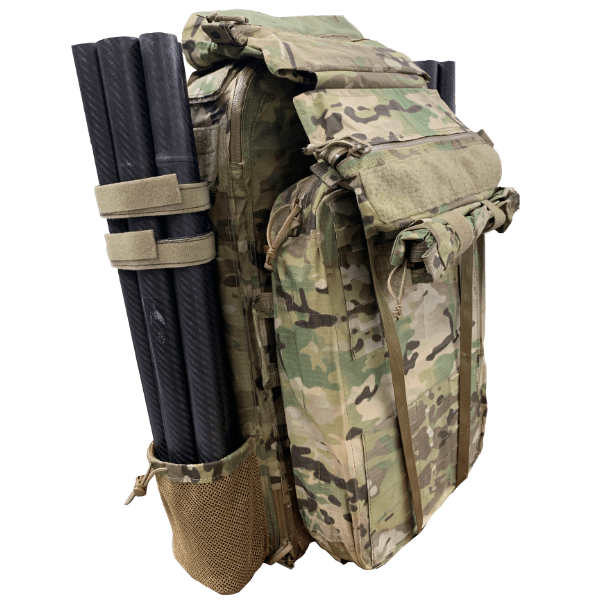
As we wrap up Medical March we will be showcasing our full line of ultra lightweight, durable and multifunctional litters.  All of our litters can be used in conjunction with our ultra lightweight Carbon Combat Poles.  The Carbon Combat Poles weigh in at 1.3 pounds per pole and have a max carrying capacity of 400 pounds!  The poles when fully extended are 7′ 6 3/4″ and can be easily collapsed into 5 – 1′ 9 1/4″ sections that can be packed into any pack.

www.matbock.com/collections/medical/products/combat-carbon-poles

At 6.5 feet long, the stretcher is long enough to accommodate all operators and has a maximum carrying capacity of 400 lbs for both the operator and his/her gear. The stretcher has 5 handles per side to give each team a multitude of configurations for carrying a downed man.  Additionally, the litter collapses and zips together to form a multipurpose, lightweight, Sensitive Site Exploitation (SSE) bag. The bag is augmented with a single adjustable strap for easy carry when loaded, a drawstring to secure the bag contents and is small enough to fold up and be stored in a cargo pocket.  The S-LIFT is compatible with the Combat Carbon Poles.

www.matbock.com/collections/medical/products/s-lift

Made from Ultra High-Density Polyethylene, it will not absorb water, biological or chemical hazards and can handle decontamination in all standard chemicals without degradation in strength or abrasion resistance. Additionally, the stretcher is constructed with Kevlar stitching to ensure even the stitching won’t absorb those hazards.  The J-LIFT is compatible with the Combat Carbon Poles.

www.matbock.com/collections/medical/products/j-lift-gen-2

The R-LIFT is a fully rigid litter that deploys in seconds, weighs only 6 lbs on its own and only 6.5 lbs with the carrying pack. It boasts a maximum load carrying capacity of 400 lbs. The litter is constructed from Ultra High-Density Polyethylene and Kevlar stitching, offering extremely high abrasion resistance and strength, inability to absorb blood, pathogens, chemical or biological hazards, and still decrease weight and size. Additionally,  The R-LIFT comes with a built-in inflatable air bladder designed to support the head and align the spine. The R-LIFT comes with a replaceable integrated emergency blanket that can be deployed quickly to prevent hypothermia.  The R-LIFT is compatible with the Combat Carbon Poles.

Entire LIFT System can be found here: www.matbock.com/collections/medical/LIFT-System

Register for their Weekly Webinar: zoom.us

Army Research Shows Connection Between Stress, Stomach Ulcers

Monday, May 25th, 2020

RESEARCH TRIANGLE PARK, N.C. — New U.S. Army-funded research demonstrates a connection between stress and stomach ulcers.

The research, conducted at the University of Pittsburgh Brain Institute and funded by the Army Research Office traced neural pathways that connect the brain to the stomach, providing a biological mechanism that explains the connection.

ARO is an element of the U.S. Army Combat Capabilities Development Command’s Army Research Laboratory.

“The bidirectional connections between brain and gut are important conduits for communication within the mind-body axis,” said Dr. Frederick Gregory, ARO program manager. “The biological mechanisms into how stress might influence cognitive performance plays a central role in future strategies to mitigate Soldier stress through diet or other new gut-centric interventions. Not only is this important for combat missions but for the overall health and well-being of the entire Army.”

The findings, published this week in the Proceedings of the National Academy of Sciences, build a scientific basis for the brain’s influence over organ function and emphasize the importance of the brain-body connection.

Until now, research exploring the gut-brain interaction has largely focused on the influence of the gut and its microbiome on the brain and neurological disorders. But it’s not a one-way street – the brain also influences stomach function.


“Pavlov demonstrated many years ago that the central nervous system uses environmental signals and past experience to generate anticipatory responses that promote efficient digestion,” said Peter Strick, Ph.D., Brain Institute scientific director and chair of neurobiology at Pitt. “And we have long known that every increase in unemployment and its associated stress is accompanied by an increase in death rates from stomach ulcers.”

To find brain regions that control the gut, Strick and his coauthor David Levinthal, M.D., Ph.D., assistant professor of gastroenterology, hepatology and nutrition at Pitt, used a strain of rabies virus to track connections from the brain to the stomach.

After being injected into the stomach of a rat, the viral tracer made its way back to the brain by hopping from neuron to neuron – using the same trick that rabies virus uses to infiltrate the brain after entering the body through a bite or scratch – to reveal the brain areas that exert control over the stomach.

The researchers found that the parasympathetic – rest and digest – nervous system pathways trace back from the stomach mostly to a brain region known as the rostral insula, which is responsible for visceral sensation and emotion regulation.

“The stomach sends sensory information to the cortex, which sends instructions back to the gut,” Strick said. “That means our ‘gut feelings’ are constructed not only from signals derived from the stomach, but also from all the other influences on the rostral insula, such as past experiences and contextual knowledge.”

In contrast, the sympathetic – fight or flight – pathways of the central nervous system, which kick in when we’re stressed, predominantly trace back from the stomach to the primary motor cortex, which is the seat of voluntary control over the skeletal muscles that move the body around.

Identifying these neural pathways that connect the brain and stomach could provide new insights into common gut disorders.

For example, Helicobacter pylori infection typically triggers ulcer formation, but descending signals from the cerebral cortex could influence the bacteria’s growth by adjusting gastric secretions to make the stomach more or less hospitable to invaders.

These insights could also change clinical gastroenterology practice. Knowing that the brain exerts physical control over the gut gives doctors a new way to approach bowel problems.

“Several common gut disorders, such as dyspepsia or irritable bowel syndrome, might not get better with current treatments,” said Levinthal, who is also a gastroenterologist at UPMC. “Our results provide cortical targets that will be critical for developing new brain-based therapies that might be helpful for our patients.”

Gregory said that this is particularly relevant to combat casualty care where there are often bowel problems such as traveler’s diarrhea that can affect the overall health and performance of the military.

In addition to the U.S. Army, the National Institutes of Health and the DSF Charitable Foundation supported this work.

By U.S. Army CCDC Army Research Laboratory Public Affairs


SCUBAPRO Sunday – Memorial Day

Sunday, May 24th, 2020

Shortly after the Civil War, Memorial Day began as Decoration Day. The reason for that is because it was a day on which Americans, North and South, would decorate the graves of soldiers who died in the Civil War.

Maj. Gen. John A. Logan, who lead a group for Northen Civil War veterans, declared in 1868 that Decoration Day would be observed on May 30. The date was chosen only for the reason that it didn’t coincide with any battles fought. It was a day for the North and South to honor their fallen and decorate their graves. After World War I the holiday was broadened to include service members who died in all of the country’s wars, not just the Civil War.

Multiple cities claim to be the birthplace of this holiday, but President Lyndon Johnson formally gave the honor to Waterloo, N.Y., in 1966. Up until 1971, Memorial Day was observed on May 30, the date Logan had selected for the first Decoration Day. In 1968 Congress passed the Uniform Monday Holiday Act, which established Memorial Day as the last Monday in May to create a three-day weekend for federal employees. The same law also declared Memorial Day as a federal holiday. It did not go into effect until 1971.

Most people look at the Memorial Day weekend as the unofficial start of summer, mattress, and furniture sales or a day for cooking out. I know most of the people that read SSD will understand what the real meaning is. This is a day to remember the fallen man and woman of the military that have gone before us. Like most holidays in the U.S., it has been turned into just a weekend for sales and people to try and make money. But please take the time to think about the fallen, and their families that have as President Lincoln said: “Laid so costly a sacrifice upon the altar of Freedom.” We truly are lucky to live in the greatest country in the world, where “the pursuit of happiness” is a garneted right. You are never asked to do anything for it other than maybe do jury duty. But some people chose to serve for whatever reason and some die because they chose to server.

There are a couple small things you can do. One is if you fly an America flag lower it to half staff until noon. Then at noon raise it all the way up until sunset. Second, in the year 2000, the National Moment of Remembrance was passed in Congress this says at 3pm local time take a moment in your own way to remember the fallen.

Memorial Day is not Veterans Day. I have heard so many people say, “oh this weekend, we should really thank a veteran.” This isn’t for us; it is for the people that never came home and their families.

Lastly, I wanted to say something about what to say to someone else on Memorial Day as a greeting. Please do not say “Happy Memorial Day”. This is a little thing but it’s like saying happy funeral day. So, if you feel like “Happy Memorial Day” isn’t appropriate, try saying, “I hope you have a nice/good Memorial Day,”.

Long Live the Brotherhood