Register Now for SOF Week

Archive for the ‘Guest Post’ Category

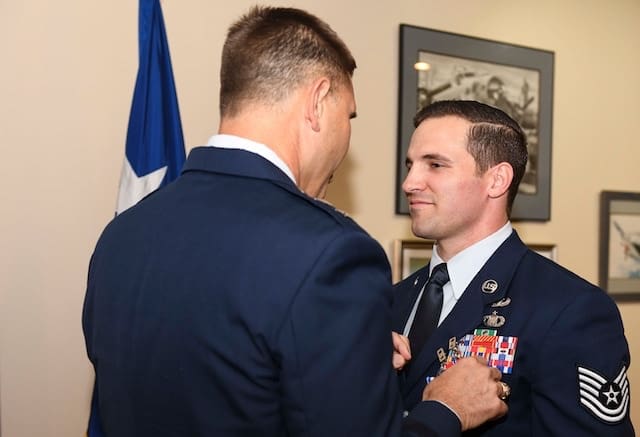
Air Force SERE Modernizes Training

Saturday, June 6th, 2020

FAIRCHILD AIR FORCE BASE, Wash. (AFNS) —

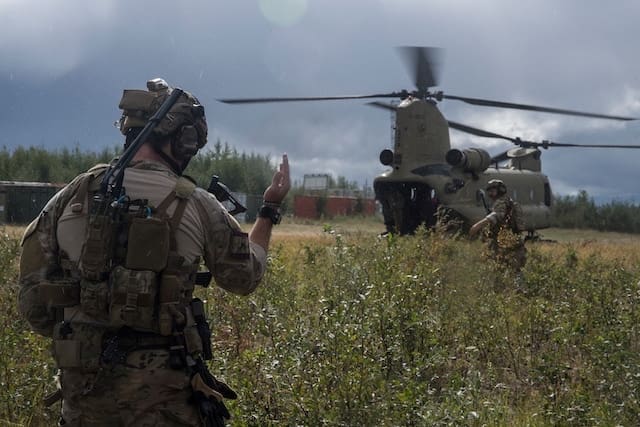
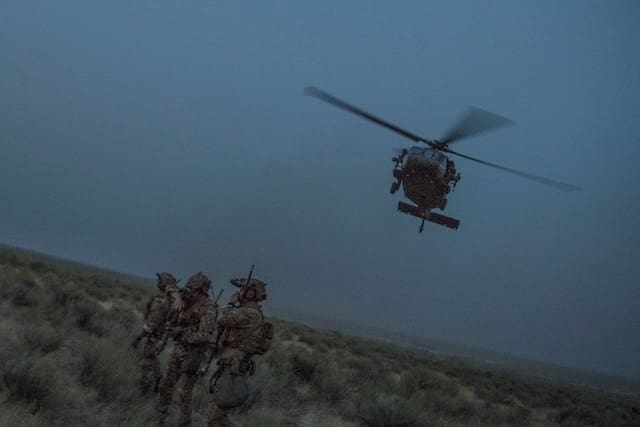
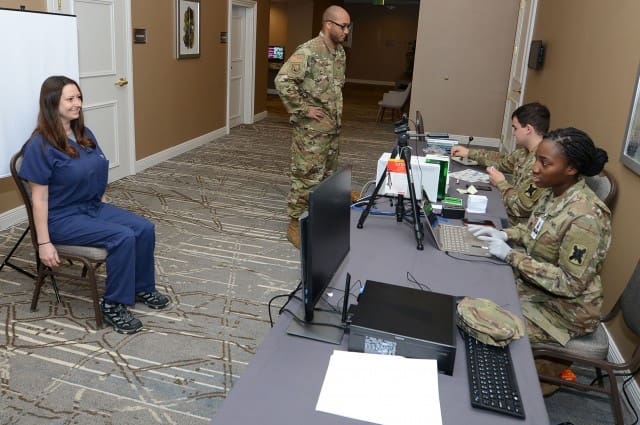
The 336th Training Group is streamlining Air Force Survival, Evasion, Resistance and Escape training with several possible permanent changes to modernize training which have been under review but are being expedited because of COVID-19.

As a response to COVID-19, SERE training at the group paused for 14 days to implement movement restrictions, which is when healthy individuals with no known exposure or illness monitor their own health status prior to being introduced into a previously healthy population.

“This has been near and dear to my heart for the last 15 months in planning,” said Col. Carlos Brown, 336th Training Group commander. “We are confident this new format of training will be able to get the right Airman, the right training and the right time and make the training process more efficient.”

The changes will involve shifting the SERE training paradigm from a one-size fits all approach to a flexible and more efficient concept that will adequately prepare forces for a high-end conflict, including the incorporation of distance learning into the curriculum.

“These changes will provide more tailored training for our Airmen while delivering them to their combat units more quickly,” said Maj. Gen. Craig Wills, 19th Air Force commander. “This is an exciting development that saves our most valuable resource – our Airmen’s time, while preparing our Air Force to better meet the demands of the 21st century fight.”

Initial SERE training for Airmen at high risk of isolation has been conducted through four courses over a 26-day period. Now, leaders at 336th TRG believe they have found a way to restructure the training requirements, which make it more efficient and ultimately saves time. COVID-19 expedited the need to test these changes, which are proving to be beneficial.

“Reducing the length of the SERE training helps accommodate personnel’s needs, especially through this pandemic,” Brown said. “We are professionalizing our Airmen through continued distance-learning education and getting after some long-term projects to modernize the SERE enterprise.”

The modernization effort, if approved by the Air Force, will provide tailored and targeted training based on an Airman’s AFSC and the level of risk they may face on the battlefield. This custom approach to training targets the right Airman, at the right time, in the right place for training.

“Currently the Air Force is working with every major command in the Air Force to better understand their SERE training needs, and we are confident these changes put into place because of COVID-19 will be in line to meet those requirements,” Brown said.

Story by C Arce, Air Education and Training Command Public Affairs

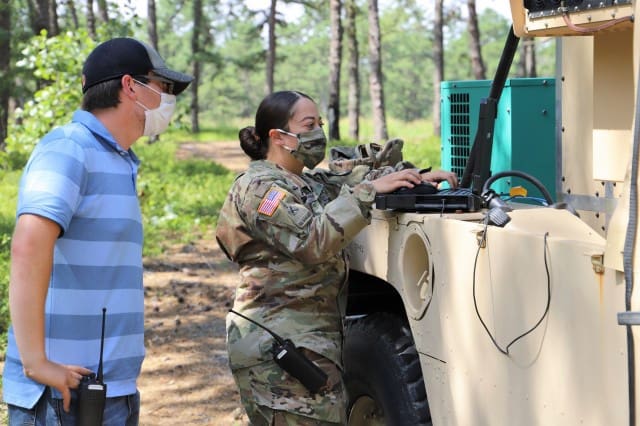
Photo by 1st Lt Kayshel Trudell

FirstSpear Friday Focus – Scrap FR Shirt

Friday, June 5th, 2020

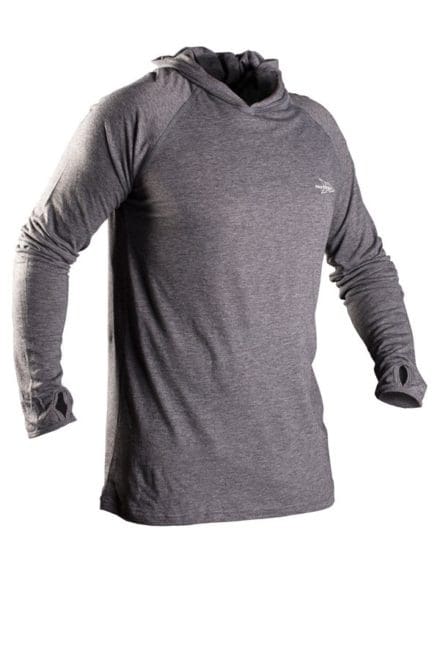
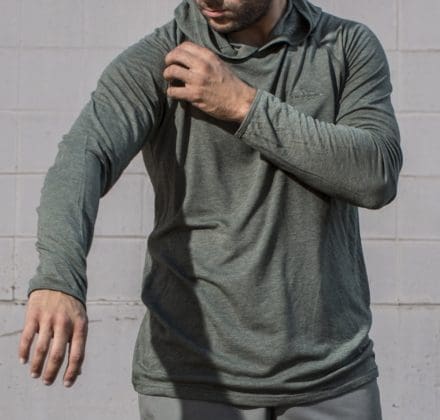
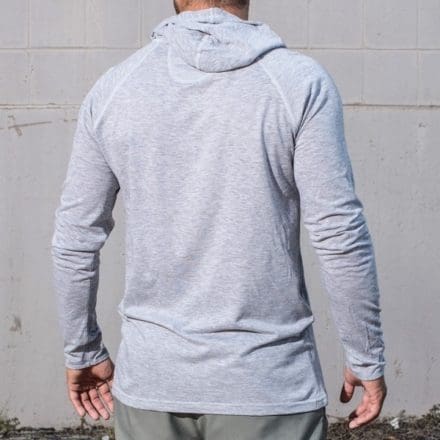
Today we are getting the first look at another all new technical garment from FirstSpear, meet the Scrap FR Shirt. Built from an advanced 3.2 oz aramid blend the scrap is an extremely lightweight shirt designed to offer some FR protection in a very low profile / low bulk solution. Wear it all on its own in extreme hot environments or use it as an outer layer to gain some flash and flame protection. Soft, pliable, and full of options that enhance comfort as well as heat mitigation.

Features a zipper front opening, reinforced with webbing sewn buttons. Protective collar can be fastened up around your FS Kojin Balaclava, FS Neckie or left open. Multi-positional cuff and security strap. To make the most of hot weather versatility the Scrap has breathable mesh in the bottom and back of the front pockets, armpits, and across the entire back yoke. All pockets feature mesh for drainage, standard FS IFF Oval Fields, and basic organization features. Cut for shooting, moving, and duration activities, a slightly longer tail to aid in protective over-lap and concealed carry when required with a slight rise in the front to access your belt line when untucked. Your FS Field Shirt Size should correspond to the Scrap and work together for you when desired. The Scrap is Machine Wash safe with minimal shrinkage. 100% American made with USA materials.

Available now in FS Graphite, FS Sand and FS Commando.

www.first-spear.com/scrap-fr-shirt

US Army Adopts New Path Forward for Optionally Manned Fighting Vehicle

Friday, June 5th, 2020

OMFV adopts new path forward from lessons learned

FORT MEADE, Md. — The Army’s G-8 discussed a new strategy for the Optionally Manned Fighting Vehicle, following lessons learned after its first request for prototypes was canceled earlier this year.

The OMFV, which will replace the Bradley Fighting Vehicle, remains on track to be fielded to both active and National Guard armored brigade combat teams starting in fiscal year 2028.

About $4.6 billion is currently invested in the program from fiscal 2020-2026, said Lt. Gen. James Pasquarette during a presentation for the Future Ground Combat Vehicles virtual conference Thursday.

“The initial solicitation required a very aggressive set of initial capabilities on an equally aggressive timeline beyond what our partners in both government and industry could provide,” he said. “To be clear, the Army is absolutely committed to the OMFV program.”

Despite the adjustment costing the Army about $23 million in unrecoverable funds, he said it was still important to reset the program’s azimuth in the right direction.

“Rarely than fail late after spending billions of dollars, like we’ve done in the past many times, the Army learned early and inexpensively,” he said.

After pulling the solicitation, the Army garnered feedback from government and industry partners to chart the next move.

Army Futures Command then adjusted the traditional requirements approach by defining a set of nine characteristics to better focus efforts, he said.

The characteristics — survivability, mobility, growth, lethality, weight, logistics, transportability, manning, and training — will further be refined through a cooperative and iterative process with industry, digital design competitions and Soldier touchpoints to produce the final prototypes for testing, AFC officials said in February.

“The Army believes that this adjusted requirement strategy preserves flexibility much longer into the acquisition process before necessitating significant hardware investments,” Pasquarette said.

The general said the new strategy will spark innovation and competition through a collaborative process that offers several opportunities for Soldiers to provide input.

“Throughout this process, Soldiers will assist the Army and industry partners in refining the vehicle’s characteristics in design and forming the most feasible and acceptable set of technical requirements for final production,” he said.

While there will be challenges due to the complexity of such a program, he said he believes some industry partners will thrive in the non-traditional acquisition setting.

“This strategy is an approach the Army must take to harness the power of innovation of worldwide industry partners, drive new ideas through competition and produce a new infantry combat vehicle that Soldiers must have to fight and win against a near-peer threat in the future,” he said.

In the meantime, the Army has also invested $915 million from fiscal 2020-2026 to develop and field the latest A4 versions of Bradley vehicles to armored units starting in the second quarter of the next fiscal year, he said.

The A4 version will have upgrades to the suspension and track, powertrain, electrical system, mission command features, plus other enhancements and accelerated technologies, he added.

“The U.S. Army is committed to providing our Soldiers the best ground combat systems in the world,” he said. “And under Army Futures Command’s direction and oversight, I’m confident that the armored brigade combat team will remain the dominate ground combat formation for decades to come.”

By Sean Kimmons, Army News Service

“Changing Stripes” (a Tiger Stripe History Teaser)

Tuesday, June 2nd, 2020

Sunday, May 31st we ran a SCUBA Pro Sunday article celebrating the birthday of the US Navy SEALs. You probably noticed a couple of interesting gear modifications and iconic camouflage patterns in the last picture of that article.

You know, the one right before you learned that SEAL Team 2 is older than Team 1?

That picture features both tiger stripe and ERDL pattern cammies like those worn by Vietnam era New Zealand SAS soldiers, current OPFOR role-players, and others (including Philippine SOF units).

Recently freelance journalist (and militaria SME) Peter Suciu wrote an article for the Breach-Bang-Clear crew about the history and development of tiger stripe camouflage on their “House Morningwood” site. In it he addresses both historical and contemporary use of the pattern.

If you’re interested in that, check out,

Changing Stripes: a history of Tiger Stripe Camo.

And remember…you don’t wear tiger stripes in Japan.

By Dave Reeder, correspondent extraordinaire and magnificent bastard.

MATBOCK Monday – Travel Kit

Monday, June 1st, 2020

Good Morning and Happy MATBOCK Monday,

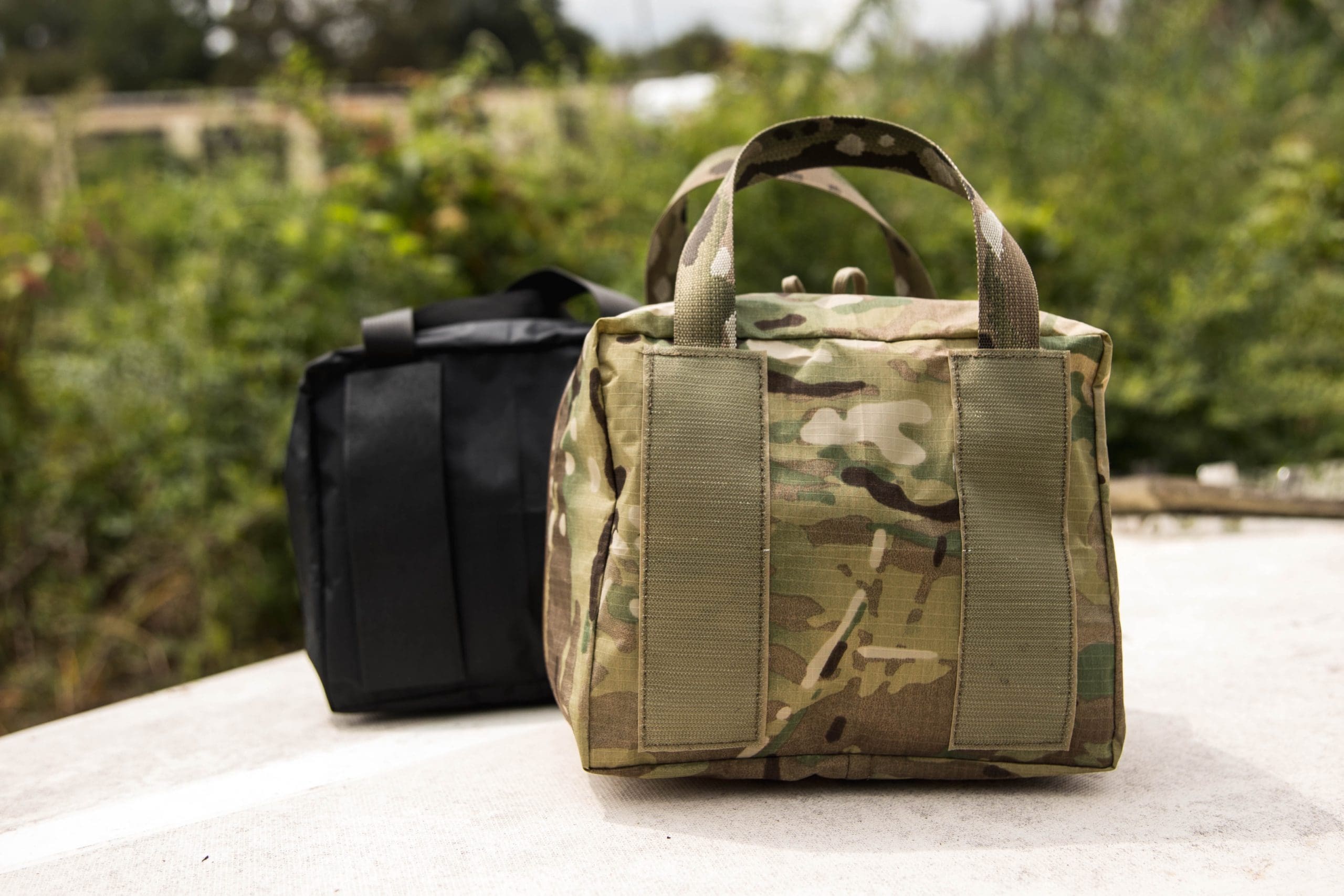
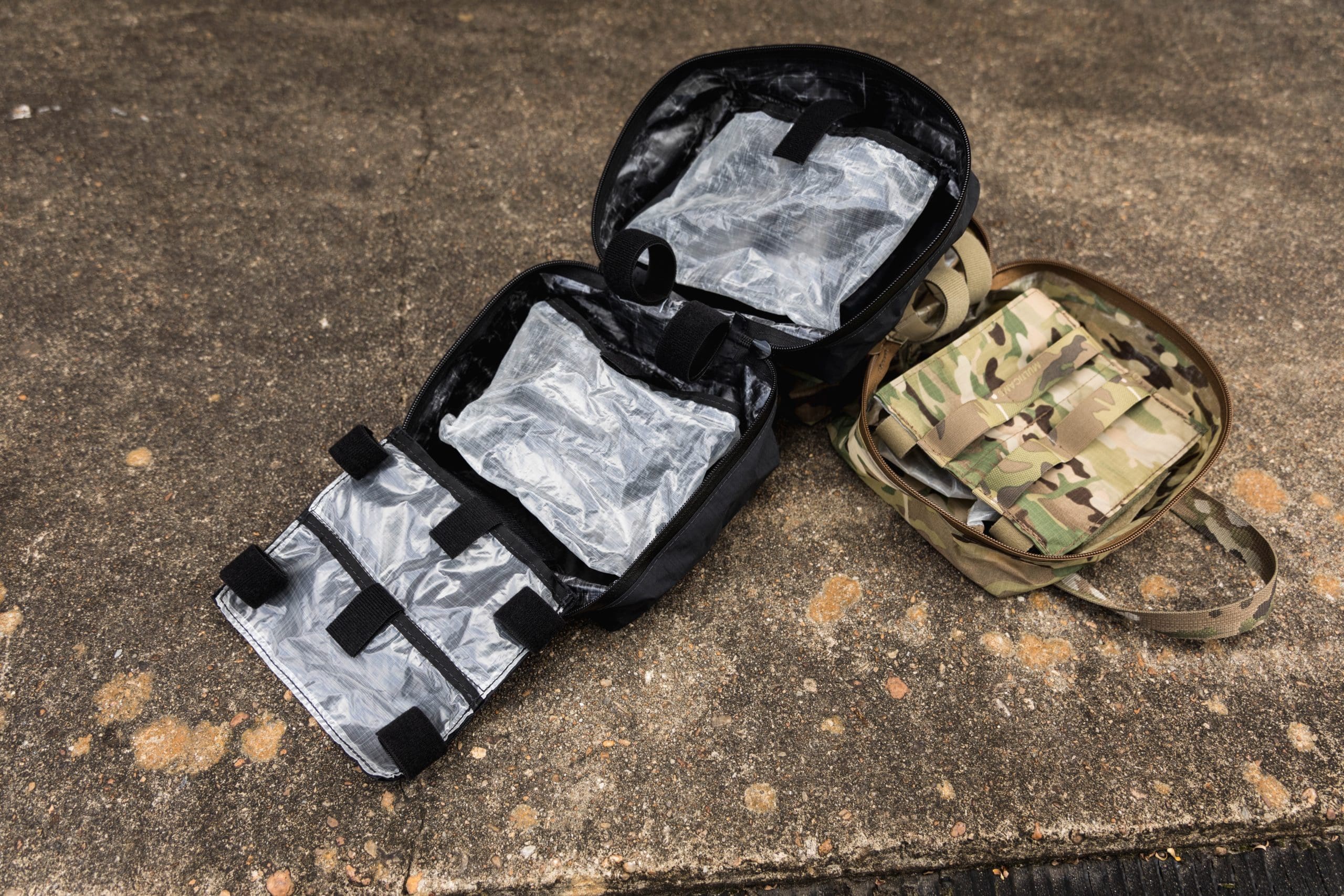
With restrictions beginning to lift during this COVID-19 Pandemic, vacation season and work travel is right around the corner. The MATBOCK Travel Kit is the perfect addition to keeping your luggage organized and neat!

Workout Bag

Workout clothes smell bad. Especially after being in your luggage for a few days. Why does the rest of your luggage and work clothes need to smell like them? This bag is designed to contain the mud and smell and prevent the rest of your luggage and clean clothes from smelling like workout clothes on day 2 of your adventure with 6 days and 4 cities to go. Easily fits 2 sets of shorts, shirts and socks with room to spare and packs up small and light when not in use! Don’t let your workouts ruin your business meetings. Waterproof and odor proof material. Water resistant zipper. Kevlar Stitching.

All Purpose Laundry Bag

Who doesn’t need a durable, lightweight, watertight bag to hold dirty laundry, groceries, beach supplies, ski boots or anything else your adventures might requires. Packs up super small and lights, holds everything you need a spot for. Waterproof and odor proof material. Water resistant zipper. Kevlar Stitching.

Sneaker Bag

Running shoes smell bad. So do hiking boots. Not to mention the fact that our adventurers usually end up muddy. Why does the rest of your luggage need to smell like them? This bag is designed to contain the mud and smell and prevent the rest of your luggage and clean clothes from smelling like running shoes on day 2 of your adventure with 6 days and 4 cities to go. Large enough for big feet and midsize hiking boots but small enough when not in use to not even notice it’s there. Waterproof and odor proof material. Water resistant zipper. Kevlar Stitching.

Toiletry Bag

Made of MATBOCK Ghost Heavy Material, this toiletry bag is light and strong and won’t absorb anything. No bacteria, no exploded 5 in 1 shampoo/car wash/dishwasher/laundry/face wash or toothpaste bottles, or anything else you keep in your toiletry bag. Let science work for you and upgrade to a toiletry case that can live up to any adventure you take it on. Waterproof and odor proof material. Water resistant zipper. Kevlar Stitching.

Cosmetic Case

Ladies, This isn’t your high fashion cosmetic bag. Its built tough just like you are. Tired of your powder foundation exploding in your make up bag and ruining the clothes in your luggage or purse? The MATBOCK Cosmetic Case is the perfect solution. It contains everything in one simple (but large) bag that is easy to clean, doesn’t absorb or facilitate bacterial growth and is made strong and tough just like you. Waterproof and odor proof material. Water resistant zipper. Kevlar Stitching.

Travel Kit

Need all 5 bags? We thought so cause we do as well. Buy the entire kit and save. Don’t let your gear slow you down. Waterproof and odor proof material. Water resistant zipper. Kevlar Stitching.

Don’t forget to join Casey and Jim on Monday at 4:30 PM EST as they go live on Instagram to demo the gear and answer all your questions!

Bringing Skunkworks Back: Armalite AR-10A2 Carbine Revived by Frank Woods

Monday, June 1st, 2020

I felt like doing an XM177 style AR-308 because I’ve never seen one before. So I did. I call this one “XM762-E1.” Since I reused the Blood Diamond carbine configuration as far as attachments go, I also nicknamed it “BD²” (Big Daddy Blood Diamond, Big Dick Blood Diamond, Blood Diamond 2: Judgement Day, whatever.)

– It is an AWB era Armalite AR-10A2 Carbine upper receiver, with a new Armalite AR-10A lower receiver. It is therefore an Armalite AR-10 through and through.

– It feeds from SR25/DPMS spec magazines.

– The upper receiver was internally modified to facilitate that function, by milling out the stabilizer shelves meant to hold the AWB AR-10B era modified M14 magazines in place.

– The upper receiver was rebarreled with a 1/10 twist 16″ barrel, that was hybrid in nature: Armalite “Carbine” style Midlength gas, DPMS spec barrel extension.

– The factory AR-10B BCG was replaced with a DPMS spec compatible BCG, the Brownells BRN-10 Retro BCG.

– It’s not an SBR.

– “Midlength” does not mean “Midlength” in AR-308 land. Midlength means whatever the manufacturer says it is in Midlength gas.

The barrel is 16″, and a slip over faux suppressor with compensator ports was used as the muzzle device, since no .308 version of an XM177 repro style muzzle device exists.

This retained the 16″ barrel accuracy and ballistic performance, taming the .308 recoil with the compensator function, and completed the XM177 moderator look as closely as possible, without a carbine length gas system 12.5″ barrel causing the rifle to beat the shit out of itself.

Furniture was spray painted Aervoe Earth Brown. Grip is a Brownells Retro AR-10 repro they made for the BRN-10.

“I want one!”

1.) Do what I did, track down an Armalite AR-10A2 upper, modify the internals, pair it with a factory Armalite lower, rebarrel/reBCG with a hybrid spec barrel and DPMS spec BCG, drive on.

2.) Maybe try to convince Armalite to revive or do a run of their A2 upper receivers, only compatible with their AR-10A series lowers?

3.) Maybe try to convince someone else like Fulton Armory to reproduce the AR-10A2 style upper receiver and a matching lower, albeit to SR25/DPMS spec?

Doesn’t count if the receivers aren’t angular cut, that curved DPMS stuff is wack.

I’ve written a full article that explains what went into this project in detail. When it’s posted, I’ll share it.

SCUBAPRO Sunday – SEALs Birthday

Sunday, May 31st, 2020

On 25 May 1961, President John F. Kennedy, addressing a joint session of Congress, delivered a speech that most people remember as his challenge to the country to put an American on the moon before the end of the decade. The most important part of that speech you seldom hear about. But, it mandated that the military broaden its numbers and the use of Special Operation in all branches of service: “I am directing the secretary of defense to expand rapidly and substantially … the orientation of existing forces for the conduct of … unconventional wars. … In addition, our special forces and unconventional warfare units will be increased and reoriented. …”


The East Coast and West coast teams have always joked about what team is older, Team One, or Team Two. Team Two says they are because of the 3-hour time difference, and the west coast says they are because they supposal received their message to commission first.  But this isn’t really about that. The SEAL Teams use 01 Jan 1962, the day the teams were commissioned as their birthday. But if you look through old messages, you can find about different dates that you could say should or could be the birthday of SEAL Teams. Before Kennedy gave his speech, the Navy and all the other branches had already started to plan for a new kind of warfare and a new group to fight it. The U.S. has just ended significant involvement in Korea and sent advisers to Vietnam around 1955, so we had an idea of what the next generation of warfare might look like.

“To augment present naval capabilities in restricted waters and rivers with particular reference to the conduct and support of paramilitary operations, it is desirable to establish Special Operations teams as a separate component within Underwater Demolition Units One and Two. An appropriate cover name for such units is “SEAL” being a contraction of SEA, AIR, LAND.”

– Vice Adm. Wallace M. Beakley,
Deputy Chief of Naval Operations, 05 Jun 1961

I love that the name “SEAL” started as a cover name, I am sure they never thought of what that name would come to mean. I say that in a good way and also a little wrong. I miss the days of being quiet professionals.

The Chief of Naval Operations, Adm. Arleigh Burke, in a memo dated 11 Jul 1960, tasked Vice Adm Beakley with studying how the Navy could contribute to unconventional warfare. Beakley responded to that tasking in a memo dated 12 Aug 1960, saying, “Navy Underwater Demolition Teams and Marine reconnaissance units were the logical organizations for an expanded naval capability in unconventional warfare.” Beakley further recommended that a working group be formed to study how the Navy could “assist or participate” in covert operations. Then, on 13 Sept 1960, an Unconventional Activities Working Group was formed. Like the military now, the progress was slow, and on 10 Mar 1961, when the Navy’s Unconventional Activities Committee presented a mission statement for the new special operations unit and officially used for the first time the acronym “SEAL.” 

Beakley sent another memo saying, “If you agree in the foregoing proposals, I will take action to establish a Special Operations Team on each coast.” Burke wasted no time in giving the green light. On 05 Jun 1961, the CNO issued a letter notifying the commanders in chief U.S. Atlantic, U.S. Pacific, and U.S. Naval Forces Europe about the Navy’s intentions regarding SEAL units. So, if you look at all the about dates, you can choose 25 May, 05 Jun, 13 Sept, 10 Mar or 01 Jan.  I do not really care about what date that it happened on; I am just glad that it did, and I think it is good to look back at the process that went from idea to a finished product.

Oh, and Team Two is the Oldest Team.

New 5G Switch Provides 50 Times More Energy Efficiency Than Currently Exists

Saturday, May 30th, 2020

RESEARCH TRIANGLE PARK, N.C. — As 5G hits the market, new U.S. Army-funded research has developed a radio-frequency switch that is more than 50 times more energy efficient than what is used today.

With funding from the Army Research Office, an element of the U.S. Army Combat Capabilities Development Command’s Army Research Laboratory, researchers at The University of Texas at Austin and the University of Lille in France, have built a new component that will more efficiently allow access to the highest 5G frequencies, in a way that increases devices’ battery life and speeds up how quickly users can do things like stream HD media.

Smartphones are loaded with switches that perform a number of duties. One major task is jumping back and forth between different networks and spectrum frequencies: 4G, WiFi, LTE, Bluetooth, etc. The current radio-frequency switches that perform this task are always running, consuming precious processing power and battery life.

“Radio-frequency switches are pervasive in military communication, connectivity and radar systems,” said Dr. Pani Varanasi, division chief, materials science program at ARO. “These new switches could provide large performance advantage compared to existing components and can enable longer battery life for mobile communication, and advanced reconfigurable systems.”

The journal Nature Electronics published the research team’s findings.

“It has become clear that the existing switches consume significant amounts of power, and that power consumed is useless power,” said Dr. Deji Akinwande, a professor in the Cockrell School of Engineering’s Department of Electrical and Computer Engineering who led the research. “The switch we have developed can transmit an HDTV stream at a 100GHz frequency, and that is an achievement in broadband switch technology.”

The new switches stay off, saving battery life for other processes, unless they are actively helping a device jump between networks. They have also shown the ability to transmit data well above the baseline for 5G-level speeds.

Prior researchers have found success on the low end of the 5G spectrum – where speeds are slower but data can travel longer distances. This is the first switch that can function across the spectrum from the low-end gigahertz frequencies to high-end terahertz frequencies that could someday be key to the development of 6G.

The team’s switches use the nanomaterial hexagonal boron nitride, a rapidly emerging nanomaterial from the same family as graphene. The structure of the switch involves a single layer of boron and nitrogen atoms in a honeycomb pattern sandwiched between a pair of gold electrodes. Hexagonal boron nitride is the thinnest known insulator with a thickness of 0.33 nanometers.

The impact of these switches extends beyond smartphones. Satellite systems, smart radios, reconfigurable communications, and Internet of Things, are all examples of potential uses for the switches. In addition, these switches can be realized on flexible substrates making them suitable for Soldier wearable radios and communication systems that can benefit from the improved energy efficiency for longer battery life with faster data speeds as well as other defense technologies.

“This will be very useful for radio and radar technology,” Akinwande said.

This research spun out of a previous project that created the thinnest memory device, also using hBN. Akinwande said sponsors encouraged the researchers to find other uses for the material, and that led them to pivot to RF switches.

In addition to the U.S. Army, support through a Presidential Early Career Award for Scientists and Engineers, the U.S. Office of Naval Research and The National Science Foundation’s Engineering Research Center funded the research. The Texas Nanofabrication Facility partly fabricated the switch and Grolltex, Inc., provided hBN samples.


By U.S. Army CCDC Army Research Laboratory Public Affairs