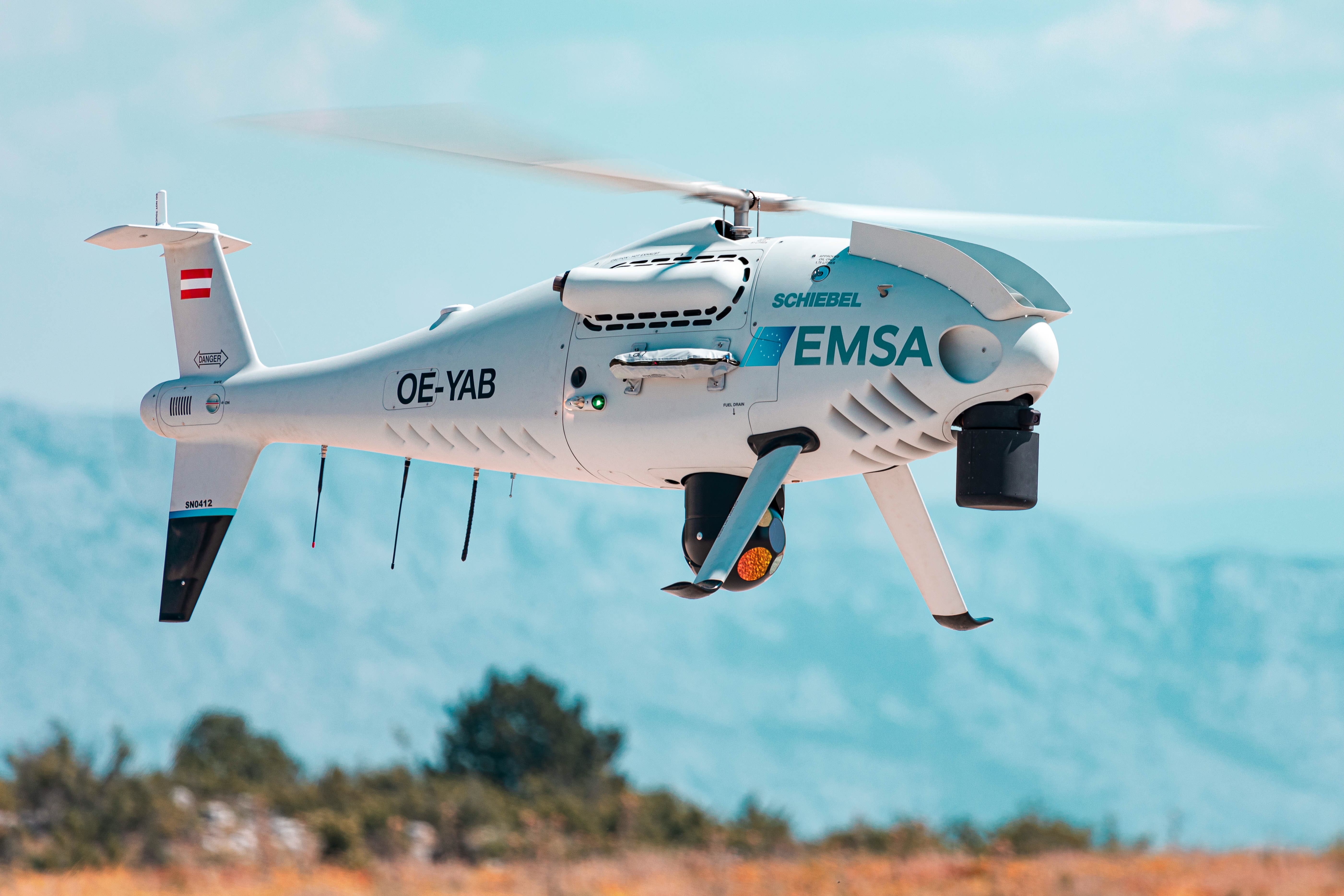
Vienna, 23 July 2019 – The Maritime Safety Directorate of the Ministry of Sea, Transport and Infrastructure of the Republic of Croatia issued the first mobilization request to the European Maritime Safety Agency (EMSA) for CAMCOPTER® S-100 maritime surveillance services.
Starting in the summer of 2019, the service provision for Croatia will assist in maritime Coast Guard functions such as search and rescue, monitoring and surveillance, ship and port security, vessel traffic, environmental protection and response, ship casualty assistance, as well as accident and disaster response. For these purposes, the CAMCOPTER® S-100 Unmanned Air System (UAS) will be based on the island of Brac? and will carry out regular patrolling flights, on-demand incident monitoring missions and specific inspection operations. The S-100 will execute these tasks equipped with an L3 Wescam Electro-Optical / Infra-Red (EO/IR) camera gimbal, an Overwatch Imaging PT-8 Oceanwatch payload and an Automatic Identification System (AIS) receiver.
EMSA awarded the multi-year maritime surveillance contract for a Vertical Takeoff and Landing (VTOL) Remotely Piloted Aircraft System (RPAS) to Schiebel in November 2018. In execution of this contract, Schiebel will provide simultaneous maritime surveillance services to several European Union (EU) member states and EU bodies.
“The CAMCOPTER® S-100 is the perfect Vertical Takeoff and Landing UAS to perform these Coast Guard functions,” notes Hans Georg Schiebel, Chairman of the Schiebel Group. “Backed by an impressive service record in the maritime domain, the S-100 has established itself as the best choice whenever sophisticated maritime surveillance is required.”
Posted in International, Maritime, Press Release, UAS | Comments Off on Schiebel Camcopter S-100 to Perform Coast Guard Services for European Maritime Safety Agency in the Republic of Croatia
As this week marks the 50th anniversary of the first man on the moon. I thought it would be a good idea to talk about how the UDT/SEALS teams have contributed to this effort. The Navy, as a whole, had a large part in the space race. From using Navy aviators as astronauts. The first American in space, Alan Shepard, was a Navy officer. The USS Lake Champlain was the ship that plucked him out of the water and brought him home. Neil Armstrong, the first man on the moon, was a naval aviator during the Korean War. When NASA Langley invented things to test how far they could push the new astronauts, they would test them out on team guys. From pilots to Frogmen to researchers and engineers, the Navy was heavily involved in the space program.

There have also been SEALS that have gone on to the space program. Capt. William Shepherd, Capt. Christopher Cassidy and LT Jonny Kim. LT Kim entered the Navy as an enlisted guy right out of high school, went to BUD/S then SEALS team 3 later became an “O” then NASA. I want to mention one other person that was at his last command before he was going to astronaut training. CDR Pete Oswald was the C.O. of Unit 4 in Puerto Rico. He died in a training accident in EL Salvador in 2002. There is no dough in my mind that he would have been a great astronaut.
Here are a couple of articles about the SEALS in the space program.
Airmen from Davis-Monthan Air Force Base’s 563d Rescue Group traveled more than 1700 miles, to save two critically injured Mexican fishermen onboard the Mazatun fishing vessel, July 10, 2019.
The fishermen were injured when their vessel’s crane collapsed more than 1300 miles southwest of San Diego in international waters at approximately 8 p.m., July 9. Fishing nets obstructed Mazatun’s propellers during the incident making the boat unable to transit under its own power. The two severely injured fishermen were transferred to Mazatun’s sister ship, Tamara, who began making the three day journey to the nearest land, a Mexican naval outpost on Socorro Island located more than approximately 840 miles away.
Due to the severity of the injuries and the ship’s isolated location, an urgent request was made for the specialized skills of U.S. Air Force Rescue. In response, the 563d RQG deployed multiple HC-130J Combat King II aircraft from the 79th Rescue Squadron to Tamara as it sailed to Socorro Island, July 10. Pararescuemen from the 48th Rescue Squadron parachuted from the HC-130J into the ocean. They intercepted and boarded the Tamara, and provided trauma care for the injured fishermen. They quickly stabilized the patients and offered continued care for the rest of the voyage to Socorro Island.


“The relationship that was built with the captain of the ship allowed a seamless integration of our PJs medical capabilities to be able to provide the best treatment for the two injured fishermen,” said Capt John Conner, 48th RQS flight commander of flight 3. “It also allowed us the opportunity to work how we were going to transfer the patient on the ship to Socorro Island. That relationship was key.”
Tamara reached Socorro harbor Friday evening, July 12. The pararescuemen transferred the fishermen to the Mexican naval medical clinic on the island where they would stay overnight. The next day an air ambulance transported them to Mazatlan, Mexico for further treatment.
“The unsaid skill Air Force Rescue offers is the ability to solve difficult problems in a timely fashion. This mission highlights rescue professionals’ ability to network within the 563d RQG, 355th Wing and a greater Tucson medical community to solve an incredibly difficult problem, and continue solving problems throughout the mission’s execution which can be seen by the infil methods, follow-on aerial resupply, and transfer of care/exfil conditions,” said Captain Michael Erickson, 48th RQS director of operations. “Air Force Rescue’s successful execution of the mission demonstrates one of the ways Davis-Monthan’s culture of readiness and problem solving skills can support the greater joint force and our mission partners.”
Pararescuemen from the 48th Rescue Squadron on Davis-Monthan Air Force Base, Ariz., along with the injured fishermen are being transported from one boat to another at Socorro Island, Mexico, July 12, 2019. Due to the limited space and capabilities of the harbor, the Tamara is too large to dock resulting in the pararescumen and injured fishermen to be transported by a smaller boat to shore. (U.S. Air Force photo by Airman 1st Class Kristine Legate)


A Pararescueman from the 48th Rescue Squadron on Davis-Monthan Air Force Base, Ariz., looks onto the Tamara at Socorro Island, Mexico, July 12, 2019. Pararescuemen from the 48th RQS were on location to help transport the injured fishermen from the Tamara to the medical center on the island. (U.S. Air Force photo by Airman 1st Class Kristine Legate)
Pararescuemen from the 48th Rescue Squadron on Davis-Monthan Air Force Base, Ariz., make their way to Socorro harbor to meet with the pararescuemen who have been onboard the Tamara at Socorro Island, Mexico, July 12, 2019. Pararescuemen from the 48th RQS are here to help transport the injured fishermen from the Tamara to the medical center on the island. (U.S. Air Force photo by Airman 1st Class Kristine Legate)
“This is the longest domestic rescue the 563d RQG has accomplished,” said Lt. Col. Scott Williams, 79th RQS commander. “The unique nature and location of the accident required specialized care, and I’m proud of the job our entire team did to ensure these men returned home to their families.”
The SPEAR Family of Tactical Headborne Systems Coxswain Helmet System consists of a non-ballistic helmet system with modular accessories which will consist of a visor, ballistic mandible, non-ballistic (i.e. impact) mandible, and two piece ballistic appliqué. Additionally, the helmets incorporate a variety of VAS Shrouds, Helmet Covers, Accessory Rails, Pads, Exterior Velcro sets, and Peltor Adapters.
The helmets will be procured in five sizes in Tan, Neutral Grey, AOR 1, AOR 2 and MultiCam.
The diving equipment company outer-limits is not only providing solutions for special forces they also lures them in to the mountains. There, at a lake, an international, professional clientele gathers to introduce the latest devices for working underwater. We were there last year and show you everything for Combat swimmers and amphibious forces.
The EXPERIENCE WEEK of outer-limits usually pushes operators to their limits. At least as far as the weather is concerned. Traditionally, it is rather cold and rainy. Last year, due to climate change: warm and sunny. The dive center on the lake offers ideal working conditions, the container serves as material store, the tent as an exhibition hall for the latest diving equipment.
Who works, should keep it easy. Every gram counts. RolaTube masts are made of composite material and can be rolled up easily. It does not always has to be an antenna.
outer-limits designed adapters and grappling hooks for the top, as well as an ultra-light flexible fabric ladder to make the boarding if not a snap, but a pleasure.
Advanced Scuba Diving Solutions are offered by SHARK MARINE. With floating GPS antenna, so the connection does not break off, as well as with DNS function for navigation without any surface connection.
The outer-limits EXPERIENCE WEEK is also very popular among special forces because the latest equipment can not only be viewed, but also experienced. Here it goes with sharkmarine directly into the water.
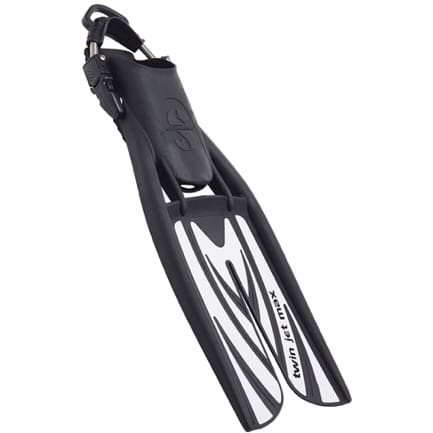
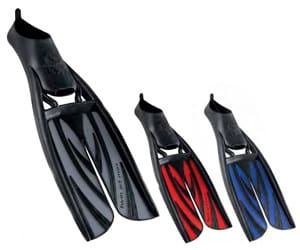
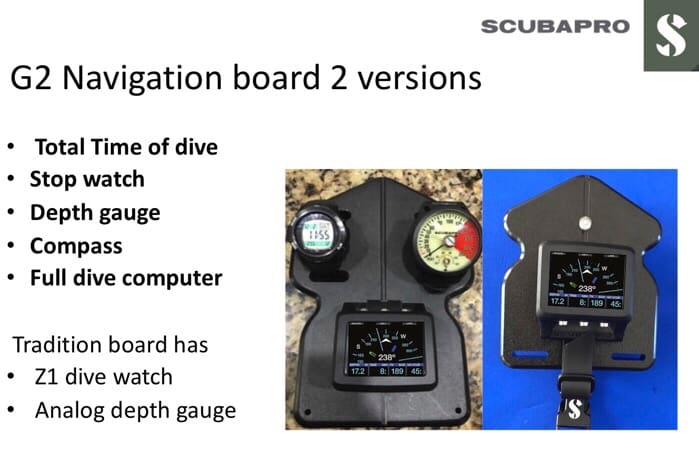
Into the water, perfectly equipped by outer-limits: divers with SIELMIMANO MK4 rebreather, outer-limits RIPSTOP drysuit and outer-limits tarable and submersible backpack. The Ops-Core BUMP helmet, the SCUBAPRO diving goggles with the tactical HUD, in addition with the navigation aid DIVE TABLET 2 from SHARK MARINE. Perfectionists are using fins with the new, stick-on camouflage strips in Multicam by SCUBAPRO.
Breaching is not just on land. Here are the underwater chrushing and spreading tools from LIBERVIT. It is a hydraulic system that operates completely independently off the surface. LIBERVITis the only manufacturer worldwide that offers such a surface-independent system.
The whole thing is complemented with a classic set of crushing and spreading tools from LIBERVIT.
Everything is ready for your use on the peaceful lake: crushing and spreading tool from LIBERVIT.
Off to the water and try it out personally.
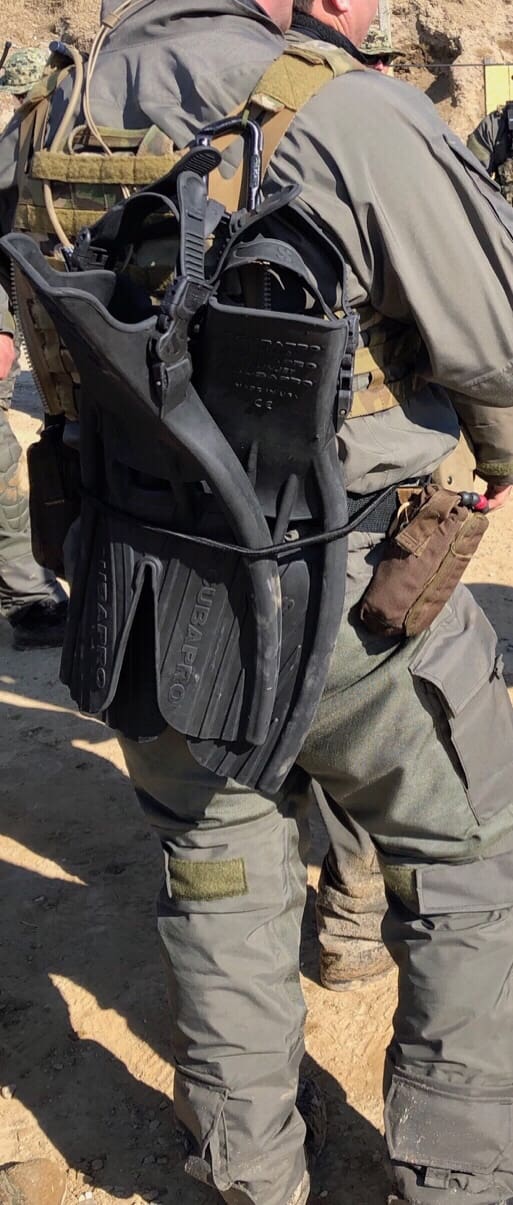
Indigo Tactical offers special fins for emergency responders. The shutter looks like a ski boot
or can work with Velcro. The upper part is screwed to the fin, which is available in different sizes. The lateral stiffening parts are available in different degrees of hardness.
Knowing where to dive is one of the key challenges. UWIS from Finland has a practical solution for it.
The GPS system, triangulates the position of the diver and can be used where to prepare the dive.
The UWIS transmitter floats in the water.
The UWIS Tablet shows the exact position of the diver.
The complete, practical system comes in a suitcase.
Combat swimmers do not always have to rely on their physical condition: SUEX offers a variety of DPV’s and DPD’s (Diver Propulsin Vehicles and Diver Propulsion Devices) and DTC (Dry Tube Containers). These devices allow approaches from up to 25km away.
Ready for use: In front of the water a dive container with 30 liters (there are also 40, 80 and 120 liters), which is moved by combat swimmers with DPVs. SUEX is the world leader in the design and manufacturer of these specialized military devices. outer-limits is Senior Consultant of SUEX and responsible for international authority business as well as for training and education. Incidentally, the diver wears SCUBAPRO scuba diving goggles with the tactical Galileo HUD (Heads-Up Dive Computer), a full dive computer with GPS.
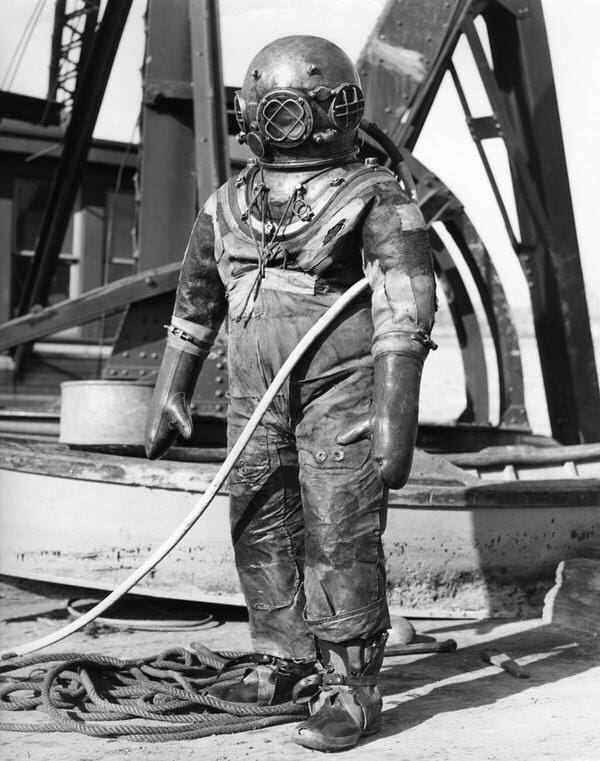
This is “heavy duty”: a diver equipped with the DEEP SEA system returns ashore. The DEEP SEA helmet is made of carbon, thereforeit is much lighter than other models. The production takes place in Switzerland at COMPOSITE Beat Engel.
The camouflage pattern from outer-limits is called chameleon. outer-limits dry suits are the ideal, durable workwear for amphibious special forces. Some drysuit models are also FR / flame retardant and have a minimized IR signature.
Always ready for action: the rebreather Mk4 CSC TWIN from SIEL/OMG has also been tested extensive. SIEL / OMG offers, as well as others, A-MAG and LOW-MAG versions. Enclosed the outer-limits drysuit suit for special forces in NATO green.
Quiet activity at the mountain lake. All special equipment is thoroughly tested.
Special production of a weapons bag from outer-limits for an international special unit. The weapon with optics is packaged waterproof during the dive. In case of emergency, glove penetration guarantees that the operator can shoot from the shell.
If you go diving, you need rock boots. Altama OTB Maritime Assault have prevailed internationally for easier tasks. They are also available at outer-limits.
On the lake: SR TACTICAL from Germany. Produced in cooperation with outer-limits an amphibious plate carrier, and also a weapon light which is submersible.
At the end of an outer-limits EXPERIENCE WEEK day, it´s getting quiet on the lake.
outer-limits is the international distributor for all those companies who presented their products at EXPERIENCE WEEK. All the equipment shown and the corresponding training are available via outer-limits. Contact: office@outer-limits.at
Last week, Program Manager Special Operations Forces which is located at the U.S. Army Combat Capabilities Development Command (CCDC) Soldier Center at Natick, MA, issued a sources sought notice for a Maritime Backpack Suite.
For the purpose of this RFI, a Maritime Backpack Suite consists of:
Backpack, Large 1
Backpack, Small 1
Pouch, Man-pack Radio 1
Pouch, Gas Mask 1
Pouch, MK48/Med Kit 1
Rucksack Liner, Roll Top, Large 1
Waterproof Duffel Bag 1
Mesh Bag 1
Backpack Frame 1
Yolk / Stability System 1
Waist Belt 1
Backpack Repair Kit 1
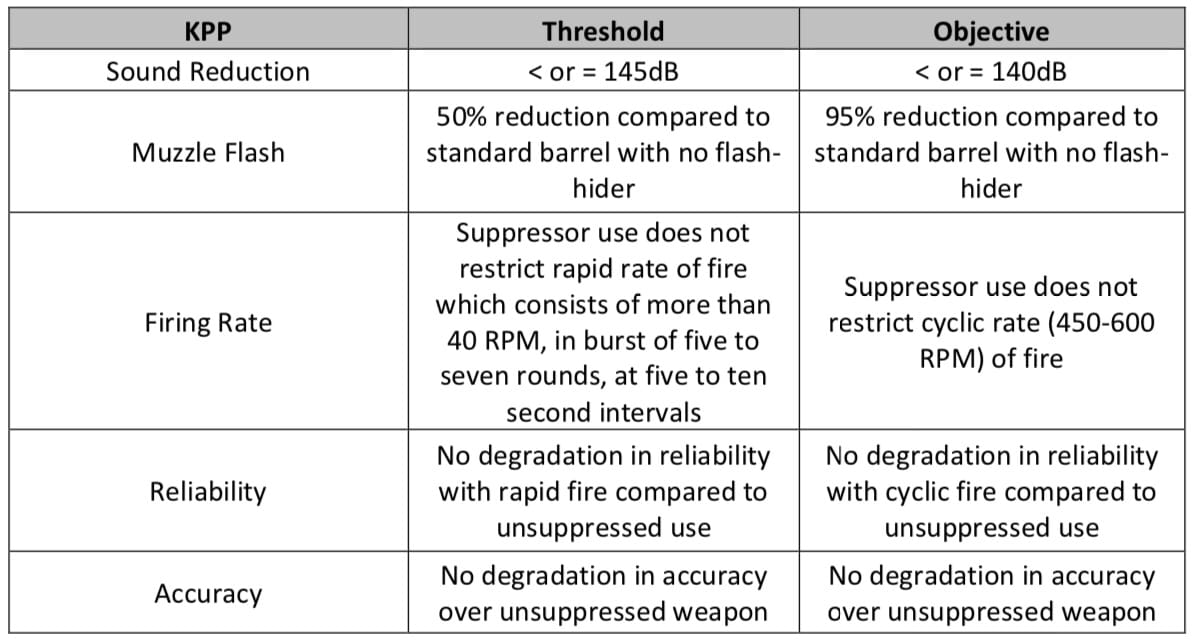
This table depicts desired attributes.
They also want the colors to be consistent with current Body Armor Load Carriage Systems (MultiCam, solid gray/green). The suite must also be compatible with the CRYE JPC & AVS and Eagle MMAC 2012 as well legacy load carriage systems (LCS) as well as all individual airborne equipment items and rigging procedures utilizing Single Point Release Harness, SOF Harness, and parachutist drop bag.
Interested vendors have until Jul 29, 2019 at 4:00 pm Eastern to respond. For full details, visit www.fbo.gov.
When you are doing a lot of diving, or you dive for the first time in new fin or a new dive shoe/ boots, you might tend to rub raw spot on the tops of your ankles, the backs of your heels or even on your toes. If you don’t have the option and you have to dive for whatever reason, say you are in the middle of your work up, or you are overseas and as part of your job you have to dive.
Prevent Blisters
There are different types of socks for diving, neoprene, lycra, and the good old fashion wool dive socks, to help keep your feet warm and also protect from blisters. You can also try and wear everyday athletic socks. Wearing socks under your dive boots stop the booties from rubbing against your skin. Instead of rubbing against your ankles and heels, the boots rub against the socks. Socks also make donning and doffing your wetsuit easier. This is a good bonus for wearing socks. Even if your dive boots fit you perfectly, they still may rub your foot raw, if you dive enough or you get sand in your booties when you go thru the surf to get sand in your bootie. Wearing socks can help prevent some of these problems.
First, I am not a doctor, so take all of this as you will. I know there are 100s of ways to do this. This is what I have done in the past, and it worked for me
Treating Blisters
The key to preventing blisters is to eliminate friction. Shoes and boots should be well broken in, and you should make an effort to keep your socks as dry as possible by changing them when your feet get hot and sweaty or by taking your shoes or boots off periodically to let your feet and socks dry out when you take a snack break. That is how it is done on land, but in the water, you will be wet. So you will need to try and keep sand out of your booties as much as possible. If you are diving something new. Start with a short duration dive so you can break it in.
So there are basically two ways to treat a blister. First is to leave it alone and not pop it and treat by keeping it intact and basically leave it alone, time will heal it. Drain it if needed. Second is to pop the blister. Once it is popped the best thing to do is treat it with Tincture of Benzoin. This will hurt, but it will help dry it out faster. Cover it with something the same way you usually would. Most people say to cut the center out of a bandage, so it looks like a donut and put it around it. Then put another one on top of the first one. This is to help stop the bandage from sticking to it. This can also be done with duck/riggers tape. Once a blister has been broken, it should be cleaned, disinfected, and then bandaged. Before bandaging the wound, an antibiotic ointment should be applied. Research has shown that the application of Neosporin or triple antibiotic gel will help kill off infecting bacteria after two applications and accelerate the healing process.
Unbroken blisters that are painful should be drained. This is caused by the build-up of fluid in the blister, so removing it will help relieve the pain. First, disinfect the area. Prick with a clean sterilized needle. Leave the skin overlying the blister in place to prevent infection. Apply antibiotic gel to the site of the needle pricks and cover with a bandage. After your dive replace the dressing at some point. You can let it dry out overnight if you want.
Tincture of Benzoin on a q-tip is a bonding agent that can also be used to seal the roof of the blister to the exposed skin underneath. It already contains alcohol, so a separate application is unnecessary. It will hurt, but it will help dry it out, and it should heel faster.
The Load Roll Vac Shoot Bag by Load Lugget gets its name from how it’s used. It’s a waterproof weapon bag which can be configured so that it can be fired while still in the bag.
The Polyurethane material has a melting point at over 300 deg F, more than enough to get off that first magazine before the bag has to be peeled away from the bag. Although it isn’t shown in this photo, there’s more than enough room for a carbine equipped with an optic as well as 30 round magazine.