XC3 Weaponlight

Archive for the ‘Profession of Arms’ Category

Patrolling Is Better When You’re…

Tuesday, June 25th, 2019

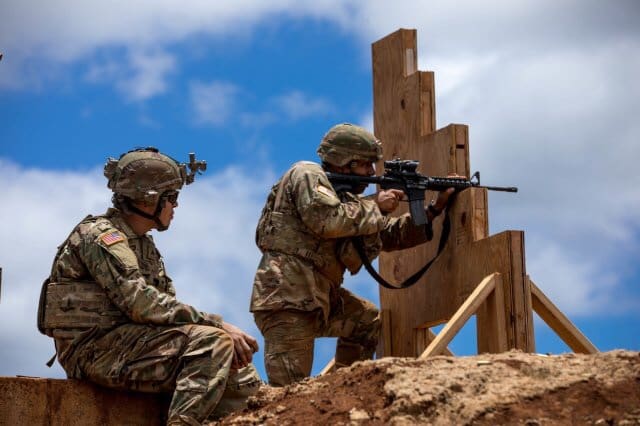
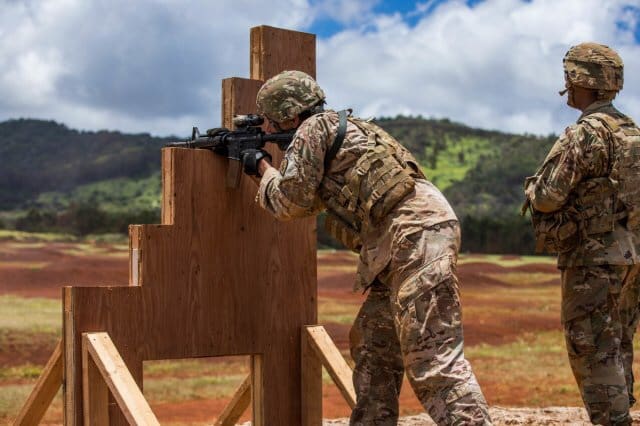
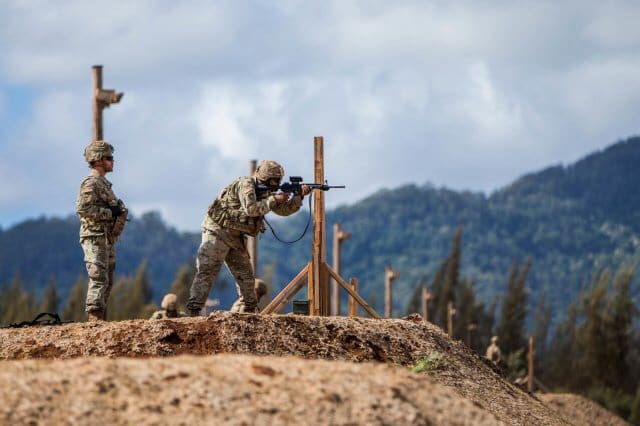
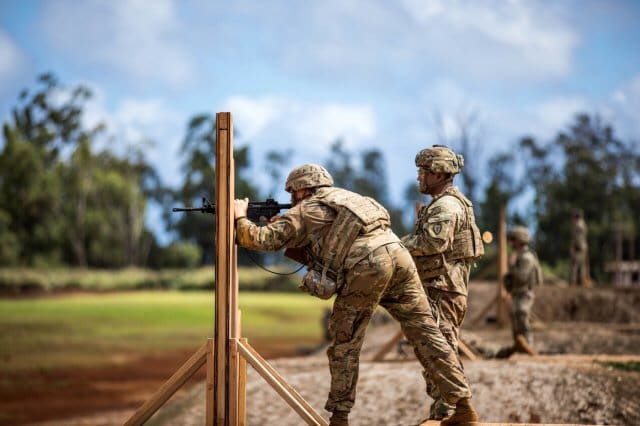
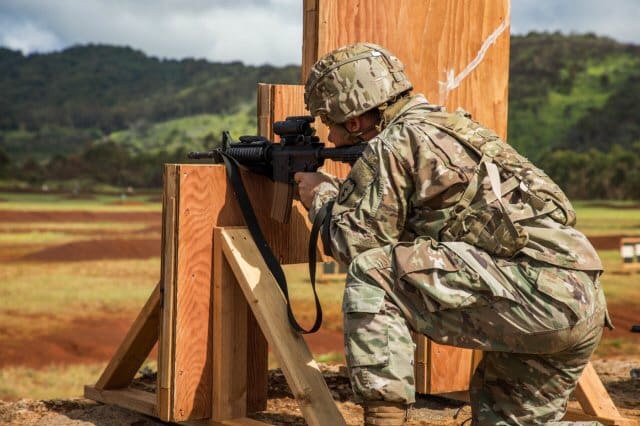
According to 75th Ranger Regiment Recruiting, patrolling is better when you’re…

1. Wearing a Patagonia uniform

2. Carrying a Mystery Ranch pack

3. Wearing an Ops-Core helmet

4. Communicating via Peltor

5. Shooting thru a Daniel Defense upper

6. Seeing thru Oakley SI eye pro

7. Walking in Nonstandard boots

8. Wearing Outdoor Research gloves

9. Wearing a Crye Precision plate carrier

Wanna join? If you’re in the Army, send your SRB to 75recruit@socom.mil from your .mil email.

Not in the Army? Go tell your local Active Duty Army Recruiter that you want to serve in the 75th Ranger Regiment.

US Army Combined Arms Center Releases First Doctrine Audiobook

Saturday, June 22nd, 2019

(Fort Leavenworth, Kan.) The U.S. Army Combined Arms Center (CAC), in a collaborative effort led by the Combined Arms Doctrine Directorate (CADD) and supported by the Army Training Support Center (ATSC) – Mobile Learning Division (MLD) and Enterprise Multimedia Center (EMC), released its first doctrine audiobook as part of a pilot program today. The first publication produced as an audiobook is Field Manual (FM) 3-0, Operations, a manual that marked the shift in the Army’s focus towards large-scale combat operations when published in October 2017.

Audiobooks are not new to the publishing industry; however, this marks the first time the Army has ventured into this medium as a way of delivering Army doctrine.

“Doctrine audiobooks give Soldiers another way to receive information and learn by letting them increase their professional knowledge while doing other things, like working out or commuting,” said Col. Rich Creed, director, CADD. “We are pleased by the flexibility the audio format provides to the majority of people in the Army, who don’t usually carry doctrinal manuals around with them every day.”

Army doctrine audiobooks are produced from published and authenticated doctrine, but abridged for the audio format. Like print publications, online presentation of audiobooks follows a standardized format that includes the publication’s introduction, each of the chapters, and the appendices. Army doctrine audiobooks use industry standard .mp3 files that can be accessed by users across multiple platforms, including laptops, e-Readers, tablets, smartphones, and other mobile devices.

The Combined Arms Center is currently working on audiobook versions of FM 2-0, Intelligence, and ADPs 3-90, Offense and Defense, and 7-0, Training, that will be available later this summer. The viability and use of the audiobook format, as well as future production of additional doctrinal publications, will be evaluated as part of this pilot program.

Audiobooks join the CADD lineup of digital interactive publications available to Soldiers via the U.S. Army Central Army Registry. To access the FM 3-0 audiobook, visit rdl.train.army.mil/catalog-ws/view/FM3-0Audiobook/index

By Ted Crisco and Maj. Christopher Parker, Combined Arms Doctrine Directorate

Army Announces Expert Soldier Badge

Friday, June 14th, 2019

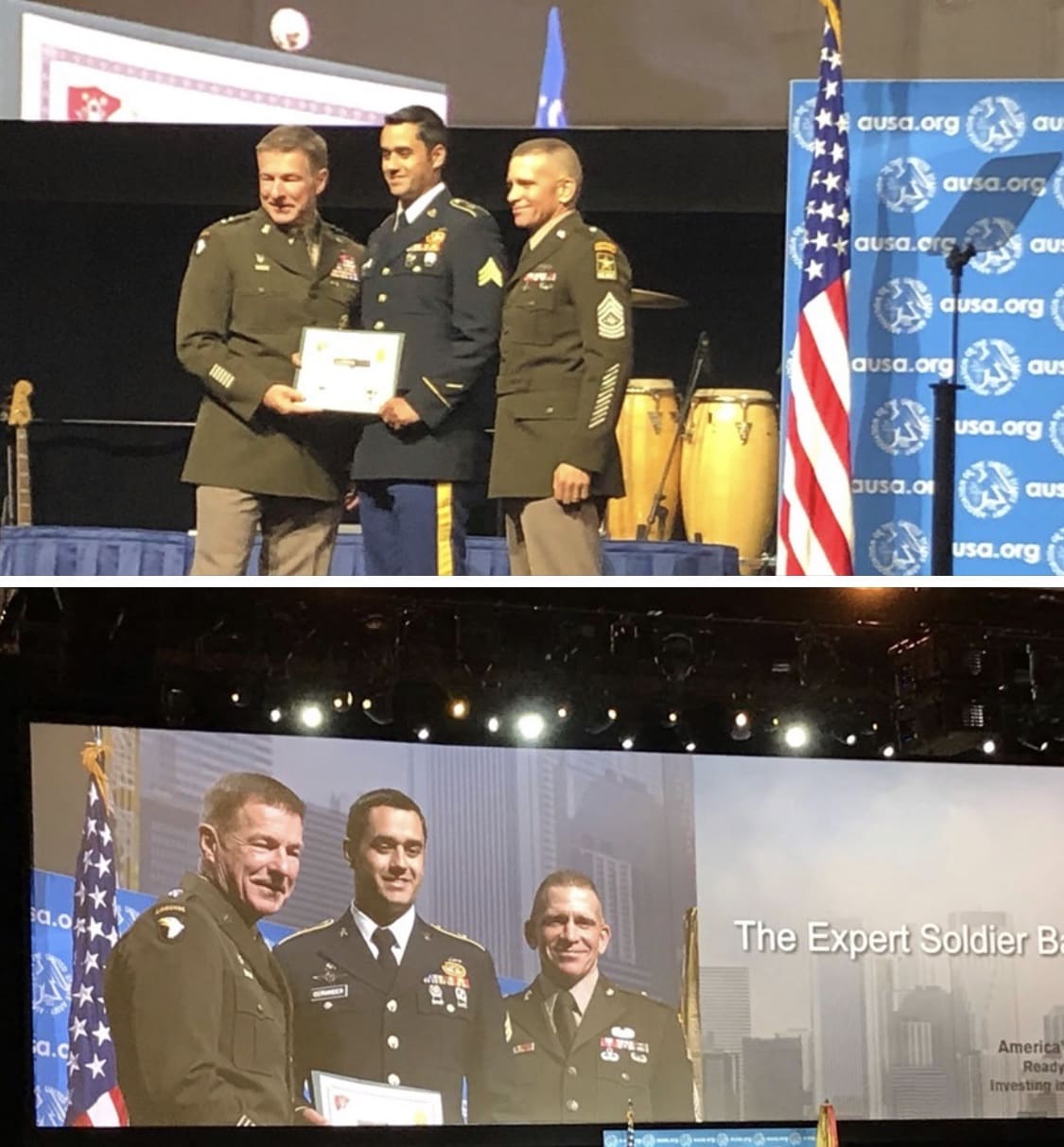
In conjunction with the U.S. Army’s 244th Birthday, the Army announced a new proficiency badge today, called the Expert Soldier Badge.

The ESB is designed to improve lethality, recognize excellence in Solder combat skills and increase individual, unit and overall Army readiness. The ESB is the equivalent of the Expert Infantry Badge and Expert Field Medical Badge but for all other military occupational specialties in the Army. Commanders will soon be able to use the badge to recognize Soldiers who attain excellence in physical fitness and marksmanship and a high standard of expertise in land navigation and performing warfighting tasks.

“The ESB will be an important component of increasing Soldier lethality and overall readiness to help achieve the vision for the Army of 2028,” said Sgt. Maj. of the Army Daniel A. Dailey. “The EIB and EFMB have supported the Infantry and medical fields with distinction, ensuring their Soldiers maintain critical skills, while recognizing the very best among them. The ESB will achieve the same for the rest of the Army.”

The Army will implement the ESB in early fiscal year 2020, with the standards and regulation to be finalized by September 2019. Earning the badge will test a Soldier’s proficiency in physical fitness, marksmanship, land navigation and other critical skills, and demonstrates a mastery of the art of soldiering.

The ESB training and testing will be extremely challenging, mission-focused, and conducted under realistic conditions. Those in the Infantry, Special Forces, and Medical career management fields are not eligible for the ESB.

“Like the EIB and EFMB, the ESB test will be a superb venue for individual training in units and the badge will recognize a Soldier’s mastery,” said Gen. Stephen J. Townsend, commanding general, U.S. Army Training and Doctrine Command. “And it will be just as tough to earn as the EIB and EFMB because the Soldier will have to demonstrate fitness, weapons proficiency, navigation and warrior task skill at the expert level.”

Standards for the ESB are still being refined but they will not be adjusted for age, gender or any other criteria. The test will share about 80 percent of the same warrior tasks as the EIB and EFMB, and is designed so it can be administered alongside and together with them. Brigade commanders will decide if and when to schedule the test so it best fits their training schedules.

Under the ESB test process, Soldiers will demonstrate mastery of individual skills through different evaluations over a five-day period. The standards for the ESB place candidates under varying degrees of stress that test their physical and mental abilities as they execute critical tasks to an established set of standards.

To qualify to take the ESB test, Soldiers must pass the Army Combat Fitness Test (ACFT), qualify as “Expert” on the M4/M16 rifle and be recommended by their chain of command.

The test itself consists of another ACFT, day and night land navigation, individual testing stations, and culminates with a 12-mile foot march. ESB test stations include warrior tasks laid out in the ESB regulation and may also include five additional tasks selected by the brigade commander from the unit’s mission essential task list. Example tasks include:

? React to an Improvised Explosive Device (IED) Attack

? Construct Individual Fighting Positions

? Search an Individual in a Tactical Environment

? Employ Progressive Levels of Individual Force

? Mark CBRN-Contaminated Areas

“We worked tirelessly on the ESB to ensure we got it right,” said Command Sgt. Maj. Edward W. Mitchell, Center for Initial Military Training Command. “We wanted to provide commanders the opportunity to recognize their top Soldiers who have met the highest standard of performance in physical fitness, warfighting tasks and readiness.”

Each ESB task will be evaluated on a “go” or “no-go” basis. Pass rates during the ESB pilot testing were similar to that of the EIB and EFMB.

“The ESB is all about increasing the readiness of our Army. It will provide commanders outside the Infantry, Special Forces and medical communities the opportunity to recognize Soldiers who best demonstrate excellence in their fields,” said Command Sgt. Maj. Timothy A. Guden, TRADOC Command Sergeant Major.

“This is not a badge to award so that the entire Army now has an ‘expert’ badge to wear. As it is now, not every Infantryman or Special Forces Soldier earns the EIB and not every medic earns the EFMB. Keeping with the same mindset, this is a badge to award to those who truly deserve recognition as an expert in their career field; for those who have achieved a high level of competence and excellence in their profession.”

By U.S. Army Training and Doctrine Command Public Affairs

So You Want to be an SFAB Advisor? Here’s How…

Friday, June 14th, 2019

FORT BRAGG, N.C. — Soldiers who believe they have what it takes to join one of the six Security Force Assistance Brigades (SFABs) must first pass the 3-day Security Force Assistance Command Assessment and Selection Course that’s designed to ensure they meet the standards of a SFAB Advisor.

Assessment and Selection Course candidates undergo a process designed to test their mental, physical and teamwork skills to ensure they possess the attributes that the SFAB teams are looking for in an Advisor.

Some of these attributes include discipline, sound judgment, moral conduct, and the ability to remain calm and collected while seizing the initiative during mission uncertainty.

“What we are looking for is someone who is physically fit, works well in a team, who is intelligent, and comfortable making decisions while operating with a certain level of ambiguity,” said Sgt. Maj. Robert George, SFAC Assessment and Selection Sergeant Major.

The assessment process is something new candidates are curious about once they decide to join the SFABs.

“I heard about the SFABs while I was deployed in Afghanistan and when I came back some senior NCOs I worked with had joined and let us know more about them,” said Sgt. Skyler Lewis, SFAC Assessment Candidate and Signal Support Systems Specialist from 1st Battalion, 41st Infantry Regiment, 2nd Infantry Brigade Combat Team, 4th Infantry Division. “I looked more into it and then decided that, yes, this is for me.”

The assessment process starts with in-processing on day zero and then moves onto day one. Day one starts the non-stop process that lasts through day two. It begins with the candidates conducting an APFT, team events, a leader reaction course, a warrior skills test, MOS proficiency and ethical dilemma tests, peer evaluations, a subject matter expert interview, and culminates with a challenging foot march.

“They briefed us on what it was going to be like when we got here and it was a little different than I thought it would be and a lot harder – but it was worth it – I thought it was a good process and I had to stay focused and push hard through some of the events,” said Lewis.

The final portion of the assessment process is the selection board on day three, after which, the candidates find out how they did and if they were selected. If selected, they receive information about the reporting process and continue their SFAB Advisor training there.

The opportunity to continue to training, mentoring and advising others is one of the reasons Fort Benning Drill Sergeant Joshua Tobin felt he needed to go through the assessment course and become a SFAB Advisor.

“I have been training and mentoring Soldiers for the past 12 years and really getting more into it with the new privates at Fort Benning for the last 33 months. I feel that this opportunity is the same, but bigger, you are still training, mentoring, and advising, but this time it’s with our partners,” said Staff Sgt. Joshua Tobin, SFAC Assessment Candidate with 2nd Squadron, 15th Cavalry Regiment, 194th Armored Brigade.

The assessment and selection process is still relatively new and constantly adapts to the current needs of the SFABs and will continue to change and facilitate any of their future needs.

“How we assess the Soldiers has changed since I got here almost a year ago. We have changed and added events that better identify the attributes that make a good Military Advisor,” said George. “We will continue to change things to better identify candidates who will make the best military Advisors.”

The SFAB Recruiting and Retention Team continues to look for Soldiers who are interested in becoming SFAB Advisors in one of the five active-duty and one Army National Guard SFABs. For more information and details about joining, visit the SFAB Recruiting and Retention Team website at www.goarmy.com/sfab or contact them at one of the following: Officers (910) 570-5159 and Enlisted (910) 570-9975/5131 or email them at usarmy.bragg.forscom.mbx.g1-ag-sfab@mail.mil.

By SFC Mark Albright, Security Force Assistance Command

CSM Michael Grinston to Serve as 16th Sergeant Major of the Army

Tuesday, June 11th, 2019

Secretary of the Army Dr. Mark T. Esper and Army Chief of Staff GEN Mark A. Milley, announced that CSM Michael Grinston has been selected as the next Sergeant Major of the Army. He currently serves as Command Sergeant Major, US Army Forces Command.

Command Sergeant Major Michael A. Grinston hails from Jasper, Alabama. A career artilleryman, he joined the Army in October 1987 as a Cannon Crewmember and has served at every leadership level from Cannon Crewmember to I Corps Command Sergeant Major.

He has been assigned to 1-84 FA at Fort Lewis, WA, 2-320th FA at Fort Campbell, Kentucky, two tours at Ledward Barracks in Schweinfurt, Germany with 5-41 FA and 1-7th FA, 1-39th FA at Fort Bragg, NC, E/1- 22 FA Fort Sill, OK, D/319th FA, 1-508 IN and 2-503 IN at Caserma Ederle in Vicenza, Italy. His service as a command sergeant major includes assignments as a Battalion CSM with 2-15 FA at Fort Drum, NY, Observer Controller CSM at Hohenfels, Germany, Brigade CSM 170th IBCT in Baumholder, Germany, Brigade CSM 4/101 at Fort Campbell, KY, 1st Infantry Division CSM at Fort Riley, KS, and I Corps at JBLM, WA.

CSM Grinston’s deployments include Desert Shield, Desert Storm, and Kosovo. He has deployed in support of Operations Iraqi Freedom and Enduring Freedom twice each, and recently returned from the Army’s first deployment of a division headquarters in support of Operation Inherent Resolve Iraq from October 2014 to June 2015.

His awards and decorations include the Defense Superior Service Medal, the Legion of Merit, and 5 Bronze Stars (with 2 ‘V’ devices). He has earned the Ranger tab, Master Parachutist badge, Air Assault badge, Drill Sergeant identification badge, and the Combat Action Badge. He has attended every level of the Noncommissioned Officer Education System and is a graduate of Ranger, Airborne, and Air Assault Schools. He is also a graduate of Drill Sergeant School and the Equal Opportunity Course.

CSM Grinston possesses a Bachelor of Arts degree in Business Administration from the University of Maryland University College.

Largest Promotion Ceremony in Army Special Operations History for Psychological Operations Soldiers

Sunday, June 9th, 2019

FORT BRAGG, N.C. (USASOC News Service) — More than 200 Psychological Operations noncommissioned officers proudly stood before their Families, friends and leaders during a promotion ceremony larger than any other in Army Special Operations history, May 31, 2019. About 100 additional promotees will pin, but were unable to attend the Fort Bragg ceremony because they are currently deployed or in training.

PSYOP Soldiers complete extensive training and education in human dynamics, influence theory, psychology, sociology, language, culture, and politics. PSYOP NCOs are expected to operate successfully in austere environments, executing national strategic and theater-level policies and decisions with limited supervision. They are expected to interact with U.S. ambassadors, senior country team members, and host nation ministerial-level officials on a daily basis. The importance and sensitivity of their missions warranted a grade plate change for the PSYOP Regiment’s enlisted ranks to ensure the NCOs’ ranks corresponded with the level of responsibility they assume while downrange.

Army and ARSOF leaders at multiple echelons worked for more than a year to achieve the grade plate change that would later create additional positions for the newly promoted staff sergeants and sergeants first class. The current organizational structure did not allow for additional NCOs of these ranks, resulting in a stagnation at the junior NCO levels. However, the dedication of these leaders resulted in the change of 336 sergeant positions to staff sergeant, and 114 staff sergeant positions to sergeant first class.

The grade plate change made it possible for these NCOs to finally pin after years of waiting – more than a decade in some cases. However, each promotee had already met every requirement for promotion; they had completed the appropriate level of professional military education and met the time in grade and service requirements, sometimes multiple times over. Instead of reclassifying to a different military occupational specialty or leaving the Army altogether, they were committed to their craft, to their teammates, and to the ARSOF Family.

Newly-promoted Staff Sgt. Gabrielle Phillip is one such NCO. Phillip has been a PSYOP Soldier since entering the Army in 2009 and was a sergeant for almost eight years. She said job satisfaction and quality leadership are what kept her in the career field for so long without the guarantee of upward advancement.

“I love PSYOP,” she said. “I love the job, I love what we do. I’ve had the pleasure of working with leaders who’ve always pushed me so even though I might have had the rank of sergeant, I never felt like one. I always felt like I could grow. I always felt like I could do new things, try new things and just accept responsibility. I love PSYOP so that’s what kept me around.”

While most promotees were pinned by Family members or friends, Phillip was among the few selected to be pinned by Maj. Gen. John Deedrick, 1st Special Forces Command (Airborne) commanding general. During the ceremony, Deedrick emphasized the fact that these NCOs have patiently waited for this well-deserved day to come while remaining dedicated members of the PSYOP Regiment.

“I think it moves the bar on what selfless service, what patriotism, and what fidelity really mean,” Deedrick said. “And I want to thank you all personally for your steadfastness, for your commitment to this nation and to this regiment as you have shouldered that burden and gone on and conducted your mission in an incredible way.”

He added, “They’ve put in the work, they’ve put in the time. They have the experience, they have the education and they are ready to operate at the next level. I couldn’t be happier for all of you standing on this field.”

By SFC Kissta DiGregorio

Tonight Is The Night Of Nights

Thursday, June 6th, 2019

This is the “Tonight is the night of nights” speech which was read aloud to the 506th PIR, 101st AB at the departure airfields on the eve of D-Day, 5th June 1944. Written by Col Robert Sink. Thank God for men like this.

MEMORANDUM:

Soldiers of the regiment: June 5, 1944 – D-DAY

Today, and as you read this, you are en route to that great adventure for which you have trained for over two years.

Tonight is the night of nights.

Tomorrow throughout the whole of our homeland and the Allied world the bells will ring out the tidings that you have arrived, and the invasion for liberation has begun.

The hopes and prayers of your dear ones accompany you, the confidence of your high commanders goes with you. The fears of the Germans are about to become a reality.

Let us strike hard. When the going is tough, let us go harder. Imbued with faith in the rightness of our cause, and the power of our might, let us annihilate the enemy where found.

May God be with each of you fine soldiers. By your actions let us justify His faith in us.

Colonel Robert Sink Regimental Commander, 506th P.I.R, 101st Airborne Division

USAF Secretary and Chief of Staff Initiate Dialogue With Commanders on a Plan for New Officer Promotion Categories

Tuesday, June 4th, 2019

ARLINGTON, Va. (AFNS) —

Secretary of the Air Force Heather Wilson and Air Force Chief of Staff Gen. David L. Goldfein shared in a memorandum to wing, numbered Air Force and major command commanders May 31, a draft plan for new Line of the Air Force officer promotion categories.

The memo explains the proposed change and directs commanders to solicit and provide feedback from officers to major command commanders by July 31, with “a final recommendation due to the secretary and chief not later than 30 August 2019.”

According to the memo, “The reemergence of great power competition, rapid development and fielding of advanced technologies, and new concepts of warfare and competition that span the entire spectrum of conflict demand a joint force structured to match this reality. These trends, if unaddressed, will challenge our ability to fight and win.”

The memo continues, “Over the past eighteen months, we have extensively examined how we develop, evaluate and promote officers across our total force. We have concluded that our current system, which has served us well in the past, is not optimized to support future joint warfighting in this new era. Based on our research, extensive discussions with Airmen across the Air Force (active, Guard, Reserve and civilian), and surveys with joint and inter-agency teammates, we believe it is time to expand the Line of the Air Force promotion categories into more subgroupings. The following categories represent the disciplines needed for future joint warfighting and allow for developmental competitive pathways that are optimized for each category.”

Promotion Category

Air Operations & Special Warfare

Pilot (11X), Combat Systems (12X), Remotely Piloted Aircraft    Pilot (18X), Air Battle Manager (13B), Special Tactics (13C), Combat Rescue (13D), Tactical Air Control Party (13L)

Space Operations

Space Operations (13S), Astronaut (13A)

Nuclear & Missile Operations

Nuclear and Missile Operations (13N)

Information Warfare

Cyber Operations (17X), Intelligence (14N), Operations Research Analyst (61A), Weather (15W), Special Investigations (71S), Information Operations (14F), Public Affairs (35X)

Combat Support

Airfield Operations (13M), Aircraft Maintenance (21A), Munitions and Missile Maintenance (21M), Logistics Readiness (21R), Security Forces (31P), Civil Engineering (32E), Force Support (38F), Contracting (64P), Financial Management (65X)

Force Modernization

Chemist (61C), Physicist/Nuclear Engineer (61D), Developmental Engineer (62E), Acquisition Management (63A)

*Note: Under this proposal existing promotion categories for judge advocates, chaplains and medical personnel will remain unchanged.

The memo sets the stage for gathering field input similar to what was done under the Revitalizing Squadrons effort. The memo states, “While these changes have been reviewed and discussed at leadership levels, we realize this would be a significant change for the officer corps. Rather than make an immediate decision, we thought it best to share the draft with commanders first in order to engage in a dialogue with the officers assigned to you and solicit feedback before proceeding.”

In addition to commander-solicited feedback, Shon Manasco, assistant secretary of the Air Force for manpower and reserve affairs, and Lt. Gen. Brian Kelly, deputy chief of staff for manpower, personnel and services, will be deploying briefing teams to various installations across major commands and functional communities during June and July to brief the proposed changes in-depth, answer questions and capture feedback from Airmen who are able to attend.

Additional virtual venues and online sites will also be available to gather feedback from across the force.

The memo concludes, “For this foundational change to succeed, commanders at every echelon must take ownership, understand and explain why we are proposing this significant change, listen to the officers entrusted to your care and pass your thoughts up the chain. Our future depends on getting this right. Help us make it better.”

The briefing and community-specific questions and answers will be made available to broader audiences at a later date.

 Editor’s Note: Special Warfare will encompass current STOs and CROs who are supposed to merge into a single careerfield with 19 as their AFSC. Possibly ALOs (TACP) may join them as a separate shredout in AFSC 19.