GORE-TEX Professional

Archive for the ‘SOF’ Category

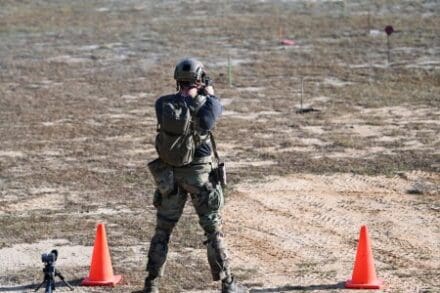
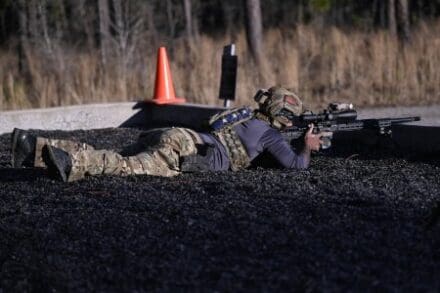
USASOC International Best Sniper Competition: 75th Rangers ‘Lead the Way’ by Securing First Place

Wednesday, March 26th, 2025

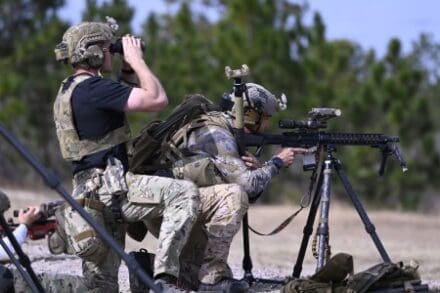
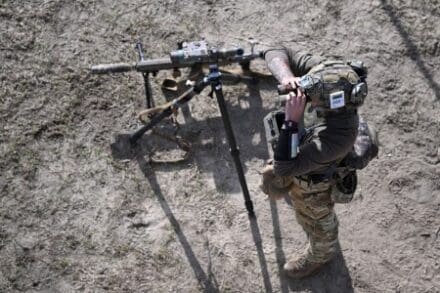
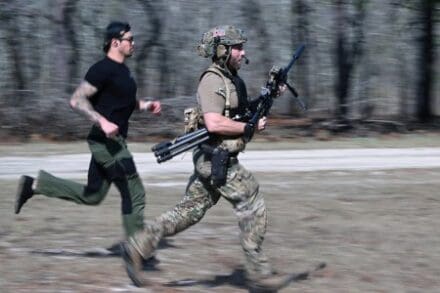
FORT BRAGG, N.C. (March 24, 2025) – The U.S. Army John F. Kennedy Special Warfare Center and School, Special Operations Center of Excellence, concluded the 2025 U.S. Army Special Operations Command International Sniper Competition at Fort Bragg, North Carolina, March 16-20.

With 21 teams from across the U.S. special operations force and allied forces, the 75th Ranger Regiment proved triumphant, securing first place followed by the 3rd Special Forces Group (Airborne) in second and the Netherlands in third.

The competition tested sniper teams on a variety of skills – from performance, precision shooting to fieldcraft – highlighting the importance of honing lethal capabilities in line with the Department of Defense’s continued focus on lethality, warfighting, and readiness.

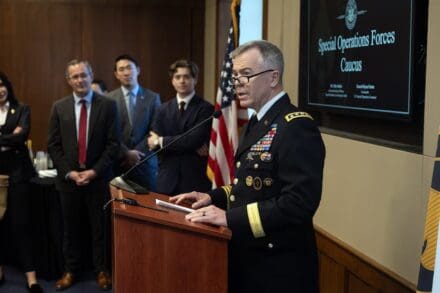
“(Army special operations) Soldiers must optimize and maintain their performance across the tenure of their career,” said Command Sgt. Maj. Lionel Strong, Special Operations Center of Excellence command sergeant major. “All of our schools, whether it is the (Army special operations force) generation pipeline or advanced skills, are designed to test our students physical, mental, emotional, and cognitive capacity, so that they can perform at the top of their potential on their worst day.”

During the five-day competition, the teams completed a 23-stage event, including three-night shoots.

“Almost everything we do in (special operations) is high risk, time constrained, and politically sensitive,” Strong said. “(Army special operations) Soldiers need to be able to perform when their teammates and the nation need it most. For snipers, in the world of long-range precision marksmanship, inches and second’s matter. The ability to remain calm under repressure and maintain presence of mind are critical for snipers to make split-second decisions in high-risk environments.”

Sniper teams in this year’s competition encompassed U.S. Marine Forces Special Operations Command, U.S. Army Special Operations Command, U.S. Naval Special Warfare Command, 1st, 3rd, 5th, 7th, 10th, 19th, and 20th Special Forces groups, the 75th Ranger Regiment, U.S. Coast Guard, and allied forces from Switzerland, France, Germany, Ireland, Netherlands, United Kingdom, and Canada.

“Our partner nation (special operations) competitors enhance the competition,” Strong said. “Everything we do in (Army special operations) is with and through partners. Their attendance at the comp reinforces our culture and our emphasis on generational relationships. Our partners all bring their own unique skills, training, and knowledge to the comp.”

He added that “they are the best from their nation and across the special operations community. This comp allows us to collaborate, share best practices, and lessons learned to grow the capability.”

In its 16th year, the competition has since grown, transformed, and modernized from its conception in 2009.

Retired Master Sgt. Kevin Owens, who was a guest at the competition, recalls when he was an instructor at Special Operations Center of Excellence from 2008 to 2011, serving as a noncommissioned officer at the sniper school from 2010 to 2011.

“I was a sergeant first class at the time,” Owens said. “It was me and [another instructor]. We were modernizing the schoolhouse. The sniper comp came up and in 2009 was the first year we ran it. I ran both stress tests and had a lot of input into the building of it because I was a competitive shooter at the time. If you look back, we had a big committee of instructors, but only four of us shot sniper competitions and long-range shooting competitions.”

Owens added that because of the history, “more of the instructors are competitive shooters, which brings a whole new dynamic to it.”

“We took that experience, and we put it into building the competition,” he said. “One conversation we had was that it was a sniper competition, not a shooting competition, so it should have sniper tasks. The other conversation we had was that all the events should be geared around combat tasks. They should be realistic tasks that you would do in combat. We always tried to build it around combat experience. So, the first year, it was only open to USASOC teams because it was a test bed. The next year in 2010, it was open to all special operations units.”

Owens said that “every year, it gets better and that they build upon that because you can see where gaps are.”

Since 2009, each year has improved its competitive edge by implementing new tactics and techniques.

“The comp has evolved and modernized everything about long-range precision marksmanship from how we train, the weapons, ammunition, and optics we shoot, to the types of ranges and targets we shoot,” Strong said. “This competition has evolved not just sniper weapons systems but combat marksmanship and lethality for the Army.”

Strong added that “the competition brings in some of the best shooters and industry partners from across the world and tests their abilities to the point of failure, so we can grow the capability. Fifteen years ago, no one with a weapons system from the arms room stood a chance at winning the comp. Today, it’s a level-playing field, every shooter and sniper team have the best equipment and ammunition available. We can positively identify and engage targets out past a mile with precision. The competition, modernization and lethality of sniper weapons systems grew parallel to each other over the past decade.”

The competition not only served as a platform to showcase grit and skill, but to strengthen camaraderie across the force and foster interoperability.

“This is great comp and thank you for coming out to represent your unit, your service, and your nation,” Strong said. “Every shooter here is phenomenal! The margins between the first and last competitor are tight. No matter what, all the competitors out here deserve recognition for their effort and throwing themselves in the arena.”

Story by Elvia Kelly

United States Army John F. Kennedy Special Warfare Center and School

Cobra Gold 25 | Royal Thai Army, U.S. Special Operations Forces Subject Matter Expert Exchange

Saturday, March 22nd, 2025

Lop Buri, Thailand – Royal Thai Army 1st Special Forces Division and U.S. Special Operations Detachment – Pacific shared staff insights on the Joint Planning Process and combined operations during the 2025 Cobra Gold academic week subject matter expert exchange, February 17-21, 2025.

Facilitated by Joint Special Operations University, the bilateral exchange for Royal Thai Army Special Forces and U.S. Special Operations participants focused on knowledge of best practices through candid dialogue and iterative demonstrations of processes through hands-on exercises.

CG25 has three primary events: a command and control exercise, humanitarian civic assistance projects, and a field training exercise to enhance readiness and foster responses to security challenges and natural disasters. Approximately 30 nations participate, with 3,200 U.S. personnel directly involved, underscoring the importance of cooperation and goodwill.

JSOU’s focus is joint special operations education and has the mandate to support U.S. Special Operations Command Pacific. SOCPAC serves as the operational component command for all SOF missions throughout the Indo-Pacific region.

The JSOU JPP academic SMEE prepared participants for aspects of special operations forces’ integration during the Cobra Gold command and control event. JPP is a method to determine the use of military capabilities in time and space to achieve objectives within an acceptable level of risk.

“Having this academic SMEE as part of Cobra Gold 2025 demonstrates the importance both Thai and U.S. leadership place on cognitive warfare,” said JSOU senior mentor retired U.S. Army Col. Scott Malone. “As part of its Joint SOF charter, the university is uniquely positioned to facilitate operational collaboration and the exchange of strategic thought amongst Special Operations partner forces.”

JSOU’s academic engagements enhance operational collaboration and strategic thinking among partner forces, fostering a culture of continuous improvement and adaptive thinking. Class discussion and group exercises were the primary means for the intellectual exchange.

“The special operations professionals from Royal Thai Army 1st Special Forces Division and SOD-P collaboration nurtures a culture of continuous improvement and highlights adaptive thinking where knowledge transference and removing barriers to learning is paramount.” said Malone. “This SMEE on day one placing Thai and U.S. participants together in working groups heightens learning and promotes intellectual exchange. This immediate placement allows for each individual to gain a sense of ownership as the combined team is built and fosters unbiased exchanges of best practices as the week progressed.”

SOD-P provides trained, prepared, and equipped augmentation to the U.S. Army Special Operations Command and SOCPAC.

“This is an unparalleled opportunity for us to share our expertise with each other,” said U.S. Army Col. David Coughran, commanding officer of SOD-P. “Our focus is on strengthening our combined operational proficiency and leadership acumen, ensuring we are all prepared to handle any eventuality.”

CG25 is a visible symbol of the U.S.-Thai defense alliance, demonstrating the U.S.’s steadfast commitment to maintaining the conditions for peace and prosperity. Enhancing critical capabilities and readiness enables each force to jointly address regional stability in the Indo-Pacific.

The 44th iteration of this exercise exemplifies the longstanding alliance with Thailand and reflects the shared commitment to preserving a peaceful, prosperous, and secure Indo-Pacific region.

Story by Petty Officer 1st Class Joseph Rolfe 

U.S. Special Operations Command Pacific

USSOCOM’s Curious Unmanned Aerial System Procurement for SOCCENT

Monday, March 17th, 2025

In a rare move, USSOCOM in support of Special Operations Command Central, a Theater Special Operations Command, has released an intent to a award a single source contract for a combat capability to be used by forces which rotate into their theater.

The actual commercial system is never named, but specifically, the requirement is for First Person View drones. Those of you who have been following the Soldier Systems Digest newsletter know how supportive I am of fielding these systems en masse, so any requirement gets me excited.

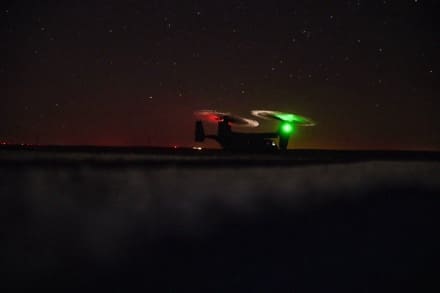
FPV drones are not new to Special Forces. They’ve begun to integrate the capability into their formations and conduct a course at the JFK Special Warfare Center and School called Robotics and Unmanned Systems Integration Course (RUSIC) to train operators to use these drones. Additionally, many receive training from Oak Grove Technologies in the specialty. In the photo above by SGT David Cordova, a 10th Group Green Beret prepares to launch an FPV drone to be used for a raid operation during Exercise Trojan Footprint last year in conjunction with Greek special operations forces near Nea Peramos, Greece. Soon, there will be a new Warrant Officer MOS in USASOC which specializes in robotics, drones, and other new warfighting technologies.

A few things stick out about this procurement.

First, it’s not normal for a TSOC to procure systems which will be used by gained forces. It happens, but it’s generally rare cases such as communications or command and control. TSOCs aren’t manned and equipped to operate and maintain ISR and lethality systems. Those are provided by gained forces from the SOF service components as well as conventional units with unique capabilities.

In fact, the J&A used to substantiate the procurement points out that the command has limited UAS capabilities and is reliant upon external agencies to provide specialized assets.

Below are several points of interest in the J&A:

Currently, the absence of dedicated Unmanned Aerial Systems (UAS) for cave clearing operations forces reliance on Military Working Dogs (MWD) or partner forces, significantly increasing risk to both personnel and mission success. This approach presents several challenges:

Hazardous Environments: Caves present confined, complex spaces with limited visibility and unpredictable terrain, increasing the danger to personnel and potentially hindering MWD effectiveness.

Specialized Threat Detection: Identifying hidden threats like explosives, booby traps, and concealed enemy combatants requires specialized equipment and expertise, limitations that UAS technology can address.

Communication and Coordination: Maintaining clear communication and coordination within a cave environment is crucial but challenging, potentially leading to delays and miscommunication.

To mitigate these risks and enhance operational effectiveness, we propose the acquisition and deployment of a dedicated UAS solution.

Enhanced Situational Awareness: FPV UAS provide real-time visual intelligence from within the cave, enabling operators to assess the environment, identify threats, and make informed decisions.

Reduced Risk to Personnel: Deploying UAS instead of personnel for initial reconnaissance and threat assessment significantly reduces the exposure (redacted) and MWD teams to potential hazards.

Improved Communication and Coordination: UAS equipped with communication relays enhance coordination between teams inside and outside the cave, facilitating smoother operations and faster response times.

This equipment enables ODAs to gain a visual on the risks present on an obscured objective, prior to engagement. Without this capability, ODAs accept undue to risk to the force by entering an objective without detect and defeat capabilities.

This heavy-lift capability, combined with its compact drone body, enables the system to operate effectively in confined spaces, such as those encountered in cave clearing operations. The system’s First-Person View (FPV) guidance system provides real-time video feed, allowing for precise navigation and control, which is essential for safe and effective operation in complex environments.

The other issue is the use of a Sole Source Contract. The drafter of the requirement certifies that the desired system is the only single source which is reasonably available and further asserts that the “JUAS platform presents a distinct combination of capabilities that make it the only viable solution for our specific needs.”

There are loads of ways to acquire the exact capability they desire without going for a J&A which will assuredly receive lots of scrutiny from industry.

Lastly, by publishing an open notice, it alerts everyone (bad guys included) that they currently have a capability gap and that they are closing it.

I’m glad they are getting the gear. Hopefully, they’ll come up with a means to train forces in its use and sustain the capability with manning and training as well as material life-cycle management. In the end, it would be great to see this capability grow across the SOF enterprise as well as into General Purpose Forces, but that means a serious look at force structure as well as the full DOTMLP-F spectrum.

SOFWERX – Adaptive Airborne Enterprise (A2E) Assessment Event (AE)

Sunday, March 9th, 2025

SOFWERX, in collaboration with USSOCOM Program Executive Office Fixed Wing (PEO-FW), will host a series of events to identify vendors that will be asked to evaluate a government owned Mission Autonomy Software solution. Subsequently the government will select a subset of providers to augment the Mission Autonomy software stack with industry provided best of breed solutions to close gaps in system limitations.

Adaptive Airborne Enterprise (A2E), is an interoperable system of systems, enabling ISR capabilities through expendable autonomous sUAS platforms, resilient data paths, and common control architecture. A2E leverages access and theater presence of Special Operation Forces (SOF) crewed and uncrewed aircraft to deliver on-demand and scalable support of Special Operations peculiar missions. A2E closes current mission gaps via mission autonomy capability increments that provide increased operational support to the SOF warfighter.

Submit NLT 24 March 2025 11:59 PM ET

*U.S. Citizens Only*

For more info, visit events.sofwerx.org/adaptive-airborne-enterprise-a2-e.

SOFWERX – Drone in a Box (DIBs) Collaboration Event

Thursday, March 6th, 2025

SOFWERX, in collaboration with USSOCOM Program Executive Office Tactical Information Systems (PEO-TIS), will host a Collaboration Event (CE) on 24 April 2025 to identify production model solutions for a configurable multidomain system capable of performing a variety of missions related to uncrewed aircraft systems (UAS) and uncrewed ground systems (UGV).

The “Drone in a Box” concept is a modular, adaptable, and scalable solution designed to provide Warfighters with a flexible and responsive Intelligence, Surveillance, and Reconnaissance (ISR) capability, utilizing both Uncrewed Ground Systems (UGS) and Unmanned Aerial Systems (UAS) with a desired maximum gross takeoff weight of 55 pounds. This innovative approach enables operators to rapidly reconfigure and tailor their systems to meet specific ISR mission requirements by swapping out interchangeable parts and components from an assembly package. The assembly package will include modular frames, propulsion systems, a sensor, and payload modules (such as electro-optical, infrared, and signals intelligence sensors), power and energy modules, control and navigation systems, and communication systems, allowing Warfighters to quickly adapt to changing mission requirements and conduct a variety of ISR tasks, such as area surveillance, target tracking, and battle damage assessment. The “Drone in a Box” system will support both Group 1 and Group 2 UAS, as well as small UGS, providing Warfighters with a comprehensive and flexible ISR capability to respond to emerging threats, gather critical information, and enhance their situational awareness in a variety of environments, including urban, rural, and austere terrain. The UGS component will enable Warfighters to conduct ISR missions in areas where UAS may be limited, such as in dense urban environments or under heavy tree cover. By leveraging the “Drone in a Box” concept, Warfighters will be able to rapidly deploy and reconfigure their ISR assets to meet the demands of dynamic and evolving mission sets, ultimately providing a decisive advantage on the battlefield. The “Drone in a Box” system is designed to deliver a modular, adaptable, and scalable ISR solution that meets the evolving needs of the Warfighter.

Request to Attend NLT 24 March 2025 11:59 PM ET.

For more information, visit events.sofwerx.org/drone-in-a-box-dibs.

AFSOC Reveals Name for OA-1K: Skyraider II

Monday, March 3rd, 2025

FORT WALTON BEACH, Fla. —

AFSOCs newest airframe, the OA-1K, will officially be the Skyraider II. AFSOC leaders made the announcement today at the Special Air Warfare Symposium. The moniker renews the rugged and versatile nature of the A-1 Skyraider, which was in service from 1946 to the early 1980s.

“I am excited about the Skyraider II, I think we have a capability that’s only ours, and we are going to have the ability to shape that into something that the rest of the nation might not even know they need right now,” said Lt. Gen. Michael Conley, Air Force Special Operations commander.

The Skyraider II is a cost-effective crewed aircraft that is adaptable across the spectrum of conflict. It will have the ability to support special operations forces as well as the Joint Force through close air support, precision strike, and armed intelligence, surveillance, and reconnaissance.

“AFSOC has enduring global missions,” said Brig. Gen. Craig Prather, AFSOC’s Director of Strategic Plans, Programs and Requirements. “While we don’t expect the Skyraider II to go mix it up with 5th and 6th generation fighters, it will provide value to our supported forces globally.”

The Skyraider II is a lean, agile, modular, and hardened aircraft but one of the most distinguishing feature, like its namesake, is its tailwheel. This prominent feature gives the Skyraider II the capability for short takeoffs and landings as well as the ability to operate from unimproved or austere airfields.

“Providing scalable and precision effects is where the Skyraider II will come in. The Skyraider II could take on missions from the southwest border to Africa and create dilemmas to those we are in competition with,” said Prather.

While in use during the Korean War and Vietnam War, the Skyraider provided extra muscle and firepower for Air Commando combat operations. Its sturdy and persistent nature was showcased when Maj. Bernard Fisher was awarded the first Medal of Honor for an Airman in the Southeast Asia War in an A-1E Skyraider. Later in 1968, Lt. Col. William A. Jones III also received the United States military’s highest decoration – the Medal of Honor – for his actions in an A-1H Skyraider.

The first Skyraider II is expected to arrive at Hurlburt Field in Spring 2025.

Air Force Special Operations Command

Rheinmetall Gladius Light – Special Networking for Special Operations Forces

Sunday, March 2nd, 2025

Soldier systems connect individual warriors on the battlefield with other actors, sensors, effectors and platforms, bringing them into the network-enabled operational loop. Rheinmetall has extensive experience in this area. Just in February 2025 the Federal Office for Equipment, Information Technology and In Service Support of the Bundeswehr (BAAINBw) has signed a framework contract with Rheinmetall Electronics GmbH for the follow-on procurement of soldiersystems ‘Infantry Soldier of the Future – Enhanced System’ (IdZES). The framework contract, with a maximum gross volume of €3.1bn, will run until the end of 2030. Overall, the German Armed Forces can thus initiate the proportional regeneration as well as the manufacturing and delivery of up to 368 IdZ-ES platoon systems and various options for the procurement of additional components and services. A platoon is a military sub-unit.

IdZ-ES is based on the soldier system Gladius 2.0. At Enforce Tac 2025, the Group will be presenting another version of its Gladius 2.0 soldier system, specifically designed to meet the needs of special operations forces. During development, the system’s designers kept a sharp focus on the need for lightweight, flexible systems that enable maximum mobility. The Gladius Light configuration has therefore been stripped down to its essentials. At the same time, however, care was taken to maximize flexibility, making it possible to include accessories needed for special operations. Moreover, the new configuration is specially designed to enable subsequent upgrades and extensions. The Gladius Light configuration is based on a lightweight tactical harness with scalable ballistic protection.

It includes:
-a radio for voice and data communication as well as GPS tracking for ‘blue force’ information;
-an advanced headset with various push-to-talk buttons (connected by cable or Bluetooth) for voice communication;
-an end user device (e.g. a tablet) for depicting tactical maps, assuring an uninterrupted exchange of information and improved situational awareness.

352nd SOW, Finnish Utti Jaeger Regiment strengthen NATO’s interoperability in austere weather environments

Friday, February 28th, 2025

KOUVOLA, Finland (AFNS) —  

Finnish Special Operations forces from the Utti Jaeger Regiment and U.S. Air Force 352nd Special Operations Wing participated in a bilateral training, Jan. 28-31, 2025, at Utti Jaeger Regiment base, Finland.

The training included airdrop operations in cold weather conditions utilizing the 352nd SOW’s MC-130J Commando II.

“The desired learning objective is familiarization with an allied force,” said the 352nd SOW exercise mission commander. “With Finland joining NATO, we want them to gain familiarization of aircraft and procedures involving both cargo and personnel airdrops using proper safety procedures.”

This training qualifies forces from the Utti Jaeger Regiment on static line jumps, military free-fall – both high-altitude high-opening and high-altitude low-opening – jumps, allowing Finnish jumpmasters to perform required maneuvers with U.S. personnel and aircraft.

“We’ve worked with the Finnish military before, but this will be the first time with the Utti Jaegers since Finland joined NATO,” said the mission commander. “The 352nd, and U.S. forces are proficient and well-versed in airdrop and Utti Jaegers are experts in extreme cold weather environments. We can take our combined experience and put them together to get a better product.”

A U.S. Space Force Guardian assigned to the 352nd SOW used the exercise as an opportunity to integrate with SOF operations by providing digital force protection capabilities, allowing U.S. forces to characterize malicious electromagnetic activities through signature matching and anomaly detection.

“Testing these sensors allows for higher fidelity in characterizing interference used by adversaries,” the Guardian said. “With this exercise we seek to build our knowledge base and better understand processes and procedures to set up a baseline of operations for future deployments of these sensors or others like it.”

By SSgt Caroline Parks, 352nd Special Operations Wing