SIG SAUER - Never Settle

Archive for the ‘Training’ Category

JSOU’s Enlisted Academy Hosts GATEWAY Course for USSOCOM, USCENTCOM

Saturday, August 2nd, 2025

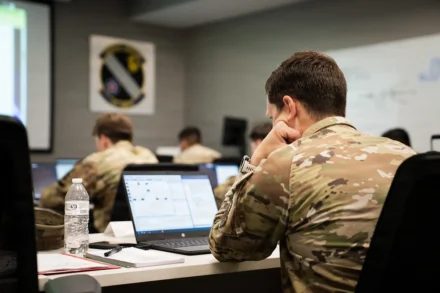
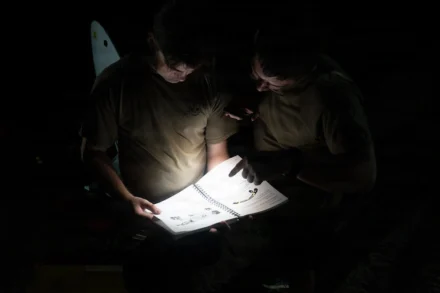
The Joint Special Operations University’s Enlisted Academy (JSOU-EA) hosted 29 service members with U.S. Special Operations Command and U.S. Central Command, June 23-26, during the university’s first iteration of GATEWAY for the geographically co-located combatant commands.

The two-week long GATEWAY course is in resident enlisted joint professional military education held at the National Defense University, Fort McNair, Washington D.C., that reinforces joint perspectives for mid-grade senior noncommissioned officers while preparing them for enhanced joint leadership opportunities at the operational level.

Last year, the decision was made by former Senior Enlisted Advisor to the Chairman, Joint Chiefs of Staff, U. S. Marine Corps Sgt. Maj. Troy Black, to start hosting GATEWAY at the combatant commands, outside of the National Capitol Region. With support from four-star leadership across the COCOMs, U.S. Strategic Command at Offutt Air Force Base, Nebraska, held the first pilot course in December 2024, hosting two members from each COCOM.

“I’m excited that our leadership, from the chairman down, knows the importance of enlisted PME, especially joint PME,” said U.S. Marine Corps Sgt. Maj. Dan Krause, senior enlisted leader of the joint force development directorate with the Joint Staff at the Pentagon, Washington D.C. “The only place you’re going to get pure joint PME is through the joint PME programs.”

Former and current senior enlisted advisors to the Chairman of the Joint Chiefs of Staff and service senior enlisted advisors advocated the need to provide EJPME to NCOs when selected for a joint assignment, or shortly after arriving, enabling members to meet the demands of emerging future operating environments.

“We live in an era of accelerating complexity – [Artificial Intelligence], cyber threats, peer competition, disinformation,” said U.S. Army Sgt. Maj. Garric Banfield, the command senior enlisted leader of JSOU. “The battlefield is no longer confined to a grid square. Education is how we prepare joint senior enlisted leaders to think critically, collaborate globally and act decisively when doctrine runs out. It is the foundation of strategic agility in an uncertain world.”

To cut travel costs and ensure NCOs received EJPME, the commandant of JSOU-EA suggested hosting a GATEWAY course for U.S. SOCOM and U.S. CENTCOM members, two geographically co-located COCOMs, rather than having all the COCOMs send their members on a temporary duty.

“There were a couple of creative ways to take what the SEAC’s vision was,” said Dr. Kari Thyne, chief learning officer for JSOU-EA. “To push it out to the commands, but also to infuse that by taking advantage of geographic location.”

The commandant of JSOU-EA did not stop there.

“Our commandant wanted us to relook at the curriculum, since a lot of the faculty here had developed the original curriculum. In the past three years, it needed a little updating and revising,” said Thyne. “We spent about a month and a half working on that, and we will continue to evolve it as we get inputs from the different combatant commands.”

While each branch of military service provides PME to its members, the ever-changing battlefield requires more than just one branch’s area of expertise.

“You should be able to go from the service environment to the joint environment with a minimum transition period so we can continue to maximize your experience and the leadership that we need you to provide in that environment,” said Thyne. “The prevailing wisdom is that we, as services, like to think that we can do it all, but the nature of conflict, the changing character of war suggests that it’s not going to be one service doing it all.”

U.S. Air Force Tech. Sgt. Kyle Ryan, executive assistant to the command senior enlisted leader of U.S. CENTCOM, is serving in his first joint position and when he heard about the course, he knew he wanted to attend.

“It was more than what I expected,” said Ryan. “There was a lot of information, and you don’t know what you don’t know. Then being in the joint world, you find out how close you are to the mission, but also how you’re a small piece to the main puzzle.”

Even though Ryan talked to other service members who have been to the course, it was nothing like he thought it would be.

“It’s eye opening,” said Ryan. “You now understand the big-picture mission – not just about the Air Force, but all departments of the military; the Army, Marines, Navy, and how everybody comes together and fights for that sole mission purpose.”

Service members in grades E-7 and E-8 serving in or transitioning to joint assignments, who are interested in the GATEWAY course, should coordinate with their supervisor and senior enlisted leader to enroll in upcoming sessions.

Story by TSgt Marleah Miller
U.S. Special Operations Command

Urban Lightfighter Course Distance Learning Package Available Now for $15

Friday, August 1st, 2025

The Urban Light Fighter Course is now stateside. One thing that we learned from past courses is that an instructional lead in via online training would accelerate the experience and would allow students to hit the ground running. So we did just that. I put together a robust distant learning package for 15.00. Now if you signed up or are going to sign up for the in-person course, this is free to you. If you are on the fence about attending an in-person course, well 15 bucks is a great entry price to learn about what you would be doing; from drone survey missions, to OSINT, to learning about Arducopter and autonomous flights. You’ll be working a robust comms package from DMR to Reticulum Networks. Also, the online course will be updated regularly, and I have some downloadable goodies as well for ya.

cr2ss.com/courses-1

21st Air Task Force Sharpens Drone Capabilities with sUAS Training

Wednesday, July 30th, 2025

DYESS AIR FORCE, Texas —  

Eight Airmen assigned to the 21st Combat Air Base Squadron, part of the 21st Air Task Force, completed small Unmanned Aircraft System (sUAS) training at Joint Base Charleston, South Carolina, July 14-18, enhancing their technological capabilities and operational readiness ahead of their upcoming deployment.

Hosted by the 628th Civil Engineer Squadron sUAS program office, the weeklong training course prepared Airmen for practical integration of drone technology in support of operational planning and force protection. Training scenarios included search-and-rescue operations, dense forested terrain navigation, and nighttime reconnaissance using thermal imaging—simulating environments where sUAS platforms act as low-cost, high-value force multipliers.  

“I have a new appreciation for how critical sUAS technology is for the future fight,” said Tech. Sgt. Hunter Pryor, 7th Civil Engineer Squadron and 21st CABS station chief. “Now our team has several members, all from different career backgrounds, that can employ it effectively, which gives us a lot more flexibility in a contested environment.”

Upon completion of the training, each Airman received certification as a sUAS operator—a capability developed outside of their primary career field. Their newly acquired capabilities support broader sustainment and warfighting functions that will be tested throughout multiple exercises and training events.

“This kind of training is the Mission Ready Airmen idea in reality,” said Col. Thomas Walsh, 21st ATF commander. “Smaller, multi-disciplinary teams, using technology like sUAS, additive manufacturing and AI will be able to solve more problems faster and with less resources in contested areas. We are training how we expect to fight.”

The training aligns with Department of Defense guidance under the recent “Unleashing U.S. Military Drone Dominance” directive, which calls for all combat units to integrate uncrewed aerial systems into force-on-force training by 2027 and equips every squadron with low-cost, expendable drones by the end of 2026.

“Our adversaries have a head start in small UAS, but we will perform a technological leapfrog and establish small UAS domain dominance by the end of 2027,” said the Honorable Pete Hegseth, U.S. Secretary of Defense. “We will accomplish this urgent goal by combining the nation’s best qualities, including risk-taking.”

By integrating sUAS operations into traditional mission frameworks, the 21st ATF is pioneering new tactics, techniques, and procedures that will inform future Air Force operations. As one of only three Pacific Air Forces-aligned air task forces, the 21st ATF is postured to lead the Department of the Air Force’s shift toward Agile Combat Employment, consistently training to operate in contested and austere environments across the Indo-Pacific.

By 7th Bomb Wing Public Affairs

7th Bomb Wing Public Affairs

Defoor Proformance Shooting Open Enrollment Classes Available Now

Wednesday, July 23rd, 2025

Defoor Proformance Shooting 2025-26 open enrollment classes –
are now live. Full sellouts are expected.

The offerings include multiple pistol, carbine and scoped rifle classes going up and a few new locations.

defoor-proformance-shooting.myshopify.com

Belgian Aircrew Completes MQ-9B Training

Monday, July 21st, 2025

GA-ASI’s MQ-9B SkyGuardian® Training Was Conducted at Multiple Sites, Including Flight Test & Training Center and Desert Horizon

SAN DIEGO – 17 July 2025 – The first Belgian aircrew has completed training to operate the world’s leading remotely piloted aircraft (RPA): the MQ-9B SkyGuardian®. General Atomics Aeronautical Systems, Inc. (GA-ASI), designer and developer of the MQ-9B, provided the extensive aircrew training that culminated at GA-ASI’s Desert Horizon test facility in El Mirage, California, following stops in Belgium and GA-ASI’s Flight Test & Training Center in North Dakota.

“Providing all-encompassing training for the aircrews of our customers goes hand-in-hand with delivering the world’s most capable RPA,” said GA-ASI President David R. Alexander. “Completing this training ensures that Belgium is ready and able to operate their MQ-9Bs and maximize the benefits that come from long-range, high-endurance RPA.”

The scope of the training is focused on the foundational skills required to operate the MQ-9B SkyGuardian air vehicle and its equipment, including the Multi-Spectral Targeting System (MTS), Synthetic Aperture Radar (SAR), Mission Intelligence Station (MIS), and System for Tasking and Real-Time Exploitation (STARE). Training involves building solid foundations for both normal and emergency operations in Intelligence, Surveillance, and Reconnaissance (ISR) systems, instrument flying, and Automatic Takeoff and Landing Capability (ATLC) and more.

The first flight of Belgium’s initial MQ-9B aircraft took place in February. That aircraft will soon complete Acceptance Test Procedures and is expected to be in Belgium before the end of September. It’s the first of a four-aircraft purchase by the Belgian Ministry of Defence. The Foreign Military Sale to Belgium also includes two Certified Ground Control Stations.

MQ-9B is the world’s most advanced RPA system, delivering exceptionally long endurance and range — with ATLC under pole-to-pole SATCOM-only control — and will be able to operate in unsegregated airspace using the GA-ASI-developed Detect and Avoid system. MQ-9B includes the SkyGuardian and SeaGuardian® models, with multiple deliveries made to the U.K.’s Royal Air Force (Protector), as well as orders from Canada, Poland, Japan, Taiwan, India, and the U.S. Air Force in support of the Special Operations Command. MQ-9B has also supported various U.S. Navy exercises, including Northern Edge, Integrated Battle Problem, and Group Sail.

Cole Engineering Awarded $62M U.S. Army Production Contract for Next-Generation Stinger Training System

Friday, July 11th, 2025

CESI is closing the gap in live force-on-force training with innovative Live Training solutions.

ORLANDO, Fla.–Cole Engineering Services, Inc. (CESI), a By Light Company, has been awarded a $62 million production contract by the U.S. Army’s Program Executive Office for Simulation, Training, and Instrumentation (PEO STRI) to deliver more than 100 Stinger Training Systems (STS) over the next five years.


This award follows a successful prototyping effort and represents a major step forward in the Army’s modernization under the Synthetic Training Environment (STE). STS is a critical component of the STE’s Live Training Systems (STE-LTS) Increment 1, designed to close live force-on-force training gaps and deliver scalable multi-domain realism.

The STS is part of the CESI Family of Live Training Products, which includes both direct and indirect fire weapons training solutions. Together, these capabilities deliver software-defined, high-fidelity training experiences across a range of operational scenarios, engineered for total situational dominance.

“At the core of our STS solution is CESI’s commercial artificial intelligence and computer vision application that revolutionizes optical tracking and engagement fidelity,” said Thomas Fransson, Senior Vice President, Simulation Products & Services at CESI. “CESI brings battlefield precision to the training range, enabling warfighters to train with greater realism, agility, and trust in their systems.”

The STS replicates guided munition effects and integrates seamlessly with current Tactical Engagement Simulation Systems (TESS) and STE instrumentation. These ruggedized, interoperable systems will be fielded across Brigade Combat Teams and Combat Training Centers, enhancing readiness through next-generation realism and reliability.

This production award includes system delivery, lifecycle support, and planned integration with future STE-LTS capabilities, reinforcing CESI’s commitment to delivering the tip of the spear for modern Air Defense Artillery (ADA) training through AI-enhanced optical targeting.

To support STS and other strategic Artificial Intelligence (AI) initiatives, By Light has officially launched AI Lab, an innovation hub designed to accelerate the development, testing, and deployment of AI-enabled solutions across defense, cybersecurity, and enterprise domains.

4GD to Triple Training Capacity with Two New Urban Warfare Training Facilities

Thursday, July 10th, 2025

London, 9th July 2025 – Military training technology specialists 4GD has significantly expanded its operations to two new urban warfare training facilities. The new Garrison Urban Skills Facilities (GUSFs) are based at Catterick Training Area in North Yorkshire and Rollestone near Salisbury. With an existing 4GD SmartFacility in operation with 16 Air Assault Brigade in Colchester, 4GD’s military training sites now represent a broad geographical footprint and can be utilised by British Army units across the UK.

In close collaboration with the Defence Infrastructure Organisation (DIO), Landmarc Support Services (Landmarc) and the Land Warfare Centre, 4GD provide the technological backbone to the facilities.

4GD’s input into these facilities represents the next generation in urban warfare training. 4GD has installed its trademark SimWall and 4GAV systems across all Urban Fighting Skills Facilities. SimWall comprises a series of reconfigurable and adaptable panels designed to provide a greater variety of training scenarios. 4GAV has then enhanced the facility through the use of light, smoke and sound effects as well as detailed ‘after-action’ reviews. 4GD’s use of advanced technology serves to enhance the learning experience for the soldier. Facilities are ready for upgrading to integrate 4GD’s flagship robotic SimStriker, as already in use in the Urban Training Facility at Colchester.

Both GUSF facilities have recently become operational. These urban training environments, being used by the British Army, have been designed with unprecedented levels of realism, complexity and density that replicate the range of urban environments likely to be encountered by military personnel deploying on operations. The three sites (Catterick, Rollestone and Colchester) alongside 4GD’s significant upgrading of Copehill Down Village facilities can all connect together to form a larger training area. This provides unrivalled training opportunities across four sites. 

Through these facilities, 4GD and its partners have significantly enhanced the British Army’s capacity to conduct realistic and relevant urban warfare training. These facilities underscore a shared commitment to equipping military personnel with the skills and experience they need to operate effectively.

Rob Taylor, 4GD Founder and Director, said:

“4GD’s expanded footprint enables British Army units across the UK to access high-fidelity, urban warfare training environments designed to reflect the diverse, high-stakes scenarios soldiers are likely to encounter in real-world deployments.

Increasing the training capacity of facilities with 4GD technology allows us to collect much more real-world data on how soldiers train in urban facilities. This enables us to understand the needs of the warfighter and stay ahead of the curve when developing future products.”

Lt Col Gord Robinson (RANGERS), SO1 Optimisation, Land Warfare Centre commented:

“These state-of-the-art facilities have been extremely well received by the soldiers who appreciate how easily the internal space can be reconfigured to provide a non-repetitive and altering urban training scenario. It really is a long overdue enhancement to the Defence Training Estate which fully enables the achievement of platoon level urban training objectives in a controlled realistic urban environment.”

CTOMS and Accuracy Under Fire Announce Partnership to Provide AUFIRE Training Device in Canadian Markets

Tuesday, July 8th, 2025

CTOMS, a leader in tactical medical and training solutions, is proud to announce a strategic partnership with Accuracy Under Fire to provide the AUFIRE training device to Canadian markets. This collaboration unites two industry innovators dedicated to enhancing tactical training with realistic, relevant solutions.

The AUFIRE training device is a groundbreaking tool designed to bring unparalleled realism to tactical training for military, law enforcement, and first responders. By simulating the physical and psychological hurdles of being wounded in the arm, AUFIRE locks the affected arm, forcing trainees to work techniques, adapt, and fight through challenging scenarios. Key features include:

Realistic Injury Simulation: Through immobilization, AUFIRE replicates the experience of an arm injury, requiring trainees to continue performing under simulated combat stress.

Enhanced Tactical Decision-Making: Forces users to adapt their tactics, improving resilience and problem-solving in high-pressure situations.

Adaptable: AUFIRE can be integrated into existing training programs.

This partnership underscores our commitment to providing Canadian professionals with innovative tools to prepare for worst case scenarios. AUFIRE’s unique approach to simulating combat injuries enhances training realism, ensuring operators are better equipped to handle these critical situations.

CTOMS will serve as the exclusive Canadian distributor of the AUFIRE training device, integrating it into their robust portfolio of tactical training and medical solutions. Accuracy Under Fire, focused on realistic training innovations, will leverage CTOMS’ extensive network to bring AUFIRE to Canadian markets.

Together, CTOMS and Accuracy Under Fire are redefining tactical training, aiming to equip those who serve with the tools to excel. For more information on AUFIRE, visit ctomsinc.com.