XC3 Weaponlight

Archive for the ‘Training’ Category

Fort Benning Prepares Soldiers to Fly, Fight with Drones

Monday, August 11th, 2025

FORT BENNING, Georgia — As small unmanned aircraft systems continue to shape modern conflict, the U.S. Army Maneuver Center of Excellence at Fort Benning is proactively addressing the evolving demands of warfare through its sUAS Master Trainer Course.

Operating within Echo Company, 1st Battalion, 29th Infantry Regiment, 316th Cavalry Brigade, the course is designed to enhance Army readiness and warfighting capabilities by empowering units to develop their own sUAS training programs and operators.

The three-week sUAS Master Trainer Course focuses on equipping noncommissioned officers, officers, and warrant officers with the expertise to establish and manage a unit’s sUAS operator training program. This includes certifying new operators, sustaining current proficiencies, and re-qualifying existing personnel. Graduates earn a U2 skill identifier (ASI for enlisted and warrant officers, SI for officers), which signifies their specialized knowledge.

“The mission is to enable the force to train their own operators at their home station, both Group 1 and Group 2,” said Sgt. 1st Class Derrick Guyton, the sUAS Master Trainer Course branch chief. “We teach our students how to create and run an air crew training program at their home station.”

Within the Department of Defense classification system for sUAS, Group 1 refers to sUAS typically weighing less than 20 pounds, operating below 1,200 feet at ground level and at speeds under 100 knots. Group 2 sUAS weigh between 21 and 55 pounds, operating below 3,500 feet AGL and at speeds under 250 knots. Both are considered “small” UAS due to their relatively lighter weight and lower operating parameters, playing a crucial role in tactical intelligence, surveillance, and reconnaissance, or ISR, operations.

Given the global operational environment and the widespread use of drones in tactical engagements, the ability to rapidly produce skilled sUAS operators is critical. “We need to be able to maximize the number of operators we’re producing across the force,” Guyton said, emphasizing the course’s vital role in meeting this demand. “Every unit has a Master Trainer so they’re producing the maximum number of operators they can at any given time.”

To take the course, Soldiers need a Small Unmanned Aircraft Systems Manager (SUASMAN) account. This is an online database that tracks a Soldier’s certifications, qualifications, flight logs, training, and logistics related to sUAS. All units use this system to maintain records and log flights.

In addition to having a SUASMAN account, Soldiers must also complete Basic UAS Qualification (BUQ) Levels 1 and 2 and receive an appointment memorandum from their brigade commander or higher, designating them as the sUAS Master Trainer for their brigade. .

Through the course, Soldiers gain proficiency on the Skydio RQ-28 Alpha, a short-range reconnaissance drone, by covering fundamental tasks such as assembly, disassembly, operation, basic maintenance, and data package download.

They also become familiar with medium-range reconnaissance drones like the Ghost X and C-100. A key component of the training involves students instructing each other on these tasks, ensuring their capability to lead future initial qualification training at their home stations.

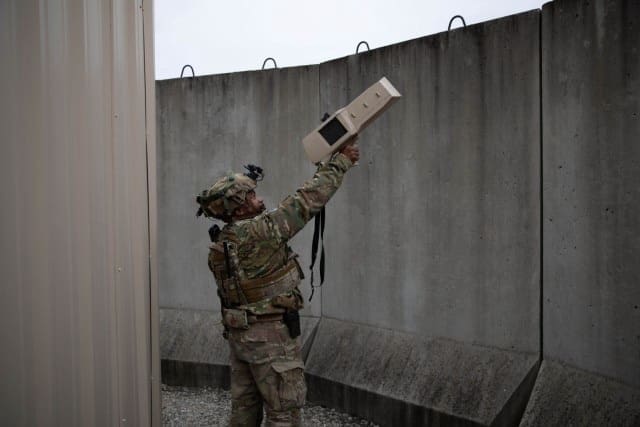
The curriculum also integrates tactical considerations for sUAS employment and counter-sUAS tactics. Students learn passive counter-detection methods, such as camouflaging launch sites during tactical exercises, and receive instruction on available counter-sUAS systems.

MCoE spearheads comprehensive sUAS integration across Army training

Beyond the sUAS Master Trainer Course, MCoE is leading broader initiatives to systematically integrate sUAS and robotics training throughout the Army’s educational spectrum, from basic training to advanced leadership courses. This comprehensive approach aims to foster a universal understanding and skillset for these critical capabilities.

One significant development is the piloting of a new sUAS Operator Course, with its initial class scheduled for October 2025. This course is designed to build upon foundational training received by all Soldiers in One Station Unit Training.

“Our sUAS training strategy in OSUT allows all Soldiers to execute approximately 10 hours of sUAS virtual training to familiarize them with basic flight and tactical skills needed to employ an sUAS in support of a maneuver mission,.” said Jay Brimstin, deputy director of MCoE’s Department of Tactics, Training, and Doctrine. “This will prepare them to certify with a unit master trainer when they reach their operational unit. Also, through this process we’ll be able to identify a select number of OSUT Soldiers to go into the Operator Course upon completion of OSUT.”

The one-week sUAS Operator Course will offer 22 hours of live flights on multiple systems and additional simulations, qualifying Soldiers as basic sUAS operators. This course does not require temporary duty funds and Soldiers will spend no more than two additional weeks at Fort Benning after their OSUT graduation. The goal is to provide qualified operators to the operational force for rapid certification on unit-specific platforms.

MCoE also plans to pilot a Robotic Autonomous Systems Leader Tactics Course and a Robotics Master Trainer Course in early 2026. These initiatives underscore the Army’s commitment to preparing Soldiers for future conflicts where robotic and autonomous systems will play an increasingly prominent role, Brimstin said.

The advancements at Fort Benning are a direct result of the Army’s ‘Transformation in Contact’ initiative. This effort is vital for adapting and reorganizing how formations are built and equipped to keep pace with the evolving global operational environment, which enables our forces to achieve overmatch against adversaries.

As the Army continuously transforms its mobility, lethality, and readiness, redesigning formations like infantry and aviation to improve its ability to deploy, fight, and win across all domains – flying, fighting, and winning is no longer the sole responsibility of the U.S. Air Force.

By CPT Stephanie Snyder

Kopin Receives Contract Increase for US Army’s Next-Generation Short-Range Interceptor (NGSRI) Visual Display Subsystem (VDS)

Tuesday, August 5th, 2025

WESTBOROUGH, Mass. – Kopin Corporation (NASDAQ: KOPN), a leading provider of application-specific optical systems and high-performance microdisplays for defense, training, enterprise, industrial, consumer and medical products, today announced it has received a contract update for development Phase 2 of the Next-Generation Short-Range Interceptor (NGSRI) Visual Display Subsystem (VDS) from Lockheed Martin. As a global defense technology company driving innovation and advancing scientific discovery, Lockheed Martin accelerates the delivery of transformative technologies through 21st Century Security®.

The NGSRI program aims to advance the capabilities of short-range missile defense systems. This update funds the build and test of the new high-resolution VDS assembly that includes Kopin’s proprietary organic light emitting diode (OLED) microdisplay, drive electronics, and optical designs for integration into the Command Launch Assembly (CLA)-a key system in the U.S. Army’s NGSRI initiative.

Under the Phase 2 contract update, Kopin will deliver fully assembled “All-Up Round” units-VDS assemblies for use in a variety of simulated and operational missile launch test scenarios.

“We are very pleased to have received the Phase 2 award for this critical program,” said Bill Maffucci, Kopin’s Senior Vice President of Business Development and Strategy. “We believe Kopin’s high-performance VDS assemblies offers an ideal solution for advanced missile systems and look forward to supporting the continued success of the NGSRI program.”

(more…)

Preparing for Air Force Special Warfare: Inside the Athletic Leadership Boot Camp

Sunday, August 3rd, 2025

The 330th and 331st Recruiting Squadrons, teamed up to host an Athletic Leadership Boot Camp at 17 Springs Complex, Millbrook, Alabama, July 18, 2025. The ALB featured teamwork-focused drills designed to build strength, resilience and camaraderie. Exercises included navigating with blacked-out goggles, sandbag sled pulls and a sandbag walk across the end zone. Staff Sgt. Andrew Hestley, 330th Recruiting Squadron special warfare scout, emphasized the importance of teamwork and physical fitness in preparing recruits for the challenges of Special Warfare. (U.S. Air Force video by Airman 1st Class Nelvis Sera)

JSOU’s Enlisted Academy Hosts GATEWAY Course for USSOCOM, USCENTCOM

Saturday, August 2nd, 2025

The Joint Special Operations University’s Enlisted Academy (JSOU-EA) hosted 29 service members with U.S. Special Operations Command and U.S. Central Command, June 23-26, during the university’s first iteration of GATEWAY for the geographically co-located combatant commands.

The two-week long GATEWAY course is in resident enlisted joint professional military education held at the National Defense University, Fort McNair, Washington D.C., that reinforces joint perspectives for mid-grade senior noncommissioned officers while preparing them for enhanced joint leadership opportunities at the operational level.

Last year, the decision was made by former Senior Enlisted Advisor to the Chairman, Joint Chiefs of Staff, U. S. Marine Corps Sgt. Maj. Troy Black, to start hosting GATEWAY at the combatant commands, outside of the National Capitol Region. With support from four-star leadership across the COCOMs, U.S. Strategic Command at Offutt Air Force Base, Nebraska, held the first pilot course in December 2024, hosting two members from each COCOM.

“I’m excited that our leadership, from the chairman down, knows the importance of enlisted PME, especially joint PME,” said U.S. Marine Corps Sgt. Maj. Dan Krause, senior enlisted leader of the joint force development directorate with the Joint Staff at the Pentagon, Washington D.C. “The only place you’re going to get pure joint PME is through the joint PME programs.”

Former and current senior enlisted advisors to the Chairman of the Joint Chiefs of Staff and service senior enlisted advisors advocated the need to provide EJPME to NCOs when selected for a joint assignment, or shortly after arriving, enabling members to meet the demands of emerging future operating environments.

“We live in an era of accelerating complexity – [Artificial Intelligence], cyber threats, peer competition, disinformation,” said U.S. Army Sgt. Maj. Garric Banfield, the command senior enlisted leader of JSOU. “The battlefield is no longer confined to a grid square. Education is how we prepare joint senior enlisted leaders to think critically, collaborate globally and act decisively when doctrine runs out. It is the foundation of strategic agility in an uncertain world.”

To cut travel costs and ensure NCOs received EJPME, the commandant of JSOU-EA suggested hosting a GATEWAY course for U.S. SOCOM and U.S. CENTCOM members, two geographically co-located COCOMs, rather than having all the COCOMs send their members on a temporary duty.

“There were a couple of creative ways to take what the SEAC’s vision was,” said Dr. Kari Thyne, chief learning officer for JSOU-EA. “To push it out to the commands, but also to infuse that by taking advantage of geographic location.”

The commandant of JSOU-EA did not stop there.

“Our commandant wanted us to relook at the curriculum, since a lot of the faculty here had developed the original curriculum. In the past three years, it needed a little updating and revising,” said Thyne. “We spent about a month and a half working on that, and we will continue to evolve it as we get inputs from the different combatant commands.”

While each branch of military service provides PME to its members, the ever-changing battlefield requires more than just one branch’s area of expertise.

“You should be able to go from the service environment to the joint environment with a minimum transition period so we can continue to maximize your experience and the leadership that we need you to provide in that environment,” said Thyne. “The prevailing wisdom is that we, as services, like to think that we can do it all, but the nature of conflict, the changing character of war suggests that it’s not going to be one service doing it all.”

U.S. Air Force Tech. Sgt. Kyle Ryan, executive assistant to the command senior enlisted leader of U.S. CENTCOM, is serving in his first joint position and when he heard about the course, he knew he wanted to attend.

“It was more than what I expected,” said Ryan. “There was a lot of information, and you don’t know what you don’t know. Then being in the joint world, you find out how close you are to the mission, but also how you’re a small piece to the main puzzle.”

Even though Ryan talked to other service members who have been to the course, it was nothing like he thought it would be.

“It’s eye opening,” said Ryan. “You now understand the big-picture mission – not just about the Air Force, but all departments of the military; the Army, Marines, Navy, and how everybody comes together and fights for that sole mission purpose.”

Service members in grades E-7 and E-8 serving in or transitioning to joint assignments, who are interested in the GATEWAY course, should coordinate with their supervisor and senior enlisted leader to enroll in upcoming sessions.

Story by TSgt Marleah Miller
U.S. Special Operations Command

Urban Lightfighter Course Distance Learning Package Available Now for $15

Friday, August 1st, 2025

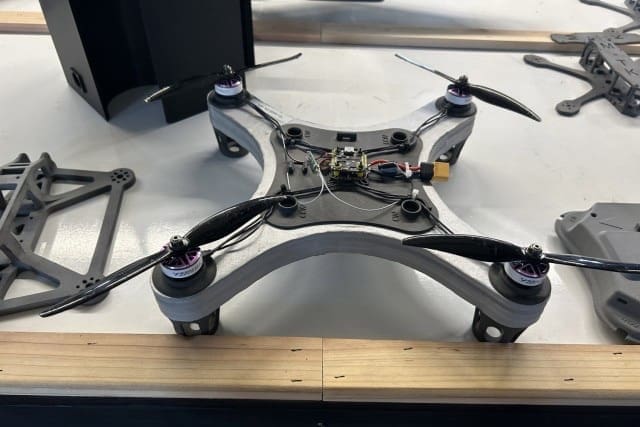
The Urban Light Fighter Course is now stateside. One thing that we learned from past courses is that an instructional lead in via online training would accelerate the experience and would allow students to hit the ground running. So we did just that. I put together a robust distant learning package for 15.00. Now if you signed up or are going to sign up for the in-person course, this is free to you. If you are on the fence about attending an in-person course, well 15 bucks is a great entry price to learn about what you would be doing; from drone survey missions, to OSINT, to learning about Arducopter and autonomous flights. You’ll be working a robust comms package from DMR to Reticulum Networks. Also, the online course will be updated regularly, and I have some downloadable goodies as well for ya.

cr2ss.com/courses-1

21st Air Task Force Sharpens Drone Capabilities with sUAS Training

Wednesday, July 30th, 2025

DYESS AIR FORCE, Texas —  

Eight Airmen assigned to the 21st Combat Air Base Squadron, part of the 21st Air Task Force, completed small Unmanned Aircraft System (sUAS) training at Joint Base Charleston, South Carolina, July 14-18, enhancing their technological capabilities and operational readiness ahead of their upcoming deployment.

Hosted by the 628th Civil Engineer Squadron sUAS program office, the weeklong training course prepared Airmen for practical integration of drone technology in support of operational planning and force protection. Training scenarios included search-and-rescue operations, dense forested terrain navigation, and nighttime reconnaissance using thermal imaging—simulating environments where sUAS platforms act as low-cost, high-value force multipliers.  


“I have a new appreciation for how critical sUAS technology is for the future fight,” said Tech. Sgt. Hunter Pryor, 7th Civil Engineer Squadron and 21st CABS station chief. “Now our team has several members, all from different career backgrounds, that can employ it effectively, which gives us a lot more flexibility in a contested environment.”

Upon completion of the training, each Airman received certification as a sUAS operator—a capability developed outside of their primary career field. Their newly acquired capabilities support broader sustainment and warfighting functions that will be tested throughout multiple exercises and training events.

“This kind of training is the Mission Ready Airmen idea in reality,” said Col. Thomas Walsh, 21st ATF commander. “Smaller, multi-disciplinary teams, using technology like sUAS, additive manufacturing and AI will be able to solve more problems faster and with less resources in contested areas. We are training how we expect to fight.”

The training aligns with Department of Defense guidance under the recent “Unleashing U.S. Military Drone Dominance” directive, which calls for all combat units to integrate uncrewed aerial systems into force-on-force training by 2027 and equips every squadron with low-cost, expendable drones by the end of 2026.

“Our adversaries have a head start in small UAS, but we will perform a technological leapfrog and establish small UAS domain dominance by the end of 2027,” said the Honorable Pete Hegseth, U.S. Secretary of Defense. “We will accomplish this urgent goal by combining the nation’s best qualities, including risk-taking.”

By integrating sUAS operations into traditional mission frameworks, the 21st ATF is pioneering new tactics, techniques, and procedures that will inform future Air Force operations. As one of only three Pacific Air Forces-aligned air task forces, the 21st ATF is postured to lead the Department of the Air Force’s shift toward Agile Combat Employment, consistently training to operate in contested and austere environments across the Indo-Pacific.

By 7th Bomb Wing Public Affairs

7th Bomb Wing Public Affairs

Defoor Proformance Shooting Open Enrollment Classes Available Now

Wednesday, July 23rd, 2025

Defoor Proformance Shooting 2025-26 open enrollment classes –
are now live. Full sellouts are expected.

The offerings include multiple pistol, carbine and scoped rifle classes going up and a few new locations.

defoor-proformance-shooting.myshopify.com

Belgian Aircrew Completes MQ-9B Training

Monday, July 21st, 2025

GA-ASI’s MQ-9B SkyGuardian® Training Was Conducted at Multiple Sites, Including Flight Test & Training Center and Desert Horizon

SAN DIEGO – 17 July 2025 – The first Belgian aircrew has completed training to operate the world’s leading remotely piloted aircraft (RPA): the MQ-9B SkyGuardian®. General Atomics Aeronautical Systems, Inc. (GA-ASI), designer and developer of the MQ-9B, provided the extensive aircrew training that culminated at GA-ASI’s Desert Horizon test facility in El Mirage, California, following stops in Belgium and GA-ASI’s Flight Test & Training Center in North Dakota.

“Providing all-encompassing training for the aircrews of our customers goes hand-in-hand with delivering the world’s most capable RPA,” said GA-ASI President David R. Alexander. “Completing this training ensures that Belgium is ready and able to operate their MQ-9Bs and maximize the benefits that come from long-range, high-endurance RPA.”

The scope of the training is focused on the foundational skills required to operate the MQ-9B SkyGuardian air vehicle and its equipment, including the Multi-Spectral Targeting System (MTS), Synthetic Aperture Radar (SAR), Mission Intelligence Station (MIS), and System for Tasking and Real-Time Exploitation (STARE). Training involves building solid foundations for both normal and emergency operations in Intelligence, Surveillance, and Reconnaissance (ISR) systems, instrument flying, and Automatic Takeoff and Landing Capability (ATLC) and more.

The first flight of Belgium’s initial MQ-9B aircraft took place in February. That aircraft will soon complete Acceptance Test Procedures and is expected to be in Belgium before the end of September. It’s the first of a four-aircraft purchase by the Belgian Ministry of Defence. The Foreign Military Sale to Belgium also includes two Certified Ground Control Stations.

MQ-9B is the world’s most advanced RPA system, delivering exceptionally long endurance and range — with ATLC under pole-to-pole SATCOM-only control — and will be able to operate in unsegregated airspace using the GA-ASI-developed Detect and Avoid system. MQ-9B includes the SkyGuardian and SeaGuardian® models, with multiple deliveries made to the U.K.’s Royal Air Force (Protector), as well as orders from Canada, Poland, Japan, Taiwan, India, and the U.S. Air Force in support of the Special Operations Command. MQ-9B has also supported various U.S. Navy exercises, including Northern Edge, Integrated Battle Problem, and Group Sail.