Aquaterro

Archive for the ‘UAS’ Category

Mach Industries Announces Mach Propulsion, New Jet Engine Factory to Fuel the Future of Unmanned Defense Technology

Thursday, March 20th, 2025

Advancing National Security with High-Performance Propulsion Technology

Huntington Beach, California– March 20th, 2025 — Mach Industries, a leader in advanced defense manufacturing, today announced the launch of Mach Propulsion, a new division dedicated to the development and production of high-performance propulsion systems. Along with this expansion, the company is constructing a state-of-the-art jet engine facility to position Mach Industries as a major U.S. supplier of critical subcomponents for unmanned aerial vehicles (UAVs) and other defense technologies.

Set to begin construction later this year, the Mach Propulsion facility will introduce a vertically integrated, scalable solution for jet engine manufacturing, with a planned capacity of 12,000 engines annually. Designed to accelerate the advancement of next-generation propulsion technologies, the plant will support both Mach Industries’ proprietary platforms and a broader ecosystem from other manufacturers. Additionally, through rapid prototyping and testing, the site will harness Mach Industries’ iterative approach to expedite the design, testing and mass manufacturing of propulsion technologies.

Mach Industries has partnered with German manufacturer JetCat to supply propulsion systems for its Strategic Strike contract, recently awarded by the Army Application Lab, while Mach Propulsion will specialize in higher-thrust class engines with both enhanced durability and reusability. This initiative aims to complement JetCat’s offerings while expanding Mach Industries’ capabilities and product portfolio. Jeremy Klyde will lead the new division as General Manager. A seasoned expert in microturbine engine design and manufacturing, Klyde previously served as director of propulsion at Anduril Industries and held key leadership roles at Volvo and Lockheed Martin. His extensive experience in advanced propulsion systems will play a crucial role in the division’s growth and rollout of new engine models. As part of Mach Propulsion’s launch, Klyde will focus on building a high-caliber team, with plans to hire more than 30 engineers.

“Mach Industries is setting the standard for America’s future defense base by tackling critical gaps in our nation’s munitions supply chain. With the defense industry’s current deprioritization of essential components like engines and warheads, Mach Industries is stepping up to create the next generation of propulsion technology and strengthen our competitive edge,” said Klyde, General Manager of Mach Propulsion. “Mach’s commitment to ensure the U.S. defense ecosystem has access to advanced capabilities is exactly the forward-thinking strategy needed to secure national defense for the future.”By establishing this development of micro-jet engines, Mach is strategically positioned to be the primary engine provider for the next generation of unmanned aerial systems (UAS). Its goal is to deliver advanced propulsion technologies that support a range of critical military applications, including vertical-takeoff and landing (VTOL) systems, cruise missiles, and other high- performance vehicles.

“The creation of this factory represents a major leap forward in our readiness for scale conflict,” said Ethan Thornton, CEO and founder of Mach Industries. “Current micro-jet engine facilities are already operating at full capacity, even during peacetime. The United States needs to rapidly and efficiently prepare itself to produce weapons of the future at unprecedented scale, and we’re honored to be a major part of that solution.”

Defense Innovation Unit Selects Four Companies To Provide Long-Range, One-Way Unmanned Platforms Prototypes for Evaluation

Monday, March 17th, 2025

Mountain View, CA (March 14, 2025) –The Defense Innovation Unit (DIU) announced that four companies were awarded contracts for Artemis, a project to operationally evaluate long range, one way platforms. DIU is partnering with the Department of Defense Office of the Under Secretary of Defense for Acquisition & Sustainment (A&S) to execute a FY24 Budget line item directing operational testing of platforms in relevant Electronic Warfare (EW) and Global Navigation Satellite System (GNSS) denied environments. 

Congressional direction for this effort had a goal to provide loitering munitions capable of operation in an electromagnetic contested environment, at a price point that allows for mass deployment.

“We are excited about the non-traditional companies who are providing low-cost, adaptable, long-range, UAS platforms with the potential to maximize operational flexibility for the Joint force,” said Trent Emeneker, DIU program manager for the effort and contractor. “This was the intent of Congress’ direction to rethink how to get capabilities to the warfighter at speed and scale that can deliver much faster than traditional Programs of Record.”

The four companies on contract include Swan, a U.S. software company partnered with a Ukrainian unmanned aerial systems (UAS) firm; Dragoon, a U.S.-based firm; Aerovironment, a U.S. based firm; and Auterion, a U.S. software company partnered with another Ukrainian UAS firm.

In just over four4 months, DIU and A&S developed a problem statement, launched a solicitation, evaluated 165 proposals, conducted flight demonstrations to verify stated capabilities of down-selected companies and entered into contract negotiations. 

In order to have a successful prototype by the end of FY 2025, the next step is meeting an aggressive testing and integration schedule to complete prototyping and demonstrate success by the end of May 2025. Project Artemis goals are directly tied to observations of current real world combat conditions as well as feedback from end users across the DoD on what capabilities may be needed in this space to face near peer threat capabilities around the world. With Artemis, DIU and A&S are moving rapidly to provide an option for Services and Combatant Commands to choose from, delivered years in advance of current Program of Record timeframes. 

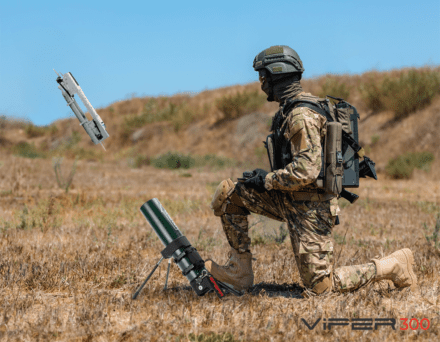
The final Artemis capabilities will be ground-launched, affordable one-way UAS platforms that operate at ranges from 50-300 km+, launch quickly and expeditiously, navigate at low altitudes, carry a variety of payloads, are rapidly updatable and upgradable, and functional in disrupted, disconnected, intermittent and low-bandwidth and Global Navigation Satellite System denied environments.

USSOCOM’s Curious Unmanned Aerial System Procurement for SOCCENT

Monday, March 17th, 2025

In a rare move, USSOCOM in support of Special Operations Command Central, a Theater Special Operations Command, has released an intent to a award a single source contract for a combat capability to be used by forces which rotate into their theater.

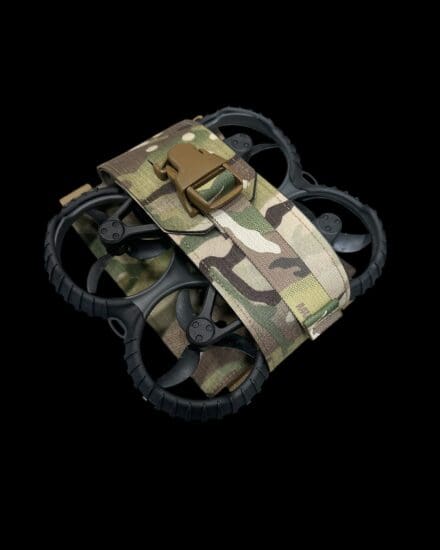
The actual commercial system is never named, but specifically, the requirement is for First Person View drones. Those of you who have been following the Soldier Systems Digest newsletter know how supportive I am of fielding these systems en masse, so any requirement gets me excited.

FPV drones are not new to Special Forces. They’ve begun to integrate the capability into their formations and conduct a course at the JFK Special Warfare Center and School called Robotics and Unmanned Systems Integration Course (RUSIC) to train operators to use these drones. Additionally, many receive training from Oak Grove Technologies in the specialty. In the photo above by SGT David Cordova, a 10th Group Green Beret prepares to launch an FPV drone to be used for a raid operation during Exercise Trojan Footprint last year in conjunction with Greek special operations forces near Nea Peramos, Greece. Soon, there will be a new Warrant Officer MOS in USASOC which specializes in robotics, drones, and other new warfighting technologies.

A few things stick out about this procurement.

First, it’s not normal for a TSOC to procure systems which will be used by gained forces. It happens, but it’s generally rare cases such as communications or command and control. TSOCs aren’t manned and equipped to operate and maintain ISR and lethality systems. Those are provided by gained forces from the SOF service components as well as conventional units with unique capabilities.

In fact, the J&A used to substantiate the procurement points out that the command has limited UAS capabilities and is reliant upon external agencies to provide specialized assets.

Below are several points of interest in the J&A:

Currently, the absence of dedicated Unmanned Aerial Systems (UAS) for cave clearing operations forces reliance on Military Working Dogs (MWD) or partner forces, significantly increasing risk to both personnel and mission success. This approach presents several challenges:

Hazardous Environments: Caves present confined, complex spaces with limited visibility and unpredictable terrain, increasing the danger to personnel and potentially hindering MWD effectiveness.

Specialized Threat Detection: Identifying hidden threats like explosives, booby traps, and concealed enemy combatants requires specialized equipment and expertise, limitations that UAS technology can address.

Communication and Coordination: Maintaining clear communication and coordination within a cave environment is crucial but challenging, potentially leading to delays and miscommunication.

To mitigate these risks and enhance operational effectiveness, we propose the acquisition and deployment of a dedicated UAS solution.

Enhanced Situational Awareness: FPV UAS provide real-time visual intelligence from within the cave, enabling operators to assess the environment, identify threats, and make informed decisions.

Reduced Risk to Personnel: Deploying UAS instead of personnel for initial reconnaissance and threat assessment significantly reduces the exposure (redacted) and MWD teams to potential hazards.

Improved Communication and Coordination: UAS equipped with communication relays enhance coordination between teams inside and outside the cave, facilitating smoother operations and faster response times.

This equipment enables ODAs to gain a visual on the risks present on an obscured objective, prior to engagement. Without this capability, ODAs accept undue to risk to the force by entering an objective without detect and defeat capabilities.

This heavy-lift capability, combined with its compact drone body, enables the system to operate effectively in confined spaces, such as those encountered in cave clearing operations. The system’s First-Person View (FPV) guidance system provides real-time video feed, allowing for precise navigation and control, which is essential for safe and effective operation in complex environments.

The other issue is the use of a Sole Source Contract. The drafter of the requirement certifies that the desired system is the only single source which is reasonably available and further asserts that the “JUAS platform presents a distinct combination of capabilities that make it the only viable solution for our specific needs.”

There are loads of ways to acquire the exact capability they desire without going for a J&A which will assuredly receive lots of scrutiny from industry.

Lastly, by publishing an open notice, it alerts everyone (bad guys included) that they currently have a capability gap and that they are closing it.

I’m glad they are getting the gear. Hopefully, they’ll come up with a means to train forces in its use and sustain the capability with manning and training as well as material life-cycle management. In the end, it would be great to see this capability grow across the SOF enterprise as well as into General Purpose Forces, but that means a serious look at force structure as well as the full DOTMLP-F spectrum.

GA-ASI’s Gray Eagle ER Makes First PLEO Flights

Thursday, March 13th, 2025

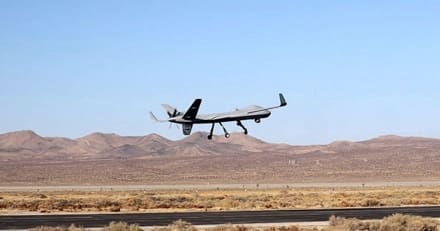
SAN DIEGO – 12 March 2025 – General Atomics Aeronautical Systems, Inc. (GA-ASI) conducted its first flight test series of the Gray Eagle Extended Range (GE-ER) Unmanned Aircraft System (UAS) using a Proliferated Low Earth Orbit (PLEO) satellite constellation for aircraft communications. Contracted by the U.S. Army, the flight tests began in January 2025 and mark a significant milestone, making GE-ER the first U.S. Army aircraft to be controlled over the new satellite service. Gray Eagle is also the only U.S. Army UAS capable of leveraging Geostationary Earth Orbit (GEO), Low Earth Orbit (LEO) and PLEO constellations for secure, inflight adaptable and resilient communication, navigation and data management.

The initial testing focused on flight-critical operations, including core aircraft control functions as well as sensor and communications systems. To date, GA-ASI has conducted two GE-ER flights and a series of ground test events using PLEO. Future flight testing is in the planning stages and includes operations across the full flight regime.

The Gray Eagle family of UAS is built on a Modular Open Systems Approach (MOSA) design that includes standardized interfaces and protocols. This approach has enabled rapid integration of the PLEO constellation and other significant capabilities without major technical efforts or extended timelines for integration and testing so new capabilities can be fielded faster.

“The PLEO integration and flight testing continue to show that the current GE-ER open architecture is real. We are practicing rapid integration now which will prove critical to the platform’s survivability and mission success in Multi-Domain Operations,” said GA-ASI Vice President of Army Programs Don Cattell.

Building on the GE-ER, the Gray Eagle 25M (GE 25M), takes MOSA to the next level with a government-owned, government-controlled open architecture that enables plug-and-play capabilities to ensure the platform’s rapid, low-cost adaptability to changing threats. GE 25M incorporates open architecture with ground systems, advanced and modular datalinks, and an upgraded propulsion system. These powerful additions significantly enhance the platform’s ability to rapidly add new capabilities, provide resilience to electronic threats, and deliver expeditionary employment to austere locations. PLEO will be a baseline capability for the 25M system.

The PLEO capability for the GE 25M is just one of several features of the system that maximizes the survivability of the platform. It also provides a low-cost opportunity to drastically increase the operational flexibility of both the Gray Eagle ER and Gray Eagle 25M. The 25M’s MOSA architecture enables use of the higher data rates available on the PLEO system and supports flight operations across the globe from pole to pole. These capabilities, combined with longer-range sensors, anti-jam navigation, and expeditionary ground control systems allow the Gray Eagles to operate outside the threat weapons envelope, but deliver effects hundreds of kilometers beyond the Forward Line of Own Troops, making GE 25M the most survivable aircraft in the Army inventory.

SOFWERX – Drone in a Box (DIBs) Collaboration Event

Thursday, March 6th, 2025

SOFWERX, in collaboration with USSOCOM Program Executive Office Tactical Information Systems (PEO-TIS), will host a Collaboration Event (CE) on 24 April 2025 to identify production model solutions for a configurable multidomain system capable of performing a variety of missions related to uncrewed aircraft systems (UAS) and uncrewed ground systems (UGV).

The “Drone in a Box” concept is a modular, adaptable, and scalable solution designed to provide Warfighters with a flexible and responsive Intelligence, Surveillance, and Reconnaissance (ISR) capability, utilizing both Uncrewed Ground Systems (UGS) and Unmanned Aerial Systems (UAS) with a desired maximum gross takeoff weight of 55 pounds. This innovative approach enables operators to rapidly reconfigure and tailor their systems to meet specific ISR mission requirements by swapping out interchangeable parts and components from an assembly package. The assembly package will include modular frames, propulsion systems, a sensor, and payload modules (such as electro-optical, infrared, and signals intelligence sensors), power and energy modules, control and navigation systems, and communication systems, allowing Warfighters to quickly adapt to changing mission requirements and conduct a variety of ISR tasks, such as area surveillance, target tracking, and battle damage assessment. The “Drone in a Box” system will support both Group 1 and Group 2 UAS, as well as small UGS, providing Warfighters with a comprehensive and flexible ISR capability to respond to emerging threats, gather critical information, and enhance their situational awareness in a variety of environments, including urban, rural, and austere terrain. The UGS component will enable Warfighters to conduct ISR missions in areas where UAS may be limited, such as in dense urban environments or under heavy tree cover. By leveraging the “Drone in a Box” concept, Warfighters will be able to rapidly deploy and reconfigure their ISR assets to meet the demands of dynamic and evolving mission sets, ultimately providing a decisive advantage on the battlefield. The “Drone in a Box” system is designed to deliver a modular, adaptable, and scalable ISR solution that meets the evolving needs of the Warfighter.

Request to Attend NLT 24 March 2025 11:59 PM ET.

For more information, visit events.sofwerx.org/drone-in-a-box-dibs.

Mach Industries Selected by Army for Contract to Develop Strategic Strike Aircraft

Wednesday, March 5th, 2025

Huntington Beach, CA, March 4th, 2025 – Mach Industries, a defense manufacturing company that develops advanced aircraft, was selected by the Army Applications Laboratory to develop Strategic Strike, a vertical takeoff (VTO) cruise missile, enabling a precision strike for maneuver units. The contract for Strategic Strike, awarded in Q3 of 2024, will enhance the strike capabilities of Company through Brigade-level maneuver elements.

Since winning this contract, Mach has rapidly developed the Strategic Strike program, locking Strategic Strike’s design by the end of September 2024, and successfully testing vertical takeoff into full-performance wingborne flight by mid-January 2025. Work is currently underway to rapidly integrate AI visual and RF sensing techniques to allow Strategic Strike’s operation in GPS and comms-denied environments.

Strategic Strike has a range of 290 km, carrying a 10+ kg warhead. The combination of VTO, high speed and range/payload is radically novel for the current fighting force. At the culmination of the contract, Mach will provide the warfighter with a VTO asset that has HIMARS range, cruise missile speed, and Hellfire effects.

The emergence of low-cost, man-portable intelligence, surveillance, and reconnaissance (ISR) assets has resulted in a new challenge: maneuver elements are now able to sense farther than they can shoot. Presently, the elimination of high-payoff targets is a collaborative effort requiring the coordination of several services or levels of organizations.

Strategic Strike, by contrast, is designed to dramatically improve a maneuver force’s ability to engage high-payoff targets beyond the forward line of troops. This product refinement will produce a versatile strike vehicle to deliver a mission-relevant payload at range.

The primary objective for Strategic Strike is to launch from beyond enemy radar range, reducing the probability of detection, and increasing launch team survivability. Tactical maneuver units will be able to engage and prosecute high-payoff targets, such as radar arrays and artillery pieces, well beyond the forward line of troops.

“I’m deeply grateful for this opportunity to deliver a war-changing capability to our military, and impressed by the engineering and manufacturing team’s hard work–taking Strategic Strike from design kickoff in September to flight just 14 weeks later,” said Ethan Thornton, CEO and Founder of Mach Industries. “I truly think the product team we’ve assembled here will drive generational value to the U.S. at this critical time, and I’m excited every day to see the rate of product development continue to accelerate. The entire Mach team is eagerly awaiting the day when the factory we’re prototyping Strategic Strike in turns on production and deploys them by the thousands to deter wars.”

machindustries.co

Gilat to Invest up to $3.5 Million in Disruptive ESA Based Drone Detection Startup Crosense

Friday, February 28th, 2025

Gilat expands its HLS and Defense strategic footprint with investment in cutting-edge deep-tech company

Petah Tikva, Israel, February 25, 2025 – Gilat Satellite Networks Ltd. (NASDAQ: GILT, TASE: GILT), a global leader in satellite networking technology, solutions, and services, today announced an investment of up to $3.5 million in Crosense, an early-stage startup revolutionizing drone detection and tracking. The investment is part of a funding round co-led by Frontier Capital, reinforcing strong industry confidence in Crosense’s disruptive technology. This move aligns with Gilat’s recently declared strategic focus on expanding its presence in the Homeland Security (HLS) and Defense sectors.

Crosense is developing a disruptive new class of deep-tech, electronically steered antenna (ESA) based drone detection and tracking systems, addressing an urgent, unmet need for securing airports, military bases, and critical infrastructure against unauthorized drone activity. Unlike traditional solutions, Crosense’s passive, all-weather, real-time system will provide 24/7 hermetic coverage, ensuring accurate, scalable, and cost-effective detection in all terrains, including dense urban environments.

“The rapid rise of drone threats has created an immediate demand for more effective detection solutions, and Crosense’s technology is poised to disrupt the market,” said Roni Stoleru, Chief Corporate Development Officer at Gilat. “This investment reflects Gilat’s commitment to the defense sector and our strategy to bring innovative, field-proven solutions to military and government customers worldwide. By supporting Crosense, we are reinforcing our role in safeguarding critical assets with next-generation technologies.”

“We are thrilled to have Gilat as our strategic partner and investor,” stated Crosense founder and CEO, Gil Zwirn. “Gilat’s extensive knowledge and expertise, as well as its robust global marketing and sales channels will be instrumental in our journey. This collaboration is expected to propel Crosense forward, fostering innovation and growth, and amplifying our reach and impact.”

HENSOLDT and QinetiQ Germany Expand Their Cooperation: Training for Unmanned Aerial Vehicles and Systems in Germany

Thursday, February 27th, 2025

Taufkirchen, 26.02.2025 – The sensor solutions provider HENSOLDT and QinetiQ Germany have strengthened their collaboration in the field of uncrewed aerial vehicles and systems, with ESG Elektroniksystem- und Logistik-GmbH serving as the prime contractor. 

This strengthened alliance supports QinetiQ’s Global Threat Representation strategy, reinforcing its reputation as a global service provider for military exercises, from operational analysis to implementing new capabilities. 

The expanded partnership focuses on three key areas including: 

·      Capability enhancement. 

·      Military uncrewed aerial vehicles of category IIa. 

·      Training and certified testing. 

This partnership builds on years of successful cooperation between, QinetiQ and HENSOLDT in Germany and Europe particularly in airborne radar systems using PC-12 test aircraft and the supply of reconnaissance technology for QinetiQ’s fleet. 

With key locations in Bavaria and Schleswig-Holstein, QinetiQ and HENSOLDT are well-positioned to support the German Armed Forces and other security authorities in operating uncrewed systems. 

HENSOLDT has been integrated as a certified body by the German Armed Forces Aviation Office for military uncrewed aerial vehicles of category IIa. This category encompasses drones used for flight target presentation, prototypes and system demonstrators. 

HENSOLDT will also act as a recognised training and certified testing centre for remote pilots of civil uncrewed aircraft in QinetiQ’s category 2c, which includes drones that do not require prior approval. As a multi-certified body, HENSOLDT can provide comprehensive system support within this strengthened partnership. 

Thorsten Heil, Head of Flight Operations at HENSOLDT in Germany, added: “As a reliable technology and innovation partner and an approved aviation company for both uncrewed and crewed aircraft, we are committed to developing specific, customer-oriented, and market-driven solutions that maintain our armed forces’ defence capabilities and enhance public safety. The intensified cooperation with QinetiQ is a critical step towards improving education and training for uncrewed aircraft and systems in Germany, contributing to the sustainable strengthening of our security.” 

Matthias Grögor, Head of Strategic Business Development at QinetiQ in Germany, said:

“Through our partnership with HENSOLDT, we demonstrate a proven collaboration with the German Armed Forces and other security authorities, backed by years of successful work, particularly with the German Air Force,” Matthias said. “Together, we aim to expand our services in uncrewed systems – from development and certification to education and training, around our Bavarian location in Augsburg, helping to establish Bavaria as a leading hub for drone technology.”