XC3 Weaponlight

AUSA 25 – Galvion Update

October 20th, 2025

First off, Galvion caught us up on their new Caiman UL (Ultra-Light). Available in five sizes, it incorporates the latest version of their APEX liner system.

It incorporates their new proprietary low-profile 3-hole shroud which signals a move away from the Wilcox shroud they’ve been using. It incorporates ballistic mounting hardware and uses rubber bumpers for rattle prevention and a more stable platform for NVGs. You’ll notice a slight color difference in the center portion of the shroud pictured above. That is an interchangeable metal plate to accommodate a variety of NVG and future headborne accessories. The new Galvion shroud is also featured on their SAR helmet.

They also gave us a peek at what the future holds in store for their Cortex ecosystem which integrates headborne technologies from disparate manufacturers into a usable system with Tactical Awareness Kit interface to get your head in the fight and out of ATAK. Data collected by various headborne sensors and indicated on the ATAK screen is routed as Augmented Reality date on an eyepiece or full heads up display visor which is not fed data via the Cortex system but also power, just like everything else mounted to the head, including lights and strobes. Cortex remains a plug and play system, integrating new peripherals as they are added to the ecosystem by the user.

The current state of the system is seen above while below we get a glimpse of what we alluded to when we wrote about the system during our SOF Week coverage.

While the helmet seen remains a concept prototype it gives us an idea of how all of the cabling and connections will become streamlined in future iterations of the technology.

We’ll continue to update you on new systems as Galvion rolls them out. In particular, we’ll be telling you about a new charging system they’ve developed with an industry partner to wirelessly charge drones once they’ve landed.

E-4 Mafia

October 20th, 2025

E-4 Is Not A Pay Grade Its A State Of Mind

When I joined the Army Reserve during my Junior year of High School in 1985 we still had Spec-5 and Spec-6s in my unit although they would change later that year to hard stripe NCOs. Until the late 70s there was an also E-7 version. They were abbreviated SP4 through SP7. When they dropped all but the E-4 version the abbreviation became SPC.

The current rank is a leftover from a period during the Cold War Army which had a traditional striped NonCommissioned Officer track for combat arms Soldiers and a Specialist track for technicians. Allegedly, there were two super grades which would take a Soldier all the way to SP9 but I have yet to actually see any evidence of SP8 or SP9 and the ranks were discontinued in 1968 due to concerns a Specialist could be working for an NCO with a lower pay grade. However, the E-4 through E-7 versions were out there in droves throughout the Vietnam-era. Today, the pay grade of E-4 is the largest single pay grade in the Army and is crucial to getting things done. We salute you!

E-Mafia is offering a bundle of OCP embroidered Specialist Rank from Spec-5 through Spec-9 along with a slew of E-4 Mafia morale boosters.

GA-ASI Selected to Support US Navy CCA Design Effort

October 20th, 2025

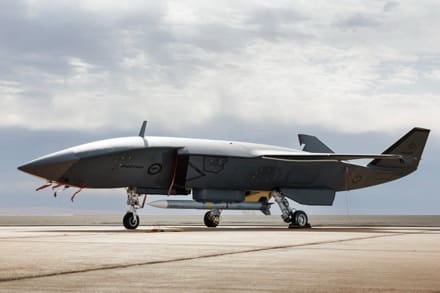
SAN DIEGO – 17 October 2025 – General Atomics Aeronautical Systems, Inc. (GA-ASI) has been contracted by the U.S. Navy to develop conceptual designs for a Collaborative Combat Aircraft (CCA) to support the carrier air wing of tomorrow.
GA-ASI was selected to work on Navy CCA designs emphasizing a modular approach to platform selection, capable of being rapidly reconfigured and upgraded to meet changing mission requirements, including operations on and from aircraft carriers. GA-ASI’s approach supports the Navy’s revolutionary acquisition strategy of smaller, frequent purchases that enable rapid technology insertion rather than traditional long-lifecycle programs.

GA-ASI’s Navy CCA contract follows its selection to design and fly the U.S. Air Force’s first CCA, the YFQ-42A. A production-representative unmanned fighter, YFQ-42A was the first Air Force CCA to begin flight testing in August, another historic achievement for the company.

“We’re honored by the vote of confidence from the U.S. Navy and we’re eager to put what we’ve built to work for the future fleet,” said GA-ASI President David R. Alexander. “No one has more experience than we do with unmanned combat aircraft and we’re leveraging that to help the Navy get this capability onto the flight deck fast.”

CCAs are highly capable, semi-autonomous jet fighters that complement and enhance traditional, human-piloted combat aircraft. Produced in high quantities at comparatively low cost, they let commanders shift risk away from human flight crews, enhance the sensing and other capabilities of legacy aircraft formations, increase lethality of the air wing, and maximize operational flexibility across the board.

GA-ASI has configured all its unmanned combat air vehicles (UCAV) to be AMS-GRA compliant, including XQ-67A, YFQ-42A and MQ-20 Avenger®. GA-ASI rapidly reconfigured and upgraded its modular XQ-67A Off-Board Sensing Station, an autonomous-capable unmanned jet built under contract from the Air Force Research Laboratory that achieved first flight in 2024. GA-ASI has pioneered unmanned jet operations for more than 17 years, beginning with the MQ-20 Avenger in 2008, and has extensive experience working with the U.S. Navy and other nations on carrier-based unmanned aircraft operations.

The Navy’s CCA design will emphasize seamless coordination among manned fighters, uncrewed vehicles and support platforms; accommodate elevated risk profiles and reduce risk to crewed platforms; support and enhance 4th- and 5th-generation aircraft and complement 6th-generation aircraft; and maximize operational flexibility, cost efficiency and mission effectiveness.

At the UK’s Farnborough Air Show in 2024, GA-ASI announced its company-developed concept for ship-based CCA operations, codenamed Gambit 5. GA-ASI’s Gambit Series envisions multiple CCA variants rapidly reconfigured from a common Gambit Core, enabling substantial commonality for rapid and affordable production at scale.

GA-ASI has recorded numerous recent aviation milestones with its aircraft at sea. In 2023, the short takeoff and landing demonstrator known as Mojave launched from and landed aboard the British aircraft carrier HMS Prince of Wales. In 2024, Mojave took off from the South Korean amphibious assault ship Dokdo and flew to a naval base ashore.

GA-ASI has developed more than two dozen different types of unmanned aircraft and delivered more than 1,200 units to customers, building more than 100 aircraft per year at its 5 million-square-foot manufacturing facility in Poway, Calif. GA-ASI aircraft have amassed 9 million total flight hours and more than 50 GA-ASI aircraft are aloft around the world every minute of every day.

The Click-Rs of WW2

October 19th, 2025

A Critical Tool for U.S. Army Airborne Soldiers During World War II: Communication in Warfare Transcended Words
Signals evolved beyond spoken language, becoming a matter of life and death. Among the myriad of innovations during this time, one particular device gained a unique reputation for its simplicity and effectiveness: the clicker. Commonly used by U.S. Army airborne soldiers during night operations, clickers were not just noise-makers; they were essential tools that ensured the safety and coordination of troops in some of the war’s most chaotic environments.

Origins and Development

The clicker, formally known as the ‘cricket’, was developed to counteract the challenges of operating in low-visibility conditions, particularly during airborne drops behind enemy lines. The idea was simple yet ingenious—create an audible signal that Allied soldiers could easily use to identify one another without revealing their position to the enemy. The cricket was an inconspicuous, compact device, resembling a small, metal pocket-sized container with a lever that produced a distinct clicking sound. Its design allowed for quick operation—just a light flick of the finger yielded a sound that could travel several yards, depending on the terrain and conditions.

The Man Behind the Clicker

The cricket was popularized by the 502nd Parachute Infantry Regiment, part of the 101st Airborne Division, during the D-Day operations in Normandy. Soldiers were trained to use the clicker to establish contact with fellow paratroopers in the dark chaos after jumping from planes. Major Richard Winters, who commanded Easy Company, famously employed the clickers in his strategic operations. His regiment, featured in the book and television series “Band of Brothers,” highlighted the crucial role the cricket played in navigating post-drop confusion.

The Sound of Survival

During the intense nights following the D-Day drop on June 6, 1944, the air was filled with the sounds of war—artillery fire, distant explosions, and the muffled chatter of troops. Amid this cacophony, the click of the cricket became a lifeline, allowing soldiers to identify allies in a sea of shadows. Each click was more than a sound; it was a coded message that signaled, “I’m friendly—where are you?” Simplicity was the clicker’s most significant advantage. Unlike radios, which could fail due to interference or battery depletion, the cricket worked without any power source and was remarkably easy to use under stress. It allowed soldiers to communicate discreetly and efficiently, minimizing the risk of detection from enemy forces.

Tactical Implementation

The use of clickers was not just random; it was part of a broader set of tactical signals that airborne soldiers utilized in conjunction with other means of communication. Soldiers were trained to recognize specific click patterns; one click might mean “good to go,” while a series of clicks could indicate a request for support or urgent assistance.  This method of communication was particularly vital during crucial moments, such as consolidating troops after a drop and planning subsequent maneuvers in enemy territory. The ability to quickly identify fellow soldiers was instrumental in U.S. troops’ efforts to regroup and execute their mission, especially in the chaotic aftermath of airborne operations.

Legacy and Cultural Impact

Although crickets fell out of use after World War II, their impact on military strategy and communication methods can still be felt today. The lessons learned from utilizing simple tools like the clicker have influenced modern military protocols concerning communication during covert operations.  In pop culture, references to the cricket have appeared as symbols of camaraderie, remembrance, and the relentless spirit of the U.S. soldiers who came before us. They serve as a reminder of the ingenuity and resilience of individuals who fought under dire circumstances. The clickers used by U.S. Army airborne soldiers during World War II may seem like a minor tool in the vast arsenal of warfare. Yet, their contribution to the success of numerous operations is undeniable. They embodied the spirit of adaptability and innovation among soldiers who faced extraordinary challenges. In the annals of military history, the clicker remains a testament to the power of simple solutions in complex battles. This small device played a significant role in the fight for freedom.

This article on the military history of the Cricket Clicker was submitted by Black Hills Designs who offers them for sale as well as a mount for a rifle or a pouch for your load bearing gear.

Major Order Worth Over €300 Million: Rheinmetall to Supply Armoured Medical Facilities for Deployment Near the Front Line

October 19th, 2025

Rheinmetall has received an order from the Federal Office of Bundeswehr Equipment, Information Technology and In-Service Support (BAAINBw) to supply highly mobile medical facilities to the German Armed Forces. The framework agreement concluded in September 2025 has an initial call-off value of over €300 million. The first of these protected, highly mobile medical facilities, which meet NATO Role 2B standards, is scheduled to be delivered to the Bundeswehr as a series model in 2029. The systems are intended for use by the German brigade in Lithuania, among others. The contract will be implemented by Rheinmetall Project Solutions GmbH.

Each of the medical facilities consists of a total of eleven vehicles with associated multifunctional containers. The contract is valid until 2040 and allows for the ordering of additional systems.

The containers remain on the vehicles during operation. These are military HX trucks from Rheinmetall MAN Military Vehicles. This makes the medical facilities highly mobile and allows them to be deployed in national and alliance defence operations in line with the threat situation. Seriously injured personnel can thus be treated close to the front line. In terms of mobility and protection, there is currently no comparable system available in NATO.

With the Role 2B medical facilities now on order, the Bundeswehr will have a highly mobile, protected system for life-saving emergency surgery and intensive care in the immediate vicinity of mechanised land forces. ‘This will enable us to provide our soldiers on the ground with the best possible medical care,’ said Dr Deniz Akitürk, Managing Director of Rheinmetall Project Solutions GmbH.

Kopin and THEON International Advance Alliance Following Regulatory Approval of $15M Agreement & Additional $8M Joint Development

October 19th, 2025
  • Kopin gains significant access to the European and NATO defense market
  • Accelerates development of critical technologies
  • Further strengthens Kopin’s balance sheet
  • Fixed conversion price of $3.00 per share on $7 million convertible preferred stock issuance

WESTBOROUGH, Mass. – Kopin Corporation (NASDAQ: KOPN) a leading provider of application-specific optical systems and high-performance microdisplays for defense, training, enterprise, industrial, consumer and medical products, announces a $15.0 million strategic investment agreement by Theon International Plc (Euronext Amsterdam: THEON), a globally recognized developer and manufacturer of advanced thermal imaging and night vision systems for global defense and thermal imaging markets.

Upon closing the parties will enter into a licensing and development agreement and funding agreements. Theon will invest $8.0 million into Kopin’s subsidiary in Dalgety Bay, Scotland, supporting co-developed products for Europe, Southeast Asia, and NATO countries, enabling collaborative initiatives across key global regions. In exchange for the $8.0 million Theon will receive a 49% equity interest in Kopin Europe. The parties anticipate performing joint development and production activities at Kopin’s wholly owned subsidiary in Reston, Virginia USA.

In addition, Theon will purchase $7.0 million of preferred shares from Kopin convertible into common stock at a fixed conversion price of $3.00 per share. Kopin will have the ability to force the conversion to common stock, once Kopin’s stock trades at $4.50 or higher for a period of 10 trading days within a 30 consecutive trading day period as defined in the agreements. The preferred shares carry an annual dividend of 4% payable in cash and stock. The $15.0 million investment is subject to standard closing conditions including obtaining necessary regulatory approval and is expected to close in Kopin’s fiscal third quarter.


“We are glad to be partnering up with KOPIN to realize their strategy of supplying complete systems directly to end users using novel micro-displays,” said Christian Hadjiminas, THEON’s CEO. “THEON’s extended A.R.M.E.D. product line of Augmented Reality solutions for the dismounted solder will be a vehicle for co-developments between the two companies enabling and expanding resources on KOPIN’s facilities in Reston (VA) that becomes Theon USA ‘s new industrial location. KOPIN’s engineering, components, and market reach will increase THEON’s US market penetration, while THEON’s global footprint in the rest of the world, along with the European jointly owned company KOPIN Europe (Scotland, UK) will ensure KOPIN’s products as well as the new co-developed products by KOPIN and THEON will be globally promoted. A true U.S. and European alliance for the present and future in the digital man portable space.”

Michael Murray, Chairman and CEO of Kopin stated, “Theon’s investment reflects our confidence in the relationship and the value we see in working together. The investment is expected to accelerate revenue growth in new markets, scale existing operations and better leverage our manufacturing infrastructure. Partnering with a world class international organization like Theon – one that believes in our future and shares in our vision – comes at a pivotal time as global defense spending continues to rise and a transformative milestone in Kopin’s evolution.”

This strategic relationship is expected to elevate Kopin’s position as a global player in microdisplays and application specific optical solutions for defense applications, and drive innovation, expand market reach, and reinforce Kopin’s role in delivering mission-critical optical technologies to allied defense forces worldwide.

Advisors

Stifel is acting as exclusive financial advisor and placement agent to Kopin.

Rhodie “Heavyweight Double Buckle Boots” Available from Fireforce

October 18th, 2025

Those of you who remember the Be a Man Among Men ads from the Bush War days may find this interesting. They’re reproduction Rhodesian Army Heavyweight Boots from Fireforce Ventures.

Based on an original pair provided by a veteran of the British South Africa Police (BSAP), Fireforce Ventures says their collaboration with HondoTread took almost two years to develop.

“We faithfully recreated the unique butterfly buckle, stitches, and overall look of the original,” they explain, “with very few deviations for the sake of modern utility. These aren’t just knock-off M43s…thes are the most truly ‘Rhodie’ boots ever put to market.”

They go on to explain, “If you’re looking for something high-speed and low-drag, these boots aren’t for you.” However, if you’re lookin’ to wear something truly “Rhodie” in every sense ? you need these boots. They’re bulky, thick, and intended to take a beating – whether it be buffalo thorns or ZANLA.”

Presumably, we can take that to mean they’re equally capable of shrugging off FRELIMO, ZIPRA, ZAPU, and Sak spinnekops.

When asked about field testing on a social media post, FV advised, “No major hot spots, on par with most leather boots. Excellent tread, and the double buckles work and achieve the same effect as standard P-37 style gaiters. Only gripe we had on our end was, they are HEAVY – but that’s the idea! Additional note – easy break in!”

Features:
  • Extremely close copy of original Rhodesian Army issue heavyweight boot pair, courtesy of our friend Alan McKenzie (former BSAP)
  • Heavy duty leather construction
  • Unique Rhodesian pattern reinforcement stitch at toe cap
  • 8-eyelet lacing under integral anklet, as per original example
  • Double-buckle secured integral anklet with correct Rhodesian pattern “butterfly” buckle
  • Commando style sole, inspired by the “asterix” sole of the original  – excellent tread and comfort
  • Distributed and designed by our friends at HondoTread Consulting

You can learn more about the Fireforce Ventures Rhodie boots here online.

Fireforce Ventures is named for the “Fire Force” tactics employed during the Bush War by the RLI, RAR, C Squadron SAS, Selous Scouts, and others.

Reproduction note from Fireforce Ventures: The only two aesthetic differences are the lack of “asterix” on the soles, and the lack of a rivet on the outside of the double buckle straps. We opted to not custom develop the sole as it would significantly increase the price point of this boot, for little discernable benefit to the wearer, and a worse tread overall. The “asterix” distinctive to the originals is instead replaced with similarly shaped “pentagon” treads at the front and back, approximately 2/3rd the size of the original “asterix” on the original sole. Additionally, we opted not to include the rivet on the double buckle boots as it seemed to severally compromised the actual durability of the buckle system itself. Given that the original 10mm rivet dug into the buckle, and left less than 2-3mm of actual material on the back end of the buckle strap, this was too big of a possible failure point to include. That being said, it is something we may consider in future iterations if a 10mm rivet can be included without compromising durable – but it is not something we were prepared to do on this first run. With all this in mind, the boot itself remains the most authentic reproduction of the heavyweight pattern Rhodesian Army boot in the market!

Put some classic Cold War era “boots on the ground.”

DRW


Industry Responds to Blast Over Pressure Effects from Weapons Firing

October 18th, 2025

Last week I wrote about Service Member exposure to the effects of Blast Over Pressure (BOP) firing weapons during training and combat.

There has been a great deal of innovation in the suppressor industry over the past few years as government demands and manufacturing technology both increase. However, most of the improvements have been on four areas:

1. Sound suppression

2. Light suppression

3. Thermal dissipation

4. Particulate blowback

We’ll break those down one by one and look at ways industry has worked to improve performance in those areas.

Sound Suppression

Silencers as they were known at the time were initially created to deaden the sound of a firing weapon. It’s a very straightforward concept and different construction techniques and materials have been used over the years to facilitate the process. Manufacturers have become so good at this attribute that they are willing to sacrifice some performance for improvements in the other areas described here. Interestingly, the desire to suppress more and more weapons has increased. There is even discussion of suppressing the upcoming Precision Grenadier System, a semi-automatic, magazine-fed grenade launcher.

The advent of additive manufacturing, or as it is commonly known, 3-D printing, has given rise to very complicated designs, which can control the release of sound from firing as well as other advantages we’ll get into next.

Light Suppression

Early in the Global War On Terror, Special Operators who operated primarily at night began to realize that sound suppression was only of particular advantage during the first memory’s of contact with the enemy. After that, visual cues in the form of flames coming out the end of weapons identify the location of operators and they asked suppressor manufacturers to deal with the issue. Now, shooters observe only a first round pop visual signature as initial gasses in the suppressor are ignited while other manufacturers have eliminated even that.

Thermal Dissipation

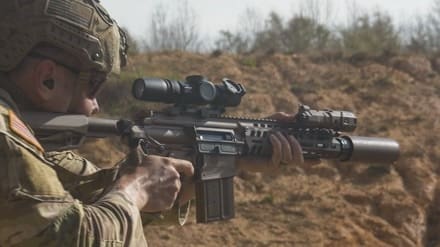
As suppressors heat up under fire they often take on an orange glow in the visual spectrum and almost serve as a beacon when observed under thermal or Infrared sensors. Not to mention, they plain old get hot and can burn the operator. US Special Operations Command’s Suppressed Upper Receiver Group program attempted to acquire an integrally suppressed M4 upper receiver with the suppressor under the weapon’s handguard but ended up buying a URP with a suppressor featuring a cage to prevent burn injuries.

As opponents on the battelfield began to use sophisticated sensors, special operators began to be targeted for their hot weapons and several systems and techniques were investigated to mitigate the threat. This remains a requirement in new NATO weapon acquisition programs.

Particulate Blowback

Special operators have been using suppressors for decades and have taken for granted being gassed in the face, particularly during sustained fire or in confined spaces. The burning of the eyes and difficulty breathing became the cost of doing business but the advantages of using a suppressor far outweighed the discomfort.

But as the Army and Marines Corps began to experiment with suppressors, the troops who were unused to the blowback started to complain and the acquisition community began to take a look at the issue. Turns out, sucking down fumes created by the combustion of propellants is very bad for your health.

When a semiautomatic firearm is suppressed, the suppressor doesn’t allow all of the propellant gases from flowing forward and out the end of the barrel. Many are pulled rearward into the shooter’s face during cycling.

Getting the Balance Just Right

The US Army’s Next Generation Squad Weapon program is one of the first that demanded that this new capability would be suppressed and provide sound and light suppression as well as mitigation from propellant fumes.

As the requirement was added during the competition, all three of the companies involved had to hit the ground running and tweak their systems to lower the amount of particulate expelled into the face of the firer.

SIG already had some experience with this answering the SURG requirement when they reduced the amount of fumes that reach the operator by up to 80%, but as it turns out, the Army and SOCOM have different particulate standards and measure differently meaning they still had their work cut out for them. All three met the requirement after learning a few things and applying some changes and the firers of the current NGSW rifle are exposed to lower noxious fumes levels than Soldiers firing the M4.

Still more may be done to mitigate the exposure to noxious fumes as propellant manufacturers rise to the challenge.

Meanwhile, some companies like SureFire have taken to using super computers at the national laboratories to conduct exhaustive fluid dynamic simulations to try out different suppressor designs before they actually cut any metal.

Attacking Blast Over Pressure

Unfortunately, the government had not until recently identified the medical threat posed by BOP. Consequently, industry has just begun to attack this new problem. Multiple concepts have been proposed, and several have made it past the white paper stage into actual material solutions. It’s a new frontier that will affect design and how weapons are employed, particularly during training.

Once thought to be the Holy Grail, we are learning it is attainable. In our next installment we are going to look at how one company has balanced the already identified suppressor attributes with a new capability, to mitigate the effects of BOP on both man and material and on me of the most difficult weapons to suppress, the M2 heavy machine gun.