Happy New Year from the FirstSpear team.
As dawn breaks into the new year, remember those working hard at home and abroad so we can celebrate in peace with family and friends.

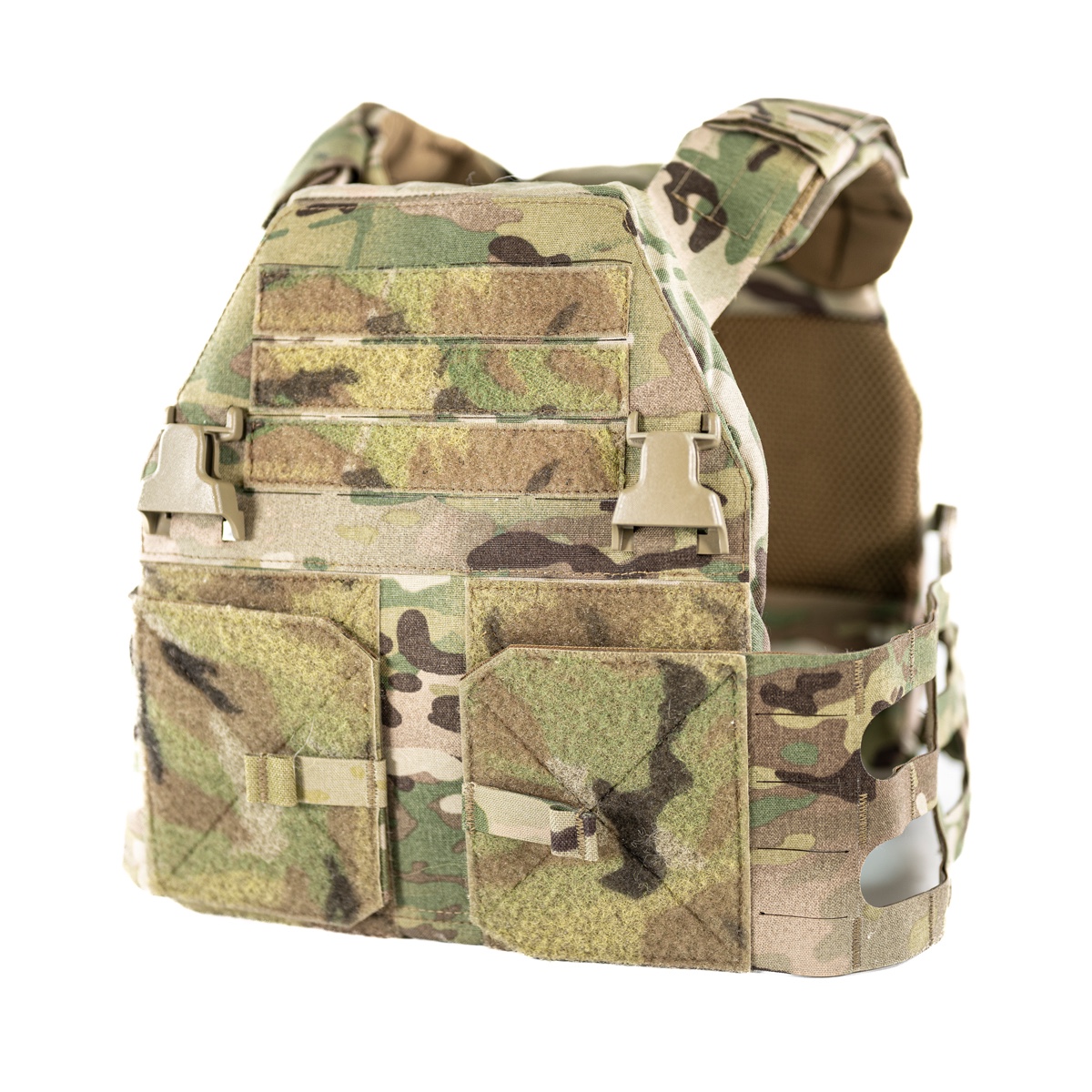
Visit FirstSpear to find America’s Best tactical gear this New Year.
Happy New Year from the FirstSpear team.
As dawn breaks into the new year, remember those working hard at home and abroad so we can celebrate in peace with family and friends.

Visit FirstSpear to find America’s Best tactical gear this New Year.

AL UDEID AIR BASE, Qatar (AFNS) —
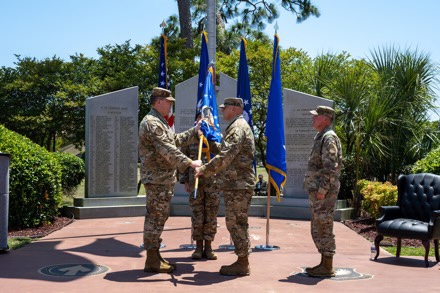
Less than two months following the establishment of Task Force 99, Lt. Gen. Alexus G. Grynkewich, Ninth Air Force (Air Forces Central) commander, visited the team at their new location for a peek behind the curtain of the command’s innovation powerhouse Dec. 1.
The new unit is the cornerstone of AFCENT’s approach to U.S. Central Command’s intent of building a Culture of Innovation. Comprised of eight full time multi-capable Airmen, its mission is to leverage digital and unmanned technologies, creating dilemmas for adversaries and new opportunities for collaboration with partners.
“[Task Force 99] a small group of super-empowered Airmen who I’m going to provide resources to so they can rapidly innovate and experiment in our area of responsibility we have in the Middle East,” said Grynkewich at the 2022 Air Force Association’s Air, Space and Cyber Conference in September.
The “Desert Catalysts” became an official Air Force organization Oct. 13, when Lt. Col. Erin Brilla took command. Agility and speed underwrite TF 99’s innovation core tenets, and the unit wasted no time setting up shop.
“Our humble beginnings started in a borrowed workspace graciously loaned to us by 379th Air Expeditionary Wing’s Desert Spark Innovation Lab. Within one month of being established, we were able to acquire this new workspace,” Brilla said. “Thanks to our incredible Qatari partners, a new hangar constructed specifically for Task Force 99 may also be in the works.”
In keeping with the command’s Partner for Strength priority, TF 99 will seek input and support from regional partners.
“[Task Force 99] will receive resources to rapidly innovate and experiment in austere and sometimes dangerous environments,” Grynkewich said. “It will also expand the collaborative space with our partners in the region and tie AFCENT into the innovation ecosystem.”
To date, 17 coalition partners have been invited to join TF 99’s efforts, encouraging all to bring their own hard problems and technologies for collaboration and regional synergy.
“None of us have enough time or money to do this on our own,” Brilla said. “We need an expansive network that shares ideas so we all can work together to solve complex problems from the lowest possible echelon.”
TF 99’s hard charging Airmen were hand-picked from a wide variety of specialties, ranging from cyber operators to civil engineers and intelligence analysts to metal technicians.
“These Airmen are the very embodiment of the Chief of Staff of the Air Force’s Accelerate, Change, or Lose mantra,” Brilla said. “Every member of our small, highly skilled, agile team is a subject matter expert in their field. We’ve empowered and encouraged them to experiment, tinker, and wonder ‘what if?’ given a few resources and high-risk tolerance, there’s no limit to what they can deliver.”
The team is empowered to accelerate change by getting after all four of the Air Force Chief of Staff’s Action Orders Airmen, Bureaucracy, Competition and Design.
The task force is also focused on flattening communication across the various innovation labs, and spark cells that exist at AEWs across the CENTCOM area of responsibility to encourage crosstalk and collaboration.
In addition to collaborating with the innovation arms of the U.S. Navy Central Command, TF 59, and the U.S. Army Central Command, TF 39, this air domain innovation task force (TF 99) also leverages relationships with partners across other arenas.
“We are interoperable by nature,” Brilla said. “To be successful, we want to unlock, embrace, and then uplift innovative solutions that can be implemented across organizations.”
Over the next two weeks, the task force will travel to the United States to connect with various vendors, leaders within academia and several government agencies. TF 99 is also sponsoring technology development through the Small Business Innovation Research program to power innovative solutions rapidly.
The task force is also leveraging relationships with the U.S. Air Force Academy by sharing real world, operational problem sets with cadets, giving them an opportunity to create innovative solutions as part of their curriculum.
TF 99 is actively recruiting the next generation of Desert Catalysts, seeking hard-charging innovators from active duty, the Air National Guard and Air Force Reserves who might be interested in joining this elite team on future deployment rotations.
“Innovation allows us to better posture our forces, to better sense the environment, to more effectively deter and defeat threat actors,” said Army Gen. Erik Kurilla, CENTCOM commander. “Together through innovation, we can all do much more to advance the stability of the region.”
Story by Capt Kayshel Trudell
Ninth Air Force (Air Forces Central)
Photo by Senior Airman Micah Coate

Via PS Magazine.

We published this in 2014. Since then, Daniel Winkler has grown his business and his blades have grown in popularity in no small part thanks to Retired SEAL and Best Selling Author Jack Carr featuring them in his hit book and Amazon series featuring the character James Reece. Since so many new people have heard of Daniel Winkler, I thought it would be a good idea to share his roots.

We are fortunate enough to be able to share this bio of Master Bladesmith Daniel Winkler. I’ve written about him multiple times and he does awesome work. But it’s his traditional designs that really interest me and how they’ve influenced the modern stuff he does for SOF. Believe me, you’ll get to see plenty of his more primitive/native/early American work in this post. Afterwards, I think you’ll have a better understanding of where he’s coming from. If you can’t tell, Daniel Winkler is a man I admire. Although he’s told me his story in person, it’s always fascinating to hear it again, and, some of it’s pretty darn funny, especially if you know Daniel and Karen. I hope you enjoy it as much as I do.
For those that are familiar with Winkler Knives and those that are not, I thought it might be important to tell a little about where Winkler Knives all got started.
My Name is Daniel Winkler. I was born in 1956 in Boone North Carolina. I have never lived anywhere else.
Next, the move to a “FullTime Knife Maker”.
The next stage actually started a couple of years before I went full time as a Knife maker. This was when Winkler Knives really started to take off and the driving force was Karen Shook. I went to work for Karen in the mid 1980’s in product development in the giftware industry. She had been with the company for several years and had knowledge and experience in Marketing and manufacturing processes. As our friendship developed she became interested in my hobby business of knife making. Since each knife I made needed a sheath and I hated making sheaths. I asked her if she would like to make sheaths for me in her spare time. I taught her everything I knew about making knife sheaths which took about 10 minutes. In those days I would put the knives on the table for people to see and only after money was handed over did they get to see the sheath. However when Karen took over making the sheaths we could put them right out with the knives without losing sales.One important encounter we had was when a well-known knife collector took an interest in one of my knives. He asked if there was a sheath to go with it so I reached under the table and handed it to him. It was one of my designs that Karen had reluctantly made. He looked over the sad piece of leather and said that this time he would buy the knife but unless the quality of the sheath matched the quality of the knife he would not be buying any more. This comment was one of the most important learning experiences in Winkler Knives history. We took this to heart and would go to museums in our travels and look at early American and American Indian displays of weapons, tools and clothing. Karen would study the construction and materials and implement a lot of what we saw in the new and improved sheaths.After a short while Karen’s sheaths became as, if not more, sought after than my knives.


I worked for Karen for a while and although I felt I was the best employee a company could have Karen had the opinion I was the worst.
As word of mouth passed through the Special Operations community we started getting quite a following with the SOF Teams. We started getting orders for DOD contracts, Unit purchases and sales to individuals. Besides the Military community we have set up several dealers as well as accepting orders from individuals. The products we have offered in the Winkler Knives II line are either the same as we developed for the Military or variations from these tested designs. Besides the knives and axes the sheaths and axe carriers had to go through extensive design changes to get them to work with the equipment kits the men were wearing. Access, secure carry and comfort are all top considerations and if one of these areas is wrong you might as well figure on the tool being left at camp instead of being carried on missions. No matter how great you think your knife or axe is if the front line guy’s don’t wear it you are just making expensive wall and shelf decor. We now have a lot of different products with a lot of handle and finish options.
For a long time folks in the knife community have speculated on whose knives and axes are carried in the field by our Military. There have been many pictures and first hand reports about the same topics. There has been a lot of stuff written and discussions about what the equipment Tier 1 Teams carry and use, including cutlery. There are many fine makers out there and so many want the recognition afforded by association with those that protect our American way of life. There have been countless makers that have sold and/or given equipment to these men and women and they should all be given credit for what they do. However there are also a lot of bad guy’s in this country as has been proven in recent tragic events. Getting too specific in “who” and “what”can be a really bad idea when there is a chance of compromising the very people that we should be protecting. On our web site and advertising you won’t see any specifics. Only some general reference to our history and influence from the professionals we have the opportunity to work with.



Thanks for reading and if there are any questions I’ll do what I can to answer.
Daniel Winkler
www.winklerknives.com
Safran Optics 1 Selected to Provide Panoramic Sight to General Dynamics Land Systems for the US Army’s Mobile Protected Fire Program

Bedford, NH, December 28, 2022.
The U.S. Army selected General Dynamics Land Systems’ (GDLS) all-new Mobile Protected Firepower (MPF) vehicle with Safran Optics 1’s PASEO Commander’s Independent Tactical Viewer (CITV) long-range panoramic targeting sight. The Low Rate Initial Production (LRIP) award, valued at $1.14 billion, will provide the U.S. Army with 96 vehicles over the next four years. The award also includes test support, logistics support and systems technical support.
“We are proud to have partnered with GDLS to offer our best-in-class PASEO CITV sight for the groundbreaking MPF, all for the ultimate benefit of those who will serve on the vehicle,” said Joseph Bogosian, President & CEO at Optics 1.
The PASEO is one of the most innovative surveillance and targeting sights for infantry vehicles and battlefield tanks. It provides an above-armor integrated sight enhancing situational awareness to the Commander and crewmembers.
MPF is a lightweight, direct-fire combat vehicle that is highly lethal and survivable to dominate ground threats on the multi-domain battlefield. The MPF vehicle employs a four-person crew and features an enhanced thermal viewer (PASEO CITV), a large-caliber cannon, a lightweight hull and turret, and a modern diesel engine, transmission and suspension system. This new tank will be the first newly designed vehicle for the Army in over 40 years.

NAIROBI, Kenya — U.S. and Kenya military planners gathered in Nairobi, Kenya, Dec. 5-9, to finalize plans for U.S. Africa Command’s largest East Africa military training exercise.
Justified Accord 23, or JA 23, scheduled from Feb. 13-24, is led by U.S. Army Southern European Task Force, Africa. This multinational exercise brings together more than 20 countries from three continents to increase partner readiness for peacekeeping missions, crisis response, and humanitarian assistance.
JA 23 will feature the following events: An African Union academics course, a multinational field training exercise, a live-fire exercise, humanitarian assistance and disaster relief projects, as well as training on defensive cyber capabilities.
This is the first-year cyber elements will be included in the exercise.
“Cyberspace is an increasingly important aspect of our daily lives and it effects both our civilian and military operations,” said U.S. Army Lt. Col. Kendra Tippett, chief of plans and exercises (G6), SETAF-AF.
“It is critical we understand the threats in cyberspace and effectively defend against them,” she added.
Tippett explained how this year’s exercise will provide U.S. joint forces the opportunity to work with African partners in the cyber domain. Specifically, multinational forces including Kenya and Uganda will focus on key cyber aspects such as incident identification, threat intelligence, artifact collection, containment and eradication.
Kenya will host activities primarily in Nairobi and Isiolo, while Uganda, Rwanda and Djibouti will provide venues for additional exercise events.
“Working together in cyberspace with our African partners and sharing our best practices will ultimately enhance our ability to defend against malign actors who seek to degrade critical infrastructure and impede military and civilian operations,” Tippett said.
SETAF-AF, based in Vicenza, Italy, is U.S. Africa Command’s lead agent for planning the Justified Accord exercise series conducted annually in East Africa. SETAF-AF is responsible for coordinating all U.S. Army activities in Africa in support of U.S. Africa Command and U.S. Army Europe and Africa. Activities include military readiness exercises across the continent, hundreds of security force assistance engagements, crisis response and enduring posture support. These engagements strengthen partner networks in Africa, build partner capacity against regional and global security threats, and provide strategic access for U.S. forces in contingency operations.
For the latest photos, videos and articles from past and present iterations of the exercise, visit www.dvidshub.net/feature/JustifiedAccord.
By CPT Joe Legros