TYR Tactical

Archive for September, 2025

FN Awarded Defense Logistics Agency (DLA) Contract to Supply Additional M240 and M249 Machine Gun Barrels

Monday, September 22nd, 2025

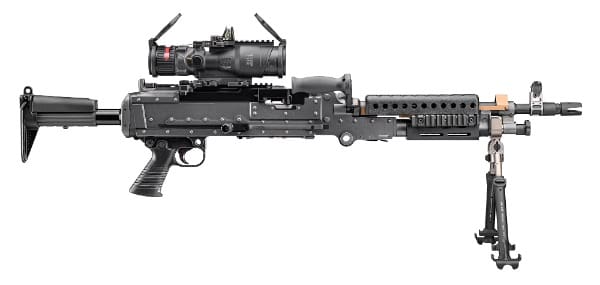
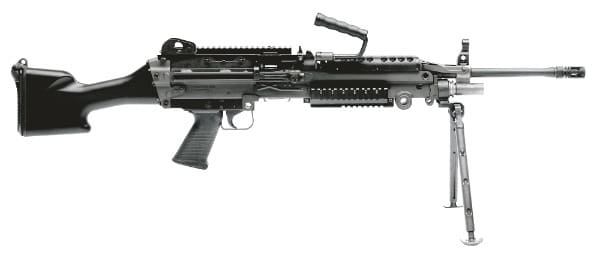
(McLean, VA — September, 2025) FN America, LLC, is pleased to announce that the company has been awarded an additional $6.9m in orders for M240 and M249 machine gun barrels spread across nine deliveries by the U.S. Department of Defense’s (DoD) Defense Logistics Agency (DLA) Land and Maritime.
“The contract to provide these barrels for M240 and M249 machine guns is a testament to our partnership with the U.S. DoD, which dates back nearly five decades,” said Mark Cherpes, President and CEO for FN America, LLC. “We are honored to support the U.S. military with the highest-quality cold hammer-forged barrels. The durability and accuracy of FN barrels provide our servicemen and women with the most effective and highest-performing products available.”

FN collaborates with and is a key partner of DLA Land and Maritime, a combat support agency within the U.S. DoD and one of the largest suppliers of spare parts that support land-based and maritime weapon systems. DLA Land and Maritime serves over 20,000 customers throughout all U.S. military branches, civil agencies and other DoD organizations, helping to sustain weapon systems in the field.

The M240 general purpose machine gun, derived from the FN MAG® 58, was adopted by the U.S. military in the late 1970s, and has been in continual service since being introduced. FN has created multiple variants of the M240, including the M240 coaxial, the M240B, M240L, M240D and M240H models. The FN® M249 has been a mainstay throughout the U.S. military since 1986 and is currently in service in more than 30 countries.
Throughout its history, FN has been one of the largest suppliers of small arms to the U.S. military and continues to develop innovative technology for the future. In addition to the M240 and its variants, the company currently holds contracts for the FN® M249 lightweight machine gun; the FN® MK 46, MK 48, MK 17 and MK 20 SSR for USSOCOM; and various other contracts.

For more information about FN’s military product line or current U.S. military contracts, please visit www.fnamerica.com

SHOP Show 2025 – October 7th, Raeford, NC

Monday, September 22nd, 2025

Experience the convergence of tactical and technology at the SHOP Show in Raeford, North Carolina. See the latest innovations firsthand and connect with the people behind them.

For more information, visit shopshow.org.

Army’s Principal Cyber Advisor Says Cyber Key to Preparing for Future Fight

Monday, September 22nd, 2025

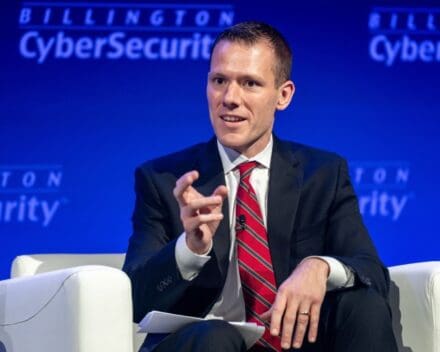
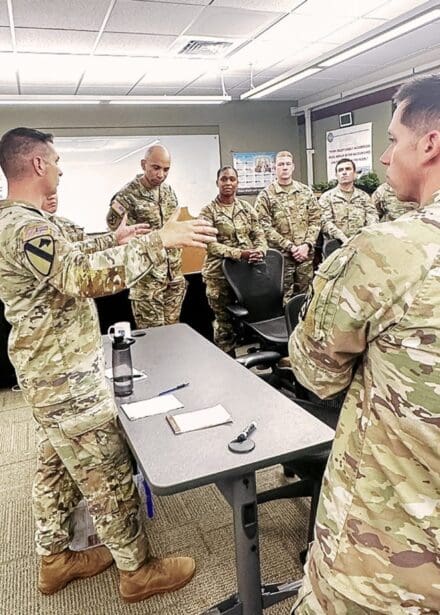
WASHINGTON — Cyber is central to the Army’s once-in-a-generation transformation and to defending the homeland’s critical infrastructure, said Principal Cyber Advisor to the Secretary of the Army Brandon Pugh to attendees at the Billington CyberSecurity Summit, Sept. 11.

Pugh said the Army’s Continuous Transformation aims to put the right technology in Soldiers’ hands faster while strengthening readiness for the future battlefield — where cybersecurity underpins everything from base operations to mobilization.

“This is our effort to make sure the Army is adapting to the future battlefield,” Pugh said. “Cyber is a key component of Army Continuous Transformation.”

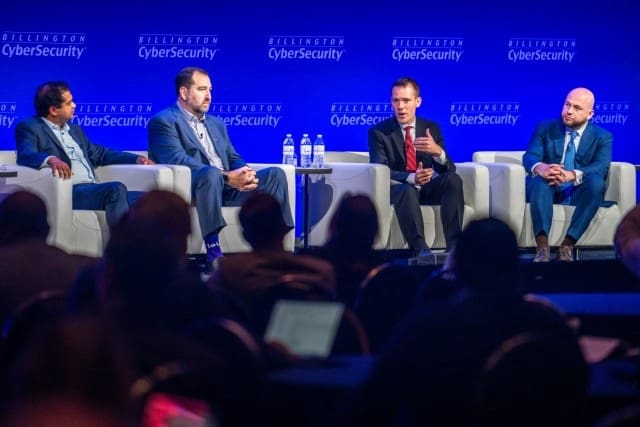
Pugh participated in “The Future of Cyber Threat” panel, moderated by Chris Townsend, an Elastic vice president. Alongside Pugh were Col. Ivan Kalabashkin, Deputy Head of Ukraine’s Security Services Cyber Division; Vikram Thakur, Technical Director at Broadcom; and Josh Salmanson, Vice President for the Defense Cyber Practice at Leidos. Panelists discussed a range of cyber-related issues.

People first

“People are the core of the Army,” Pugh said, noting that modernization efforts revolve around Soldiers and Army civilians who defend the nation every day. He highlighted opportunities to better harness the skills of Army National Guard and Army Reserve cyber professionals — many of whom work in cybersecurity in their civilian careers. “Who is better positioned to defend a critical infrastructure threat than the people who live there?” he asked.

Protecting critical infrastructure at home

Pugh emphasized that defending the homeland is a top priority, and that the Army has a direct stake because vulnerabilities in privately owned critical infrastructure — from power grids to transportation networks — can affect Army installations and unit mobilization. He pointed to assessments by the Army Cyber Institute at the U.S. Military Academy at West Point that examine how infrastructure weaknesses could disrupt the Army’s ability to project forces in crisis or conflict. “We need to be able to mobilize forces and equipment at a moment’s notice,” he said.

When asked how to address critical infrastructure vulnerabilities, Salmanson urged organizations to “get back to the basics” — patching systems, reducing vulnerabilities and avoiding shared passwords — to cut noise in networks and improve response to new threats. “We’re seeing higher volumes and better quality [attacks] consistently,” he said.

AI for cyber — at scale

Panelists agreed adversaries are already using artificial intelligence to increase the speed and quality of attacks. Kalabashkin said Ukraine has faced more than 13,000 cyberattacks on government and critical infrastructure systems since the start of the full-scale war, with Russia using AI in recent months to scan for network vulnerabilities.

Pugh said the Army is leaning into AI where it can provide a decisive edge. “How can AI be used more effectively and at scale for defensive cyber operations and perhaps even offensive cyber operations?” he asked, noting strong work already underway across Army Cyber Command and U.S. Cyber Command. “We should leverage AI to gain the upper hand — a force multiplier for our Soldiers.”

Speed to capability

Pugh said the Army is working to shorten timelines to field cyber capabilities, particularly from innovative companies with niche solutions. “If you have a unique capability that can add value to the military, there should be an ability to get that in the hands of a warfighter and test it in weeks,” he said. That effort, he added, aligns with the Army’s broader push to transform how it acquires, tests and fields technology.

By MAJ Sean M. Minton

Beyond the Strategic Corporal: 9th Communication Battalion Extends Gen Krulak’s Vision to Information Domain

Sunday, September 21st, 2025

“Attention in the COC!”

The gentle ripple of hushed conversation and rustling papers in the expeditionary command operation center completely subsided in response to the watch chief’s baritone voice. Heads snapped from computer monitors to the sound of his voice, and pens scrawled shorthand notes, recording his description of enemy signal interference.

After receiving the report, corporals and sergeants of the 9th Communication Battalion’s newly established intelligence department swiftly analyzed it and initiated an assessment that would be routed to the operations officer. The report indicated interference from an adversary’s nearby electronic warfare training exercise. The Marines sprang into action and applied pre-coordinated frequency protocols, maintaining the integrity of their communications and preventing their location from being revealed, thus preserving the mission.

This fictional scenario highlights a different kind of challenge Marines face today: not one of firepower or physical maneuver, but of connectivity and communication in a contested information environment, which is increasingly characterized by jamming, malware, and cyberattacks. These attacks, which have become a growing concern of military planners throughout the world, threaten communications and can lead to the isolation of forward elements. Marine tacticians say the potentially high tempo and wide range of simultaneous attacks in the information environment require decentralization of information operations.

As part of this transition to decentralization, the battalion, based at Marine Corps Base Camp Pendleton, California, stood up an intelligence staff section in July 2025. The creation of the intelligence section makes the battalion more tactically responsive to threats in the information environment. The intelligence section now proactively monitors the electromagnetic spectrum for potential interference, analyzes adversary abilities related to electronic warfare and cyberattacks, develops threat assessments tailored to communication assets, and provides real-time intelligence updates to commanders and subordinate units. This is a significant shift from the past, when Marine Corps communication battalions relied upon Marine Corps Forces Cyberspace Command (MARFORCYBER) to fulfill these functions.

“Historically it was very reactive,” stated Capt. Brock Turner, the company commander of 9th Communication Battalion. “A malicious actor would attempt to gain access to our networks, and we would then receive feedback from MARFORCYBER. Now we are putting in measures to ensure that we strengthen posture based upon examination of adversarial tactics, techniques, and procedures.”

2nd Lieutenant Aaron Hern, an intelligence officer with 9th Communication Battalion, I Marine Expeditionary Force Information Group, explained the reason for the change.

“Our integration into the battalion is crucial in supporting the Battalion Commander’s decision-making in support of all domain operations, with impacts on communication units of action,” he said. “My signal intelligence capabilities of signature management and electronic warfare aid the planning process and employment of communications capabilities.”

The decentralization of information warfare follows a precedent set by U.S. Marine Corps Gen. Charles C. Krulak, the 31st commandant of the Marine Corps, who emphasized the importance of small unit leadership through his conceptualization of the “Strategic Corporal,” a noncommissioned officer whose tactical decisions on a three-block battlefield could have strategic, international consequences. Krulak understood and embraced the possibility of junior leaders being isolated in geographically dispersed locations and having to make important, time-sensitive decisions on the spot. His philosophy placed confidence in junior leaders to do so and emphasized tough training to prepare them for the task.

Krulak articulated his vision in “The Strategic Corporal: Leadership in the Three-Block War”, which appeared in the January 1999 edition of Marines Magazine. Although his article, which was written while the internet was still emerging, focuses on war on land and in the air rather than in the information environment, the information warriors of 9th Communication Battalion say it’s just as applicable to information operations today.

“We are directly supporting leadership decision making cycles by providing intelligence reporting,” said Sgt. Gabriel Tuazon, an intelligence specialist with 9th Communication Battalion.

During a training exercise at Camp Pendleton in August 2025, 9th Communication Battalion incorporated its new intelligence capability into the task of establishing and maintaining communications while dealing with a variety of notional threats to their networks. The training exercise provided a realistic environment for Marines to hone the skills necessary to identify threats and develop innovative solutions to overcome adversary actions.

Cpl. Tobias Laskowski, a transmission system operator with 9th Communication Battalion, provided a general description of the battalion’s activity during the exercise. He explained that this exercise provided an opportunity for the Marines to train on less familiar radio waveforms, which allows for communication to continue in the event of enemy disruption to primary channels.

“When the enemy uses their electronic warfare assets to jam us and disrupt our communication, we can keep communicating with whatever echelon we need to talk to,” Laskowski said.

Tuazon said the battalion 9th Communication Battalion is adapting to the new challenges of a rapidly changing battlespace by embracing a decentralized approach and empowering Marines to operate as strategic corporals. He envisions broad application of the information warfare tactics now being employed at the battalion.

“I definitely see this integration model being a standard across the Marine Corps as other communication battalion S-2s (intelligence sections) can support their operations,” said Tuazon.

Story by Sgt Sean Potter    

I MEF Information Group

In Memoriam – Dave Harrington

Sunday, September 21st, 2025

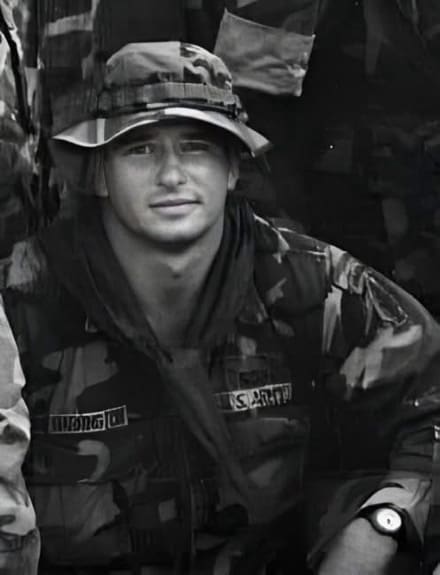
MSG Dave Harrington was friend, inspiration, instructor, and mentor to many readers of SSD, me included. Although we were never close, everytime I saw him he acted like we were lifelong friends and he wanted to catch up. He passed away last month but I’ve been waiting for a proper bio to share this man’s incredible story.

May He Rest In Peace, he more than earned it.

David Alan Harrington

August 1, 2025 (Age 64)

Greenwell Springs, Louisiana

Special Forces

David Alan Harrington, age 64, transitioned to glory on August 1, 2025, in Greenwell Springs, Louisiana. He was a beloved, son, brother, uncle, cousin, and friend who will be fervently missed by all who had the honor of knowing him. Dave was born on November 2, 1960, in Baton Rouge, Louisiana, to James Harrington and Nell Marhefka. He graduated from Live Oak High School in Watson, Louisiana in 1979. After graduation, he followed his passion to serve our great nation and began his lengthy career in the U.S. military. Dave served fearlessly in the U.S Navy, and the U.S. Army from 1986-2004. He earned numerous commendations, honors, and medals throughout his years of dedication. Dave was a respected Army Ranger, Green Beret, and Special Forces veteran. Some of his accomplishments include the meritorious service medal, National Defense Service Medal, Marine Corps Expeditionary Medal, Expert Infantryman Badge, Master Parachutist Badge, Royal Thai Army Airborne Wings, Special Forces and Intelligence honors and many more. He is a true American hero and will continue to be celebrated for his incredible sacrifice and commitment to our country, his family, friends and to his integrity. He was known as “Super” Dave Harrington for many reasons.


Dave spent the first half of his life serving and protecting others. He spent the second half of his life teaching others to protect themselves. After completing his military career, Dave entered the Firearms and Outdoor Industry. He is widely recognized as a prolific and exemplary firearms instructor and competitive shooter. He enjoyed sharing his knowledge and skill with individuals and groups, from high-level military tacticians to civilians wanting to become more skilled with their knowledge and use of firearms. Through Combat Speed, LLC and Martial Gun, Dave trained countless people to better their mindset, individual skills, and overall confidence to be their absolute best – which was, to him, always something to keep training towards, no matter how good you thought you were. He was a sponsored competitive shooter and was supported by so many companies along the way that believed in him and his outstanding skill and his drive for excellence. Dave was an unwavering supporter of our 2nd Amendment rights and an avid hunter. Words are not sufficient to describe the impact he has had on the firearms and outdoor community. He will forever be known as one of the VERY best of the best; not just for his skill, but for who he was as a man. Intense, loyal, focused, deep-thinking, accountable, trustworthy, dedicated and kind-hearted are words that only scratch the surface of who Dave was. He was a unique human being blessed by God with immense talent, an immeasurable will and great strength for endurance.

Dave exemplified excellence through his strong work ethic and unwavering devotion to doing what was right. He embodied this belief: “Do the right thing, at the right time, every time.” He loved his country. He loved his guns. He loved his family. He loved his friends and good times together. He loved AC/DC and playing the guitar. He loved his cats. In his final days, he loved hearing Psalm 91 read aloud. He would want you to read it and think of him. He said what he meant and meant what he said. He was impactful, honorable, and unforgettable.

Dave fought valiantly until the very end at 3:33AM on August 1st . Two of Dave’s common phrases were, “That’s all I got” and “OK, here goes” … They are the perfect exit and entry from his last moments on earth and his first glimpse of eternity. He would not want us to mourn him in sadness, but to simply look ahead to the day when we will see him again.

Dave is survived by his stepbrother Eric Wesley Harrington (Pamela Harrington) of Baton Rouge.

Brother, Peter Wayne Harrington of Portland, Oregon, aunt and uncle Sue Harrington Talley and Wayne Talley of Greensburg, LA, cousins Vickie Harrington Smith (Charles Everett Smith); Elizabeth Harrington Robertson; Renee Harrington; Shannon Harrington Kennedy-Perri; Fred Newman, III; Mitchell Newman; Darren Talley and Cherae Talley Slack, and numerous other cousins, nieces, nephews, and cherished friends.

Dave is preceded in death by his beloved father James Edward Harrington; Mother: Gay Nell Marhefka; brother Jon Everett Harrington; paternal grandparents Pearlie Everett Harrington and Hazel Margaret Young Harrington; uncle & aunt Bobby Gene Harrington and Beverly Williams Harrington; aunt and uncle Lela Ann Harrington Newman and Fred Newman, Jr.; and cousin: Kara Danette Talley Worthington.

In lieu of flowers, please consider a donation in Dave’s memory to either the Special Forces Trust (sftrust.org) or the Black Dagger Military Hunt Club (www.blackdaggermhc.org/how-to-support/).

This obituary is courtesy of Bonnie Cooper’s tireless work at Special Forces TAPS on Facebook.

Nomad Outdoor Releases Updated Version of Popular Harvester In-Field Gear

Sunday, September 21st, 2025

Newest update to Nomad Outdoor’s perennial favorite line of in-field gear

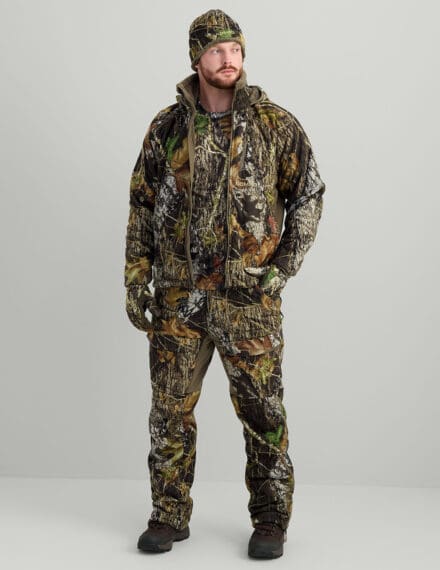
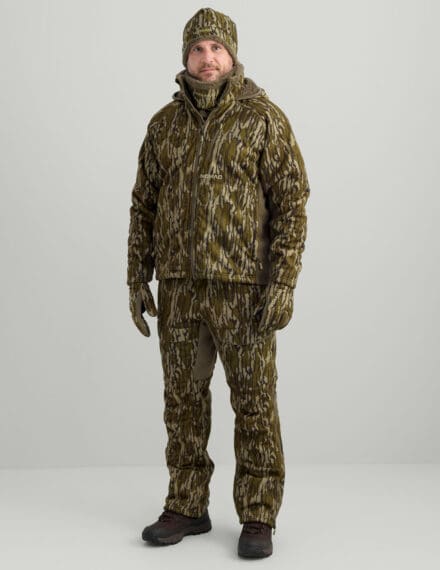
CHARLESTON, SC. (September 19, 2025) – Nomad Outdoor launched Harvester VX3, the newest version of its popular line of technical in-field gear designed for stealth, maximum comfort and warmth in the field on the chilly fall mornings and evenings during prime hunting season.

Harvester VX3 is sherpa lined for insulation and has an inner membrane to cut brisk autumn winds.  Lightweight and breathable, Harvester VX3 has a woven, brushed outer shell for super quiet movement, and a built-in four-way stretch component to make it easy to pull a bow to full draw or shoulder a rifle without any binding or encumbrance.

“Harvester has always been one of our most popular lines and now we have improved it” said Mike Tussey, Marketing Director Nomad Outdoor. “The new VX3 version takes it even further with an improved fabric that adds stretch for better mobility and SilverZÔ scent suppression technology to keep hunters undetected. It’s the perfect Goldilocks combo for fall hunting. Not too hot, not too lightweight, but just right for the days that most hunters head into the field. “

Harvester VX3 is available in both the recently reintroduced Mossy Oak New Break Up pattern, and Mossy Oak Bottomland. The lineup includes bib overalls, pants, jacket, vest, beanie, neck gaiter, and matching gloves to protect hands and fingers.

The bib overalls have zippered legs for easy on and off over boots, zippered chest pocket for gear and generous pockets to keep your hands protected in cold weather. The Harvester VX3 bib overalls retail for $180.

Harvester VX3 pants have an elastic waistband to fit easily over base layers or other garments, plus plenty of zippered and snap-closure pockets for all the gear a hunter might need. The pantsalso have zippered legs for easy on and off and retail for $180.

The jacket has generous hand warmer pockets and a lined hoodfor full coverage warmth. An integrated harness port allows easy access for a safety tether when in a tree stand. The HarvesterVX3 jacket retails for $160.

The Harvester VX3 vest also has a safety tether port, a zippered chest pocket and traditional hand warmer pockets. It gives the same lightweight-but-warm performance as all the other Harvester VX3 garments with a sherpa lining and anti-wind inner membrane. The vest retails for $120.

Harvester VX3 accessories include a beanie, gloves and a matching neck gaiter for maximum concealment and protection against the elements, all with the same materials and construction as the rest of the VX3 line. The beanie retails for $45; the gloves for $45 and the neck gaiter for $40.

Mossy Oak released a YouTube video showing the details of the Harvester VX3 line of in-field hunting gear.

To learn more or to purchase, visit www.Nomadoutdoor.com

Lethality, Innovation, and Transformation Through AI Education at the U.S. Army School of Advanced Military Studies

Sunday, September 21st, 2025

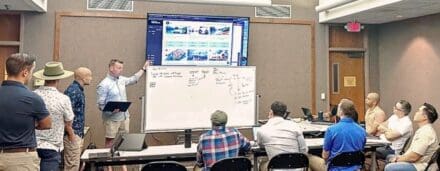
THE ARMY UNIVERSITY, FORT LEAVENWORTH, Kansas – In late July 2025, the Advanced Military Studies Program at the School of Advanced Military Studies, known as SAMS, launched its first-ever experimental, three-day, Practical Application of Artificial Intelligence module.

The mission was simple: transform the program with an innovative, hands-on AI learning experience for students and faculty. The purpose was to enable warfighter lethality through AI education and training.

“AI is changing the character of warfare. Our graduates have got to be ready to lead formations powered by AI—and that’s why we did something about it,” Col. Dwight Domengeaux, Director, SAMS said.

Dr. Bruce Stanley, Director, AMSP, envisioned a module that pushed institutional norms about how mid-career officers learn about AI and learn with AI.

“Did we accept risk? Yes. We did—to create a critical learning opportunity for our students,” Stanley remarked. “We knew what was at stake, and we trusted our faculty and students to make it work.”

And make it work they did.

According to AMSP faculty, the module’s experimental instructional design was key, consisting of ten-and-a-half hours of total classroom contact time divided over three lessons.

“We covered a lot of ground with our students in three days,” Dr. Jacob Mauslein, associate professor, AMSP, said. “Subjects ranged from AI theory and ethical considerations of AI, to applying AI tools, and leading AI-enabled organizations.”

A novel feature of the module was that it was developed by AMSP students. As a task in their Future Operational Environment course, six students from the Class of 2025, mentored by two faculty, developed the AI module that would be taught to the Class of 2026. The students’ final draft was adopted almost without change by the faculty.

“Incorporating students as full participants in the process allowed us to co-develop lesson objectives and materials that deeply mattered to them,” Dr. Luke Herrington, one of the faculty leads for the module shared.

Meeting students where they were in terms of their AI skills and then taking them to the next level was part of the academic approach for the AI module, Herrington explained.

Maj. Justin Webb, PhD, an AY 2025 AMSP student, and one of the module’s developers explained it this way: “SAMS is a warfighting school—so we chose learning activities that would help us become more lethal warfighters with AI. Using AI tools like CamoGPT, Ask Sage, and others for several hours over three days helped us get there.”

Some students in the AY 2026 class were initially skeptical of using AI.

“At first, I didn’t know what I didn’t know,” Army Maj. Stuart Allgood, an Armor officer SAMS student said. “But by the end of the first day my thinking about AI had changed. After the second day, I could use AI tools I had never even heard of.”

Maj. Callum Knight, an intelligence officer from the United Kingdom summed up his experience.

“Before this course I viewed AI as just a data point,” Knight said. “Now that I’ve experienced what’s possible with AI, I realize it’s an imperative that is going to impact everything I do going forward.”

So, what’s next for AI at SAMS?

“Based on what our students got out of this, we intend to add more AI learning moments across the program,” Stanley said. “The priority now is to integrate AI into our upcoming operational warfare practical exercise.”

AMSP is one of the three distinct academic programs within SAMS.

The other two SAMS programs are the Advanced Strategic Leadership Studies Program or ASLSP – a Senior Service College equivalent, and, the Advanced Strategic Planning and Policy Program or ASP3 also known as the Goodpaster Scholars—a post-graduate degree program.

Matthew Yandura is an AMSP assistant professor, and retired Army colonel.

By Matt Yandura, Assistant Professor, School of Advanced Military Studies

DroneShield Surpasses 4,000 Systems Sold, $7.9m orders

Saturday, September 20th, 2025

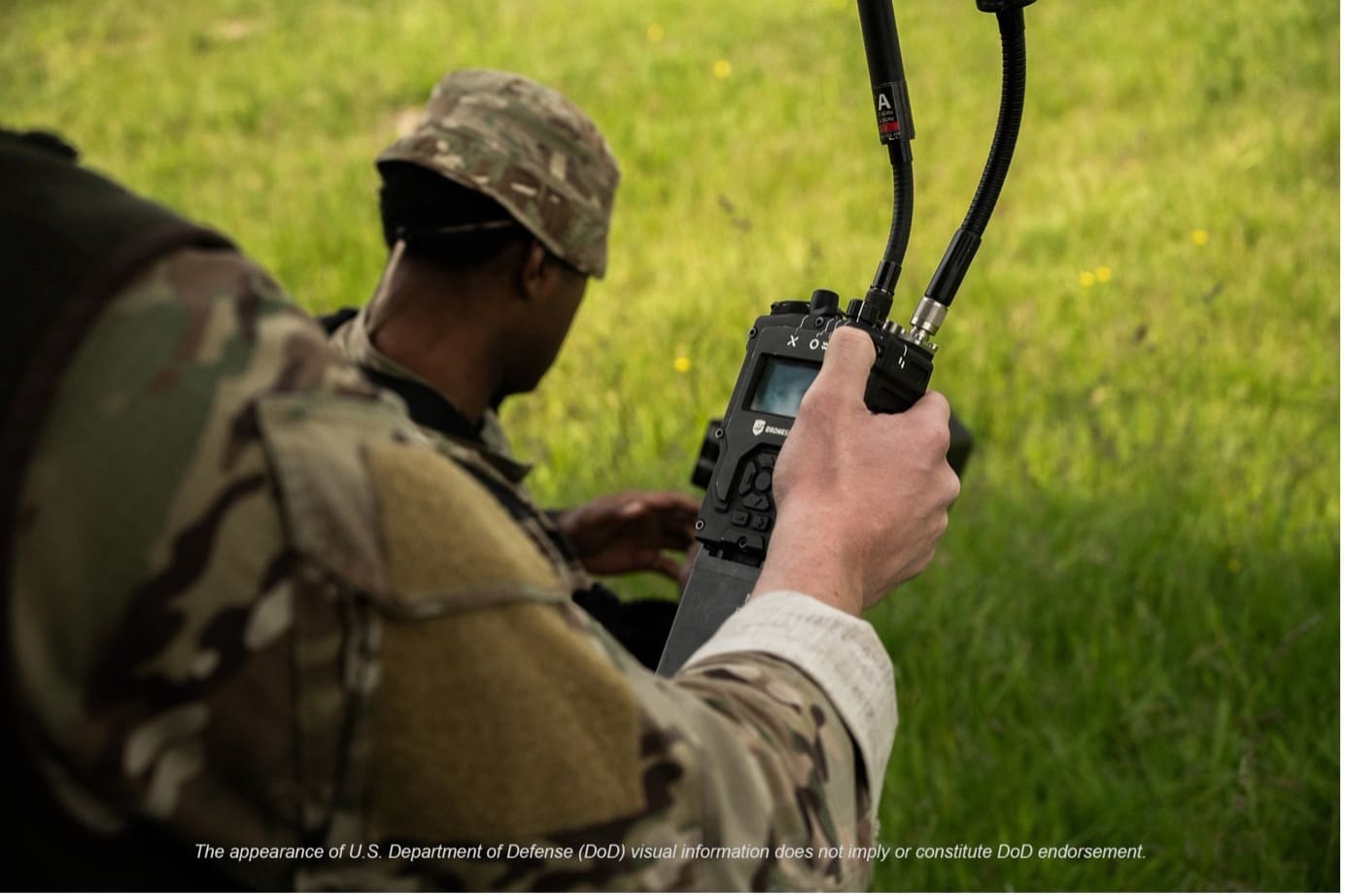
DroneShield (ASX:DRO) is pleased to announce it has surpassed 4,000 systems sold worldwide with the receipt of a package of 2 standalone contracts totalling $7.9 million for handheld systems for delivery to the U.S. Department of Defense. DroneShield expects to deliver all equipment in Q4 2025, with cash payment expected in Q4 2025. No additional material conditions need to be satisfied. There is no obligation for any additional contracts from this customer.

DroneShield has previously received standalone orders from this customer. These repeat orders strengthen DroneShield’s position as a trusted provider of mission-critical solutions to address the growing challenge of drone threats on the modern battlefield and the civilian sector.

The latest orders build on existing Department of Defense programs already deploying DroneShield systems. With this milestone, more than 4,000 DroneShield solutions are now fielded globally, highlighting sustained end-user confidence and the solutions’ effectiveness in operational environments.

“Passing 4,000 systems in service is an important milestone for our team and our customers,” said Matt McCrann, U.S. CEO of DroneShield. “It underlines the performance and dependability of our solutions in the field, and the trust placed in DroneShield by those who rely on them.”


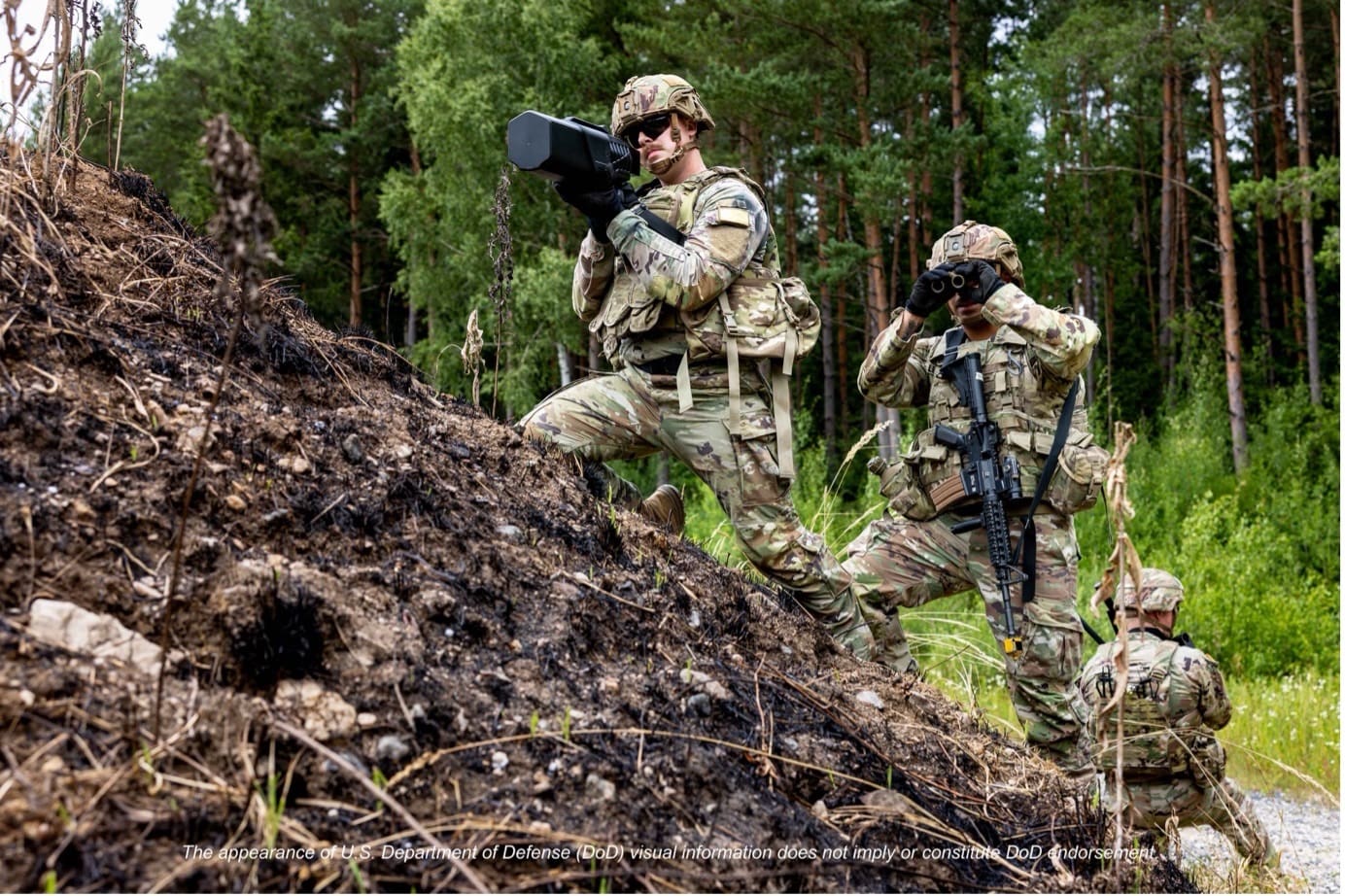
Image: DroneShield DroneGun Mk4 utilised by the U.S. Army at a training exercise

DroneShield’s handheld solutions form a cornerstone of its wider counter-drone portfolio, which spans dismounted, vehicle-mounted, and fixed-site solutions that fuse multiple sensors and effectors integrated through DroneShield’s advanced software. Together, they provide a layered defense architecture enabling operators to detect, track, identify, and defeat hostile drones with speed and precision. Customers enrolled into the SaaS-based AI software updates receive new firmware quarterly through the Company’s secure portal.

The entire order is expected to be fulfilled within 30 days from existing stock. This is important for this and other DroneShield customers due to their urgent operational requirements, and is an important factor of securing more orders.

The milestone comes as DroneShield reported a record 1H2025 revenue of $72.3 million (up 210% vs. 1H2024), 1H2025 Profit Before Tax of $5.2 million for the June 2025 period.

3Q25 recognised revenue to date (with significant additional deliveries and further revenue anticipated prior to September month end) is currently standing at $77 million and growing, already in excess of the previous two record quarters combined. The quarterly revenue and cash receipts will be released in October as part of the 3Q25 4C investor report.

DroneShield CEO, Oleg Vornik, commented, “As our customers seek to step up from their early small-scale evaluation purchases into full scale procurement, we are seeing rapidly rising customer demand. Counterdrone is still at its nascency with our customers requiring very significant additional purchases to progress to the required levels of counterdrone defence. DroneShield is a well regarded industry leader globally, and we expect to continue to benefit from this rising demand.”

Operational Excellence

The 4,000 devices sold, includes over 2,200 RfPatrols, produced by an Australian contract manufacturing partner, following rigorous in-house quality assurance testing. The RfPatrol has featured in multiple high-profile programs, including:

The Company’s all-time record $61.6 million European contract in mid-2025

The recent $5 million order for the Australian Government’s Land 156 Line of Effort 2 program, delivering handheld drone detection and neutralisation equipment to the Australian Defence Force

A $10.4 million contract to Ukraine in 2023, through the Australian Government’s only Ukraine counter-drone aid package


Image: DroneShield RfPatrol Mk2 utilised by the U.S. Army at a training exercise

The RfPatrol is a passive (non-emitting) lightweight, intuitive, and reliable drone detection device, designed to enhance situational awareness by alerting users to the presence of drones in real time, without requiring specialist training or complex setup. The device receives quarterly AI-firmware updates for customers enrolled into its SaaS plans. 

Production of the significant volume of the complex devices, underscores DroneShield’s advanced manufacturing and production capability, underpinned by a robust Australian supply chain. Around 85 per cent of the device’s components are sourced from local manufacturers across New South Wales, Victoria, Queensland, South Australia and Western Australia.

US and European-made versions of RfPatrol will be available in those markets from 2026, as the Company expects local production to further boost sales in those geographic segments. 

DroneShield remains focused on advancing its current and next-generation counter-drone technology solutions, leveraging export success, deep counter-drone technology expertise, and a strong manufacturing base, to deliver sustained growth.

Learn more at droneshield.com.