Get a free Arc’teryx LEAF EPF Tee, espresso mug, and sticker when you spend at least $165 on Arc’teryx LEAF gear.
Extremely limited supply.
www.us-elitegear.com/brands/arc-teryx


Get a free Arc’teryx LEAF EPF Tee, espresso mug, and sticker when you spend at least $165 on Arc’teryx LEAF gear.
Extremely limited supply.
www.us-elitegear.com/brands/arc-teryx
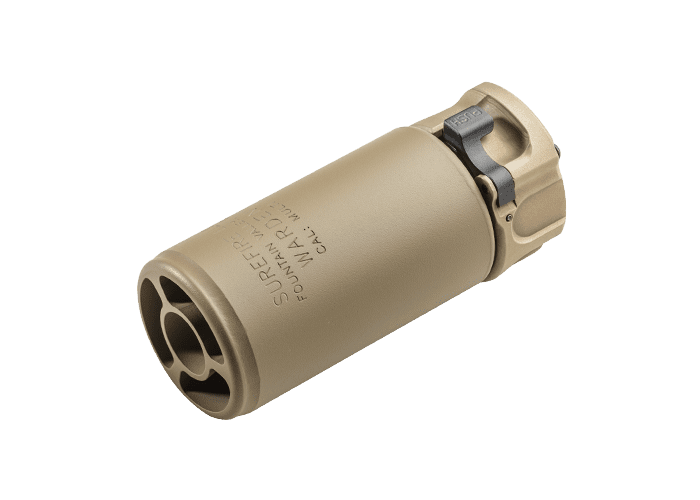
SureFire’s Warden Blast Diffuser is a muzzle device designed to direct the concussive blast of the muzzle forward, rather than to the side as found with many muzzle break devices. This not only reduces overpressure and flash felt by others to either side of a shooter’s firing position, but also aids in minimizing dust signature when firing from a prone position. The Warden attaches to any SureFire 5.56 or 7.62 SOCOM muzzle device using the same Fast-Attach system found on the SOCOM suppressor series.
www.surefire.com/tactical-equipment/suppressor-adapters/warden
December 20, 2015
Aaron Barruga
The “malfunction stick” is a 1 x 2 piece of wood that instructors use to induce malfunctions in carbine courses. Skulking up and down their firing line, an instructor will place the stick against a shooter’s ejection port to induce a failure to eject.
The problem: it distracts shooters from learning the unhampered sensation of a malfunction, while simultaneously conditioning them to disregard foreign objects in close proximity to their weapon.
Altered Mental And Physical Sensations
It is normal to feel uncomfortable when a foreign object enters your workspace. Suppressing instinctive spatial awareness cues is both dangerous and encourages complacency. This creates a training environment in which a higher premium is placed on the uniqueness of a drill, rather than its intended and unintended effects.
Even if we evaluate the utility of a malfunction stick in a vacuum, in which no attention is given to peripheral behavior, it still fails. Allowing a stick to enter his workspace, a shooter is mentally primed for the following sensation, “I am about to have a failure to eject.”
Pressing the stick against a shooter’s ejection port also creates an added physical sensation. Regardless of the stick’s size, a shooter will unavoidably feel his gun pushed to the left. Under these circumstances, a shooter must suppress both mental and physical cues in his environment before he can experience the subtlety of a malfunction.
Comparative Methods
Bolt lock is another sensation shooters must learn. For novices, bolt lock may be indistinguishable from a bolt that has cycled into battery. A malfunction stick can be repurposed as a “bolt lock” stick, and instructors can press the piece of wood against a shooter’s slide lock. Does this accomplish its stated task, yes, but completely distorts the learning process.
Constructive Stimulus Or Unnecessary Distraction
In Ranger School or Special Forces small unit tactics training, instructors will use a training aid called the artillery simulator. This tool replicates the distinct whine of incoming artillery, and finishes with a non-lethal explosion. Used correctly, instructors employ artillery simulators to induce stress during a graded patrol.
For example, students learning how to doctrinally execute an ambush may spend too much time on the objective. Instructors will use artillery simulators to signal to students that they need to begin movement away from the target to avoid compromise from enemy reinforcements.
By using the simulator the instructor is interrupting the student’s mental and physical state, however, the added stimulus of the artillery simulator actually replicates real world circumstances. Adding stress under this context allows a student to build proper decision-making models because his training environment is still patterned after a real operation.
Improperly used, lazy cadre will throw artillery simulators to frustrate students, but with no specific learning objective. For example, while conducting a 10KM infiltration, an instructor may throw an artillery simulator just to make students move faster, or worse, because he feels it is his prerogative to aggravate students.
In combat, a patrol can receive enemy artillery fire during infiltration. However, the difference between the two examples is that in the former, the added stimulus provided by the artillery simulator is meant to enhance the learning experience. Using the simulator signals to the student, “We have spent too long on the objective.”
In the second example, the added stimulus does more to provoke annoyance. What are normally the qualities of purposeful interruption for the sake of learning is replaced by randomness. Although it causes students to react, it distracts from learning.
Instructor Inexperience
The varied use of artillery simulators either disrupts or contributes to training. Regardless, simulators replicate real world circumstances. Unlike the simulators, the malfunction stick is a deliberate interruption to training that is not patterned after any real world context, and is more representative of an instructor’s lack of experience.
Although it is impossible to avoid the inherent artificiality of any range exercise, it is best to err on the side of simplicity. The purpose of training is to create environments as close as possible to real world conditions. The malfunction stick fails to accomplish this because it requires a shooter to suppress both mental and physical stimuli within his workspace. Consequently, this behavior is contradictory to self-preservation, and may be disastrous for shooters that train to operate in the real world as opposed to just the flat range.
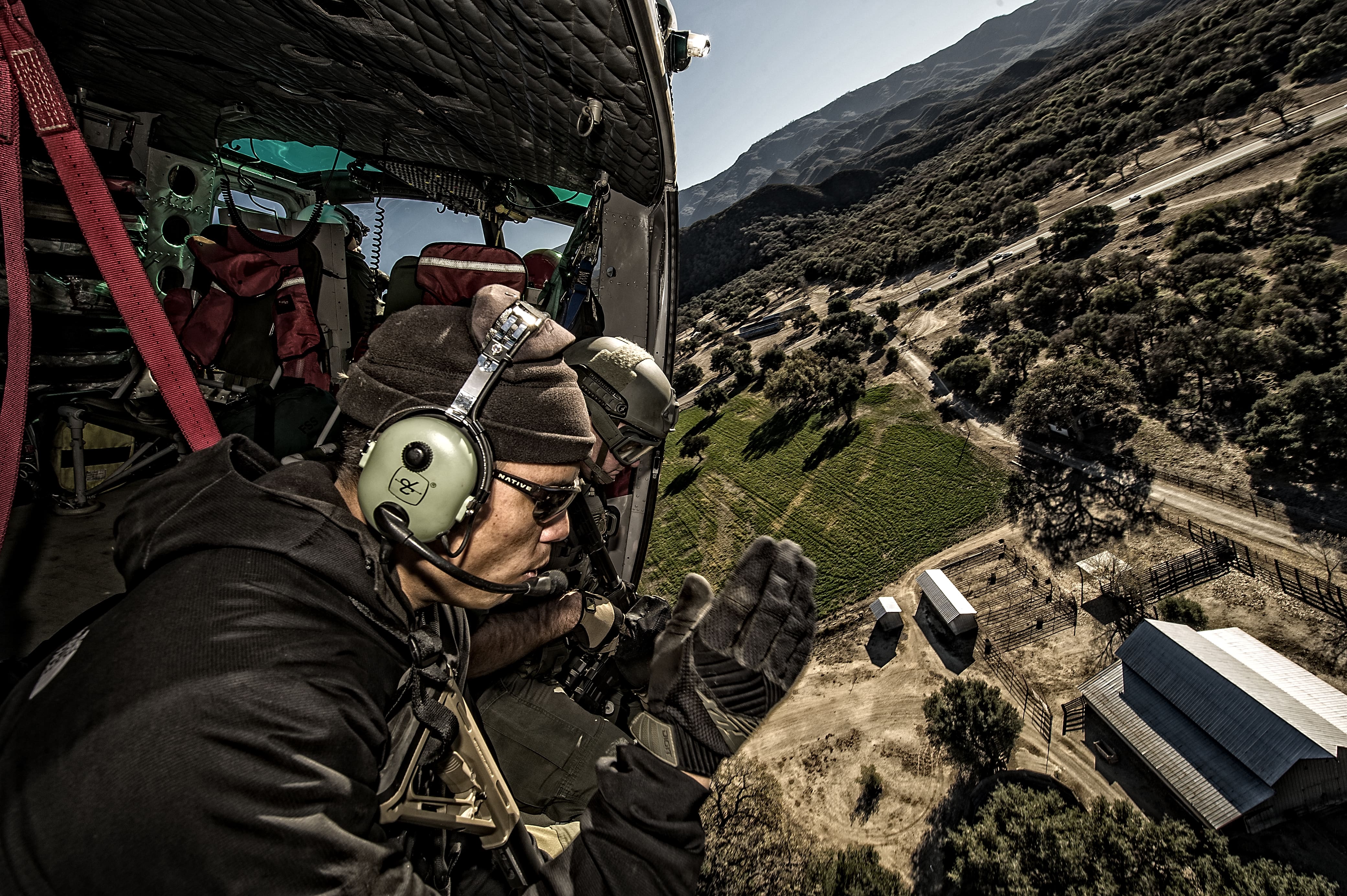
Aaron is a Special Forces veteran. His company (Guerrilla Approach) provides training for law enforcement, the military, and civilians in CA.
instagram.com/guerrilla_approach
facebook.com/guerrillaapproach
www.guerrillaapproach.com
This video, shown at a Concussion Summit sponsored by Case Western University and Team Wendy, was made to honor Dan Moore and Team Wendy. It details the origin of the Team Wendy name, as well as Team Wendy’s ongoing efforts in the development of helmet systems. It’s some great background, and if you’ve ever been curious about the Team Wendy name, here’s your answer.
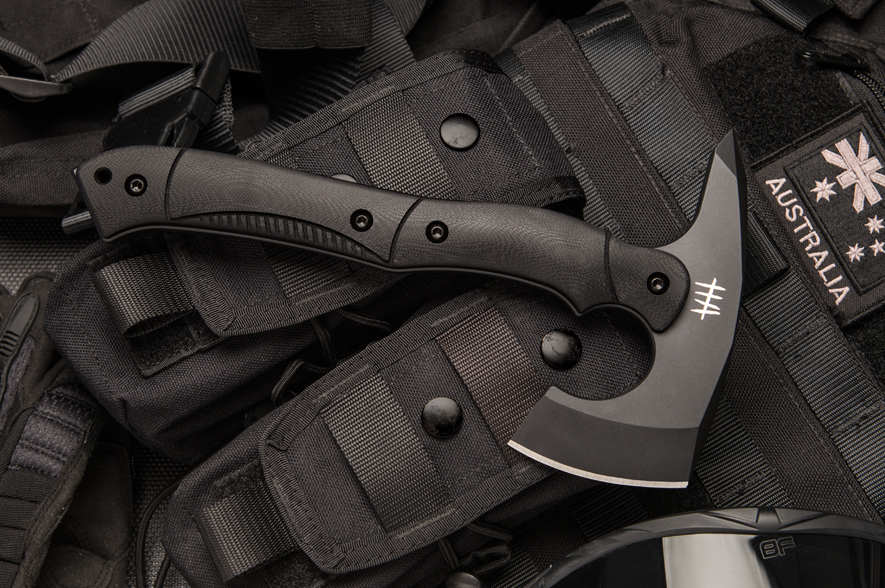
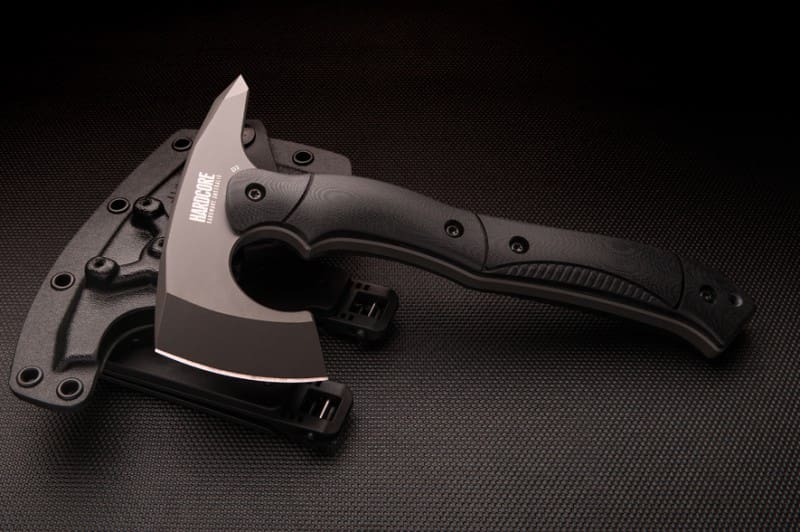
Hardcore Hardware Australia has released the CTT-O1 Compact Tactical Tomahawk. It is a compact Tomahawk designed as a multipurpose tool suited for MOE, CQB, Rescue, and Survival. The CTT-01 is constructed from D2 tool steel with a low-viz Teflon coating, and G10 grip scales. It features a large cutting head and a tanto spike for prying and penetration. The handle pomel features a lanyard hole for attachment to a carabiner or rope fastening point. The CTT-01 also comes with an ambidextrous Kydex sheath with pre-fitted Molle-Loks for mounting to most popular assault platforms.
Specs
Available in Black, Desert, and Graphite.
hardcorehardware.com.au/hardware/ctt01
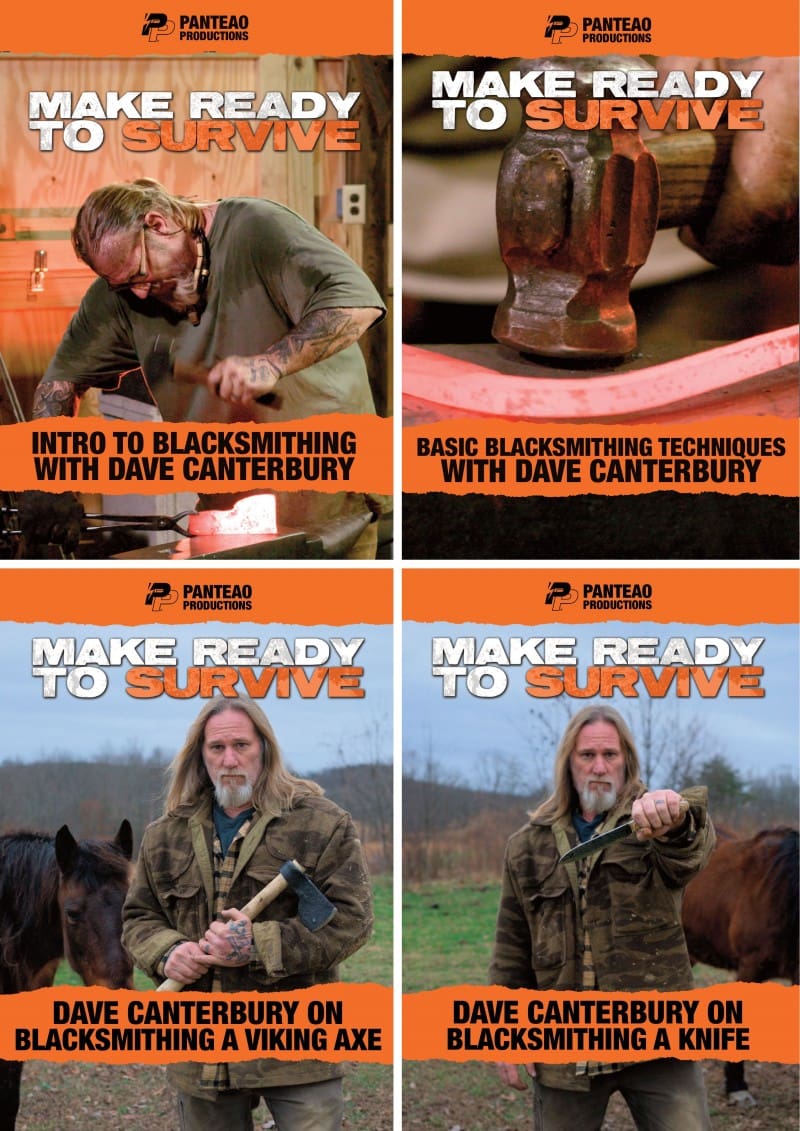
Columbia, SC, December 22, 2015 – Panteao Productions is happy to announce the filming of four new videos for the Make Ready to Survive Series. The Panteao film crew traveled to Jackson, OH and spent time with Dave Canterbury at his facility filming a series dedicated to blacksmithing. Each video builds upon the previous one, from what you need to start blacksmithing to creating simple tools and finally making your own fixed blade knife and axe. We enjoyed filming these videos and think you will like them too. Dave walks you through all the blacksmithing steps in a clear and methodical approach that will help you to start hammering steel.
These titles are currently in post-production status and being edited. They can be pre-ordered from the Panteao website with a 10% savings while they are in pre-order status.
We will also be announcing very soon an auction where the winner will receive the Viking Axe and Knife created by Dave in the videos. The folks at Battle Horse Knives also supported our project by creating custom sheaths for both the knife and axe. Proceeds from the auction will be donated to the Autism Society.
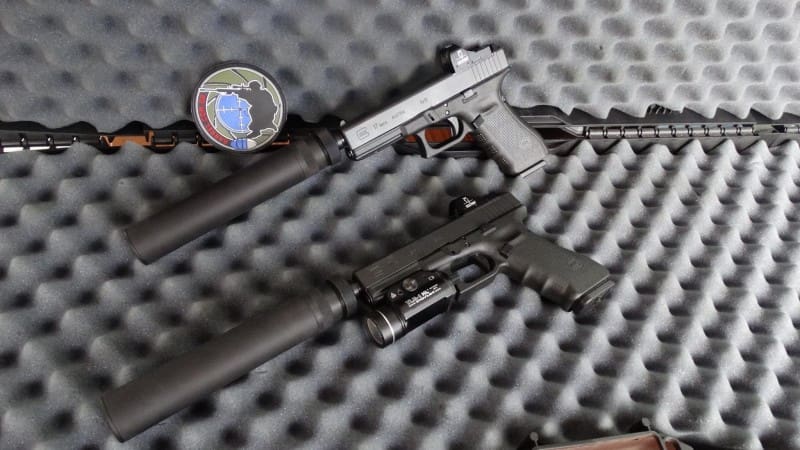
Greek company Barrel Advanced Armament recently posted the above photo of the Glock 17 MOS on their Facebook page, stating that the featured pistols were procured for a “special user”. The Glocks are equipped with a Docter RDS, unidentified suppressor, and in the case of the bottom pistol, a Streamlight TLR-1 HL weapon light. A source who wished to remain anonymous stated that the pistols are intended for a special unit that cooperates with US Federal Agencies, but gave no further details.
Today, we’re introducing a new company to the High Angle Solutions rotation, Atlas Devices, LLC. Atlas Devices is a world leader in tactical access for SOF. Look forward to future High Angle Solutions posts from Atlas, in addition to CTOMS and DMM.

ATL System Introduction
The Atlas Tactical Ladder system designed by Atlas Devices is an extremely versatile tool for SOF teams to increase their current tactical access capabilities while generating new ones never before possessed. The ATL System can be used for collapsible bridging, extended reach, weight reduction, ladder/bridge range increase, and more, in scenarios and locals including:

The core of the Atlas Tactical Ladder system is a rigid 7 ft collapsible ladder (P/N: ATL) weighing under 10 lbs. In addition to vertical climbing, the ATL can also safely bridge gaps with a 400 lb load. Its joint locking system can be set to auto-locking mode for rapid deployment or manual lock whisper mode for silent deployments. The collapsed profile can be packed within a torso dimension for ease of employment by all infiltration methods including MFF and AIE operations.
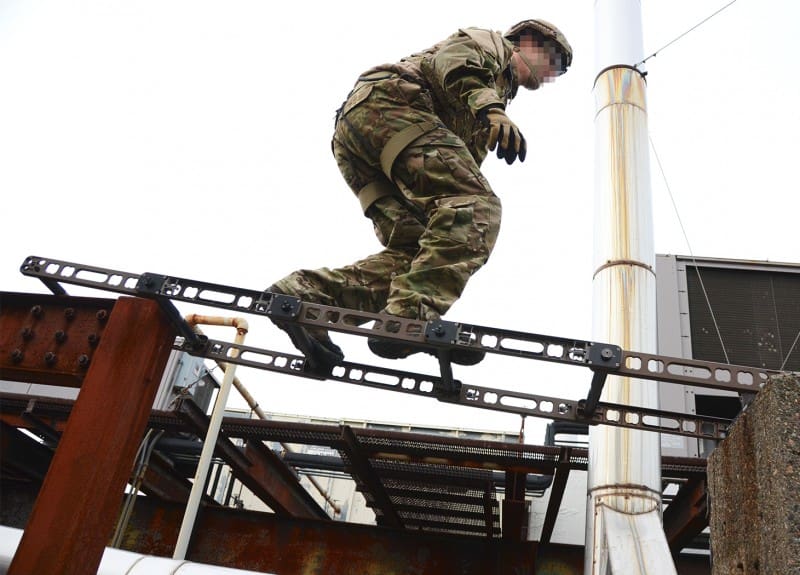
The ATL has a suite of accessories that enhance the capability of the ATL by utilizing unique design features that integrate into the ATL core ladder/bridge system. All accessories are tool-less for rapid don/doff. Atlas Devices is currently finalizing safe working load ratings for a 15 ft bridge configuration of the ATL. Additional mission profiles and ATL capabilities that we’ll be highlighting in upcoming High Angle Solutions features include:
Stay tuned for more information.
Atlas Tactical Ladder Introduction from Atlas Devices on Vimeo.
Get the full Atlas Catalog here: atlasdevices.com/pdf/Atlas_Devices-2015_Catalog.pdf
For more info visit www.atlasdevices.com or email sales@atlasdevices.com.
High Angle Solutions is a weekly feature by DMM, CTOMS, and Atlas Devices.