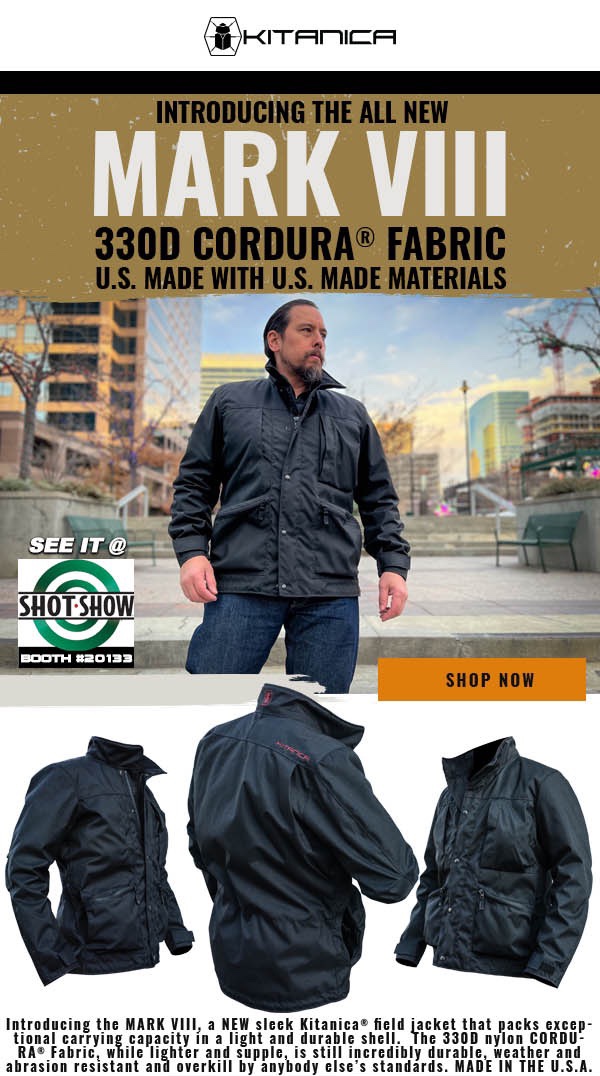
Kitanica is launching the new Mark VIII jacket at SHOT Show in booth 20133. I really like the styling that combines an M65 Field jacket and motorcycle jacket.
kitanica.com/collections/jackets/products/mark-viii-jacket


Kitanica is launching the new Mark VIII jacket at SHOT Show in booth 20133. I really like the styling that combines an M65 Field jacket and motorcycle jacket.
kitanica.com/collections/jackets/products/mark-viii-jacket
Magpul pinky promises that their collab with ZEV Technologies, the Folding Defensive Pistol-9 (FDP-9) & Folding Defensive Carbine-9 (FDC-9) is really coming in 2023.
Check out the latest version at SHOT Show.
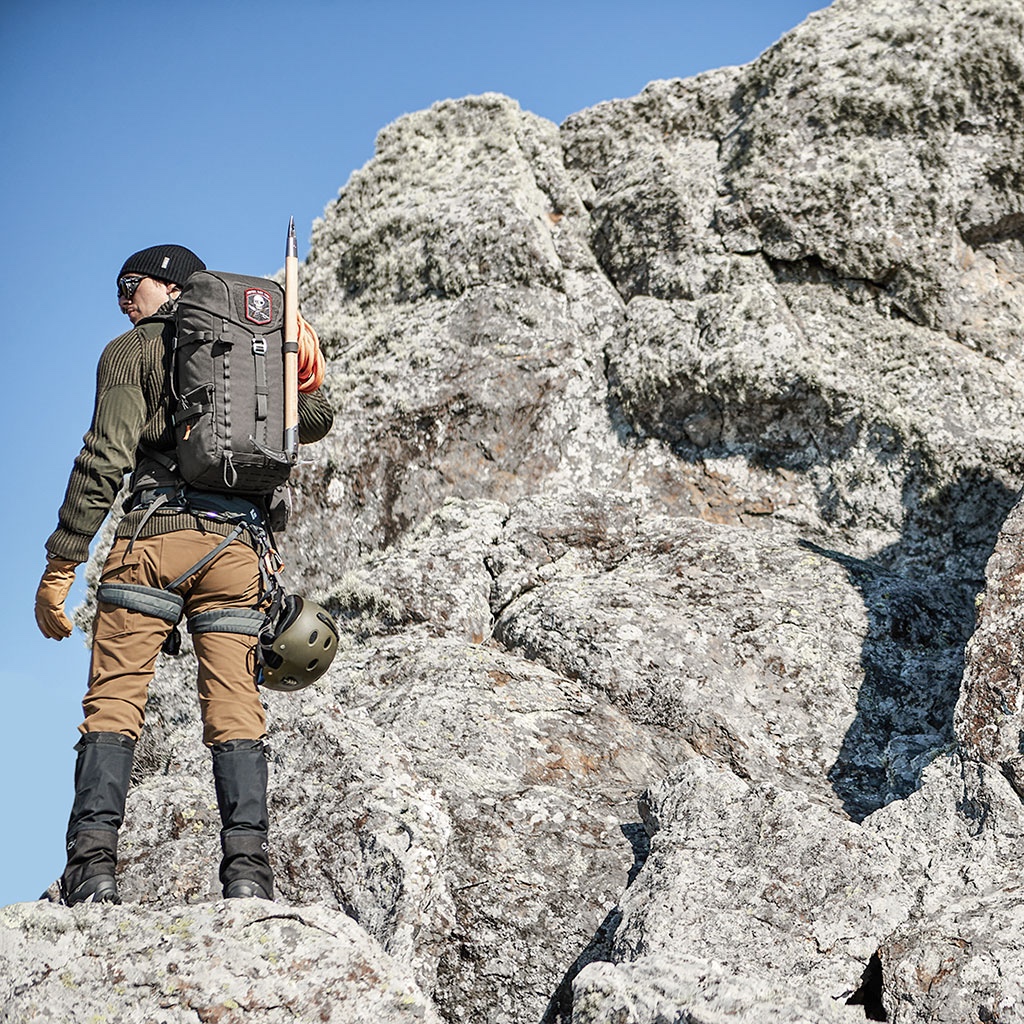
For the start of 2023, Prometheus Design Werx introduces their W.U.U.L.F. Pack 24L. This design is a modern interpretation of the classic, alpine style, top loading, summit assault pack. While this pack is dialed more towards wilderness and backcountry use, it features numerous, practical details for urban use as well, and a well-rounded daypack for multiple use cases. The W.U.U.L.F. Pack 24L is highlighted by an updated and unique design feature which is the center front 2-way zipper. This style zipper opening allows a secondary B.E. access/entry point into the main compartment with the top lid closed, and when the top lid is opened and laid flat on any suitable surface, can be fully zipped opened to allow access to nearly 90% of the main compartment.
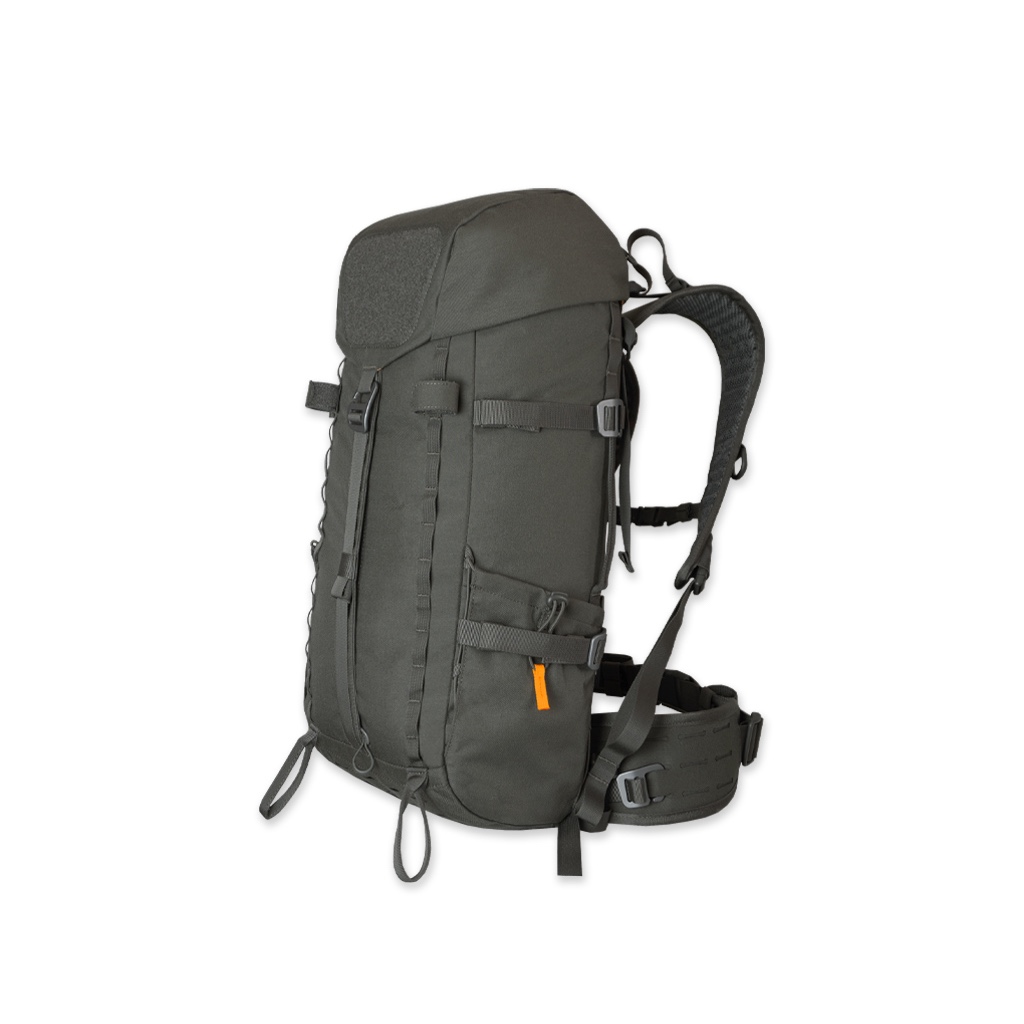
The W.U.U.L.F. Pack 24L is a part of Prometheus Design Werx’s PRO-Line. Available in Universal Field Gray, and Ranger Green as an exclusive to the brand GRR.
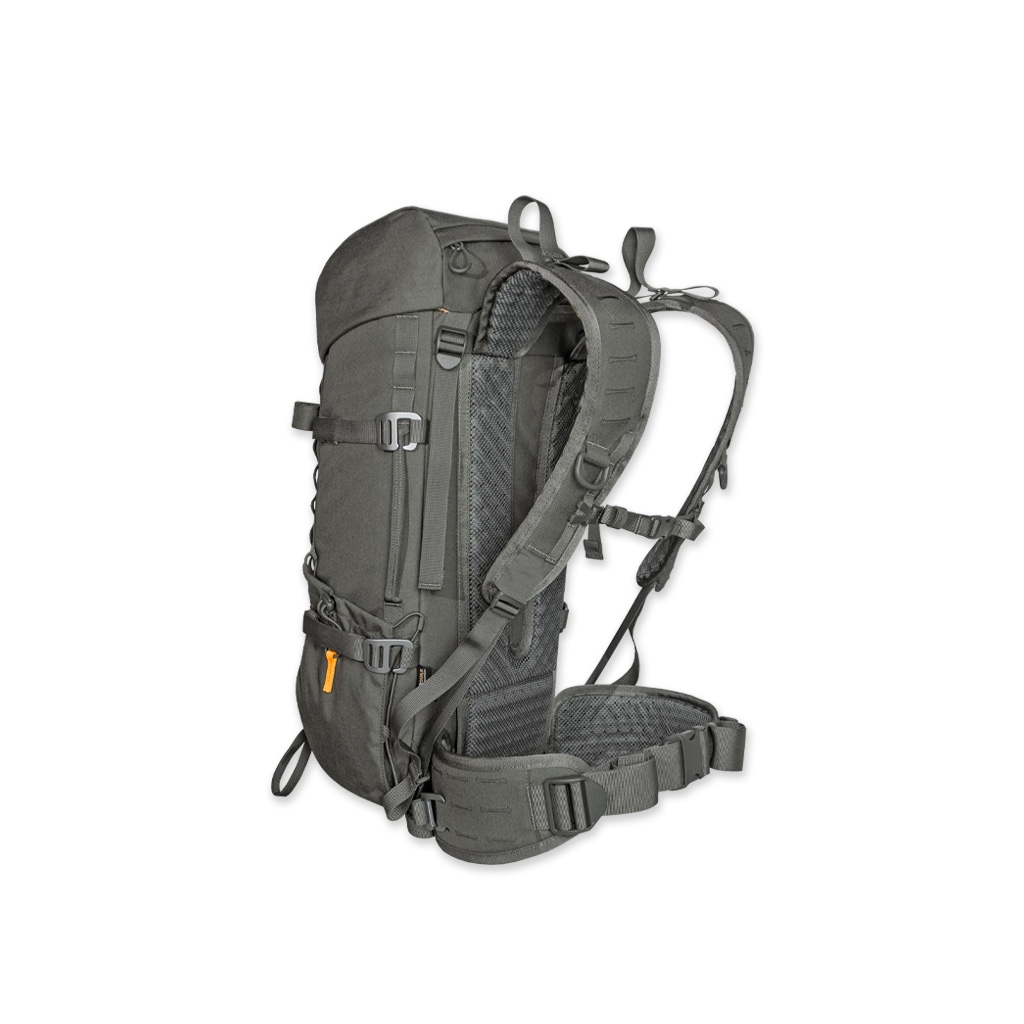
The Design and R&D Team at PDW states:
“The WUULF Pack 24L is at its core, a mountain pack. The pack name is derived from the words, ‘Wilderness Utility Urban Lay Flat’, which describes its basic functional criteria. It draws it design from the classic, single point top loaders from an earlier era. Top loading backpacks are the simplest method of pack entry and has been in use from the earliest days of backpack design. This design is not prone to failure and even if the top lid becomes inoperable, the pack body can still hold its contents. Unlike a zippered panel loader where if the zipper fails, so will the pack, and become useless. Other considerations were the metals buckles at the request of rock climbers; metal buckles will not crack if accidently stepped on like the nylon or acetyl type. Besides the modern additions of a loop panel for morale patches, ventilated ripple foam padding, laptop sleeve, and laser cut M.OLLE C.ompatible A.rray, what is notably unique to the WUULF Pack is the 2ndary entry point via the 2-way center body zipper. This allows user access into the main pack body with the top lid closed, and nearly full access to inside the pack if laid flat (like a ‘blood eagle’) with the top lid open. Finally, we created unique water bottle pockets which feature user replaceable shock cord, should they ever blow out. Unlike all other modern water bottle pockets using stretch fabrics, ours will be useable far beyond the standard life cycle.”
The WUULF Pack 24L In Universal Field Gray is available for purchase for $179.00 via their website, prometheusdesignwerx.com. The Ranger Green edition exclusive to GRR will available via their website grr.world on Friday 13JAN23 at noon PDT.
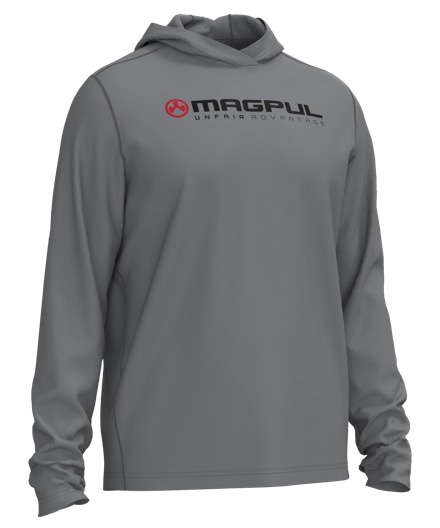
Unfortunately, we don’t get a lot of clothing from Magpul these days so the Sun and Steel Performance Hoodie will be a welcome addition to my wardrobe this summer.
It’s made of a technical high-performance stretch poly material that delivers UPF 50 sun protection, wicks away moisture, and keeps you cool throughout a wide variety of outdoor activities.
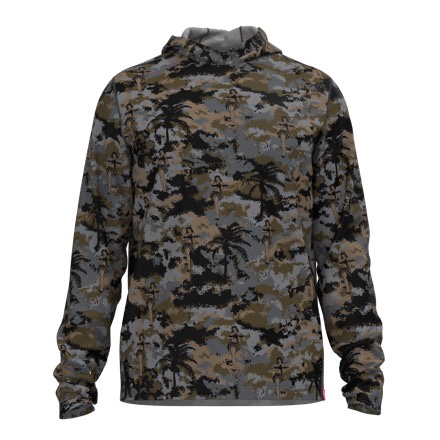
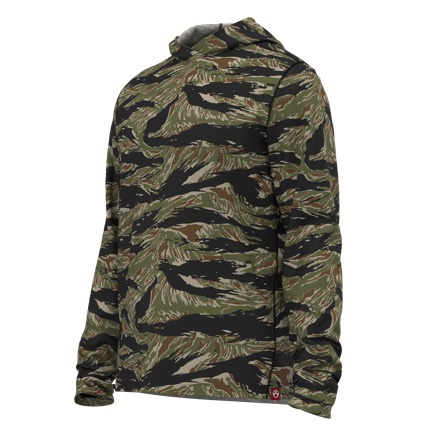
Offered in four colorways (: Hula Camo, Skull Camo Sky, Tiger Stripe, and Gray) in sizes Small – 4XL.
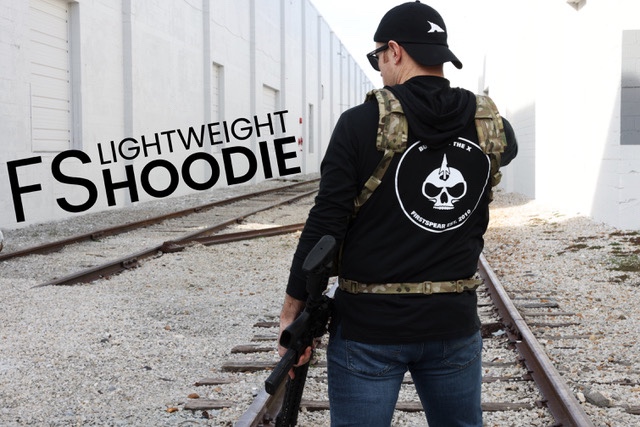
The FS Lightweight Hoodie is designed and printed in the USA with caffeine and hate. This pullover pairs well with the FirstSpear Dad Hat and FirstSpear MC Black Trucker Hat. These are limited edition — get yours before they’re gone.
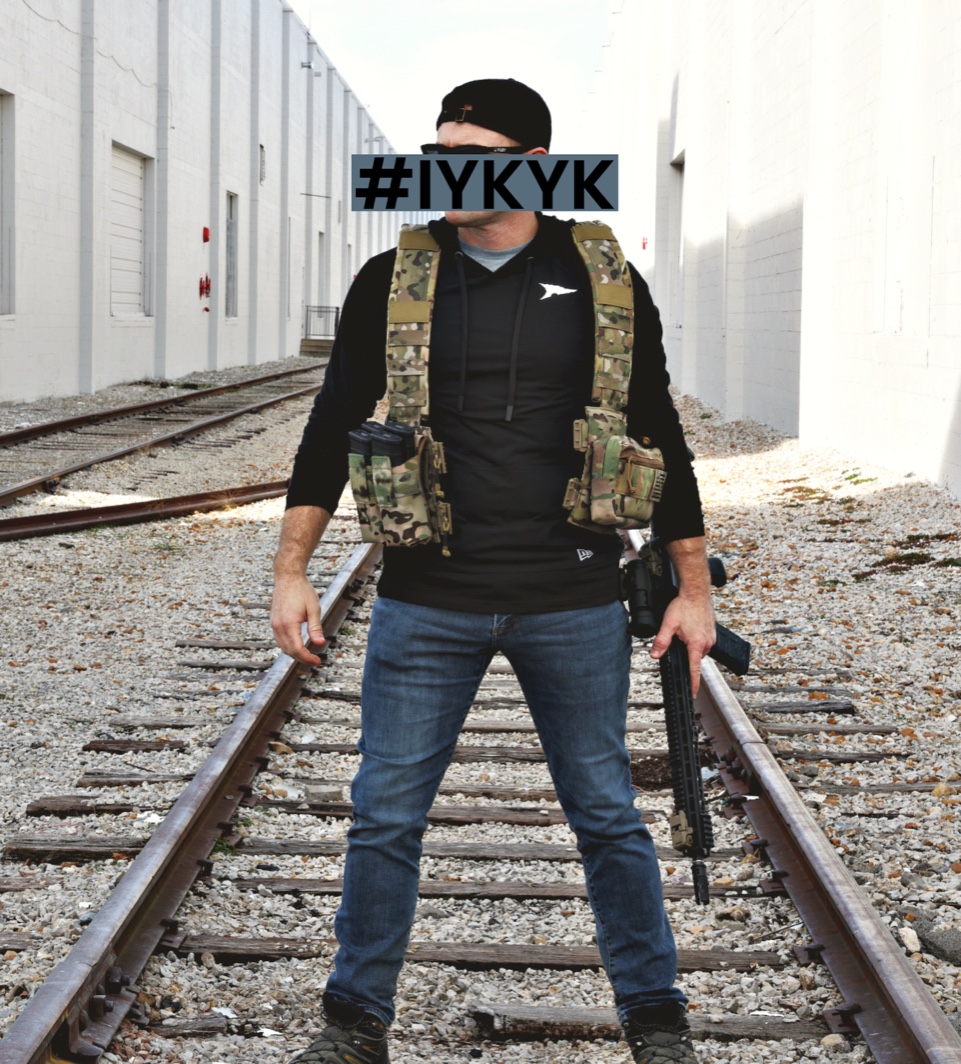
The spear tip logo is near the front left collar bone and the back features the FS Icon Skull. This hoodie is a 55% cotton, 34% polyester and 11% Rayonne tri-blend with a light, athletic fit.

Visit FirstSpear to find America’s premier tactical gear and equipment.

Stop by U.S. Tactical Supply at SHOT Show in Booth # 40329 to see several new products & Additions to our GSA Contract.
• G9 Barrier Blind & Precision Long Range Hunting Ammunition
If you can’t make it to SHOT and have questions shoot them a quick e-mail sales@ustacticalsupply.com or call them. They still do it the old-fashioned way and answer the phone when you call! 208-457-7320
NEWINGTON, N.H., (January 12, 2023) – Introducing ROSE by SIG SAUER™. Developed by SIG SAUER in collaboration with Team SIG Professional Shooter and 8-time World Champion Lena Miculek, the all-new ROSE brand by SIG SAUER was created to help encourage and inspire women to take on the responsibility of their own personal safety through education, training, and community.
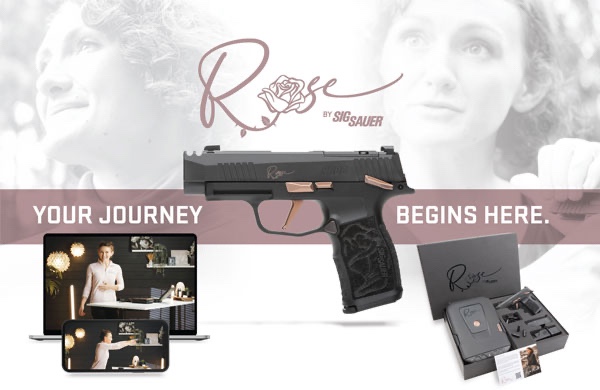
ROSE by SIG SAUER is a complete firearms education program that begins with a custom ROSE P365 kit including a special edition P365-XL COMP ROSE pistol chambered in 9MM or P365-380 ROSE, a custom ROSE Vaultek safe, and instant access to a complete step-by-step video training series with Lena Miculek that is supported by an online community to encourage, inspire, and grow female shooters to become more confident and comfortable.
“For the past ten years I have been exclusively a professional competitive shooter. While I worked hard for my titles, and am proud of all that I have accomplished, the most rewarding part of my career has been to help women overcome fear and get into firearms ownership. You could say that ROSE blossomed through these experiences and is now made possible by the power of the SIG SAUER brand,” began Team SIG Professional Shooter Lena Miculek. “ROSE is not only a pistol, it is a kit you take home with you to start your firearms journey and become part of a community where you are supported and can learn at your own pace in an environment you are comfortable in. I have heard countless times from women that they leave the store with more questions than answers and they want to learn. This is where ROSE by SIG SAUER comes in; the heartbeat of this program is education and getting you from the retailer to the range so you can start your lasting journey with firearms.”
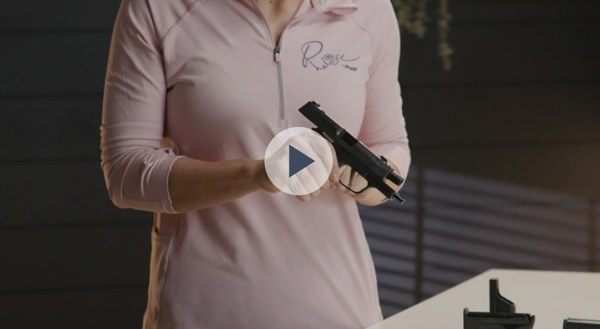
ROSE by SIG SAUER is a complete program that helps women take the first step towards responsible firearms ownership. The program begins with the purchase of ROSE by SIG SAUER P365 kit that provides you with all the tools you need including the pistol, safe storage, and dummy rounds to begin your firearms journey and start your training program. Whether it is your first firearms purchase, or you are just looking to improve your skills, the full online training course, guided by Lena Miculek allows gun owners to get comfortable handling the pistol and ready for the range. The educational component is further complimented by an online community to support and share the journey as you learn and grow.
“ROSE by SIG SAUER is based on Lena’s years of experiences as a career competitor and in teaching women at every skill level, all over the country. ROSE was developed to be a complete system, that’s easy to understand, easy to learn and easy to use,” added Tom Taylor, Chief Marketing Officer and Executive Vice President Commercial Sales, SIG SAUER Inc. “For all that ROSE has to offer including the kit, the program, and the community, the entire package is a tremendous value that will pay dividends from the day you purchase and well into the future as both the ROSE by SIG SAUER brand and program grows.”
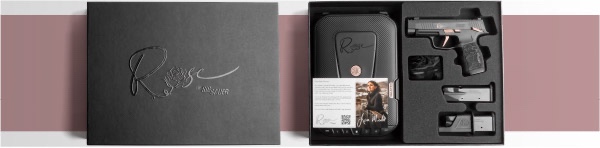
The SIG SAUER ROSE kit includes either a custom P365-XL COMP ROSE in 9MM or a P365-380 ROSE with (2) magazines, a signature ROSE Vaultek Lifepod™ pistol safe with built-in lock system and TSA approved, (5) polymer dummy rounds for safe dry-fire practice, a magazine loader, a personal note from Team SIG professional shooter Lena Miculek which includes access to the QuickStart guide and online training series. Additionally, custom ROSE by SIG SAUER printable practice targets are available for download at sigsauer.com/rose.
Both P365 ROSE pistols feature custom ROSE accents including a laser engraved ROSE polymer grip module, optics-ready slide with X-RAY3 Day/Night sights, and matte rose gold-colored controls including trigger, manual safety, slide catch, and takedown lever. Additionally, both pistols are optic-ready for direct slide mounting of the SIG SAUER Electro-Optics ROMEOZero Elite optic. The P365-XL COMP ROSE includes an integrally compensated slide, flat XSERIES trigger, and ships with (2) 12-round 9MM magazines, while the P365-380 ROSE comes standard with a curved trigger, and (2) 10-round magazines.
SIG SAUER P365XL-COMP ROSE / P365-380 ROSE Specs:
Caliber: 9MM / 380 AUTO
Overall length: 6.6 inches / 5.8 inches
Overall height: 4.8 inches / 4.2 inches
Overall width: 1.1 inches / 1.1 inches
Barrel length: 3.1 inches / 3.1 inches
Sight Radius: 5.1 inches / 4.9 inches
Weight (w/magazine): 20.7 oz./ 15.7 oz
The complete SIG SAUER ROSE kit is now shipping and available at retailers. To learn more about the SIG SAUER ROSE program and watch the welcome video with Team SIG professional shooter Lena Miculek, visit sigsauer.com.
Join the ROSE by SIG SAUER Community:
IG: @rose.sigsauer
FB: @ROSE.SIGSAUER and /groups/rosecommunitysigsauer
Twitter: @ROSE_SIGSAUER
For years, law enforcement, security forces, and first responders in the USA and abroad have dealt with the inconsistency of conventionally dyed nylon (“Piece Dyed”) fabrics. Additionally, these piece dyed nylon fabrics fade significantly just hours after exposure to UV light.
The manufacturers of law enforcement and police gear turned to HLC Industries to provide a solution.
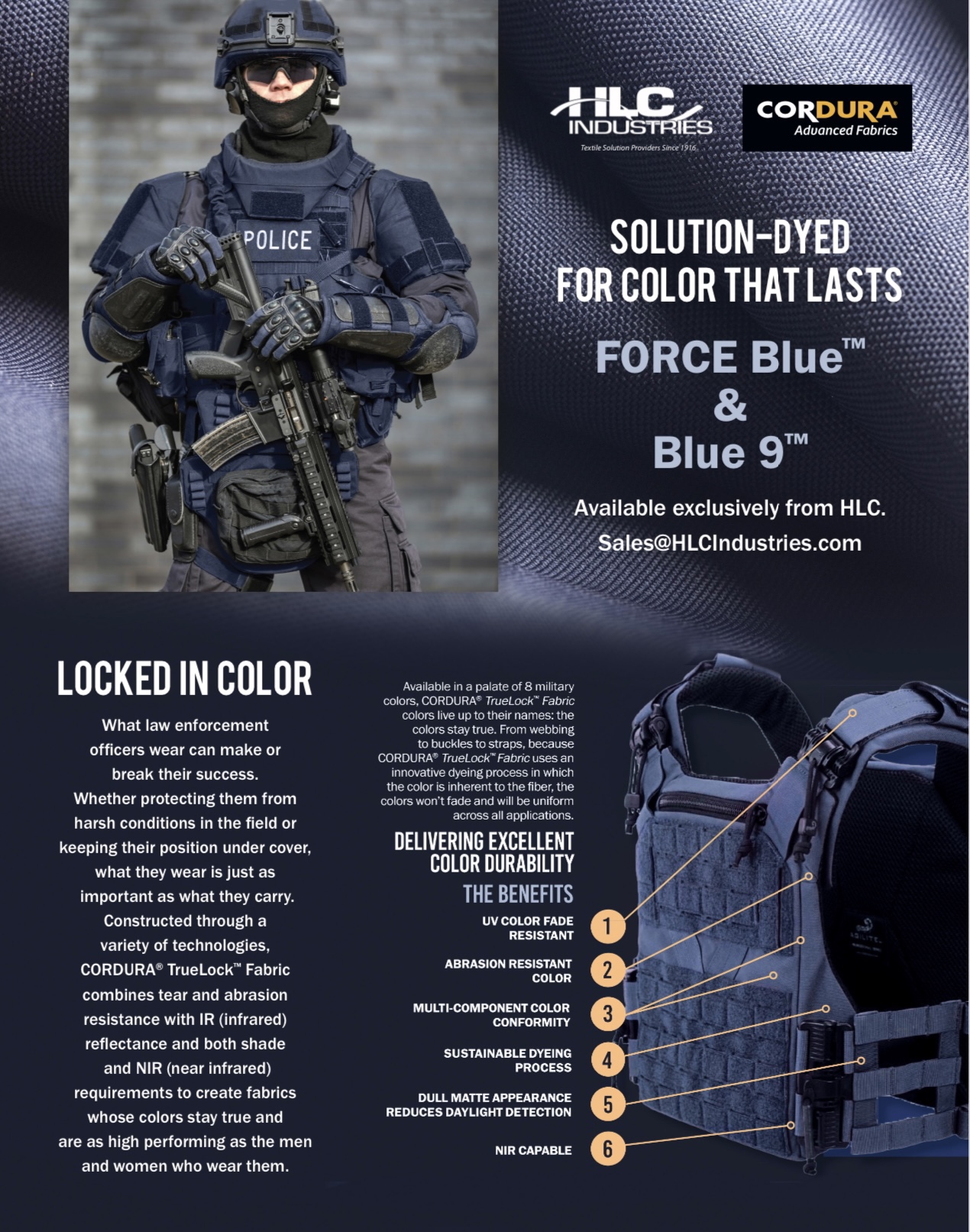
In a cooperative effort, HLC and industry partner INVISTA engineered two new solution dyed nylon CORDURA® shades:
FORCE BLUE™
BLUE 9™
FORCE Blue™ is a very dark navy, common in law enforcement uniforms and vests.
BLUE 9™ is a traditional navy, to be used in numerous commercial, tactical and workwear applications as well as some law enforcement equipage.
Both shades will be added to the family of In-Stock solution dyed CORDURA® nylons (500D & 1000D) and sold exclusively by HLC Industries.
FORCE Blue™ and Blue 9™ feature the CORDURA® TrueLock™ Fiber and will share all the added benefits of solution dyed nylon:
• Abrasion resistance
• Lot-to-Lot color consistency
• Locked in color
• Resistant to UV exposure
For samples, please contact HLC, Sales@HLCIndustries.com