Colt

Archive for the ‘Advertiser’ Category

UF PRO Sets 8 October to Launch Next-Gen Hunter FZ Softshell Tactical Jacket—Offers More Ruggedness, Functionality

Tuesday, September 24th, 2019

TRZIN, SLOVENIA (24 Sept. 2019)—UF PRO said today it will begin selling on 1 October its new Hunter FZ Gen.2 Tactical Softshell Jacket, an upgraded version of the company’s durable and versatile soft-shell mid-layer/outerwear for military or law-enforcement field operations in less-than-ideal weather.

UF PRO said this next generation Hunter FZ Tactical Jacket carries forward the features that made its predecessor. Those original features included construction with breathable yet windproof and water-repellent materials plus a smart pocket configuration and use of design techniques that allow the garment to fit the contours of the wearer’s body without restricting freedom of movement.

Among the key improvements to the soon-arriving Hunter FZ Gen.2 Tactical Jacket:

• Superior abrasion resistance, thanks to the addition of nylon mesh side-panels starting at the armpits and extending down to the waist;

• Elasticized cuffs;

• Strap-operated upper-arm pocket with velcro cover and a pen pocket

Retailing at €139, the Hunter FZ Gen.2 Tactical Jacket is going to be available in Black, Brown Grey, Navy Blue, and Steel Grey, according to Armin Wagner, head of UF PRO product development.

“We’re confident military and police professionals are going to love the enhancements to this must-have item of soft-shell tactical gear,” Wagner said. “And because the Hunter FZ Gen.2 is an anatomically fitted garment, it can be worn as a mid-layer underneath one or more extra layers, such as a hard-shell product like our Monsoon Tactical Rain Jacket

“The Hunter FZ Gen.2 Tactical Jacket is the ideal clothing-system add-on.” According to Wagner, the UF PRO Hunter FZ Gen.2 Tactical Jacket’s water-repellency makes it supremely well-suited for use in fog, mist, drizzle, and light-to-moderate rain, while its ability to completely block wind means even strong gusts on chilly days won’t cause shivers or set teeth chattering.

Its lining is 100-percent polyester fiber. This, Wagner explained, provides thermal properties that keep the wearer warm at temperatures down to 5° C and comfortable when the mercury rises to as high as 25° C.

“As with our other garments in the Hunter FZ range, we employ lightweight COCONA® Inc. 37.5™ microfleece for the lining material—and we do so because of its outstanding performance profile,” he added. “Among the things 37.5™ microfleece is exceptional at doing is drying quickly if it becomes wet from sweat. In fact, it dries so rapidly that you probably won’t even be aware that you were sweating in the first place.”

The lightness of the liner contributes to keeping the overall weight of the jacket at just over one-half kilogram and to helping ensure that the garment easily folds away or rolls up for stowage in a rucksack or duffle, Wagner offered. 

For more information and to sign up to get updated on the release of the UF PRO Hunter FZ Gen.2 Tactical Jacket visit UF PRO website here.

BE Meyers & Co BOARS-M2 Optic Mount Selected For US Army Fielding

Tuesday, September 24th, 2019

boars-m2_000.jpg

September 24, 2019 (Redmond, WA) – B.E. Meyers & Co. Inc. is proud to announce that the BOARS®-M2 optics and accessory rail system has been issued National Stock Number (NSN)1240-01-682-8650 by TACOM, US Army, following successful evaluation and testing through the US Army Soldier Enhancement Program (SEP).

A total of 4,752 complete BOARS®-M2 units have been procured for initial fielding by PM Soldier Weapons, PEO Soldier. Designed to support a variety of mounted machine gun optics for the M2 and M3 family of weapon systems, the BOARS-M2 provides a modular, low-profile optics and accessory rail mount with true return-to-zero capability.  The BOARS-M2 is ideal for those wishing to easily transition from a day optic to a night optic while retaining boresight for both systems, and without interfering with the operation of the spade grips or the feed tray cover.

Units are encouraged to contact PM-Soldier Weapons, PEO Soldier, Picatinny Arsenal, NJ to place their demands for initial fielding.

FEATURES AND CAPABILITES

LOW PROFILE

The BOARS®-M2 is the lowest-profile M2 mount for optics and accessories.

With an overall height measuring in at a 2.1 inches over the top of the receiver, the BOARS-M2 is almost half height of the current optic/accessory mounting solutions. This drastic reduction in height translates into a lower end-user defilade and increased operator survivability during use.

103AF621-50AC-414C-9BFC-7CD6B9268255

MODULARITY

The BOARS-M2 is a two-piece design (lower base, and detachable upper rail rail) which provides a quick-disconnect for effective changes between day and night optics with true return-to-zero reattach. The lower base of the mount is installed via friction clamps and is meant to remain on the host platform, while the detachable rail incorporates rail segments for mounting most common laser systems in conjunction with a top mounted optic, and a pass-through aperture for use of iron sights.

32B73710-6532-4C8F-94FC-6A0B8782AAA3

www.bemeyers.com

Raptor Tactical – WW II-Style Army Combat Helmet Net Cover

Sunday, September 22nd, 2019

Raptor Tactical has introduced a World War Two-style net Helmet cover for the Army Combat Helmet.

Shown over a MultiCam cloth cover. Mesh is OD.

www.raptortactical.com/home/232-army-combat-helmet-net-cover-wwii-style

SCUBAPRO Sunday – Viking Funerals

Sunday, September 22nd, 2019

Like most military people, I believe in Valhalla. I have seen the 13th warrior and have always hoped to be in Valhalla when I die. The Vikings believed in an afterlife, and these were based on the religious beliefs they held. We have been learned about their practices by both archaeological and textual sources. The Vikings believed that it was possible to take their worldly possessions into the afterlife with them. So, an essential feature of Viking funerals was the grave goods. The Vikings believed that warriors who fell in battle would earn the right to enter Valhalla, an enormous hall located in Asgard, the domain of Odin. There, the fallen warriors would feast and fight until the arrival of Ragnarok. The dead needed to have their equipped so they could fight in the afterlife. There was more than one realm for the dead include Folkvangr (also for warriors), Helgafjell (for those who have led good lives), and Helheim (for those who died dishonorable deaths). This could be from laziness, old age, for example, to die in your bed with never doing anything good for your people. In Viking times, dying bravely was definitely the most honorable.  




One of the most essential objects required by a dead Norse was a warship. The Vikings were great seafarers, and they believed that ships would help provide them with safe passage into the afterlife. Although the warship played a prominent role in Viking funerals, there was no standard funeral., it was based on your status. The grave could also include slaves or thralls, and, in some cases, the widow would choose to be sacrificed to join her husband on the journey to Valhalla. It the Middle Ages a traveler named Ahmad ibn Fadlan gave the account of a funeral like no other. At the funeral for a Viking chieftain, he said it included a sacrificial female slave who was forced to drink copious amounts of alcohol, then she was raped by every man in the village as a tribute to the deceased. From there, she was strangled with a rope, stabbed by a matriarch of the village (known as the Angel of Death), then placed in the boat with her master and set on fire. The more polite Viking would bury people with stuff they had in life like a craftsman might be buried with his tools. A Viking woman might find her cloth-making equipment or cooking tools would follow her in the afterlife.  

Vikings Traveled to the Afterlife by Ship but Not by Sea

Thru out Scandinavia, Archaeology has discovered some Viking burial mounds that were meant to resemble ships. They used stones to outline the shape of what looks like small ships. Higher ranking Vikings, such as chiefs and kings, were even able to have actual ships accompany them into the afterlife. In some cases, the boats would be buried with its contents, while in others, they would be burnt before the burial. There is a widespread belief today that the Viking set the ships on fire before pushed out to sea, but I am sorry to say this, but there is no real proof that this has ever happened. So, no flaming arrows. Sorry

Apart from their ships, warriors entering Valhalla would be required to bring their weapons and armor, these objects were part of a Viking’s grave goods. Archaeologists have found blades as part of a Viking’s grave goods would usually be broken or bent. This was meant to symbolically signify the final death of the individual, as the Vikings believed that a warrior’s soul was linked to his weapon. Additionally, the destruction of the blade served as a deterrent to grave robbers. 

Grave goods also served to ensure that the deceased was satisfied in the afterlife. The Vikings believed that if the dead were not appeased, they could return as a Draugr (unfriendly ghost) to haunt the living. The undead could be blamed for everything that was going bad, from losing a battle or the crops not growing. If they thought a Draugr was up to no good, they would dig up the last people buried and look for signs of undead activity. When a Draugr was identified, the Vikings would rebury the body with more grave goods, assuming at the person had been a highly respected person in life. Sometimes they would go as far as to stake the body down to make sure it couldn’t get up again and lastly, they would chop off their head so as to kill it, very much like Dracula or the walking dead.  

When you died, there were two typical ways of dispose of the body, cremation or inhumation (cover you with a rock mound basically) (the ground was frozen most of the time, so the inhumation was the best way for them to bury someone)

There are typically two common ways to bury the dead, and the Vikings did practice both. The first method, cremation, is to burn the body, the ashes, could then be scattered, buried, or sailed out to sea. The second, inhumation was to bury the body in its current state under the ground, and then either place earth, dirt or stones on top of the body.

It was normal in Norse times to cremate the deceased body before a land or sea burial, a practice that had a significant reach to their afterlife. By cremating their dead, the Vikings believed the smoke would carry them to their rightful destination in the afterlife. Successful cremation required a scorching fire, hot enough to burn flesh and bone to ash and to achieve this a pyre was needed. The Vikings used pyres (basically a big pile of very dry wood that would burn at very high heat) (you know like the fire Luke used to cremate Darth Vader” his father”) to cremate their dead. Without the intense heat caused by a pyre, a typical fire would likely not burn the body completely. This could leave parts of the body remaining and is of course, not desirable.

A Viking sea burial.

Another kind of burial was for the Vikings to sail their dead out to sea. This practice often involves the burning of the ship before the dead are cast out. Many believe that the body was cremated before the ship was sailed. Either way, it was common for the dead’s goods to travel with them out into the water. This type of burial was not common however and was likely reserved for sea captains, noble Vikings and the very wealthy. In old Norse times, boats would have taken months to construct and would not have been wasted without valid cause or a suitable amount of status. Some woman held high statues also. One of the most extravagant boat burials honored two women, who likely died around 834 A.D. Known as the “Oseberg ship,” it’s one of the most well persevered Viking artifacts ever found. While the Vikings were known for the craftsmanship that went into their vessels in general, the size and detail of the Oseberg were above and beyond. Seventy feet long and nearly 17 feet wide, the ship had 15 oars on each side, a pine mast more than 30 feet high, and was spacious enough to fit 30 people. You go girls.

Typically, the Vikings would wait for seven days before the celebration. This day would be marked with the drinking of ale, which signified the passing of any property from the deceased. After this celebration, the heir would truly claim their inheritance. The exact rituals of Viking funerals are challenging to say, (so maybe flaming arrows) as they kept minimal written accounts of their lives and deaths. Regardless of how the body was disposed of, a few rituals remained almost constant. The body was draped in new clothes explicitly prepared for the funeral, and a ceremony was held featuring songs, chants, food, and alcohol. Death rituals are designed to help those left behind come to terms with the loss. Many have survived but slightly modified over the centuries. Looking at what we do today when someone dies today. It is very close to the Viking funnerals. We put them in their uniform, sometimes we give them things for the afterlife, swords, tomahawks, alcohol and we drape them in cloth, but it is our flag, the symbol of our tribe and nation. I would never compare us to the Vikings, as they had no rules and did what they wanted to do. But a lot of the warrior spirit of them is in every person that goes to fight and defend their brothers.

Holy Schnikes!

Friday, September 20th, 2019

Something cool is coming very soon from Thyrm and I’ve got to have it.

FirstSpear Friday Focus – Stratton Flannel is Back

Friday, September 20th, 2019

Today we are getting the first look at the all new FS Stratton Flannel now available in the lighter 4oz weight perfect for fall. 100% American made with the same generous cut that can be worn all on its own or open as an outer garment. Premium construction with two outer pockets, high collar, and hang loop. Sizing is the exact same as last year. If you plan to wear the flannel on its own with no layers step down one size from your normal t-shirt size, the flannel will shrink about 3% after about three wash cycles. In-stock and now shipping exclusively from FirstSpear.

www.first-spear.com/technical-apparel/outerwear/stratton-flannel

What’s This?

Thursday, September 19th, 2019

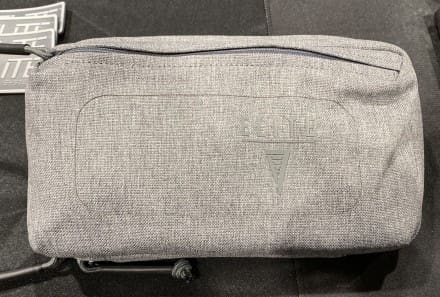
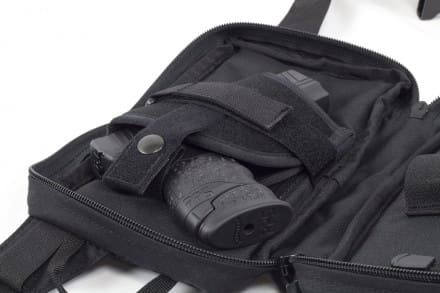
Instagram user @wetworxoutfitters shared these photos of an upcoming LBT design, urging them to”Make fanny packs great again.”

The SureFire Optimized Bolt Carrier

Thursday, September 19th, 2019

Fountain Valley, CA—SureFire, LLC, manufacturer of the world’s finest—and most innovative—illumination tools and tactical products, has launched an informational video on its revolutionary Optimized Bolt Carrier (OBC).

The SureFire OBC is designed to greatly increase the reliability of an M4/M16/AR variant during both unsuppressed and suppressed firing. The OBC comes as a package with the OBC bolt carrer group as well as buffer and buffer spring. This patented design makes numerous improvements to the standard Mil-Spec full-auto bolt carrier group starting with delayed unlocking of the bolt during the firing sequence. This delayed unlocking is a result of a lengthened cam pin slot and our neutrally balanced counterweight. This delay allows expanding gases more time to exit the bore, lowering chamber pressure by 15%, which not only reduces wear and tear on parts, but also reduces back-pressure gases exiting the ejection port.

FC1C5105-1C85-4C5E-92AC-674499EBFB4F

Next the shortened gas carrier key in conjunction with shorter buffer allow a 60% increase in stroke. This increase in stroke gives the magazine more time to feed, which can be essential as gas ports erode and magazines become dirty from austere environments. This additional stroke also provides smoother and more reliable feeding due to increased inertia when the OBC picks up a round from the magazine.

The previously mentioned neutrally balanced counterweight works three times in the cycle of operation. First the counterweight delays unlocking, as mentioned before. Secondly, the counterweight keeps the carrier group to the rear for additional time, allowing more time for reliable feeding of ammunition from the magazine and nearly eliminating bolt-over-base malfunctions. Lastly, this counterweight improves carrier and barrel extension lock-up, nearly eliminating bolt bounce. The OBC also reduces felt recoil, allowing for better tracking of sights and more control of the weapon when firing. Coated with an advanced anti-friction coating, the OBC resists friction during use and makes cleaning easy. For the ultimate in reliability, choose the SureFire OBC.

www.surefire.com