Salomon Forces Genesis MID GTX

Archive for the ‘AFSW’ Category

Special Tactics Wing, AFRL Develop Smartphone App to Mitigate COVID-19 Risk

Thursday, June 11th, 2020

HURLBURT FIELD, Fla. – The Air Force Special Tactics community is known for looking at complex problems and finding new ways to accomplish the mission; when COVID-19 became a global pandemic, it was no exception.

Medical and Preservation of the Force and Family (POTFF) team members of the 24th Special Operations Wing, headquartered at Hurlburt Field, Florida, teamed up with the Air Force Research Lab to develop a way to monitor ST operators’ health status during the pandemic straight from their smartphones.  

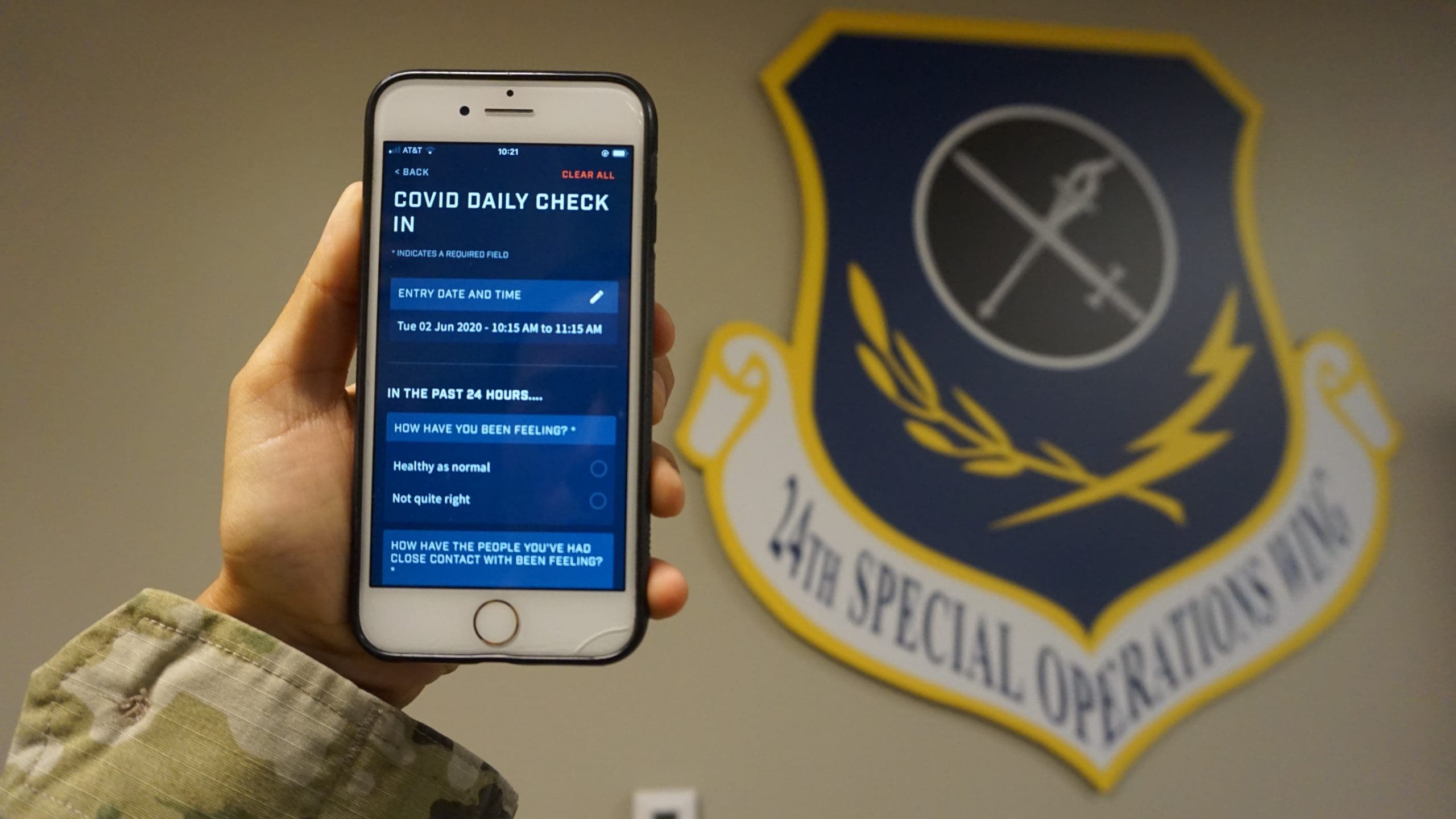
The team quickly responded by taking an existing human performance software known as, Smartabase, which identifies health risks to the force, and adding a “COVID-19 Check In” feature to monitor pre-and post-deployment health.

“We recognized the need for real-time monitoring of the force and readiness impact from COVID-19,” said Col. John Dorsch, 24th SOW surgeon general. “COVID-19 screening was a natural extension of our efforts since it is another risk to force like others for which we are monitoring, such as TBI, musculoskeletal injuries, and PTSD.”

The app feature is designed as a daily survey where users input daily temperature, possible symptoms, risk factors, exposure as well as mental health state. All the data from the ST operators is collected and alerts medical and command teams if there is anything out of the ordinary that needs to be addressed.

“This ensures commanders have important information related to their operators and allows them to make the best decisions about who goes where and does what,” said Craig Engelson, 24th SOW POTFF director. “In the past they have had to coordinate with multiple departments and multiple systems to get the same information.”

The idea stemmed from the wing’s long-standing efforts using technology and innovation to maintain operator readiness as well as ensure Special Tactics teams’ ability to perform optimally on the battlefield for years to come.

“[Special Operations Forces] can’t be mass produced,” said Dorsch “Special Tactics is a small, but incredibly important and highly specialized combat capability.  This system helps protect this capability for combat operations, and our partnership with AFRL has been invaluable.  We must continue to leverage technology to help us solve the nation’s hard problems.”

Dr. Adam Strang, a human performance research scientist and AFRL’s director of the Signature Tracking for Optimized Nutrition and Training (STRONG) team, has been leading the back-end development of the database as well as finding new opportunities for improvement.

“As a scientist I like to lean forward and stay on the cutting edge,” said Strang. “Often that requires taking big swings and being comfortable with risk. Special Tactics functions similarly, which makes a good pairing.  Together we push the edge of technological capability in ways that AFRL could not accomplish alone.”

The technology proved successful in monitoring returning deployers, safeguarding families from health risks, as well as helping outgoing deployers meet specific country clearance requirements. The 24th SOW team also helped integrate the technology at the 1st Special Operations Medical Group at Hurlburt Field and 27th Special Operations Medical Group at Cannon Air Force Base, New Mexico to monitor pre-deployment health for almost 250 Air Commandos.

“In truth I believe that we are only scratching the surface of its capabilities,” said Engelson “As our providers and commanders integrate with the system even more, there is no telling how much more useful this system could become.”

Special Tactics is the Air Force’s ground special operations force that leads global access, precision strike, personnel recovery and battlefield surgical operations. For more info on Air Force Special Tactics visit our website www.airforcespecialtactics.af.mil or follow us on social media: Twitter: @SpecialTactics_ Facebook/Instagram: @Airforcespecialtactics

24th Special Operations Wing Public Affairs Office

Air Force SERE Modernizes Training

Saturday, June 6th, 2020

FAIRCHILD AIR FORCE BASE, Wash. (AFNS) —

The 336th Training Group is streamlining Air Force Survival, Evasion, Resistance and Escape training with several possible permanent changes to modernize training which have been under review but are being expedited because of COVID-19.

As a response to COVID-19, SERE training at the group paused for 14 days to implement movement restrictions, which is when healthy individuals with no known exposure or illness monitor their own health status prior to being introduced into a previously healthy population.

“This has been near and dear to my heart for the last 15 months in planning,” said Col. Carlos Brown, 336th Training Group commander. “We are confident this new format of training will be able to get the right Airman, the right training and the right time and make the training process more efficient.”

The changes will involve shifting the SERE training paradigm from a one-size fits all approach to a flexible and more efficient concept that will adequately prepare forces for a high-end conflict, including the incorporation of distance learning into the curriculum.

“These changes will provide more tailored training for our Airmen while delivering them to their combat units more quickly,” said Maj. Gen. Craig Wills, 19th Air Force commander. “This is an exciting development that saves our most valuable resource – our Airmen’s time, while preparing our Air Force to better meet the demands of the 21st century fight.”

Initial SERE training for Airmen at high risk of isolation has been conducted through four courses over a 26-day period. Now, leaders at 336th TRG believe they have found a way to restructure the training requirements, which make it more efficient and ultimately saves time. COVID-19 expedited the need to test these changes, which are proving to be beneficial.

“Reducing the length of the SERE training helps accommodate personnel’s needs, especially through this pandemic,” Brown said. “We are professionalizing our Airmen through continued distance-learning education and getting after some long-term projects to modernize the SERE enterprise.”

The modernization effort, if approved by the Air Force, will provide tailored and targeted training based on an Airman’s AFSC and the level of risk they may face on the battlefield. This custom approach to training targets the right Airman, at the right time, in the right place for training.

“Currently the Air Force is working with every major command in the Air Force to better understand their SERE training needs, and we are confident these changes put into place because of COVID-19 will be in line to meet those requirements,” Brown said.

Story by C Arce, Air Education and Training Command Public Affairs

Photo by 1st Lt Kayshel Trudell

US Air Force Creates New AFSC for Special Warfare Officers

Thursday, April 30th, 2020

ARLINGTON, Va. (AFNS) —

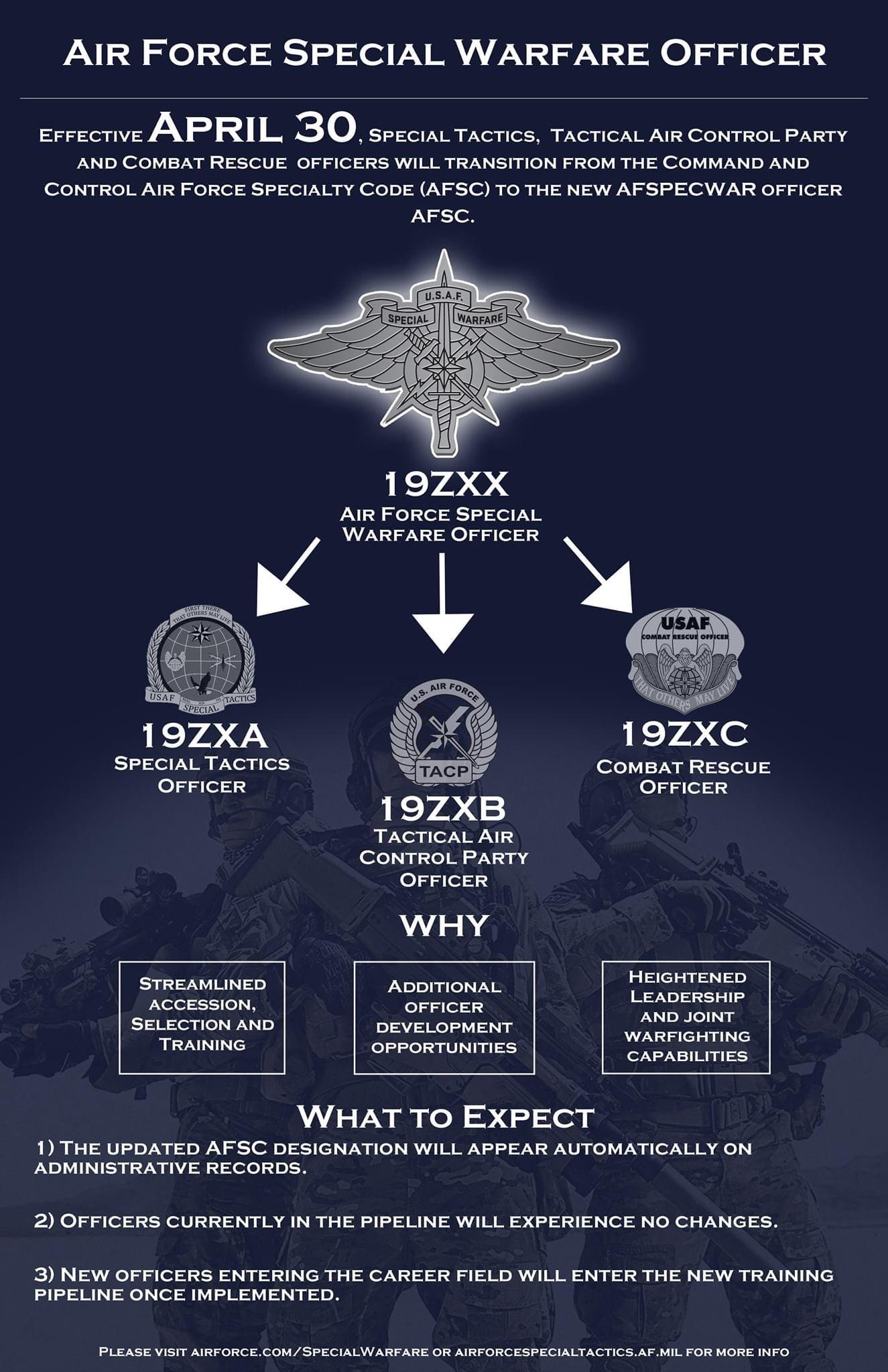
The Air Force consolidated and transitioned officers of Air Force Special Warfare to a new Air Force specialty code to increase resourcing, improve talent management and enhance deployment capabilities.

Effective April 30, special tactics, tactical air control party and combat rescue officers will transition from the command and control AFSC, 13XX, to the new AFSPECWAR officer AFSC, 19ZXX.

“The creation of a cadre of officers steeped in joint leadership and trained to lead the full spectrum of AFSPECWAR conventional and special operations missions will streamline accession, selection and common skills training,” said Col. Thomas Palenske, director of the AFSPECWAR directorate at the Pentagon. “These officers will share a common assessment and selection standard with a heightened benchmark for leadership capabilities to prepare them as next-generation leaders for the AFSPECWAR enterprise.”

The 19ZXX AFSC includes three shred-outs:

– Special tactics (19ZXA): Leads special operations forces conducting global access, precision strike and personnel recovery operations across all domains to support the joint force commander.

– Tactical air control party (19ZXB): Leads combat air forces and SOF conducting precision strike, the application and integration of joint fires and all-domain command and control operations to support the JFC.

– Combat rescue (19ZXC): Leads personnel recovery and SOF conducting personnel recovery operations to report, locate, support, recover and reintegrate isolated personnel across all domains to support the JFC.

All administrative systems such as MilPDS are expected to automatically update by May 1.

The transition to the new AFSC will be a direct conversion with no additional training required. While differences between special tactics, TACP and combat rescue officer training and development exist today, the development of a new 19Z assessment and selection process will create core standards for future special warfare officers.

“Upon the establishment of the 19Z officer training and developmental processes, every AFSPECWAR officer will exercise the unique competencies: ‘mission command’ culture, advanced combat skills, ground maneuver warfare expertise, air-mindedness and all-domain warfare capabilities,” said Col. Mark McGill, AFSPECWAR deputy director and officer career field manager. “They should see greater opportunities to serve in different positions across the Air Force and will serve the greater AFSPECWAR enterprise together.”

AFSPECWAR is the Air Force’s premier ground force that specializes in air, ground, space and cyber integration in hostile, denied or politically sensitive environments to achieve all-domain dominance. Officers in these career fields are charged with leading, organizing, training and equipping the special tactics teams, TACP and Guardian Angel weapon systems, which collectively execute global access, precision strike and personnel recovery operations.

The development and implementation of the new AFSC is a continuation of efforts to empower AFSPECWAR to be the elite and ready ground force the Air Force needs to dominate the air, space and cyber domains. In October 2019, enlisted members transitioned to new AFSCs that identify and categorize the AFSPECWAR operator, enabler and support specialties.

“The Department of the Air Force is modernizing to connect the joint force so we can more seamlessly integrate as a joint team,” Palenske said. “This transformation strengthens the connective tissue between AFSPECWAR Airmen enabling them to integrate the unique capabilities of the Air Force into an even more lethal, joint all-domain fighting force.”

Special Tactics Airmen Support Vital Training, Maintain Readiness Through COVID-19

Wednesday, April 29th, 2020

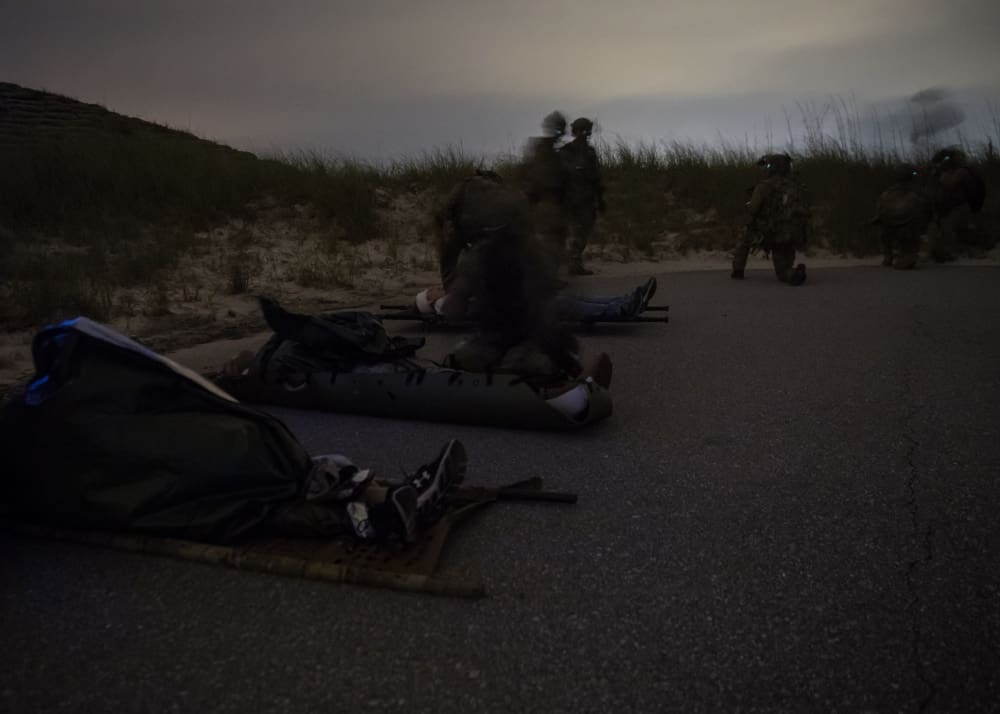
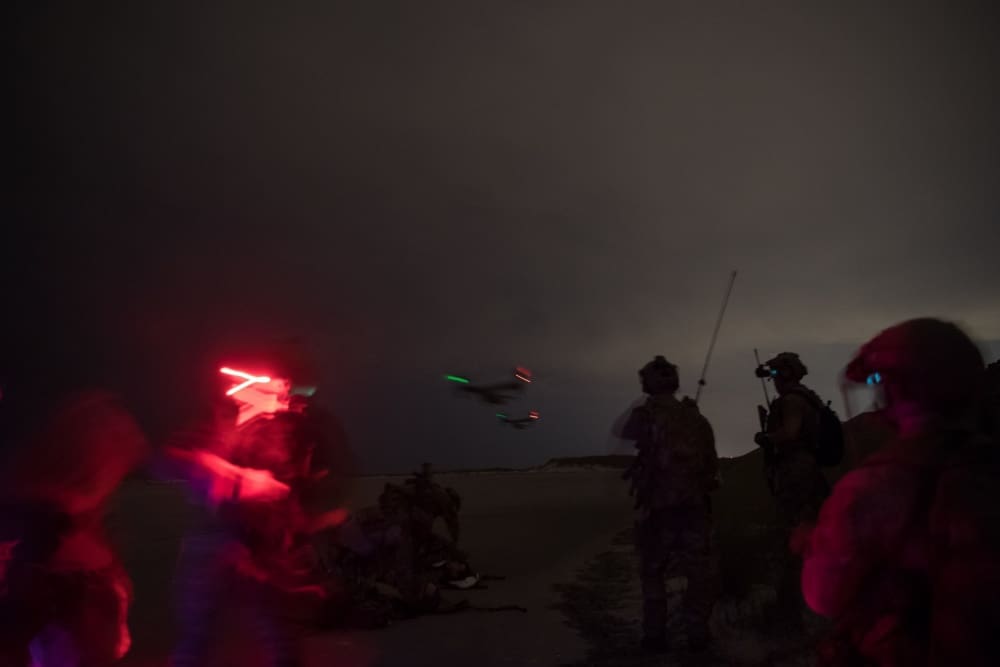
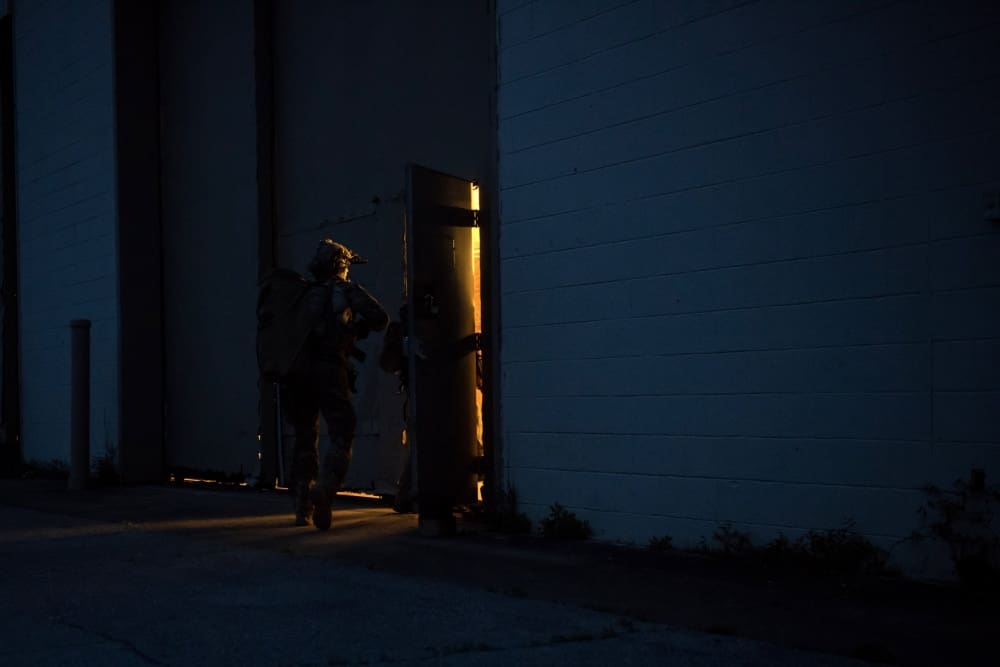
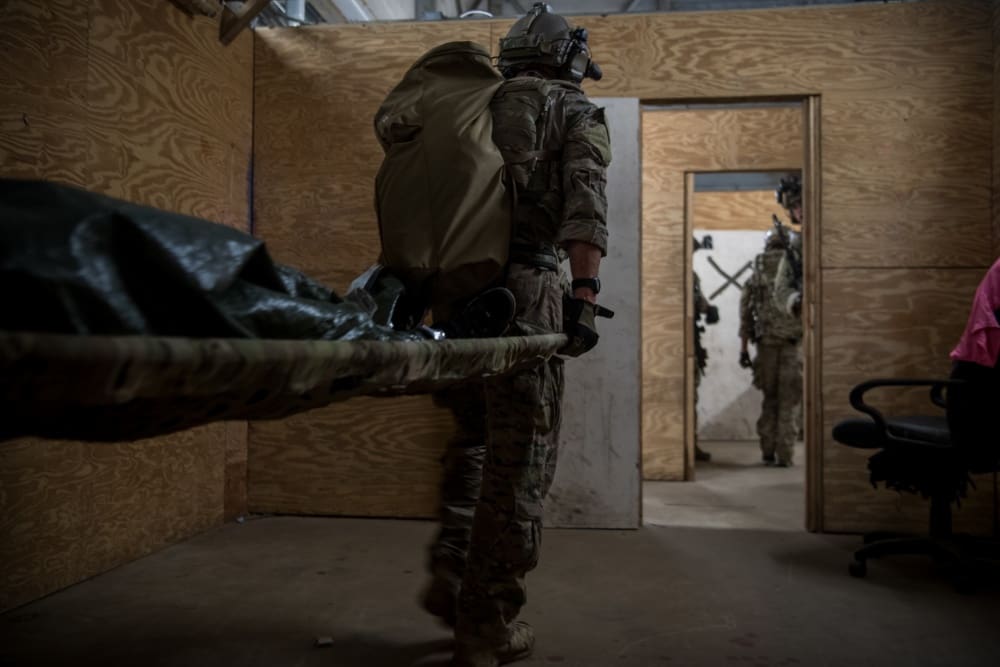
Special Tactics Airmen from the 23rd Special Tactics Squadron filled in to conduct interoperability training with the 14th Weapons Squadron assigned to the U.S. Air Force Weapons School detachment at Hurlburt Field, Florida for a Special Operations Force Exercise on April 22, 2020.

“The recent training event was done in conjunction with the 14th Weapons Squadron as part of their curriculum to produce Weapons Officers from various aircraft in [Air Force Special Operations Command].,” said Maj. Blake Jones, director of operations for the 23rd STS. “Their scenarios and full mission profiles necessitate the role of ground force as they train to conduct and support airfield seizures, non-combatant evacuations, hostage rescues and counter weapons of mass destruction operations. The 23rd STS picked up this great training opportunity after COVID-19 travel restrictions prevented other units from participating as planned.”

The exercise is a part of the 14th WPS’ demanding five and a half month syllabus exposing students to a wide range of joint special operations and combat air force capabilities. Being able to move forward with the training allowed the iteration of Weapons School students to stay on track with their training timeline.

“Our students require close interaction with skilled ground forces throughout their training to graduate them as the recognized experts in [Special Operations Forces] and [Combat Air Forces] integration,” said. Lt. Col. Jacob Duff, 14th WPS director of operations. “Our planned training partners, a different Special Tactics Squadron and multiple Army Special Forces units, were unable to travel to Hurlburt and the 23rd STS immediately stepped in to fill that gap. Without them, it would have been significantly more difficult to meet our training objectives and graduate the newest class of SOF Weapons Officers and enlisted Advanced Instructors.”

The SOFEX also provided a unique opportunity for local Special Tactics Airmen to conduct multifaceted training with a volume of aviation assets otherwise not easily replicated outside of a larger exercise. 

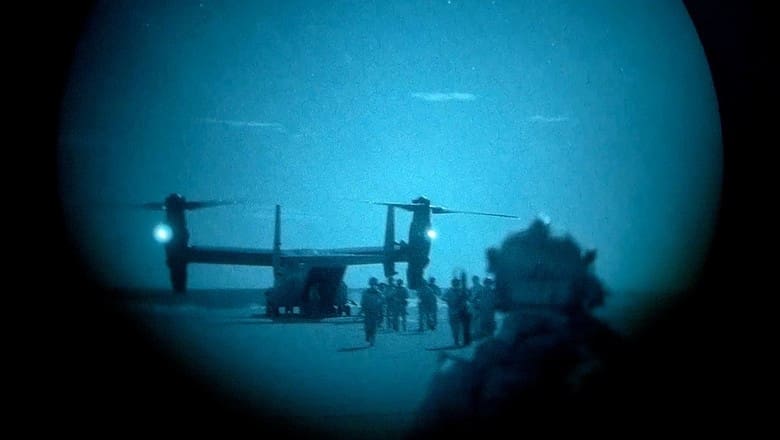
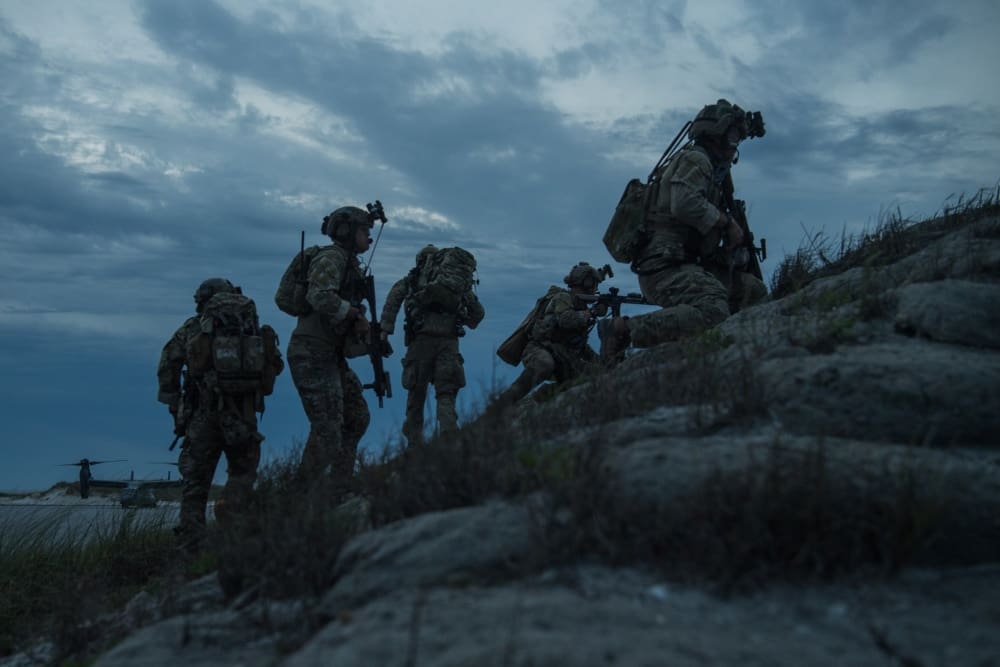
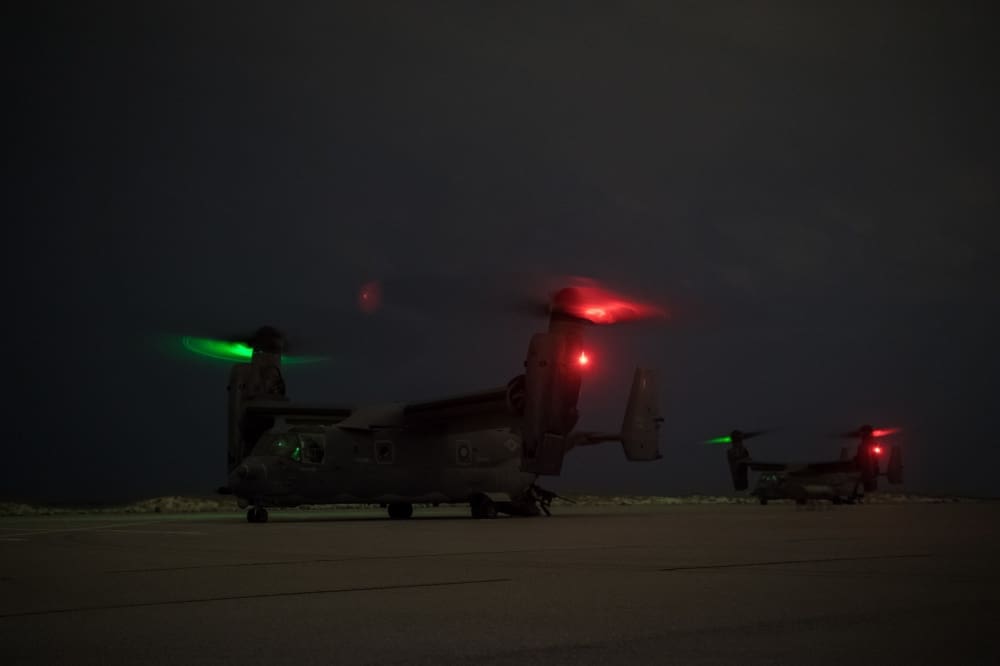
“Our recent participation allowed us to evaluate individual personnel and conduct training in mission planning, tilt-rotor assault, airfield seizure, landing zone establishment and control, terminal attack control, close quarters combat, personnel recovery and battlefield trauma care,” said Jones. “This was important because it gave many junior enlisted and junior officer [Special Tactics] personnel a crucial repetition mission planning with some of the best aviators in AFSOC as well as the opportunity to execute, work through contingencies and lead in a high-fidelity scenario.”

The units not only trained on the necessary skill sets needed to conduct a wide-range of special operations missions, increase lethality and maintain joint warfighting capabilities, but they were also tested on their ability to plan complex missions amidst COVID-19 preventative measures.

“The combat capabilities we are tasked to provide are not changing, but the constraints are different now so we must adapt,” said Jones. “We are adapting how we train, but also adapting how we resource and plan that training over teleconferences and web-based planning applications.”

In addition to reducing in-person mission planning, Special Tactics Squadrons have implemented several techniques to maintain readiness while keeping health of operators at the forefront, including sanitizing equipment, using face coverings when needed, conducting internal evaluations on prioritization of missions, staffing smaller training groups and taking advantage of local training opportunities.

“Stopping all training is not a feasible course of action because the second and third order effects months down the line are far too costly in terms of readiness,” said Jones. “Our squadron commits and deploys personnel operationally year-round, so we focused on ensuring we are still on track to field combat ready forces on time.” 

Special Tactics is U.S. Special Operations Command’s tactical air and ground integration force, and the Air Force’s special operations ground force, leading global access, precision strike, personnel recovery and battlefield surgery operations.

Story by 1st Lt. Alejandra Fontalvo, 24th Special Operations Wing Public Affairs

Photos by Staff Sgt. Rose Gudex

ISAF TACP – From the Battlefield to the Ring, the Mission is to Win

Thursday, April 9th, 2020

OSAN AIR BASE, Republic of Korea —

With piercing blue eyes and unwavering confidence, a man walks into life’s arenas and envisions success. Whether exchanging blows in an octagonal ring or climbing snowy mountains to call in airstrikes, his visions of prosperous outcomes cancels out the deafening noises.

Being distracted can be the difference between life and death, or standing upright versus tumbling down. Knowing the severity of a miscalculated move, his passion and professionalism keeps him in the fight – one that parallels the worlds of MMA and being a U.S. Air Force TACP.

“Being in the ring and being a TACP are very similar,” said Staff Sgt. Mark Bunkley, 607th Air Support Operations Group tactical air control party (TACP). “The feeling I get going into the ring, is the same feeling I felt when I stepped out of my vehicle for the first time in Afghanistan and charged my weapon.”

Bunkley continued to explain the butterflies deep in his stomach from the uncertainty of what’s going to occur, which were flooded over by the trust he had in himself and the troops by his side.

“In combat, you don’t know if you’re going to hit an improvised explosive device or if you’re going to start taking contact,” Bunkley said. “You have to be on your toes the whole time. Same with in the ring, you don’t know what your opponent is planning. All you know is that they’re trying to defeat you.”

Whether Bunkley is observing his opponent from a higher terrain or is face to face with them, his goal is to be victorious. The amount of hours, days, months, and years of training can make or break him.

Life as a TACP

“As a TACP, you have to be able to multi-manage, which is something that doesn’t come naturally,” Bunkley said. “It’s not natural to talk to you, this guy over here and then three different people on the radio. You have to train a lot to obtain the ability to multi-manage in these situations. You have to be able to take information given and act in a quick manner that’ll make sense to get effects on the battlefield.”

His mission is to supply multilateral communication between aircraft and ground troops in the battlespace. He’ll either give the “cleared hot” order to aircraft for close air support or receive a bigger picture of the battlefield from intelligence, surveillance and reconnaissance aircraft.

“The challenges of being a TACP drew me to the career field,” Bunkley said. “I was 18 years old going through the schoolhouse and all I wanted was to do something that would be meaningful and make a big impact on my life and others.”

Going into the initial stage of TACP training, Bunkley doubted whether he would make it through to graduation. He knew in the back of his mind there was an incredibly high attrition rate for special warfare Airmen.

Now after nine years of service, Bunkley has become extremely well versed in his job. He has deployed and has had the opportunity to be an instructor in the special warfare pipeline.

“Sometimes I think to myself, ‘I can’t believe I get paid for this,’” Bunkley said. “We get to call in airstrikes, shoot guns, go skydiving and experience many different combat courses. But with all that comes the sucky moments, like hiking up a snowy mountain to get a good observation point. You can stay in the field for days at a time in extreme heat or cold; it can be wet or dry.  Through the good or the suck, I wouldn’t want to be doing anything else.”

Bunkley’s two worlds meet

In January 2020, the Las Vegas native was one of nine U.S. Air Force special warfare and combat support Airmen to receive an opportunity to visit the Ultimate Fighting Championship Training Center. During this visit he was able to meet and train with some of the top UFC fighters.

“It was totally awesome to get the opportunity to go out to the UFC Training Center and train with Dustin Poirier, Forest Griffin and Stephen Thompson,” Bunkley said. “We were able to hear their stories of past fights, how they came up and some of their challenges they’ve faced.”

The goal from this opportunity was for the U.S. Air Force Recruiting Service to strengthen their partnership with the UFC, which provided the Airmen and fighters a look into each other’s worlds.

“I’m definitely not able to be a top UFC fighter and be a TACP at the same time.” Bunkley said. “Being a MMA fighter is a full-time deal. My plan is to continue fighting amateur and get my experience up and hopefully fight at the pro level in the future.”

Bunkley’s experience in the ring includes three amateur MMA fights, more than 80 jiu jitsu competitions and a couple of Army combative matches.

“I grew up wrestling and didn’t get into MMA until my deployment to Africa,” Bunkley said. “I had a group of friends who trained a few times a week and started to join them. I got addicted to it. I started training once a week, then twice a week and later found myself training almost every day.”

“Took my first fight on a seven hour notice”

“I was back home and a buddy of mine, who helps promote amateur and pro-level fights, noticed me competing in jiu jitsu,” Bunkley said. “He called me and said, ‘Hey man, I know you do jiu jitsu but do you want to fight in the cage tonight.’”

Bunkley surprised and confused, ended up agreeing to the fight.

“I just went for it,” Bunkley said. “I took my first fight on a seven hour notice in Las Vegas on the strip.”

At this point in Bunkley’s experience, he had primarily done ground combatives and only two or three sessions of striking.

“The whole feeling of having my music played while walking up has no comparison,” Bunkley said. “The adrenaline and excitement overcomes you before you start throwing fists. And it’s all very real. These dudes are straight up trying to knock your head off.”

As soon as the bell rang, Bunkley’s nervous feeling faded away. His focus was on how he could defeat his opponent.

“Very quickly, I realized this guy’s striking was a lot better than mine,” Bunkley said. “I was getting hit over and over, but I just kept watching him looking for my edge. When I got the chance, I took him to the mat. It was over. I knew that’s where I had him. From there, every round I took him down.”

The years of high school wrestling and jiu jitsu payed off for Bunkley in this match, which came down to the very end.

“I played my strength,” Bunkley said. “I was tactical about the fight and it all came down to the judge’s decision. Standing there felt like forever for them to announce the winner. And with a unanimous decision, they raised my arm in victory.”

Story by By SSgt Ramon A. Adelan, 51st Fighter Wing Public Affairs

Photos by SrA Denise M. Jenson

In Memoriam – SMSgt Ron Kellerman (USAF, Ret)

Monday, March 30th, 2020

We just received this tragic news from our friends in the Grey Beret Association. What a senseless loss of a great man who served for many years in the Special Tactics community. He will always stand as a shining example for present and future members of Air Force Special Warfare.

May He Rest In Peace

Brothers & Sisters ~

With great sadness I am informing all of you about the recent death of our Special Tactics/SOWT Friend, Teammate, Mentor, Leader and true BROTHER

Ron Kellerman – RHK

RHK was killed on 29 March 2020 at his home on Roatan island in Honduras – Details are still being compiled

Ron was a key leader in SOWT for many years, serving at Fort Bragg, Rhein-Main, and Hurlburt Field. He was a Master Parachutist, Military Freefall Jumpmaster, and recognized communications expert. He was a plank holder Detachment and Team NCOIC with the 10th Combat Weather Squadron, and later served at both the 720th Special Tactics Group and HQ AFSOC. Following a full and illustrious military career, he transitioned to a civilian GS position at AVTEG and served the nation in a highly critical role there for over 15 years until recent retirement just a few months ago.

It’s fair to say he directly influenced everyone in the SOWT specialty. The tributes we are seeing to him are overwhelming. The word “Mentor” is woven in to nearly every single post. I’ve known him since 1986 and I have never heard even one negative word said about him. He was one of the nicest guys you’d ever meet and was loved by all who knew him.

Ron’s influence and expertise extended far beyond the borders of the SOWT community, and his significant accomplishments and contributions to Air Force Special Operations as a whole were recognized in 2005 when he was inducted into the Air Commando Hall of Fame.

His wife Maria is currently in Spain with her Mother – Efforts are in progress to get all the pieces and parts squared away with her movement, security of their house, etc. I have spoken with Maria, and I let her know we loved Ron and we love her – And will do everything we can to assist her however possible.

More to follow as we learn it – This is a very sad day for all of us.

-USAF Grey Beret Association

Special Tactics Airman Involved In Fatal Swim Training Incident Identified

Saturday, March 21st, 2020

HURLBURT FIELD, Fla. – Airman First Class Keigan Baker, 24, an Air Force Special Tactics combat controller assigned to the Special Tactics Training Squadron, 24th Special Operations Wing, was found unresponsive after he went missing during a surface training swim at Naval Support Activity Panama City, Florida, Thursday.

Baker was taking part in the Air Force Combat Dive Course run by Air Education and Training Command’s Special Warfare Training Wing headquartered at Joint Base San Antonio-Lackland.

“This is devastating loss to the entire Special Tactics community,” said U.S. Air Force Col. Matthew Allen, commander of the 24th SOW. “We are very grateful for Keigan’s willingness to serve our nation and vow to honor his memory.”

The agencies that contributed to the search and recovery efforts include: The Naval Diving and Salvage Training Center, U.S. Coast Guard Station Panama City, Bay County Sheriff’s Office, The Florida Fish and Wildlife Conservation Commission and other sister service dive units.

Baker enlisted in the United States Air Force in June 2018 and was recognized as an Honor Graduate at Basic Military Training. After BMT, he immediately entered the two-year combat control training program. Shortly after being assigned to STTS he left to attend the Special Warfare Pre-Dive course at Joint Base San Antonio-Lackland, followed by the Air Force Combat Dive Course at Naval Support Activity Panama City, Florida.

The Air Force Combat Dive Course teaches students diving fundamentals through open circuit self-contained underwater breathing apparatus (SCUBA) training and closed circuit underwater breathing apparatus (UBA) training. Students learn basic diving, advanced rescue diving principles and advanced combat diving fundamentals. Upon completion of the course, students are certified Special Operations Command (SOCOM) combatant divers.

“Keigan’s loss is felt across the entire training wing, where the safety of our trainees is our top priority,” said U.S. Air Force Col. Parks Hughes, commander of the Special Warfare Training Wing. “We are grateful to all the agencies that assisted with the search and recovery effort.  Our thoughts and prayers are with Keigan’s family, friends and teammates.”

The Longview, Washington native was a graduate of Mark Morris High School. He then received his Bachelors of Arts Degree in Business Administration from Eastern Washington University. 

His awards and decorations include: Air Force Good Conduct Medal, Air Force Basic Military Training Honor Graduate Ribbon, The Air Force Training Ribbon and the Global War on Terrorism Service Medal.

As a Special Tactics combat controller apprentice, Baker was training to deploy into combat zones to conduct reconnaissance, global access, precision strike and personnel recovery operations.

The incident is currently under investigation. For further queries on the incident and training please reach out to the Special Warfare Training Wing at SWTW.Public.Affairs@us.af.mil

The AFSOC Air-Ground team in action: How Precision Strike turned the tide of battle against ‘ISIS-K Pentagon’

Saturday, March 7th, 2020

The aircrew of Spooky 41, an AC-130U “Spooky” gunship from the 4th Special Operations Squadron, was awarded medals for their role in a nine-hour mission over Nangarhar, Afghanistan. These medals included two Distinguished Flying Crosses and 12 Air Medals.

Maj. Wright, an Air Force Special Tactics officer, led a seven-man Special Tactics Team (STT) in support of the Army Special Forces company conducting the operation on the ground.

The following is his account of the mission from his perspective on the ground.

Vignette by Maj Jeffrey Wright, 24th Special Operations Wing (Air Force Special Tactics)

I served as the lead joint terminal attack controller and fire support coordinator for a major assault against a notorious Islamic State – Khorisan (ISIS-K) stronghold in Nangarhar, Afghanistan. This operation took place from 1 April through 6 April 2019, and the events below took place on the night of 3-4 April.

It would be inaccurate to describe this target as a village. Rather, this was a military installation literally dug into the side of the mountains, with a single path through which friendly forces could assault. The enemy consolidated their forces here in a warren of interconnected command and control nodes, operations centers, staging areas, and ‘on-base housing’ for ISIS-K leaders. This was no low-level commander and his men: this place was ‘ISIS-K’s Pentagon.’

I am aware of at least three previous assaults against this position that were quickly defeated by virtue of the enemy’s elaborate defense, high degree of training and commitment, and skillful application of firepower against friendly forces.

In my 20-plus years of training and experience in the art of attacking and defending ground objectives, I have seen few more formidable defensive positions – or ones more daunting to attack. I would have to reach for examples like Normandy, Iwo Jima or Hamburger Hill to appropriately convey the degree to which the enemy were prepared and ready for our assault.

The enemy stayed hidden until the assault force drew close. The result was an intense firefight where the lead elements found themselves under fire from not only all sides, but also three dimensions. The enemy had prepared apertures in floors and ceilings, and used barricaded shooters to devastating effect. By using networks of subterranean passageways, the enemy would re-appear behind our forces even after they’d cleared buildings.

Despite our numerical superiority, the situation was dire. From my support-by-fire position, I could do little to help. The safe evacuation of the growing numbers of wounded was up to my Special Tactics teammates in close-range gun battles with the enemy – literally fighting room-to-room. During the fight, the combat controller with the lead element of the assault force reached out for help, and got Spooky41 on the radio.

In short order, I heard the bark of the AC-130U’s guns. I distinctly remember wondering whether they were shooting at the right target, given the speed of their reaction – in 10 years as a JTAC, I’d never seen any kind of fire support as responsive. Sure enough, the first rounds were right on target – a good thing, because the enemy was so close to the assault force.

The enemy now had a problem on their hands. They had probably figured that their proximity to friendlies would mitigate our ability to bring fires to bear on them. Now, they were being heavily attacked by the AC-130U’s weapons.

The precise application of fires allowed friendly forces to establish a defensive perimeter and turn to the task of evacuating the wounded. The terrain prohibited the helicopter from landing, so they performed hoist lifts of the most critical patients. This entailed coming to a hover within machine gun range of dozens, if not hundreds, of enemy fighters keen to press home their advantage.

I watched this unfold with a sense that ‘this is how it happens…this is how aircraft get shot down.’ Yet, the enemy wasn’t able to get a single shot off as the patients were extracted, one by one. The reason there will be no memorials for three separate medical evacuation aircrews is because Spooky 41’s fires were so responsive and so precise that the enemy was effectively neutralized.

At least three members of my team were relaying information on two different nets in an effort to coordinate air and ground movement. Looking back, I am amazed that Spooky41 managed to track everyone so effectively. Even with my high degree of situational awareness as the man on the ground and with my degree of experience, I had a hard time keeping it all straight. At several points they were engaging different targets simultaneously and on different nets. I had one net in each ear – I watched and listened as they delivered salvo after salvo of fires with zero error.

A co-located teammate directed a few F-16 strikes during this time and I worked with Spooky41 to integrate the fires. It felt almost like a weapons school exercise, in that the degree of difficulty was so high and the number of assets so numerous that it far exceeded normal training scenarios.

I don’t know exactly how many of the wounded would have died without immediate medical evacuation, but I can say with certainty that the medical evacuation aircrew would have been among the casualties if it weren’t for the fires provided by Spooky 41.

I personally took fire the following day and the enemy’s expert gunnery put the bullets within arm’s reach. Had they been allowed to get a shot off at the MEDEVAC helicopters, we’d have lost aircraft. But again – after the initial gunshots and IED blast injuries, no further harm befell Americans or our Afghan allies that night.

Spooky 41’s legendary airmanship is the reason why – period.

I resolved that the first thing I would do upon getting back to Bagram was to seek each of them out and thank them for what they did for us that night. I’ve been to far too many memorials and seen far too many folded flags. I didn’t have to do that on this trip because instead of Americans giving their lives for their country that night, Spooky41 made the enemy die for theirs – on time, on target, and in the most complex environment I’ve ever seen – training, or combat.

1st Special Operations Wing Public Affairs

U.S. Air Force photo by SrA Joseph P. Leveille