Phantom Lights

Archive for the ‘Air Force’ Category

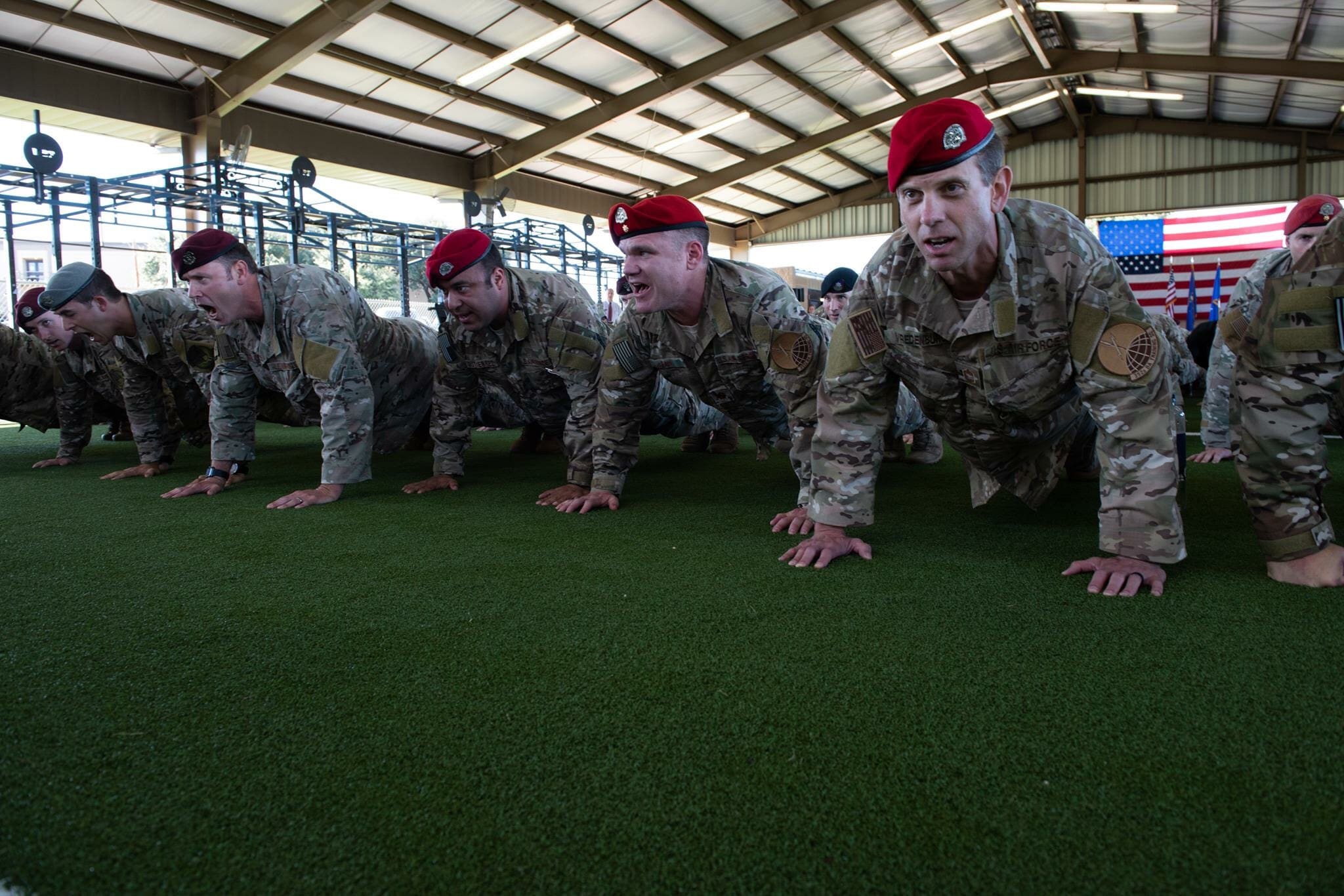
USAF Special Tactics History

Thursday, October 4th, 2018

Since we’ve discussed US Air Force Special Tactics in the past, I thought this video would be a good share.

www.airforcespecialtactics.af.mil

Show Me A Leader

Saturday, September 22nd, 2018

AFSOC showing what it’s all about.

Happy 71st Birthday US Air Force

Tuesday, September 18th, 2018

Thanks for protecting America’s skies!

AFSOC Seeks Information On Personalized Tourniquet Systems Blood Flow Restrictor

Friday, September 14th, 2018

Hurburt Field’s 1st Special Operations Contracting Squadron has issued a Sources Sought Notice, for Market Research purposes only, for potential sources of developing and/or providing equipment similar to the Owens Recovery Science personalized Tourniquet System or an equivalent product.

The equivalent product must be able to control/restrict blood flow to limb for rehabilitation of damaged/weak muscle tissue, include timer controls to automatically maintain pressure or deflate when time has expired, safety alarms to warn of cuff over and under pressurization, and must measure occlusion in mmHg (standard blood pressure measurement: systolic/diastolic pressure).

For full details, visit www.fbo.gov.

Air Force Shooters Get Schooled

Thursday, September 13th, 2018

SMOKY HILL AIR NATIONAL GUARD RANGE, Kan. — Teams of Airmen move in and out of cover while under fire. Less than 15 feet from the enemy, one of the Airman’s primary weapons jams. Without hesitation, in one fluid motion, he slings his rifle, draws his pistol and quickly eliminates the threat.

img_5754.jpg

Airmen from various career fields within the 93d Air Ground Operations (AGOW) traveled to Smoky Hill Air National Guard Range, Kan., to participate in a course that made techniques like this second nature.

The gun course was held Aug. 26-31, which incorporated their specific duties as tactical air control party (TACP) members and security forces personnel and built on their gunfighting skills.

13747FD9-9256-4679-A2E5-C1B360DEE7A7

“The full spectrum operator course bridges the gap between the traditional combat arms instructor training (CATM) and what they’re going to face downrange facing off with enemy combatants,” said Master Sgt. Joe Aton, 93d AGOW joint terminal attack controller (JTAC) program superintendent. “Traditional CATM shooting is shooting at paper (from various positions) while this course will prepare guys for what they’re going to see in real combat.”

Fast transitions to their side arm, organizing their gear so it didn’t hinder their ability to aim or reload their weapons and practicing proper form when firing were all lessons hit hard during the first few days of the course.

226D5341-FC8E-4F3A-AE0F-2C29845B7FE8

A mix of veterans, guard and reserve members whom have varying levels of combat experience run the course, hoping to impart their knowledge to today’s warfighters.

“The mission is to save lives,” said Brian Hartman, chief instructor. “It’s all about the troops that are downrange … there’s rarely a week that goes by that we don’t receive communication from folks who are using material that we’ve given them and it’s helped them gain or maintain the edge in an encounter.

7DB755C0-A9F3-4D1E-A98A-A9B1A241543A

“That’s the greatest feeling in the world; there’s no better job satisfaction than that, but we want to share the wealth,” Hartman added. “It’s about getting that information pushed out there and getting everybody back home safe to see their kids grow up.”

Various air support operations squadrons chose one experienced and new JTAC to participate, while the 820th Base Defense Group chose a new defender and a fire team leader.

96655777-4010-4B05-A5F7-59E4227CE28F

While the course primarily focused on gunfight techniques, it also incorporated exercises that challenged specific job skills. Airmen were challenged on their mindset of the feel and look of a “real-world” gunfight.

“One of the most challenging things we impart to people will be mindset,” said Hartman. “In a real environment a small mistake can magnify massively into a huge mistake which can have severe consequences to you, your teammate and can have a ripple effect on down the line.

9A6C250B-E014-42F0-8762-4B64D074C47D

“That shift in mindset to make everybody treat every single bullet as though it’s a gift,” Hartman added. “Every single minute; every second they step out onto the range should be treated as though they’re in the real environment and could have to use these skills tomorrow. If we knew we’d have to do it tomorrow it might change the way we approach training today.”

Throughout the course, Airmen moved tactically through dangerous crossings where they had to return fire and call in close air support, all while being held accountable for every mistake.

D9033818-8345-4CAC-99AD-28CE7E1055E0

“I think the biggest challenge is breaking bad habits,” said 1st Lt. Andrew Janosick, 20th Air Support Operations Squadron joint terminal attack controller (JTAC). “We haven’t had a lot of dynamic weapons training so breaking out of our comfort zone, learning these dynamic movements and being comfortable behind the weapon (is great).

In addition to revamping the way they shoot during the course, Airmen were encouraged to take the techniques and knowledge back to their squadron and incorporate it.

3EFE905B-C6F9-4542-BB6A-3F746FC6EAD6

“I’m hoping to take back as much information from this course (as I can),” said Tech. Sgt. James Estep, 822d Base Defense Squadron fire team leader. “(Especially) ways to think outside of the box when it comes to shooting and honing your skills. It’s really nice having a wide variety of career fields out here. You’re either learning new things from them or they’re learning from you so it shines a new light on things.”

Like any skill, if you don’t use it, you lose it; which is why Aton also hopes to incorporate this course into the current training AGOW Airmen receive.

“I think this is something that should become one of the foundations for our guys as far as gunfighting which is a basic skill everybody should have,” said Aton. “It’s also a perishable skill so it should be something we do annually.”

Story and photos by Senior Airman Janiqua P. Robinson, 23d Wing Public Affairs

The Air Force Is Teaching Airmen How To Wear The ACU

Sunday, September 9th, 2018

It doesn’t matter how much the Air Force refers to their recently adopted Army Combat Uniform as “OCPs” (for the camouflage pattern), the tags will still say “Army Combat Uniform”.

As the 1 October roll out date nears, the Air Force Personnel Center has started releasing guidance to the force on how to wear the ACU. Despite wearing Patrol Caps with the BDU, DCU and ABU, Airmen have apparently forgotten how to wear it. And oh yeah, many are unhappy ballcaps aren’t authorized.

Whoo! All these questions about the new Operational Camouflage Uniform! AFI 36-2903 does the heavy lifting for you, but sometimes you just want to hear it from the source, like us!

First up in our OCP series: The Patrol Cap.

Airmen will wear the patrol cap straight on the head so that the CAP BAND creates a straight line around the head, parallel to the ground. Officer rank is Spice Brown – EXCEPT for first lieutenants and lieutenant colonels who are required to wear black rank (starting next April). Chaplains may wear the chaplain occupational badge sewn-on and centered ½ inch above the visor.

WHEN can Airmen wear the OCP patrol cap? Starting Oct. 1, but of course, if you wear the cap, you should be wearing the entire OCP uniform. No mixing and matching ABUs, BDUs and OCPs!

WHERE do you get OCPs if you want to wear them Oct. 1? First – check with your leadership. They may want to wait until they have your unit/org patches available before they authorize wear of OCPs. Otherwise, Airmen with previously-owned, serviceable OCPs (not multi-cams) can wear them with current patches and badges.

$$ What if you don’t want to buy OCPs just yet? That’s ok, too. The mandatory wear date for all Airmen to wear the OCP isn’t until April 1, 2021, so plenty of time to get your new uniform ready! Visit our website for more info at www.afpc.af.mil/Career-Management/Dress-and-Appearance

Air Force Battlefield Airmen To Be Renamed Special Warfare

Wednesday, September 5th, 2018

While there are lots of changes coming to the US Air Force’s ground forces, known for the past 15 years as “Battlefield Airmen”, the most recognizable, is a name change. They will soon be referred to as “Special Warfare”.


Yes, it’s going to be confusing in the joint arena. However, don’t forget that the Army has run the U.S. Army John F. Kennedy Special Warfare Center and School (SWCS) since 1956, so confusion may have ensued on occasion even before referring to two operational SOF elements (Navy and Air Force) by the same moniker.

IMG_7394

The Air Staff has yet to issue definitive guidance on the renaming, but the training pipeline has already begun to refer to components of the program as Special Warfare rather than BA.

There are still questions about which career fields will be included in the new community. Currently, it includes Combat Controllers, Pararescue, Special Operations Weather and Tactical Air Control Party. However, due to additional physical fitness and medical standards, SERE and EOD candidates are recruited and groomed before enlistment along with the SW candidates (more on this below).

Also, there’s discussion Special Tactics Officers may become Specal Warfare Officers (once again, adding to confusion over Staff Weather Officers and Surface Warfare Officers, so context is everything). This also makes one wonder if the term “Special Tactics” will go away altogether, as major moves are afoot to reamalgamate CROs (who will become STOs/SWOs) and PJs into Air Force Special Operations Command, creating new Special Tactics Squadrons.

Another big change, and major improvement, which began a little over a year ago, is how Special Warfare recruits are prepared for their enlistments. While in the Delayed Entry Program, Recruits must participate in Special Warfare Development conducted by contractor T3I Services. Developers are retired Special Warfare Airmen who bring “been-there, done-that” experience to their charges, encouraging them through mentorship, instruction, challenging workout schedules and administration of the Physical Ability and Stamina Test.

In addition to the creation of a Prepatory Course between Basic Military Training School and their current selection courses, there is also discussion that how SW candidates are selected will change to a system more in common with the US Army’s 18X SF candidate program. Under this concept, SW candidates would be assessed and then assigned one of four Air Force Specialty Code training pipelines (CCT, PJ, SOWT and TACP) rather than choosing a careerfield on their own.

While there are numerous other moves underway, these are the most pressing. Already, the ST community is far and away larger and different than it was pre-GWOT. It’s grown up. But within five years, it will be something altogether different.

What is The Air National Guard Trying To Say?

Sunday, August 12th, 2018

This Air National Guard photo by TSgt Daniel Ter Haar, was intended to inform Guard members about the upcoming switch from the Airman Battle Uniform in Digital Tiger Stripe to the Army Combat Uniform in the Operational Camouflage Pattern. If a picture tells a thousand words, this one didn’t transmit the intended message.