XC3 Weaponlight

Archive for the ‘Air Force’ Category

Civil Air Patrol Continues Auxiliary Efforts for the Total Force

Monday, August 23rd, 2021

In 2015, the Air Force Doctrine Volume 2 “Leadership” was updated to include the Civil Air Patrol as an official Air Force auxiliary, and part of the Total Force.

“All Airmen, including the members of the Civil Air Patrol, are directly responsible for acquiring, delivering, supporting, launching and driving Airpower,” said Air Force Chief of Staff Gen. CQ Brown, Jr. “The Civil Air Patrol has a critical role in attracting and developing innovative individuals who have an interest in science, technology, engineering and mathematics who can help reshape the design of the Air Force in line with the ‘Accelerate Change or Lose’ Action Orders.”

The doctrine lists the active duty Air Force, Air National Guard, Air Force Reserve, retirees, contractors and other groups supporting the Air Force mission as other parts of the Total Force. When acting on behalf of the Air Force, the Civil Air Patrol is aligned under First Air Force.

Since 2020, the auxiliary has logged more than 365 days of continuous support during the COVID-19 pandemic. This included flying test kits, vaccines and critical protective equipment to hospitals, which was the largest coordinated effort since World War II.

The inclusion of the Civil Air Patrol allows for approximately 59,000 volunteers to support non-combat related Air Force missions within the United States. They also act as ambassadors to the Air Force to communities that may not have consistent military exposure. 

“CAP is in over 1,400 communities across the United States and its territories,” said John Russo, the assistant deputy for the Air Force Auxiliary. “In many cases, CAP may be the closest Air Force-associated unit a person interested in aviation and the military comes in contact with.”

The auxiliary members conduct 90% of the inland search and rescue missions in the U.S. tasked by the Air Force Rescue Coordination Center and other agencies, and has nearly 7,000 aircrew members and 33,00 responders trained to the Federal Emergency Management Agency’s standards.

“The Civil Air Patrol bolsters many of the Air Force homeland operations,” Russo said. “The auxiliary flies Air Force-assigned missions at about 1/40th the cost of an active unit. For example, during every hurricane response, the program saves the Air Force $8 million. They are also recognized by the Air Rescue Coordination Center with about 100 lives saved each year.”

The Civil Air Patrol provides intercept training, light cargo transport and aerial imagery for disaster damage assessments to support local, state and national agencies, along with disaster relief.

Another example of how the Air Force Auxiliary provides support to the United States is its ability to be an avenue for a diversity of cadets and students interested in pursuing aviation and STEM-education and careers.

“Civil Air Patrol has cadets as young as 12 years old, and gives youth the chance to learn more about the military and service to their community,” Russo explained. “The Civil Air Patrol has squadrons located in underserved areas, exposing more diverse youth to the opportunities the Total Force offers.”

The Civil Air Patrol provides an Air Force-style organization with values, structure, and focus on aerospace. For young Americans seeking to learn about service, to give back to their community, and explore more about aviation or the military, the Civil Air Patrol is a great opportunity to prepare them for service in the Air Force, Russo said.

Eastern National Robot Rodeo Showcases EOD Emerging Capabilities

Saturday, August 21st, 2021

INDIAN HEAD, Md. (AFNS) —

Explosive ordnance disposal and bomb squad experts in the Department of Defense and civilian sector tested the latest EOD robotics and emerging capabilities during the Eastern National Robot Rodeo and Capabilities exercise Aug. 2-6.

The Robot Rodeo, in its fifth year, was back after more than a year-long hiatus due to the COVID-19 pandemic.

The event, conducted at the Naval Surface Warfare Center Indian Head Division and town of Indian Head, brought together experienced EOD operators and public safety bomb squads to evaluate EOD capabilities in real-world operating environments and provide real-time feedback to industry partners.

“Everyone – sponsors, vendors and participants – was excited about the 2021 ENRR-CAPEX, especially after having to cancel the 2020 event due to the COVID pandemic,” said Dr. John Olive, deputy director of the Air Force Civil Engineer Center’s EOD Division and Air Force EOD subject matter expert.

The rodeo is extremely important to AFCEC, which is responsible for central procurement of equipment for the Department of the Air Force’s 1,700 Total Force operators at 84 locations around the globe.

“The rodeo showcases technologies under development from various industry vendors and has a direct impact in putting the absolute best tools in the hands of our EOD and public safety bomb squad operators, and international partners,” he said.

While all CE missions are critical to the Department of the Air Force and mission platforms, EOD is perhaps the most dangerous.

“Having these technologies that give our operators the ability to do more standoff investigation, interrogation and mitigation of hazards, keeps our warfighters out of harm’s range and enables them to do things more efficiently,” said Col. John Tryon, AFCEC Detachment 1 commander.

AFCEC in general is always looking to push the envelope and do things smarter and more efficiently, Tryon said, with EOD in particular always being on the cutting edge.

“With new threats it won’t be one or two unexploded ordnance we’ll be dealing with in future, it will be hundreds or thousands of UXOs and we have a limited number of EOD operators. We need technologies that we can leverage, that are force multipliers, so we can achieve the result that we need,” Tryon said.

In addition to the equipment showcase, ENRR included a multi-day, multi-event technical competition to include potential real-world scenarios like a swarm of unmanned aerial systems employing explosive devices, and clearance of a homemade explosive laboratory, while integrating emerging technologies such as advanced radio graphics and multi-shot disruption off from existing robotic platforms.

“Participating multi-agency teams were given one hour to train on new equipment, then given three hours to complete a scenario that challenges that new technology,” Olive said. “Operators provided vendors direct feedback, which shapes future development of that technology in-line with the Chief of Staff of the Air Force’s accelerate change or lose initiative.”

The rodeo directly allows AFCEC to build relationships with industry partners, public safety bomb squads and various other agencies, Olive added, to shape future tech development and “enable us to better support our nine core mission areas for the Air Force EOD program.”

“Getting military and civilian bomb techs together is vital to the overall success of defeating hazardous devices,” said T.J. Brantley, a member of Plano Police Department’s Bomb Squad in Texas. “You get the opportunity to talk about different tactics and procedures other teams are using. Meeting with vendors and getting hands-on training with the latest and greatest technology available helps us do our job safely. Hands down (Robot Rodeo) was one of the best training opportunities I have been to.”

During the event’s distinguished visitor day, Brig. Gen. Bill Kale, director of Air Force Civil Engineers, said he appreciated the opportunity to meet with industry.

“I think it’s very important, as civil engineers, that we stay on the cutting edge of technology,” Kale said. “We need to make sure that whatever we decide to procure, or what we’re looking at, that we can use it or innovate it to improve our readiness.

“We have quite a challenge ahead of us with near peer competition with some of our adversaries and we need to use every tool in our toolkit to make sure we make it challenging for them to even think about trying to come after the United States or our interests,” Kale said.

The Air Force Civil Engineer Center’s Readiness Directorate was one of four sponsors for the event, but it was a joint effort with Naval Surface Warfare Center Indian Head Division and the town of Indian Head as hosts, and the United States Bomb Technicians Association as a core partner.

“We very much appreciate the NSWC hosting ENRR and the opportunity to come together with the different vendors that provide the robots, sensors and different technologies that EOD teams can employ now and in the future, and for them to interact with our Air Force and joint partner warfighters,” Tryon said. “Actually getting some stick time and providing direct feedback with the vendors is valuable for them not only on how to adapt their technologies, but also for us being able to see what we want to add to our arsenal going forward.

By Debbie Aragon, Air Force Installation and Mission Support Center Public Affairs

Special Tactics Airmen augment Haiti earthquake humanitarian relief efforts

Thursday, August 19th, 2021

HURLBURT FIELD, Fla.– Special Tactics Airmen assigned to the 24th Special Operations Wing are currently responding to a request to augment humanitarian aid efforts in Haiti following a 7.2 magnitude earthquake on Aug. 14.

            The Special Tactics Airmen responding to the relief efforts will be working with Joint Task Force-Haiti under Rear Admiral Keith Davids, the commander of U.S. Special Operations Command South. While in country, the ST Airmen will be responsible for conducting various airfield surveys to determine suitability for bringing in humanitarian aid via airlift. Special Tactics teams are also postured and ready to establish airfield operations and conduct air traffic control if necessary.

                            “Our Special Tactics Airmen are trained and ready for a number of humanitarian missions that we may be called upon to accomplish,” said Col. Jason Daniels, 24th Special Operations Wing commander. “Our teams are looking forward to providing assistance to the people of Haiti while working alongside our joint teammates in U.S. Southern Command in support of USAID’s Bureau for Humanitarian Assistance.” 

            In recent years, Special Tactics Airmen have responded to several natural disasters including Hurricanes Eta and Iota in Honduras, Hurricane Michael in Florida and Hurricane Katrina in Louisiana.

            Special Tactics Airmen fall under Air Force Special Operations Command and U.S. Special Operations Command and are trained to execute global access, precision strike, personnel recovery and battlefield surgery operations across the spectrum of conflict. Special Tactics operators are experts in air-ground integration and have the ability to assess, open, and control major airfields to clandestine dirt strips in any environment.

            More information will be released as it becomes available.

For more information on Air Force Special Tactics visit our website, www.airforcespecialtactics.af.mil

Wanted: Innovative Ideas for Spark Tank 2022

Saturday, August 14th, 2021

WRIGHT-PATTERSON AIR FORCE BASE, Ohio (AFNS) —

Spark Tank 2022, a Department of the Air Force annual competition in which Airmen and Guardians pitch innovative solutions to operational problems, will accept submissions in early August 2021.

Spark Tank is co-sponsored by the Deputy Under Secretary of the Air Force for Management (SAF/MG) and AFWERX. “Spark Tank is a crucial part of the Air Force’s relentless search for innovative technology,” said Col. Nathan Diller, AFWERX director. “The operational skills and knowledge our Airmen and Guardians possess give them the expertise not only to identify problems unique to their jobs, but also solutions.”

This is the fifth year of the Spark Tank competition. Spark Tank 2021 drew more than 300 submissions with five finalists. Master Sgt. Justin Bauer from the 355th Fighter Wing at Davis-Monthan Air Force Base, Arizona, was awarded the Spark Tank trophy for his idea, “Innovative Approach to C-130 Wheel Repair.” Previous winners and finalists have offered improvements from smart weapons loading checklists to robotic process automation for personnel records and everything in-between.

As a bonus, SAF/MG and AFWERX are introducing Spark Tank innovation awards to recognize innovative solutions proposed and developed by Airmen and Guardians across the enterprise. The awards are designed to encourage innovation development, talent retention, and speed up adopting emerging, game-changing technologies that impact the Air and Space Force.

“Spark Tank offers a great opportunity to highlight the innovative spirit of our Airmen and Guardians,” said William Gautier, Spark Tank director. “These risk-takers, idea makers, and entrepreneurs reject the status quo, instead they seek inventive answers that improve how our jobs are done.”

To enable participation, interested members will submit ideas through the recently launched Guardian and Airmen Innovation Network portal. GAIN allows personnel to share ideas, critique submissions, and vote on the most promising solutions.

Innovation submissions are due via GAIN no later than close of business, Oct. 1, 2021. Finalists will be announced in January 2022. The pitch-finals competition will take place on March 4, 2022, at the Air Force Association’s Aerospace Warfare Symposium in Orlando, Florida.

More information will be forthcoming at www.afwerx.af.mil/spark-tank. Ideas can be submitted to the Spark Tank competition at afwerx.af.mil.

Air Force Releases Additional Dress and Appearance Changes

Wednesday, August 11th, 2021

WASHINGTON (AFNS) —

New dress and appearance updates will soon be released following feedback, testing from Airmen and reviews conducted as a part of the 2020 Air Force Uniform Board.

“We remain committed to maintaining an iterative approach with our dress and appearance standards,” said Lt. Gen. Brian Kelly, Air Force deputy chief of staff for manpower, personnel and services. “During this most recent review we approved several updates fully aligned with our Air Force standards and culture that maintain our focus on warfighting while providing options to meet many of the needs of our Airmen.”

2020 Air Force Uniform Board initiatives

Uniform Board changes will be effective upon publication in Air Force Instruction 36-2903, Dress and Appearance of Air Force Personnel, which is expected to publish in early October 2021. Below are examples of a few changes to the updated AFI:

– Male bulk hair standards increase from 2 inches to 2.5 inches

– Cosmetic tattooing on the scalp is authorized for men

– The size of hair accessories increases from 1 inch to 2 inches for females

– Hosiery is optional for females with any combination of the dress uniform

– Transparent piercing spacers are authorized

– Wing commanders may authorize the local wear of approved OCP morale patches on Fridays or during special events

Furthermore, the board conducted a review of several policy items that previously mandated specific behavior based on restrictions. In some cases, the board recommended removing the restrictive language to entrust commanders and Airmen to understand and adopt proper behavior based on their situation and circumstances.

“We trust our Airmen, (noncommissioned officers) and commanders with incredible resources and significant responsibilities and we’ll need to do so even more as we prepare for future conflicts,” Kelly said. “We likewise trust they can figure out what it takes and means to maintain standards without specifying exact behavior in every situation.”

Examples of guidance removed in the future AFI release:

– When walking in uniform, members may not use a cell phone or drink water

– Members may not place hands in their pockets when walking or standing in uniform

Specific details about the initiatives listed above, as well as additional changes, will be available upon AFI publication. In total, more than 30 recommendations from the Air Force Uniform Board were approved for implementation to the field.

Additional Uniform Item Improvements

The following uniform item improvements were made considering feedback from the field and multiple uniform fit tests. These items will be released for issue and/or purchase as the design and development process is completed.

Men’s Blue Shirt and Women’s Blouse

The improved men’s blue shirt and women’s blouse will utilize a new stain-resistant, wrinkle-resistant and moisture-wicking fabric with a herringbone weave in the current Air Force blue shade.

The men’s shirt improvements include a tapered and lengthened shirt body with a reengineered armhole and shoulder. The women’s tuck-in style blouse and semi-form-fitting blouse improvements include a lengthened shirt body, realigned buttons, a reengineered armhole, and a redesign of the neckline and collar.

In addition, the updated maternity blouse will include a redesigned neckline and collar for improved fit and comfort. The back pleat of the previously-designed blouse was replaced with darts for better shape and fit. It has realigned buttons and a lengthened shirt body for accommodation through all trimesters.

The improved men’s long-sleeve blue shirt is expected to be available August 2021. The improved men’s short-sleeve blue shirt and women’s tuck-in style blouse (long and short-sleeve) are expected to be available at the end of October 2021. The improved maternity blouse is expected to be available October 2021 and the updated semi-form fitting blouse is expected to be available in January 2022.

Improved Hot Weather Combat Uniform

The improved hot weather combat uniform is a variant of the operational camouflage pattern uniform aimed at reducing layers of fabric in order to be lighter in weight, more breathable and quick drying, providing safer flame protection that does not melt or drip. It was designed to improve performance, survivability, lethality and safety in extreme hot and wet-weather environments. The improved hot weather combat uniform is expected to be available to Airmen in October 2021.

Extreme Cold Weather Parka

Generation III Level 7 parkas, commonly referred to as extreme cold weather parkas, are expected to be available for personal purchase through AAFES online and in select AAFES stores this winter season. Previously, the parka was not available for personal purchase and was primarily distributed as organization clothing and equipment at northern tier or extreme cold weather base locations.

Men’s Blue Trousers and Women’s Blue Slacks

Men’s blue trouser improvements include an adjustment to the pocket design to enhance the fit of the trousers and reduce additional alterations.

The women’s blue slacks improvement includes a redesigned and lower waistband, removal of the front darts to create a flat front, and a shortened rise to address fit concerns. Additionally, the pant legs will be straight cut as opposed to the previously tapered fit.

The updated trousers and slacks are expected to be available in May 2022.

Women’s Mess Dress Slacks

The new women’s mess dress slacks will provide Air Force women an option in addition to the current mess dress skirt and men’s mess dress trousers. The slacks will be a female-fit version of the male mess dress trousers with design adjustments required to fit female measurements. Slacks can be worn with the current mess dress jacket. Women’s mess dress slacks are expected to be available in August 2022.

Physical Training Gear

Modernized physical training gear will feature a revised fit and look with updated materials and fabric. The fabric includes soft, quick drying, antimicrobial technology that helps with moisture and odor control. The jacket, pants, and men’s and women’s t-shirts will be available along with new running and all-purpose shorts. The physical training gear is expected to be available in October 2022 with a four-year transition period for mandatory wear.

Space Force Guardians will follow the updates above except where Space Force specific guidance already exists. For example, in accordance with SPFGM2020-36-01, USSF personnel are not authorized to wear morale patches. The Space Force held its inaugural uniform board in March and is currently developing comprehensive service-specific grooming and uniform policies with a targeted release late 2021.

Secretary of the Air Force Public Affairs

U.S. Air Force graphics by SSgt Elora J. McCutcheon

USAF EOD Tests New Imaging Technology

Wednesday, August 11th, 2021

EGLIN AIR FORCE BASE, Fla. (AFNS) —

Local explosive ordnance disposal units received and were trained on a new and upgraded portable imaging X-ray system at Eglin Air Force Base July 22.

The Vidisco Guardian 12 Digital Radiographic X-ray system enhances EOD’s capabilities by making it easier to view the internal contents of suspicious, improvised explosive devices and unexploded ordnance.

The Air Force Civil Engineer Center recently delivered the first systems to Hill AFB, Utah and will distribute the remaining systems in conjunction with training events over the next five years. EOD flights from Eglin AFB, Hurlburt Field and Tyndall AFB received the new systems and attended the training.

“The digital X-ray technology will make a world of difference for our EOD forces,” said Tech. Sgt. Quentin Tubbs, 436th Civil Engineer Squadron EOD technician at Dover AFB, Delaware. “It will increase the reliability of capturing clear and concise images and reduce the amount of time we spend next to hazardous devices.”

The Guardian 12 replaces three commercial off-the-shelf systems serving as interim solutions until the new system is fully deployed. This includes a large system weighing over 99 pounds, that primarily serves as base support and requires a wired connection to operate; an X-ray that serves as the wireless mobility system; and a third system that has been obsolete for several years.

“The new system essentially consolidates all the capabilities of previous systems,” said Dave Hodgson, AFCEC EOD logistics lead. “It meets all of the requirements necessary to support the mission.”

Compared to the analog technology of the previous systems, the digital X-ray technology provides a much sharper and clearer image, making it easier to detect explosives such as IEDs or unexploded ordnance, Tubbs said.

Featuring both wired and wireless technology, the new technology combines the capabilities of the off-the-shelf systems currently in use. The wireless capabilities enable remote image capture and can reduce the amount of time Airmen spend going down range, Tubbs said.

“With the older systems, every time we took an image, we had to go downrange and retrieve a panel, bring it back and run it through a machine to verify if the X-ray worked. Many times, we thought a good image was captured only to realize later there was something dense in the way blocking the image.”

The new digital radiographic X-ray system also includes features to improve resiliency. It is lightweight, weighing less than 22 pounds and housed in a compact carrying case for easy mobilization for fly-away missions. The system is also designed to work in extreme temperatures, ranging from minus 14 to 140 degrees Fahrenheit.

Obtaining the new systems was a collaborative effort between AFCEC and the Air Force Installation Contracting Center’s 772nd Enterprise Sourcing Squadron—both part of the Air Force Installation and Mission Support Center enterprise. The $30 million acquisition will put 331 new systems in the hands of EOD Airmen by 2026.

“We’re committed to ensuring our EOD forces have the training, equipment and resources required to accomplish their duties in garrison and downrange,” Hodgson said. “The new systems will allow Airmen to conduct missions safely, rapidly and effectively.”

Story by Emily Mifsud

Photos by Samuel King Jr

An Inside Look at F-35 Pilot Helmet Fittings

Tuesday, August 10th, 2021

HILL AIR FORCE BASE, Utah (AFNS) —

Reservists in the 419th Operations Support Squadron play a crucial role to ensure the safety of pilots assigned to the 419th Fighter Wing, the Air Force Reserve’s only combat-capable F-35 Lightning II unit.

“We are responsible for maintaining and repairing pilot gear to ensure everything is in proper working condition,” said Staff Sgt. AJ Arteaga, 419th OSS aircrew flight equipment Reservist. “That also includes their helmet.”

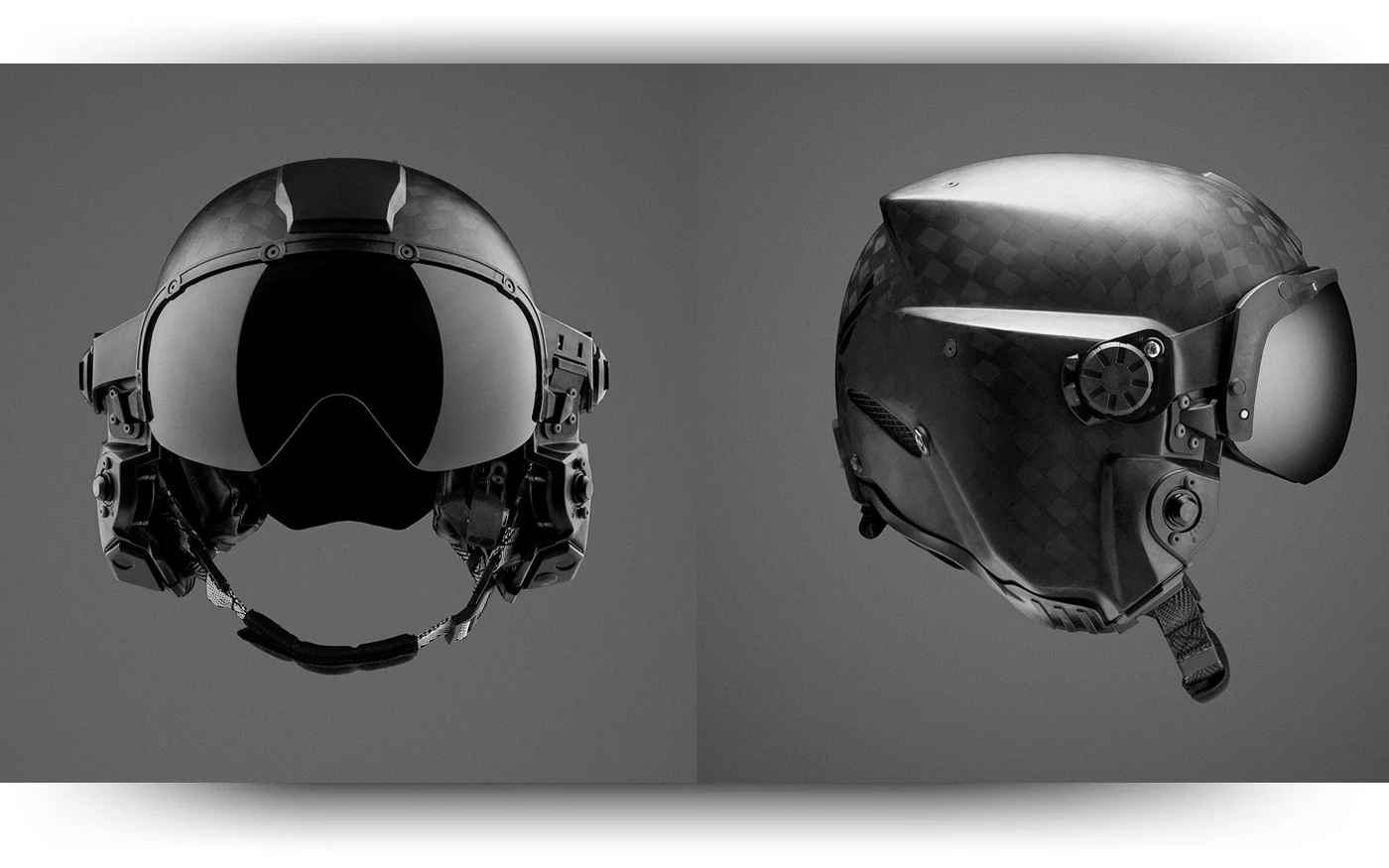
Every helmet is custom-fitted to its pilot during a two-day process at a fit facility. To begin assembly of the helmet, pilots have their heads measured and scanned to secure the perfect fit.

Once assembled, pilots need to have the optics aligned using a pupilometer, which measures the distance between their pupils within two millimeters of its center, so pilots see a single image on the helmet-mounted display.

On the display, pilots are able to view mission-critical information and obtain enhanced situational awareness of the battlefield simply by moving their head. The helmet gives pilots a 360-degree view of the F-35’s external environment without needing to tip the jet.

“The pilot can look down through a portion of their wing and see what’s below,” said Tech. Sgt. William Vass, 419th OSS. “When they look toward the cameras embedded on the F-35 that image projects onto their helmet display.”

The helmet’s innovative technology and precise fit require routine maintenance so pilots can complete their mission. In addition to pre- and post-flight fittings, the helmet is inspected every 105 days and has a 120-day fit check to ensure its functionality and safety.

“Pilots come in and put on all their gear so we can double-check to make sure everything fits properly and without issue,” Arteaga said. “Small things such as a new haircut or a couple of pounds gained could cause the helmet to not fit correctly.”

Mask adjustments are also included within the helmet fitting. Pilots are sent to an oxygen tester where aircrew flight equipment technicians can identify any leaks around the mask that could prevent adequate oxygen flow.

“The next part is to ensure there is a proper distance between the mask and the visor,” Arteaga said. “We have to make sure when the pilot moves or talks, the mask doesn’t hit the visor. If it’s too close, it will bend the visor and distort the display image.”

Reservists in the AFE shop are an integral part of the helmet-fitting process and maintenance intervals. They verify it remains as precise as possible to guarantee the safety of the 27 pilots in the 419th FW. The work is involved and in-depth, but essential to providing a seamless interaction between the helmets’ advanced capabilities and the exacting skills of the pilot wearing it.

By Senior Airman Erica Webster, 419th Fighter Wing Public Affairs

AFSOC WEPTAC 2021: Staying Relevant for Future Fights

Monday, August 9th, 2021

Air Commandos from Air Force Special Operations Command hosted a weapons and tactics conference here, July 6 – 16, 2021.

This annual conference was a gathering of special operations forces and combat air force’s tactical experts to meet and identify and improve tactics, techniques and procedures with the purpose of conducting Mission Area Working Groups (MAWGs) and the annual Tactical Review Board (TRB) to bolster AFSOC’s Tactics Development and Improvement Program (TDIP).

The theme for the 2021 WEPTAC conference is “Competing Now and in the Next Conflict – SOF Operations in the Joint Fight.” Operators and tacticians identified potential deficiencies and worked to develop TTP’s for future fights while advancing AFSOC’s creativity and capability.



“This is a great opportunity for teammates to come together and discuss how we can and must help AFSOC change for any future challenges,” said Maj. Gen. Eric Hill, deputy commander of AFSOC. “Our command has faced various inflection points in its history, and WEPTAC is a forum where some of our best minds develop ways for us to stay relevant in the fight.”

Since 9/11, AFSOC has largely focused on a counter-violent extremist organizations fight, but this year’s WEPTAC shifted the conversation towards implementing new strategies in the peer and near-peer adversarial competition.

“If history has shown us anything, change is inevitable,” Hill said. “I know that each one of you here will do your part to help push the conversation and develop changes needed far into the future.”

After Hill’s opening remarks, conference attendees broke out into the MAWGs, which were built using a combination of subject matter experts from operations and intelligence, that had industry knowledge and air and ground tactical expertise, with the goal of working through potential future problem sets.

The TRB’s addressed specific tactical improvement ideas in both mobility and strike functional areas, and combined with the MAWG’s, worked towards helping push forward innovative thoughts.

The conference was an opportunity for Airmen to focus on joint MAWG’s that provide relevant near-peer planning in line with the NDS and AFSOC strategic guidance. WEPTAC is aligned with generating advantage in competition by enabling the joint force to respond to crisis and to win.

“Our human capital is our ultimate weapon,” Hill said. “The ideas and tactics we come up with during WEPTAC will make sure that our Airmen remain the competitive advantage.”

By Senior Airman Brandon Esau, AFSOC Public Affairs