Streamlight TLR VIR II

Archive for the ‘Air Force’ Category

Teaching the Commando New Tricks

Friday, September 17th, 2021

HURLBURT FIELD, Fla. —

The C-130J is an incredibly versatile aircraft, and since it’s creation, it’s landed on rough fields, in arctic locations and even an aircraft carrier Yet, it cannot land on water, which covers about 71% of the planet. As national strategic objectives shift focus to littoral regions, Air Force Special Operations Command is advancing new approaches to expand the multi-mission platform’s runway independence and expeditionary capacity.

In partnership with the Air Force Research Lab’s Strategic Development Planning and Experimentation (AFRL-SDPE) directorate, AFSOC is developing an MC-130J Commando II Amphibious Capability (MAC) to improve the platform’s support of seaborne special operations. “The development of the MAC capability is the culmination of multiple lines of effort,” said Lt Col Josh Trantham, AFSOC Science, Systems, Technology, & Innovation (SST&I) Deputy Division Chief. “This capability allows the Air Force to increase placement and access for infiltration, exfiltration, and personnel recovery, as well as providing enhanced logistical capabilities for future competition and conflict.”

The development of a removable amphibious float modification for an MC-130J would enable “runway independent” operations, which, according to Trantham, would extend the global reach and survivability of the aircraft and Air Commandos. “Seaborne operations offer nearly unlimited water landing zones providing significant flexibility for the Joint Force,” Trantham said.

Utilizing the MAC capability may provide unlimited operational access to waterways to distribute forces if land assets are compromised. 

“MAC is vital to future success because it will allow for the dispersal of assets within a Joint Operations Area,” said Maj Kristen Cepak, AFSOC Technology Transition Branch Chief. “This diaspora complicates targeting of the aircraft by our adversaries and limits aircraft vulnerability at fixed locations.”

A task force of industry partners are closely collaborating with AFSOC and AFRL-SDPE to bring the vision to life. A five-phase rapid prototyping schedule will lead to an operational capability demonstration in only 17 months while de-risking the concept for a future potential MAC program of record that could field MAC for MC-130Js but also potentially field a similar amphibious capability for other C-130 variants with only minor variations.

AFSOC and private sector counterparts are currently testing MAC prototypes through digital design, virtual reality modeling (VR), and computer-aided designs (CAD) in a virtual setting known as the Digital Proving Ground (DPG), paving the way for digital simulation, testing, and the use of advanced manufacturing for rapid prototyping and physical prototype testing.

According to Trantham and Cepak, the DPG can deliver mission review, aircraft system analysis, design ideation, engineering risk-reduction, virtual reality, concept imagery, feasibility studies, and other deliverables.

“Being able to experiment with existing technology to evaluate design tradeoffs and test a new system before ever bending metal is a game-changer,” Cepak said. “AFSOC is evolving and experimenting in a smart way to reduce technical risk and deliver capability to the field more rapidly and efficiently than before.”

According to Trantham, while the MAC project demonstrates rapid capability development for AFSOC, the Air Force and the Total Force will also benefit.

“We believe MAC will be able to be used by our sister services, allies, and partners on various C-130 platforms,” he said. “Further, expanding the operational use of an amphibious aircraft alongside other innovative tools will provide even more complex dilemmas in future battlespaces for our strategic competitors.”

By SSgt Brandon Esau, AFSOC Public Affairs

Vice Chief of Staff of the Air Force Visits ShOC-N Battlelab

Thursday, September 16th, 2021

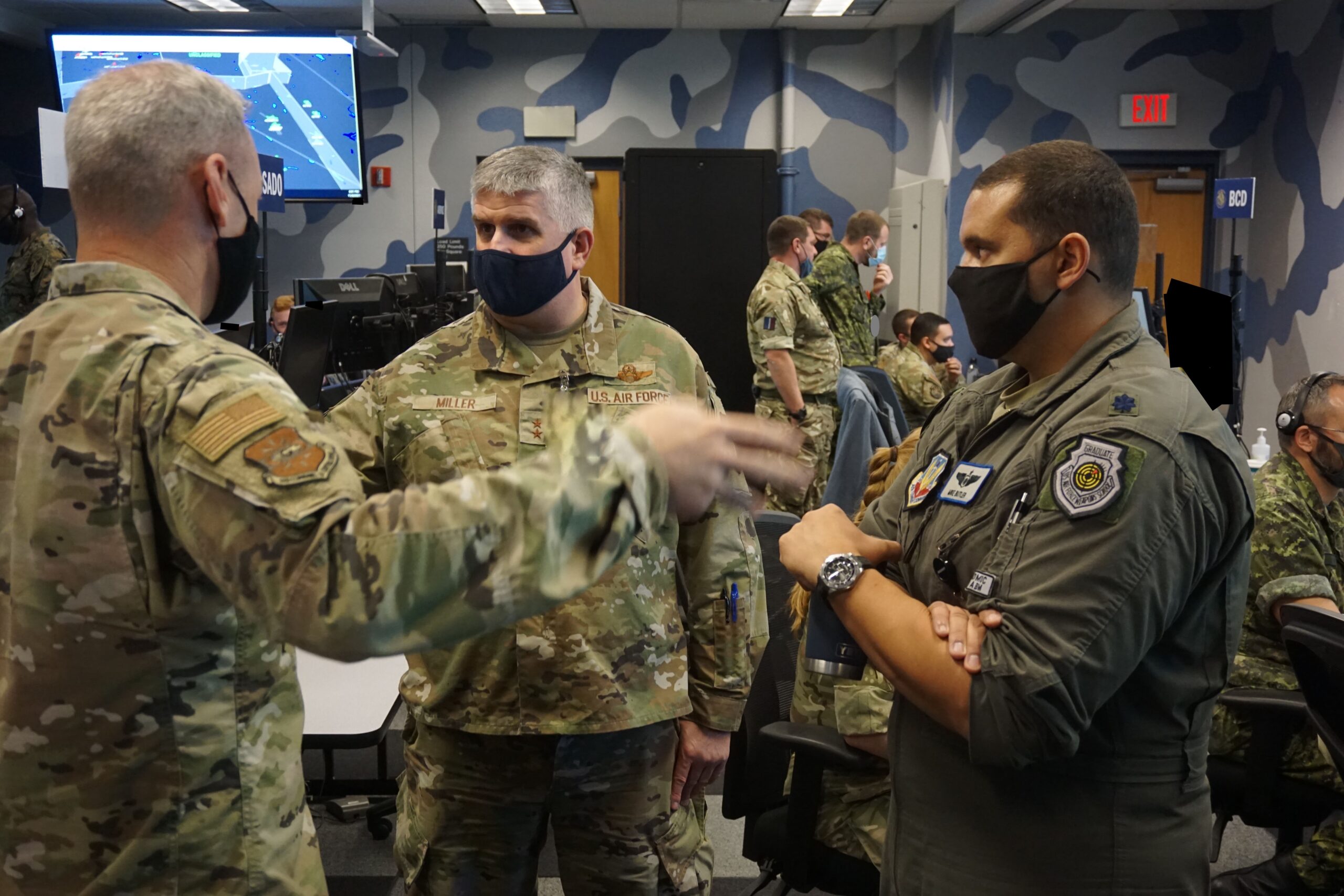
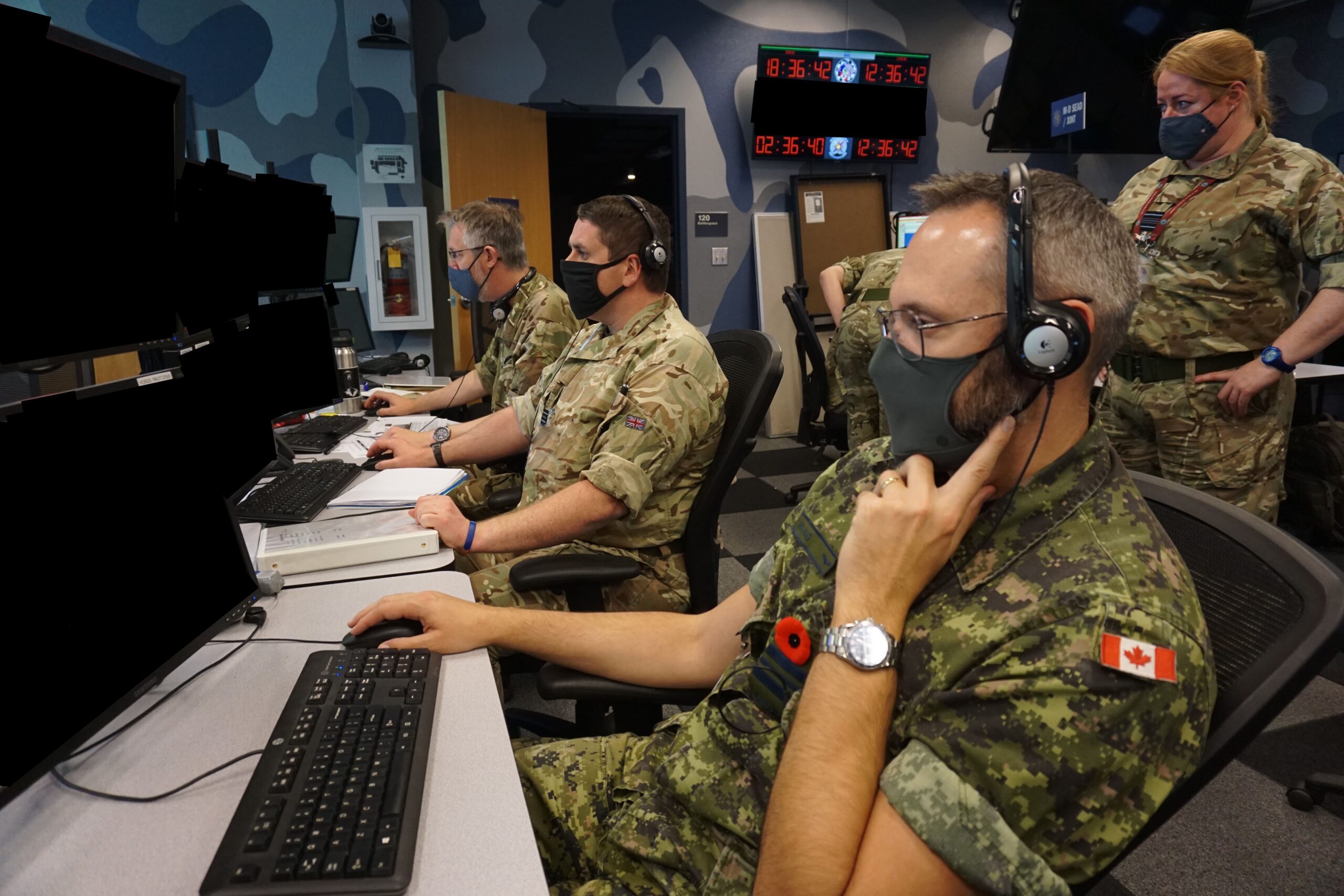
The Vice Chief of Staff of the U.S. Air Force, Gen. David Allvin, visited the 505th Command and Control Wing’s Howard Hughes Operations, or H2O, facility in downtown Las Vegas, Nevada, Aug. 28. 

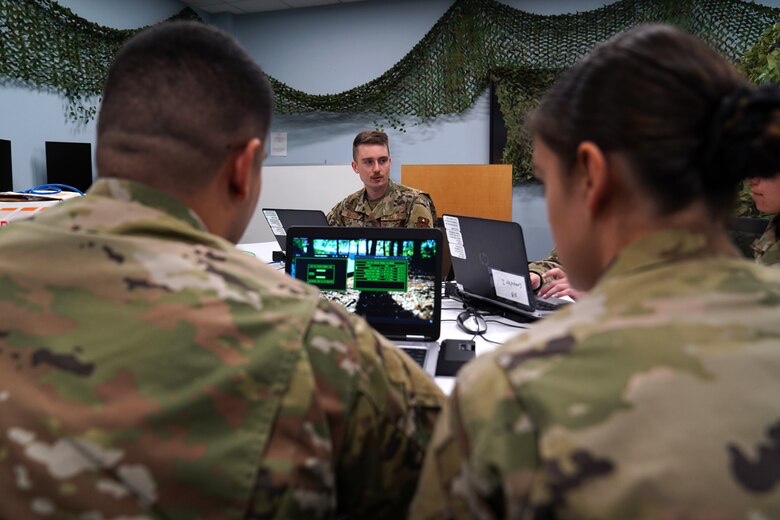
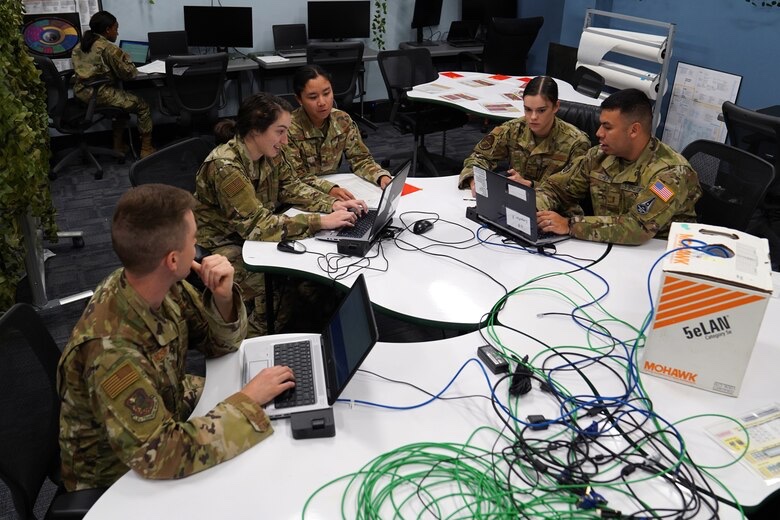
H2O is part of the 805th Combat Training Squadron’s Shadow Operations Center – Nellis, or ShOC-N.  ShOC-N is the Air Force’s primary Advanced Battle Management System (ABMS) Battlelab for experimentation and incubation of new command and control technologies and development of C2 tactics, techniques, and procedures enabling multi-echelon, multi-domain battle management. 

During the Vice Chief’s visit, 505th personnel showcased ShOC-N’s efforts to build a persistent experimentation ecosystem where anyone could come and put hands-on future C2 capabilities.

Assessing the collaboration on display, Allvin said, “The value of developing capabilities in a battle laboratory is immeasurable.  ShOC-N is future-focused but maintains a connection to the warfighter to ensure they are experimenting and incubating useful capabilities at the speed of relevance.”

The ABMS Battlelab is the intersection of technologists, acquisition, and warfighters for direct, credible, and rapid evolution of capabilities. “It is the persistent, iterative nature of the ShOC-N Battlelab that makes it so valuable,” said Lt. Col. David Spitler, ShOC-N commander. 

“Every activity has to count,” said Col. Frederick Coleman, 505th CCW commander. “Every day, USAFWC [U.S. Air Force Warfare Center] agencies are leading test, experimentation, and training of the most advanced capabilities ever seen. Our job is to leverage each opportunity and find ways to use it to advance ABMS.  It’s an iterative process that allows us to rapidly test, train, and deliver C2 capability, and the ShOC-N is the nexus of that process.”

The VCSAF’s visit was a joint engagement with AFWERX, which is also located in the Howard Hughes complex.  AFWERX is instrumental as a model to discover innovative opportunities both from industry and Department of Defense partners and deliver tangible capabilities to warfighters at speed.

AFWERX already played a key role in helping the 505th CCW find and develop partnerships.

“We literally grew up on their [AFWERX] couch for about 18 months,” said Lt. Col. Aaron Sick, ShOC-N director of innovation. “AFWERX has a proven track record of discovering industry and military talent through their workshops and challenges, transitioning innovative ideas into real capabilities.”

Sick continued, “ShOC-N is a great compliment to what AFWERX is already doing.”

“ABMS is expansive,” said Spitler, “but we have clear lines of effort and specific warfighter requirements that partners can target for focused experimentation within the Battlelab ecosystem, and we know AFWERX has a portfolio of opportunities ripe for experimentation.”

Providing a low barrier to entry into the ABMS Battlelab ecosystem is critical. Approximately 70% of the companies working with AFWERX have no prior government experience.

“Our goal is to allow partners to engage with AFWERX and then walk across the atrium and immediately begin experimentation with ShOC-N,” said Maj. Greg Haverkorn, ShOC-N director of systems and communications.  “We can provide an unclassified environment with access to warfighters and warfighting data in order to quickly start the maturation process.”

“When ready, ShOC-N can help match product owners with the required cybersecurity and accreditation professionals to move the capability into an appropriate operationally relevant experimentation environment such as the ShOC-N primary Battlelab on Nellis Air Force Base,” Haverkorn continued.

The 505th CCW collaborates with the other USAFWC Wings and staff, Air Combat Command, and Headquarters Air Force to showcase the initial persistent Battlelab concept.  The intent is to provide Department of the Air Force leadership a hands-on introduction to the potential of the Battlelab. 

Courtesy of 505th Command and Control Wing (ACC), Public Affairs

Photos by Lt Col David Spitler

USAF Defenders Beta Test New Weapons Qualification Course

Wednesday, September 15th, 2021

JOINT BASE SAN ANTONIO-LACKLAND, Texas (AFNS) —

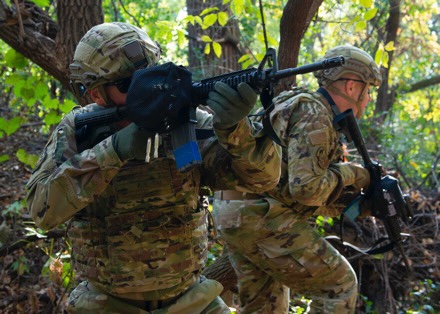
Defenders from across the Total Force are currently beta testing a new Air Force security forces weapons qualification course designed to enhance proficiency across the career field.

Developed by the Air Force Security Forces Center, a primary subordinate unit of the Air Force Installation and Mission Support Center, the proposed course will seamlessly instruct, test and evaluate weapons training for the more than 38,000 active duty, Air National Guard, Air Force Reserve and government civilian security forces members.

Twelve active-duty bases, two Air National Guard bases and one Air Force Reserve base are currently participating in the one-year beta test, which began June 1.

“The weapons qualification course is a forward-thinking effort, focused on enabling Defenders to adapt to a changing operational environment. Together, we will organize, train and equip Defenders to remain the most proficient and ready force,” said Brig. Gen. Roy Collins, Security Forces director and deputy chief of staff for Logistics, Engineering and Force Protection.

“This improved course of fire will allow our Defenders to focus more on weapons proficiency after initial qualification,” Collins added. “Once qualified on any weapon in our inventory, it is imperative to immediately start to build upon proficiency and repetition to create Defenders who are ready to operate in current and future environments.”

The four-block qualification course supports many of the 32 recommendations proposed by the Security Forces Defender NEXT Initiative. One aspect of the new initiative seeks to modify weapons and tactics capabilities with a focus on air base ground defense as a foundational requirement for Defenders across the Total Force.

Although a viable rifle and carbine qualification course is currently in place for security forces, “senior leaders recognized a need for enterprise-level change with an emphasis on continuous and realistic training across the career field,” said Jason Seibel, AFSFC chief of Air Force combat arms at Joint Base San Antonio-Lackland.

The course, in testing, incorporates training on a quarterly basis rather than annual weapons qualification, as is currently the case for Airmen and Guardians in the security forces career field. This transition to proficiency training integrates four blocks of training:

Block 1: Carbine marksmanship fundamentals and simulator training
Block 2: Short-range combat training and shoot, move and communicate skills training
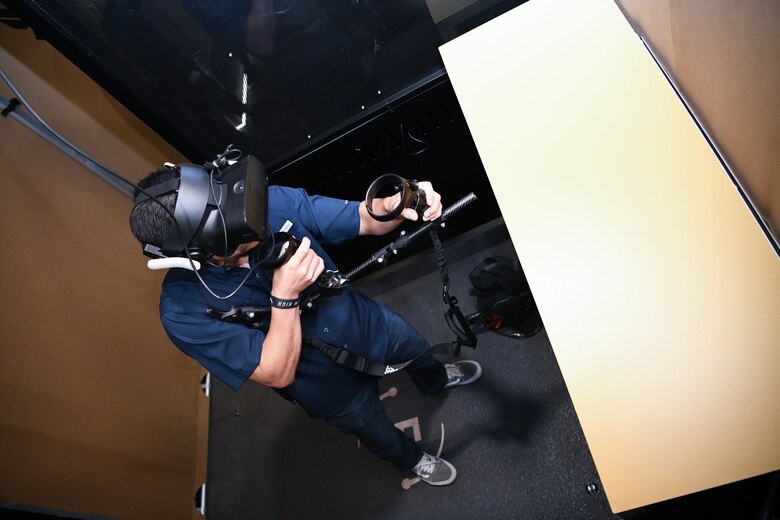
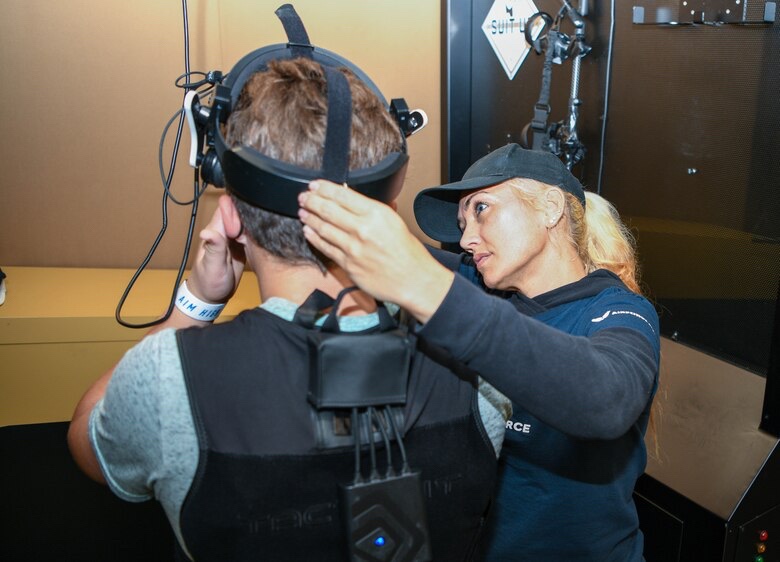
Block 3: Limited visibility engagement training and virtual reality scenario-based training
Block 4: Marksmanship qualification and live-fire proficiency training for select Defenders

“The course provides instructors with what is called a building-block instruction method,” Seibel said. “Each block of training builds on the previous block. Defenders must successfully complete Blocks 1, 2 and 3 before taking the final qualification block. In this way, we develop Airmen from the novice, who graduates basic military training, to the expert Defenders who attend our advanced course, ensuring proficiency throughout their careers.”

Tech. Sgt. George Henry III, 355th Security Forces Squadron combat arms instructor at Davis-Monthan Air Force Base, Arizona, which is one of the test sites for the course, said it’s giving the career field a standardized way to accomplish weapons proficiency.

“This new course of fire will be used to pave the way for how Defenders qualify throughout the entire enterprise. Defenders will be shooting, moving and communicating during the entirety of the course,” he said.

Throughout the training, Defenders and combat arms instructors at each of the 15 test sites will provide data and feedback to Seibel and other combat arms training team developers at AFSFC. When beta testing ends May 31, 2022, the AFSFC team will analyze the input from the test sites and finalize the policy guidance with the goal of implementing the course by October 2022.

“This new course … benefits all Airmen who are charged with protecting our assets day and night. Today’s threats are evolving and our Defenders need to as well,” said Staff Sgt. Logan Goode, 355th SFS combat arms instructor. “Our Defenders will become more versatile and agile than ever before, allowing for better base defense and operations abroad.”

Story by Joe Bela, Air Force Installation and Mission Support Center Public AffairsPublic Affairs

Photos by SrA Alex Miller

ACC Innovates with Air Force CyberWorx

Friday, September 10th, 2021

JOINT BASE LANGLEY-EUSTIS, Va. (AFNS) —

When there is a problem that arises within cyberspace or the operational world, Airmen may have ideas to create a better process for the United States Air Force to “accelerate change” in their mission.

Air Force CyberWorx is a Department of Defense cyber mission-focused, operational problem-solving organization that gives Airmen the tools to support Air Force operational problems by collaborating with government, industry and academic experts through structured, human-centered design activities.

“AF CyberWorx can give Airmen the ability to reach industry with unique acquisition methods, building a tidal wave of innovators,” said Lt. Col. Mike Helgeson, CyberWorx acting director. “We are focused on three lines of effort to support the warfighter: operational problem-solving, industry engagement with emerging technology sectors and our innovation education component.”

According to Helgeson, what makes CyberWorx different from other innovation cells in the DoD, is that they help the Airmen and the end user find what is really the problem.

“Every time we start a project, we are laser-focused on the end user, and how they will use this new technology or solution in their environment,” Helgeson said. “Our team then will design around the tactical outcome the user is looking for at the end.”

A couple projects the AF CyberWorx is currently working on include the Cyber Risk Ecosystem and Project Holodeck. The Cyber Risk Ecosystem project started out with a discussion of what operational commanders need to know about cyberspace, as well as how other units use cyber mission enablers. The Cyber Risk Ecosystem develops a commander’s dashboard by utilizing artificial intelligence to ingest applicable information such as flying, medical and cross-domain data points. The AI will utilize this data to aid a fighter wing and squadron commander with system effect analysis, allowing them to change flying availability faster.

The second, Project Holodeck, is a platform to use innovation intelligence by identifying best practices for solutions in development through analyzing performance data and ensuring money is applied to achieve the best portfolio outcome. Holodeck accelerates decision-making by guiding Airmen through development phases more efficiently. The customized innovation program guides experimental activities, generates status reports and makes funding recommendations along the way.

The project develops problem-solvers by moving Airmen to quickly develop and test ideas based on Air Force priorities, leveraging innovation best practices, guiding Airmen with the right process and recommending the right team for each project.

Project Holodeck stretches taxpayer dollars with transparency and enterprise-wide visibility to ensure money and resources are applied to the most promising ideas that have sustainable support.

According to Helgeson, an advantage of CyberWorx being at the U.S. Air Force Academy is that it allows the Air Force to bring operational problems into the education process. The team then takes those problems and aligns them to cadet capstone projects and other engagements letting cadets see both how industry innovates and how to apply those innovations to operational mission needs.

“This program allows cadets to understand the operational Air Force, so they are prepped when they hit the ground after graduation,” Helgeson said. “We want them to go out into the force and have the tools, knowledge and capabilities so we won’t need innovation organizations to innovate; we have developed a culture of innovation in the Air Force for the future.”

The future operating location for CyberWorx is under construction with a ground-breaking ceremony held Aug. 6 at the academy.

The new, 33,000 square-foot facility, will feature cyber-tech classrooms, labs, and a research and design space. Funding for the project was provided by 420 donors who committed $30 million to the project, with $30 million provided by military funding.

By TSgt Carlin Leslie, Air Combat Command Public Affairs
352d Special Operations Wing Deploys to Ukraine

Thursday, September 9th, 2021

VINNYTSIA, Ukraine – Members of the 352d Special Operations Wing and 24th Special Operations Wing deployed to Ukraine for the month of August to demonstrate commitment to the Black Sea region and strengthen relationships and combined capability.

The wing deployed two U.S. Air Force MC-130J Commando II aircraft to conduct bilateral training with Ukrainian Special Operations Forces and Ukrainian Air Force members.

“We focused on interoperability with our Ukrainian partners through a multitude of training events during the month of August,” said U.S. Air Force 352 SOW mission commander. “We were able to exchange (best) practices during many training events to include mission planning, low-level flight operations, personnel airdrops, field medical practices, aircraft maintenance and physical security.”

Training as partner forces increases lethality and enhances interoperability, allowing U.S. and Ukrainian forces to counter regional strategic competition and coercion. The 352 SOW worked closely with Ukrainian military leaders, ensuring both militaries were given the opportunity to hone their skills and increase readiness.

“No nation can confront today’s challenges alone. We value the close cooperation with European allies and partners to enhance deterrence and counter a range of regional threats,” said Maj. Gen. David Tabor, Special Operations Command Europe commanding general. “Conducting multinational operations in the Black Sea Region ensures stability throughout the region.”

During the training exercise, Tabor, Ukrainian Maj. Gen. Hryhoriy Halahan, Commander of the Special Operations Forces of the Armed Forces of Ukraine, Iryna Vereshchuk, Ukrainian Member of Parliament, members of the U.S. Embassy Kyiv and many other U.S. and Ukrainian military members participated in a low-level flight over Kyiv, Ukraine in a MC-130J.

“We were very happy to be in Ukraine again and during the celebration of Ukrainian Independence,” continued U.S. Air Force 352 SOW Mission Commander. “The 352 SOW recognizes and celebrates a strong history and relationship with our Ukrainian partners that is a critical part of these continued engagements and strengthened partnerships.”

Over the past few years, the 352 SOW has participated in multiple exercises with Ukraine in the Black Sea region, to include Seabreeze and Fiction Urchin.

Story by SSgt Izabella Workman, 352nd Special Operations Wing Public Affairs

38 RQS Trains to Support SpaceX, Boeing

Friday, September 3rd, 2021

PATRICK SPACE FORCE BASE, Fla. (AFNS) —

Pararescuemen, aircrew flight equipment Airmen and maritime operations specialists assigned to the 38th Rescue Squadron, Moody Air Force Base, Georgia, conducted rescue training in the Banana River and Atlantic Ocean near Patrick Space Force Base, Aug. 23-27.

The 38th RQS Blue Team performed free fall jumps and equipment drops into water to prepare for potential operations supporting the SpaceX human spaceflight program and Boeing’s spaceflight program as well as other immediate response-force operations.

“When astronauts are doing their launches, we cover down in the Pacific or Atlantic Ocean,” said Tech. Sgt. Michael Galindo, 38th RQS pararescueman and Blue Team section chief. “That way, if they have an emergency and they need a bailout, we’re the rescue team on-site who would recover them from their capsule.”

In the event of a malfunction during launch, the capsule will detach itself from the rocket and jettison away from potential explosions or other hazards. The goal is for the capsule to land in an ocean where pararescue jumpers can go in and extract anyone on board.

In order to execute this type of rescue operation, the team needs to be proficient in several areas. For starters, they need to know how to safely land in the ocean with their water gear. Additionally, there are two different boat packages they need to be familiar with: a Rigging Alternate Method Boat, or RAMB, which is a deflated Combat Rubber Raiding Craft that can be dropped by parachute into the water and then inflated upon landing; and a hard duck, which is an inflated CRRC fixed to a wooden base and dropped by parachute as well.

Using these packages, Galindo said their team can load the boats with medical supplies, paddles, boat engines and anything else they would need for their rescue operations. Then, the team can drop them from cargo aircraft and jump into the drop zone immediately after to conduct their rescue mission.

“In October, we’re actually doing two weeks of additional training at Cape Canaveral to learn how to access the SpaceX and Boeing capsules … and then make sure we can get access to the astronauts,” said Capt. Trent Vonich, 38th RQS Blue Team flight commander.

Conducting these training exercises on a routine basis ensures the teams are ready to go at a moment’s notice. This level of proficiency offers a layer of comfort for the astronauts conducting launches off the coast.

“It reassures them that if they do have an emergency, they know there’s a team who is highly trained in these types of rescues,” Galindo said. “It’s important for us to constantly keep current on this type of jump because there’s a lot that goes into it.”

While this training was specifically tailored to support the human spaceflight programs, it doubles as preparation for potential rescue operations in contingency locations.

“The top two locations in which that would occur would be the Arabian Gulf and the South China Sea,” Vonich said. “Adversaries have a number of capabilities that could potentially put one of our aircraft in the water, and we would have to go jump into the gulf or sea and do exactly what we did in today’s training.”

Whether rescuing downed pilots off foreign coasts or supporting rocket launches in the U.S., the 38th RQS could not execute their mission without trusted teamwork.

“It’s a lot of work being a pararescueman,” Galindo said. “I’m surrounded by a bunch of great people who are constantly challenging me. We have those who are always trying to improve themselves, whether mentally or physically, and it just drives me to be a better person and reach my potential.”

SpaceX plans to launch a crew of three Oct. 31, and the team will be prepared to respond if needed.

“Heaven forbid anything goes wrong, we’ll be ready if it does,” Vonich said.

Story and photos by SSgt Devin Boyer, 23rd Wing Public Affairs

Additional photos by SSgt Melanie A. Bulow-Gonterman

Air Force Declares TACP Mobile Communications System ‘Combat Ready’

Wednesday, September 1st, 2021

HURLBURT FIELD, Fla. – The U.S. Air Force’s Air Combat Command recently declared the initial operational capability for the tactical air control party mobile communications system block 2 system ‘combat ready’ at the recommendation of the 605th Test and Evaluation Squadron, Hurlburt Field, Florida.

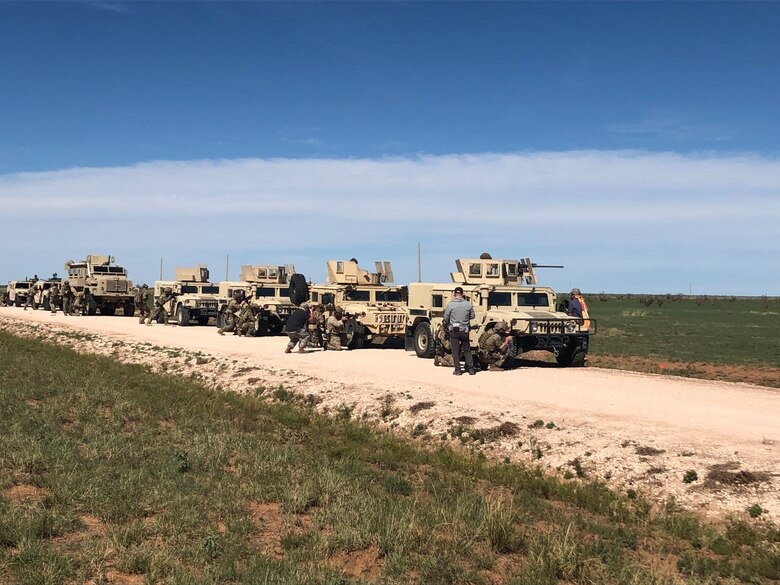
In the spring of 2020, the 605th TES TACP Element, in conjunction with the 14th Air Support Operations Squadron, Pope Army Airfield, North Carolina, conducted the operational utility evaluation, or OUE, of the MCS block 2 on M-1165 armored high-mobility multipurpose wheeled vehicles.

As Air Combat Command’s independent, sole, command and control operational test unit, the 605th TES, tested the system under realistic conditions, using new and experienced Airmen, who will be operating and maintaining the system once fielded.

The OUE validated the operational effectiveness and suitability of MCS block 2, cybersecurity and resiliency, and its impact on TACP and air support operations center tactics, techniques, and procedures. 

M1165 HMMWVs, better known as humvees, are integrated with multi-channel communications equipment through the MCS block 2 system which provides voice, data, and video capabilities to TACP Joint Terminal Attack Controllers while “on-the-move” and “at-the-halt”.

“This new system gives TACPs greater mission flexibility by incorporating additional data link, full motion video, and high frequency radio capabilities while out in the field,” said Master Sgt. Jesus Torres, 605th TES senior enlisted leader and TACP.

JTACS will use MCS Block 2 to perform their close air support and command and control missions.

To achieve IOC, the MCS Block 2 system demonstrated the necessary combat capability for voice and video communications and had sufficient required fielding and logistics support.

“Through early involvement and by building relationships across the acquisition process the 605th TES was instrumental in providing early user feedback,” said Torres.  “During early DoD [Department of Defense] COVID Guidance, the 605th TES TACPs developed risk mitigation measures enabling regression testing to continue during the pandemic which allowed this vital capability be delivered to the warfighter five months ahead of schedule.”

“As our service takes positive steps to mature Agile Combat Employment concepts, through years of being disaggregated and embracing Mission Command, the TACP community is best positioned to inform the larger enterprise on what technology could be beneficial, said Col. Adam Shelton, 505th Test and Training Group commander.  “This IOC declaration will assist in furthering our integration efforts with joint partners in venues such as the Army’s Project Convergence or in tier 1 exercises such as Northern Edge.” 

As of August 2021, the 605th TES continues to accelerate change by conducting operational testing on the MCS Block 3, installed on the U.S. Army’s next-generation Armored Multi-Purpose Vehicle as a replacement for the M113 Armored Personnel Carrier family of vehicles.

505th Command and Control Wing (ACC) Public Affairs

Dover AFB Leads Joint, Interagency Survival Training

Friday, August 27th, 2021

COAST GUARD STATION INDIAN RIVER INLET, Del. (AFNS) —

Imagine being in a yellow life raft in the middle of the ocean after surviving an aircraft incident. There is an aircraft flying several hundred feet overhead. The best chance of being rescued lies in an ability to use the issued survival equipment to signal the position to the aircraft.

While this situation might seem far-fetched, it is a very real possibility for aircrew members flying out of Dover Air Force Base, Delaware.

For this reason, members of the 436th Operational Support Squadron Survival, Evasion, Resistance, Escape flight partnered with the 3rd Airlift Squadron at Dover AFB, Coast Guard Air Station Atlantic City, New Jersey, and Coast Guard Station Indian River Inlet, Delaware, to train local search and rescue procedures during Exercise Castaway.



“The whole idea for Exercise Castaway started with a picture,” said Tech. Sgt. Derreck Day, 436th OSS SERE specialist. “I was conducting a water survival preparation course [that includes] a picture of a 46-man life raft, [where] at 4,000 feet is extremely difficult to spot. Looking at that photo, I thought ‘what is the probability of finding an individual, if not, a whole crew of people in a life raft out in the Atlantic Ocean.’”

The picture Day refers to is a photo taken from a C-17 Globemaster III at an altitude of about 4,000 feet. The raft is nearly impossible to spot with the naked eye. At that altitude, the raft appears to blend in with the ocean waves; an incredible challenge to anyone attempting to locate survivors in the open ocean.

“It’s a photo of the largest life raft we have in our inventory and in that photo you can’t even see the life raft,” Day said. “So looking at that situation, I thought to myself, ‘why not exercise this.’”

During Exercise Castaway, Day and four Airmen from the 436th OSS SERE flight were escorted 5 miles out into the Atlantic Ocean by Coast Guardsmen from Indian River Inlet.

“We got to Coast Guard Station Indian River and by the time we broke through the waves out of the inlet, about 4 and a half miles off shore, the 25 mile buoy was reading 5 foot seas and 17 knot winds,” Day said. “I’m very grateful that the Coast Guard was there to provide over watch in case of an emergency.”

Once in place, the SERE crew then prepared their signaling equipment including the combat survivor evader locator radio, sea dye, flare and life raft canopy. This marked the official start of Exercise Castaway.

Day explained their objective was to go through the issued survival equipment, use it, devise tactics, techniques and procedures, and to relay pertinent information to assist the aircrew in spotting them.

Two aircraft crews participated in the exercise: a C-17 from Dover AFB and a MH-65D Dolphin from CGAS Atlantic City. As the acting on-scene commander, the C-17 crew spotted the life raft and relayed location information to the MH-65D for simulated rescue and hoist practice.

“The scenario for the aircrew aboard the C-17 was for them to respond to a simulated downed aircraft call, provide a search pattern, exercise their on-scene commander checklist and take photographs of what’s happening through their perspective,” Day said. “As they role-play on-scene commander, once they spotted the life raft, they notified Coast Guard Station Atlantic City.”

As the C-17 was spotted in the distance, the crew began their series of signaling attempts to the aircrew aboard the aircraft.

“We came in at 500 feet through several passes while the guys in the raft were trying out different signaling techniques,” said 1st Lt. Nicholas Johnson, 3rd Airlift Squadron pilot. “Then we climbed to higher altitudes to see how clear we can see those visuals at different altitudes and capture data on what would be the best altitude to ingress to try and find guys on the ground.”

Spotting the life raft became a challenge on its own due to the high-speed winds and tall waves. It took a couple passes before the aircrew spotted the life raft.

“At first there were no visuals,” Johnson said. “It was just them on the raft and we had to find them. Even at 500 feet, which is pretty close to the ground, we weren’t able to see them until we were right on top of them.”

With each pass over the raft, the aircrew then ascended to higher altitudes to observe the effects altitude had on spotting the life raft. The higher they climbed, it became increasingly difficult to keep track of the life raft.

“There are a lot of lessons learned that I plan on relaying to the aircrew that could find themselves in that situation,” Day said. “It was amazing to see the interaction between all participating agencies and record all the success and failures that happened during the exercise.”

During flight operations, there is always risk involved. For Dover AFB, being prepared in case of a real world incident means readiness and tactful knowledge of basic water survival and search and rescue principles. Knowing how to signal aircraft aiding in rescue while also experiencing the dangers of open water is paramount to survival. The SERE team here is dedicated to ensuring aircrews have the skills needed to give themselves the best chance of survival.

Stories and some photos by Senior Airman Marco A. Gomez, 436th Airlift Wing Public

Some photos by Senior Airman Faith Schaefer