GORE-TEX Professional

Archive for the ‘Ammo’ Category

Federal and Speer Ammunition Awarded Prestigious FBI Contracts

Thursday, January 6th, 2022

ANOKA, Minnesota – January 4, 2022 – The FBI awarded Federal and Speer Ammunition in all four categories of its handgun ammunition bid. This prestigious award keeps35,000 employees trained and ready for duty.  Three of the rounds will be manufactured in the Anoka, Minnesota facility and the other will be built in Lewiston, Idaho. 

Federal and Speer were the only brands to be collectively awarded in all four ammunition categories:  Service (Full Size), Service (Micro), Reduced-Lead Training, and Frangible.  Federal and Speer were the primary for the Training and Frangible rounds with secondary designations for the full size and micro service rounds.

“It is an honor that our brands continue to be selected for use by the most trusted law enforcement agency and value the products we make,” said Federal’s President Jason Vanderbrink. “The ongoing validation of the technology and performance found in every round of ammunition made by our highly skilled American workforce brings great pride to our company.”

This Indefinite Delivery, Indefinite Quality contract is a one-year base contract with four possible option years.  “We are excited to build the FBI the best bullets on the market for both duty and training,” said David Leis, Federal and Speer’s Vice President of Law Enforcement, Government and International Sales.  “This is a win for our engineering team as the FBI will be utilizing  new as well as refined bullet technology in their firearms for both service and training.”

Federal ammunition can be found at dealers nationwide or purchased online direct from Federal. For more information on all products from Federal or to shop online, visit www.federalpremium.com. For information on Speer visit www.speer.com.

15-Round .22LR Reloadable Beehive Round for 37mm/40mm Launchers

Thursday, January 6th, 2022

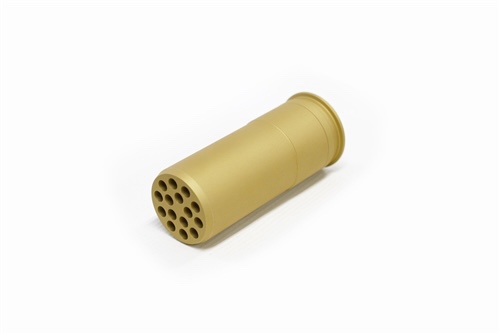
The AU Beehive holds fifteen .22 LR rimfire rounds that fire simultaneously from your 37mm or 40mm launcher with the use of one large pistol primer. The Beehive is reusable and is reloaded by hand.

Built to last, the Beehive is manufactured from aerospace grade aluminum with a hard coat anodize finish. Firing pins and components manufactured from 4140 Chrome Moly Steel. A removable primer pocket is used to detonate the round by using a large pistol primer that is installed by simply press-fitting.

The Beehive is NOT live ammunition, and no .22 LR rounds are included.

www.armsunlimited.com/22LR-Reloadable-Beehive-Round-37mm-40mm-Launcher-p

APEX Ammunition to Exhibit at SHOT Show

Wednesday, January 5th, 2022

Columbus, Miss. (January 4, 2022) – APEX Ammunition, makers of handloaded, ultra-high-density Tungsten Super Shot (TSS) shotshells, will showcase its ammunition offerings at the 2022 SHOT Show in Las Vegas, January 18-21 (Booth # 71104).

APEX pioneered the commercial use of 18.1 g/cc density TSS in 2017, and today offers a comprehensive line of shotshells for Waterfowl, Upland, and Predator and Deer hunting, in addition to its renowned Turkey TSS loads.

Waterfowl

APEX offers a variety of waterfowl loads to meet the needs of discerning hunters who value superior performance and craftsmanship. Waterfowl TSS shotshells are meticulously handloaded for ultimate knockdown power. The TSS/S3 Steel™ Blend duplex loads feature No. 7.5 or 9 TSS combined with No. 2, 4 or BB S3 Steel shot in 12-gauge and No. 4 shot in 20 gauge. The APEX S3 Steel™ line features premium-grade zinc-coated steel and the same Tungsten-grade wad system used in the APEX TSS loads for superior patterning and consistency.

28-gauge, 16-gauge, and 410 bore waterfowl loads are available upon request.

Upland

Whether you are hunting grouse or Huns out West, quail in the South, or late-season roosters across the Great Plains, APEX Upland Bird TSS helps you put more birds in hand.  Available in 3-inch 12-and 20-gauge loads.

Upland Bird 3-inch 16-gauge, 2 ¾-inch 28-gauge, and .410 bore 2 ½ and 3-inch loads are available upon request.

Predator

Shotshells for predator hunting typically meant low pattern count and massive lead pellets leading to limited performance. APEX Predator TSS, offered in shot sizes 4, 2 and BB, capitalizes on superior density to deliver extended range and penetration while maximizing pattern retention for ultimate knockdown power on coyotes, hogs and deer.

Turkey

APEX’s legendary Turkey TSS offerings bring a new level of performance to sub-gauge shotguns. Now available in 20-gauge No. 9s, 28-gauge (No. 9 and 9 ½) and .410 bore (No. 9 ½), APEX Turkey TSS shotshells are designed for maximum penetration at extended ranges. Handloaded for ultimate consistency and quality control, APEX TSS allows the use of smaller shot sizes and larger payloads for maximum pattern density and downrange energy. Also available in 10-gauge, 12-gauge and 16-gauge loads.

APEX also offers Smalltown Hunting Blend loads which feature a combination of No. 7 1/2 and No. 9 shot TSS as well as Ninja Turkey TSS loads.

The 2022 APEX Ammunition Catalog is now available online at ApexAmmunition.com.

Bill Wilson Announces Purchase of Lehigh Defense

Monday, January 3rd, 2022

[Berryville, Arkansas, January 3, 2022]

Bill Wilson is proud to announce the acquisition of Pennsylvania-based ammunition and bullet manufacturer Lehigh Defense.

Lehigh Defense will join other Wilson-owned companies Chip McCormick Custom, Circle WC Ranch, Khumba Bush Camp, Scattergun Technologies, Wilson Custom Ammunition and Wilson Combat to expand the group’s presence in the firearms and hunting marketplace.

Lehigh Design, originally founded by Dave Fricke later expanded to Lehigh Defense with the addition of Pete Vogel and Mike Cyrus and has been designing and manufacturing solid brass and copper bullets using the latest technology since 2004. In 2009, Lehigh started working with Black Hills Ammunition in developing unique military projectile designs. Years of collaboration later, the Fluid Transfer Monolithic design culminated with the release of the Black Hills Honey Badger line. Another patented design is the Maximum Expansion 300 Blackout subsonic bullet used by US and many NATO special operations groups throughout the world with over 7 million sold to date.

Lehigh Defense currently operates two manufacturing plants, one in Pennsylvania and one in South Dakota. Once a new purpose-built facility in northeast Texas is completed in Q3 2022 some operations will begin the move to their new home in Texas. There are immediate plans to increase production and some products are already in production in Arkansas at the Wilson Combat facility to rapidly increase production capacity. Lehigh will have a substantial increase in manufacturing capacity and a state of the art testing facility once the Texas plant is operational. Our goal is to meet product demand, add exciting new products and build brand awareness.

To add stability to these changes we’re proud to announce Dave Fricke will retain minority ownership and continue to work with Lehigh for several years into the future.

Wilson Combat®

Visit www.wilsoncombat.com for more information.

Lehigh Defense

For additional information on Lehigh Defense LLC email info@lehighdefense.com

Federal Ammunition Joins Rare Companies by Turning 100 Years Old in 2022

Saturday, January 1st, 2022

ANOKA, Minnesota – January 1, 2022 – Estimates show less than one percent of all companies make it to their 100th year in business. Federal Ammunition joins this extraordinary group in 2022 and has plans to celebrate all year long. Its official date of incorporation was April 27, 1922, but the festivities will start now.

Jason Vanderbrink, Federal’s President offered his thoughts: “The entire staff of 1,500 hard-working Americans in Anoka, Minnesota is extremely proud to celebrate a full century of continuous and successful operation. We appreciate those who came before us to make this possible and look forward to taking Federal into its next century.”

Federal kicks off the year by lighting up a 100th Anniversary sign on top of one its silos in Anoka and will continue to tout its accomplishment with limited availability throwback packaging, special merchandise available on its website, an exhibit at the Anoka County Historical Society Museum and much more.

“Our workforce and business have never been stronger than they are today, and we owe it to a century of continuous innovation across every department in the company. Many people and partners have contributed to our success and I’m proud to join the current team in making sure that tradition of excellence continues.”

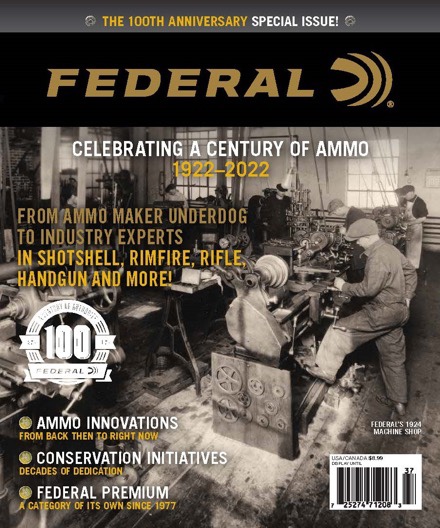
A special edition magazine, on your favorite newsstand right now, and coffee table book are also planned, along with many recollections online and via social media of the fun and interesting facts from throughout Federal’s history.

For more information on all products and online services from Federal or to shop online, visit www.federalpremium.com.

RCBS Expands Precision Mic and Chamber Gauge Lineups

Thursday, December 16th, 2021

New Cartridge Offerings Include 6mm Creedmoor, Others

OROVILLE, Calif. – December 14, 2021 – RCBS®, the leading manufacturer of ammunition reloading equipment for rifles and pistols, has announced the expansion of its Precision Mic and Chamber Gauge offerings with the addition of several new cartridge options.

The RCBS Precision Mic lineup will now include 6mm Creedmoor, 6mm GT and
6.5 PRC, while the Chamber Gauge lineup has added 6mm Creedmoor, 6.5 Creedmoor, .243 Winchester, 30-06 Springfield, 300 Winchester Magnum and .44 Magnum.

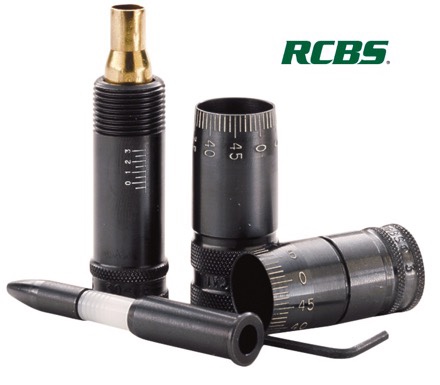
The RCBS Precision Mic helps reloaders determine chamber headspace and bullet seating depth to within 0.001 inches. By measuring from the datum point on the case shoulder to the base, the precision mic gives reloaders spot-on Sporting Arms and Ammunition Manufacturers’ Institute (SAAMI) tolerance readings, making it an indispensable tool for safe, accurate reloads.

The RCBS Chamber Gauge is designed to measure minimum SAAMI specs, verifying overall cartridge length and ensuring rounds will safely chamber. Reloaders can simply drop a loaded round into the chamber gauge to see if it will fit their firearm.

Manufacturer’s suggested retail price is $74.95 for all models of RCBS Precision Mics and $28.45 for most models of RCBS Chamber Gauges. For more information about RCBS Precision Mics and Chamber Gauges, or to check out other RCBS products, be sure to visit RCBS.com.

Primary Focus – Core Differences Between the .223 Wylde and 5.56 NATO

Saturday, December 11th, 2021

What’s the hype about .223 Wylde, and is it worth the money and time?

It’s not so much hype as reality. The .223 Wylde can successfully chamber and fire both the 5.56NATO round and the .223 Remington. The Multi-Cal on your lower receiver explained. Mystery Solved. Case closed – article over.

Unless you want the details…

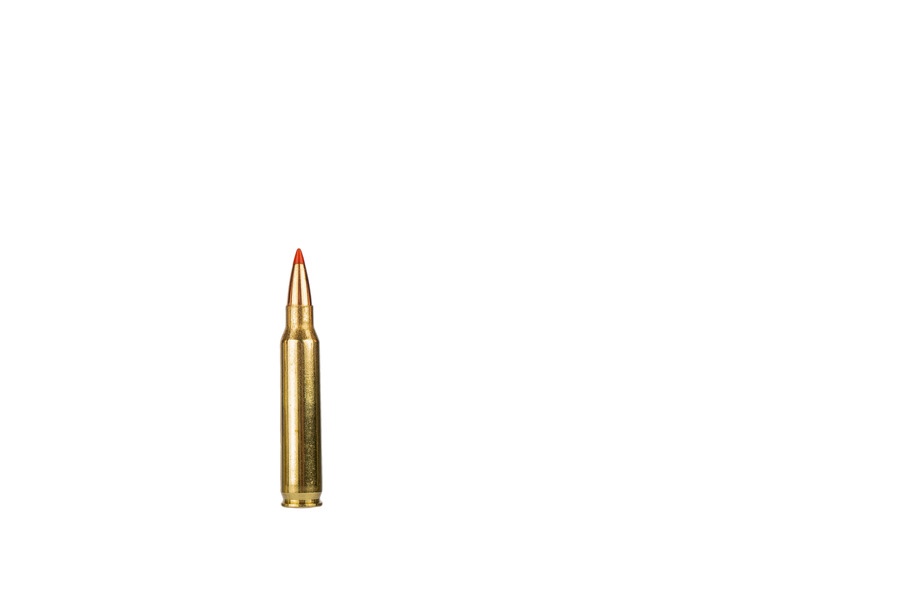
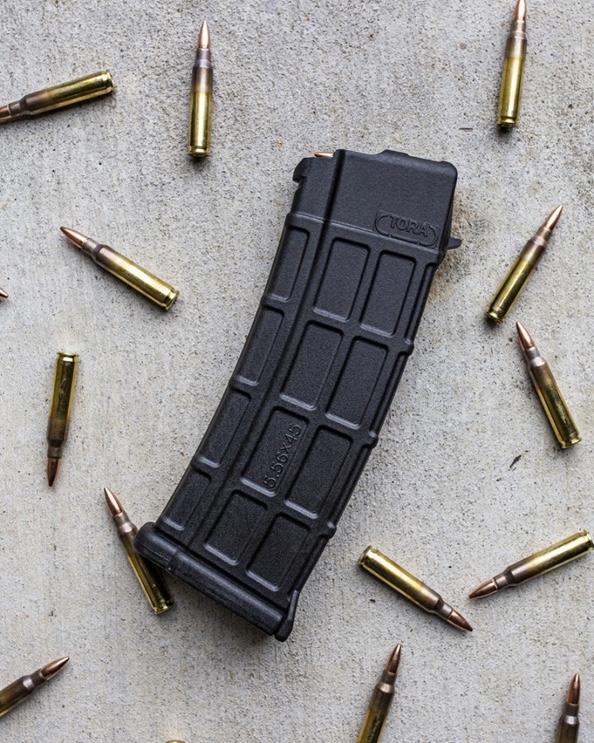
The 5.56×45 and the .223 Remington aren’t interchangeable. This is mostly because of pressure differences in the SAAMI specification. The load pressure for the 5.56×45 is 62,000 on the specification. The .223 Remington is loaded to a 55,000-psi pressure specification. The dimensions aren’t different, but the tolerances and the chambering dynamics are different.

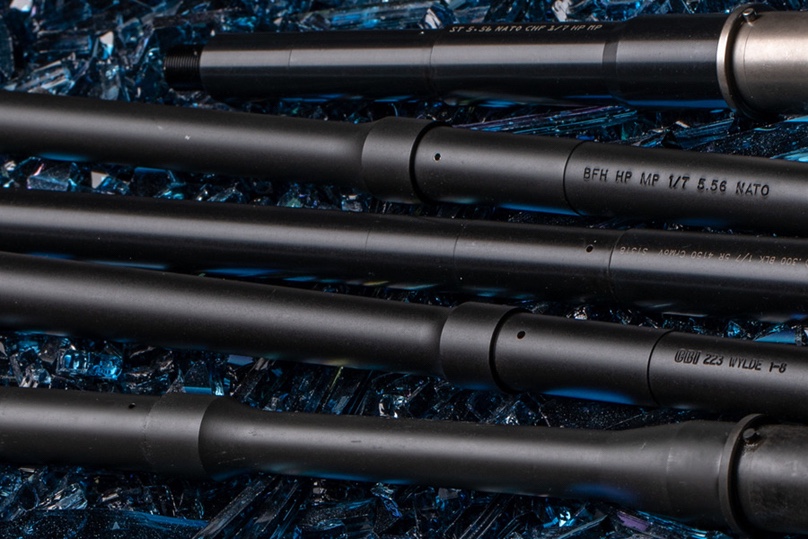
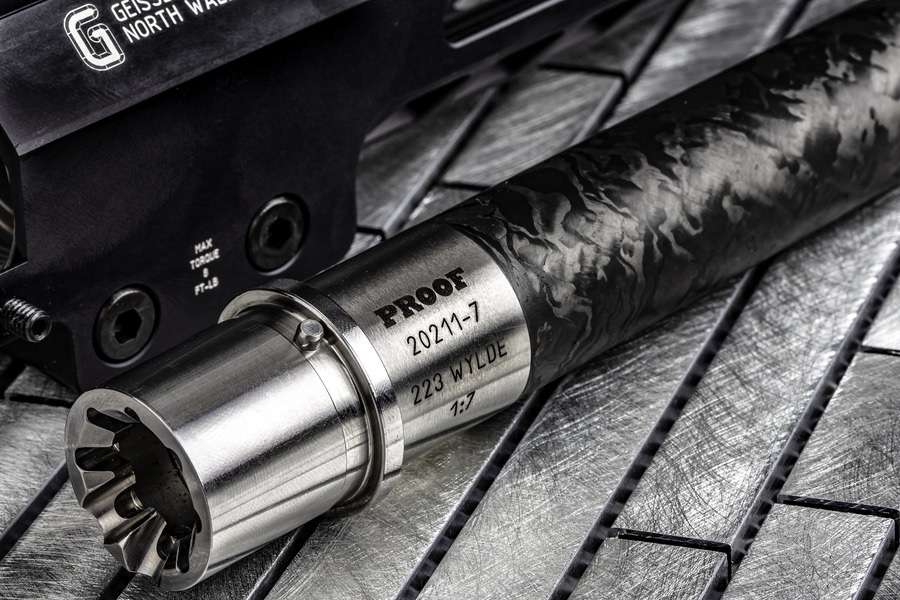
All things equal, the .223 Remington is held to a tighter set of tolerances in expectation of being loaded into a firearm chambered to enhance accuracy and take advantage of that core tolerance control. The picture below shows 223 Wylde. They typically have a sharper taper from the case down to the bullet.

The 5.56 is held to a less rigorous tolerance specification and is meant to deliver a higher pressure load in its respective chamber.

So again, all things equal, the differences in potential are that the 5.56 is made for a higher pressure scenario and therefore requires a more supported chamber. The .223 Remington is built to a theoretical higher tolerance specification and can potentially be used to deliver better accuracy if given the right conditions.

This is provable in the real world. You see it in ammunition prices (sometimes), and you see it on the target, more often. But the real benefit here is that safety and interchangeability that has been talked about for so long is part of the deliverables of the .223 Wylde.

What’s the point here? Sounds like something you could do safely with a 5.56×45 stamped barrel for years. Yes, in part, but not in totality. A 5.56 chambered barrel, while tough enough to handle anything it can chamber, doesn’t offer the same barrel-specific variables to enhance the accuracy that the .223 chambering will offer to the .223 Remington cartridge.

Similarly, the 5.56×45 cartridge should not be shot out of the .223 Remington chambering/barrel. This is already a higher pressure load. But the concern comes not from the higher pressure load, but the combination of a higher pressure load, and the higher pressure that will be stacked upon it from the fact that the 5.56×45 will be engaging the leade (the transitional part from the front of the chamber into the rifling of the barrel) incorrectly for the pressure specifications.

This means additional pressure will be present, even above and beyond the 62k psi that is part of the loadout.

In a .223 Remington, the leade is built to maximize the tolerance and quality control inherent in the .223 Remington cartridge from the factory. That engagement relies on a shorter space between the chamber and the rifling, where that transition will be too tight of a fit for a 5.56×45 relative to the tighter tolerances of a .223 Remington.  

Does this mean your 5.56 will blow up a .223 Remington barrel or chamber? Not necessarily. It may never happen. But it’s a risk you shouldn’t be taking. The risk is real, and there have been accidents and failures, and it is a legitimate situation.

The backstory on the .223 Wylde

To get to the backstory of the .223 Wylde, you might be best served understanding the backstory of the .223 Remington and the 5.56 and how their paths crossed in 1972 when FN (the famous Belgian manufacturer) made a round-based off the .223 Remington for use by NATO that had preferable performance increases over the .223 Remington. This was due mostly to the higher pressure specification – 62,000 psi.

The benefit of increased range and effectiveness made the 5.56 the go-to for wartime and military usage.

The inherent accuracy though was lost from the .223 Remington, as it now had to be chambered in a chamber with different freebore and leade dimensions, which meant that the projectile engagement into the rifling of the bore was looser and not optimized for the .223 Remington.

Bill Wylde decided to modify the dimensions to suit the best attributes of each cartridge in hopes of finding a way to get the best of both worlds from either cartridge in a single barrel suited to handling the intricacies of both cartridges independently or in use together.

The leade and outer dimensions of the 5.56 barrel were used to compensate for pressure and allow for the proper chambering, while the freebore of the original specification for the .223 Remington was used to ensure safe engagement but still support the tendencies of the .223.

The result was improved effectiveness on the accuracy front for the .223 Remington, in a barrel specification that could safely chamber and shoot both cartridges with reliability and the performance that was only slightly lacking over the previous optimized standalone accuracy of the .223.

Basic performance ranges and off the shelf type performance parameters

Each cartridge is going to get similar performance metrics out of the Wylde. It isn’t overly compensating for anything. Where you will see some important performance increases is with the .223 being slightly more accurate than it was having been used out of a true 5.56×45 specification chambering.

It also allows for the higher grain weight and slightly elongated 80-grain projectiles that are popular in National match type events to be shot particularly well from the barrel and therefore gives niche shooters a way to optimize further for longer range more effective projectiles on hand loads or specialty factory loads for longer range targets.

What’s the incremental cost increase and does it pencil out logistically?

It depends on what you are trying to accomplish with your rifle. It’s simultaneously a good way to be sure you get good performance from both cartridges out of a single barrel and to utilize an optimized build to prioritize larger grain weight bullets that are particularly good on long-range targets in competitions.

That is where the market has determined the Wylde should be at this point, and there are enough shooters in that niche or with the desire to play around with the stability and accuracy of the larger grain weight projectiles that the Wylde chambering has become an interesting option to a growing market population.

Only you can decide if the cost of a barrel will ruin the economies of your engagement in the varied aspects of the AR market.

What can you do with a .223 Wylde that you cannot do with other chamberings?

Shoot safely, and extract maximum theoretical precision from any given (safely) chamber-able cartridge from either the 5.56×45 or the .223 Remington. You can also hone down on the optimization for larger grain weight bullets suitable for competition that have a longer overall length.

Some basic optimization considerations for the .223 Wylde

The competition group has become so hyper-focused on tangential optimization strategies that a whole subculture of customization now exists that can cut a freebore by a few thousandths of an inch for a specific chambering to match a specific projectile, and specific Overall Cartridge length projectile included.

The importance to some shooters is so high on these dimensions that they are custom handloading rounds to that given specification in an attempt to wring out the most accuracy from the specific pairing.

While it may seem a bit esoteric, the tangible benefits are evident through data collected by volume shooters of precision builds in competitions like the National Match formats.

In a broader sense, the mainstream adoption of ever more optimized and nuanced parts and components in the AR space allows the consumer to further tailor their modular build to their unique needs, even if that incremental improvement may not be registering in the overall data.

This is not a criticism of the Wylde concept; the people who strive for absolute precision in their components and the variables they build for their style of shooting; or the market for AR component parts.

Rather, this is an exploration of what is possible when a modular platform like the AR can begin to make improvements on an already ridiculously refined set of components to further defy the pundits of the AR market and sell more nuanced and sophisticated elements to a group that likes to test everything.

The Wylde equals the playing field for the .223 Remington, which was made for higher tolerance guns, and the 5.56×45 which was made for cyclic reliability. It melds the best of both worlds to create a space where innovation might be derived.

Getting a bit more into the weeds about how the Wylde Chamber can be optimized – you will typically find the chamber matched to a rifling twist rate of 1 in 8 inches, which is traditionally mated to projectiles in the 75 and 77-grain arena.

You’ll also have access to the 80-grain specialty match bullet – the storied Boat Tail hollow point by Sierra Match King that has quite the reputation, which is also being optimized over a decent range of velocities. The twist rate is good for stabilizing the longer bullets and the specific angles of these types of projectiles.

The 1:8 twist is particularly forgiving and doesn’t over or under spin the projectiles in this range, giving the handloader the ability to find a standard deviation range that works best for their specific goals on the range and specific distances, taking the barrel out of the equation and giving the corresponding control over flight to the handloading precision of the ammunition maker.

Conclusion

Such is the state of the competitive market in the AR space – and that is said without a hint of sarcasm or frivolity. Individual shooter control where there was never control given before, is a benefit to those who will optimize it. That may be the best storyline about the Wylde that we can think of.

Primary Focus is a weekly feature from Primary Arms that covers various firearms related subjects.

Primary Focus – Can 6.5 Grendel Get You Where You Want to Be in an AR Drop in Receiver?

Saturday, November 27th, 2021

What’s all the hype about with the 6.5 Grendel?

The 6.5 Grendel doesn’t fit next to the 6.5 Creedmoor in a side-by-side comparison, despite similar concepts and similar naming structure. Sure, they shoot the same diameter bullet – and very accurately at that, but that’s about where the similarities end. So, what’s all the hype?

Simply put, you can do more with your AR-15 rifle than you could before with a much easier conversion, that doesn’t get you outside of the realm of the effectiveness for the AR platform, and you can do it while driving tacks out to 750 yards and maybe then some.

You aren’t going to win any benchrest competitions with the 6.5 Grendel, but then, you weren’t going to be competitive at those ranges and with those specifications in a semi-auto sporting rifle either. The Grendel is very interesting for those who want significantly better accuracy; good recoil profile that compares favorably with the .223 as well as range that nearly triples the on-target range of the native offering.

Yes, the ammunition is going to cost you more, and the components aren’t as “mainstream” as the native cartridge/caliber choices, but you get near drop-in ease of implementation, with “almost unbelievable” improvements in accuracy and range.

What’s the hype about the 6.5 Grendel you ask? It’s a better offering than standard AR folks have had for shooting accurately to 750 yards than ever before, without one off-builds. And it is affordable. You’re taking a gun that is capable of MOA under some pretty exacting specifications which require significant tweaking at minimum to get there and making it a native ½ minute semi-auto for about the price of a decent bolt action rifle in additional costs. 

You can’t do that with a 6.5 Creedmoor affordably, and you cannot expect too much more from a platform that routinely catches flack when it shows up to longer range competitions. You may be able to find full factory builds on sale for half that of the Creedmoor – and that means you can be shooting a lot of intermediate range 6.5’s well before you match that price tag – and you can usually get an upper or a whole rifle faster than the larger 6.5.

Is it genuinely competing with the 6.5 Creedmoor and other strategically long range cartridges in the “6mm class”

No, the 6.5 Grendel isn’t competitive with the “6mm’s” generally speaking, but it’s not designed to be competitive with those rounds either. It was built to deliver exceptional accuracy and it does that, but it was designed to do that in a shorter, lighter, semi-automatic rifle, like the AR-15. It has a special purpose, but that special purpose isn’t 850+ yards, per se. It’s also a lot more approachable for AR-15 purists, because it drops into the normal platform, instead of the larger .308 AR style variant.

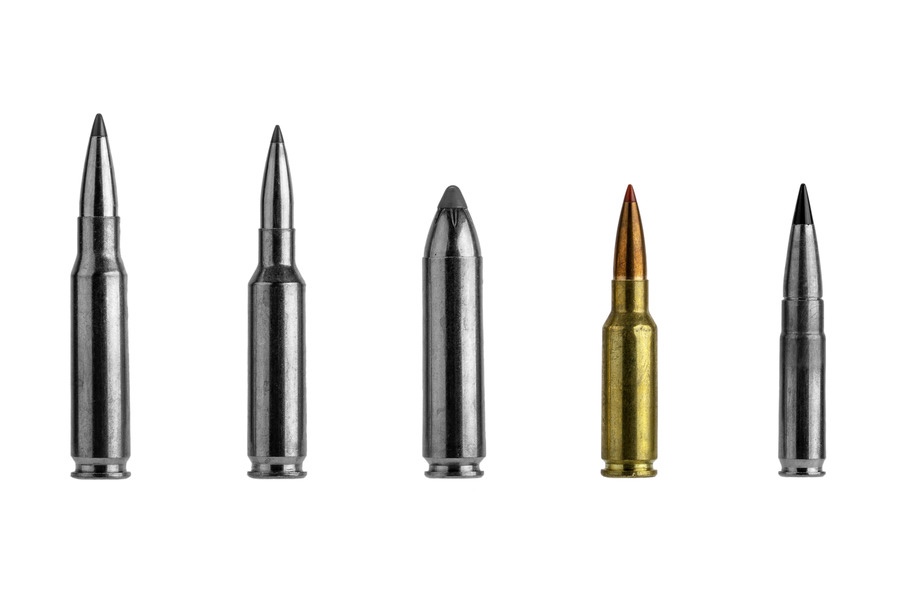
Just looking at a 6.5 Creedmoor cartridge vs. a 6.5 Grendel almost tells the tale of what to expect from the different offerings, but it’s a nuanced story with a lot of very cool features on both sides. You kind of just have to align with one or the other, or both, in separate configurations – especially if you are dropping either cartridge onto the backbone of the AR platform. They are very different beasts, and both are definitely beasts in their own right.
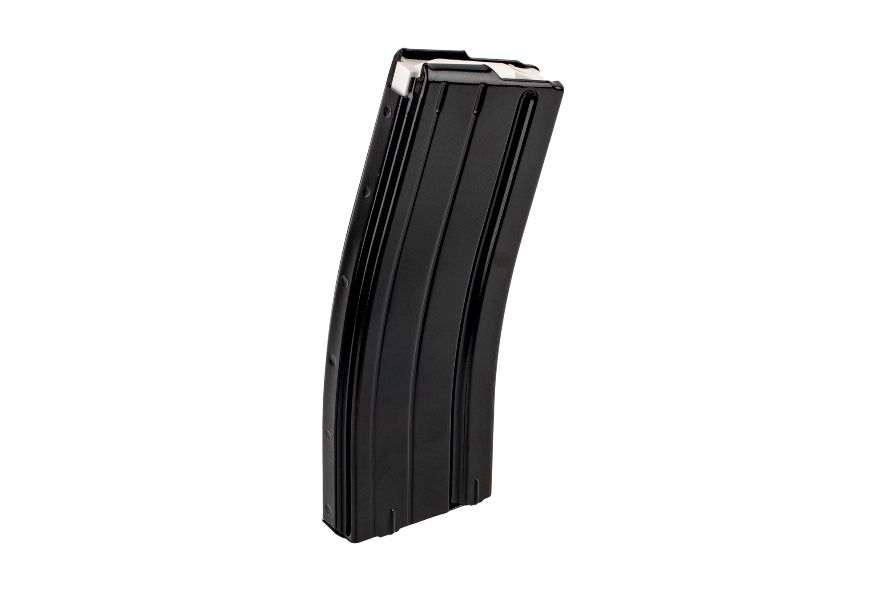
To say that a 6.5 Grendel is going to compete with benchrest cartridge offerings that have been punching 5-shot one-hole targets for decades is sort of ridiculous – it’s designed and built to fire reliably out of a basic AR-15 setup, with a bolt/carrier/barrel change. You’ll need a magazine too, but they aren’t typically hard to find. And that’s kind of the beauty of the Grendel in 6.5 – it’s approachable, can actually be found occasionally on the market instead of being a myth, and it doesn’t try to be something it isn’t.

If you want to shoot $3-4 a round ammo there are plenty of benchrest cartridges that will put you there. If you want to shoot a 6.5 Creedmoor on benchrest, you aren’t really opting for an AR anyways. So yeah – they do different things.

Bolt guns are the real domain for one hole targets that need to be in that one hole configuration all the time.

The cool thing about the 6.5 Grendel is that out to regular distances for range work, it’s going to get you really close to that desirable one-hole target, and you are probably less than 1k out of pocket on a decent upper receiver build, or less than $1500 on a dedicated factory rifle on the intermediate to high end. Sometimes you can find the kits or rifles at half those respective prices too – so yeah – it’s approachable for high end accuracy out of an AR.

If you’re talking about paper targets, the 6.5 Grendel is good to go to 750 yards and the 6.5 Creedmoor is good to twice that, but the Creedmoor won’t achieve those numbers out of a 20” or 22” barrel on an AR. In the field you can expect out of a typical AR configuration for the respective builds, about 650+ yards on the 6.5 Grendel and about 850+ yards on the Creedmoor, with both requiring a well dialed optic and some adjustment at those extreme distances to take a deer-sized animal at that range.

Ideally, you’re shooting a 6.5 Grendel out of a 20 or a 24 inch barrel from the AR, and you’re getting the most out of a 6.5 Creedmoor at a 24”+ barrel, with a 26” or 28” barrel being optimal for the 6.5 Creedmoor. Note: 24” Grendel barrels are basically a myth for the AR – super hard to find unless bespoke.

In the field hunting for deer, it almost makes more sense to be using the 6.5 Grendel unless you like the 6.5 Creedmoor so much you don’t mind carrying an AR that is 12+ pounds and has worse accuracy than the cheaper, lighter bolt action in the same caliber (Creedmoor). If you’re hunting for deer at greater than 650 yards with an AR, you may not be taking appropriate shots, even with a tack driver like the 6.5 class.

What’s a realistic expectation of all things equal with off the shelf components and an off the shelf or simple maker’s build?

You can get to ½ MOA all day long. But that may not even be the goal. What’s probably even more interesting, is that the 6.5 Grendel makes a compelling case as the gateway drug to the precision long range shooting world to allow casuals the opportunity to test the waters and see if they like it before they commit 15 weeks of pay to dip their toes in the long range precision game.

You get to test if you like tromping out 750 yards to get a target after only a handful of shots.

You get to test if you like adjusting windage for slight shifts in crosswind activity on the regular, so you don’t ruin that pretty target out there at 750 yards.
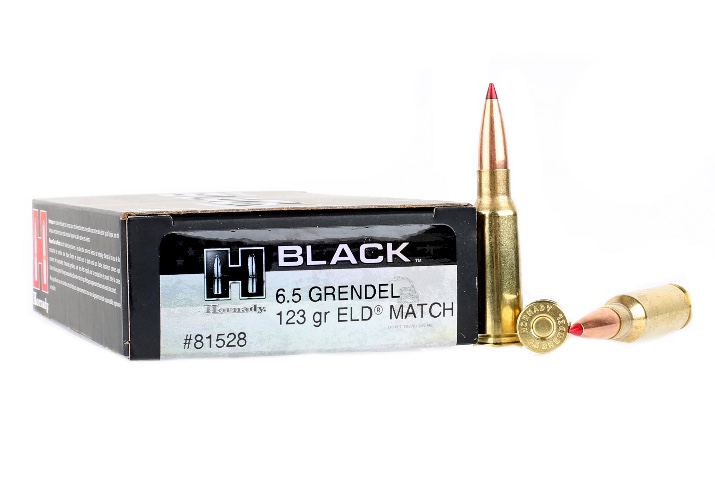
You get to find out if you mind only shooting $40 worth of ammunition on a range trip because you take 2-3 minutes or more playing around with the notepad and the settings and your bench configuration at the range between each shot.

You get to see what it’s like to not ALWAYS have a flyer on your AR target.

Here are the numbers for a basic comparison:

6.5 Grendel approximate average performance based on typical grain weights:

90 grain bullet; ~2875 fps velocity; ~1650 ft. lbs. of energy

120 grain bullet; ~2700 fps velocity; ~1950 ft. lbs. of energy

123 grain bullet; ~2675 fps velocity; ~1910 ft. lbs. of energy

130 grain bullet; ~2500 fps velocity; ~1810 ft. lbs. of energy

Note: shorter barrels than 24” are going to see some reduction in velocity and may see larger standard deviations.

6.5 Creedmoor approximate average performance based on typical grain weights:

120 grain bullet; ~3075 fps velocity; ~2450 ft. lbs. of energy

143 grain bullet; ~2750 fps velocity; ~2250 ft. lbs. of energy

Note: these are out of a 28 inch barrel, with a 26 or 28” barrel being optimal for the Cartridge; the average length of Creedmoor barrels for the AR308 platform is probably in the 20-22 inch range, so you can expect these velocities and the ultimate range of the projectile to take big hits.

The 6mm PPC that the original case for the Grendel was designed from, is a powerhouse in history, and the 6mm’s and 6.5mm classes are brilliant when it comes to delivering on target for accuracy. Ultimately, they are a great way to send a projectile on a man sized target or a deer sized target. That’s why the AR market has adapted to them so well. The terminal ballistics on both of the 6.5’s are excellent for hunting, and suitable for some military use cases. And the extended range on both the Grendel and the Creedmoor, while totally serving different goals, are incredible.

What can you expect? A very capable cartridge with a very nice range of activities with off-the-shelf ammunition that doesn’t cost more than $2 a round usually. The price probably has a bit of a kicker during times of low ammunition volumes, but it isn’t detrimental to the type of shooting that 6.5 shooters and hunters are doing. It’s a safe place to be for someone who wants more than a decent accuracy upgrade to their favorite rifle platform (the AR, obviously) and doesn’t want to be too far into the weeds for the privilege of it.

What was the original intent of the 6.5 Grendel

The original intent is touched upon up further in this article, but here’s a more in-depth exploration to help clarify how the 6.5 Grendel, despite being a bit less popular with the precision shooter crowd in the AR world, has outperformed its original intent in many observer’s minds.

Basically, the designer (Bill Alexander) wanted to outperform the .223 Remington and 5.56×45, with a longer effective range and that could be used in the normal OAL/magazine constraints of the AR. Pairing with Lapua Ballistics expert Janne Pohjoispaa and Arne Brennan, a competitive shooter, Alexander, who owns Alexander Arms, launched the product at a blackwater facility where it was more accurate than the .308 at intermediate distances and still had supersonic velocity at 1200 yards.

So, if anything you might gather from those statements – it should be that it was meant to be used in a military rifle, for use in battle. And meant to be better than the .223/5.56 and the fact that recoil is half that of the .308 and intermediate distance accuracy is better, it seems like it delivered on design parameters.

Has the 6.5 Grendel lived up to the hype?

It seems obvious by the sold out products in the space, and the demand for ammunition that it has gained more than a few fans or followers. But the basic performance promises of the cartridge make it very interesting for those who want to deer hunt with their AR out further; or want a flatter shooting, better terminal performance round for warfighting or defensive purposes.

It’s not the 1200 yard gun the Creedmoor can be with a long barrel and a bolt action. But is it the better option for those who value the numbers and want the familiarity and approachability of the AR?

It hasn’t won a contract yet for U.S. military adoption. The 6.8SPC hasn’t either, thanks to the cost prohibitive nature of swapping out a decades old relationship with the 5.56×45. Interestingly the 6.5 Grendel is being developed in a Zastava rifle that looks to be adopted eventually by the Serbian military forces.

The 6.8SPC is an interesting cartridge to compare beside the 6.5 Grendel:

6.8SPC approximate average performance based on typical grain weights:

115 grain bullet; ~2575 fps velocity; ~1675 ft. lbs. of energy

120 grain bullet; ~2450 fps velocity; ~1600 ft. lbs. of energy

Note: this is out of a 16 inch barrel which aligns well with military use cases, generally.

Given the nature of the things you can do with the Grendel out of a standard AR, it’s pretty safe to assume that the cartridge and subsequent builds on that platform have lived up to the hype. 

Where is the sweet spot for the 6.5 Grendel?
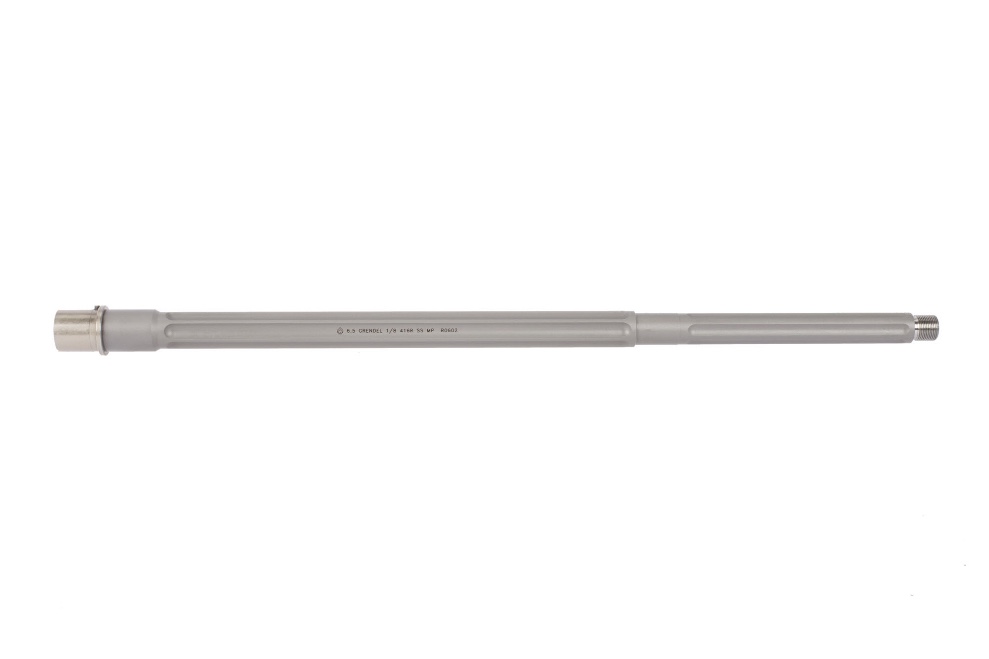
Shooting out of a 20” barrel on the AR would be nearly ideal thanks to the increased stiffness of the barrel, and the fact that the only real gain is tighter standard deviation ranges and some velocity past 600 yards if using a larger barrel length. The original manufacturer itself (Alexander Arms) points to a preference of 20” and 24” barrel lengths.

If you are hunting or target shooting past 450 yards and out to about 700, you can be well served by the 20” barrel and some basic understandings of your optic and the characteristics and bullet drops for the cartridge you are shooting.

On an AR, this makes it even more approachable than it already was, relative to the 6.5 Creedmoor, which is great on the AR, but much better on a long barreled bolt action in both target use and field use going after bigger game.

Some final notes about the 6.5 Grendel in an AR build

It’s a winner. It’s affordable. It’s realistic. It’s not pushing the absolute limits of the AR platform for no reason, and it can really get you where you want to be on an upper receiver platform, which may not be the case for many other alternatives. 

The 6.5 Grendel, despite not being chosen for a military contract, is well within the appropriate performance ranges to be considered a better alternative for nearly everything compared to the 5.56/.223, except when you factor in the access to cheaper ammunition that comes from being the darling of the US Armed Forces since the late 60’s. If you are not shooting 30 rounds at a time, but instead, 1 every 30-40 seconds, the Grendel is a compelling offering out of the AR, especially when you like tight groups and want to squeeze something different out of the muzzle of your AR. 

If you need a dual purpose rig for target work and deer harvesting, the 6.5 Grendel does not disappoint.

Primary Focus is a weekly feature from Primary Arms that covers various firearms related subjects.