Atrius Development Group

Archive for the ‘Army’ Category

‘The Backbone of Everything We Do:’ Army Advances New Communications Network Baseline

Monday, May 2nd, 2022

FORT MYER, Va. — From current support operations in Europe, to experimentation with emerging technologies at Project Convergence, leaders say it is clear that the Army must rely on an integrated, adaptive communications network to accomplish its missions.

“The network is the backbone of everything we do, and data is our new ammunition,” said Lt. Gen. James Richardson, Acting Commanding General of Army Futures Command, or AFC. “All of the experimentation we are doing today is informing where we are going for the future.”

On Tuesday, the Army took an important step forward in delivering that network with the completion of the critical design review for Capability Set 23, or CS23. CS23 aligns more than 40 systems — from Soldier radios and satellite terminals to mission command software and network operations tools — into a system of systems that increases network resiliency, capacity and convergence. Informed by test and experimentation, while balancing capabilities’ technical maturity, operational relevance and affordability, the critical design review is the acquisition event that finalizes the capability set design and authorizes limited production of CS23 systems.

“Capability Set 23 is not a singular, monolithic program — it is a compilation of many programs that come together to provide an operationally useful capability,” said Maj. Gen. Robert Collins, Program Executive Officer for Command, Control, and Communications — Tactical, or PEO C3T, the organization that leads the capability set process, along with AFC’s Network Cross-Functional Team. “It has been a tremendous collective team effort.”

The Army’s two-year network capability set delivery cycle is designed to enable consistent modernization driven by Soldier-led experimentation, commercial technology progress and overarching Army strategy — as well as Department of Defense initiatives such as Joint All-Domain Command and Control, or JADC2.

The Army is simultaneously fielding and developing several capability sets: CS21 is fielding, CS23 is in near-term development, CS25 is in technology maturation and prototyping, and CS27 design goals are being developed. While CS21 focused on Infantry formations at Brigade and below, Capability Sets 23 and 25 and beyond are increasingly targeting network modernization for mounted formations, as well as the Division level as the Army transitions to the Division as unit of action.

“From an operational perspective, what you’re really starting to see is how the Army wants to fight in the future be baked into each iteration of the Capability Sets,” said Lt. Gen. John Morrison Jr., Deputy Chief of Staff, G-6.

As the Army evolves to more data-centric, expeditionary and dispersed operations, Capability Set 23 will also deliver a foundational tactical data fabric that will provide commanders with relevant data at the point of need, as well as Mission Partner Environment data exchange capability that increases interoperability with coalition partners.

“We need to create a data centric environment, a cloud environment, a backbone that we can reach to for our data and render that data to our commanders so they can make informed decisions,” said Brig. Gen. Jeth Rey, Director of the Network CFT.

Capability Set 23 also increases integration of electronic warfare, intelligence, fires and sustainment capabilities into the network. It introduces high-throughput, low-latency satellite communications through commercial services and non-traditional orbits to provide additional communications options for commanders.

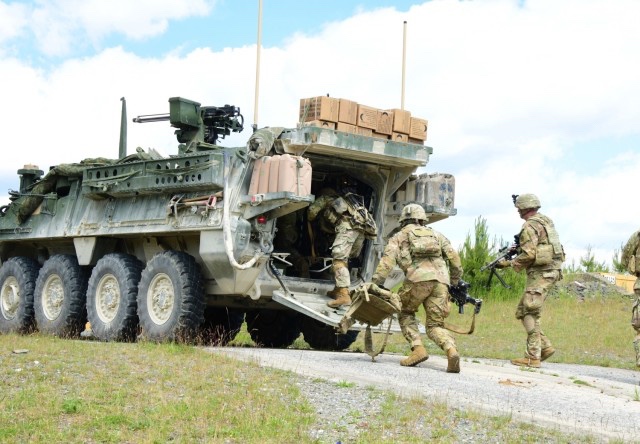
For Stryker formations such as the 2nd Cavalry Regiment — which has participated throughout the CS23 design and assessment process and will be the first mounted unit equipped with CS23 — the new technology improves digital voice and data communications for mounted and dismounted operations.

“This allows Soldiers to maintain their communications while inside the vehicles, and as they dismount the vehicles, they maintain that connectivity throughout their mission,” said Mindy Gabbert, Deputy Project Manager for Capability Set Development at PEO C3T.

Capability Sets utilize synchronized Soldier touchpoints, developmental and operational tests, and experiments such as Project Convergence and CyberQuest in order to fully vet and integrate systems so they are prepared for fielding. This ensures that input from the operational force, including lessons-learned from units supporting operations in Europe, is captured in the iterative design process.

“Tactical level Soldier/operator feedback more clearly informs and defines capability requirements,” said Maj. Todd M. Klinzing-Donaldson, head communications and network officer for the 2nd Armored Brigade Combat Team, 3rd Infantry Division, whose unit executed an Armor formation networking pilot earlier this year. “Our unit experimented with three unique equipment sets, focused on creating a more robust upper tactical internet capability that would build a better common operational picture for the unit commander.”

Feedback from the pilot event is already informing Capability Set 25, which will extend the network to Armor formations and continue to incorporate commercial solutions that enable the future network to be transport-agnostic, data-centric and underpinned by modernized security architecture and cyber resiliency. In parallel, the next step for Capability Set 23 will be a two-phase operational demo with the 2nd Cavalry Regiment that will take place staring in June, which will inform final CS23 fielding decisions to take place in Fiscal Year 2023.

By Claire Heininger and Amy Walker

Soldiers Trained on Inflatable Satellite Antenna

Saturday, April 30th, 2022

U.S. ARMY GARRISON HUMPHREYS, Republic of Korea — The Ready First Brigade will be prepared to order vital parts and supplies thanks to training received on the Combat Service Support Very Small Aperture Terminal, or CSS VSAT, an inflatable satellite antenna this past week.

Soldiers of 1st Armored Brigade Combat Team, 1st Armored Division, from Fort Bliss, Texas, were taught how to set up and operate the Army’s new inflatable satellite antenna, or ISA.

For Army logisticians who sustain their units with critical supplies, repair resources and parts, one of their most important tools is the CSS VSAT, a mobile satellite terminal found at every MSC within Eighth Army.

Eighth Army was the first unit to receive ISA systems. It is a lightweight, versatile satellite terminal, which Soldiers can set up and connect to a satellite to conduct logistics operations in the field. Soldiers can order anything from vehicle parts to medical supplies.

“In the [supply support activities], we support the requisition process of parts for customers, so in order for us to do that we have to put the order in the system of record, GCSS-Army, we depend on this internet connectivity that the ISA provides,” said Cpl. Faustina Fetalaiga, 501st Brigade Support Battalion, 1st ABCT, 1st AD. “This week we learned how to set up and operate the ISA and how to get the right azimuth to get the correct signal, so we are able to use the internet to order parts when we go to the field.”

For a week, the students from various 1st ABCT units from Camp Humphreys and Camp Casey took classroom lessons and later set up their ISA systems, which then connected to a satellite above Earth. The goal is to have each Ready First Brigade Soldier able to return to their units and set up and employ the ISA.

The class was taught by instructors from the 19th Expeditionary Sustainment Command Logistics Training Team.

The ISA system looks different than the legacy version; its dish sits inside a 1.2-meter inflatable ball. The ISA is more expeditionary than the legacy version because it only weighs approximately 150 pounds and packs into just two cases. It is designed so two Soldiers can set up the ISA in less than 30 minutes, compared to more than 45 minutes for the previous system, according to U.S. Army Communications-Electronics Command.

“The ISA is more compact, you can pack it up very quickly and bring it to another location if you need to move,” said Sgt. Tony Harrington, Sustainment Automation Support Management Office noncommissioned officer in-charge for 501st Brigade Support Battalion, 1st ABCT, 1st AD.

Harrington is an information technology specialist team leader who will help fix any issues Soldiers have with the ISA in the field.

“The legacy VSATs back in the states come in big boxes that you have to carry around to different places,” Harrington said. “We learned the setup and tear down process for the ISAs and my team and I have a lot of experience with the legacy VSATs so we’ll be able to troubleshoot any connectivity problems with the ISA if needed; it’s almost the same process.”

Harrington added the training is good for the Soldiers because it will help them set up the ISA properly and limit the amount of trouble calls his team gets so he’ll be available to help other Soldiers with troubleshooting issues.

Despite its appearance, the ISA will not pop like a balloon if punctured. The new system is also designed to withstand interference because wind tends to travel around its round shape as opposed to an exposed satellite dish. The ISA also can operate in additional spectrum bands, according to U.S. Army Communications-Electronics Command.

According to David Moody, 19th ESC, Logistics Management Specialist instructor, Eighth Army and U.S. Army Pacific are the only U.S. Army units to use the ISA right now. He and his team have been conducting continuous training on the ISA since it arrived and are fulfilling Eighth Army G4’s request to have rotational brigade Soldiers trained to set them up for success.

“I was asked back at Fort Bliss if I wanted to attend this class before we deployed,” said Fetalaiga. “This class has been great and I appreciate the civilian instructors. I’m glad I told them I wanted to attend.”

By Kenji Thuloweit

Photos by PVT Lee, Hee-won

New Soldier-Protection Turret Developed for Armored Multi-Purpose Vehicle

Thursday, April 28th, 2022

PICATINNY ARSENAL, N.J. — Soldiers are getting a chance to evaluate and train with a new armored turret system for the Armored Multi-Purpose Vehicle, the latest U.S. Army platform within the high-priority Next Generation Combat Vehicle modernization program.

The new Objective Commander’s Weapon Station integrates with all five variants of the AMPV: a general-purpose vehicle, mission command vehicle, mortar carrier, medical evacuation and medical treatment vehicles. The AMPV is currently in low-rate production.

The OCWS system, which addresses the ongoing need to develop advanced armor protection and capabilities for Soldiers, is part of the broad sweep of modernization efforts within the U.S. Army. The advanced protection kit has a new armor alloy and a titanium hatch design.

The OCWS turret protects the vehicle commander, who operates as the gunner on the top side of the vehicle. Essential features include periscopes, motorized rotation and a spacious interior that allows the gunner to perform complex missions under protection. The weapon mount on the system gives the gunner full access to the suite of crew served weapons, providing a range of firepower options.

The OCWS was developed and prototyped by engineers at the U.S. Army Combat Capabilities Development Command Armaments Center at Picatinny Arsenal, New Jersey. The Armaments Center reports to the U.S. Army Combat Capabilities Development Command, which is part of Army Futures Command.

“The OCWS is definitely one of our more sophisticated turret systems,” said Thomas Kiel, who leads the engineering activity for U.S. Army and U.S. Marine Corps armored and tactical vehicle turrets within the DEVCOM Armaments Center Force Protection team. “The AMPV was developed to operate on the front lines of the battlefield, and our team had to accommodate the challenging requirements associated with that,” Kiel added.

The OCWS includes a combination of opaque and transparent armor that is specially configured to provide advanced protection and situational awareness for the Commander. The Armaments Center works closely with DEVCOM’s Army Research Laboratory to ensure that the high performing armor materials are lightweight, affordable and readily available.

“Our initial prototype was integrated with the vehicle at the test site for a formal user evaluation,” said Narayan Bhagavatula, Program Lead for Gunner Protection Systems within Program Manager Soldier Lethality, also located at Picatinny Arsenal.

Experienced warfighters, program managers and Picatinny engineers participated in a Human Systems Integration event at the Aberdeen Test Center for a complete evaluation of every aspect of the new turret. “It is critical that the OCWS meets the needs of the Soldier,” said Bhagavatula. “User feedback is the most important aspect of our development process.”

At the Soldier-centered event, the turret team gathers all comments and recommendations from Soldiers and incorporates them into the design. Engineering analysis of the updated computer models follows each design change.

“We’re able to really push the envelope on system complexity and performance because of recent advances in modeling and simulation,” said Kiel. The engineers work closely with the Gaming, Interactive Technologies & Multimedia team at the Armaments Center to evaluate computer models within a virtual environment that simulate various battlefield scenarios, from dense urban combat to open terrain, under certain weather conditions.

In collaboration with Rowan University in Glassboro, New Jersey, the Armaments Center is acquiring new simulation technologies and toolsets that make it possible to evaluate the overall effectiveness of new weapon systems through fully immersive environments.

“Through advanced modeling, we can predict the behavior of our turrets under extreme stress, as well as understand how the system will be used during combat,” said Kiel. “The engineering data we generate is treated as a weapon system and is managed and secured as such,” he added.

The DEVCOM Armaments Center has the lead within the DOD in the development of Tactical Vehicle Turret Systems. More than 50,000 systems have been fielded on a variety of platforms, including the Humvee, Mine Resistant Ambush Protected Vehicles, the MRAP All-Terrain Vehicle and others. Objective Gunner Protection Kit Turrets are standard for the Joint Light Tactical Vehicle.

At least 14 patents have been issued related to the development of turret systems, including three that were selected as Army’s Greatest Inventions. AGI awards are considered somewhat of a “Soldier’s Choice Award” because nominations are judged by a panel of noncommissioned officers with recent combat experience as well as practical, hands-on experience.

The Product Data Management team at Picatinny is responsible for processing and maintaining all aspects of weapon system data, which is used throughout the Armaments Center enterprise for various functions such as prototype fabrication, structural modeling, and cost analysis. “The technical data itself is a strategic asset for the U.S. Army and a crucial component in achieving military advantage,” Kiel said.

“We built all of the prototype OCWS turrets in-house over the last 18 months,” said Bhagavatula. “Meeting the aggressive test schedule was a top priority, along with finalizing the technical data package for the start of low-rate production,” he added. Assembled within its Prototype Integration Facility, the Armaments Center provided 20 OCWS turrets for test and evaluation.

The AMPV with OCWS has undergone reliability, availability, and maintainability testing at Yuma Proving Ground, Arizona, as well as live-fire testing at Aberdeen Proving Ground, Maryland.

Follow-on operational testing of the AMPV with Soldiers is underway.

By Ed Lopez, Picatinny Arsenal Public Affairs

DEVCOM Soldier Center Seeks to Improve Body Armor for Women

Tuesday, April 26th, 2022

NATICK, Mass. — Researchers at the U.S. Army Combat Capabilities Development Command Soldier Center, or DEVCOM SC, have developed a body armor questionnaire to help improve body armor for female users specifically and for all body armor users in general.

The researchers at DEVCOM SC — who are longtime experts in Soldier protection, human factors and gathering/analyzing Soldier input — are investigating body armor fit and related issues, and how those issues impact the ability of users to perform their mission.

Participation from current and past users of body armor will provide researchers with insight into user needs and ways to make improvements. Data will be collected from a questionnaire completed by eligible individuals.

The questionnaire is part of DEVCOM SC’s larger effort to support the Female Body Armor Modernization Act. In support of the act, DEVCOM SC is investigating and developing body armor system improvements specifically focused on women as well as improvements that will benefit both male and female Soldiers. DEVCOM SC’s Applied Ergonomics Team and the Consumer Research Team, both part of DEVCOM SC’s Soldier Effectiveness Directorate, have worked together to develop the questionnaire.

Blake Mitchell, team leader of the Applied Ergonomics Team and lead for the Anthropometric Study for the Female Body Armor Modernization program, explained that the questionnaire will help “to identify the predominant fit and performance issues, as well as the body armor system sizing and issuance process experienced by women in the Army.”

Mitchell explained that the questionnaire goes into considerable depth in its attempt to identify what the primary issues are in a way that can allow for design improvements. The questionnaire gives participants the means to identify ways they are not fully protected, any discomfort they experience — both short or long term — and how issues with fit may impede their ability to do their job.

“We want potential participants to understand the importance of completing this survey, because it takes time to answer all questions honestly and thoroughly, particularly for those who have more experience with body armor,” said Wendy Johnson, a research psychologist on the Consumer Research Team. “In order to make the survey more convenient and to accommodate their schedules, participants have up to seven days to complete the survey once they begin.”

The questionnaire is aimed at women in the Army, but all genders are welcome to respond. The research team hopes to use data from male respondents to better understand their general fit and performance issues. Researchers are also interested in gathering opinions of body armor users from the National Guard and the Reserves, as well as individuals who have recently separated from the military.

“We hope to elicit responses from a wide variety of mission areas across the military – from people that only have to wear body armor occasionally to those that wear it day and night for extended periods of time,” said Mitchell. “Having data from a broad array of users will allow us more power in how we understand and interpret the data, and aid in the better design of future systems to accommodate a broader range of the user population.”

The questionnaire asks respondents relevant questions about their body shape and size, as well as their experiences with, and performance impacts due to, body armor use. In addition to identifying the specific body armor elements that need to be improved, researchers also hope to find out what is working well.

“Researchers will summarize the information derived from this questionnaire and will make it available to designers, manufacturers and acquisition personnel,” said Mitchell. “Key issues will be grouped based on demographic and anthropometric descriptors to lead to a better understanding of how to improve fit and performance.”

As part of their larger effort to improve female body armor, DEVCOM SC researchers are also using data from the 2012 Anthropometric Survey, or ANSUR II, to better understand the size and shape of women who make up the U.S. Army. ANSUR II includes direct measurements and three-dimensional whole-body scans. ANSUR II was executed by DEVCOM SC and is one of the world’s largest and most comprehensive anthropometric surveys. It provides invaluable data that aids the design and optimization of a wide range of products.

The body armor questionnaire is part of DEVCOM SC’s ongoing emphasis on Soldier input as a key component in all research and product development.

“The Soldier Center wants to ensure that all of the products we support meet the requirements of all Soldiers so they can complete their mission and do their job without creating unneeded or additional burdens for them,” said Mitchell. “This questionnaire will provide specific information on Soldier’s preferences and experiences for body armor in their own voice.”

Data gathered from DEVCOM SC’s questionnaire will be used to improve future body armor development efforts for the Army. Navy body armor designers and project officers have also expressed interest in the results and have requested information and summary data on female Sailors who have experience with certain Navy body armor systems, as responses from other services are also being collected. The Soldier Center plans to have a summary of results by the end of the fiscal year.

If you are interested in participating in the questionnaire, it is available at online.

By Jane Benson, DEVCOM SC Public Affairs

Army Industrial Base Poised for Holistic Modernization

Saturday, April 23rd, 2022

REDSTONE ARSENAL, Ala. — As the Army undergoes its greatest transformation in more than 40 years, senior leaders are taking steps to ensure persistent modernization of the Organic Industrial Base to sustain the next generation of Army equipment, current unit readiness and the ability to surge in support of contingencies.

The Army’s OIB Modernization Implementation Plan, led by Army Materiel Command, will modernize facilities, processes and the workforce across the 23 depots, arsenals and ammunition plants that manufacture and reset equipment, generating readiness and operational capability throughout Army formations. The Army OIB is comprised mostly of facilities that were built during World War II.

“The 15-year OIB modernization plan represents a once-in-a-generation chance to holistically modernize,” said Gen. Ed Daly, commanding general of AMC. “The plan provides a deliberate and comprehensive roadmap to a 21st century OIB focused on processes, facilities, equipment, workforce, data and information technology, as well as energy and cyber resilience.”

Last year, the Army stood up an OIB Modernization Task Force with experts from across the service. The task force has collaborated over a series of planning sessions, site visits and war games to develop a holistic investment plan to bring the OIB into the 21st century, infuse industry best practices and refine human capital management structures to maximize the skills and capabilities of the workforce.

“We are exploring new production processes to enhance capacity and improve resiliency, rebuild organic capabilities and develop new ways to leverage innovation technologies,” said Doug Bush, the Assistant Secretary of the Army for Acquisition, Logistics, and Technology.

The 15-year OIB Modernization Implementation Plan synchronizes a cost-neutral investment of an estimated $16 billion in three phases: Build 21st Century Capability for the Future (Fiscal Years 24-28); Continue to Build Capabilities and Attack Vulnerabilities (FY29-33); and Maintain and Sustain OIB Investments (FY34-38).

“The first phase is getting at the most critical processes and capabilities that we need immediately,” said Daly. “The second phase is really expanding those 21st century capabilities and reducing our vulnerabilities, and then the third phase is continuing to expand beyond that and into the future.”

ASA(ALT) and AMC, in collaboration with the Secretariat, Department of the Army partners, academia and industry, built the OIB MIP from the 2019 Army Modernization Strategy and 2019 Army Organic Industrial Base Strategy. These investments are tied directly to the Army’s signature modernization efforts, ensuring that the OIB is ready to sustain the next generation of Army equipment.

“History is replete with examples of the OIB’s criticality,” said Daly. “This is getting at the continuance of that legacy. It is ensuring the OIB can better support surge capacity for Large Scale Combat Operations, reducing single points of failure and mitigating supply chain vulnerabilities.”

A key piece of these modernization efforts is empowering the OIB workforce, approximately 32,000 employees who work in more than 240 different job fields, ranging from aircraft mechanics, machine tool operators, welders and machinists.

“Our artisan workforce provide the best equipment the world has ever seen, and it is their dedication that lets a warfighter know when they take a piece of equipment on the battlefield, it will survive enemy contact,” said Daly. “They are the backbone of the OIB. To meet the Army’s future needs, we need to ensure we are recruiting, training and retaining the next generation of artisans. We must identify and prioritize the jobs and skill sets needed to repair the Army’s future equipment.”

A living document, the OIB MIP was developed through data-driven decisions tied to the Army’s priorities of People, Readiness and Modernization. The OIB Modernization Task Force transitioned the 23 sites from having separate, hard-copy master plans to using an enterprise data repository that can show real-time updates and information.

“It’s dynamic, flexible in nature and it will be revisited on an annual basis,” said Daly.

By Megan Gully, U.S. Army Materiel Command Public Affairs

UT System, U.S. Army Futures Command Announce Partnership to Accelerate Innovation in Trauma Care

Wednesday, April 20th, 2022

The University of Texas System and the United States Army Futures Command (AFC) have formed an official educational and cooperative research partnership to advance medical science and technology to save lives both on and off the battlefield.

Since last year, leaders from the UT System, AFC, U.S. Army Medical Research Command and U.S. Army Institute of Surgical Research (USAISR) have been exploring how to work together to solve some of the most critical issues affecting soldiers injured in combat.



Today, they formally signed two agreements to streamline collaboration between the military and UT institutions: an Educational Partnership Agreement and a Cooperative Research and Development Agreement.

The agreements will allow a continuous flow of resources, research and scientific expertise, focusing specifically on medical science and technological innovations.

“I can not emphasize how groundbreaking this will be,” said Lt. Gen. James Richardson, AFC acting commanding general. “This will allow opportunities for furthering research and expand capabilities for improving our work in the critical area of trauma care, which will extend to our future soldiers and also have impacts in our communities.”

The partnership will leverage the scale and expertise of the both the UT System and the Army, UT System Chancellor James B. Milliken said.

“The military brings to the table a substantial health research infrastructure, unrivaled experience in battlefield trauma, and the capacity to test innovations in the field,” Milliken said. “UT institutions offer an extensive basic and applied science infrastructure, a world-class system for conducting clinical trials, and some of the world’s most brilliant and innovative minds.”

During a Summit last year, researchers and military health specialists from AFC and the UT System emphasized the need to turn the “Golden Hour” into the “Golden Day,” referring to the timeframe following a battlefield wound when proper medical treatment is crucial to survival. Following the Summit, several UT institutions and USAISR developed collaborating research proposals to address the underlying causes of tissue damage and novel treatment options following trauma.

The UT System and Army Futures Command anticipate that the new partnership will have long-lasting impacts on both soldiers as well as civilians who suffer traumatic injuries that land them in the emergency room.

The partnership also builds on numerous existing collaborations between the Army and UT institutions.

The UT System Board of Regents allocated $50 million to UT Austin to establish facilities to develop and test robotic systems and artificial intelligence through the new Robotics Center of Excellence. Researchers at UT Arlington are studying the human dynamics of decision-making, and UT Dallas is creating chemically powered artificial muscles that could power robotic mules to serve as alternative Army vehicles. UT San Antonio and UT El Paso are working with the Army to advance cybersecurity.

In addition, the UT System currently has several research projects with the Department of Defense to create more technologically advanced cybersecurity systems and to support the use of robotics in combat. The collaboration aims to deliver breakthroughs in the science of combat casualty care, such as delivering oxygen to tissue, shock management, wound progression and infection, as well as physical pain or PTSD.  

US Army Selects SIG SAUER for Next Generation Squad Weapons Program

Tuesday, April 19th, 2022

The US Army has just announced that it has selected SIG SAUER under an Other Transaction Agreement to provide their SPEAR and Lightweight Machine Gun as the new XM5 Rifle and XM250 Automatic Rifle. Both fire a hybrid cased cartridge in 6.8 x 51mm which features a steel head and brass case firing a government provided projectile. This cartridge offers similar performance to .270 Win Short Mag. The 6.8 Common Cartridge Family of Ammunition will be manufactured by Winchester at Lake City Army Ammunition Plant.

The Army selected the SIG SPEAR which is a large frame version of the MCX Carbine used by US and foreign SOF and features selective fire and ambidextrous controls. The new beltfed machine gun is lighter than the currently issued SAW and has a lower recoil impulse than the M4 Carbine. It’s a joy to shoot. Additionally, the system includes suppressors for both weapons. Rumor has it the contract ceiling has room to buy over 500,000 rifles and almost 80,000 beltfed machine guns over a 10-year period.

The Army has also put out feelers to industry, seeking manufacturers for conversion kits for the existing 7.62 NATO M240 beltfed Machine Gun to 6.8mm.

The road to the selection of a NGSW system was started about five years ago with a short lived quest for an Interim Combat Service Rifle in 7.62 NATO which quickly morphed into the search for 6.8mm weapons to replace the 5.56 NATO M4 Carbine and M249 Squad Automatic Weapon in close combat formations which include Infantry, Cav Scout, and Engineer squads.

Both USSOCOM and US Marine Corps are monitoring the program. It will be interesting to see how this affects SOCOM’s 6.5 Creedmoor-based initiatives. As for the Marine Corps, word is that they would only transition away from their H&K produced 416 rifles, named the M27 if it were to a bullpup platform.

An OTA for a Fire Control System to enable NGSW was awarded to Vortex Optics in January.

The other system under consideration by the Army for NGSW was from True Velocity which proposed a polymer cased ammunition and bullpup Rifle and Automatic Rifles. This would have been a shoe-in for the Marines if those rumors I mentioned earlier are true.

Between the two options many in industry considered SIG a lower risk and the “Easy Button” as the ammunition technology is very straight forward and can be manufactured using existing machinery. Additionally, the weapons will seem quite familiar to service members who currently use the M4 and M249 due to similar controls and ergonomics. Finally, SIG has undertaken several successful military contracts for ammunition, optics, and weapons, including the Modular Handgun System.

The Army now faces the arduous task of putting this new ammunition and weapons through developmental and operational testing and determining how their increased range and lethality will affect employment of the close combat squad. Expect some teething pains, but also look forward to the opportunities that come with a new weapon and cartridge.

SIG also plans to offer their ammunition (.277 SIG FURY), Rifle and suppressor commercially.

To wrap things up, I’ll just say that this article from earlier today didn’t age well. A lot of people thought the Army would cancel this program. They didn’t, and they are moving ahead with it. If you’re one of them, its time to go through the stages of grief and make it to acceptance. This is happening.

US Military Academy at West Point Combat Weapons Team Defends Title as SIG Relentless Warrior Champion

Tuesday, April 19th, 2022

NEWINGTON, N.H., (April 19, 2022) – SIG SAUER, Inc. is honored to announce the conclusion of the Fourth Annual SIG Relentless Warrior Championship.  On Saturday, April 9, 2022, over eighty cadets from the United States Air Force Academy, United States Naval Academy, United States Coast Guard Academy, United States Military Academy at West Point, Texas A & M, Virginia Military Institute (VMI), Virginia Tech and the Royal Military College of Canada competed in the SIG Relentless Warrior Championship at the SIG SAUER Academy in Epping, New Hampshire.  The course of fire consisted of six mission stages that tested the marksmanship and leadership skills of our future military leaders.  The U.S. Military Academy at West Point Combat Weapons Team defended their title to earn the honor of 2022 SIG Relentless Warrior Champion. 

“The SIG Relentless Warrior Championship is the highlight of the season for West Point’s Combat Weapons Team, as it is the ultimate test of our Cadets’ abilities to problem solve, plan, and test their training and shooting skills against some of the best collegiate-level combat weapons shooters in the nation,” explained Lieutenant Colonel Charles Faint, the Team’s Officer in Charge (OIC). “This was an exceptional win for the Team and validates our program’s focus on developing our Cadets to be the best leaders, shooters, and warriors that they can be.”

“Our team was relentless when it came to our training and their hard work and dedication was validated by the win and defending our title,” added Coach Gary Salman.  “We are extremely thankful to SIG SAUER for providing this opportunity to our cadets and for creating a format to bring these teams together for competition and camaraderie.  We look forward to next year’s challenge.”

Additional top awards for the SIG Relentless Warrior Championship are as follows:

Top Gun:   Awarded to the individual first place finisher of the competition

      Jake Vollmond (US Military Academy at West Point)

High Lady: Awarded to the top female competitor

    Ayla Myrin (Texas A&M)

Top Shot:  Awarded to the best shooter from every school

   Caleb Brady (US Air Force Academy)

   Joseph Simmons (US Coast Guard Academy)

   Jaimeson Hamsho (US Naval Academy)

   Joshua Delgado (Texas A&M)

   Braden Kerr (Virginia Military Institute)

   Adam Jardines (Virginia Polytechnic Institute)

   Jake Vollmond (US Military Academy at West Point)

“It’s an honor for SIG SAUER to host the SIG Relentless Warrior Championship for these cadets each year, and after a two-year hiatus from an in-person event, it was especially meaningful to bring this group together to participate in their development and watch them persevere throughout the competition as they prepare to lead and serve our country and defend our freedoms,” added Tom Taylor, Chief Marketing Officer and Executive Vice President, Commercial Sales, SIG SAUER, Inc.

The 2022 SIG Relentless Warrior Championship was sponsored by GO RUCK, GT Targets, and Atlas PyroVision Entertainment. 

www.sigsauer.com