FirstSpear TV

Archive for the ‘Army’ Category

The Joint Fight: Arctic Paratroopers and HIMARS Build Combat Power During Northern Edge 21

Saturday, May 22nd, 2021

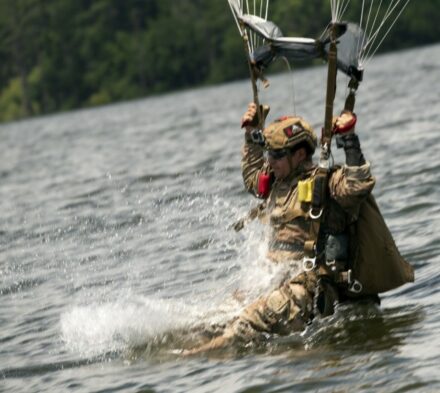
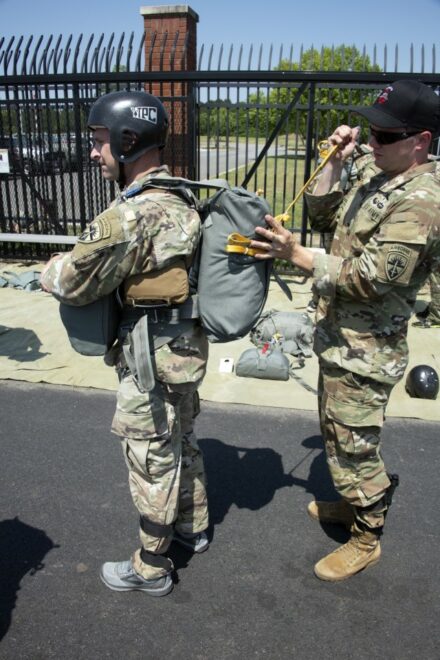
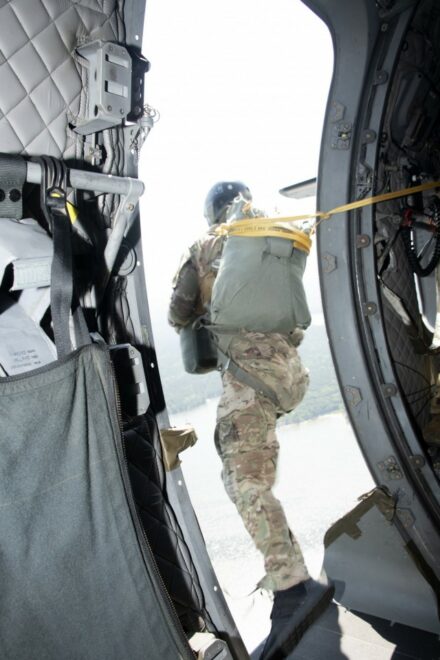
FORT GREELY, Alaska — Paratroopers with 4th Infantry Brigade Combat Team (Airborne), 25th Infantry Division, conducted an airborne operation May 11, 2021, onto Allen Army Airfield, Fort Greely, Alaska, as part of Northern Edge 2021.

Following the seizure of the airfield, an M142 High Mobility Artillery Rocket System (HIMARS) battery from the 17th Field Artillery Brigade out of Joint Base Lewis-McChord arrived and conducted a live fire exercise at nearby Donnelly Training Area.

Approximately 300 paratroopers from the 1st Battalion, 501st Parachute Infantry Regiment, out of Joint Base Elmendorf-Richardson, Alaska, exited from U.S. Air Force C-17 Globemaster III and C-130 Hercules aircraft while A-10 Thunderbolt IIs orbited, providing close air support. Once on the ground, paratroopers moved to their assembly areas to consolidate and secure the airfield as additional C-130s and C-17s landed with more paratroopers, equipment and the HIMARS battery.

The HIMARS battery with 5th Battalion, 3rd Field Artillery Regiment, was air transported from Cold Bay, Alaska, and fired a full volley of rockets that demonstrated the ability of the joint force to quickly build and implement combat power.

Conducting a JFEO as part of a joint operation is nothing new to the Spartan paratroopers who train for operations like this all year long.

“We’ve been doing this for a long time, and each paratrooper knows their role,” said Maj. Michael Conforti, the operations officer for 1-501st PIR. “You never know if an aircraft will have a mechanical issue, or someone will get injured, so the key to success is that each paratrooper also knows the jobs and duties of everyone else around them.”

Understanding the role of adjacent units and enhancing the ability to work together are key components of exercise NE21.

NE21 is a U.S. Indo-Pacific Command sponsored, Headquarters Pacific Air Forces led U.S. joint field training exercise scheduled for May 3-14, 2021, in locations in and around Alaska that uses realistic scenarios to improve joint combat readiness.

The Spartan Brigade is the only airborne infantry brigade combat team in the Indo-Pacific Command and provides the combatant commander with the unique capability to project an expeditionary force by air across Pacific and Arctic regions.

By MAJ Jason Welch

US Army Scientists Developing Solutions to Improve Thermal Toughness in the Arctic

Tuesday, May 18th, 2021

NATICK, Mass. – For the Arctic Soldier, thermal toughness is essential for operating and training in the coldest conditions. Scientists from the U.S. Army Research Institute of Environmental Medicine are developing solutions to make this ability a reality.

These innovations could not come sooner. The increasing accessibility of the Arctic has led to the U.S. Army focusing on rebuilding its ability to operate in extreme cold-weather conditions. This spring, the Army released its Arctic Strategy, which lays out how the service can better position itself to operate in the region.

The strategy includes plans about establishing an operational two-star headquarters with specially trained and equipped units. The Army also has ongoing efforts to improve the quality of life for its Soldiers, civilians and families who live and work in the Arctic-region installations.

USARIEM’s cold research team has spent decades studying the effects of cold weather on warfighter health and performance. Dr. Karl Friedl and Dr. John Castellani have been key players in the field.

Friedl, USARIEM’s senior research scientist for Army physiology, has studied the limits of human performance in extreme environments, including the cold. He has even joined Arctic training exercises to learn first-hand what Arctic warfighters need to fight and win. Castellani, a research physiologist, has led USARIEM’s efforts in studying the causes, management and treatment of major cold injuries, including trench foot, frostbite and hypothermia.

Both scientists know better than anyone that “A man in the cold is not necessarily a cold man.” Yet, to get to that level, Soldiers need a high level of preparation and training, as well as every advantage the Army can provide.

Modern Guidance for Modern Warfighters

“A very critical part of the training is to learn the early signs of cold on the body and to understand how to be comfortably cold,” Friedl said. “The Soldier has to know when they can readily recover and when they are entering a physiological danger zone of cold exposure where they must take action immediately.”

Training in the Arctic is a formidable task. In cold conditions, a single mistake may be only minutes from disaster. A lost glove, an ignored cold foot, heavy sweating during exertion, or a snowmobile accident can result in a rapidly progressing injury without hope for a quick evacuation to warmer surroundings or even shelter from the freezing temperatures.

Castellani explained that freezing and non-freezing cold injuries are treatable when they’re caught early. When left untreated for too long, they can result in lifelong nerve damage, or worse, loss of appendages.

“We certainly know what causes these injuries,” Castellani said. “The next thing we need to do is to develop solutions and guidance to prevent them in the first place. Modernizing the Army’s medical guidance on cold injury prevention, Technical Bulletin Medical 508, is one of our most significant efforts.”

TB Med 508 gives military and civilian healthcare providers medical guidance for cold-weather conditions. This medical guidance is based on decades of USARIEM’s research on health and performance in cold weather. Some of the topics in TB Med 508 include information on how the body responds to the cold, how Soldiers should prepare when deploying to the Arctic and how to mitigate and treat different cold-weather injuries.

USARIEM published the most recent copy of TB Med 508 in 2005. Castellani’s team is now leading an effort to update this guidance in partnership with the Office of the Surgeon General, specially trained Army Arctic installations, and several military hospitals and training centers.

“This is going to be a significant update to the Army’s medical guidance on cold weather,” Castellani said. “We are particularly focused on the treatment sections. We are also adding new guidance derived from significant data findings on performance in cold, wet environments, like swamps and bogs.”

Friedl added that USARIEM also develops predictive models that will help the AI-enabled warfighter plan missions and mitigate injuries in cold or wet environments. These include solutions like the Cold Weather Ensemble Decision Aid, or CoWEDA, which prevents hypothermia and frostbite by predicting how long warfighters can endure the cold based upon their clothing, activity and environmental conditions. The CoWEDA was recently used by Soldiers in the 2021 Arctic Warrior Training Exercise.

Another mission planning tool is the Probability of Survival Decision Aid, or PSDA, a computer program that predicts an individual’s survival time during water immersion by taking to account hypothermia and dehydration. The PSDA has been transitioned to the U.S. Coast Guard since 2010 and is implemented as a mandatory element to their Search and Rescue Operations. It has also been transitioned internationally to collaborative partners.

A Hands-On Approach

Improving cold-weather guidance is only part of the solution. According to Castellani, even the best equipment and guidance do not benefit Soldiers if they cannot use their hands and fingers in the field.

“The loss of hand dexterity can occur because the body’s natural reaction to more frigid temperatures is to decrease blood flow to the hands and feet,” Castellani said. “The body sends that blood to protect and warm the core, where major organs are located. The problem is that warfighters need hand dexterity for many military-relevant tasks, including shooting, handling equipment and treating injured Soldiers.”

Castellani is leading several USARIEM efforts in developing physiological and technological solutions to improve hand blood flow. These solutions could lead to Soldiers having warmer hands and fingers and improved dexterity in cold conditions. These innovations could especially come in handy as the Army veers toward using gear that requires more dexterity and hand function.

One of these solutions includes USARIEM’s forearm heating device, called the Personal Heating Dexterity Device, or PHD2. Castellani’s team has developed a prototype of the PHD2 for field testing using two parallel efforts, both in-house and through the Small Business Innovation Research program. His team is preparing to test the product in the field next winter with Alaska National Guard troops during Arctic Eagle 2022.

“Our previous research has shown that warming the forearm increases hand and finger temperatures significantly,” Castellani said. “The result is that Soldiers can have improved hand dexterity.”

His team is also conducting a Defense Health Program-funded effort this year to examine the effect of a cocoa-based flavanol supplement in cold conditions. Studies have shown that flavanol, a nutrient often found in cocoa beans and tea leaves, can help improve blood flow. The researchers are now testing if taking this supplement could increase blood flow to the hands and fingers, improving hand dexterity in the cold.

The researchers will be testing other methods of hand-warming in future studies, including one on occlusion training and another on cold-weather habituation. Occlusion training is typically used in bodybuilding. It involves intermittently restricting blood flow in the arm and allowing it to flow again every five minutes. According to Castellani, recent studies have shown that this method may increase normal blood flow. His team will be investigating whether this method can be used to improve hand function in the cold. The research study is being proposed for the fiscal year 2022.

He added that USARIEM’s cold habituation study will be learning how people’s bodies get used to the cold over time. It is unknown how this change occurs in our bodies.

“We’re trying to understand what changes happen in your skin and underlying tissue that help you adapt to a cold environment after you have been exposed to it for a while,” Castellani said. “This will help us develop novel countermeasures that will improve thermal toughness.”

Approximately 11,600 Soldiers serve at Fort Wainwright and Joint Base Elmendorf-Richardson under the command of U.S. Army Alaska. While there are no current plans to station more Soldiers in Alaska, a decision on that could occur within a year.

As an increasing number of Soldiers pour into the Arctic, it’s important that Army scientists ensure that Soldiers will have the biomedical solutions needed to fight and win in the frigid temperatures. According to Friedl, USARIEM is up for the task.

“It has been said that Soldiers who successfully perform in the Arctic can function in any other environment in the world,” Friedl said. “USARIEM has been the U.S. Department of Defense leader in cold physiology research for over 50 years. This research improves our understanding of what Soldiers need to be resilient in these environmental extremes.”

By Mallory Roussel

Vivo Barefoot – Tracker Forest ESC

Thursday, May 13th, 2021

Designed in conjunction with wilderness experts from Wild Human and the Independent Adventurer, Vivo Barefoot’s Tracker Forest ESC is a rather unconventional hiking boot.

Their Wildhide leather is naturally scarred and comes from free-roaming cattle sourced from small scale farmers.

Above you can see the Michelin Esc Sole. Sausage laces are paired with barrel eyelets.

Additionally, these do not incorporate a waterproof membrane. Instead, they rely on construction and the use of Renapur Leather Balsam (included with boots) to keep the leather water resistant, yet facilitate breathability.

As you can see, this simple construction offers a great deal of flexibility.

Made in Vietnam.

www.vivobarefoot.com/us/tracker-forest-esc-mens

KONGSBERG Awarded Extension of US Army CROWS Frame Contract

Wednesday, May 12th, 2021

Kongsberg Defence & Aerospace AS (KONGSBERG) has been awarded an extension to the CROWS IDIQ (Indefinite Delivery/Indefinite Quantity) frame contract with the US Army first announced September 14, 2018. This extension is valued at approximately 500 MUSD and is contingent upon future demand and annual allocations.

KONGSBERG continues the development of new, advanced versions of remote weapon station systems as well as serial deliveries to the United States Army, the United States Navy, the United States Marine Corps, and the United States Air Force.

“CROWS has become an essential capability for military platforms and soldier safety within the United States Armed Forces. This contract extension enables us to continue delivering systems that are advancing operational capabilities and effectiveness together with the team at Picatinny Arsenal”, says Pål Bratlie, Executive Vice President, Kongsberg Defence and Aerospace.

Meeting tomorrow’s requirement together with our customer

With more than 20 000 systems delivered worldwide and 14 years of CROWS experience, KONGSBERG will continue to support the soldiers with new systems, capabilities and features meeting tomorrow’s requirements while maintaining, supporting and keeping up to date a wide range of CROWS variants and support equipment.

All CROWS and RWS systems are produced in the KONGSBERG Johnstown, PA facility. Continuing the execution of this contract secures 3,000+ jobs, both directly and through the KONGSBERG U.S. supply chain.

With more than 20,000 systems sold to 26 nations, KONGSBERG is the world-leading provider of remote weapon stations.

Image of CROWS by Staff Sgt. Alexander Burnett, US Army 7th Transportation Brigade (Expeditionary) was added to this press release by editor for context.

52nd EOD Takes Lead in Testing Army’s Newest Bomb Suit

Wednesday, May 12th, 2021

FORT CAMPBELL, Ky. – Explosive Ordnance Disposal, or EOD, Soldiers put their lives on the line whenever they are called into action, and their protective equipment can mean the difference between life and death.

Fort Campbell’s 52nd EOD is playing a major role in pushing that equipment forward as the first unit to test the Next Generation Advanced Bomb Suit, or NGABS, the latest development in Army bomb suit technology.

“We got a lot of receptive feedback from the Soldiers, and they were very thorough,” said Sgt. 1st Class Jeremy Jordan, 184th Ordnance Battalion, 52nd EOD. “

“They understand it’s the next generation of bomb suit that we’re going to be using … (and) we can make sure we have a good suit that’s fielded to us, and in turn support the Army and local authorities through our mission,” he said.

Initial NGABS fielding is expected around the second quarter of 2023, said Maj. Justin Bond, assistant product manager, Soldier Protective Equipment, Program Executive Office Soldier. 52nd EOD has completed multiple human factors evaluations meant to provide feedback and help improve the suit’s design in the meantime, most recently April 5-19.

“We need EOD technicians to assess this capability, and the 52nd EOD group at Fort Campbell offers that,” Bond said. “They were willing and ready to provide the necessary Soldiers to help us evaluate the capability, and the availability of resources at the 52nd EOD was also helpful in facilitating the event.”

The NGABS provides increased mobility, 360-degree ballistic protection, weight reductions and a modular sensor suite that provides low light and thermal capability. All of these are improvements when compared to the existing advanced bomb suit, or ABS. Through human factors evaluation, or HFE, 52nd EOD evaluated the improvements through a series of operationally relevant training exercises.

“The engineers who are designing this suit are actually listening to our feedback and care about what we have to say,” said Sgt. 1st Class Eric Thom, 717th Ordnance Company, 184th Ordnance Battalion, 52nd EOD. “During the first round, there were a lot of negatives about the suit that they changed for the better, and I think it just needs a few more tweaks in the design, comfort and mobility.”

Thom said the suit’s mobility in certain areas and the addition of ballistic protection stood out as strong points, but he recommends improvements to its fitting and sensor systems.

“On a personal level, this is something I feel that I can contribute to fostering the career field and the equipment the guys that are following me will be able to use,” he said. “If I can help them get better equipment, that’s a huge part of what being EOD is – not just to protect myself, but to leave some-thing to protect future EOD techs.”

Fort Campbell also brought in Soldiers from other installations to effectively test how the NGABS functions for women because 52nd EOD is predominantly male.

“This has been a huge opportunity,” said Staff Sgt. Dione Brown, 55th Ordnance Company EOD, Fort Belvoir, Virginia. “Giving valuable input to a system that’s probably still going to be used 10 years down the line by techs that follow behind me is a big deal, and I feel very fortunate to be part of the process.”

Brown said the NGABS is a marked improvement over the ABS and could save time across the Army once it is fielded to active-duty Soldiers.

“The mobility, range of motion and the modular system are huge improvements over the suit we have right now,” she said. “The biggest thing is the range of motion – allowing us to do a job quickly with little impediment to our movement means we’ll be able to neutralize our target faster, get in and get out.”

Bond said the HFE was a success and provided PEO Soldier with valuable input on the suit’s strengths and weaknesses.

“These are EOD technicians, so it’s very important that we have the actual user’s feedback as we’re developing this capability,” he said. “We’ll take that feedback and make necessary design changes prior to the next HFE.”

Jordan said 52nd EOD is expected to conduct another HFE this fall, and the Soldiers look forward to helping make the NGABS the best it can be.

“I’ve been in the Army for 18 years, so I probably won’t see this suit fielded until right as I’m getting out,” he said. “But it feels good to do my part in helping it come together. And all the Soldiers, whether they know it or not, they’re helping to shape the future of EOD.”

By Ethan Steinquest, Fort Campbell Courier

The ‘Eyes’ Have It; Army, Navy Researchers Agree to Train Tech Tools Based on Warfighter Gaze

Wednesday, May 5th, 2021

PLAYA VISTA, Calif. — Imagine future American warfighters in the midst of a mission leveraging technology to maintain a new level of situational awareness. This may be possible thanks to a new suite of software tools that tap into what a Soldier or sailor sees and feels.

U.S. Army researchers developed a suite of tools under a decade-long research program that focused on how brain function and eye tracking can be used to predict  situational awareness.

Researchers developed software to exploit gaze and physiological data and provide real-time estimates of human situational awareness using a systematic collection of measurements via what they call the lab streaming layer, or LSL. This data collection ecosystem addresses analytic difficulties when combining information from different types of sensors.

It also offers the capability of synchronizing physiological data from a suite of sensors that monitor eye tracking, breathing patterns and other physiological responses during experiments designed to mimic realistic mission events.

Researchers use the software to quantify, predict and enhance squad-level shared situational awareness with Tactical Awareness via Collective Knowledge, or TACK.

“We can know exactly when and what someone looked at when we use TACK software tools and the physiological changes happening concurrently including what their pupil size was, as well as heart, brain and many other sensors,” said Dr. Russell Cohen Hoffing, a research scientist supporting TACK who works at the U.S. Army Combat Capabilities Development Command, known as DEVCOM, Army Research Laboratory’s western regional site in California.

Cohen Hoffing said he extensively relies on TACK tools and LSL to do data collection and analysis. He’s bringing together DEVCOM ARL colleagues with researchers from the U.S. Army Aeromedical Research Laboratory and the Naval Research Laboratory to find synergy and collaborate on experiments for multi-domain operations.

A new suite of software tools enables Army research and technology development using Soldier-borne technologies to assess Soldier performance and improve human-autonomy teaming.

“The ability to integrate USAARL’s realistic helicopter pilot simulations with TACK’s dismounted environment, which can incorporate multiple humans in virtual or augmented reality scenarios alongside intelligent agents, is currently not possible but would be necessary to do virtual experimentation around a multi-domain Army-relevant scenario,” Cohen Hoffing said. “We could simulate helicopter pilots dropping off dismounted team.”

Researchers developed LSL as part of the lab’s Cognition & Neuroergonomics Collaborative Technology Alliance, which is the Army’s flagship basic science research and technology transition program in the neurosciences. It’s a multi-aspect data acquisition and synchronization software backbone that has been adopted by an industry partner, Neurobehavioral Systems, Inc., for integration into their commercial stimulus presentation tool.

LSL has also become a key integration and synchronization technology for a number of laboratory projects, including large-scale research efforts supported by

Army-wide programs designed to address expected challenges within multi-domain operations. A growing number of academic labs around the world use LSL to create a unified ecosystem for human sensing, Cohen Hoffing said.

Dr. Jonathan Touryan, Army researcher and collaborative alliance manager of this decade-long research team, now leads TACK, which aims to improve warfighters situational awareness in teaming contexts that involve both Soldiers and intelligent agents like autonomous aerial and robotic systems.

“Obtaining and maintaining situational awareness in complex, dynamic environments is a critical component to ensuring force protection and mission success,” Touryan said. “Maintaining situational awareness is everyone’s responsibility.”

Army and Navy researchers are focusing efforts to determine what to do with the data once it’s been collected from the sensors.

“Without meaningful analysis of pupil size, for example, it is just a number of millimeters at any given time point,” Cohen Hoffing said.

Researchers at USAARL and NRL are beginning to integrate LSL into their research pipeline because it offers an easy method to synchronize sensors in a standardized format that is shareable, he said.

Researchers at DEVCOM ARL used physiological sensors like electroencephalograms, or EEG, to detect electrical activity in brains to build a human-interest detector. They also plan to create a way to estimate other states relevant to situational awareness like cognitive load and exploration or exploitation.

“This new research efficiency will allow laboratories to move away from previous efforts spent on making custom software to synchronize other sensors,” Cohen Hoffing said. “Relying on LSL will allow them to focus on run experiments which aim to understand and interpret the sensor data and infer human states.”

DEVCOM Army Research Laboratory is an element of the U.S. Army Combat Capabilities Development Command. As the Army’s corporate research laboratory, ARL is operationalizing science to achieve transformational overmatch. Through collaboration across the command’s core technical competencies, DEVCOM leads in the discovery, development and delivery of the technology-based capabilities required to make Soldiers more successful at winning the nation’s wars and come home safely. DEVCOM is a major subordinate command of the Army Futures Command.


By U.S. Army DEVCOM Army Research Laboratory Public Affairs

New Army Technology Stops Traumatic Bleeding Without Requiring Wound Compression

Tuesday, May 4th, 2021

Stopping Bleeding Saves Lives on the Battlefield

RESEARCH TRIANGLE PARK, N.C. — A new medical technology stops traumatic bleeding without requiring wound compression for Soldiers on the battlefield. Hemorrhaging is a leading cause of preventable death for Soldiers in combat.

The simplicity, potential for deployability and proposed affordability of this technology under development allows Soldiers to carry a life-saving solution in their pocket.

Through a project funded by the Defense Health Agency Small Business Innovation Research, or SBIR, program, Hybrid Plastics, the University of Mississippi Medical Center, Vanderbilt University and Ichor Sciences developed StatBond, which treats uncontrolled bleeding from noncompressible areas of the body that include the groin, trunk, armpit, neck and internal organs. Currently, there is no battlefield treatment for such bleeding because these injuries are not responsive to the compression dressings currently carried by Soldiers and medics.

The Defense Health Agency supported the research and development of this device as a part of an SBIR contract, with technical oversight provided by the Army Research Laboratory, an element of the U.S. Army Combat Capabilities Development Command, known as DEVCOM.

“This technology provides a new capability to stop bleeding under austere conditions,” said Dr. Robert Mantz, a chemistry branch chief with ARL at its Research Triangle Park location. “It’s encouraging to see the potential applications of breakthrough basic science research being put into the hands of Soldiers.”

The research team identified that visco-liquid hemostatic agents could be an alternative treatment to compression. The liquid characteristic provides for deep penetration into a wound channel, and the immediate suppression of fluid loss.

“The breakthrough nature of the device lies in the ability of the hemostatic gel to flow deeply into penetrating wounds, and immediately seal against fluid loss, thereby allowing the natural blood clotting cascade to happen against the surface of the gel,” said Dr. Joe Lichtenhan, vice president of Technology, Hybrid Plastics, a Mississippi-based nanotechnology company. “It is really remarkable this device works without compression. It offers the potential for Soldiers to self-treat or to provide non-medic buddy care.”

The technology behind the development is based on proprietary silicon-like formulations developed by Hybrid Plastics. The Royal Society of Chemistry journal Dalton Transactions (2017) published preliminary findings of their research.

In addition to treating traumatic bleeding injuries, StatBond can also be used to treat lung punctures, eye injuries, burn wounds and prevent infection. Bleeding may not be associated with these types of injuries, but they all commonly have a need to prevent fluid loss and maintain tissue viability. For these injuries, Statbond seals the damaged tissue against further fluid loss while retaining oxygen transport to the injury, which aids in tissue preservation and supports the natural healing process and tissue regeneration.

Statbond is undergoing FDA registration and packaging development. For civilian use, it will be packaged in syringe form while warfighters are anticipated to be provided the device in the form of a durable pocket carry squeeze pack.

In contrast to the basic research programs managed by ARO, this program focuses primarily on feasibility studies leading to prototype demonstration and productized testing for specific applications. The SBIR program funds research and technology development with small businesses using a three-phase process.

With the success of Phase I and II, the Army awarded the research team a Phase III contract to the team to further mature the technology. As part of the award, the team will advance the device’s manufacturing readiness level to pilot line capability and the Department of Defense will conduct medical investigations on its performance and potential for deployability for treatment of battlefield polytrauma.

“We are committed to bringing advanced medical technology and devices to the wounded warfighter,” Lichtenhan said. “We anticipate the technology will become available for use by physicians in 2022 and potentially carried by soldiers by 2025.”

By U.S. Army DEVCOM Army Research Laboratory Public Affairs

10th SFG(A)’s Winter Warfare Detachment Introduces New Winter Training

Saturday, May 1st, 2021

FORT CARSON, Colo. — The Winter Warfare Detachment (WWD) at 10th Special Forces Group (Airborne) introduced a new training course this year to expand on the unit’s winter operational capabilities. The development of this knowledge and skillset is essential to ensuring success in arctic missions.

The Winter Warfare Course (WWC) is designed to train, evaluate and certify Special Forces Operational Detachment-Alphas (SFOD-As) within 10th SFG(A). The training covered backcountry mobility, avalanche awareness and preparedness, winter survival, snowmobile operations and advanced riding techniques, and special operations small unit tactics on skis and snowmobiles.

“The course itself has been a natural progression for moving 10th Group forward. I believe that it is paramount that we continue to develop, expand and modernize our capabilities to operate in austere winter environments. Conducting ever-improving training in this spectrum will ensure that 10th SFG(A) remains the tip of the spear for winter warfighting capability,” said the WWD’s NCO in charge (NCOIC). “The Winter Warfare Detachment, our initial mission was to expand the expertise, knowledge and capability of cold weather training and operations within 10th Group.”

To facilitate the end state, the WWD initiated the Winter Mobility Instructor Course, now known as the Cold Weather Instructor Course (CWTIC). This course is designed to validate instructors who become CWT trainers, planners and facilitators at the battalion level.

“The CWTIC is designed to develop professional instructors for units using a standardized certifying course,” said the NCOIC. “They come to our course to be validated as cold weather training instructors and return to their units as capable instructors and leaders for their units’ CWT events.”

To increase 10th SFG(A)’s capabilities and further the arctic mission, the detachment implemented the WWC. Unlike the instructor course, the WWC is designed as a validation and training exercise for SFOD-As deploying to high north and arctic regions. It ensures that teams are operationally capable in these extreme cold weather environments, and are prepared for joint training exercises with their allies in the high north region.

The success of the WWC emphasizes the development, expansion and modernization of 10th SFG(A)’s capabilities to operate in austere winter environments. In the harsh climate of the high north and arctic regions, the ability to shoot, move and communicate becomes even more challenging. The WWC prepares Green Berets and Paratroopers for these operations, and focuses on the critical tasks needed in order to succeed.

“We need to maintain our expertise and our capability, and expand to ensure we are the best in operating in cold weather and high north regions, because that is our operational area. Our success depends on us having this expertise.”

10th Special Forces Group (Airborne) Public Affairs Office

Editor’s note: The full names and identifications of those serving in the 10th Special Forces Group (Airborne) are withheld due to safety and security of the Soldiers and their Families.