XC3 Weaponlight

Archive for the ‘Army’ Category

Army Fields M250 Automatic Rifle to Minnesota National Guard

Saturday, October 4th, 2025

CAMP RIPLEY, Minn. — The Minnesota National Guard’s 34th Infantry Division is among the first Guard units to field the Army’s newest automatic rifle, the M250, during a new equipment training event at Camp Ripley.


The M250, part of the Army’s Next Generation Squad Weapon program, replaces the M249 Squad Automatic Weapon and introduces a new 6.8mm cartridge, higher muzzle velocity and advanced optic capabilities. The new equipment training fielding marks a milestone for the Guard, giving Soldiers hands-on instruction to build confidence and proficiency with the new system.

The event is led by Project Manager Soldier Lethality, PM SL, under Program Executive Office Soldier, which oversees the Army’s small arms and fire-control systems. PM SL experts deliver classroom instruction, explaining the M250’s technical features, ballistics and optic functions.

On the range, the U.S. Army Marksmanship Unit’s Instructor Training Group, ITG, turns that technical knowledge into practical performance. Sgt. 1st Class Chuck Riegel, ITG’s primary instructor for the event, emphasizes fundamentals such as sight alignment, trigger control and recoil management to ensure Soldiers can use the weapon effectively in live-fire conditions.

“We take PM Soldier Lethality’s technical knowledge and put it into performance on the range,” Riegel said. “We show Soldiers everything they learned in class, then focus on the shot process and what they need to do to get hits on target.”

The M250’s advanced optic is one of the biggest changes for Soldiers. With its onboard ballistic system, it is unlike anything many have used before. Riegel said once Guardsmen fire live rounds with it, their confidence grows quickly.

“The optic ensures every Soldier has the capability to make first-round hits at distance, whether in single shot or burst,” he said. “And the cartridge’s terminal performance is incredible — it will defeat pretty much anything they come across.”

The shift from the 5.56mm round of the SAW to the 6.8mm cartridge means Guardsmen must adjust to new ballistics and extended ranges. According to Riegel, this requires more understanding of long-range shooting but ultimately makes units more lethal.

The NET fielding also highlights the value of PM SL and ITG working together. While PM SL explains the technical aspects of the M250 and its optic, ITG makes sure Soldiers can apply that knowledge in live training.

“ITG provides the most up-to-date marksmanship instruction and techniques used across the Army,” Riegel said. “PM Soldier Lethality explains the technical aspects in great detail so Soldiers understand the why behind the new equipment.”

As the Army continues to field the NGSW program, Guard units like the 34th Infantry Division are among the first to gain experience with the M250, strengthening readiness across the Total Force.

For units interested in similar training, Riegel encourages them to reach out. “If units want to get in contact with the Instructor Training Group, all they have to do is send us a message,” he said. “We’ll provide a training request form and deliver tailored training to meet their needs.”

By SFC Timothy Hamlin

Draganfly Enlisted by US Army to Deliver Drones on Heels of Developing Drones for Border Security

Friday, October 3rd, 2025

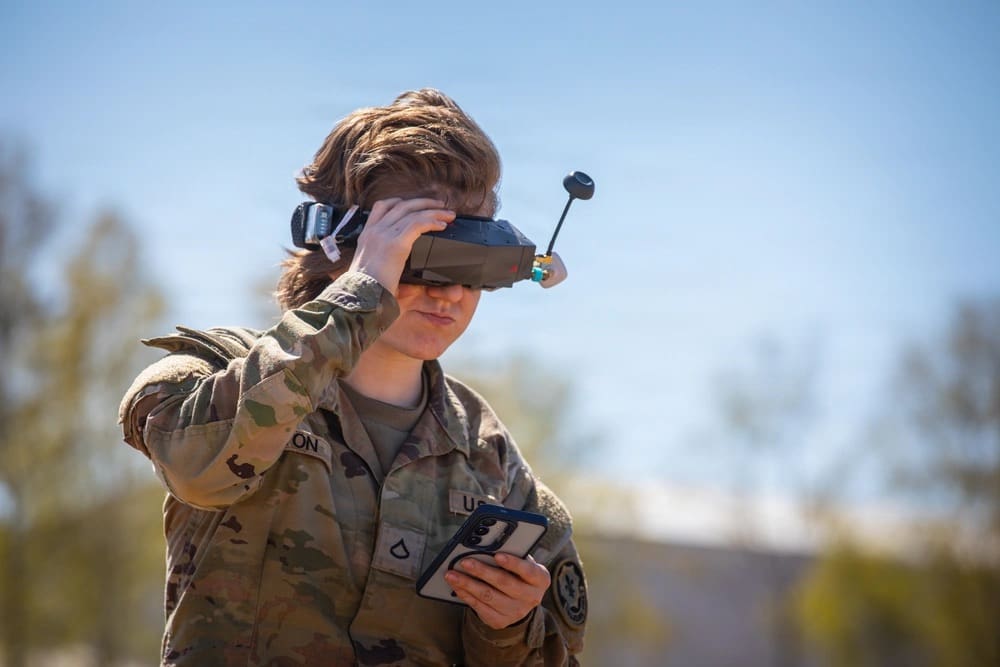
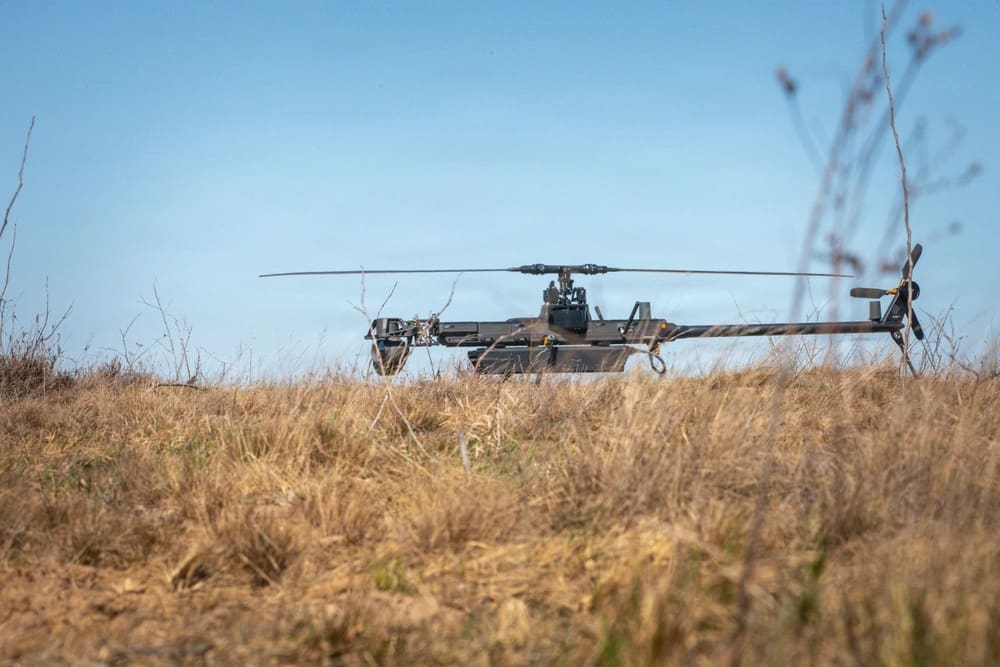
Tampa, FL. October 2, 2025 – Draganfly Inc. (NASDAQ: DPRO) (CSE: DPRO) (FSE: 3U8) (“Draganfly” or the “Company”), an industry-leading developer of drone solutions and systems, today announced its selection by the U.S. Army to provide Flex FPV drone systems.

Under the initial order, Draganfly will deliver Flex FPV drones designed for high-performance operations as well as help establish on-site manufacturing of the Flex FPV (First Person View) within overseas U.S. Forces facilities to accelerate deployment and reduce supply-chain timelines.

The Company will also provide both flight and manufacturing training to enable Army personnel to sustain operations, and will manage logistics to ensure a secure, NDAA-compliant supply chain practice. This marks a significant milestone in evolving critical drone capabilities closer to the theater of operations, reducing logistical vulnerabilities and enhancing force readiness.


Recent exercises have underscored the importance of FPV technology for U.S. forces. During the Swift Response 2025 exercise in Lithuania, paratroopers operated and detonated in-house-built FPV drones against dismounted and vehicle-sized autonomous targets. The unit has also established its own drone lab for design, training, and rapid innovation. In August 2025, the U.S. Army executed the first-ever air-to-air kill with an armed FPV drone, advancing the evolution of drone warfare. Draganfly’s Embedded Manufacturing Program and the Flex FPV Drone systems are in direct support of this strategic shift to decentralized and agile innovation.

“We are honored to support the U.S. Army as it moves critical drone capabilities closer to front lines,” said Cameron Chell, President & CEO of Draganfly. “By combining advanced Flex FPV Drone systems, embedded manufacturing, training and secure logistics, we are helping reinforce operational agility and sustainment for forward deployed forces. This helps ensure personnel have the tools, training and capabilities required when and where they need them most.”

For more information, visit www.draganfly.com

Anniversary of the Battle of Mogadishu

Friday, October 3rd, 2025

On this date in 1993, US service members were engaged in what is now known as the Battle of Mogadishu. They were assigned to a joint organization named ”TF Ranger” to deploy to Mogadishu, Somalia in support of a UN-led humanitarian mission. Tgeir mission was dismantle an armed militia which was threatening that aid program.

By October 3rd, they had been conducting operations for quite some time, but that day’s raid would be unlike anything they had yet experienced. The mission was to raid the city’s Olympic Hotel in order to capture key leaders of the Aidid Militia who had been opposing UN efforts to feed the locals.

Unfortunately, during the exfil portion of the raid, a battle ensued which claimed the lives of 18 Americans and wounded another 73. Additionally, CW3 Michael Durant was captured by the Aideed militia after being shot down while piloting his Blackhawk. Fortunately, Durant was later repatriated and went on to retire from the 160th.

Of the men killed that day, two would be awarded the Medal of Honor, Delta Operators Gary Gordon and Randy Shughart, for their selfless efforts to protect Durant after his aircraft, callsign Super 64, was shot down.

A few years ago, the US Army reevaluated the awards presented to the participants of that battle and amongst the Ranger element, upgraded 60 veteran’s awards including 58 Silver Stars and two Distinguished Flying Crosses. The order of battle included other organizations and their Soldiers have received similar upgrades.

If you are unfamiliar with the events, one of the best accounts of the battle is contained in the book, “Blackhawk Down” by author Mark Bowden. Much of the information was serialized prior to the book’s publication in the Philadelphia Enquirer. Later this was made into a movie bearing the same name.

Please take a moment to remember these men and their sacrifice.

Additionally, the 75th Ranger Regiment was created on this day in 1984, along with the stand up of its 3rd Battalion. Four decades later, the Ranger Regiment boasts five battalions of some of the most elite warriors on the face of our planet.

How Anduril and the Army Are Rewriting Fire Missions with NGC2

Thursday, October 2nd, 2025

Only eight weeks after Anduril was awarded a $99.6 million prototype Other Transaction Authority agreement for the Army’s Next Generation Command and Control (NGC2), the 4th Infantry Division became the first unit to use NGC2 in live fire training. The event, known as Ivy Sting 1, demonstrated a division-level targeting process running entirely on Anduril’s Lattice Mesh and Palantir’s Target Workbench (TWB) from headquarters down to the gun line—firing faster, more reliably, and more resiliently than legacy systems.

NGC2 is the Army’s initiative to modernize the command and control ecosystem. Built on an open, modular architecture, NGC2 connects the entire battlefield—soldiers, sensors, vehicles, and commanders—with resilient, real-time data. Anduril leads the effort alongside partners Palantir, Striveworks, Govini, Instant Connect Enterprise™ (ICE), Research Innovations, Inc. (RII), and Microsoft, integrating their capabilities into a single ecosystem.

For decades, artillery fire missions required soldiers to manually compute firing data with charts and protractors—a slow, error prone process that tied up fire direction centers. The process was digitized in the 1990s with the development of the Advanced Field Artillery Tactical Data System (AFATDS). But while it was progress, AFATDS was slow to set up and unable to interface easily with other systems.

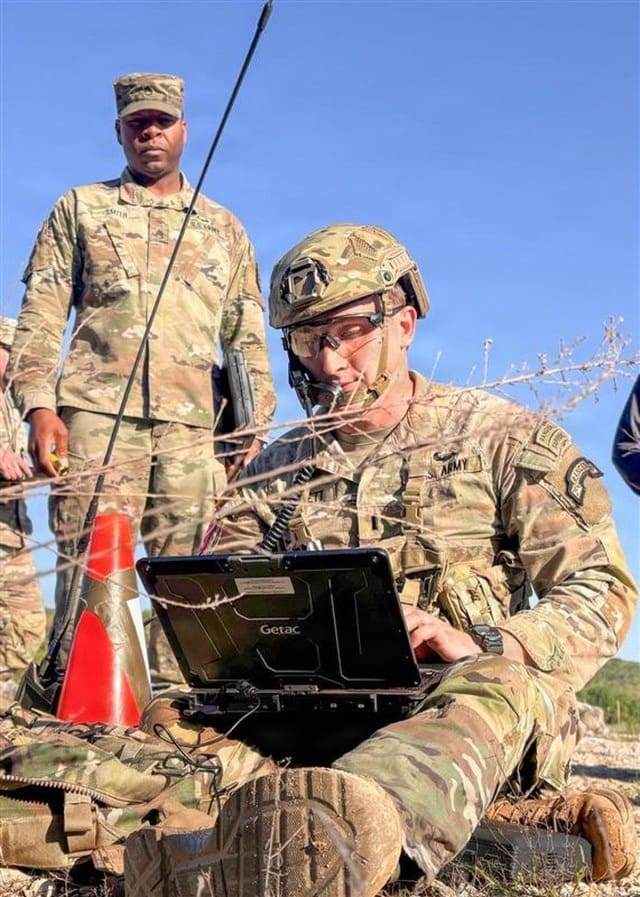
At Ivy Sting 1, the Army’s new Artillery Execution Suite (AXS) replaced that model. Integrated into NGC2, AXS delivered fire control at speed. The gains were measurable. With AFATDS, gun crews often spent time troubleshooting digital connections before they could fire. Using AXS on Lattice Mesh, crews were digitally ready in under 30 seconds.

Running on Voyager rugged edge computing kits, Lattice Mesh, Anduril’s software backbone, kept the workflow seamlessly connected and resilient in concert with Palantir’s software platform. Ghost, Anduril’s modular UAS platform, also ran on the mesh, providing immediate battle damage assessment through full-motion video, and Army Forward Observers fed inputs directly into Lattice via Android Tactical Assault Kit (ATAK) integrations. Palantir’s TWB managed, tracked, and allocated resources for each target taking geolocation data and translating it to actionable targets to process through the kill chain.

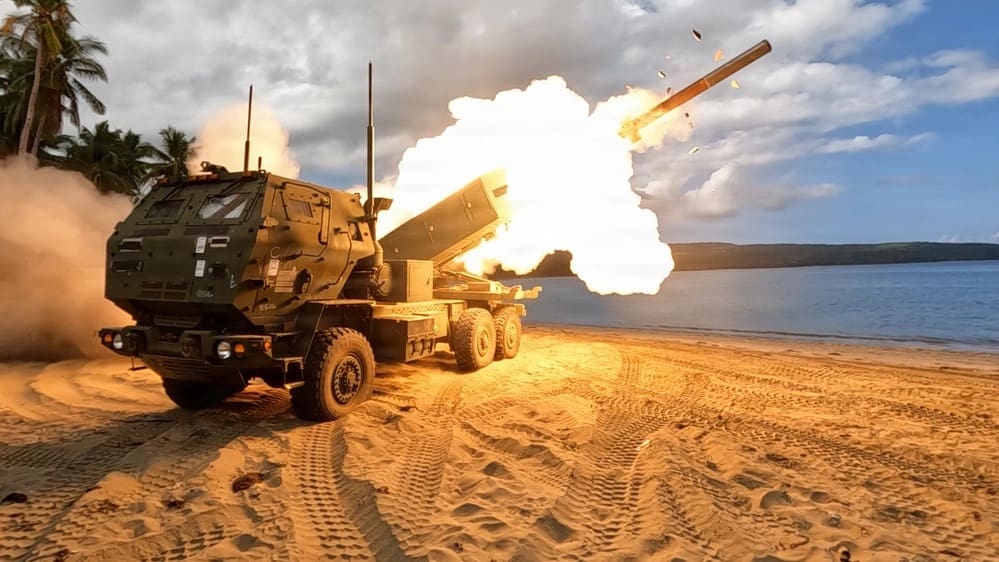
This was no tabletop exercise. Soldiers fired 26 live missions with M777 howitzers on Fort Carson’s live-fire ranges, running AXS side-by-side with legacy crews. The contrast was visible: one team struggling with delays, the other firing digitally in seconds. Ivy Sting 1 proved that NGC2 works under operational conditions and set the stage for future events that will scale across more nodes and integrate partner applications.

To make it all happen, Anduril’s NGC2 engineering team embedded directly with the AXS developers using the NGC2 Software Development Kit (SDK). The SDK gives third-party developers the tools and open interfaces needed to rapidly build and integrate new applications and data services for NGC2, ensuring flexibility and avoiding vendor lock-in. That integration allowed the Army to move faster than planned—pulling a milestone originally set for January 2026 into Ivy Sting 1. The first M777 round was fired just 12 hours after the beta software was installed.

The workflow demonstrated has now been adopted as the division’s standard operating procedure for artillery fire control. Every future 4ID training event will build on Ivy Sting 1 mission thread, reinforcing and refining the process.

Ivy Sting 1 is only the beginning. Anduril and its partners will expand the number of nodes integrated into Lattice Mesh and use the NGC2 SDK to pull new mission threads into the data fabric. What started with fires will extend to sustainment, aviation, logistics, counter-UAS, and medical evacuation within Army operations. During Ivy Sting 2, a new mission thread will demonstrate how Lattice Mesh connects data generated by AXS to Ark, Govini’s sustainment application, enabling warfighting functions to interoperate seamlessly across the division. By Ivy Mass in May 2026, the division will be operating those workflows on Lattice at scale, treating the event as a full dress rehearsal for Project Convergence Capstone 6 in July.

Ivy Sting 1 showed how fast the Army and industry can deliver when they work as one team. In just two months, Anduril and its partners delivered a live-fire NGC2 capability that connected headquarters, artillery crews, and autonomous systems on a single mesh network.

Next-Gen Navigation Systems Reach Army Units

Thursday, October 2nd, 2025

Fielding of the Mounted Assured Positioning, Navigation and Timing System, MAPS, GEN II hardware is underway across the Army to provide increased operational effectiveness with advanced positioning, navigation and timing, PNT, systems.

MAPS GEN II is the next-generation PNT system used to provide highly accurate and resilient PNT data to Army vehicles, especially in GPS-degraded or denied environments.

Fielding of the MAPS GEN II systems supports Transformation in Contact 2.0, the Army’s current initiative to rapidly deliver new equipment to operational units.

GEN I vs. GEN II – What’s changed?

The goal when developing MAPS GEN II was GPS security, first and foremost. At the most basic level if Soldiers don’t know where they are or where they are going and have confidence in the information, that’s not a very effective Army. PNT’s number one priority is to enable Soldiers to shoot, move and communicate.

The old trope, never judge a book by its cover, is true for MAPS GEN II. While it may look similar to its predecessor, GEN II boasts several welcomed improvements.

With the advancements in electronic warfare threats, a hardened, more secure PNT system was necessary. MAPS GEN II has stronger and more secure encryption through M-Code, uses alternative sensors providing sensor fusion and advancements to the exterior antenna providing Soldiers with more advanced anti-jamming and anti-spoofing capabilities, two of the main electronic warfare threats the Army faces.

“Jamming is disruptive, but spoofing can be far more damaging,” Jennifer Thermos, acting product manager, Mounted PNT said. “When you don’t have a GPS signal, you know something’s wrong but there are still ways to take action. With spoofing, you’re still getting GPS signal but if you don’t have a system like MAPS GEN II that can recognize a spoofing attempt and reject it, you could be following a false GPS signal which could lead you right to where the enemy wants you.”

“MAPS GEN II is able to detect and reject GPS interference and provide the Soldier with a notification that it is operating despite the electronic warfare environment,” Thermos said.

The system was designed with size, weight and power in mind, as are all Army systems, to address space limitations inside vehicles.

“MAPS GEN II can take the place of MAPS GEN I systems as well as multiple Defense Advanced GPS Receivers, providing Assured PNT to client systems with one platform,” Thermos explained.

C2 Enabler

Built using open architecture standards which allows modularity and scalability, MAPS GEN II easily integrates with various platforms currently in use as well as future systems still in development that fall under the Command and Control, C2, umbrella.

MAPS GEN II also fits in well with Next Generation Command and Control, NGC2, architecture, part of the “how” the Army accomplishes its TIC goals. The system is a critical enabler of C2 and Fires capabilities. Networks, radios and Fires systems rely on highly accurate timing and positioning data to function.

“If legacy systems don’t have accurate timing and positioning data, the effectiveness of the system overall is degraded,” Thermos explained. “We want to provide every Soldier the full capability, so we want to field as many MAPS GEN II systems as possible, and as fast as possible.”

Training

MAPS GEN II represents a significant leap forward in assured PNT capabilities, but realizing its full potential requires Soldiers to be proficient in its operation and maintenance. The new equipment training provided a foundational understanding of the system’s architecture, operational procedures, troubleshooting techniques and integration with existing platforms.

“This training isn’t simply about learning how to use the system; it is about building confidence and fostering a proactive approach to maintaining PNT superiority in contested environments,” Maj. Shay Wright, assistant product manager, Mounted PNT production and fielding lead said. “Without this dedicated training, the Brigade’s ability to effectively leverage MAPS GEN II’s capabilities would be severely hampered.”

Fresh off training, the 2nd Stryker Brigade Combat Team, 2nd Infantry Division, attached to the 7th Infantry Division, put MAPS GEN II through its paces during a follow-on training event.

“GPS jamming was an issue we had to deal with in training,” Capt. Tianna Johnson, 2nd Stryker Brigade Combat Team said. “We must be prepared to respond to GPS jamming. In one case, MAPS indicated a detected threat, which was exactly what MAPS GEN II was designed to do, and we were able to take the appropriate actions.”

The value of in-person, hands-on training is not an expense, but a critical investment in maintaining our warfighting edge.

Future Plans

With fielding and training to the 2nd Stryker Brigade Combat Team complete, the MAPS Team at Program Executive Office Intelligence, Electronic Warfare & Sensors is focused on fielding and training various units including other TIC units, continuing with Stryker BCTs.

New Equipment Fielding is critically important to maintaining Army readiness and achieving overmatch against potential adversaries. These trainings enhance combat capability, maintain readiness levels and align with Army priorities.

By Shawn Nesaw

US Army Updates Ranger Handbook

Wednesday, October 1st, 2025

Just published last month, the latest version of TC 3-21.76, Ranger Handbook, supersedes the previous version of 26 April, 2017.

Download you copy here.

FN Wins US Army Development Contract for the Precision Grenadier System

Wednesday, October 1st, 2025

(McLean, VA — October 1, 2025) FN America, LLC is pleased to announce that it has been awarded a Prototype Project Opportunity Notice (PPON) contract valued at $2 million, by the U.S. Army to further develop its submission for the Precision Grenadier System, a next-generation primary soldier weapon system and family of ammunition that enables precision engagements to destroy targets with increased lethality and precision compared to legacy grenade launchers.

The FN Multi-purpose Tactical Launcher 30mm (MTL-30™) that was designed in the U.S. and will be manufactured by FN America at its plant in South Carolina is a soldier-portable, semi-automatic, medium-velocity, flat trajectory grenade launcher that enables warfighters to engage targets at extended ranges with more effective payloads over existing technologies. After extensive testing, FN’s solution has successfully met the DoD’s key performance criteria while also delivering desired characteristics. In addition, the FN solution is easily manufacturable and logistically supportable due to state-of-the-art manufacturing techniques, ensuring the program will be cost-effective.

“This program is a U.S. Government priority with the shift in modern warfare and engagements, and FN is honored to be selected to develop this new, innovative solution,” said Mark Cherpes, President and CEO for FN America, LLC.  “Once developed and implemented, this weapon system could radically change future battlefield strategies. It will offer new capabilities at the squad level and upgraded tactical options, giving the warfighter a more effective system.”

FN’s solution, the FN MTL-30, is the first in this family of launchers and ammunition, as FN works with the Department of Defense (DoD) to help solve one of the world’s most pressing battlefield needs.

“The FN MTL-30 shoulder-fired launcher can engage in close-quarter warfare, defeat targets in defilade, and engage unmanned aerial systems (UAS).  It could also be networked with FN remote weapon stations to create a multi-layered defense against UAS,” said John Bungard, Sr. Director, Military Development Programs for FN America, LLC. “Providing solutions that can counter multiple threats is critical for future battlefield engagements. We are excited that the Army is interested in maturing our PGS solution. We are fully committed to this system and its development.”

The FN MTL-30 is chambered for 30mm medium-velocity grenades and features a detachable box magazine with 3- or 5-round capacity. At just 35 inches in length and 8.5 inches tall, the weapon weighs just over 10 lb. The bolt catch, magazine release and safety selector are all ambidextrous, plus there is an M4-style telescoping buttstock with a modular cheek riser. The modular rail system has a contiguous top rail for mounting of visual augmentation systems (VAS) and other devices, plus side M-LOK® slots with a MIL-STD Picatinny rail.

For the soldier, the FN MTL-30 is lighter and more streamlined than previous options. Real time soldier feedback has led to a prototype that is far more user-friendly, incorporating a footprint users will be familiar with due to the M4-style controls, grip and buttstock. The system features a soft shooting launcher with low-felt recoil, enabling rapid target engagement with effective payloads from an extremely controllable system. In addition, FN’s modular system is fully serviceable at the user level and has high parts commonality with existing components.

“The technologies we have incorporated have allowed FN to create a system that is much lighter, more compact and more maneuverable than previous soldier-operated grenade launchers,” said Jim Williams, Vice President, Military Programs for FN America, LLC. “This will improve soldier capabilities on the battlefield, offering a robust solution for close combat, engaging targets beyond 500m or to potentially combat other threats such as unmanned aerial systems.”

Throughout its history, FN has been one of the largest suppliers of small arms to the U.S. military and continues to develop innovative, future technology. In addition to this opportunity, the company currently holds contracts for the FN® M240 and its variants, the FN® M249 lightweight machine gun; the FN® MK 46, MK 48, MK 17 and MK 20 SSR for USSOCOM and various other contracts. FN has decades of experience designing and supplying various grenade launching systems. The company produced the MK 19 fully automatic 40mm launcher, the MK 13 EGLMthat was a part of the SCAR program and currently sells the FN 40GL® standalone launcher internationally.

For more information about FN’s military product line or current U.S. military contracts, please visit www.FNAmerica.com.

Army’s 1st Cavalry Division Conducts First Switchblade 600 Live-Fire Exercise

Wednesday, October 1st, 2025

As part of Pegasus Charge, 1st Cavalry Division’s effort in support of the Army’s “Transforming in Contact” initiative to modernize armored formations, soldiers assigned to the 2nd Armored Brigade Combat Team, 1st Cavalry Division, conducted Fort Hood’s first live-fire exercise of the Switchblade 600 Loitering Munition System, Sept. 15.

The Switchblade 600 — a tube-launched, unmanned aircraft system — has already seen extensive use by Special Operations Forces, light infantry units and foreign partners. The 1st Cavalry Division is among the first armored units to field the system.

“This is the first time for all of our soldiers to see these munitions fired, and you can feel the excitement in the air,” said Army Capt. Jeffrey Weller, Multifunctional Reconnaissance Troop commander, 2nd Armored Brigade Combat Team, 1st Cavalry Division. “The Switchblade enables the brigade to engage targets with precision between 5 and 15 kilometers in front of our forward line of troops, extending our reach and lethality.”

Modernizing the Fight

The Army’s broader Transforming in Contact initiative aims to overhaul how armored formations fight by integrating new technologies, particularly drones and advanced communications.

“A huge thing the Army has seen across multiple battlefields, whether in Ukraine or elsewhere, is the rapid modernization and high usage of drones,” Weller said. “We’re taking those lessons learned and revamping our [unmanned aircraft] systems to stay ahead of adversaries.”

Roughly 5 feet long and weighing 75 pounds, the battery-powered Switchblade 600 resembles a drone, but carries a Javelin multipurpose warhead. It has a flight time of 40 to 45 minutes, a range of up to 27 miles and delivers a 5-pound explosive payload.

“It’s a remote-controlled missile that flies like a drone until it gets to the target,” explained a flight operations supervisor with the system’s manufacturer. “The operator uses onboard cameras to identify, select and engage the target.”

Once launched from its tube, the Switchblade can navigate through waypoints, loiter over the target area and strike with precision. Operators also retain the ability to wave off a strike mid-flight if conditions change.

“The Switchblade allows us to target vehicles or small groups of personnel from much farther away than before,” Weller said. “It increases our lethality, minimizes collateral damage and helps protect soldiers on the front lines.”

Before the live-fire exercise, soldiers completed a five-day training course with the manufacturer, during which they learned to set up, arm and program the drones for flight and strike missions.

Army Spc. Drake Cross, a Switchblade operator who has flown RQ-7 Shadow and RQ-28 Quadcopter drones for the division, said this was his first experience with a munition-carrying UAS.

“Everything else I’ve flown has been for surveillance and target acquisition,” Cross said. “This is the first one where I can actually deliver a round. It’s exciting because it saves soldiers’ lives by hitting targets without putting us in danger.”

Cross said the system was user-friendly and similar to other UAS platforms, adding, “There’s not much of a learning curve. Once you identify and lock onto a target, you can adjust right up until impact to make sure you’re hitting what you want.”

Looking Ahead

Weller said the Switchblade is just one example of how Transforming in Contact is reshaping the 1st Cavalry Division’s armored formations. He noted that the unit will use the system during their upcoming rotation at the National Training Center at Fort Irwin, California.

“The battlefield is constantly changing, and the Army has to modernize to keep pace,” he said. “Seeing systems like the Switchblade in action shows us the future of how our formations will fight. It’s a big step toward keeping our soldiers safer and more lethal.”

By Heather Ashley, Fort Hood Public Affairs Office