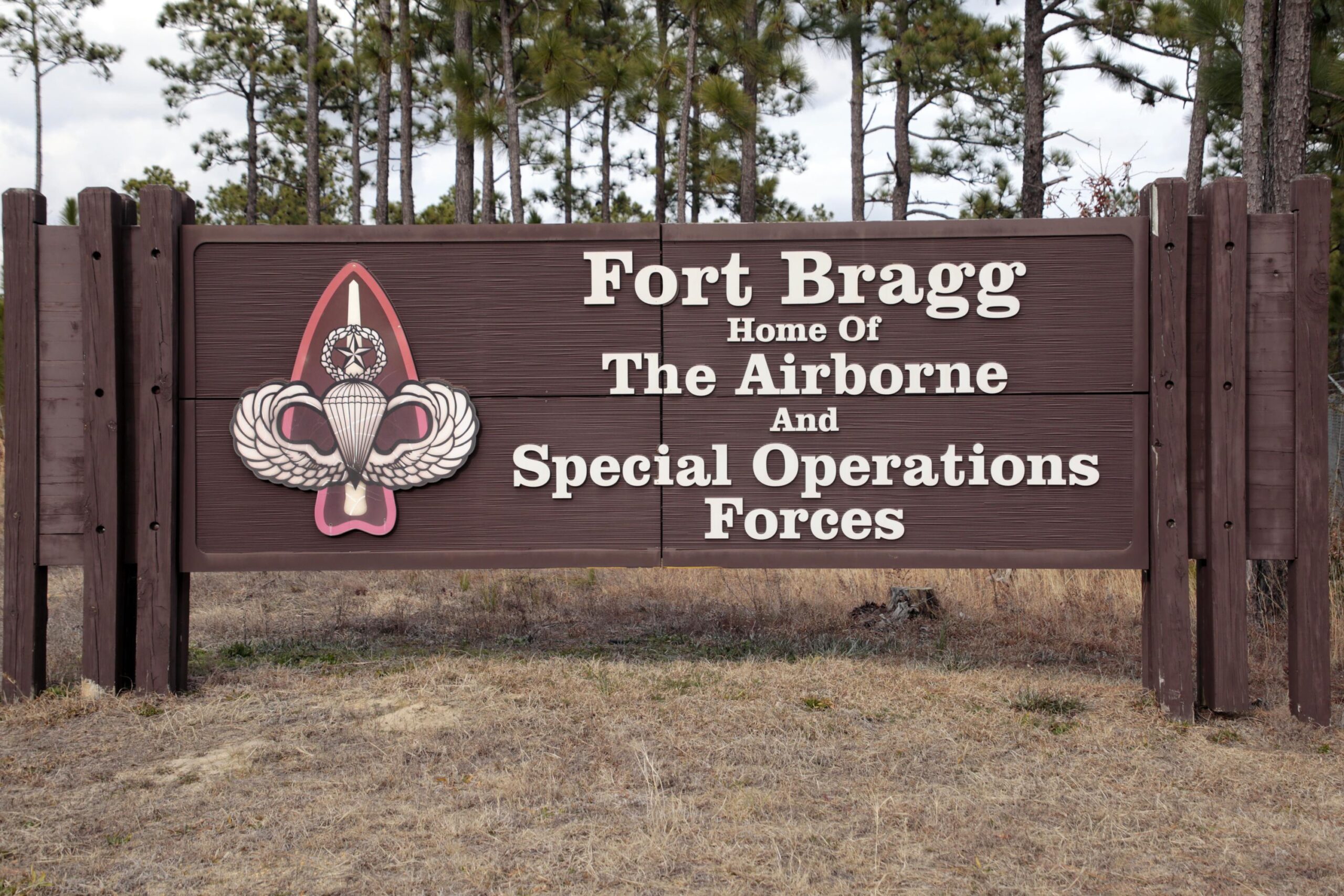
Sure, the Army announced that Fort Bragg will now be called Fort Liberty, but it will always be Bragg to me.


Sure, the Army announced that Fort Bragg will now be called Fort Liberty, but it will always be Bragg to me.
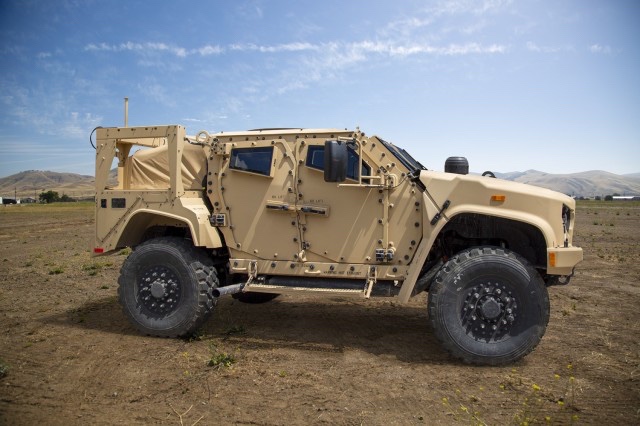
DETROIT ARSENAL, Mich. (Feb. 9, 2023) – The Army announced today the award of a requirements contract with five base ordering years plus five one-year optional ordering periods to AM General LLC for estimated Joint and Foreign Military Sales (FMS) production of up to 20,682 Joint Light Tactical Vehicles (JLTVs) and up to 9,883 JLTV Trailers. The total contract value is $8.66 billion. This competitive follow-on production contract has been part of the JLTV acquisition strategy from the beginning and focused on a best value determination that includes retaining the capability of the JLTV today, while ensuring that it can be upgraded in the future with the latest technologies.
The JLTV follow-on contract strategy was designed to provide a fair and competitive environment, while ensuring the Army obtained a premier manufacturer that delivers the highest quality, most capable, and affordable tactical vehicle in the world.
The JLTV follow-on contract request for proposal, in accordance with the Army Climate Strategy, sought to incentivize offerors to propose fuel efficiency technologies that targeted on-the-move fuel economy improvements and anti-idle capability in support of optimizing combat effectiveness. The JLTV A2 design is the first tactical wheeled vehicle with baseline architecture utilizing lithium-ion batteries, which is a key enabler for anti-idle capability.
Effective competition is the critical element for controlling cost and maximizing buying power for the government. The JLTV engagement strategy with industry has been very successful in establishing executable timelines, adding mature technology insertions, and providing transparency throughout the process to allow contractors to make individual business decisions.
“One of the key strategies of the JLTV program from its earliest days was to leverage competition to control cost and maximize buying power for the government,” said Brig. Gen. Samuel L. “Luke” Peterson, program executive officer, Combat Support & Combat Service Support. “From the start of production, the government procured the data rights to the JLTV Technical Data Package from the original equipment manufacturer, which the program leverages to conduct future production competitions and control the platform’s configuration and vehicle price well into the future. These government-held data rights permitted the program to compete this follow-on production contract with much better control of the production configuration and cost.”
To ensure the JLTV follow-on production contract was robustly competitive, the government focused on rigorous communication with its industry partners. This consistent communication strategy included prior notifications to the current contractor that future contracts were intended to be competitive. The original JLTV contract was awarded in August 2015 to Oshkosh Defense, and the Technical Data Package option was ordered shortly thereafter.
“Our industry partners are essential to ensure we deliver critical, advanced technology and capabilities like the JLTV to our warfighters,” said Brig. Gen. David Walsh, commander of Marine Corps Systems Command. “We look forward to partnering with AM General to build upon this proven platform and ensure our warfighters have the latest in vehicle technology.”
Since August 2019, Joint Program Office JLTV actively engaged the light tactical wheeled vehicle industrial base. The feedback received from market research was instrumental in framing the acquisition plan, which was approved by the Army Acquisition Executive in November 2020. The plan:
Focused on and extended the presolicitation period
Provided multiple draft Request for Proposal releases that sought feedback to shape the solicitation and eliminate barriers
Provided lease vehicles to provide a deeper level of understanding for the nonincumbents
Released both the JLTV A1 and A2 Technical Data Packages to provide competitive balance
Enabled multiple static displays and one-on-one sessions with government subject matter experts
Provided a responsive Q&A forum, resulting in active industry engagement (more than 400 questions submitted and corresponding responses.)
The JLTV Family of Vehicles, an Army-led joint program with the U.S. Marine Corps, closes capability gaps in the light tactical vehicle fleets. JLTVs can perform multiple mission roles and are designed to provide protected, sustained, networked mobility for personnel and payloads across the full range of military operations. The JLTV brings increased protection and performance to the fleet; minimizes ownership costs by maximizing commonality, fuel efficiency and reliability; and maintains effective competition throughout its life cycle. Commonality of components, maintenance procedures, training, etc., between vehicles is expected to be inherent in Family of Vehicle solutions across mission variants to minimize total ownership cost.
The JLTV program has been lauded as a model of successful acquisition. It has received two David Packard for Acquisition Excellence Awards as well as Department of Defense Should-Cost and Innovation Awards.
By Sam Tricomo, Program Executive Office Combat Support & Combat Service Support
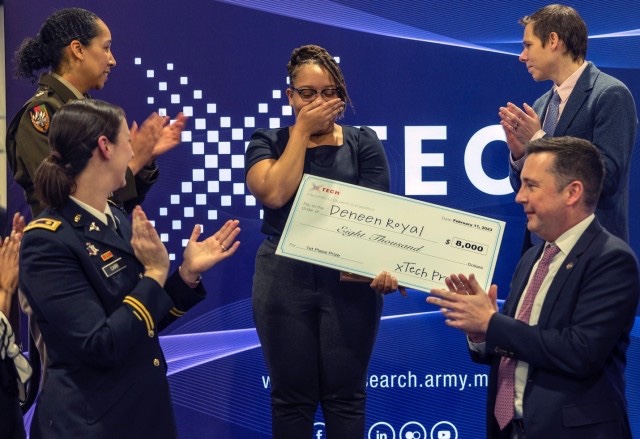
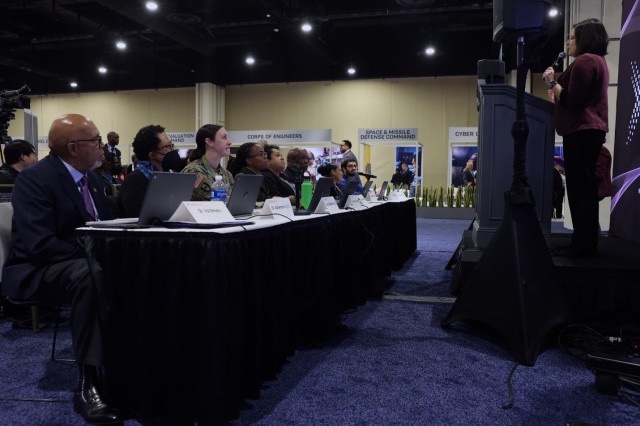
WASHINGTON — The U.S. Army xTech Program announced three winners of the inaugural xTechHBCU Student competition on February 11, 2023. The winners were selected out of the 16 student finalists who delivered their final technology solutions pitches to a panel of Army judges at the 2023 Black Engineer of the Year STEM Conference in National Harbor, Maryland.
The xTechHBCU Student competition provided eligible historically Black college and university undergraduate students with the opportunity to pitch their innovative technology ideas addressing climate change, preventative care for Soldiers’ mental and physical health and implementation of artificial intelligence and machine learning.
Through its first-ever student prize competition, the U.S. Army awarded three promising young scientists and engineers $8,000 for first place, $5,000 for second place and $2,000 for third place. The winning students also have the opportunity to develop a prototype or seek a patent for their technology solution.
In addition to their innovative technology pitches at BEYA, students also had the opportunity to network with Army and industry leaders from across the research and technology ecosystem and discuss their future careers in STEM. Many of the finalists received on-the-spot interviews and job offers from the Army and industry organizations in attendance that were recruiting at the conference.
Leaders from across the Army enterprise also attended the students’ technology demos to learn more about the capabilities.
“The students who participated in xTechHBCU Student took each step of the competition in stride — from the concept submission and pitch preparation to the final live pitch event in front of a prestigious panel of judges,” said Dr. Matt Willis, director of Army prize competitions and the Army Applied SBIR Program. “It was exciting to see these students’ passion for research and development, as well as public service. This year’s competition is an excellent step in developing key partnerships the Army needs to continue driving toward its modernization priorities.”
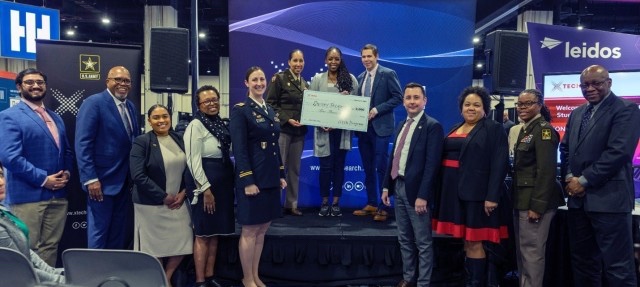
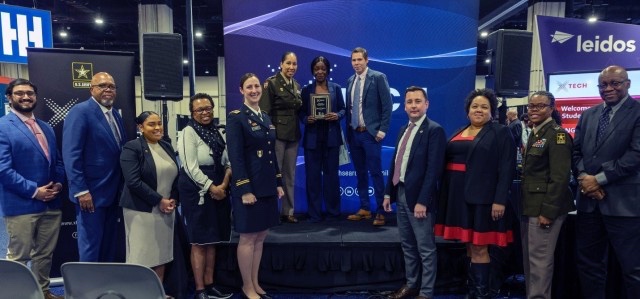
The winning students of the competition are:
1st Place: Deneen Royal, Fayetteville State University: “AI For Independent Surveillance Missions (ASIM)”
2nd Place: Lirane Mandjoupa, University of the District of Columbia: “Ground-based remote sensing for Airdrops precision system: A data acquisition approach to mitigate supply chain and climate change risks”
3rd Place: Shirley Jacquet, Fayetteville State University: “QTL Mapping and Correlation Analysis of Amino Acids Contents in Soybean [Glycine max (L.) Merr.] Population”
The finalists represented nine HBCUs across the U.S. and finalists were invited to take part in an eight-week xTech Accelerator program that prepared students for their pitches, educated them on Army priorities and areas of interest, and provided insight into Army career pathways.
“I was greatly impressed by the talent and technologies presented during the final pitch event at BEYA,” said Dr. Travis King, director of basic research and science, technology, engineering and math in the Office of the Deputy Assistant Secretary of the Army for Research and Technology. “The success of the first xTechHBCU Student Competition reinforces the value of a diverse talent pool, specifically as a driver of innovation in science and technology. Collaboration with these HBCU students early in their careers is essential to the Army developing lasting partnerships with future research leaders.”
Established in 2018 by the Assistant Secretary of the Army for Acquisition, Logistics and Technology, the Army xTech Program strives to integrate small businesses and non-traditional vendors into the Army’s science and technology ecosystem by providing opportunities for direct exposure to laboratories, program executive offices and program managers from across the Army. The xTechHBCU competition series enhances opportunities for HBCU students as it works to develop relationships with institutions that directly serve minorities.
The xTech Program holds several competitions per year, from open-topic competitions such as xTechSearch, to technology-specific competitions targeting specific Army needs and challenges. For all competition information, visit the xTech website.
The Office of the Assistant Secretary of the Army for Acquisition, Logistics and Technology provides the American Soldier with a decisive advantage in any mission by developing, acquiring, fielding and sustaining the world’s finest equipment and services, and by leveraging technologies and capabilities to meet current and future Army needs. For more information, visit ASA (ALT)’s page on Army.mil.
By Melissa Hirsch, Office of Army Prize Competitions and Army Applied SBIR Program
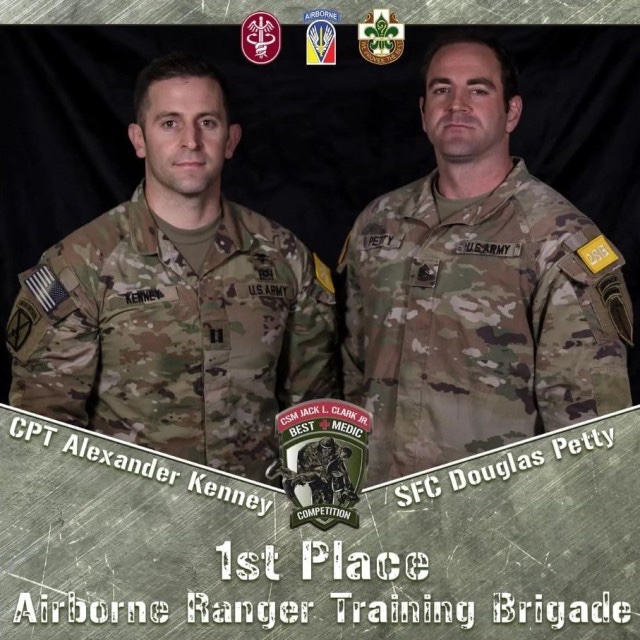
WASHINGTON — The Command Sgt. Maj. Jack Clark Army Best Medic Competition is a grueling three-day test of strength, knowledge and endurance held annually. This year’s competition at Fort Polk, Louisiana, put some of the best medics in the Army to the test by challenging their abilities to determine who is the most skilled.
This year’s winners, Capt. Alexander Kenney and Sgt. 1st Class Douglas Petty from the 6th Ranger Training Battalion, Airborne Ranger Training Brigade, demonstrated exceptional skill, resilience and teamwork, solidifying their place among the top medics in the Army.
Combat medic specialists — also known by their military occupation specialty 68W — play a critical role in the Army. They are responsible for providing medical support to Soldiers on the battlefield and ensuring their health and well-being. They are often the first line of aid and care when Soldiers are injured or become ill.
Medics are required to be physically fit, mentally tough and knowledgeable in a wide range of medical procedures and techniques. The Army’s Best Medic Competition is not only a test of individual skill and endurance but also a testament to the importance of the medic’s role in the Army.
Kenney explained the competition is broken down into multiple phases: the Army Combat Fitness Test; an obstacle course; aircraft repelling; Combat Water Survival Test; a helocast; a ruck march; an extrication exercise; casualty hoist operations; M4 rifle qualifications; stress shoots; a written test; day and night land navigation; tactical combat casualty care; health services and support; prolonged field care; a mystery event; and a chemical, biological, radiological and nuclear event.
Kenney is a former combat medic and currently serves as the battalion physician assistant, or 65D, for the 6th Ranger Training Battalion. Petty, on the other hand, had no medical experience prior to joining the Army in 2009. Despite this, he chose to become a combat medic and worked hard to become an excellent one. Both Soldiers put in tremendous effort to achieve their status as top-tier medics.
Winning the Best Medic Competition requires more than just physical fitness and knowledge of medical procedures. It requires a relentless pursuit of excellence, a dedication to being the best possible version of oneself, and an unwavering commitment to the well-being of fellow Soldiers.
Kenney and Petty have put in years of hard work and training to reach the level of skill and knowledge necessary to be the best medics in the Army. They have been tested in some of the most challenging and demanding environments imaginable, including combat deployments to Iraq and Afghanistan, and have emerged stronger and more resilient as a result. Their journey to the top of their field has been a long and difficult one, but it has prepared them well for the challenges that lie ahead.
Kenney noted that “being prepared and pushing the limits of what you know at any given time was super important.”
This mentality of being a lifelong student is essential to being the best medic possible.
Petty agreed, saying that “It made me realize real quick that if I don’t stay on top of my medicine and my mental state, that not only am I going to feel the repercussions of it, but the guys are going to feel the repercussions of it as well.”
Both Soldiers are now dedicated to teaching the next generation of medics.
“One of the best things about military medicine, especially as [physician assistants], is most of us are prior enlisted,” said Kenney. “Not a lot of us are direct commissions off the street or non-medical people beforehand, and we understand the value of building that in the next generation.”
Petty, who now serves as the battalion senior medic and medic platoon sergeant, knows the importance of sharing his knowledge and experience.
“I want to be able to pass that knowledge on to them and see them want to do stuff and be able to help them with the connections I have to get to these other places,” he said. “Train them up to go to these places and go to schools that I have been to and that Capt. Kenney has been to, we have that knowledge to pass to them to see them be successful.”
Petty is also keenly aware of the weight of his responsibility at 6th Ranger Training Battalion.
“It’s the most dangerous, the most high-risk battalion in the United States Army,” he said. “Maintaining health and welfare is a huge portion of that, and understanding what each one is going through — which is why we’re all Ranger tabbed as well — we’ve all been through the program. So knowing what their issues are, and knowing what their struggles are, are super helpful in being able to deliver effective care and anticipate what their challenges are going to be medically.”
The Ranger Tab refers to a badge earned by Soldiers who have completed the grueling Army Ranger School, a course that specializes in small unit tactics and leadership. Rangers develop functional skills directly related to units whose mission is to engage the enemy in close combat and direct fire battles.
Kenney and Petty have done what few in the Army have. They have proven that they are the best of the best. But for them, it is not about the accolades, but about the work they do every day to make sure that their fellow Soldiers are healthy and well.
“Integrity and dedication. It’s a no-fail mission, so you have to be dedicated to what you do,” said Kenney. “And the integrity piece of it is not only doing the right thing 100% of the time, but having the self-check, self-awareness, the integrity to take it up every day. Learn something new and be better than you were yesterday, because medicine is a lifelong learning experience.”
Petty agreed, saying he’s “trying to instill in them the confidence and knowledge and a willingness to want to grow both medically and as a Soldier.”
Kenney and Petty serve as role models for anyone who wants to make a difference in the lives of others, and they exemplify the very best of what it means to serve in the U.S. Army.
“The greatest benefit that you can actually see is from the ground up,” said Kenney.
“I do enjoy the fact that I continually have to learn, and it’s not something I get bored with,” said Petty. “That willingness to never give up has really made me succeed throughout the Army.”
By SGT Pablo Saez, U.S. Army Public Affairs
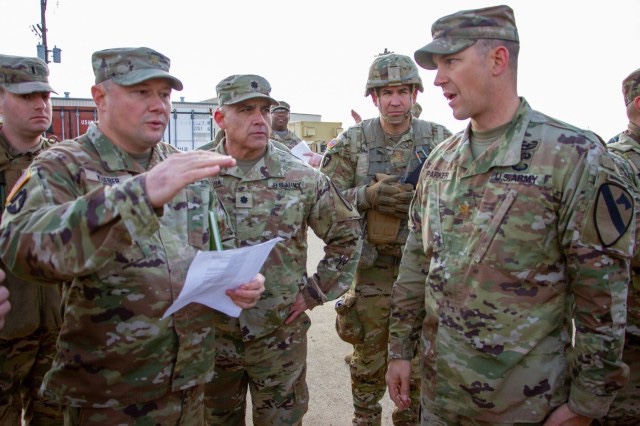
FORT HOOD, Texas — 1st Cavalry Division staff and subordinate brigades conducted a command post exercise at Fort Hood over the past in early February to test warfighting functions and refine processes ahead of a Warfighter exercise planned for this spring.
“It is absolutely critical to maintain the ability to deploy to multiple locations and stay in the fight, because failure to do so will diminish all warfighting capabilities,” said Sgt. Maj. Yolonda Jordan, division sustainment non-commissioned officer in charge, 1CD.
A command post exercise, or CPX, is a field training exercise that prepares units to fight in a large and complex environment. The exercise enables the commander to see if the staff’s processes and procedures work and identify what needs to change before being called to the fight.
“This CPX allows us to better prepare and execute our mission objectives,” Jordan added.
This is the second CPX iteration for the division as they prepare for their culminating exercise where the division will be evaluated in their proficiency, communication and warfighting capability in Warfighter 23-04 scheduled this spring.
“This is absolutely critical, you have to know the team that you work with,” said Maj. Mark Mckinney, division sustainment deputy officer, 1CD. “This sets the stage, so everybody gets their job done right so we don’t have to learn the hard way in combat.”
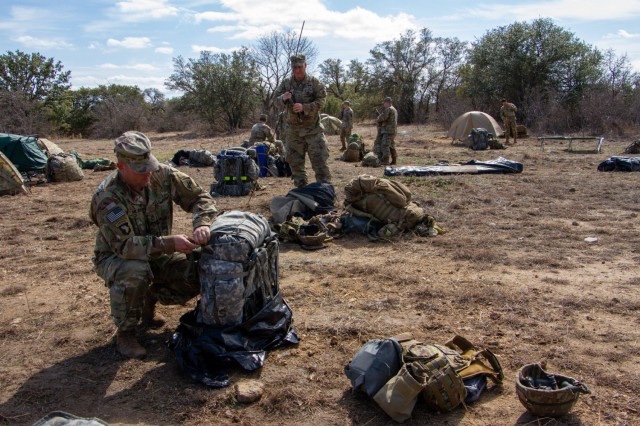
Testing the division’s ability to communicate as an effective warfighting team is vital, as the main command post and rear command post the staff works to effectively communicate and coordinate while also providing support towards subordinate units. Without synchronizing communication methods, the division would be unable to guide the fight.
“All elements of our division must be ready to contribute to the fight at hand,” said Jordan.
Projecting the First Team’s firepower includes augmenting the division with the right personnel.
“The goal is for us to be ready to support the “First Team” in training so that when the time comes to deploy we are not meeting for the first time,” said Maj. Robert Kaueber, deputy commander, of the Main Command Post Operational Detachment, Texas Army National Guard.
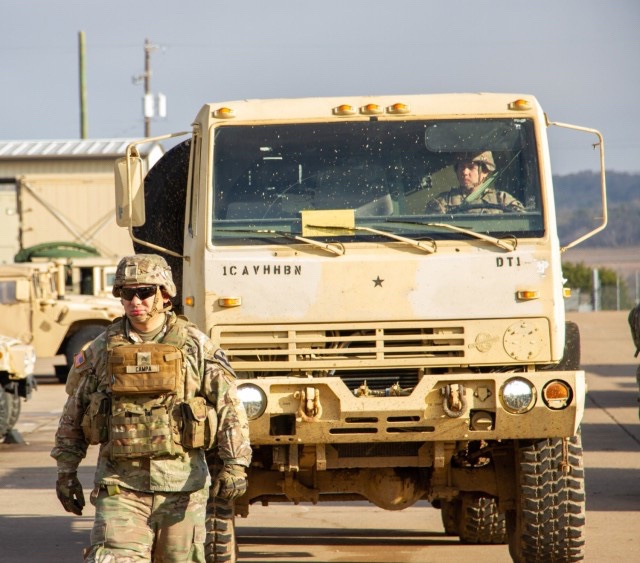
The exercise is just a steppingstone to test current tactical standard operating procedures and identify battle drills that work and things that no longer work so they can be updated before the Warfighter and potential deployments in the future.
It’s important for the staff to be able to interact with subordinate units across the battlefield and it’s also extremely important that everyone understands how to use command and control systems designed for sharing battlefield updates and communicating at different echelons.
“It’s always important to remember if you’re going to win the fight, every piece of equipment has a person behind it, whether it’s a weapon system, communication system, or planning tool,” said Maj. David Christensen, deputy command chaplain, 1CD. “If we don’t make sure our people are taken care of physically, mentally, and spiritually none of those systems matter. Conversely, if we spend a little more time taking care of our people, that effort can make the difference that ultimately wins the fight.”
By SGT Elliot Alagueuzian
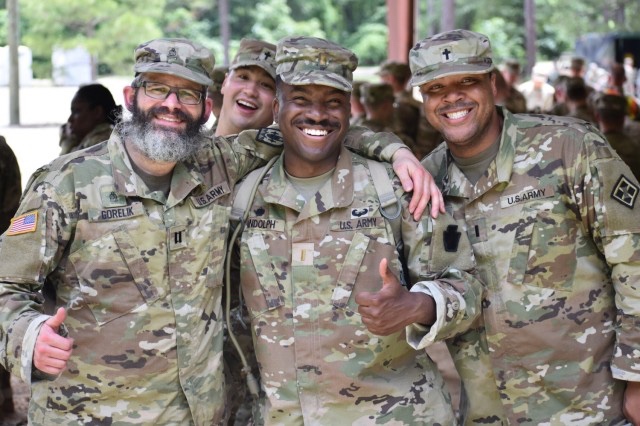
The first Chaplain Basic Officer Leader Course of the year, Class 23-001 began at the Army Institute for Religious Leadership, Jan. 19.
The students come from different locations, backgrounds and faith groups. The diversity of the students plays a major role in providing religious service support to Soldiers and their Families.
Soldiers and their Families represent a cross-section of America. The Army Chaplain Corps seeks chaplains and religious affairs specialists who can meet the needs of this diverse population and care for the soul of America’s Army.
It is not always an easy task to match the diversity of the Army population with members of the clergy, but it is a major part of the recruiting effort to try.
“The military focus on diversity, equity and inclusion helps to capture the full landscape of our diverse culture. One dimension of the military culture is a person’s faith as it relates to spirituality and their religious beliefs,” said Chaplain (Col.) Monica Lawson, chief, Recruiting and Accessions Division – Office of the Chief of Chaplains. “In order to assist in our chaplain recruiting efforts we are looking for called and qualified applicants who also represent the diversity of the Army population.”
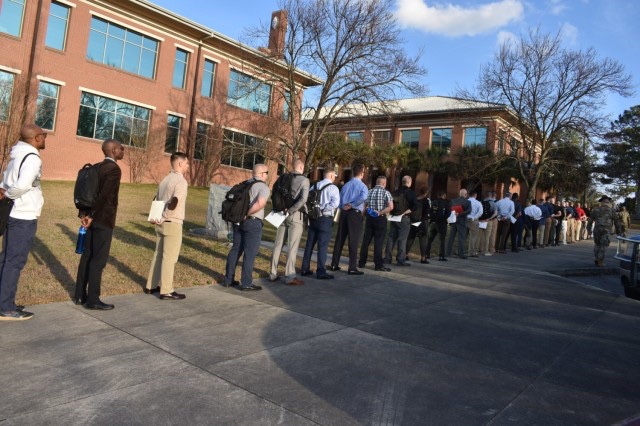
There are three CHBOLC classes each year. A look at the three CHBOLC classes in 2022 tells a story of how it is going.
At a glance, there were 78 students in class 22-001, 86 students in class 22-002 and 82 students in class 22-003. CHBOLC 23-001 begins with 75 students.
Males’ makeup most students with 70 males in class 22-001, 77 in class 22-002 and 73 in class 22-003 with ranges of 20-59 years of age. Chaplain candidates tend to be older due the requirement to complete seminary and hold a master’s degree. Younger applicants who apply for the Chaplain Candidate Program are able to attend CHBOLC while going through seminary and working on their master’s degree. The age requirement for the Chaplain Candidate Program is less than age of 37 unless a waiver is granted.
Candidates are mixed racially and ethnically. Caucasians are the largest group followed by African Americans, Asian, Hispanic and others. They represent future active duty, Reserve and National Guard appointments. Some have prior military service as officers or enlisted in various specialties.
The faith traditions the Army recognizes for training as Army Chaplains include Christian, Muslim, Jewish, Hindu and Buddhist. Christian is the largest group, but also represent many denominations.
Candidates are associated with an endorser organization within different faith groups. Many faith groups don’t allow females to become clergy which partially accounts for the lower number of female candidates. Female chaplains are part of an underrepresented group that the Chaplain Corps is working to grow. Underrepresented faith groups include Muslims, Hindu, Buddhist and Catholics.
The Chaplain Corps introduced Every Chaplain Corps Member a Recruiter Initiative to address the low numbers across the corps and among the underrepresented groups.
“We need to recruit the next generation of chaplains today. We need chaplains who are passionate about caring for the souls of Soldiers and their Families, and who can operate effectively in a pluralistic environment,” said Chaplain (Maj. Gen.) Thomas L. Solhjem, chief of chaplains.
The goal is to transition civilian clergy of different faith traditions into Chaplains who will take on the charge of caring for the souls of America’s Army.
“‘The mission of the Initial Military Training Division is to provide education and training to newly accessioned chaplains and religious affairs specialists that enables graduates to perform the function as a Unit Ministry Team.’ The training enforces the Army standard and welcomes all people of all backgrounds,” said IMT Division Chief, Chaplain (Lt. Col.) William M. Oliver.
There are minimum requirements to request entry into the Army chaplaincy.
One must possess a bachelor’s degree from an accredited university or are a current graduating college senior, secure an endorsement for military service from one’s faith group and enroll or get accepted as a full-time student in an accredited graduate program that qualifies one for ordination.
The core responsibilities of a chaplain are to nurture the living, care for the wounded and honor the dead. This includes Soldiers, Family members and Department of the Army Civilians. In a diverse organization with many beliefs, this may require coordination among UMTs. When chaplains encounter those of another faith group, they work to find a chaplain of that faith group to provide religious service support to the Soldier or Family member.
This is known as perform or provide.
“That’s the strength of our Chaplaincy. We care for everybody,” said Deputy Chief of Chaplains, Chaplain (Brig. Gen.) Bill Green. “When the four chaplains had to give away their life jackets, they weren’t looking for their particular faith group to give their life jackets to. They saw another person. They honored the life of that person and as a result of that they gave their jacket away and made the ultimate sacrifice. They died.”
Once an individual has accepted the call to serve as an Army Chaplain, they would need to follow the steps outlined on the www.goarmy.com/careers-and-jobs/specialty-careers/chaplain webpage.
By Mel Slater, Institute for Religious Leadership
FORT BRAGG, N.C. — In the midst of a modernization effort that is focused on meeting strategic demands, organizations from across the military services collaborated in a joint exercise to improve capabilities to prepare to combat near-peer threats.
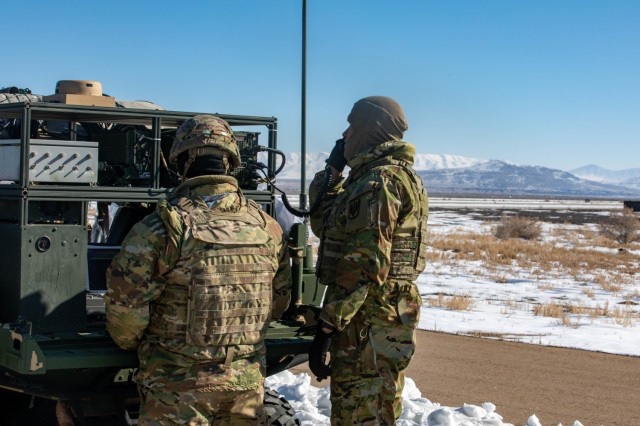
The XVIII Airborne Corps is at the leading edge of building the future force of 2030 and beyond through collaboration and innovation to meet these complex global challenges.
America’s Contingency Corps put that on full display during Scarlet Dragon Oasis, an artificial intelligence and data-centric operation that enabled a live-fire target identification and execution exercise from Jan. 23 to Feb. 3, 2023.
This was the sixth iteration of the Scarlet Dragon Oasis, and is a continuation of Project Convergence, in an ongoing series of training operations since 2020 that solely serve to increase the capabilities of warfighting skills across the joint force.
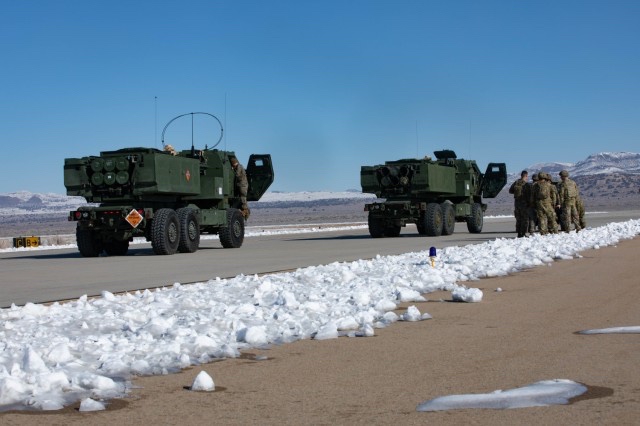
The XVIII Airborne Corps partnered with U.S. Central Command and several commands spanning across all branches of the Department of Defense to enable data-driven predictive models to inform and drive operations. The exercise was held across multiple states, including North Carolina, Georgia, Utah and Florida. They employed multiple platforms across all domains to hit specific targets in a more precise and effective manner.
Scarlet Dragon also enabled service members from across the joint force to improve interoperability by incorporating NATO allies. The exercise focused on sharing data and processing artificial intelligence to increase capacity for each warfighting function.
“We see this as an opportunity to take our joint partners and continue training to solve problems together,” said U.S. Army Col. Joseph O’Callaghan, XVIII Airborne Corps Fire Support Coordinator. “Partners are a crucial part of our warfighting force.”
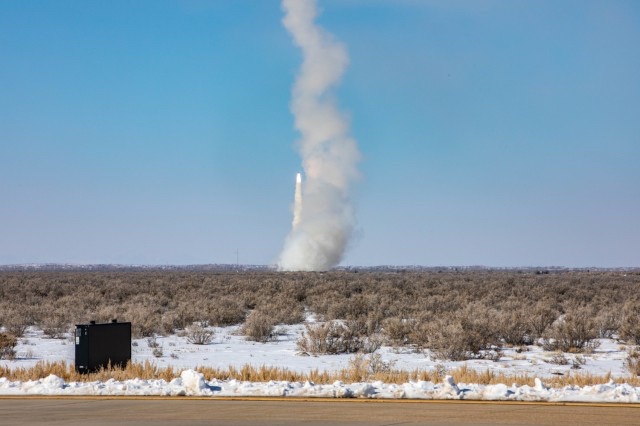
The exercise showcased each service’s ability to operate in a multi-domain environment aimed to enhance their joint relationship.
From the U.S. Army using Boeing AH-64 Apache attack helicopters in a sprawling gunnery range to the U.S. Air Force providing Boeing B-52 Stratofortress bombers, Scarlet Dragon demonstrated the accuracy and lethality of targeting using sophisticated technology.
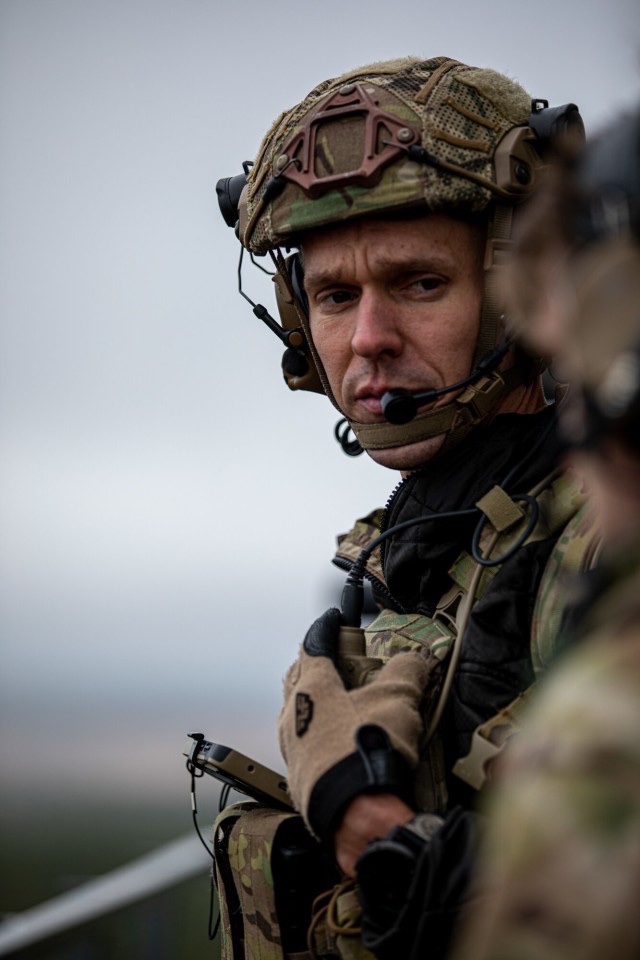
“The Army is able to find the targets with the software, and then passes that information on to us through our joint domain architecture,” said U.S. Air Force Tech Sgt. Matthew Ping, a tactical air control party specialist. “We pass that information onto Air Force fixed-wing aircrafts, to strike the target.”
The U.S. Marine Corps conducted a High Mobility Artillery Rocket System Rapid Infiltration, partnering with the 18th Field Artillery Brigade using their HIMARS.
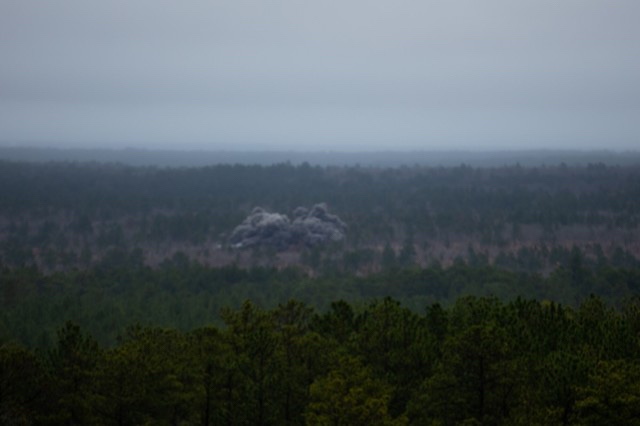
The sea domain also played a vital part of the Scarlet Dragon Oasis as the U.S. Coast Guard and U.S. Navy demonstrated their ability to control and patrol the waters by using the Tomahawk Land Attack Missile displaying their targeting precision.
This exercise was also the first time the U.S. Space Force was incorporated into the exercise, and they provided key elements to the exercise by incorporating the space domain and space range to harness another realm of data centric warfare.
“We are using artificial intelligence to pull all actionable data from a scan, instead of having an extra delay from having a team measure it out,” said U.S. Air Force Maj. Joseph Hamilton, a tactical air control party officer. “We’re significantly cutting the time it takes from detection until the point of the strike.”
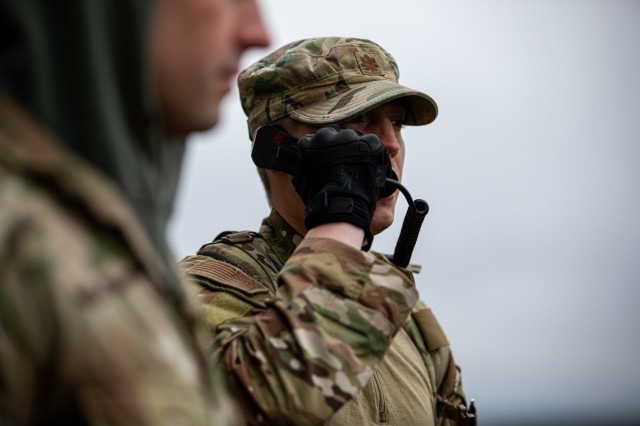
The joint force model’s interoperability is crucial to our nation’s warfighting success and the improvement of our technology lies within the people who are the service themselves.
“The ultimate goal is if one person from any service walks out with an idea or concept from here and applies it to their work, and makes it better, then we have won. Plain and simple.” said O’Callaghan.
By SPC Osvaldo Fuentes
Some photos by SGT Erin Conway
FORT BRAGG, N.C. – Fifty-five years ago, on Jan. 30-31, 1968, the North Vietnamese Army, in conjunction with their Viet Cong allies, launched an ambitious country-wide offensive in South Vietnam. Hoping to break the will of the South Vietnamese military and stimulate a popular uprising against the pro-American South Vietnamese government, they committed more than 80,000 troops to the initial wave of attacks. Timed to begin during the Tet Mau Than holiday, which marked the start of the lunar new year, the offensive soon took on the abbreviated name of that holiday: Tet. Four Green Berets from the 5th Special Forces Group (Airborne) demonstrated exceptional valor during a five-week period in early 1968, immediately preceding and during the Tet Offensive.
U.S. Army Special Forces and the Escalation in Vietnam
The U.S. Army’s advisory role in South Vietnam began in the late 1950s with the deployment of Mobile Training Teams, including some drawn from the Army’s nascent Special Forces units. The advisory mission accelerated in the early 1960s due to U.S. President John F. Kennedy’s preferred counterinsurgency strategy, which leaned heavily on Army Special Warfare, particularly Special Forces. This strategy emphasized building the capacity of South Vietnam’s Armed Forces and other indigenous partners, securing the populace, and defeating the Viet Cong, the main Communist insurgent force. Special Forces was tailor-made for such missions.
In early 1965, the U.S. deployed its first conventional combat troops to Vietnam. Rather than advising, their mission was to decisively engage and defeat both the Viet Cong and the NVA operating in South Vietnam. Special Forces continued to play an important role and, although their numbers continued to grow, their overall share of the war effort decreased as conventional troop levels rose dramatically between 1965 and 1968.
More boots on the ground, coupled with more aggressive tactics, brought an increase in U.S. casualties. Still, Gen. William C. Westmoreland, the U.S. Military Assistance Command, Vietnam commander, entered 1968 hopeful about the progress of the war. President Lyndon B. Johnson shared Westmoreland’s optimism. Both men anticipated a successful conclusion to the war, despite increased casualties and a burgeoning anti-war movement at home.
The North Vietnamese were also optimistic, believing that their planned offensive would turn the tide of the war decisively in their favor. Throughout January 1968, the NVA and Viet Cong maneuvered into their positions. To distract U.S. and South Vietnamese forces, the Communists conducted diversionary attacks in the weeks leading up to the Tet holiday. One such attack took place east of the village of Thong Binh, South Vietnam, on Jan. 16, 1968.
Sgt. Gordon D. Yntema
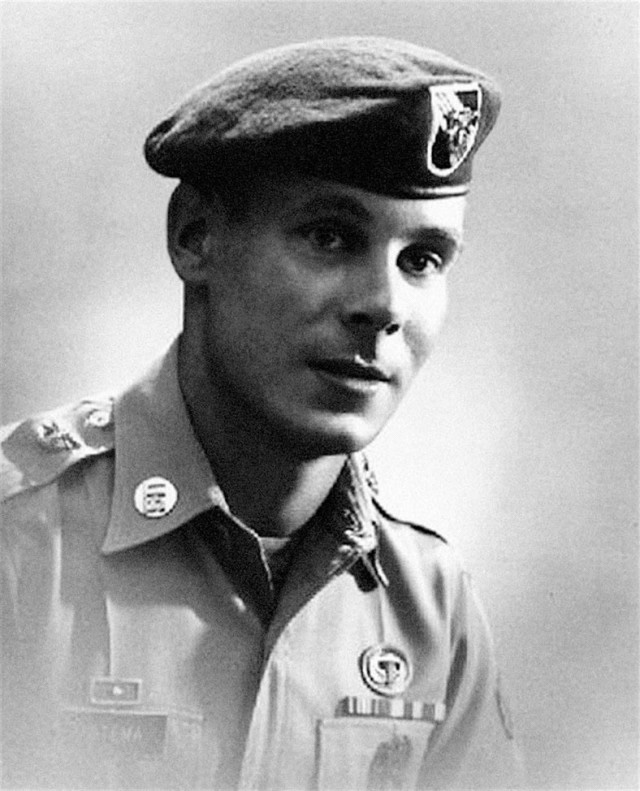
U.S. Army Sgt. Gordon D. Yntema was posthumously awarded the Medal of Honor on Dec. 2, 1969, for valorous actions near Thong Binh, South Vietnam, Jan. 16-18, 1968. He was assigned to Detachment A-431, Company D, 5th Special Forces Group (Airborne), at the time of his death. (Photo Credit: U.S. Army)
During the ensuing battle, Sgt. Gordon D. Yntema accompanied two platoons of civilian irregulars to a blocking position east of the village of Thong Binh, where they were attacked by a much larger force of Viet Cong. Yntema assumed control of the element after its commander was seriously wounded and led a tenacious defense despite overwhelming odds. Out of ammunition and reduced to using his rifle as a club, he held his ground until succumbing to enemy fire.
Staff Sgt. Drew D. Dix
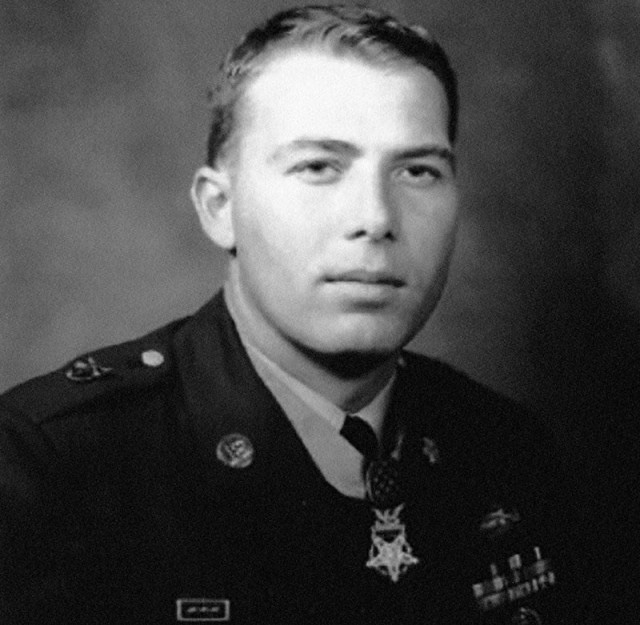
U.S. Army Staff Sgt. Drew D. Dix, 5th Special Forces Group (Airborne), was awarded the Medal of Honor on Jan. 16, 1969, for valorous actions in Chau Phu, South Vietnam, during opening days of the Tet Offensive (Jan. 31-Feb. 1, 1968). Dix later received a direct commission and retired from the U.S. Army in 1982, having attained the rank of major. (Photo Credit: U.S. Army)
Two weeks later, on the morning of January 30, communist forces attacked eight major South Vietnamese cities. The next day, fighting erupted almost everywhere across South Vietnam as the communists attacked more than 60 towns, 36 provincial capitals, and five of South Vietnam’s autonomous cities, including the capital city, Saigon. Chau City, capital of Chau Doc Province, was attacked by two Viet Cong battalions. Staff Sgt. Drew D. Dix, along with the South Vietnamese patrol he was advising, were called on to assist in the defense of beleaguered city.
Dix organized and led two separate relief forces that successfully rescued a total of nine trapped civilians. He subsequently assaulted an enemy-held building, killing six Viet Cong and rescuing two Filipinos. The following day, he assembled a 20-man force and cleared the Viet Cong out of a hotel, theater, and other adjacent buildings within the city. In the process, he captured 20 prisoners, including a high-ranking Viet Cong official. He then cleared enemy troops from the Deputy Province Chief’s residence, rescuing that official’s wife and children in the process.
Sgt. 1st Class Eugene Ashley, Jr.
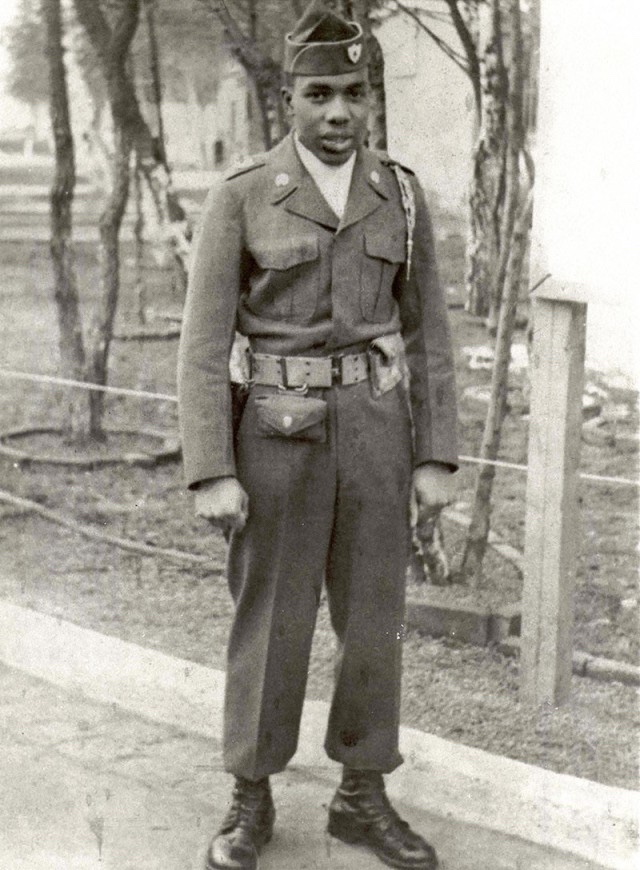
U.S. Army Sgt. 1st Class Eugene Ashley, Jr., was posthumously awarded the Medal of Honor on Nov. 18, 1969, for valorous actions near Lang Vei, South Vietnam, Feb. 6-7, 1968. He was assigned to Detachment A-101, Company C, 5th Special Forces Group (Airborne) at the time of his death. (Photo Credit: U.S. Army)
A week later, on the evening of Feb. 6, the NVA launched a surprise attack on the Special Forces camp at Lang Vei, in the northwest corner of South Vietnam. With the camp’s surviving Special Forces advisors trapped in a bunker, Sgt. 1st Class Eugene Ashley, Jr., organized a rescue effort, consisting mainly of friendly Laotians.
Ashley led his ad hoc assault force on a total of five assaults against the enemy, continuously exposing himself to withering small arms fire, which left him seriously wounded. During his fifth and final assault, he adjusted airstrikes nearly on top of his assault element, forcing the enemy to withdraw and resulting in friendly control of the summit of the hill. Following this assault, he lost consciousness and was carried from the summit by his comrades, only to suffer a fatal wound from an enemy artillery round. Ashley’s valiant efforts, at the cost of his own life, made it possible for the survivors of Camp Lang Vei to eventually escape to freedom.
Staff Sgt. Fred W. Zabitosky
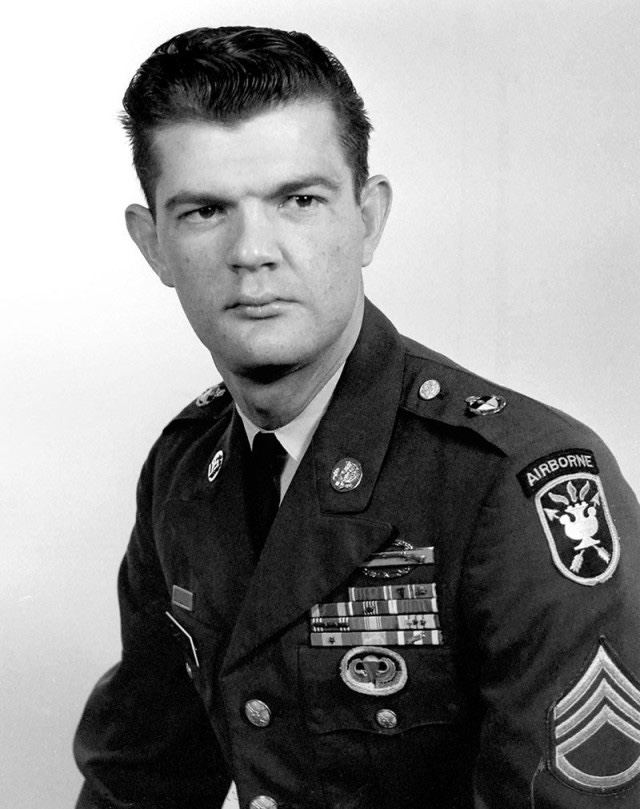
U.S. Army Sgt. 1st Class Fred Zabitosky, 5th Special Forces Group (Airborne), was awarded the Medal of Honor on March 7, 1969, for valorous actions east of Attopeu, Laos, on Feb. 19, 1968. He retired from the U.S. Army in 1977, having attained the rank of master sergeant. (Photo Credit: U.S. Army)
Later that month, on Feb. 19, Staff Sgt. Fred W. Zabitosky was part of a nine-man Special Forces long-range reconnaissance patrol operating deep within enemy controlled territory in Laos when his team was attacked by a numerically superior NVA force. Zabitosky rallied his team members and deployed them into defensive positions. When that position became untenable, he called for helicopter extraction. He organized a defensive perimeter and directed fire until the rescue helicopters arrived. He then continued to engage the enemy from the helicopter’s door as it took off, but the aircraft was soon disabled by enemy fire.
Zabitosky was thrown from the helicopter as it spun out of control and crashed. Recovering consciousness, he moved to the flaming wreckage and rescued the severely wounded pilot. Despite his own serious burns and crushed ribs, he carried and dragged the unconscious pilot through a curtain of enemy fire before collapsing within ten feet of a hovering rescue helicopter. Zabitosky would become the fourth Green Beret to receive the Medal of Honor for actions during the Tet Offensive period, joining Yntema, Dix, and Ashley.
These four Special Forces heroes were in good company. The mettle of the U.S. forces in Vietnam was severely tested during the opening months of 1968 in places such as Hue, Saigon, Lang Vei, Dak To, Quang Tri, and Khe Sahn. At every turn, the men and women of the U.S. military rose to the occasion, demonstrating indomitable valor and dealing the North Vietnamese and Viet Cong a crushing defeat. Combined, the Communist forces lost an estimated 72,455 soldiers between January and March 1968, compared with 15,715 allied dead, of which 4,869 were Americans.
A Turning Point: The Impact of the Tet Offensive
The ferocity of the Tet Offensive, and the resulting increase in U.S. casualties, alarmed both U.S. government officials and the American people. It also discredited the claims of progress from both military and political leadership. Anti-war protests intensified as more and more Americans came to share the assessment of popular news anchor Walter Cronkite that the war in Vietnam was unwinnable. President Johnson terminated his reelection campaign. The fighting continued under his successor, Richard M. Nixon, who adopted a strategy of “Vietnamization,” characterized by a gradual transfer of responsibility to South Vietnamese forces and a phased drawdown of U.S. troops.
On Jan. 27, 1973, nearly five years to the day after the start of the Tet Offensive, the United States, North Vietnam, South Vietnam, and the Viet Cong signed the Paris Peace Accords. The long U.S. combat mission in Vietnam ended two months later, on March 29, 1973. North Vietnam later resumed offensive operations, eventually capturing Saigon on April 30, 1975, thereby ending the war and uniting Vietnam under Communist rule.
Twenty-two Green Berets earned the nation’s highest award for valor for service in Vietnam, eight of them posthumously. In the 50 years since, time has not dimmed, nor will it ever dim, the glory of their deeds. Their valorous actions, often at the cost of their own lives, continue to inspire U.S. Army Special Operations Forces soldiers, the U.S. Army, and the nation.
For more information, visit www.arsof-history.org/medal_of_honor/index.
By Christopher E. Howard, USASOC History Office
Army Editor’s note: The article contributes background to the U.S. Army Center of Military History’s pamphlet referencing the U.S. Army Campaigns of the Vietnam War series, Turning Point, 1967–1968, by Adrian G. Trass.
About the author: Christopher E. Howard served four years in the U.S. Army as a psychological operations specialist before earning an M.A. in History from Appalachian State University. He joined the USASOC History Office as a staff historian in June 2018.