XC3 Weaponlight

Archive for the ‘Breaching’ Category

US Army Selects Four Contractors for Engineer Autonomous Breaching Capability to Automate Battlefield Breaching Operations

Friday, July 10th, 2026

DETROIT ARSENAL, Mich. – The Capability Program Executive Mission Autonomy announced today the selection of four companies for the Engineer Autonomous Breaching Capability (EABC) initiative, a key effort to modernize engineer support for Soldiers on the battlefield.

This project will develop and prototype autonomous systems capable of rapidly breaching complex obstacles and minefields under direct observation and fire, minimizing personnel exposure and ensuring the safe passage of follow-on forces. The selected contractors will provide advanced robotic systems designed for beyond-line-of-sight autonomous control, directly enhancing the Army’s ability to conduct multi-domain operations.

The four selected companies – Caterpillar (Irving, Texas), Forterra (Clarksburg, Md.), IDV USA (York, Pa.) and Overland AI (Seattle) — were chosen for their innovative approaches to autonomous breaching. Their proposed technologies range from autonomous commercial equipment to purpose-built robotic platforms, both featuring modular payloads to support varied breaching requirements.

Formal contract awards for the EABC initiative are expected to be finalized in the coming weeks. Once awarded, the project will advance into a series of demonstrations and assessments, culminating in a Transformation in Contact unit assessment in early 2027. This rotation will allow the Army to collect direct, unit-level feedback to inform the production decision for the next generation of autonomous engineer systems.

By Ashley John

Army Researchers Modernize Breaching for Ground Platforms Through AI-Enabled Explosive Hazard Detection

Thursday, July 2nd, 2026

FORT BELVOIR, Va. (June 4, 2026) — To defeat adversaries’ explosive hazards on today’s battlefield, U.S. Army researchers are integrating the latest advances in artificial intelligence to deliver greater lethality and survivability to Soldiers.

With Soldiers facing increasingly sophisticated and complex threats, Army scientists and engineers are developing capabilities to enable persistent ground situational awareness for maximum force protection. The Army’s Command, Control, Communications, Computers, Cyber, Intelligence, Surveillance and Reconnaissance (C5ISR) Center leads the Ground-based Multi-Mission Payload project.

Breaching minefields has historically been one of the most dangerous tasks for troops. By automating the monotonous and fatiguing task of manual threat scanning, Soldiers can focus their attention on the broader tactical environment while easing the cognitive load. While unmanned aerial systems can cover wide areas, ground systems remain essential to detect threats aerial assets can’t see.

“Our S&T and technical expertise across core competencies including advanced sensing, intelligence, and command and control are delivering critical advantages for our Soldiers — situational awareness, enhanced operational speed, and safety,” said C5ISR Center Director Beth Ferry.

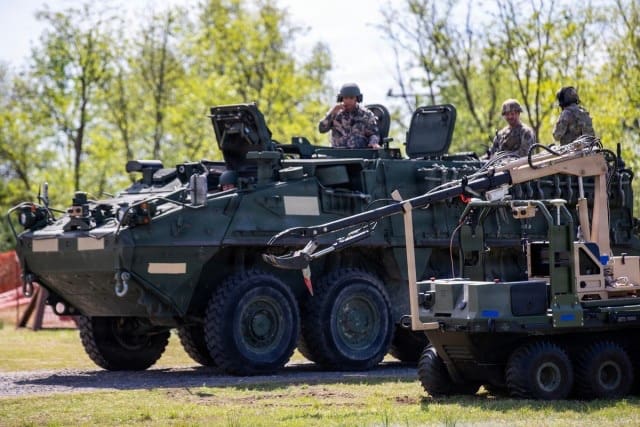
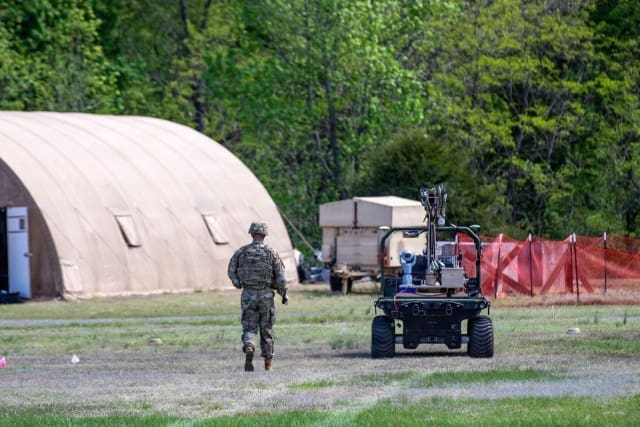
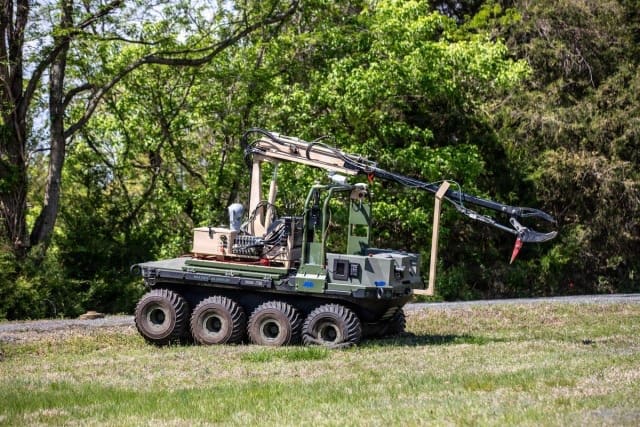
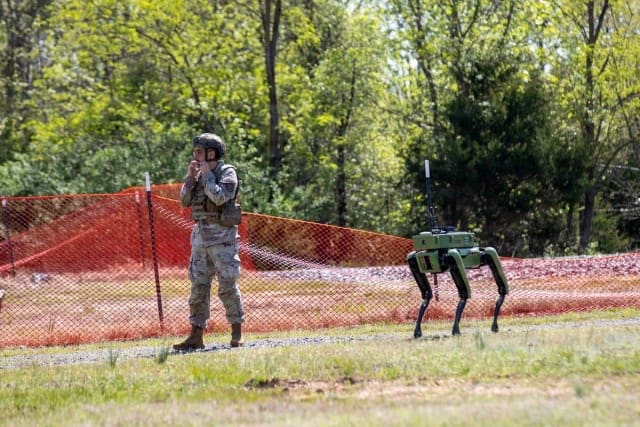
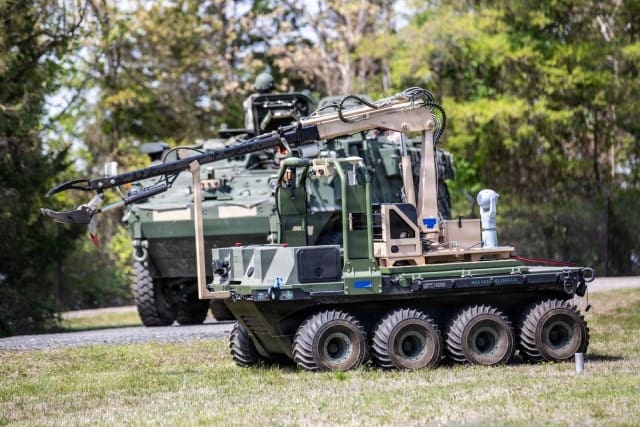
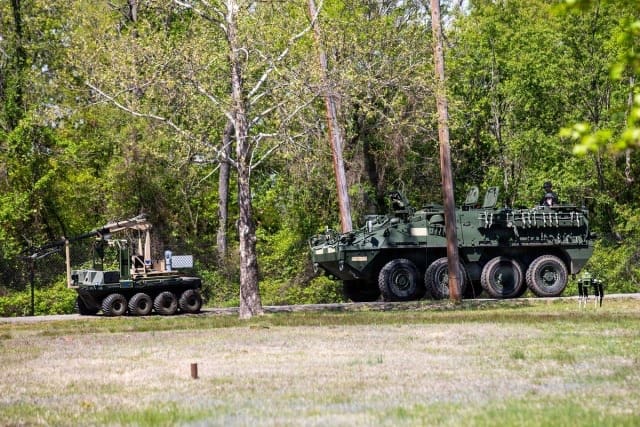
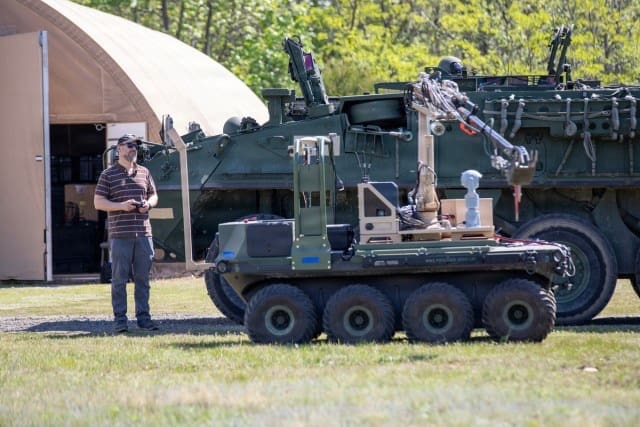
The GMMP proof-of-concept prototype includes a suite of hardware and AI-enabled software with advanced sensors, which have been outfitted onto a variety of ground vehicles and robotic platforms: a specially equipped military vehicle; a robot dog; and a Squad Multipurpose Equipment Transport, an unmanned, eight-wheeled heavy-duty robotic platform with instruments to complete multiple threat removal and complex mission sets, according to C5ISR Center physicist Kendall Johnson, the project’s technical lead.

An AI model detects, classifies, and reports explosive threats in real-time, integrating seamlessly into the Tactical Assault Kit ecosystem that populates a common operating picture for the entire team, both inside the vehicles and in the command post. Soldiers can identify hazards from a safe standoff distance, turning hours of manual scanning into a millisecond-fast automated process.

“The system incorporates a government-developed and -owned open AI architecture built by Army subject-matter experts,” Johnson said of the project’s plans for multi-algorithm support. “The Army can add the best algorithms from any source, at any time. The concept remains relevant into the future with the ability to incorporate new technologies as they emerge.”

C5ISR Center Countermine Ground to Ground Portfolio lead Dr. Amin Abbasi Baghbadorani said another project goal is transitioning from current counter-explosive systems that are often built with proprietary software and hardware while limited to a single purpose.

“GMMP is based on a modular concept to integrate commercial off-the-shelf hardware,” Abbasi Baghbadorani said. “Its open architecture is designed for rapid adaptation to new vehicles, sensors, and AI algorithms. The capabilities can be used with any platform and are easy to transition.”

Working with noncommissioned officers assigned to the Center is critical to providing Soldiers with the best tools for lethality and survivability, Johnson said.

“Feedback from NCOs has been incredible as we get feedback on-site,” Johnson said. “We’re able to make changes the same day and update the systems. It’s optimized the speed and pace of our project.”

Sgt. 1st Class Michael Havens, a C5ISR Center enlisted adviser, is working with the project’s scientists and engineers to bring his operational expertise as a network communication systems specialist into the technology development cycle.

“There’s an instant feedback loop,” Havens said. “What we do as enlisted Soldiers for C5ISR Center is they will give us their technology, show us how operate it, and run us through scenarios. We’ll tell them how to design the system to make it easier to use, more functional. Situational awareness is key. The more you have SA of the battlefield, the more you can devise a plan to execute, navigate, and negotiate.”

The GMMP team’s next steps are to mature the prototype into a cross-platform demonstrator with activities planned in additional climates and locations in the near future. It’s imperative the system performs across the wide range of conditions Soldiers face — extreme temperatures and humidity, sand, dust, foliage, snow, ice, and varying grass and soil types.

“The focus is adapting the system to more complex environments to prove its end-to-end capability,” Abbasi Baghbadorani said.

By Dan Lafontaine, DEVCOM C5ISR Center Public Affairs

Soldiers Test Drone-Delivered Breach Capability

Tuesday, June 30th, 2026

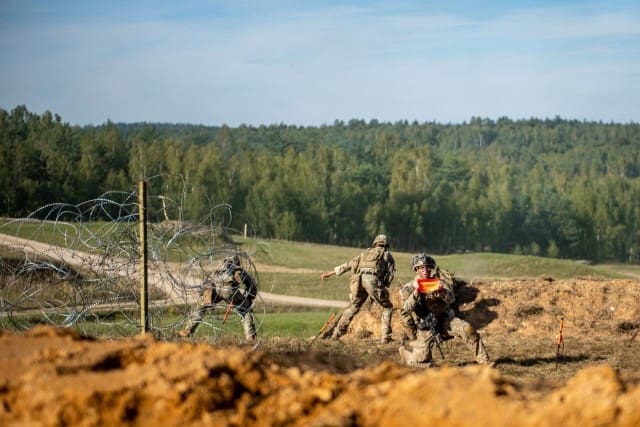
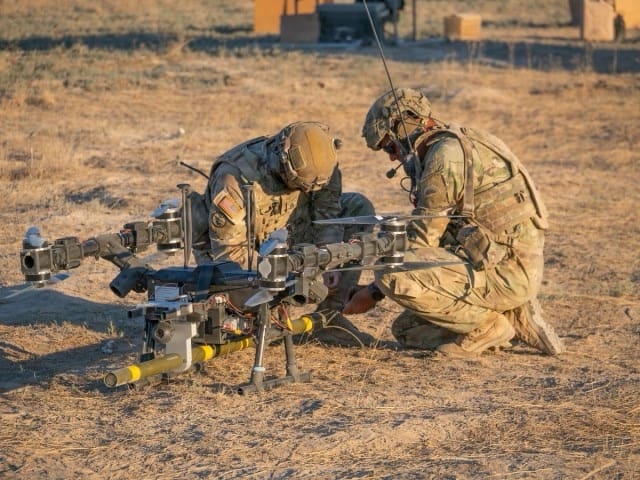
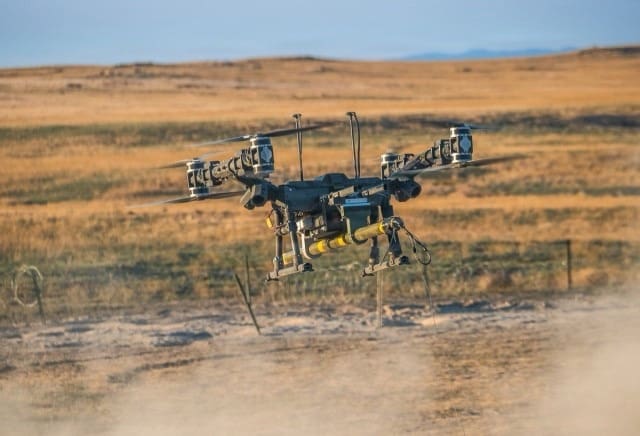
ORCHARD COMBAT TRAINING CENTER, Idaho — A heavy-lift drone climbed into 25 mph gusts above the high desert June 22, carrying a live Bangalore torpedo toward a wire obstacle.
For combat engineers, breaching that kind of obstacle is one of the most dangerous missions on the battlefield. Army doctrine accounts for that risk with a 50 percent casualty planning factor for a deliberate breach.

This time, no Soldier had to sprint forward to place the charge.

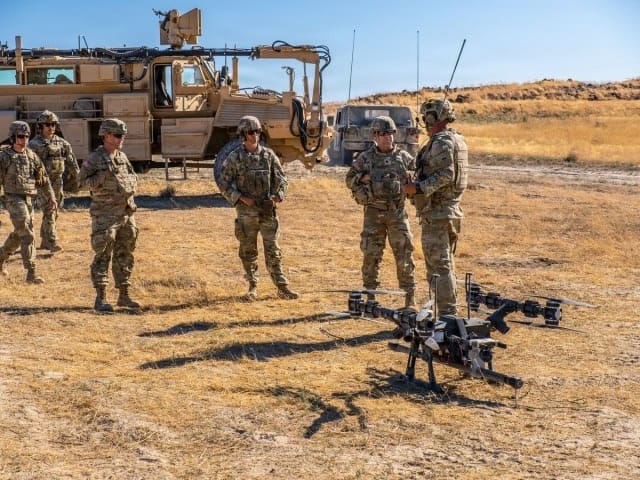
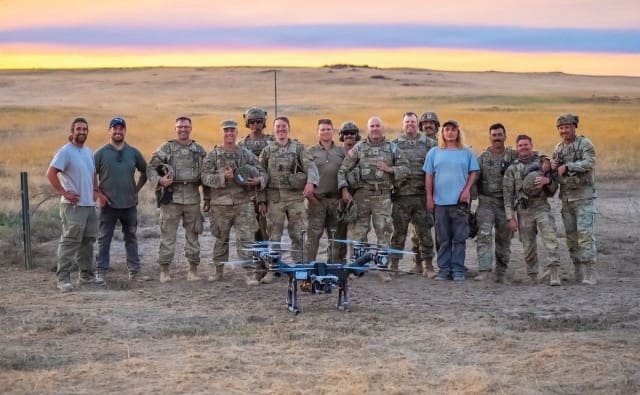
Soldiers from Bravo Company, 741st Brigade Engineer Battalion, 41st Infantry Brigade Combat Team, Oregon Army National Guard, used a drone-delivered Bangalore torpedo to breach the wire obstacle on Range 22. The drone released the charge, shock tube unspooled behind it and the Soldiers took cover before the Bangalore detonated, opening a lane through the wire.

The proof of concept marked the close of a months-long innovation effort by the 741st BEB’s drone working group. Battalion commander Lt. Col. Eric Zimmerman established the group with a directive to defeat a wire obstacle using a commercial off-the-shelf or similar drone during the battalion’s annual training. The working group’s research found no precedent for the tactic in the U.S. Army.

“Mostly Ukraine,” Zimmerman said when asked what drove the concept. “Watching what was going on in Ukraine, and how innovative they are, it inspires you to get better and think bigger.”

The doctrinal cost of a breach added urgency to the effort.

“The most casualty-producing thing that Army engineers do is the breach,” said 1st Lt. Andrew Lucas, who co-led the working group from the battalion S-3 operations section. “Expect 50 percent casualties. If you can deliver something to clear the breach with a $40,000 drone, instead of putting Soldiers in harm’s way, that’s worth experimenting with.”
Innovation surrounded by doctrine

Zimmerman said his intent was to apply emerging technology to a problem engineers already know how to solve.

“I want us to talk about drones around something we already do really well, which is defeating obstacles,” he said. “So let’s do this non-doctrinal thing, but surround it with doctrine.”

The working group was led by Lucas and Capt. Samuel Cushing, the battalion’s plans officer, with input from senior noncommissioned officers, including 1st Sgt. Joshua Martin. The team first studied commercially available drones priced from $2,000 to $40,000.

After funding for a commercial purchase did not come through, the team turned to the Oregon Army National Guard’s 249th Regional Training Institute. The RTI’s existing drone-build program could not produce an airframe with the lift capacity required by the mission. Lt. Col. Mark Timmons, the 249th RTI commander, told the working group his program could not meet the requirement within the available timeline.

Rather than abandon the effort, the battalion operations section continued pursuing alternatives. Working from specifications developed by the drone working group, Maj. Harvey, the battalion S-3, and Martin, the battalion operations noncommissioned officer, vetted industry partners before determining Lorica Technologies could meet the requirement.

When Lucas arrived for annual training, he believed the search had come up short.

“We’d been told no, it’s not going to happen, we’re not going to get a drone,” he said. “And that’s when Maj. Harvey said, ‘Oh, we actually got a drone.’ So, full speed ahead.”
The Mule 28

Lorica’s contribution was the Mule 28, a heavy-lift, multi-mission unmanned aerial system designed and built in-house at the company’s Ashland facility.

The airframe weighs about 45 pounds, can lift about 200 pounds and is powered by eight motors turning eight 28-inch bi-blade propellers. It carries onboard artificial intelligence processing, software-defined radios and a sensor package designed to support recognition and targeting functions. The drone can also derive coordinates from its camera using trigonometry and focal length, allowing it to mark drop points on objects it identifies.

Lorica founder and CEO Christopher Dye said the company’s software, including a swarm-control system called Hive, is what makes the platform distinct.

“It doesn’t matter what the vehicle is, as long as we understand the capabilities and the parameters of the vehicle,” Dye said. “We can task the swarm based on what the job needs to get done. Right now, we’re working on natural language control, so that you can just talk to the bird and tell it, ‘Hey, I want a reconnaissance around this building. I need to know how big that ditch is before we get there, how many steps, how high the windows are.'”

Lorica currently fields three Mule 28 prototypes. The company had about six weeks to develop the airframe for the Oregon project.

Cushing said working with a domestic manufacturer to build to specification, rather than buying a commercial drone with Chinese components, was a deliberate choice that helped reduce electronic warfare and supply chain vulnerabilities.

“It’s been helpful to have contractors that can meet every specification we’re asking for and produce a drone that also meets the Army’s intent for any sort of technology that we integrate,” he said.

Soldiers with Bravo Company, 741st Brigade Engineer Battalion, 41st Infantry Brigade Combat Team, conducted a proof-of-concept drone-delivered breach against a wire obstacle June 22, 2026, on Range 22 at Orchard Combat Training Center, Idaho. U.S. Army video by Maj. W. Chris Clyne, Oregon National Guard Public Affairs.

Building the safety case

The team built safety into the project by increasing risk in stages. The drone first carried an inert training aid identical in size and weight to the M1A3 Bangalore. Once the platform could reliably deliver an inert charge on target, the team progressed through limited live-fire iterations before flying a live, two-section M1A3 Bangalore torpedo.

Every iteration involving live explosives was initiated using a shock tube spooled from the drone to the obstacle. The team deliberately avoided an electronic trigger that could be jammed or prematurely activated.

“Ideally, you would love to be able to remote-detonate this without having to have a spool of shock tube,” Lucas said. “But in the LSCO environment, we’ve seen so many other systems jammed that if you have the ability to, it’s not a detriment that we’re doing it this way.”

The M1A3 Bangalore torpedo demolition kit consists of 10 tube sections, each 2.5 feet long and containing a 5-pound composition B4 main explosive charge. Doctrine permits up to four sections joined together for a single shot. The working group used two-section assemblies June 22 and made one small adjustment to prevent the blasting cap junction from pulling loose in flight.

“We’re trying to introduce a new TTP here anyway,” Cushing said. “We want to see if we can deliver a Bangalore remotely and defeat a wire obstacle. Everything beyond that is something we’ll take into consideration as the project evolves.”
Both working group officers said the broader value of the project is giving engineers a tool tailored to their core mission rather than relying only on infantry-focused drone applications that have dominated the field.

“Mobility, counter-mobility is the bread and butter of the engineers, so we should focus on leaning into that versus infantry tasks,” Lucas said.

Cushing said the Bangalore breach could become a foundation for broader experimentation.
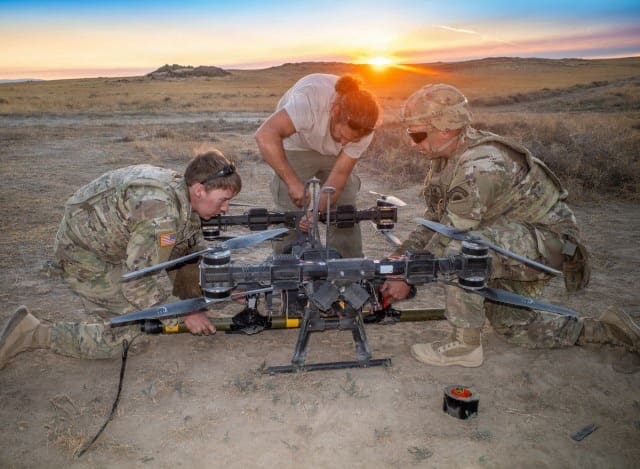
“The platform they’ve built, if we got an entire annual training with plenty of explosives, range time, and the ability to make modifications as we go, I think we could be defeating 10, 20 times more obstacles than we’re talking about today.”

Lucas said the next conceptual step is autonomy.

“We’re not that far technologically from a drone that has an AI processor on it that could identify where concertina wire is. And you could put in a rough coordinate of, ‘Hey, I know the obstacle’s there,’ and you could send it to autonomously deploy the Bangalore on the wire with near-perfect precision, where there’s no possibility of it being jammed, because it’s all running off of internal direction.”

Dye said the next iteration of the Mule 28 will refine flight controls, dropping mechanisms and safety systems, with the goal of integrating AI-driven obstacle recognition that could allow the drone to identify a wire obstacle, position itself and release the charge autonomously. Lorica plans to return to additional inert drops in the coming weeks and is preparing for follow-on demonstrations.

Zimmerman said the successful demonstration reflected more than a new capability. It showed collaboration across the battalion.

“I’m really proud. We have a true group project that highlights innovation across everything we do is possible,” he said. “The Soldiers of Bravo Company took an idea from the battalion staff and applied their expertise to make that idea functional and effective.”

For Dye, watching the live Bangalore release and detonate as planned was, in a word, “relief.”

“It’s been very nerve-wracking the last few days,” he said.

The 741st BEB plans to capture lessons learned in a battalion white paper and forward the concept to the engineer community.

By MAJ Wayne Clyne

ANR Design Introduces Breaching Tool Carriers

Monday, February 16th, 2026

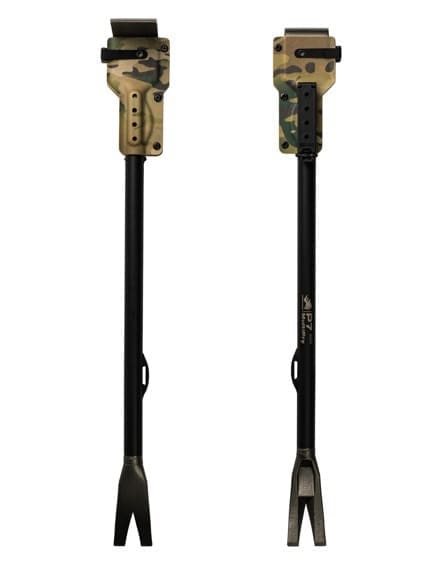
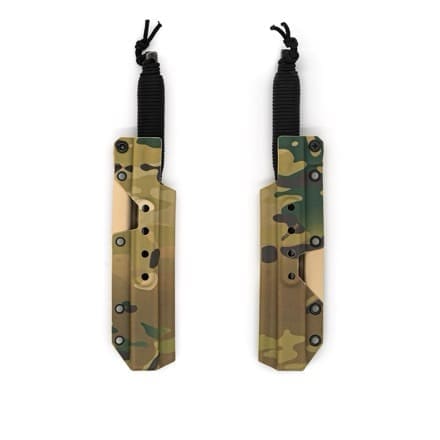
So far, ANR Design has added two new breaching tool carriers to their website. Made from Kydex, they are available in a variety of colors.

SET Breaching P7 MultiPry Tool Sheath

Broco JIMMY Tactical Pry Bar Sheath

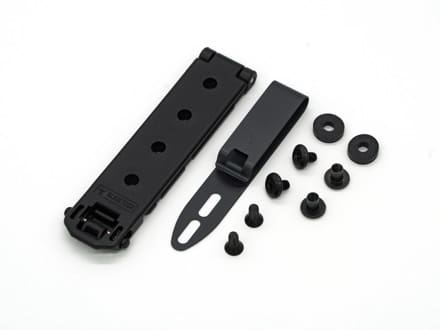
The carriers come with Blade Tech Molle Lok and DCC MOD 4 Belt Clip mounting hardware.

See the entire lineup at www.anrkydexholsters.com/product-category/soldier-systems/breaching.

Milipol 25 – Weber Rescue Systems COMBI-TOOL

Monday, December 1st, 2025

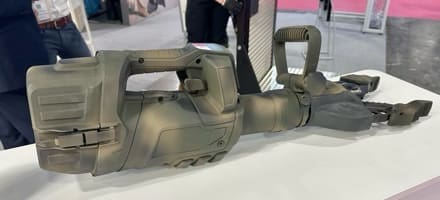
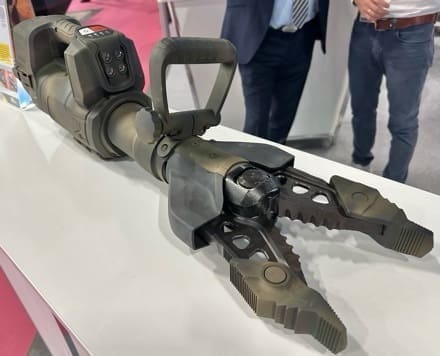
The COMBI-TOOL is a battery-powered multipurpose tool for rapid intervention teams, offering high cutting and spreading forces, interchangeable tips for breaching, cutting, lifting, and pulling, a swivel-folding handle for optimal handling, and compatibility with MILWAUKEE 18V M18 FORGE batteries.

Technical Specifications:

Weight (ready for use): 14,2 kg

Opening width: 285 mm

Spreading force (in work area): 30 – 1305 kN

The COMBI-TOOL will cut a 28mm bar in a single cut.

www.weber-rescue.com

Genesis Rescue Tools Achieves Berry Compliance; Launches Strategic Push into US Government & Department of War Markets

Friday, November 21st, 2025

Dayton, OHGenesis Rescue Systems, a leading manufacturer of hydraulic rescue tools used in the fire service across the United States, is now fully Berry Amendment compliant, allowing for procurement within U.S. Government and Department of War programs.

Berry compliance, which requires that products purchased by the DoW be sourced, manufactured, and assembled in the United States, positions Genesis Rescue Tools for immediate eligibility in federal purchasing channels, including military, and federal contracting sectors.

“With Berry compliance in place, we are no longer limited to the fire service” said Spencer Howell for Genesis. “We can now compete head-to-head for military and federal contracts that require U.S. sourcing.”

Howell Rescue Systems to Lead Military Sales Channel

Howell Rescue Systems, the exclusive Genesis master distributor for the eastern half of the Unites States, has designated Shay Dortch as Military Sales Representative to oversee federal and defense outreach.

“Shay will be the point of contact for all DoW and U.S. Government procurement teams,” said RJ Snider, VP of Sales for Howell Rescue Systems. “He understands the market, the procurement process, and the operational demands of federal agencies. We are making a commitment to supply our federal agencies with top tier products produces by Genesis Rescue Systems.”

Built in the U.S. for U.S. Missions

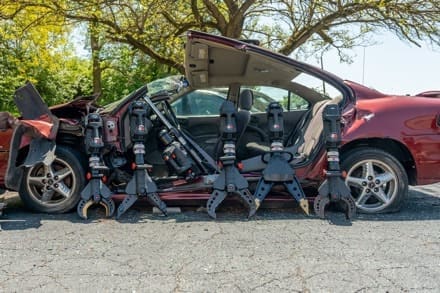
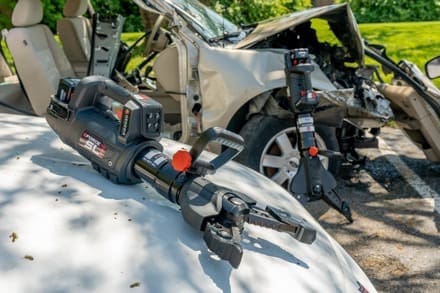
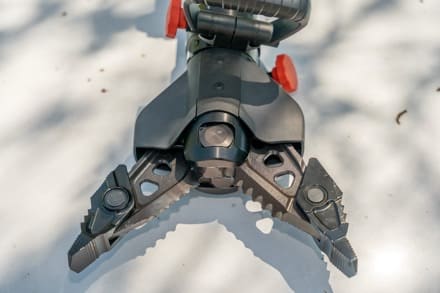
Genesis Rescue Tools are engineered and built in the United States, with a proven track record in fire service vehicle extrications, tactical breaching, and superior performance when it’s needed most, aligning closely with the demands of U.S. military and Department of War.

Sneak Peek – Breacher Quiver from Bushido Tactical

Wednesday, November 12th, 2025

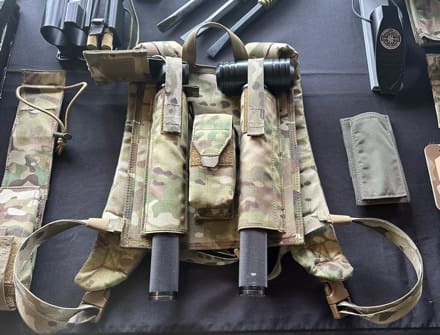
During last week’s SWAT Roundup in Orlando Bushido Tactical offered visitors a look at a prototype breaching tool quiver they had just created. Designed as a backboard with integrated sleeves for two tools such as the hammer and halligan seen here (and pocket for wedges), another version is known as its way as well all with accommodation for a third tool.

Coming soon.

LionHeart Alliance Awarded Spot on FBI’s STEAL Contract for Tactical Equipment and Procurement Support

Wednesday, August 13th, 2025

LionHeart Alliance FBI Patches from Combat Swag

Virginia Beach, VA – 12 August 2025 – LionHeart Alliance, a Virginia Beach-based tactical gear supplier, has been selected as a contract awardee on the Federal Bureau of Investigation’s Strategic Tactical Equipment Acquisition and Logistics (STEAL) IDIQ. With a total ceiling of $57.5 million, the award allows LionHeart to support FBI missions with essential tactical equipment—delivered fast and procured without friction.

The STEAL contract is built to simplify the acquisition of mission-critical gear—everything from survival kits and ballistic protection to comms systems, diving equipment, and HAZMAT solutions. It spans a one-year base period with four optional renewals, supporting both urgent needs and long-term programs.

Where LionHeart breaks from the pack is with its customer service, and how it supports the full range of procurement methods embedded in the contract.

“This isn’t just about what we sell—it’s about how agencies can buy it,” said Cody Schneider, FBI Sales Manager of LionHeart Alliance. “Whether it’s a GPC swipe or a contract call order —we make it easy. No red tape. No delays. Just the right gear, ready when it’s needed.”

About LionHeart Alliance

LionHeart Alliance is an operational equipment supplier built for the next generation of government procurement. Based in Virginia Beach, we serve federal agencies, state and local law enforcement departments, and defense professionals across the country—delivering the gear they trust through the channels they actually use.

We don’t build products – we build relationships to solve your equipment problems. Whether you’re buying on GSA, placing a PO, or standing up a multi-year contract, our team knows how to get it done fast, clean, and without excuses. Backed by real-world experience, a curated catalog of high-performance brands, and a no-nonsense approach to service, LionHeart makes procurement frictionless.



With a deep catalog covering:

… and access to thousands of trusted brands, LionHeart is built to deliver—fast, flexible, and fully aligned with the operational tempo of modern mission sets.

Learn more at www.LHAGear.com or contact Sales@LHAGear.com