Los Angeles & San Diego, Calif—February 23, 2026—Epirus and Digital Force Technologies (DFT) have partnered to deliver a fully integrated counter-UAS kill chain unifying the companies’ respective technologies for detection, tracking, identification, localization and non-kinetic, low collateral defeat of unmanned aerial systems (UAS) threats.
Under the agreement, Epirus will lead systems integration of DFT’s Seraphim command-and control and multi-modal sensor fusion software with Epirus’ Leonidas high-power microwave (HPM) platform for critical point defense.
Epirus’ Leonidas high-power microwave is a proven non-kinetic counter-UAS solution that leverages electromagnetic interference to defeat swarming, AI-controlled and fiber-optic guided UAS that can evade legacy electronic warfare tactics. The Leonidas platform emits precise electromagnetic interference to disable the critical electronics onboard a drone, neutralizing the threat. Using software-based, operator-defined safe zones, Leonidas provides a scalable, high precision and low-collateral counter-UAS capability. The platform defeated a 49-drone swarm simultaneously with a targeted burst of electromagnetic interference at a 2025 live-fire demonstration.
DFT’s Seraphim software platform and counter-UAS Family of Systems deliver autonomous tracking and identification of UAS threats in complex operational environments. Trusted to support critical missions worldwide, Seraphim is built on a modular, scalable architecture that remains sensor- and effector-agnostic, enabling rapid integration of best-in-class capabilities. Seraphim combines sensing, decision support and effects coordination through a unified operational interface. By fusing data in real-time and autonomously prioritizing threats, the platform enables operators to move from detection to response with speed and precision.
“Leonidas was designed to maximize interoperability with partner technologies,” said Andy Lowery, Epirus CEO. “This collaboration marries our systems integration and swarm defeat expertise with DFT’s edge processing and automation knowhow to deliver exactly what our customers are asking for: a flexible, adaptable and fully integrated counter-UAS kill chain for critical point defense missions.”
“Integrating Seraphim with Epirus’ Leonidas high-power microwave platform extends AI-enabled decision making through the defeat layer of the counter-UAS kill chain, delivering a turnkey detect to-defeat capability,” said Justin MacLaurin, Digital Force Technologies CEO. “This partnership reflects a shared commitment to scalable, interoperable systems that give operators faster, more effective solutions to defeat evolving drone threats.”
The companies will partner on U.S. government demonstration activities and are expected to present their full counter-UAS kill chain solution later this year.
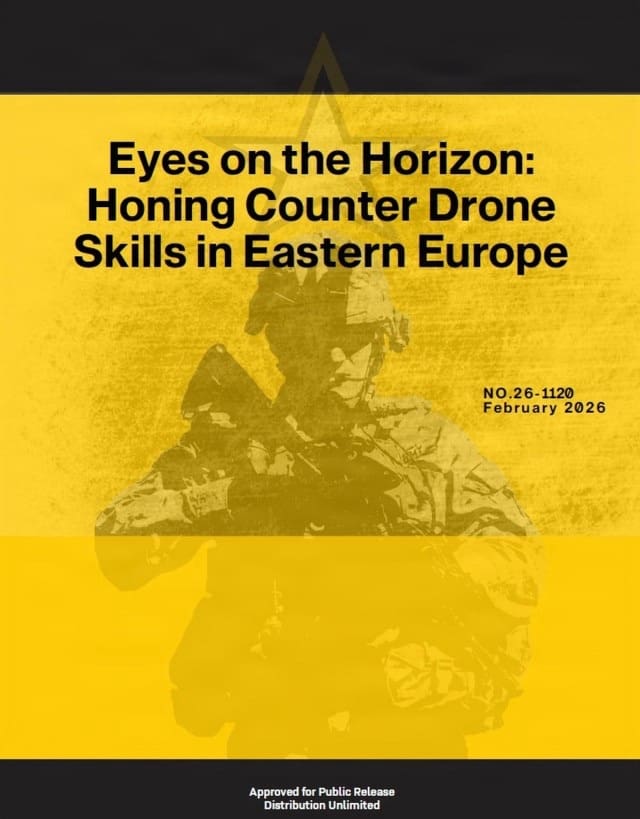
“In a situation where seconds determine survival, C-sUAS training isn’t just preparation, it’s a measurement of readiness. We must be ready to counter the evolving threat of unmanned systems…to dominate the skies.”
– 173rd IBCT (A) UAS subject matter expert.
Introduction
Observations from the Russia-Ukraine War have revealed emergent tactics, techniques, and procedures (TTPs) in the employment of small-unmanned aircraft systems (sUAS), which have proliferated across the battle space. Russian sUAS have become a significant and persistent factor in protection considerations for Eastern European nations, particularly bordering Ukraine. The rapid employment of sUAS compresses the decision-making cycle to mere seconds, rendering traditional centralized air defense approval processes ineffective at the tactical edge. Consequently, the training environment in future U.S. Army Europe and Africa exercises must replicate the compressed decision cycles and complex threat environments seen in Eastern Europe, ensuring tactical leaders have both the tools and the authority to act decisively.
Numerous drone incursions from the Russia-Ukraine War have spilled over into neighboring countries. These incursions have heightened concerns over unexploded ordnance (UXO), particularly in Moldova’s southern regions: Cahul, L?pu?na, and Tighina which are near the Ukraine border. UXO threats in these regions raise concerns about public safety and regional security. These challenges and concerns are not unique to Moldova but are prevalent across NATO’s Eastern Flank Deterrence Line, underscoring the need for enhanced counter small-unmanned aircraft systems (C-sUAS) capabilities and regional collaboration. This publication provides insights on how U.S. Army Europe and Africa (USAREUR-AF) units plan and execute C-sUAS training along with lessons learned from exercise Fire Shield ’25 executed in Moldova in August 2025.
Background
USAREUR-AF leadership plans to conduct C-sUAS activities in exercises to build readiness with subordinate units, integrate emergent technologies, and exchange best practices with Allies and partners. However, host nation legal frameworks governing radio frequency (RF) jamming often constrain full replication of real-world, non-kinetic defeat operations across many established training areas in Western Europe during peace time. Partner nations, like Moldova, that formerly belonged to the U.S.S.R., are optimum locations to conduct C-sUAS training because of drone incursion threats that bleed over from the Russia-Ukraine War. These threats have created a regulatory environment that allows C-sUAS equipment to operate and a host nation appetite for electronic warfare (EW) focused training. As a result, the 173rd Infantry Brigade Combat Team (Airborne) partnered with the 2nd Moldovan Brigade to conduct C-sUAS training as part of the Moldovan annual exercise Fire Shield ‘25 from 4-14 August 2025 at the Bulboaca Training Area in Moldova.
By CPT Madison Fuentes, CPT Saundra Johnson, Scott Safer, Samuel Flaming
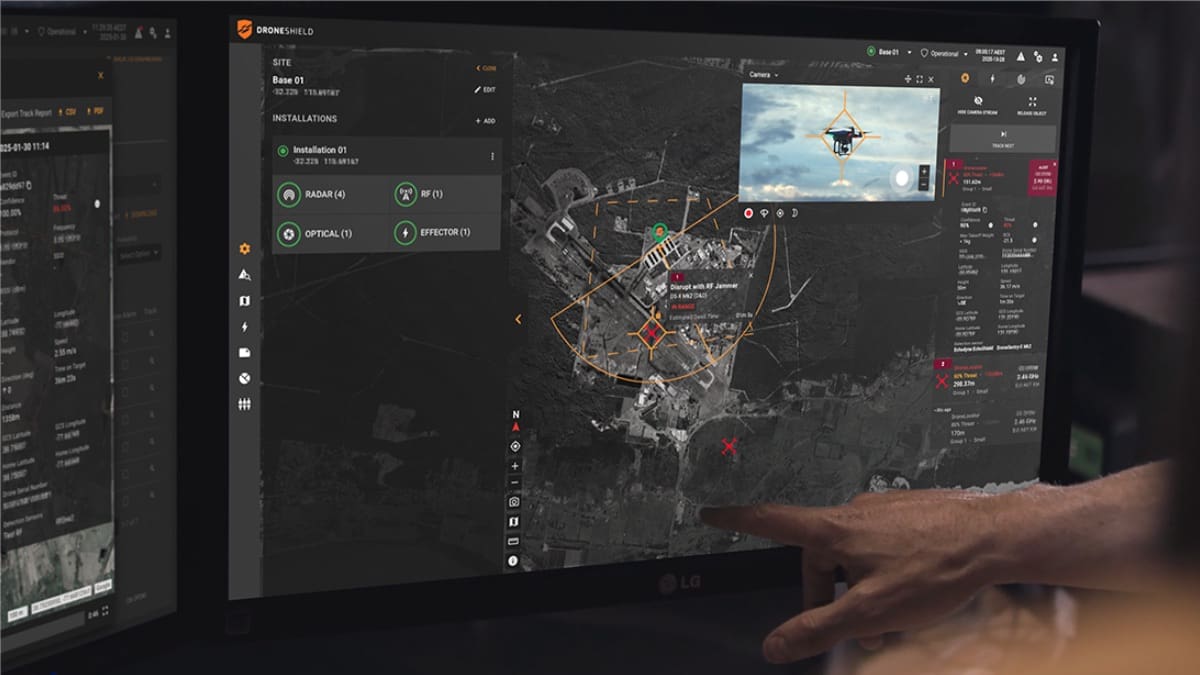
Sydney, Australia – 26 February 2026 – DroneShield (ASX:DRO), a global leader in counter-drone technology, today announced the signing of a Bilateral Collaborative Research Agreement (CRA) with the Australian Department of Defence (Defence), through the Defence Science and Technology Group (DSTG), to strengthen Australia’s capability in counter-drone technology.
The agreement establishes a framework for sharing data on emerging drone technologies and access to either parties test articles, ranges and facilities. This collaboration will leverage DSTG’s scientific expertise and DroneShield’s industry-leading counter-drone technology to ensure both organisations continue to deliver world-class solutions to emerging threats posed by new drones.
DroneShield has also announced the establishment of a $13 million R&D Hub in Adelaide for counter-drone technology, strategically located to enable closer collaboration with Defence and DSTG. This investment complements DroneShield’s previous R&D collaborations, such as with the DSTG-supported Defence Innovation Network that helped develop DroneOptID, DroneShield’s optical system for detection, identification and tracking of fast-moving drones.
Image: A new partnership between DroneShield and DSTG will establish a framework for sharing data on emerging drone technologies
Angus Bean, Chief Product Officer of DroneShield said, “This agreement represents an important step in advancing counter-drone technology not only for Defence but for DroneShield’s end-users globally. Working closely with DSTG allows us to combine our practical experience with their research expertise to deliver innovative solutions that meet the evolving needs of the Australian Defence Force.”
The collaboration will focus on emerging drone technologies through sharing data, test articles and conducting collaborative test programs to drive innovation areas that enhance detection, tracking, and neutralisation of unauthorised drones, supporting Defence and industry efforts to safeguard Australia’s security in an increasingly complex operational environment.
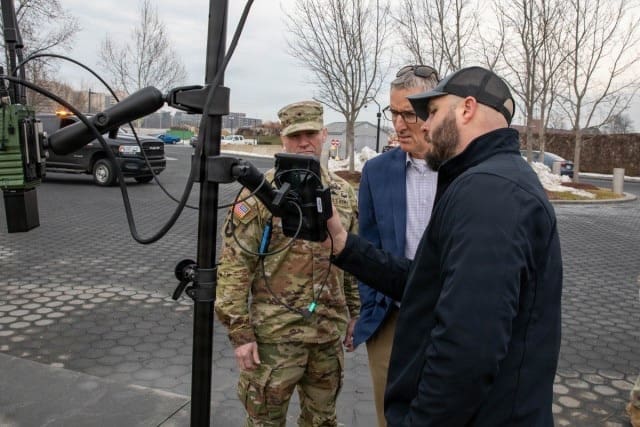
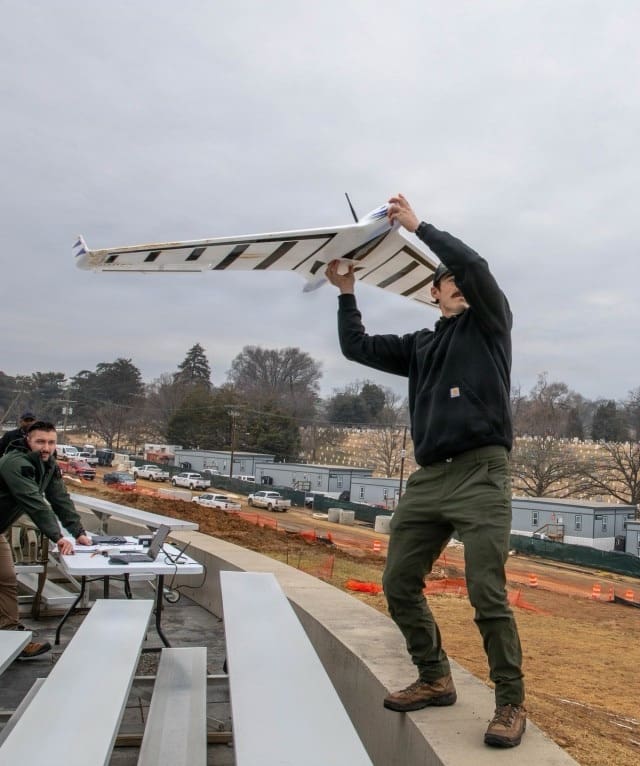
JOINT BASE MYER-HENDERSON HALL, Va. — Joint Inter-Agency Task Force – 401 participated in a multi-day Counter-Small Unmanned Aircraft Systems Threat Simulation Exercise this week, designed to test and evaluate cutting-edge technologies aimed at protecting the National Capital Region. The exercise was a collaborative effort involving the base defense forces of Joint Base Myer-Henderson Hall and key leaders from the Joint Task Force – National Capital Region, Combat Capabilities Development Command and the U.S. Army Military District of Washington. The Director of JIATF-401, Brig. Gen. Matt Ross, visited the exercise on February 18 and praised the team’s efforts to test and train our forces on cutting edge counter drone technology.
“The threats we face are constantly evolving, and exercises like this are critical to ensuring we stay ahead of our adversaries,” stated Ross. “Seeing these dedicated teams and advanced technologies in action gives me great confidence in our ability to defend the vital assets within the National Capital Region. This is innovation and collaboration at its finest.”
The exercise involved the execution of dozens of simulated sUAS incidents, utilizing various drone types to test eleven different sensor systems and three mitigation devices. These scenarios, run during both day and night, were designed to replicate real-world threats and enhance the readiness of regional security forces.
A key focus of the event was the interoperability between different agencies and the seamless integration of their technologies. The data collected will be instrumental in refining the multi-layered defense strategy for the NCR.
Col. Brian Reynolds, provost marshal of Joint Task Force – National Capital Region, emphasized the importance of the joint effort. “This training is about more than just technology; it’s about people and partnerships,” said Reynolds. “By bringing together interagency, federal, state and local law enforcement, we are building a unified and coordinated defense. The interoperability we are honing this week ensures that we can act as a cohesive team to detect, track and mitigate any potential aerial threat. Every agency brings a unique capability to the fight, and together, we create a formidable domestic shield for installations in the homeland.”
JIATF-401 and its partners remain committed to continuous innovation, joint force training, and the rapid delivery of state-of-the-art c-UAS capability our warfighters need to defend the homeland.
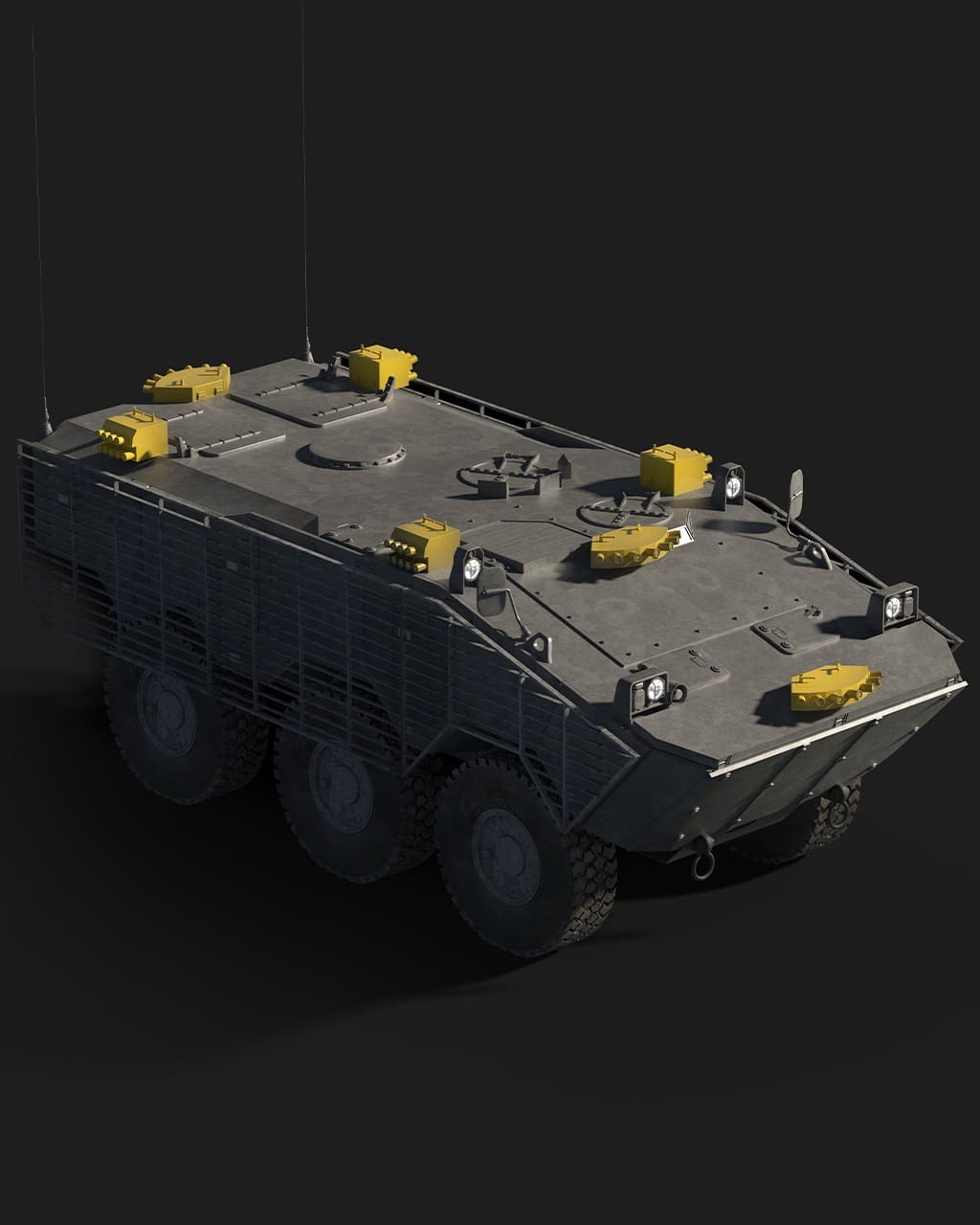
Mehler Protection presents SCILT, a new close-range protection system to counter drones attacking land vehicles from short range and low angles. The system is presented for the first time at Enforce Tac 2026.
Uncrewed Aerial Systems (UAS) increasingly no longer approach only from above. Instead, they emerge from terrain, ditches, flanks, and rear sectors, appearing at very short distance and leaving minimal reaction time. SCILT is conceived specifically to address this immediate close-in envelope, where conventional mobile air-defence systems and unit-level counter-UAS solutions reach detection and defeat limits.
SCILT is conceived as a dedicated last protective layer for individual vehicles, addressing the gap between large-scale mobile air defence systems and passive vehicle protection. Designed to counter small drones, including FPV drones, kamikaze drones, and loitering munitions, SCILT operates in close and very close-range engagements and is intended to defeat both single drones and multiple simultaneous threats in the immediate hazard zone.
The system combines effector modules, sensors, and operating logic directly on the vehicle, enabling defence against drones approaching from lateral and frontal directions as well as low-angles. Sensor kits can include electro-optical and other close-range surveillance sensors to support detection and operator decision-making. Cost-effective effector solutions support scalable employment across different mission profiles.
Key characteristics include:
Close and very close-range protection against drones
Sector-based configuration, allowing individual directions to be activated or deactivated depending on formation and movement
Three staged alert levels: detection alert, approach alert, and trigger alert
In its first version, SCILT operates deliberately with a man-in-the-loop architecture, with further automation planned as technology, procedures, and approval processes evolve
Effector modules use market available standard ammunition types in shotgun-calibre, ranging from rubber projectiles to hardened-core, tungsten-carbide fragment, and armour-piercing variants. This effector spectrum enables controlled hazard areas and scalable effects depending on scenario requirements, while cost-effective effector solutions support employment against both single drones and multiple simultaneous threats.
SCILT is controlled via a vehicle data bus and integrates into existing vehicle architectures. Where such interfaces are not available, the system operates as a self-contained package with its own close-range surveillance and control chain. Remote control units can be installed at multiple positions inside the vehicle.
The development of SCILT has been ongoing for approximately one and a half years. Mehler Protection conducted 48 test campaigns, including external and terminal ballistics, temperature behaviour, trigger reliability testing, and fragment-density measurements to determine the optimal effective range.
The first version of SCILT is planned to be available from summer 2026 as an effector package with sensor kits and control units that can be integrated into different vehicle configurations.
SCILT builds on Mehler Protection’s long-standing platform protection portfolio across land, air, and sea. The company supplies protection solutions for helicopters, land vehicles and naval systems, and is a main supplier of protection systems for almost all naval platforms currently under construction for the German Navy.
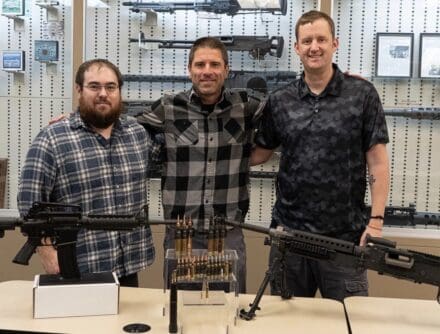
Naval Surface Warfare Center, Crane Division (NSWC Crane) has designed and developed the Drone Killer Cartridge (DKC), a new and cost-effective family of ammunition for the warfighter that increases probability of hit and kill against drone threats while inherently reducing collateral damage.
“We’re enabling extended range, shotgun-style effects through automatic rifles and machine guns with nothing more than an ammunition change,” said Brian Hoffman, Man-Portable Weapons Chief Engineer at NSWC Crane.
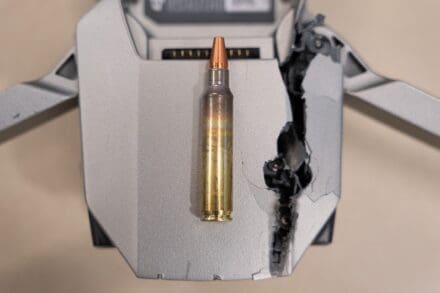
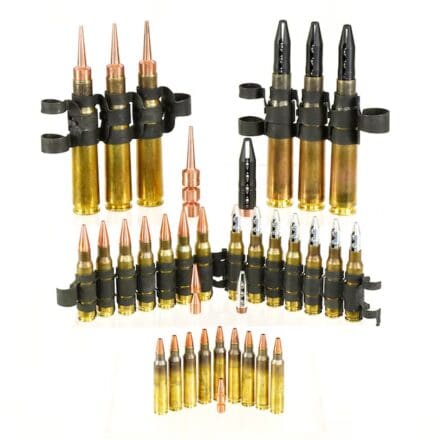
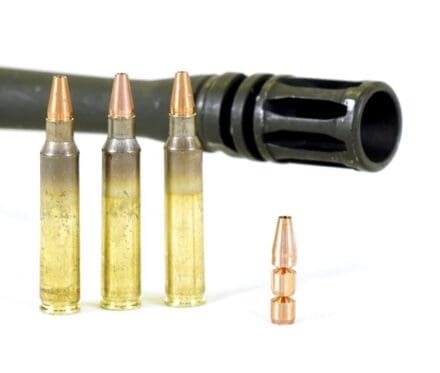
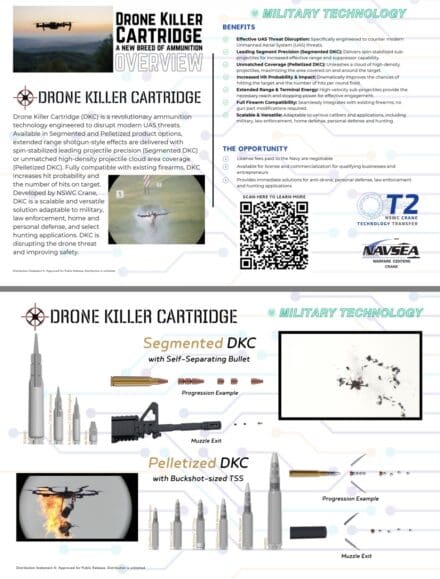
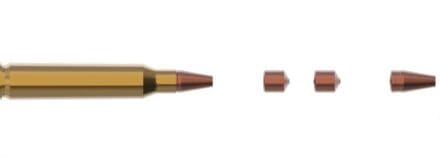
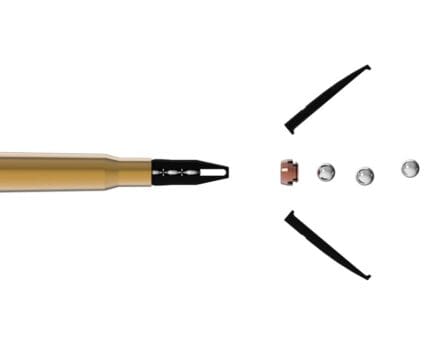
DKC is an ammunition technology that disperses a cluster of projectiles upon firing—for rifles, automatic rifles, and machine guns—with far greater range than a conventional shotgun. These effects increase the probability of hit and kill against Unmanned Aerial System (UAS) threats in a way that also reduces the risk of collateral damage for any projectiles that don’t impact the target. During a recent demonstration at Camp Atterbury in Edinburgh, Indiana, DKC achieved a 92% success rate against drone targets.
Col. Andrew Konicki, Program Manager of Ground Based Air Defense for Program Executive Officer Land Systems, said the Marine Corps plans to broadly leverage DKC for its enhanced capabilities and implement at the operator-level.
“The Drone Killer Cartridge represents a pivotal shift in countering the pervasive threat of enemy drones,” said Col. Konicki. “This type of ammunition provides an immediate and significant improvement to our kinetic kill capabilities by using standard-issued weapons that are already in the hands of Marines. The collaborative work between NSWC Crane and the Marine Corps has positive impacts across the ecosystem of Homeland Defense as well as self-protection for our forward deployed troops in harm’s way. With DKC, we are adding capability well beyond conventional options, while also bending the cost curve for neutralizing drone threats, particularly to the individual Marine. Crucially, its design reduces the risk of collateral damage, making it a dominant and urgently needed solution that will fundamentally change the fight for every Marine.”
Unmanned systems are reshaping tactics, challenging established operations, and creating life-threatening threats for warfighters globally. To counter this rapidly evolving and critical threat, the Department is aiming to improve overall defense capabilities.
“By design, DKC provides broader terminal coverage on and around the intended target, which increases effectiveness against stationary and moving drones by helping offset imperfect aim,” said Hoffman. “There’s a good reason why bird hunters use shotguns. We’ve applied a similar philosophy to killing drones while amplifying overall performance. DKC sub-projectiles exit the barrel at velocities typical of centerfire rifle ammunition. Those velocities, and associated energies, far exceed shotgun capabilities and serve to extend effective range while offering more devastating effects on target.”
DKC technology provides an improved defense capability at an affordable price, ensuring versatility for end-users with rapid integration for a variety of mission sets. Engineers and technicians developed DKC from internal NSWC Crane Naval Innovative Science and Engineering (NISE) funding and Department of Homeland Security and Marine Corps investment. Because use of DKC involves only an ammunition change, timeline to initial fielding can be accelerated as it does not require qualification of a new weapon system. As a beneficial side effect of that approach, DKC eliminates the need for warfighters to carry excess weight of an additional weapon dedicated to countering drones.
“When you compare the cost it takes to kill a drone using DKC versus some other solutions that are being employed, it’s a night-and-day difference,” said Hoffman. “The projectiles used in segmented DKC and pelletized DKC are both inert, meaning there is no energetic material in the projectile itself. The separation mechanisms are purely mechanical, and the cartridge case, primer, and propellant are common to other ammunition types already in production. These attributes combine to help keep it elegantly simple yet effective while ensuring low-cost producibility.”
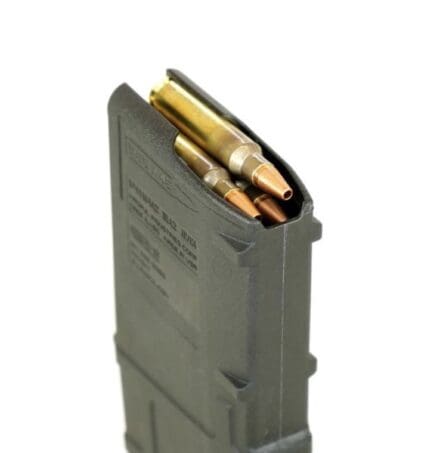
All DKC products are NSWC Crane-designed and U.S. Government-owned intellectual property (IP) with U.S. nonprovisional utility patent applications and Patent Cooperative Treaty applications on file. The DKC family includes both Pelletized and Segmented product options. There is functional overlap between the two, though each type maintains unique priority rankings for effective range, target area coverage, suppressor compatibility, and cost. Segmented DKC includes a one-piece projectile that mechanically self-separates into discrete, spin-stabilized sub-projectiles prior to muzzle exit whereas Pelletized DKC includes a projectile assembly containing a stack of high-density, spherical buckshot-sized pellets that are mechanically disbursed at muzzle exit.
Hoffman said the technology enables the end-user to quickly dispatch UAS threats.
“The intent with our ammunition was to simply give operators a better chance of killing drones with cost-effective products that can be used in existing weapons. If you aren’t the world’s best shot or don’t have a lot of experience engaging aerial targets, your odds go up immediately with DKC. As a bonus and since these products are already mature, you won’t have to wait years for product development in order to access DKC and put it to good use.
Hoffman said the DKC team and NSWC Crane family are excited and motivated to fast-track these products to the field and fleet to help meet urgent needs – not just for the Navy, Marine Corps, and DHS – but for the other U.S. Military Services, Government Agencies, and select foreign partners.
“The demand signal for DKC is increasing dramatically given the current threat environment and the more we socialize these products and the technology,” said Hoffman. “There are obvious reasons why it resonates with military operators and Counter-UAS stakeholders who understand the urgent need. DKC is effective, it’s affordable, and it can be used immediately with weapons that are already in service.”
To view some footage of drone kills using DKC, high-speed video of the sub-projectiles as they exit the barrel, and additional introductory content.
The Drone Killer Cartridge technology is available for licensing to commercial ammunition and defense manufacturing partners. Initially designed for military applications, there also are applications for home defense, personal protection, and hunting. To learn more about the IP and licensing opportunity, please visit TechLink.
The newest NATO member, Sweden, has commissioned Rheinmetall to supply eight Seasnake 30 weapon systems for the Swedish Navy. These systems will be the primary armament of the new Combat Boat 90 fast military assault craft. The first order under the framework agreement is worth around €63 million and was placed in February 2026. Delivery of the first system is scheduled for February 2028.
The framework agreement also includes airburst and 30 mm calibre training ammunition, with a term of four years. Spare parts and services are also included in the agreement. Additionally, the contract includes an option for up to 29 extra Seasnake weapon systems.
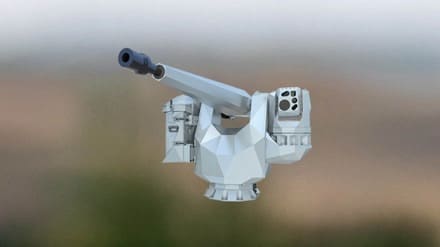
The Seasnake 30 is a state-of-the-art remote-controlled naval light gun designed for close-range defence. Alongside the weapon itself, the system incorporates modern daylight cameras, infrared sensors, and a laser rangefinder. It features automatic target detection and the ability to track multiple targets simul¬taneously. The revolver cannon’s nominal maximum rate of fire is 1,100 rounds per minute.
Thanks to its integrated airburst capability, the Seasnake 30 is particularly effective against air targets, such as drones. Its low silhouette and compact stealth design also make it difficult for enemy sensors to detect.
This order from Sweden marks an important market success for Rheinmetall, as it positions the Seasnake 30 with a NATO customer for the first time. This decision highlights confidence in the performance and future viability of Rheinmetall’s modern naval weapon systems. At the same time, the order reinforces the Group’s standing as a dependable provider of maritime defence solutions within the alliance.
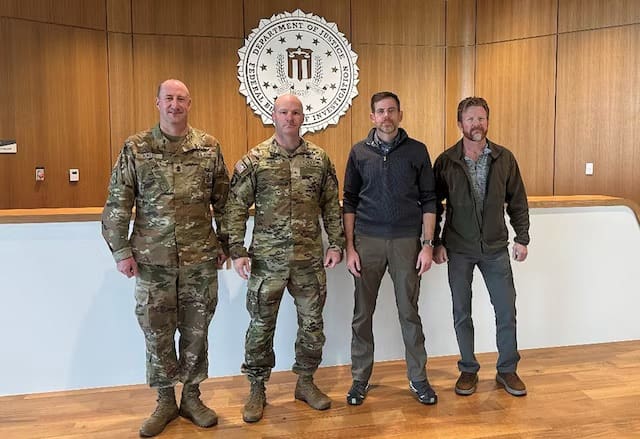
Army Brig. Gen. Matt Ross, Joint Interagency Task Force 401 director, visited the FBI’s National Training Center for counter-small unmanned aircraft systems in Huntsville, Alabama, yesterday to solidify a strategic alliance to protect the nation from unmanned aerial threats.
The visit centered on increasing collaboration between the War Department and the FBI to enhance homeland defense through joint training and the accelerated development of counter-UAS capabilities with federal interagency partners.
A primary focus of the discussion was enhancing efforts to coordinate security preparations for this summer’s FIFA World Cup. Ross and Mike Torphy, FBI acting assistant section chief for UAS and counter-UAS, spoke with expert instructors who are teaching a specialized course for local law enforcement in each of the tournament’s eleven host cities across the nation.
“The security of our homeland depends on a seamless, unified defense, and that is only possible through robust interagency collaboration,” Ross said. “The threats we face are shared, so our solutions must be as well. Our work with the FBI, to secure major events like the World Cup against the threat of drones, is a prime example of this strategy in action, but our goal is much broader: to build permanent, integrated [counter]-UAS capabilities across the federal government.”
This synergy is foundational to building a more resilient national counter-UAS capability and ensuring state and local partners are effectively trained and equipped for any threat.
Ross thanked Torphy for hosting the productive visit, which underscored the importance of combining JIATF 401’s lessons learned from the battlefield and expertise in joint training with the FBI’s critical law enforcement mission.
“This is one example of how JIATF 401 is working with partners to enhance our counter-drone efforts,” Ross said. “No single person or agency can take on this task alone. It requires a whole-of-government coordination, and I am grateful that Mr. Torphy and the training center staff are supporting our mission to build a layered defense against the full spectrum of small UAS threats to the homeland.”
The engagement in Huntsville signifies a deliberate move to formalize and expand the working relationship between the department and federal law enforcement. Future efforts will include the JIATF 401’s Joint Counter-Small UAS University in Fort Sill, Oklahoma, working closely with the FBI’s National Training Center to execute this shared mission.
This partnership model, focused on joint capability development and shared training, will enhance security for specific events and serve as a blueprint for a more integrated national approach to all counter-UAS threats, Ross added.
By Army LYC Adam Scher, Joint Interagency Task Force 401