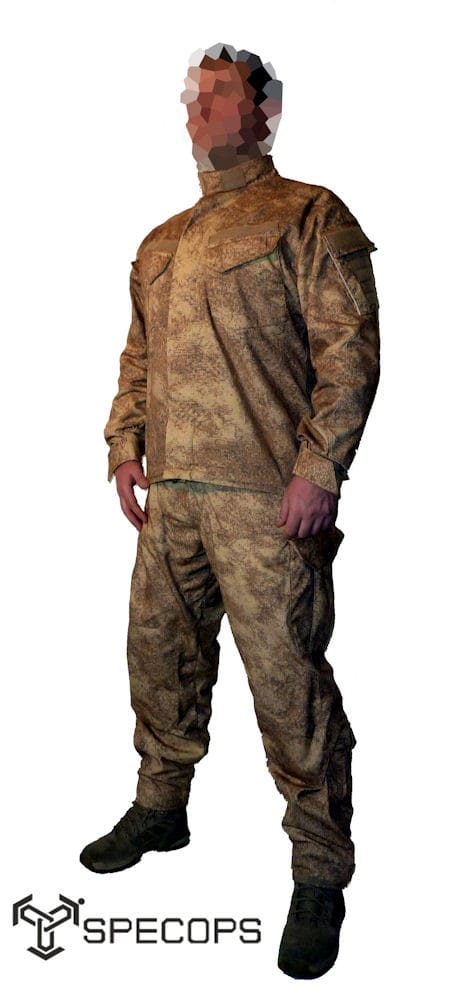
FirstSpear

Archive for the ‘Clothing’ Category

Introduction of Personal Clothing System

Tuesday, February 8th, 2011

This article was published by the MoD yesterday but for some reason taken down early today. Here is the article in its entirety. More details to follow as they become available.

UK Armed Forces will be issued with the new Personal Clothing System (PCS) to replace Combat Soldier 95 (CS95) uniform it has been announced today, Monday 7 February 2011.


The new Personal Clothing System, pictured, will begin to replace the existing Combat Soldier 95 uniform from early 2011
[Picture: Crown Copyright/MOD 2011]

The new clothing system will start to be issued to units from early 2011 in accordance with Front Line Command (FLC) fielding plans and will start to be issued to new recruits from October 2011. The roll-out will be complete to most personnel by April 2013.

The PCS consists of combat uniform (CU), ancillary items (AI) and waterproof clothing. Combat uniform replaces the camouflage lightweight jacket, trousers and windproof smock while ancillary items and waterproofs replace the t-shirt, Norwegian shirt, fleece and waterproofs of the current CS95 system.

All camouflage items will be in Multi-Terrain Pattern (MTP). Other items will be in Khaki.

Since the introduction of CS95 in 1995, combat body armour has now become mandatory wear for personnel both training for and deploying on operations. As a result, while the principles of CS95 still apply, the design of the clothing items needs refreshing to reflect the changes and lessons learnt from operations.

This also allows changes resulting from developments in material technology to be incorporated. All camouflage clothing items will also change to MTP camouflage. Combat footwear is not part of the PCS but a separate competition to replace the combat assault boot is underway, allowing delivery in 2012.

MTP camouflage, introduced for operations in April 2010, incorporates elements of Disruptive Pattern Material (DPM) shapes to create a unique British camouflage that will replace both Woodland and Desert DPM for use in training and on operations. While the Woodland and Desert camouflages are very good in their very specific environments, MTP is the best-performing across the widest range of environments, while only being marginally less effective than Woodland and Desert DPM in those areas.

MTP will be controlled to ensure it is only available for military issue; it will not be released for the manufacture of items for commercial sale.

The design principles of CS95 as a layered system of clothing allowing flexibility for temperature regulation remain extant. This has been retained in the PCS; however, it recognises the increased requirements for protection, both in the integration with body armour and incorporation of extremity protection and fittings for potential combat identification systems.

The PCS consists of three distinct elements that will be delivered separately.

The MTP camouflage outer layers consist of:

• Lightweight Jacket. A shirt that can be worn over a thermal or sweat-wicking layer. It can be worn either tucked into trousers or loose depending on environmental conditions.

In order to allow body armour to be worn over the top (in temperate conditions) buttons have been removed and replaced with Velcro and a zip. Chest bellows pockets have been replaced with map pockets with pen and notebook/compass stowage.

Bicep bellows pockets have been added to arms to allow stowage of ready access items when body armour is worn. In addition, pockets have been added to the outside forearms and elbows to allow for additional fragmentation/bump protection to be fitted if required.

The collar can be secured up when wearing body armour to reduce chafing. The bicep pockets have ‘touch and close’ panels to allow combat ID badges to be fitted if required.

A blanking plate protects the touch and close fastening while also allowing non-tactical badges (eg tactical recognition flashes) to be fitted while being removable in the field.

• Combat trousers. Thigh map pockets have been angled to allow easier access. A secure pocket has been added to waist pockets to allow stowage of small items. The draw cord has been removed. A seat panel has been added to reduce wear in the crotch. Map-pocket buttons have been shrouded to reduce snag hazards.

• Windproof smock. The design of the existing windproof smock has been retained as an outer garment principally for when body armour is not being worn. A mesh drop liner and armpit vents have been added to help with thermal regulation.

Buttons have been shrouded to reduce snag hazards. Behind the waist pockets, fleece-lined handwarmer pockets have been added. The windproof smock incorporates the same bicep pockets as the lightweight jacket.

• Rank slides. No change to the current design. Only low-contrast, all-arms rank slides are to be worn on MTP. Regimental/high contrast rank slides for wear in camp are to be on plain/regimental backgrounds.

• Helmet covers. No change to the existing range of helmet cover design, although an update is in development.

Ancillary items will include insulation and sweat-wicking layers, consisting of:

• T-shirt. Base layer, providing both thermal insulation and sweat-wicking. Based upon the current operational hot-weather t-shirt.

• Underwear. Sweat-wicking, anti-microbial unisex undershorts based upon the existing operational underwear.


• Thermal shirt. A micro-fleece base layer shirt with zippered collar (replacing the CS95 Norwegian shirt).

• Thermal smock. A micro-fleece-lined mid-layer, with windproof and showerproof outer, to provide increased insulation under the windproof smock (replaces the CS95 fleece).

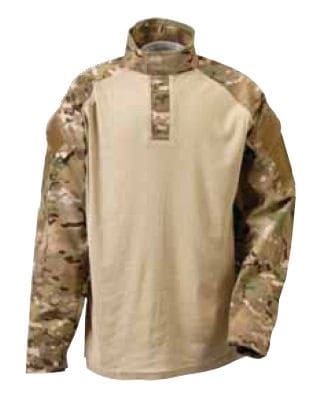
• Under Body Armour Combat Shirt (UBACS). A sweat-wicking torso with lightweight jacket sleeves and a zippered neck for wear under body armour in hot weather environments.

Various different designs of waterproof garments are currently being assessed as part of the ongoing development of the PCS with an expected fielding date of 2012. All items will be in MTP.

A review of the need for specific female designs is underway and results will be trialled accordingly. These will be rolled out separately once designs have been finalised.

Units will change to the new CU over three years from Spring 2011 in accordance with FLC fielding plans. In order to control expenditure, task issues to units will be spread over three financial years before units will be allowed to demand items direct. Issuing to recruits will begin in the second half of 2011. Unit CS95 stocks will be withdrawn and reissued to units later in the fielding plan to minimise waste.

Ancillary items will be available for issue from mid-2011. They will be issued in bulk to recruits along with issues of CU. Personnel previously issued with CS95 will only receive the new ancillary items for operations or to replace CS95 equivalent items that have worn out. Current CS95 ancillary items are fully compatibe with the PCS CU and will remain in use as long as stocks are available.

Hot weather CU and ancillary items will be issued to personnel deploying on Op HERRICK 15 and to other operations or overseas training exercises from mid-2011. Hot weather clothing will be of the same design as the temperate combat uniform but in a lightweight, breathable cloth. The permanent treatment of hot weather clothing with insecticide is being developed.

New Balance Introduces Merino Wool Clothing ADS

Monday, February 7th, 2011

Wool really makes sense for military garments but a couple of things have happened over the years that have pushed it to the back of the line. In the late 1980s new, man-made fabrics began to come on the military scene that out performed the issue wool garments which dated back to before WWI. Troops were more than happy to ditch the itchy long johns that their great grandfathers had worn into battle on the Western Front. But then came the IED. Unnaturally (pun intended), the answer was to develop new man made FR performance fabrics since the recently adopted polypropylene and polyester fabrics used in military base layers are very flammable. This was a very costly undertaking. So where was wool, nature’s performance fiber through all of this? Quite frankly, it wasn’t quite ready to make a return.

Traditionally there have been several criticisms of the use of wool:
-Comfort (that itchy feeling)
-Limited domestic availability of Merino wool (considered the best wool for next to skin use, not itchy)
-Shrinkage
-Smell
-Lack of domestic treatment due to EPA guidelines

Despite these generic criticisms, the benefits of Merino wool are myriad:
-Warm even when wet
-Comfortable in a wide range of temperatures as well as against the skin
-Antimicrobial
-Inherently FR (No Melt, No Drip)

We are now at the point where we have almost an entire Army that has never used wool undergarments, and those that have probably don’t have the fondest of memories. Truthfully, current military attention towards wool has been driven by troops with an interest in the outdoors, as commercial wool garments have gotten better and better of the past few years. This has been combined with a concern by those who keep the Army’s purse strings, as they are constantly seeking more economical ways to accomplish the mission.

To mitigate the common criticisms of wool, New Balance has combined Merino with FR Rayon to increase performance and durability. This also increases the FR properties of wool and facilitates field laundering. Then, they have treated the resulting fabric with X-static to further enhance wool’s natural anti-microbial properties to reduce stink. Additionally, there is finally an environmentally green US-based wool treatment facility. Treatment is critical to improving the comfort and performance of the wool. While the US Merino herd is small, as with all things “domestic textile”, the military is a prime customer. In fact, all of the components have just recently aligned in order to allow New Balance to produce a Berry compliant product.


New Balance has developed several garments including Base Layer long and short-sleeved T-shirts, Briefs, light and mid-weight Long Underwear Pants, and a Performance 1/4-zip Shirt. Initially, the plan was to have the Merino products available by July, but user feedback from the test items has been so strong that New Balance is looking to accelerate their schedule.

Units interested in New Balance military products should contact ADS.

Win an Arc’teryx Combat Jacket in UCP from Grey Group

Friday, February 4th, 2011

Naturally there are a couple of stipulations. This contest is open to deployed military so if you fit the profile you could win a UCP Combat Jacket by Arc’teryx LEAF. The next step is to prove how cold it is in your AO by providing 27 8 x 10s with circles and arrows and a paragraph on the back of each one (actually, they only need one photo accompanied by an explanation). They are giving out more than one but haven’t disclosed exactly how many so be sure to enter.

For full details visit www.greygrouptraining.com

Kitanica/Noveske Video

Friday, February 4th, 2011

Check out this new video featuring Kitanica’s PNT X.A, MARK I and MARK IV. During the transition you will also notice scenes featuring the Noveske Shooting Team from their new DVD “3 Gun Outlaw” available at www.noveske.com.

www.Kitanica.net

We Love the Shemaughlava

Wednesday, February 2nd, 2011

And it looks like US Cav does as well. They produced this excellent video featuring 782 Gear’s Erik Rockel discuss the attributes and wear of the FR Shemaughlava.

Ninja Suit

Tuesday, February 1st, 2011

One of the more interesting things we saw at the recent Outdoor Retailer Winter Market was the Ninja Suit. Available in a variety of materials and configurations, Ninja Suits can be had in Merino Wool, which is offered in Black and Charcoal in addition to Red, if you are into the retro look of Red long johns. Considering the inherent FR and anti-microbial properties of Merino and the fact that the Ninja Suit has an integral 7-panel hood, it looks to make a case for a base layer for those who spend a lot of time in cold, wet conditions. Outer layers can be shed and the suit worn by itself to dry out in more secure conditions and you always have full coverage in the event of an emergency. You don’t have to take it off even to relieve yourself as it has a full horizontal zip around the waist along with drawstring as well as a front fly and chest zip. It also features thumb loops at the wrist.

www.myninjasuit.com

Beyond Clothing Update

Thursday, January 27th, 2011

Beyond Clothing launched their new, updated website today. I like the look and feel and it seems a bit more streamlined than the previous incarnation. Additionally, they have released a new catalog featuring products that they debuted at OR. In particular, look for a woman’s line as well as their new hardshell bibs.

Beyond Clothing 2011

www.beyondclothing.com

OTTE Gear Recce Anorak

Tuesday, January 25th, 2011

This exclusive video depicts OTTE Gear’s new Recce Anorak which they debuted at SHOT Show. Packed full of features, it is the first softshell we have seen that integrates a ghillie platform directly on the jacket. The headover anorak design features pitzips that go from waist all the way up to the elbow. The forearms pockets will take the place of arm boards and will also accept an ammo sleeve for a long gun. A large collar opening and pass through kangaroo pockets top off the piece. Coming Spring 2011. They are also planning an Assaulter version that will lose the hood as well as the ghillie platform and come in a solid color.

In other OTTE news, they have updated their color palette dropping Light Coyote in favor of Tan and Foliage Green for the darker Ranger Green. In fact, what little bit of inventory is left in these older colors is on sale.

They have also produced a gaiter in MultiCam.

www.OTTEgear.com