We haven’t shared one of these in a while but we ran across this German documentary about the fall of the wall.
Subtitles by the poster of the video to Youtube.


We haven’t shared one of these in a while but we ran across this German documentary about the fall of the wall.
Subtitles by the poster of the video to Youtube.
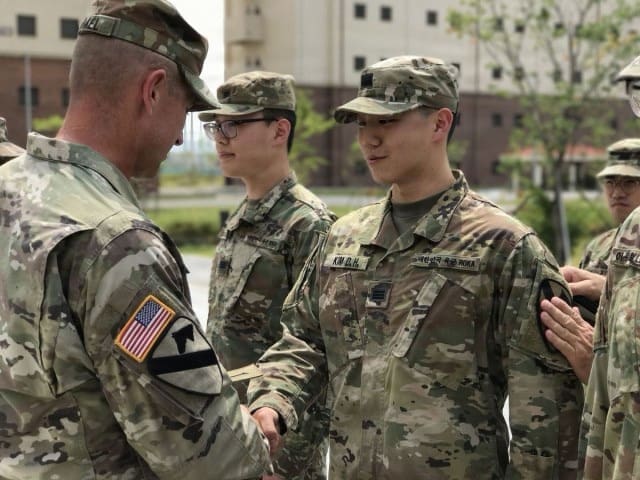
August 15 is recognized as the birthday of the Korean Augmentation to the United States Army Soldier program, or KATUSA. The program was created only weeks after the Korean War ignited, and to this day KATUSAs continue to serve side-by-side with Eighth Army Soldiers providing priceless support and friendship.
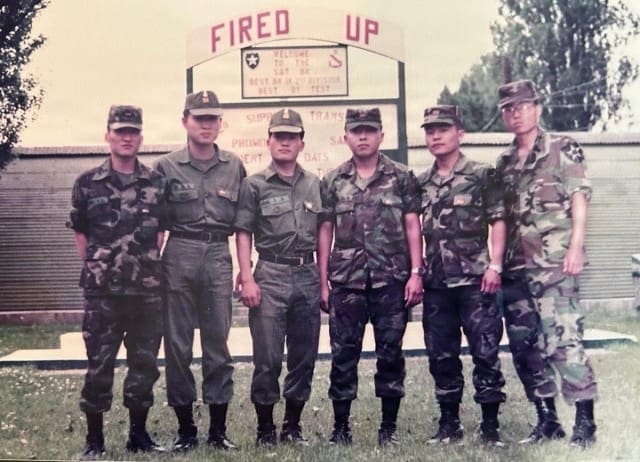
The Korean War began June 25, 1950. Roughly three weeks later the KATUSA program was initiated July 15 by an informal agreement between the Honorable Syngman Rhee, president of the Republic of Korea, and General of the Army Douglas MacArthur, commander in chief, United Nations Command.
During the first two months of the war, the Republic of Korea Army had been destroyed as a fighting force and the U.S. Army was significantly understrength and had been “compressed” into the Pusan perimeter by North Korean forces, as described in an official Army report. Replacements and fighting men were in desperate need.
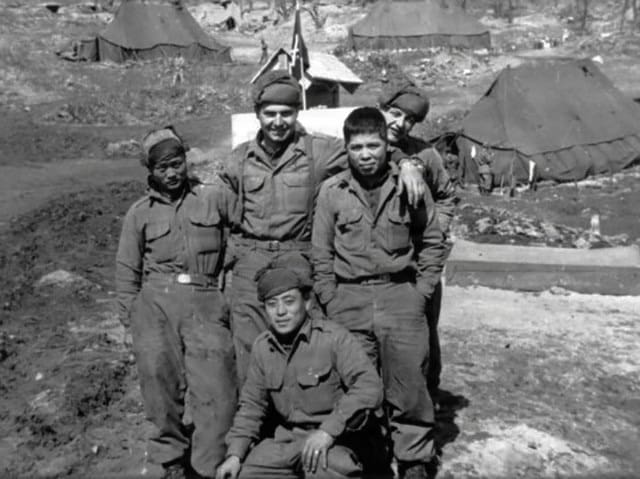
The concept of the KATUSA program was to augment the U.S. forces. In the beginning most KATUSAs were recruited directly off the streets of Pusan, now spelled Busan. After a basic training period, KATUSA Soldiers were sent to combat units serving as infantrymen. The first KATUSAs reached U.S. Army units by mid-August 1950.
They were issued U.S. supplies, but were paid by and remained administered under the Republic of Korea Army. Throughout the Korean War, up to a maximum of 23,000 KATUSAs served at any one time, according to the Army.
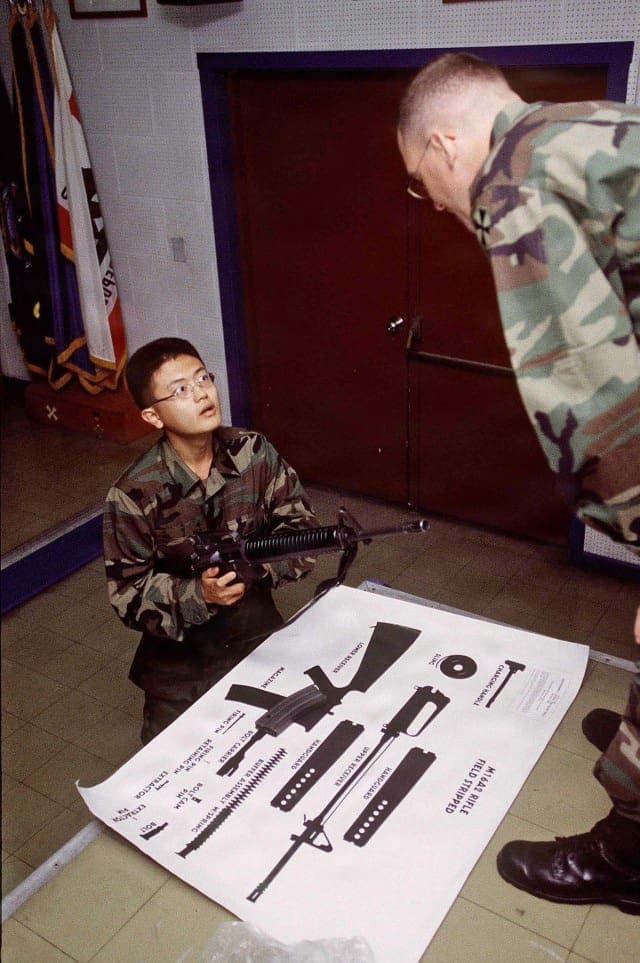
After the 1953 armistice, KATUSA Soldiers remained with U.S. Army units to receive training not readily available in the ROKA and to enhance U.S. Army in Korea’s mission capability.
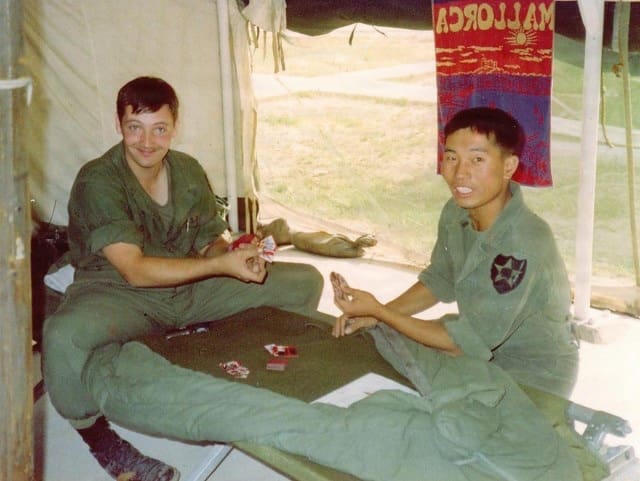
Since 1950, the KATUSA Soldier Program has been ongoing with only periodic strength adjustments dictated by requirements. Originally, KATUSA Soldiers were returned to the ROKA after serving with the U.S. Army. Since 1968, however, KATUSA Soldiers remain with Eighth Army until their service commitments are completed. The ROKA Support Group was established May 11, 1965 at the request of the Eighth Army commander to administer the KATUSA Soldier program.
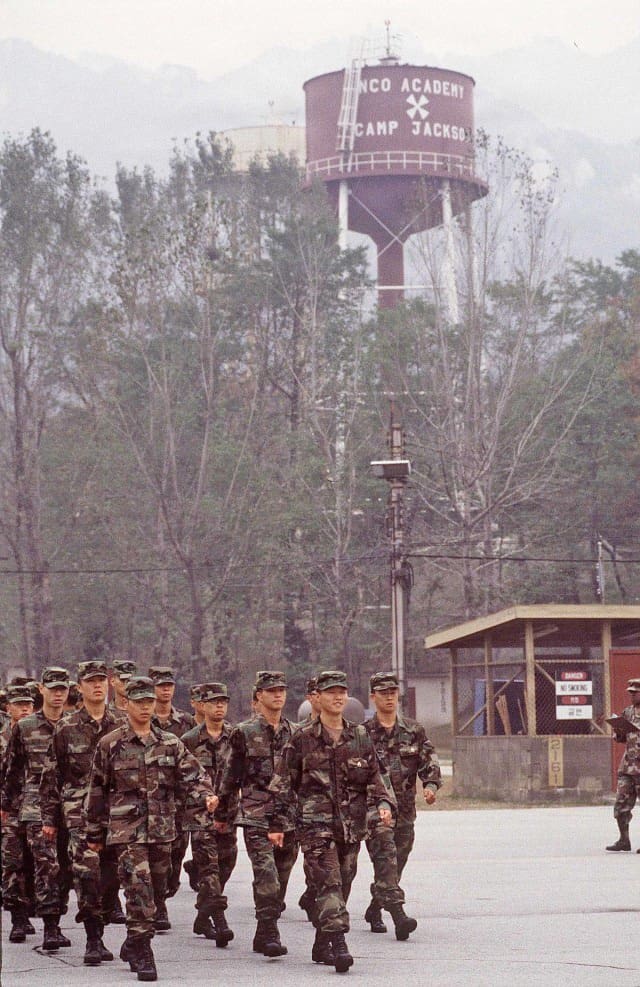
Today, young South Korean men planning to conduct their mandatory military service obligation can apply to become a KATUSA if they have a command of the English language and if positions are available.
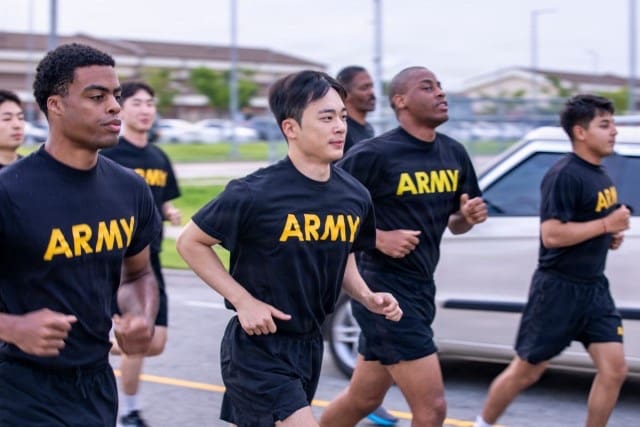
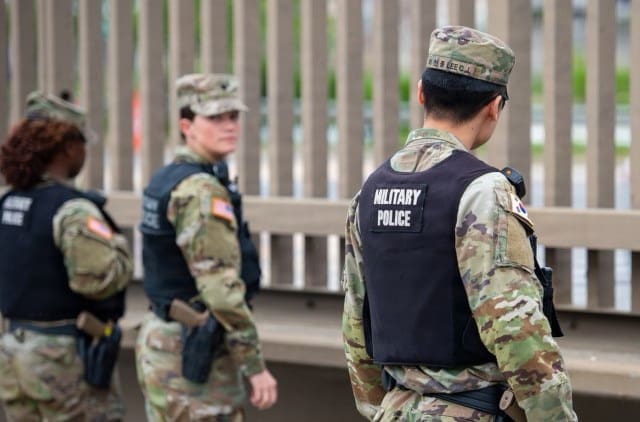
Eighth Army has stated the KATUSA program increases the ROK-U.S. combined defense capability on the Korean peninsula. The program is also significant not only because of the military manpower and monetary savings that it provides to the U.S. Army, but also because it puts a face on the ROK-U.S. alliance and the combined commitment to deter war.
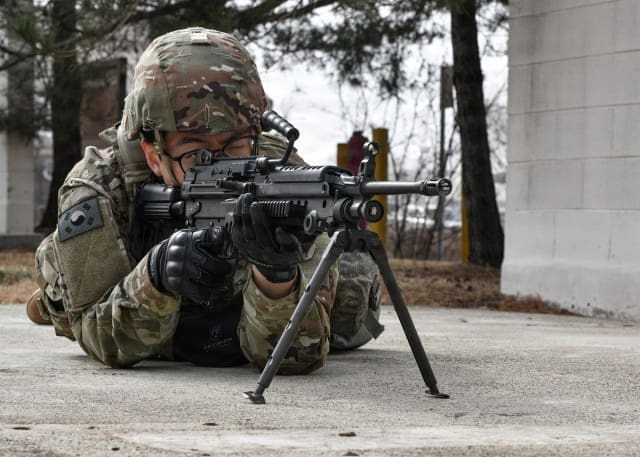
The KATUSA program is the very essence of one of Eighth Army’s favorite phrases, “katchi kapshida,” — “we go together.”
Information for this article provided by Eighth Army and these sources:
“Integration of ROK Soldiers into US Army Units (KATUSA)” (U.S. Army)
“The KATUSA Experiment” by David Curtis Skaggs (excerpt)
By Kenji Thuloweit
If you’re not a subscriber to our weekly newsletter, Soldier Systems Digest, you missed this Cold War Long Range Surveillance (LRS) entry from last week.
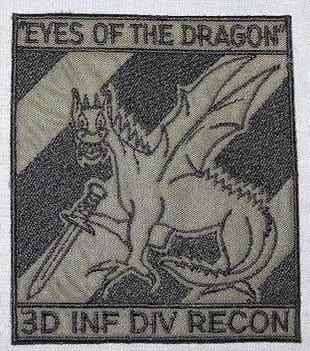
The US Army has a long history of small units organized for deep reconnaissance. During the Vietnam War each Division along with a few other units had Long Range Reconnaissance Patrol Companies. Eventually they were reflagged as Companies within the 75th Infantry Regiment for lineage purposes. After the war, these units were deactivated.
Despite reconstituting the 1st Bn, 75th Infantry and eventually the 2nd Bn not long after the conflict as the world’s premier light infantry, GEN Creighton Abrams did not organize Divisional LRRP elements. This led to the Divisions creating provisional units out of hide.
One such organization was the 3rd Infantry Division Recon Company. Former member Nathaniel Collins offers a brief history of the unit.
“3rd Recon Company started up around April of 1982 as a off the books, strictly volunteer platoon size element stationed in Gieblestadt, Germany. They were tasked with testing the effectiveness of a long range reconnaissance unit in Europe since all the other NATO allies were employing such tactics. The concept was tested in Reforger of ’82 and widely considered a huge success. The 82nd Airborne Div command was so impressed that they stated that upon return to state side they were going to begin the process of developing such a unit for the 82nd. The platoon was then recognized as an official unit at the company size level with two reconnaissance line platoons and a HQ platoon.”
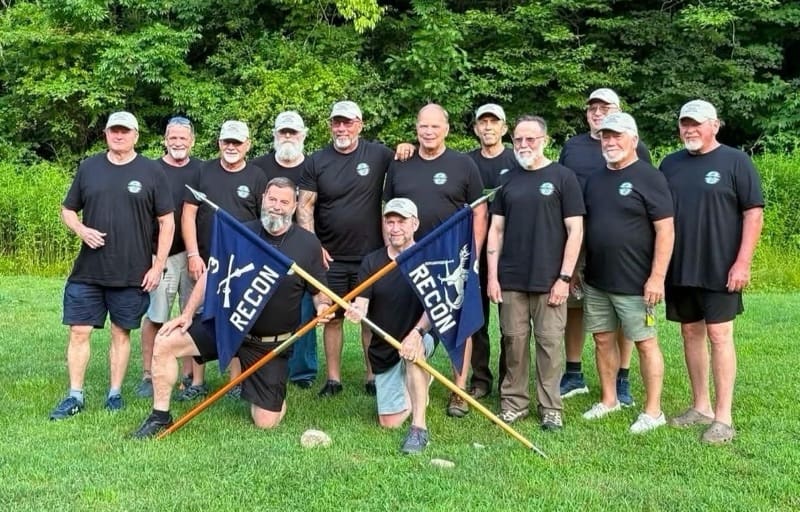
Here is a photo from a recent unit reunion.
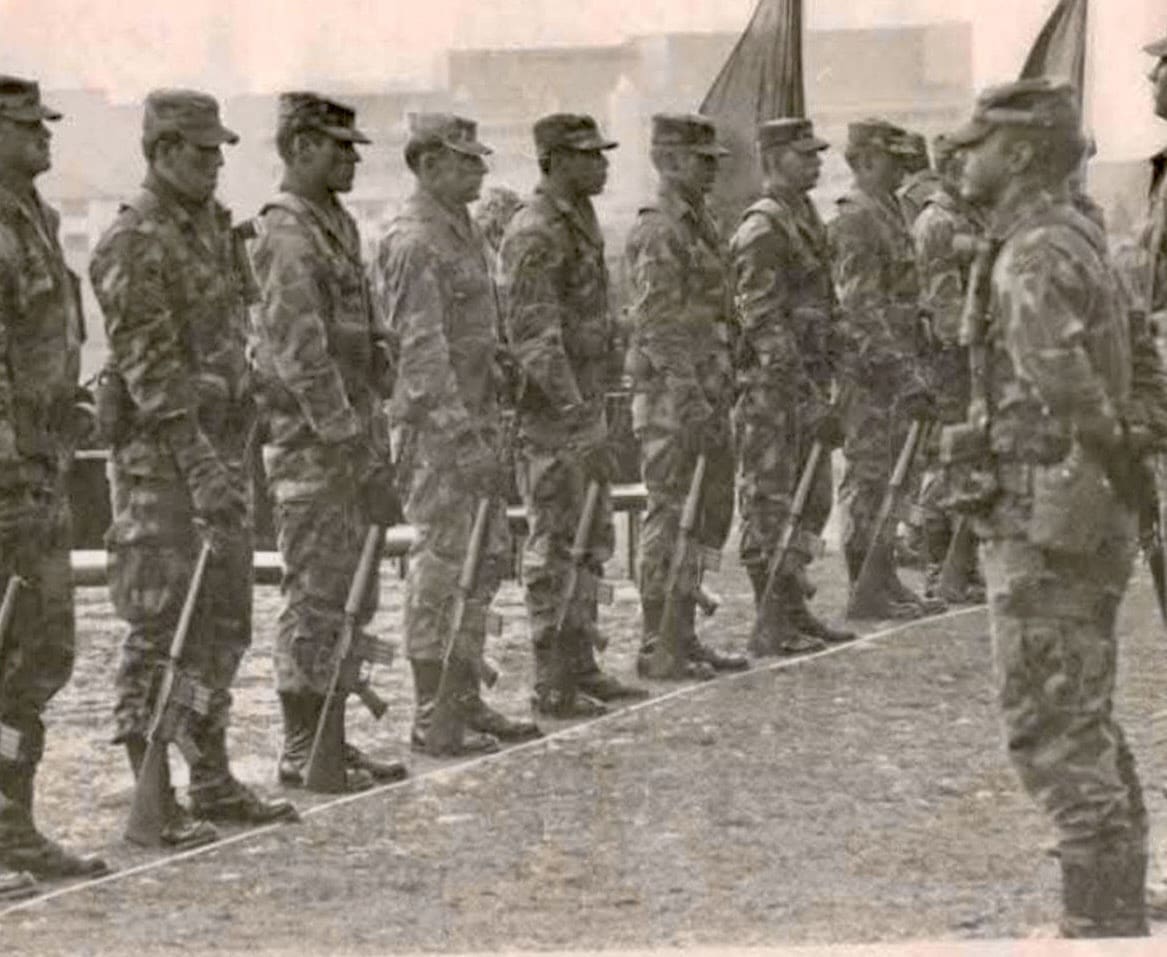
Earl Corp added some details on the lineage of the unit which I will expand upon, “3rd Infantry Division Reconnaissance Company, we were in Germany from 1982-85 then were converted to E Troop 3/7 Cav. The unit evolved into 3rd ID LRSD.”
Below is an image of the unit.
By the mid-80s, the Army had embraced the Long Range Surveillance concept with an LRS Detachment at each Division and a Company at each Corps. E/3/7 was the 3ID LRS Detachment. Initially, the Dets were assigned to Divisional Cavalry, but since they were a deep reconnaissance asset, they were moved to the Military Intelligence Battalions.
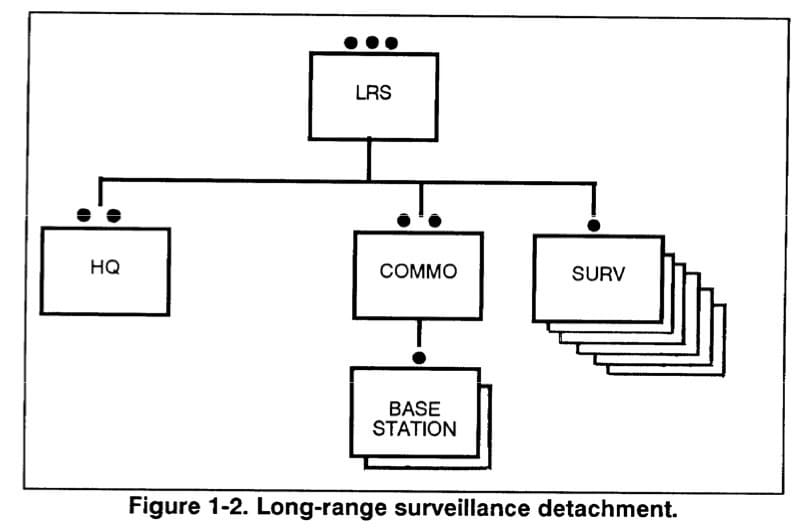
This is where I come into this story. Despite being a Crypto-linguist, I was assigned to D Co (LRS), 103rd MI Bn (CEWI) from 89-90 after having served in A Co (Collection & Jamming) during 1988. The short version of the story is that my 1SG, Cliff Lynch (later INSCOM CSM) was a former infantryman and my Bn CSM was an Infantryman. I spoke with the LRSD CO who was like me from Iowa, and the SNCOs in my support chain. They made it happen so I could try out. I was accepted into the Det and served in the Communications Section where I leaned about HF communications and patrolling. I brought translation skills in German and French.
The table of organization and equipment called for Light Infantrymen (11B) and 31C / 31V (Single Channel Radio Operator & Tactical Communications Systems Operator/Mechanic).
While there weren’t a lot of us who were not either of those MOS, there were quite a few a few 11H and 11M (TOW Gunners & Bradley Infantrymen) due to the scarcity of Light Infantry in Germany. While I was there, we also had an artilleryman and a light wheeled vehicle mechanic. I believe the openness to accepting nontraditional MOSs into the detachment came from the unit’s initial founding as a provisional unit. If you were the right Soldier for the job, the Detachment would take you.
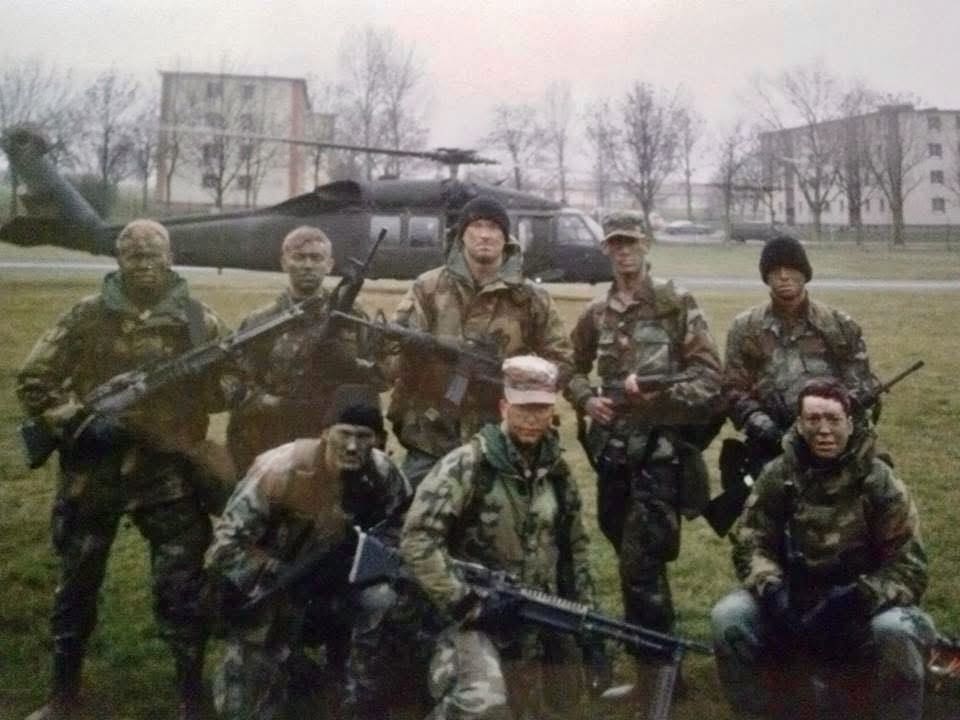
Author photo of the Long Range Surveillance unit he served in. You can read more like this in SSD’s recurring Cold War series of articles.
Serving in LRS is one of the best jobs I’ve ever had in the military and helped me grow professionally as an NCO as well as tactically and technically; skills I applied in my next assignment as a SOT-A member in 3rd Group. I’m in the photo above with other Commo Section troops getting ready to infil on a patrolling exercise in early 89. The Detachment’s two Base Radio Sections had an M-60 assigned.
While the units were all designated as Airborne, only the two Corps LRSCs were on jump status in Europe. Divisional Detachments were not placed on jump status due to a treaty on offensive forces in Europe. However, all other LRSD across the Army were on jump status, even in the heavy divisions. Likewise for the Corps LRSCs.
The US Army deactivated its active duty LRSUs in September, 2005 although Guard Detachments soldiered on until 2017.
As an addendum, I’d like to point out that the motto seen on the morale patch dates from the early 80s and was still used by the Detachment while I was assigned there at the end of the decade despite it being reflagged twice. It stems from the Wyvern, a form of a dragon, that is found on the Marne Division’s Distinctive Unit Insignia or unit crest. We were its eyes, deep in the enemy’s rear area.
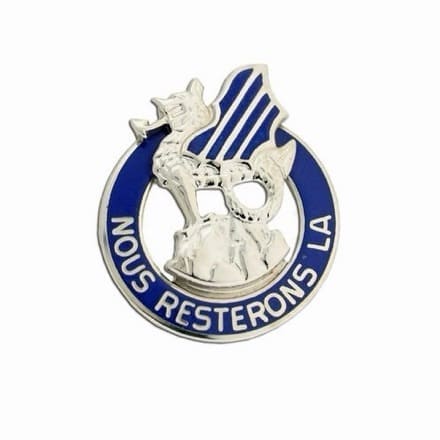
“Nous Resterons La” means, “We chall remain here.” It is a motto of the U.S. Army’s 3rd Infantry Division, declared by MG Joseph T. Dickman to French allies during the Second Battle of Marne in 1918. The phrase is a significant part of 3ID’s legacy as the “Rock of the Marne.”
Eric Graves
Founder, SSD
If you’d like to subscribe:
In this taken sometime in October 1968 photo you see USAF General Curtis LeMay meeting with 5th SFG(A) Colonel Harold “Hank “ Aaron at 5th Group HQ in Na Trang, Republic of Vietnam.
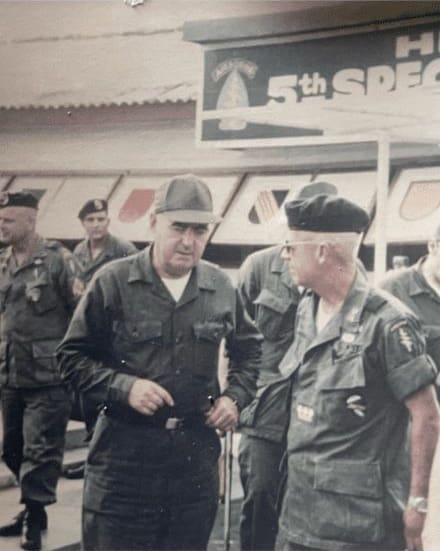
Although LeMay is in a simple set of fatigues, he was obviously a civilian when this photo was taken. He had retired in 1965 as Chief of Staff of the Air Force. This is right at the end of his failed bid for Vice Presidency as running mate of George Wallace in their 3rd party candidacy on the American Independent Party ticket. Even Wallace’s staffers thought he was out there for his stance on nuclear weapons.
LeMay served in the US Army’s air component and then in the Air Force from 1929 until 1965 with service in World War Two as well as the Korea and Vietnam wars. Having overseen the use of nuclear weapons at the end of WWII, he was the first commander of Strategic Air Command from 48-57 and transitioned the bomber five from propeller to jet engines aircraft. He also led the first deployment of ICBMs and was a vocal supporter of their use in conflict which often put him at odds with the civilian leadership. He was known as a staunch disciplinarian during his time as Commander of SAC but that actually began during the war in the Pacific when he dealt with high abort rates of bombing missions by declaring that he would fly the lead bomber on all missions and that any crew who did not make it over the target would be court martialled.
We also have LeMay to thank for buying the first M16s for use by Air Police while Chief of Staff, directing the acquisition of 80,000 M16s in 1962.
KommandoStore has launched another recreation of a Cold War classic, the South African 83 pattern Battle Jacket in DPM.

These are brand new manufacture. What makes this reproduction so interesting is the pattern. The story goes that these were made to be used by Recce troops in a nonstandard pattern for the AO to throw off guerrilla forces. It was camouflage all right, but if a slightly different bent. They didn’t want to just blend into the local flora, but into the local operational environment as well.

FYI, compatible with R4 Vektor (Galil) and STANAG pattern magazines, and partially compatible with Galil and AK 5.45 magazines. Otherwise, accepts square SA water bottles.
If you want to feel like a merc, this is the way to go.
These are made in Vietnam using custom-run mesh, 1000D Cordura, and ITW Nexus hardware.
This week we continue our focus on the Cold War nuclear enterprise with the 1979 documentary “First Strike.”
Courtesy of Lion Heart Film Works, this film was created in partnership with the United States Department of Defense and the RAND Corporation to examine the United States Armed Forces strategy for dealing with nuclear warfare. The film that starts with showing a hypothetical Soviet nuclear first strike scenario leading to a U.S. surrender, followed by a United States Air Force “sales pitch” for more defense spending. The film became far better known when various clips were edited into the 1983 TV-movie “The Day After,” and the 1983 movie “War Games”.
The film used actual Air Force personnel for actors, filming on location at various United States Air Force installations. Specifically, the film used cameras on-board Strategic Air Command command planes out of Offutt Air Force Base, and also shot footage inside the SAC Headquarters where scenes were used to depict the NORAD Cheyenne Mountain Command Post. The nuclear missile launch sequence seen in the film (and later in “The Day After”) was performed by actual Air Force officers stationed with the 742d Missile Squadron at Minot Air Force Base.
I ran across this look at two great Cold War movies on Youtube and wanted to share. I watched both of these movies when they debuted and in the case of “By Dawn’s Early Light” multiple times.
I’ve long been fascinated by nuclear war fiction, likely as a response to growing up in the 60s through 80s and then serving in Germany during the waning days of the Cold War. I don’t know if enjoy is the proper word for appreciating this genre, but I hope you get something out of this examination of these nuclear fiction dramas.
Via AtomCentral we bring you a Cold War-era Strategic Air Command training film about nuclear effects concerns of combat aircrew conducting Emergency War Order Single Integrated Operation Plan missions. Produced by Lookout Mountain Labs for the Air Force.