XC3 Weaponlight

Archive for the ‘Comms’ Category

Zinc Air Batteries

Friday, August 7th, 2009

Other than the fact that they are lightweight and reliable, the single greatest thing about Zinc Air batteries is that they are not HAZMAT. That alone is worth its weight in gold. Imagine a life with out the trials of dash twos. And now, with the video just released by Blackheart International, we know just how hazardous traditional lithium batteries can be.

Leaders are beginning to seriously discuss the Soldier’s load and engineering tools like SWAP (Size, Weight, and power) analysis used to look at aircraft and vehicles are beginning to be applied to the grunt. When you stack an 8180/U battery up against a 5590/U using those criteria, the Zinc Air technology wins hands down. What’s more, they are safer and as the video demonstrates, will continue to provide power even when damaged by projectiles. The 12/24 Volt 8180/U battery has an NSN and is available from Blackheart International. Additionally, there are numerous adapter cables available to help you use the battery with a variety of communication and electronic devices.

Digital Ears Invisio X50

Monday, July 20th, 2009

The Digital Ears X50 is a digital in-ear bone conduction headset system with built-in active hearing protection. It uses bone conduction which captures vibrations caused by speech which travel up the jaw bone to the ear. This helps eliminate ambient noise and produce clearer voice signals. Additionally, the system features electronic hear-thru and impulse noise protection (Noise Reduction Rating (NRR) of 23db) with volume control for enhanced hearing. Finally, the X50 is designed for dual communication with radio autosensing and full-duplex/VOX capability. Consequently, unlike other Invisio products, the X50 is designed to worn in both ears.

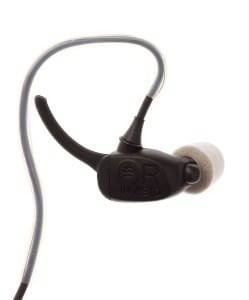
X50 Ear Piece

The ear piece features the Soft SpringTM which adapts to the contours of the ear to provide a secure fit and enhance comfort as well as compatibility with helmets, eyewear, and protective masks.

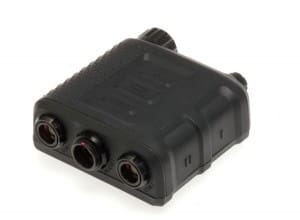
Invsio X50

The interface box seen above features switches for On-Off Open Mic Selector, PTT Button, Volume Up & Down, and Hear-Thru & Mic Volume Selector.

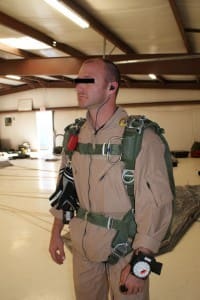
X50 Equipped MFF Parachutist

The X50’s fit is secure enough that it has been used regularly for Military Free Fall operations.

The X50 is available from Television Equipment Associates. For more information visit swatheadsets.com.

Silynx Communications, Inc.

Monday, June 22nd, 2009

Silynx Communications

Soldier Systems Daily is proud to welcome Silynx Communications, Inc. as a new sponsor. Silynx is a world leader in miniature, software defined, tactical hearing protection, communication headsets. Their headsets are used by elements of the US Special Operations Command (USSOCOM), US Army, USMC as well as international SOF. Silynx specializes in the design, development, and manufacturing of advanced and innovative software based noise protection communication headsets. Their name really sums up who and what they are – Silynx combines SI for silent communications and LYNX, a solitary wild cat that is known for its strength, precision, and stealthiness.

C4 Ops

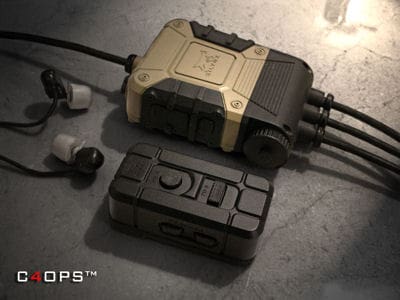
The C4OPS is Silynx’s premier headset featuring 20m immersibility and an excellent man machine interface. The user receives voice prompts from the system in a clear female voice and can monitor up to 3 radios/intercoms simultaneously using the same headset. Additionally, the C4OPS provides hearing protection (ANR & INR) and hearing enhancement. The modular system is designed for ease of repair without putting the entire system down. The heart of the system is the Main Control Box and this allows each user to customize the system to their requirements, whether that means wearing an Eagle headset, Peltor ear muffs, the standard foamies that come with the system or custom molds. When the system is only connected to one radio, the user has dual hearing through both ears but if the user connects to dual comms he receives primary in the left ear and secondary in the right. If the user then connects to an intercom/3rd radio then the user monitors this third connection via both ears. The C4OPS is a PC programmable system which allows the user to customize his system and integrate upgrades as they are produced. Check out the “Build Your Own” web page.

C4 Ops in Use

For us, two things really stand out about Silynx. First, their system is software based so changes can be rapidly made to the system without having to purchase new components and other vendor’s components can be integrated into the system.

For more information please visit www.silynx.com.

Introducing Juggernaut Defense, LLC

Friday, May 29th, 2009

Juggernaut Defense, LLC

Specializing in soldier-borne equipment design & engineering, Juggernaut Defense, LLC is a full-spectrum design consultancy dedicated to the military, law-enforcement, and public safety communities. Since 2000, Juggernaut Defense has been involved in many successful programs which have provided superior survivability, communication, and lethality systems to Soldiers, Marines, Airmen, and Special Operators fighting in both OIF and OEF. Juggernaut Defense (located in Scottsdale, Arizona) was spun off by Chris Stalzer in November 2008 from Juggernaut Design to focus its business toward government and military design problems.

Check out their website to learn about some of the projects they have already completed. www.juggdef.com

Harris Wins $20 Million Contract from Poland

Wednesday, April 29th, 2009

Harris Corp. has announced that it has been awarded a $20 million contract from the Polish Ministry of National Defense to provide its Falcon II and Falcon III tactical radios to Poland’s land and special operations command forces. Earlier this year the Estonian military purchased $5 million worth of Falcon III multiband radios from Harris.

Harris Falcon III
The U.S. Army issues the Falcon III as the An/PRC-150. It provides secure voice and data communications in the HF-SSB/VHF-FM bands.

This win literally comes on the heels of a $600 million award from the U.S. Army to modernize SATCOM terminals.

PowerFlares – An Alternative to Incendiary Flares

Saturday, April 11th, 2009

PowerFlare

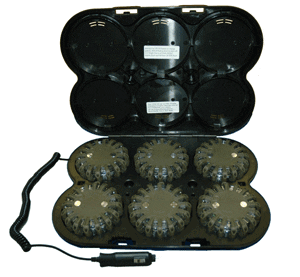
Invented by a police officer, the PowerFlare PF-200 Electronic LED Safety Light is designed for use by police, firefighters, EMTs, rescue first responders, military, and members of emergency response teams. The applications are limited only by your imagination but work well for marking routes, drop and landing zones, and items of interest. It can also be used for IFF, Personnel Recovery, as well as illumination. In addition to a Morse Code SOS blinking feature the PowerFlare has 10 User-selectable blinking patterns.

beacon-amber-small

The advantages are obvious as PowerFlares overcome the myriad problems experienced with incendiary flares. Flares/fusees cause unintentional fires, in some cases spontaneous trunk fires, they often don’t light, leave toxic residue, and contaminate air and water. Additionally, flares are an expensive one time use item, not to mention that fusees burn out in in a mere 20 minutes.

On the other hand, PowerFlares can be used from 8 to 150 hours per battery (with a shelf life of up to 10 years) while the LED’s last for up to 100,000 hours. In addition, the systems are extremely impact resistant and can withstand the weight of a truck so they won’t need to be replaced.

PowerFlares are available in a variety of colors

PowerFlares are available in a variety of colors

Shells are available in Yellow, Orange, Blue, and OD. LEDs are offered in Amber, Blue, Green, Red, and White. Additionally, a special version of the PowerFlare is available with IR LEDs. The best value is the PF-200R 6-Pack Rechargeable System which comes with six of the PF-200R beacons packed in a recharging case. The recharger can be plugged into a vehicle hot point (12-30VDC) or wall outlet.

powerflare_6_pack_ir

They also offer storage bags in UCP as well as other colors that carry four PowerFlares.

bag4_all-small

To order visit PowerFlare Distribution Center, Inc.

Comms Cord and Reel

Friday, April 10th, 2009

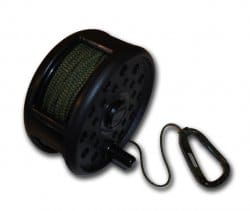
From high tech to low tech. The last article depicted the latest in intra-squad communications but there are more traditional methods. Although rarely used by US forces, the British continue to utilize a comms line when setting up a patrol harbour (base). Naturally, this can’t be used while patrolling but it is a silent means of communication while lying up. The concept is to string lines between emplacements in order to signal one another. Codes are worked out to signify different messages, for example, two tugs means stand to.

Comms Cord on a Reel from RV Ops

Comms Cord on a Reel from RV Ops

Comms cord on a reel with a handy carabiner clip is available from RV Ops in the UK.

Army Develops Rifleman Radio

Friday, April 10th, 2009

The Joint Program Executive Office Joint Tactical Radio Systems (JPEO-JTRS) is developing the Rifleman Radio as part of an effort to bring secure, networking capabilities to the intra-squad level.
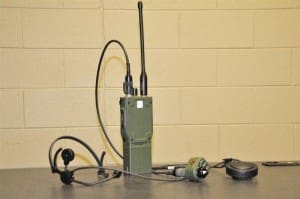
The Rifleman Radio will be interoperable with other Joint Tactical Radio System products, to allow needed connectivity to higher echelon command elements.  Photo by: Jason Bock (C-E LCMC)

The Rifleman Radio will be interoperable with other Joint Tactical Radio System products, to allow needed connectivity to higher echelon command elements. Photo by: Jason Bock (C-E LCMC)

The Rifleman Radio is interoperable, software programmable and upgradable and employs the Soldier Radio Waveform. It is ruggedized and light, includes a convenient push-to-talk, and a hands-free headset. The system is self-networking and will expand and contract as radios are added or subtracted from the net. Recently tests of the new radio were conducted at Fort Bliss, Texas with the 1st Armored Division.

“Right now, the individual Soldiers and their squad leaders are the biggest have-nots within the communications arena,” said Maj. Tracy Mann, of the TRADOC Capability Manager for Tactical Radios. “This capability will allow squad leaders and team leaders to talk directly to their subordinates, and their subordinate leaders to be able to command and control their individual squad and platoon battle troops.”

By employing a National Security Agency Type 2 certification, the Rifleman Radio can offer controlled but unclassified communications a Soldier can employ without requiring security clearances. This solves one radio problem for infantry units, which are comprised mostly of troops who are not cleared. The NSA Type 2 encryption bars classified information from being passed during transmissions and makes secure information more difficult for enemies to intercept. With these factors in place, the Rifleman Radio will not only deliver 10 to 100 times the bandwidth to the tactical edge, but at the same time, make sharing information more secure for the Soldier.


In addition to voice communication, the Rifleman radio also supplies a commander with a GPS picture of his squad members through a Position Location Information, or PLI, display. At Fort Bliss, the 1st Armored Division used the GPS features of the Rifleman Radio in a shoot-house situation. Squad leaders positioned outside of a darkened room were able to locate and identify the positions of each member of their team through the PLI.

The Rifleman Radio is being developed as a stand alone system, but will integrate into the Ground Soldier System Ensemble platform providing mission planning, execution, and situational awareness capabilities to squad team leaders and above. The Rifleman Radio will also be interoperable with the other suite of JTRS products being developed including the Ground Mobile Radio and HMS Manpack radio, to provide the needed connectivity to higher echelon command elements.