XC3 Weaponlight

Archive for the ‘Comms’ Category

What They Meant to Say Was…

Wednesday, October 12th, 2011

JTRS isn’t cancelled. JTRS is like a Hydra with tentacles into each of the services. Think of it as “Too Big to Fail.” Despite press reporting to the contrary, it just isn’t so.

“Army Kills JTRS, Goes ‘Platform Agnostic’ With Network Plan” AOL Defense
“Boeing Army Radio Program Said to Face Termination for Cost” Bloomberg Business Week

For one thing, the Joint Tactical Radio System is actually several radios, and at least one of those, the Rifleman’s Radio, works.

So, cut the authors of those stories a little slack. I too have meant one thing but said it in a way that could be construed entirely differently. Recently, I said that Nett Warrior was cancelled. This was partially true. The Army isn’t going to buy that beast that we had. Instead, they’re restructuring the program to make it more relevant. So, the Army cancelled that solicitation but they didn’t kill the program. Killing a program is actually much easier said than done due to the hoops that you have to jump through to get a program approved and funded. Never fear, the same thing will happen with JTRS. Some of the segments will be restructured allowing industry to apply Moore’s Law and deliver more at a lower cost.

And, this isn’t the first time the press has said that JTRS is cancelled. That thing is like a cockroach. It will survive us all.

Vuzix Delivers Sunlight Readable See-Through HMD Systems to the Army

Monday, October 10th, 2011

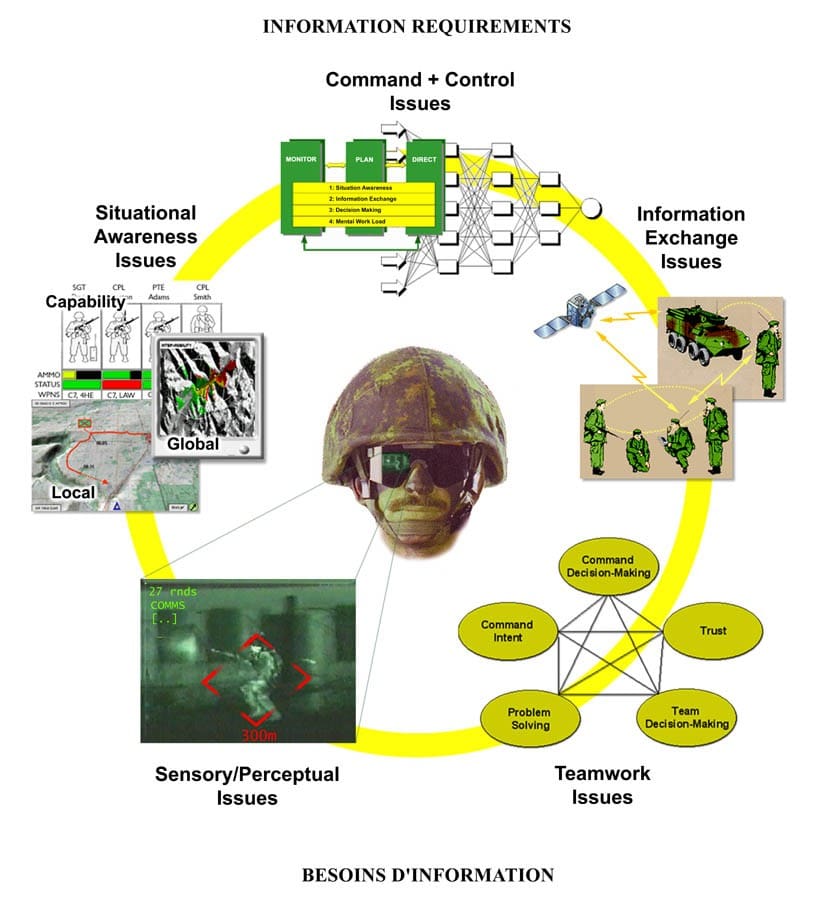
When the big, heavy, cable-laden Nett Warrior went away it took the Helmet Mounted Display along with it. But, with technologies like this new Sunlight Readable See-Through HMD from Vuzix they may remain an option in the future. Vuzix just delivered two different sets of the technology to the Army’s Natick Soldier RD&E Center (NSRDEC). Unlike previously used HMDs these are see-through. The monocular design clips on to ballistic glasses or helmets and are compatible with any device featuring a VGA or composite video out capability. They use a Liquid Crystal light shutter as a means to control the level of translucency.

According to a press release from Vuzix:

Each of Vuzix’ waveguide and quantum beamsplitter optical systems delivered to NSRDEC demonstrate various performance characteristics. The first design affords a smaller form factor, and the second, a super high brightness system achieving a display screen outputting 2400 nits for use in direct sunlight.

www.vuzix.com

Warrior Expo 2011 – Amphonel

Sunday, October 9th, 2011

Amphonel Fiber Systems International provides tactical fiber optic solutions. If you’re a comms guy, you’ve probably worked already with their products. What’s really cool about their products is that they facilitate the repair of fiber optic cables and connectors, saving both time and money.

www.adsinc.com/amphenol

The End User Device

Friday, October 7th, 2011

Already the techno websites are making much hay of the Army’s move to a new End User Device that will, most assuredly, wipe the notion of what was Land Warrior/Nett Warrior from our collective bad memories. By removing 70% of the weight from the Soldier, the End User Device is simultaneously enhancing the capability of the system as a whole.

What has tongues wagging is that, thankfully, the Android-based systems currently being evaluated are not phones. That’s right. As PEO Soldier, BG Camille Nichols stated at yesterday’s media roundtable, they are NOT 3G devices. Instead, the Army will connect these End User Devices to the Rifleman’s Radio variant of the Joint Tactical Radio System or JTRS. It is pronounced “jitters” as in, that radio system that is still in development hell after 15 years gives me the JTRS. At any rate, the Rifleman’s Radio segment of JTRS actually works and much better than its predecessors the PRC 126, 127 or God forbid 68 (if you are old enough). Plus, it handles data pretty well which is critical for a system like this.

Why no 3G you might ask? Simple, it’s all about the infrastructure, or lack thereof. Oddly enough, we rarely fight in places with a nice, new 3G (or better) network in place. And even if it is there, the bad guys are using it so we have to knock it out in order to disrupt their Command & Control. Sure, there are new portable mobile networks being developed, but they are still just phone networks that rely on switches. A radio on the other hand does not. Radios can talk to other radios without a switch and if a redundant mobile network goes down, radios continue to Soldier on. Yes, we know that a cellphone uses a radio. Unfortunately, it requires a complex infrastructure to work. Like it or not, the Rifleman’s Radio is the key here.

This strategy can also be cheaper. If a newer End User Device is approved you aren’t stuck with that pesky contract. Instead, you just go out and buy the new one. Likewise, if we upgrade radios there’s no need to replace everything.

And then, there’s that whole accreditation issue. How do you keep the data and access to the network safe safe from the enemy? That’s the current long pole in the tent, working out the security for the device. But, we are very pleased to hear, that the Army gets it. Unfortunately, those writing about it don’t seem to.

Most of the comments flying around the interwebs about this issue are confounded about why we can’t just go buy the latest ‘Droid, let the troops upload some apps, and go kick ass. That’s because those commenting know two things about warfighting. That’s “Jack”, and you can guess the other one. What’s worse, they don’t seem to have much of a grasp on telecommunications either.

So, big points here:
Army looking at Android based tablet or handheld devices.
Army is not going 3G with the End User Device.
Mobile Devices require a network, networks don’t exist in places we tend to fight.
Consequently, radios are not going away.

Discuss amongst yourselves…

Silynx Introduces Headband Boom Mic ADS Tactical

Monday, September 19th, 2011

On the heels of release of their C4OPS Hybrid Headset, Silynx Communications has announced a new accessory, the Headband Boom Mic. It connects to the Hybrid Headset via a quick disconnect connector on the collar clip. The low-profile headband is manufactured from a lightweight material and can be worn under a helmet. This is a good option for those that are regularly donning and doffing their helmet so that the mic will always be on you.

www.silynxcom.com

NTOA – Garmin

Sunday, September 18th, 2011

Garmin’s GTU 110 is a tracking unit. Think of it as a tag. Boasting up to four weeks of battery life and up to seven days of location information, the unit can be immediately queried by phone or computer.

20110918-010341.jpg

At this point the only limitation of the GTU 10 is that coverage is only available within the US and Canada. This still makes it great for tracking assets or investigative work. In fact, since you can check the data via the Internet, it’s a great way to keep track of a sketchy spouse while deployed.

As always, our favorite place to purchase Garmin is Strohman Enterprise.

Silynx SureFire KM2 Flashlight Head for C4Grip ADS Tactical

Tuesday, September 13th, 2011

We first introduced the innovative C4Grip from Silynx Communications right before SHOT Show. As you will recall, the C4Grip incorporates a built-in wireless PTT and controls to activate the light, laser aiming devices, and tactical radios. The only thing missing when the C4Grip was released was a production flashlight that was compatible with the device.

Now, Silynx has announced the release of a SureFire® KM2 Flashlight Head + Adaptor for the C4Grip. It attaches a standard KM2 flashlight head directly to the front of the C4Grip and it’s exactly the type of thing that can happen when you remote the power source from the actual device. The KM2 flashlight head can be activated (momentary, constant, and strobe) by the C4Grip. This combination transforms the light and switch into a much lighter, more compact, and ergonomic package.

The KM2 from SureFire is an LED light head normally used as a drop-in upgrade to older lights. It offers both white light and IR output from one dual-LED emitter assembly selectable by a positive lock bezel selector. Additionally, the KM2 utilizes a Total Internal Reflection (TIR) lens that produces a comparatively tight beam suited for close- to medium-range applications.

To learn more, visit www.silynxcom.com.

C4OPS Hybrid Headset

Wednesday, September 7th, 2011

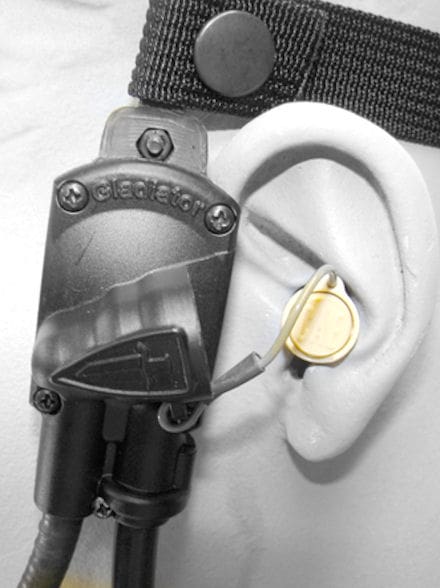
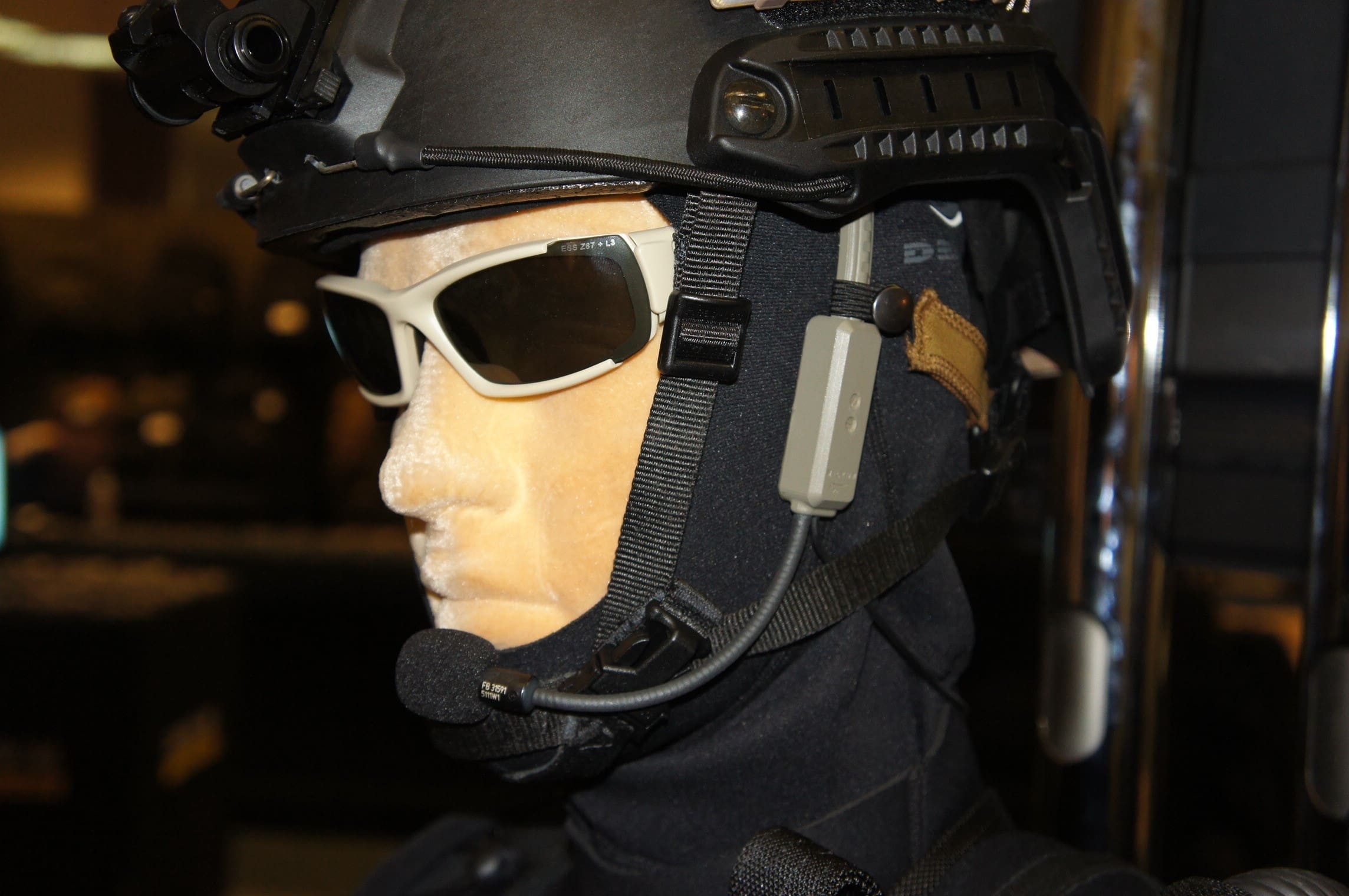
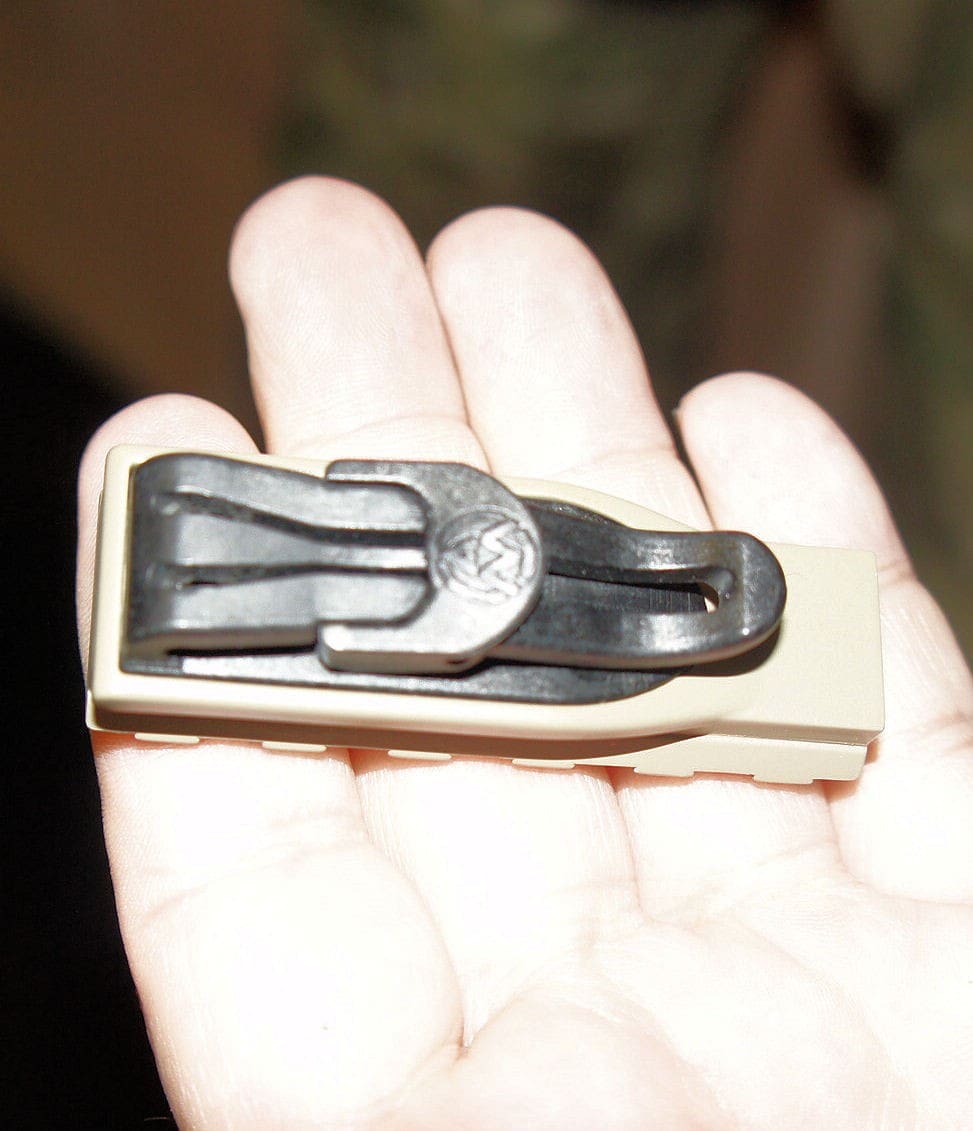
Silynx has just released the C4OPS Hybrid Headset Configuration. Designed for use in high noise environments such as aircraft and boats, it consists of an in ear bud paired with an optional helmet mounted boom microphone. The kit features a modified steel core cable, new cable MOLLE clips, and a modified collar/vest clip.

Designed specifically with the Ops Core chinstrap, the boom integrates with their proprietary buckle. While primarily envisioned for use with the FAST helmet, the Ops Core chinstrap is standard issue throughout SOCOM for the MICH and is available for use with numerous helmet shells so there is a great deal of versatility here.

It features a quick disconnect connector.

www.silynxcom.com